What Are Non-Linear Loads—and Why Do They Matter to Generators?
Most people size a generator by adding up load numbers and picking a unit that looks large enough on paper. That works fine for simple systems. But modern buildings rarely run on simple systems anymore.
Today, many sites rely on electronics. They use drives, battery backup systems, LED lights, control panels, servers, chargers, and power supplies. These devices do not pull power in a smooth, even way. They draw it in quick bursts. That is where trouble starts.
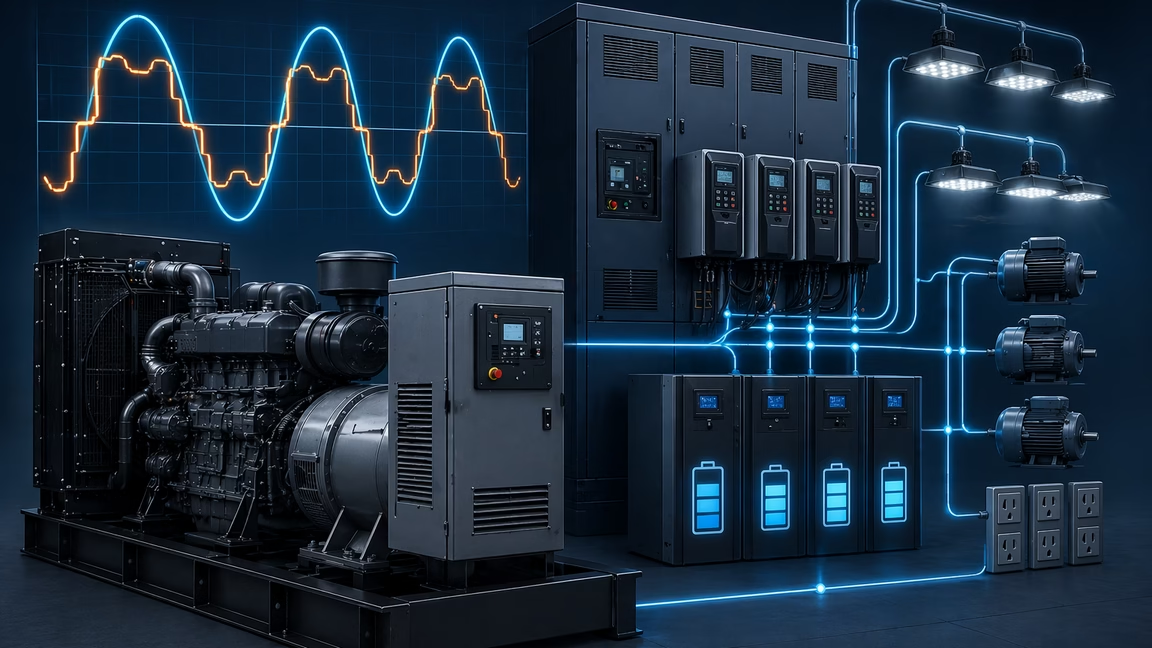
A load is called “linear” when it pulls current in a smooth pattern that matches the voltage wave. Old-style heaters and simple motors are easier on a generator because their demand is more predictable. A non-linear load behaves differently. It grabs power in pulses. Those pulses distort the current wave. Once that happens, the generator has a harder job to do.
This is the heart of the problem with non-linear loads generator sizing. It is not just about how much power the load uses. It is about how the load uses that power. Two systems can show the same total kW and still behave very differently when connected to a generator.
That is why a smart sizing process should start with the load profile, not just the nameplate total. If you want a fast baseline before you go deeper, tools like this DG load calculator can help you estimate the starting point. But for electronic loads, that baseline is only the beginning.
Linear Loads vs. Non-Linear Loads
A linear load pulls current in a steady shape. A non-linear load does not. It draws current in short chunks, often right at the peaks of the voltage wave. That sounds like a small detail. It is not.
Those chopped current pulses create harmonics. Harmonics are unwanted frequencies layered on top of the main waveform. In plain English, they make the electrical signal messy. And generators do not love messy signals.
This matters because a generator is not as stiff as the utility grid. Utility power can absorb a lot of abuse. A generator has less margin. So when distorted current shows up, the generator feels it faster. The result can be voltage distortion, unstable performance, overheating, and equipment that acts strange even when the total load looks safe.
That is why engineers who work with backup power spend time on more than just kW. They also look at kVA, power factor, step loading, and source strength. If someone on your team still mixes up kW and kVA, this kW to kVA converter guide is a useful internal reference to link alongside this topic.
Common Non-Linear Loads in Real Buildings
Non-linear loads are no longer limited to factories or data centers. They are everywhere.
You will see them in commercial offices, hospitals, schools, warehouses, apartment towers, retail sites, and industrial plants. Some of the most common examples include:
Variable frequency drives (VFDs)
These are used on fans, pumps, compressors, and process equipment. They save energy and improve control. But they can also feed harmonic current back into the power system.
UPS systems
Uninterruptible power supplies protect sensitive equipment during outages. They are common in server rooms, telecom sites, labs, and healthcare spaces. Their input side can be tough on a generator if the system is not sized and matched correctly.
LED lighting
Many people still think lighting is an easy load. That used to be true. It is not always true now. LED drivers can behave like small electronic power supplies. One fixture may not matter much. Hundreds or thousands of them can.
Switched-mode power supplies
You find these in computers, telecom gear, security systems, automation controls, and many types of modern equipment.
Battery chargers and rectifier-based equipment
These often create distorted current and can change their behavior during recharge or after a power event.
This is why a solid diesel generator sizing guide should never stop at a simple wattage total. Modern loads are more complex. The sizing method has to reflect that.
Why Generators React Differently Than Utility Power
This is the part many articles skip. It is also the part that explains why projects go wrong.
A utility source is strong. It has massive capacity behind it. In power terms, it is a stiff source. A generator is smaller, more sensitive, and easier to disturb. So the same non-linear load that runs fine on utility power can create real problems when the site switches to generator power.
That difference is huge.
It means you cannot assume that “if it runs on the grid, it will run on the generator.” Many systems fail right there. They are designed around normal utility operation, then tested on standby power and suddenly show alarms, nuisance trips, or poor voltage quality.
This is one reason generator harmonic distortion matters so much. The distortion usually starts at the load. But the generator often feels the consequences more sharply than the utility ever did.
Why This Topic Matters More Than Ever
Buildings keep adding electronics. Energy codes push more efficient lighting. Process systems use more drives. Backup systems rely more heavily on UPS equipment. Even sites that look simple from the outside now carry a surprising amount of non-linear load.
So the old shortcut no longer works. You cannot just total the connected kW and pick the next larger generator size. If the load mix includes VFDs, UPS systems, or LED-heavy circuits, the real-world sizing result may be very different.
That is why this topic deserves a deeper look. Not because harmonics are a niche issue. But because they are now part of normal generator design.
How Harmonics Affect Generator Performance
Once non-linear loads start pulling current in pulses, the generator stops seeing a clean electrical demand. Instead, it sees a distorted one. That distorted current flows through the generator’s own internal impedance. And that is what bends the output voltage wave out of shape.
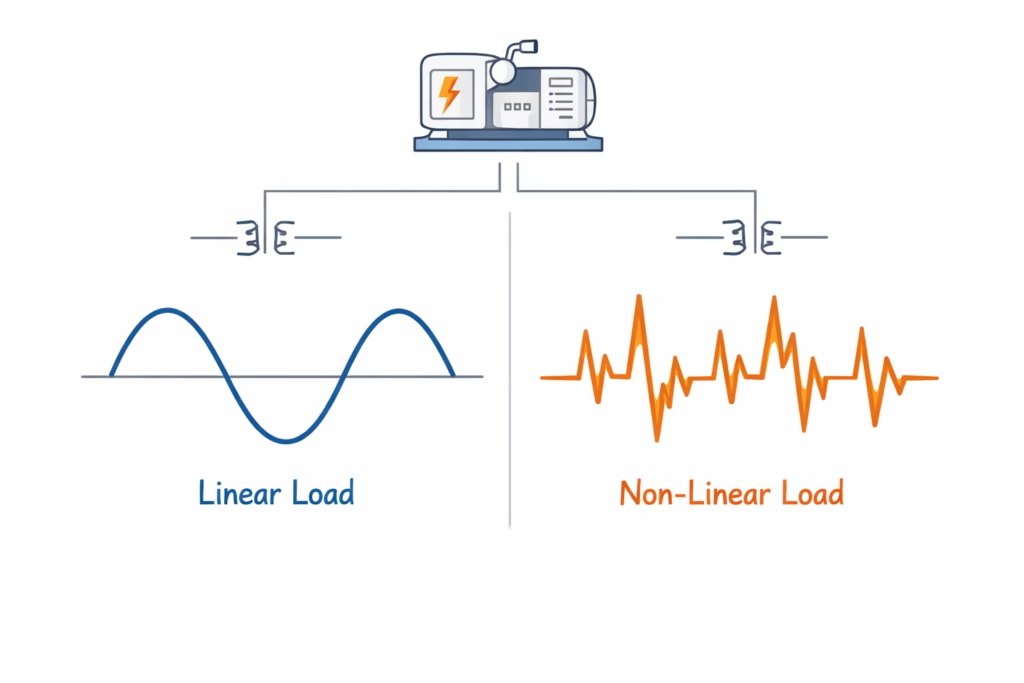
In simple terms, the load distorts the current, and the generator ends up with distorted voltage.
That is the main chain reaction behind generator harmonic distortion. It is not just a theory problem. It shows up in real equipment behavior.
Harmonic Current Leads to Voltage Distortion
A generator can produce a clean sine wave under the right conditions. But when the connected load pulls current in sharp bursts, those bursts push back on the generator. The more non-linear the load, the more the voltage waveform can suffer.
This matters because most equipment is built around the idea of stable voltage. Once the waveform starts to flatten, notch, or wobble, sensitive devices may stop behaving normally.
That is why non-linear loads generator sizing must look beyond total capacity. A generator may have enough raw power, yet still struggle because the waveform quality gets worse under electronic loads.
What Voltage Distortion Looks Like in Real Life
In the field, voltage distortion rarely announces itself with a neat label. It usually shows up as symptoms.
You may see a UPS throw alarms during transfer. A drive may trip even though the motor load seems light. LED fixtures may flicker or behave oddly. Control panels may reboot. Protective devices may act more sensitive than expected. None of those issues feel like “a harmonic problem” at first. But very often, they are signs of poor generator-load interaction.
That is what makes this issue expensive. It hides inside systems that appear properly sized. The nameplate numbers look fine. The generator starts. The load connects. But the site still performs badly.
When that happens, teams often blame the generator brand, the switchgear, the controls, or the connected equipment. Sometimes the real issue is simpler. The load mix was not analyzed deeply enough during design.
The Generator Can Lose Usable Capacity
This is one of the most important ideas in the whole article.
A generator may be rated for a certain output. But that does not mean all of that output is usable under harmonic-rich conditions.
Electronic loads can force the alternator to work harder than the kW number suggests. Heat builds up in parts of the machine that do not normally see the same stress under cleaner loads. Voltage quality may slip before the unit reaches full rated load. In other words, the generator can reach a practical limit before it reaches its theoretical one.
That is why some systems “should work” on paper but do not work in the field.
You can think of it this way: paper capacity is one thing, clean usable capacity is another.
If your project also includes motor loads, the problem can stack up fast. Non-linear loads distort the waveform, and motors add starting stress. If you want to connect those dots for readers, it makes sense to link naturally to why your generator trips on startup, since startup surge and waveform weakness often combine in the same real-world project.
Extra Stress on the Alternator
When people think about generator sizing, they often focus on the engine first. That is understandable. The engine feels like the main event.
But with harmonic-heavy loads, the alternator often becomes the real constraint.
The alternator has to support the voltage wave while distorted current moves through the windings. That can increase heating, raise internal losses, and make the system more sensitive to sudden load changes. The result may be more instability than expected, even when the engine itself still has room left.
This is one reason two generators with the same headline rating can behave very differently in the same application. The alternator design, excitation support, and overall source strength can change the outcome.
Harmonics Can Make Good Equipment Look Bad
One of the most frustrating parts of harmonic problems is how they mislead the people troubleshooting them.
A VFD may trip and look like the drive is faulty. A UPS may reject the source and look too sensitive. LED fixtures may flicker and look cheap. In reality, the issue may come from voltage distortion upstream.
That is why the best troubleshooting teams step back and look at the system, not just the device that fails first.
When the load mix is heavy with electronics, power quality becomes part of generator sizing. It is not a separate issue. It is built into the sizing decision from the start.
Why “Just Go Bigger” Is Not Always Enough
Oversizing does help in many cases. A larger generator can offer a stronger source and more margin. But bigger does not always mean solved.
If the load behavior is aggressive enough, or if the generator is not a good match for that load type, simple oversizing may not fix the root issue. It may reduce symptoms without removing them. That is why the best designs combine sizing with load review, sequencing, and in some cases, mitigation.
This matters even more in harsh environments. Heat and altitude can reduce what the generator can really deliver. If your readers need that context, https://reviewfriendly.com/generator-derating-explained/ is a natural internal link because derating and harmonic-rich loads can both chip away at the same capacity margin.
Why These Problems Often Show Up Late
A lot of projects pass through design review without anyone noticing a problem. The single-line diagram looks clean. The load schedule looks reasonable. The generator rating seems adequate.
Then commissioning starts.
That is when the real behavior shows up. The UPS transfers. The drives start. The lights come on. The controls wake up. Suddenly, the nice tidy plan meets a messy real-world electrical system.
That is why advanced sizing matters. It catches the interaction before the site goes live.
Why VFDs, UPS Systems and LEDs Are Especially Challenging
Not all non-linear loads behave the same way. That is a key point. A good article should not treat them as one big category.
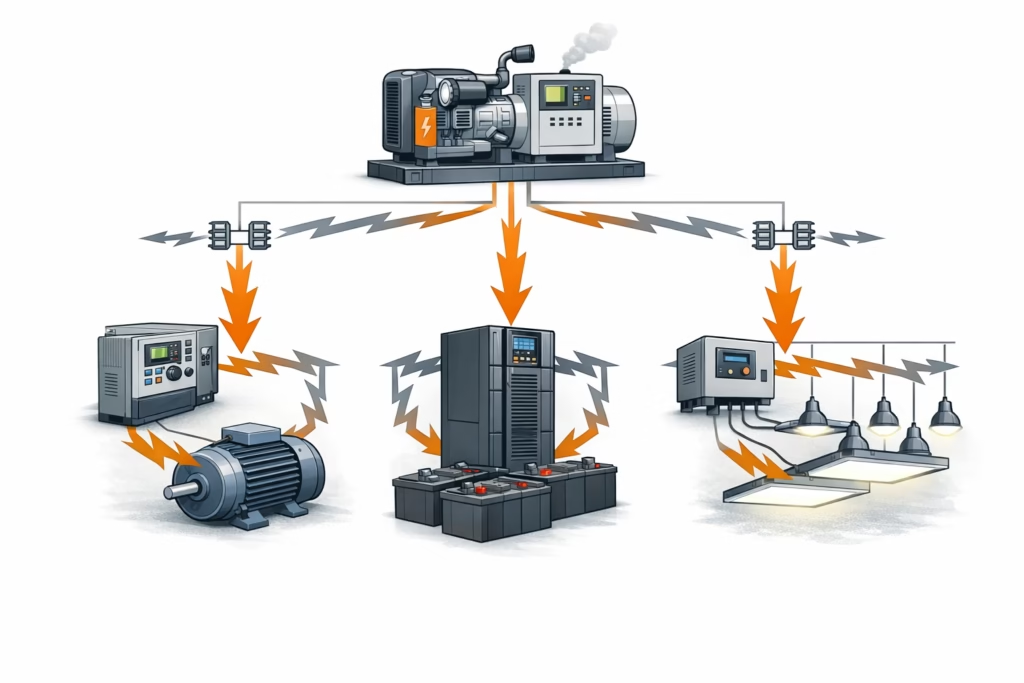
VFDs, UPS systems, and LED lighting all create challenges for a generator. But they do it in different ways. That means the sizing approach should change with the load type.
VFDs and Generator Sizing
Variable frequency drives are common for a reason. They improve control. They save energy. They make systems more flexible.
But from a generator’s point of view, they can be demanding.
A typical drive takes incoming AC power, converts it, and then feeds the motor in a controlled way. On the input side, many drives draw current in pulses rather than in a smooth pattern. That pulsed demand can create harmonic current. Once the generator sees enough of that current, voltage distortion can rise.
On utility power, the drive may seem perfectly happy. On a generator, the same drive can become more sensitive. It may trip on undervoltage, overvoltage, or poor input quality. It may not like sudden weakness in the source. It may react badly when several drives ramp at the same time.
This is where many projects go wrong. The team sizes for running load but overlooks how the drives interact with the generator as a source.
The risk grows when the site has multiple drives, a light linear base load, or a generator that already sits close to its limit. It also grows when motors start in stages while other electronic loads stay online.
If you want to help readers think through generator selection more broadly, it also makes sense to mention https://reviewfriendly.com/best-diesel-generators-by-kva-tier/ as a next-step resource. It fits naturally after you explain that the right size class depends on load behavior, not just headline output.
What to review for VFD-heavy systems
When drives make up a large share of the load, the sizing review should look at more than motor horsepower.
It should examine:
- how many drives run at once
- whether they ramp together or in sequence
- the share of total load made up by drives
- the drive front-end design
- the sensitivity of the process to poor voltage quality
- whether the generator has enough source strength for the duty
In practical terms, generator sizing for VFD loads is about compatibility as much as capacity.
UPS Systems and Generator Sizing
UPS systems add another layer of complexity.
At first glance, people assume a UPS should make life easier for a generator because it protects the load. In some cases, that is true on the output side. But on the input side, the UPS can be a difficult customer.
The rectifier section of the UPS may draw current in a way that creates harmonic distortion. Some modern units are much better than older designs. But not every UPS behaves the same. That is the point many buyers miss.
A “UPS load” is not one thing. It depends on the model, the front-end design, the charger settings, and what the unit does after a power event.
That last part matters a lot. After an outage, the UPS may begin recharging batteries. That recharge demand can push the generator harder than the normal protected load does. So a system that appears stable at first may become less stable a few minutes later.
This is why generator harmonic distortion often shows up in standby systems with battery backup. The initial transfer may work, but the long-run operating condition reveals the real mismatch.
Common UPS-related trouble signs
When a UPS and generator are poorly matched, you may see:
- alarm conditions during transfer
- unstable input acceptance
- source rejection
- odd charger behavior
- higher stress once battery recharge starts
- more distortion than the design team expected
This is one reason non-linear loads generator sizing should never treat “UPS” as a simple checkbox item. The exact UPS behavior matters.
LED Lighting and Generator Sizing
LED lighting is often the most underestimated load in this conversation.
People still think of lighting as easy. And in older systems, it usually was. But modern LED fixtures use drivers. Those drivers are electronic devices. They can pull current in a non-linear way, especially in lower-cost products or in large distributed systems.
A few fixtures will not ruin a generator setup. But hundreds of fixtures across a warehouse, store, office floor, sports site, campus, or emergency lighting system can add up fast.
The tricky part is that the kW total may still look modest. That is why teams dismiss the issue. The lighting load appears small, so no one expects it to affect generator performance. But the waveform tells a different story.
A large LED-heavy system can contribute to distortion, especially when combined with drives, controls, and UPS loads on the same standby source.
Why LED systems deserve more attention
LED loads deserve a closer review when:
- the site has a very large lighting count
- many fixtures use budget drivers
- emergency lighting must perform cleanly on generator power
- the system already includes other electronic loads
- the project has shown flicker, odd dimming behavior, or controls issues in testing
This does not mean LED lighting is “bad.” It means modern lighting is electronic. And electronic loads need smarter sizing.
Why These Three Load Types Matter So Much Together
Each of these load types can challenge a generator on its own. But the real problem often comes from the mix.
A site may have VFD-driven HVAC equipment, a UPS for critical loads, and LED lighting everywhere. Each system looks reasonable in isolation. Together, they create a much more demanding electrical environment.
That is why advanced generator sizing cannot rely on a single rule of thumb. The answer depends on the load mix, the sequence, the sensitivity of connected equipment, and the generator’s ability to hold voltage quality under stress.
This is also why simple shopping by rating tier can be risky. The right generator is not just the one with enough published capacity. It is the one that can support the actual load behavior at the site.
The Practical Takeaway
If a project includes VFDs, UPS systems, and LED lighting, do not treat the generator like a commodity item. Treat it like a matched part of the electrical system.
That means:
- identify every major non-linear load
- understand how each one behaves
- review what happens during startup, transfer, and recharge
- check both running load and waveform quality
- leave room for real operating conditions, not just best-case assumptions
That is the difference between a system that merely starts and a system that actually performs when the power goes out.
Generator Harmonic Distortion: The Electrical Reason Standard Sizing Rules Fail
Standard generator sizing looks simple on the surface. Add the load. Check the power factor. Leave a little room for growth. Pick the generator. Done.
That method still works for many basic systems. But it starts to fall apart when the load is full of electronics.
The problem is not just total demand. The problem is how that demand hits the generator.
A modern building may only show a moderate kW number. On paper, the generator looks large enough. But once the site switches to backup power, the load starts pulling current in uneven pulses. That changes the entire game. The generator is no longer feeding a clean, steady demand. It is feeding a distorted one.
That is the real reason generator harmonic distortion matters so much. It explains why a unit that looks fine in a spreadsheet can still struggle in the field.
Why kW Alone Does Not Tell the Whole Story
Many buying decisions start with kW because it feels familiar. It is easy to compare. It is easy to quote. But by itself, it does not tell you whether the generator can hold stable power for a non-linear load mix.
That is because kW measures real working power. It does not fully show how the load behaves electrically.
A better sizing review also looks at kVA, power factor, current shape, and the way loads come online. If the project team skips those factors, they may size for total power but miss the quality of that power.
The Generator Is Not an Infinite Power Source
This is the deeper issue.
The utility grid can absorb ugly load behavior much better than a generator can. It has huge upstream capacity. It is a stronger source. A generator is more limited. It has its own internal impedance. So when a non-linear load pulls distorted current, the generator reacts more sharply.
That reaction often shows up as distorted voltage.
And once the voltage waveform starts to deform, connected equipment may begin to misbehave. The site may still have “enough power” in the broad sense. But the power is no longer clean enough for sensitive electronics.
This is why non-linear loads generator sizing should never assume utility performance and generator performance will match. The same building can behave one way on grid power and a very different way on standby power.
The Alternator Often Becomes the Real Limiting Factor
When people talk about generator size, they usually think about the engine first. That makes sense at a basic level. The engine drives the system.
But in harmonic-rich applications, the alternator often becomes the part that decides whether the job works.
The alternator has to support voltage under a distorted load. If the current waveform is messy, the alternator may run hotter, lose clean output sooner, or respond less smoothly to changes in demand. That can reduce the generator’s usable performance even when the engine still has headroom left.
This is why two generators with similar ratings can perform very differently with the same electronic load mix.
One may handle the application well. The other may show trips, alarms, or poor voltage stability. On paper, both looked right. In real life, only one was the right match.
Why Oversizing Helps But Does Not Solve Everything
A larger generator often helps. It can give the system more margin. It can reduce how hard each load hit feels. In many real projects, that added strength improves performance.
But oversizing is not a magic fix.
If the load mix is especially harsh, or if the source and load are simply a poor match, a bigger unit may only reduce the symptoms. It may not remove the root problem.
That matters because many buyers overspend for size when what they really need is a better application review.
Sometimes the right answer is a larger alternator. Sometimes it is load sequencing. Sometimes it is better compatibility between the generator and the UPS or drive package. Sometimes it is a smarter layout of which loads sit on which branch.
And sometimes the capacity loss is made worse by site conditions. Heat and altitude can cut into real output, which leaves even less margin for harmonic-heavy operation.
Why Simple Rules of Thumb Can Mislead Buyers
A lot of online advice uses blanket statements. Oversize by this much. Add that percentage. Go one frame size up. Those tips sound helpful because they are easy to remember.
The problem is that they are too broad.
A site with a few modern LED circuits is not the same as a site with large VFD banks and a UPS recharging after transfer. A mixed commercial building is not the same as a data-heavy facility. A warehouse lighting system is not the same as a healthcare branch serving critical electronics.
So the right question is not, “How much should I oversize?”
The better question is, “What kind of load behavior does this generator need to support?”
Once you ask that, the sizing review gets smarter fast.
Practical Generator Sizing for Non-Linear Loads
If the load mix includes VFDs, UPS systems, LED drivers, chargers, or other electronics, the sizing process needs more than a simple total wattage check.
The good news is that the process does not need to be confusing. It just needs to be structured.
A strong sizing review follows a few clear steps. It starts with knowing the load. Then it looks at behavior, sequence, and real operating conditions. That is how you move from a rough estimate to a reliable generator choice.
Step 1: Identify Every Non-Linear Load
This is where many sizing mistakes begin. A team counts the obvious big loads but misses the electronic loads spread across the site.
Those smaller items may not look dramatic on their own. But together, they can shape how the generator performs.
Start by listing all major non-linear loads, including:
- variable frequency drives
- UPS systems
- battery chargers
- LED lighting networks
- IT and telecom power supplies
- building control panels
- rectifier-based equipment
- process electronics
- security and access systems
Do not assume that only large equipment matters. In some sites, the total effect of many smaller electronic loads can be surprisingly large.
Step 2: Separate Loads by Type, Not Just by Size
This step matters a lot.
Do not lump everything into one total block. Group loads by how they behave. That gives you a far clearer picture of what the generator will face.
A smart review might separate loads into:
- standard linear loads
- motor loads across the line
- VFD-driven loads
- UPS-backed loads
- lighting and electronic branch loads
- battery charging loads
- emergency-only loads
- delayed or sequenced loads
Why does this matter? Because a 40 kW motor load and a 40 kW UPS input are not the same challenge. The number may match. The electrical behavior does not.
That difference sits at the core of non-linear loads generator sizing.
Step 3: Gather the Right Data Before You Size
A lot of generator projects go sideways because the team starts choosing equipment before collecting the right details.
At a minimum, you want to know:
- running kW and kVA
- power factor
- starting behavior
- whether the load starts instantly or ramps
- whether it runs continuously or in steps
- whether it recharges after transfer
- how much of the total load is electronic
- what must come online first
- what can wait
- what future expansion may add
This does not need to become an academic exercise. It just needs to reflect reality.
Step 4: Review the Generator as a System, Not Just as a Rating
Once the load side is clear, the generator side needs the same level of attention.
At this stage, the review should look beyond the headline kW number. It should consider whether the generator can support the actual load mix with enough stability.
That means asking practical questions like:
- Does the unit have enough kVA margin?
- Is the alternator strong enough for the electronic load share?
- Can the generator hold stable voltage during transfer and step loading?
- Will the unit stay comfortable under real operating conditions, not just ideal ones?
- Is there enough room left after altitude, temperature, or enclosure limits are considered?
Step 5: Model the Worst Real-World Scenario
A generator should not be sized for the easiest moment. It should be sized for the hardest realistic moment.
That is a big difference.
The hardest moment may be:
- the instant the site transfers to backup power
- the point when the UPS begins battery recharge
- the time several VFDs ramp together
- the moment lighting, controls, and HVAC all connect in sequence
- a hot day at high altitude with the enclosure already warm
- a mixed-load condition where the linear load is low and the electronic load share is high
This is why experienced teams do not stop at “What is the total load?” They also ask, “What is the worst operating condition this system may see?”
That question often changes the answer.
Step 6: Decide Whether You Need Margin, Mitigation, or Both
Once the real operating picture is clear, the next step is to decide how to protect performance.
In some projects, extra generator size is enough. In others, better sequencing solves a lot. In more demanding systems, the fix may involve both size and smarter system design.
Depending on the project, that may include:
- a larger generator frame
- more alternator margin
- staged load pickup
- limiting UPS battery recharge rate
- separating sensitive electronic loads
- choosing better-quality front-end equipment
- improving overall load management
The Main Goal of Good Sizing
The goal is not just to make the generator start.
The goal is to make the whole system perform well under real conditions.
That means the unit should carry the load, hold stable voltage, support transfer, avoid nuisance trips, and keep sensitive equipment happy. If the site can do all that under backup power, the sizing was done well.
If not, the team probably sized for numbers instead of behavior.
Warning Signs Your Generator Is Undersized for Harmonic Loads
A generator that is undersized for harmonic-heavy loads does not always fail in a dramatic way. Sometimes it starts. Sometimes it carries part of the site. Sometimes it looks fine until one more load comes online.
That is what makes these problems hard to spot. They hide inside systems that almost work.
If a site shows the symptoms below, there is a good chance the issue is not just raw capacity. It may be poor generator-load compatibility caused by electronic loads.
UPS Alarms During Transfer
One of the clearest warning signs is a UPS that becomes picky or unstable when the site switches to generator power.
On utility power, the UPS seems normal. On standby power, it throws alarms, delays acceptance, rejects the source, or behaves inconsistently. That often points to voltage quality issues, not just a weak UPS.
If the generator only struggles once the UPS is online or once recharge begins, the sizing review may have missed a key part of the load behavior.
VFD Nuisance Trips
Drives are another strong clue.
If VFDs trip, fault, or act erratically on generator power but run fine on the grid, that is a red flag. It usually means the generator is not holding the quality of power the drives expect.
This does not always mean the generator is too small in a simple kW sense. It may mean the source is too weak for the drive-heavy load mix.
That is a classic sign of non-linear loads generator sizing gone wrong.
LED Flicker or Strange Lighting Behavior
Lighting issues are easy to dismiss. People often blame the fixtures first. But if LED lighting flickers, dims unevenly, or behaves strangely only on generator power, the source may be the real issue.
That kind of symptom often points to a waveform problem upstream.
If the building has a large lighting network and other electronic loads share the same generator, the issue may be load interaction rather than defective fixtures.
The Generator Runs “Fine” Until More Electronics Come Online
This is one of the most common field stories.
The generator starts well. Basic loads connect. Everything appears stable. Then the system adds UPS input, lighting branches, or drive-controlled HVAC equipment. That is when performance starts to slip.
Maybe alarms begin. Maybe voltage gets unstable. Maybe operators notice flicker. Maybe a few loads trip and reset.
That pattern usually tells you the generator was sized for a simpler load profile than the site actually has.
Overheating at a Lower-Than-Expected Load
If the generator seems to run hotter than expected even though the total real power looks modest, that can be another sign.
Harmonic-rich loads can create stress that the plain kW number does not fully reveal. So the machine may feel more loaded than the dashboard suggests.
This is especially important in warm climates or high-altitude sites, where normal derating already shrinks the margin. If the generator is already starting from a reduced real-world capacity, harmonic-heavy operation can eat up the rest quickly.
The System Works on Utility Power but Not on Generator Power
This may be the single strongest clue of all.
If the building runs smoothly on the grid and then starts showing odd behavior only during backup operation, do not assume the connected equipment suddenly became faulty.
Very often, the difference is source strength.
The utility absorbs distortion more easily. The generator does not. That is why generator harmonic distortion becomes visible only during standby runs, testing, or real outages.
Commissioning Problems That No One Expected
Many harmonic-related issues show up for the first time during testing.
The design looked fine. The load schedule looked fine. The generator rating looked fine. But the minute the site goes through real transfer and load pickup, the weak points appear.
That does not always mean the project was careless. It often means the design process stayed too close to nameplate totals and not close enough to real load behavior.
“We Keep Going Bigger, But the Problem Never Fully Goes Away”
This is another strong warning sign.
If a project keeps solving generator problems by moving up one size at a time without fully fixing the issue, the root cause may not be simple undersizing. It may be that the site needs a better application review.
More size can mask a mismatch. It cannot always cure one.
A Simple Way to Think About These Warning Signs
If the generator seems healthy on basic loads but unstable on electronic loads, the issue is likely not just capacity. It is interaction.
That is the key takeaway.
Many so-called generator failures are really generator-load mismatch problems. The machine is not necessarily defective. It may simply be the wrong fit for the waveform demands of the site.
Common Design Mistakes Engineers Make With Non-Linear Loads
Non-linear loads do not usually break a power system in one obvious moment. They create trouble in quieter ways. That is why design mistakes around them are so common.
The generator may look correctly sized. The drawings may look clean. The load total may seem safe. Yet the system still underperforms once it meets real operating conditions.
Most of those failures trace back to a few repeat mistakes.
Sizing by Total kW Alone
This is the biggest one.
A team adds up the load, picks a generator with a bit of margin, and assumes the work is done. That method can work for simpler systems. It often fails when the load mix includes drives, UPS equipment, LED drivers, and other electronics.
The issue is simple. Total kW tells you how much power the site needs. It does not tell you how the load pulls that power. A clean load and a distorted load can show the same kW and still place very different demands on the generator.
That is why a generator can look right on paper and still struggle in practice.
Assuming Utility Performance Will Match Generator Performance
This mistake causes a lot of surprise during testing.
A building runs fine on utility power. So everyone assumes it will run the same way on generator power. Then the transfer happens, and the site shows alarms, flicker, trips, or unstable behavior.
The hidden problem is that the utility is a much stronger source. It can absorb bad load behavior more easily. A generator cannot. So the same electronic load that seems harmless on the grid may become a real issue on standby power.
If the design team forgets that difference, they may approve a system that only works under normal utility conditions.
Treating All UPS Systems as the Same
A UPS is not one simple load type.
Some UPS units are far easier on generators than others. Their input design matters. Their charger settings matter. Their recharge behavior matters. Even units with the same output rating can behave very differently on the input side.
Designers get into trouble when they see “UPS” on the load schedule and assume all those systems place the same demand on the source.
They do not.
A good design review asks what kind of UPS it is, how it behaves during transfer, and what happens after an outage. A weak review just checks the rating and moves on.
Ignoring LED Drivers Because the Lighting Load Looks Small
This mistake shows up more now than it did a few years ago.
Lighting still feels like a harmless load to many people. But modern LED systems rely on electronic drivers, and those drivers can affect power quality. A few fixtures may not matter much. A large lighting network can.
The trap is that the kW number often looks small enough to ignore. That makes the load easy to dismiss. But once many fixtures are added together, the effect can become large enough to shape generator performance, especially when the site already has other electronic loads on the same source.
This is why small-looking loads should not be dismissed too quickly.
Focusing on the Engine and Overlooking the Alternator
Another common mistake is treating the generator as if the engine is the only part that matters.
In reality, non-linear loads often push the alternator harder than people expect. Voltage support, heat, and usable output under distorted current all become important. The engine may have room left while the alternator is already under strain.
That is why two generators with similar ratings can perform very differently in the same project.
If the buying decision focuses only on headline output and not on how the generator supports real load behavior, the wrong unit can slip into the design.
Assuming Oversizing Will Fix Everything
Oversizing helps. But it is not a cure for every problem.
Some teams respond to every warning sign by moving up one generator size. That can reduce the symptoms. It can buy more margin. But it does not always solve the true issue.
If the real problem is poor load compatibility, bad sequencing, or a harsh mix of electronic loads, a larger generator may still struggle. The problem just appears later, or under a different operating condition.
This is why the best designs do not stop at “bigger.” They also ask, “better matched to what?”
Failing to Review Load Sequence
Loads do not all arrive at once. Or at least they should not.
A design can look acceptable at full running load and still fail during transfer because the load sequence was never reviewed. The order in which systems connect matters. So does the moment when batteries begin recharge. So does the timing of drives, lighting, and control systems.
If the design ignores those steps, it may miss the hardest moment the generator will ever face.
And in real life, that hardest moment is often the one that decides whether the project succeeds or fails.
A Better Way to Avoid These Mistakes
The solution is not complicated. It just requires a more honest view of the load.
Do not size for totals alone. Size for behavior.
Do not assume all electronic loads act the same. Separate them by type.
Do not trust utility performance as a model for standby performance. Treat the generator as its own source with its own limits.
And above all, do not let a neat spreadsheet hide a messy real-world system.
When Should You Oversize the Generator—and By How Much?
This is one of the first questions buyers ask. It is also one of the easiest questions to answer badly.
People want a simple rule. Add this percentage. Go one size up. Double the margin. Those shortcuts sound helpful because they are quick. But they often create the wrong result.
The honest answer is this: sometimes you should oversize the generator, and sometimes you should not. The right call depends on the load mix and how the system will operate.
When Oversizing Makes Sense
Oversizing often makes sense when the generator will serve a heavy share of non-linear load.
That could include:
- large numbers of VFDs
- a UPS-heavy critical load
- wide LED lighting networks
- mixed electronic branch loads
- small systems where electronic loads make up a big share of the total
In these cases, extra margin can make the source feel stronger. That can help the generator hold voltage more steadily and reduce how sharply the load disturbs the output waveform.
Oversizing also helps when the site must ride through hard operating moments, such as transfer, motor pickup, or battery recharge after an outage.
When Oversizing Is Not Enough
This is the part many people miss.
A larger generator may improve performance without fully solving the issue. If the load behavior is difficult enough, or if the source and load are poorly matched, oversizing alone may only hide the problem for a while.
For example, a bigger unit may reduce nuisance trips but still leave a UPS unhappy. It may support more load but still show waveform issues once the site reaches a certain condition. It may feel better at light operation and still struggle during recharge or step loading.
In those cases, the project may need more than size. It may need better sequencing, better load separation, or better alignment between the generator and the equipment it serves.
Why There Is No Universal Oversizing Rule
A universal rule fails because the load types vary too much.
A site with a few high-quality modern drives is not the same as a site full of older rectifier-heavy equipment. A modest office backup system is not the same as a healthcare or data-heavy site. A generator serving mixed loads with strong sequencing is not the same as one taking large blocks of electronics all at once.
Even the same load can behave differently depending on timing.
That is why blanket advice often creates two bad outcomes. It either oversizes the project too much and wastes money, or it undersizes the real application and creates commissioning pain later.
Better Questions to Ask Instead
Instead of asking, “What percentage should I oversize?” ask these:
- How much of the total load is electronic?
- What type of electronic loads are present?
- What happens during transfer?
- What happens after transfer, especially during recharge?
- Which loads connect first?
- Which loads can be delayed?
- How sensitive is the site to poor voltage quality?
- How much margin remains after real site conditions are considered?
Those questions usually produce a far better answer than a fixed oversizing rule ever could.
Cases That Often Push the Design Toward a Larger Unit
Some conditions do tend to push projects toward a larger generator or at least a larger practical margin.
That often happens when:
- the UPS load is a large share of the total
- several drives may run or ramp together
- the site has a large amount of LED lighting on emergency or standby branches
- the project includes sensitive controls or electronics that do not tolerate poor voltage quality
- the system is relatively small, which makes each load hit feel larger
- the site runs in hot, high, or otherwise challenging conditions that reduce real output
In those cases, a tighter design may work on paper but leave too little breathing room in the field.
When a Smarter Design Beats a Bigger Generator
One of the best outcomes is when the team avoids unnecessary oversizing by improving the system design instead.
That may mean changing the load sequence. It may mean delaying battery recharge. It may mean separating load groups. It may mean using better front-end equipment. It may mean reducing how much the generator must absorb all at once.
These choices can improve performance without turning every problem into a larger equipment purchase.
That is why oversizing should be seen as one tool, not the only tool.
The Practical Bottom Line
If the load mix is rich in electronics, some extra generator margin is often wise. But the amount should come from the application, not from a generic rule of thumb.
A strong design does not oversize out of fear. It oversizes with purpose.
That is the difference between buying bigger and sizing smarter.
Best Practices for Specifying Generators for Harmonic-Rich Loads
A weak specification invites trouble. It leaves too much open to guesswork. It turns a technical decision into a price-driven one. And when that happens, the project often ends up with a generator that meets the rating but misses the application.
That risk grows fast when the load mix includes non-linear loads.
If the goal is reliable performance, the specification needs to describe the real job the generator must do, not just the number printed on the nameplate.
Specify the Load Mix, Not Just the Total Load
This is the first best practice, and it may be the most important.
Do not stop at the total connected load. Show what is inside that total. Identify how much of the load is made up of drives, UPS systems, LED lighting, battery chargers, control systems, and other electronics.
That one step changes the whole quality of the conversation.
A supplier who sees only total kW may quote a unit that looks fine on paper. A supplier who sees the actual load mix is much more likely to catch application risks before the order is placed.
Describe How the Site Operates
A good generator spec should also explain how the load behaves, not just what the load is.
That includes:
- which loads must connect first
- which loads can wait
- whether the system takes load in steps
- whether large motors start during backup operation
- whether a UPS will recharge batteries after an outage
- whether some loads are optional or delayed
- whether future expansion is expected
This context matters because the hardest moment in a generator system is often not full running load. It is the transfer, the first few minutes after transfer, or the instant several systems connect in sequence.
If the specification ignores those moments, it may miss the real design challenge.
Ask for Application Review, Not Just a Price
This is one of the most practical ways to improve results.
A generator for a harmonic-rich site should not be treated like a basic commodity item. The project deserves an application review. That means someone should look at the actual load profile, the operating sequence, and the likely stress points in the design.
Without that review, the quote process tends to collapse into one question: “Which unit meets the rating at the lowest cost?”
That is rarely the best question for a site with electronic loads.
The better question is: “Which unit is most likely to perform cleanly and reliably in this exact application?”
Include Performance Expectations in the Specification
A stronger specification tells suppliers what the generator must achieve, not just what size it should be.
That may include expectations around:
- stable voltage under mixed electronic loads
- acceptable behavior during transfer
- acceptable load pickup sequence
- support for UPS-backed systems
- steady performance with drive-heavy load groups
- performance under real site conditions, not only lab conditions
This improves the quality of the response. It pushes the discussion toward actual performance instead of raw rating alone.
Avoid One-Size-Fits-All Language
Specifications often fail because they are copied from older projects. The wording may have worked for a simpler building years ago. It may be a poor fit for today’s load mix.
A site with modern power electronics should not be specified with language that assumes mostly linear loads. If the project is advanced, the specification should be advanced too.
That means dropping vague phrases and replacing them with clearer, application-based requirements.
Require Clear Communication About Assumptions
Another best practice is to make sure all sizing assumptions are visible.
If a supplier assumes battery recharge is limited, that should be stated. If some lighting branches are excluded from the transfer case, that should be stated. If the load sequence depends on delays or controls, that should be stated.
Hidden assumptions often become field problems later.
Clear assumptions lead to better design reviews, fewer surprises, and easier commissioning.
Think Beyond the Purchase and Toward Commissioning
A strong specification should help the project not only buy the right generator, but also test it successfully later.
That means the written requirements should match how the system will actually be commissioned. If the generator will be tested with UPS load, drive load, lighting load, and staged pickup, those conditions should not feel like a surprise after the equipment arrives.
Good specifications make commissioning smoother because they force the real questions to be answered early.
The Best Spec Is the One That Matches Reality
In the end, the best practice is simple.
Write the specification around the real site, the real load mix, and the real operating sequence.
Do not let the project hide behind generic numbers. Do not let electronic loads vanish inside a total load line. Do not let the buying process treat a complex application like a basic one.
When the specification reflects the real electrical behavior of the site, the generator choice gets much better.
And that is the real goal. Not just to buy a generator, but to buy one that works the way the project needs it to work.
Frequently Asked Questions About Generator Harmonic Distortion
These are the questions many buyers, engineers, and facility teams ask once they realize modern electronic loads can change generator performance in a big way.
What causes generator harmonic distortion?
Generator harmonic distortion starts with the load.
When a load pulls current in uneven bursts instead of a smooth wave, it creates distortion in the electrical system. That distorted current then pushes back on the generator. The result is a messier voltage waveform at the generator output.
In simple terms, the load distorts the current, and the generator ends up delivering less clean voltage.
That is why the issue often begins with VFDs, UPS systems, LED drivers, and other electronic equipment rather than with the generator itself.
Why do non-linear loads require special generator sizing?
Non-linear loads require special sizing because they change more than just the total power demand.
They change how the generator is asked to deliver that power. A generator may have enough capacity in a basic kW sense, but still struggle if the connected loads pull current in a distorted way. That can lead to unstable voltage, equipment trips, overheating, or poor performance during transfer.
So the sizing process has to look at load behavior, not just load quantity.
Why do VFDs need special attention on generator power?
VFDs can be demanding because they do not always draw current smoothly.
On utility power, that may not seem like a big deal. On generator power, it often becomes more visible. The generator is a weaker source than the grid, so the same drive can create more voltage distortion or become more sensitive to source conditions.
That is why a drive system that looks perfect during normal operation can still show problems during generator testing or a real outage.
Do UPS systems always require a larger generator?
Not always. But they often require a more careful review.
Some UPS systems are easy on a generator. Others are much harder to support. The difference depends on the UPS design, the input behavior, and what happens after a power event.
One of the biggest issues is battery recharge. A UPS may look fine at first, then place more stress on the generator once recharge begins. That is why a UPS should never be treated as a simple fixed load in a sizing review.
Can LED lighting really affect generator performance?
Yes, it can.
A single LED fixture is usually not the problem. The real issue comes when many fixtures are connected across a site. Each driver may be small, but together they can create a noticeable electronic load.
That effect gets stronger when the building also has other non-linear loads, such as drives, chargers, controls, or UPS equipment. So while lighting may look harmless on the load schedule, it should not always be ignored.
Is kW enough to size a generator for harmonic-rich loads?
No. kW alone is not enough.
kW tells you how much real power the load uses. It does not tell you how the load behaves electrically. For harmonic-rich systems, the generator selection should also reflect kVA, load type, startup sequence, and how sensitive the connected equipment is to poor power quality.
If a project relies only on total kW, it can easily miss the real-world stress the generator will face.
Does oversizing always solve harmonic problems?
No. It helps, but it does not solve everything.
A larger generator can provide more margin and a stronger source. That often improves performance. But if the load mix is aggressive, or if key equipment is a poor match for the generator, extra size alone may not fix the root issue.
That is why some projects keep going larger but still see nuisance alarms, trips, or odd behavior.
The better approach is to review both size and compatibility.
What are the most common signs of harmonic-related generator trouble?
The most common signs include:
- UPS alarms during transfer
- VFD nuisance trips
- LED flicker or unstable lighting
- odd control behavior on standby power
- overheating at lower-than-expected load
- poor performance on generator power even though utility power seems fine
- repeated commissioning issues that were not obvious on paper
These signs do not always point to a bad generator. Very often, they point to a generator-load mismatch.
What is the best way to avoid harmonic problems in generator projects?
Start with the real load mix.
Do not size the generator as if all loads behave the same way. Separate electronic loads from simpler ones. Review what happens during transfer, startup, recharge, and staged loading. Make sure the specification reflects the actual site conditions, not just the total connected load.
That step alone prevents many of the most expensive mistakes.
🔌 Generator Sizing & Load Resources
Expert guides, calculators & case studies
Conclusion: Modern Loads Require Smarter Generator Sizing
Generator sizing used to be more straightforward.
If the load was mostly simple motors, heaters, and basic lighting, a standard sizing method often worked well enough. Today, that is no longer the full story. Modern buildings and facilities rely on electronics. And electronics change how a generator performs.
That is the real lesson behind harmonic loads.
VFDs, UPS systems, and LED drivers do not just consume power. They shape the quality of that power. They can distort current, stress the alternator, reduce usable capacity, and make a perfectly acceptable generator on paper perform poorly in real life.
That is why generator harmonic distortion deserves more attention than it often gets.
The real question is no longer just, “How much load will this generator carry?”
The better question is, “How will this generator behave with this exact mix of loads?”
That shift matters.
It pushes the design away from rough rules and toward real application thinking. It moves the conversation beyond simple kW totals. It forces the project to look at load type, load sequence, voltage stability, and what happens during the hardest moments of operation.
And that is exactly where better results come from.
If a site includes a high share of electronic loads, the generator should not be treated like a generic box with a rating. It should be treated like a working part of the full electrical system. That means the sizing decision should reflect the real behavior of the building, not just the math in a summary row.
In practice, that means a few simple things:
- identify non-linear loads early
- separate them by type
- review startup, transfer, and recharge conditions
- think beyond raw capacity
- specify the generator around the real application
Do that, and the project has a much better chance of running cleanly when the power goes out.
Skip it, and even a large generator can become an expensive disappointment.
The bottom line is simple.
Modern loads require smarter generator sizing. Not because the rules got harder for no reason. But because the loads themselves changed.
And when the load changes, the sizing method has to change too.