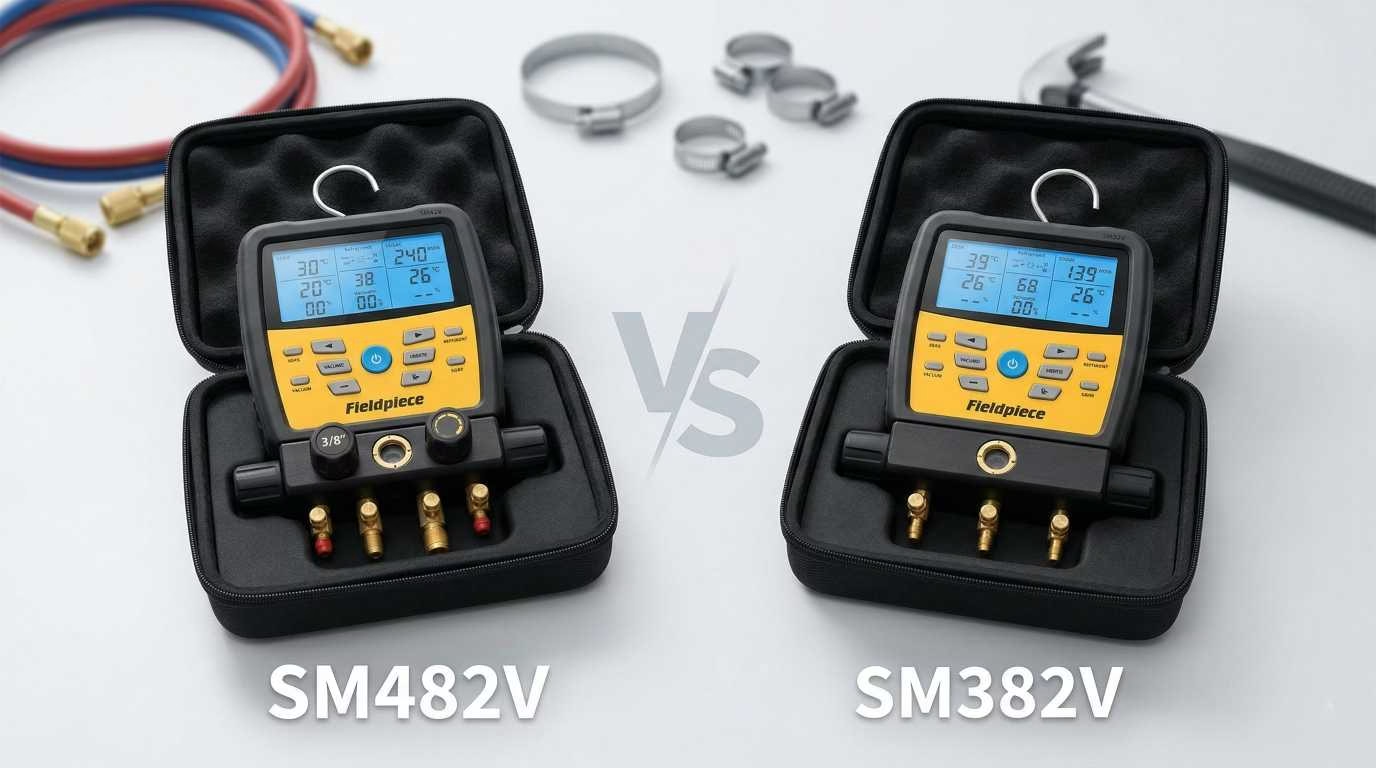
Hey there, fellow HVAC techs and shop owners. If you spend your days fixing air conditioners, heat pumps, and refrigeration units, you know a good manifold can make or break your day. The Fieldpiece SM482V vs SM382V stand out as top picks in the latest lineup. Both feel like command centers for your jobs. They handle pressure, temperature, and vacuum all in one tough package. Plus, they connect wirelessly to your phone and other tools.
But which one fits your truck and your workflow best? The SM482V brings four ports for speed on bigger jobs. The SM382V keeps things lighter with three ports. Today, we dive deep into this head-to-head. You will see clear differences, real user stories, and honest advice to help you decide. By the end, you will know exactly which one to grab. Let’s get started.

Fieldpiece SM482V
A wireless 4-port digital refrigerant manifold designed as an HVACR command center. It features a dedicated 3/8″ vacuum port for faster evacuations and A2L refrigerant compatibility.
- Ports: 3 × 1/4″ SAE + 1 × 3/8″ Vacuum
- Weight: 4.6 lbs (with batteries)
- Display: 5-inch LCD with backlight
- Wireless Range: 1,000 feet
- Vacuum Range: 50 to 9,999 microns
Pros
- 3/8″ dedicated vacuum port speeds evacuations.
- Durable construction (IP55 rating).
- Comprehensive wireless integration and data logging.
Cons
- Higher upfront cost.
- Heavier than 3-port models.
- Occasional initial vacuum-holding challenges due to hose off-gassing.
As an Amazon Associate, I earn from qualifying purchases

Fieldpiece SM382V
A wireless 3-port digital refrigerant manifold serving as a central hub for diagnostics. It offers A2L compatibility and integrated vacuum monitoring via the center port.
- Ports: 3 × 1/4″ SAE (Vacuum via center)
- Weight: 3.9 lbs (with batteries)
- Display: 5-inch LCD with backlight
- Wireless Range: 1,000 feet
- Vacuum Range: 50 to 9,999 microns
Pros
- Lighter weight improves portability.
- Durable construction (IP55 rating).
- Lower entry point than 4-port version.
Cons
- No dedicated 3/8″ vacuum port (slower evacuations).
- Higher cost relative to analog options.
- Occasional app pairing challenges on new units.
As an Amazon Associate, I earn from qualifying purchases
Why Compare These Two Models Right Now?
HVAC work keeps changing. New refrigerants come out all the time. You need tools that keep up without breaking the bank. Fieldpiece just updated its popular SMAN series with these V models. They added A2L compatibility for future-proofing. They made the units smaller and tougher too. Many techs wonder if the extra port on the SM482V justifies the higher price. Others love the lighter SM382V for everyday residential runs.
I hear this question a lot in shops and online groups. One tech might pull deep vacuums daily on commercial systems. Another sticks to quick residential swaps. Your choice affects how fast you finish jobs and how tired you feel at the end of the day. This guide breaks everything down simply. No fluff. Just straight talk so you can buy with confidence and get back to what you do best—fixing systems.
Both models share a ton of smart features. They give accurate readings. They log data for reports. They talk to your app from 1,000 feet away. Yet small differences add up on the job site. Let’s meet each one up close.
Getting to Know the Fieldpiece SM482V
Picture this. You roll up to a big commercial job. You need to evacuate fast, charge refrigerant, and check everything at once. The SM482V feels built for that. It has four ports total. Three standard quarter-inch ones for suction, liquid, and recovery. Plus a bigger three-eighths-inch port just for vacuum. That extra size pulls vacuum way quicker than older setups.
The screen lights up bright and clear. It shows five inches of easy-to-read numbers. You see pressures, temperatures, and vacuum levels all at once. You can even customize what shows up. No more squinting at tiny dials.
Inside, it handles over 70 refrigerants. New A2L types come built in already. You update through a simple USB-C cable if something new drops. It calculates superheat and subcooling automatically. That means you spot issues faster without extra math.
Wireless magic ties everything together. Connect pipe clamps, scales, or psychrometers. Readings pop right on the screen or your phone app. Walk away to grab parts while it logs data for hours. The unit runs on six AA batteries and lasts hundreds of hours if you turn off the backlight.
Fieldpiece made it tough. It shrugs off dust and water with an IP55 rating. Drop it? The screen and hook hold strong. Hang it anywhere with the reinforced steel loop. Techs love the new case too. It opens easy and folds back so you use the manifold right inside it.
Weight comes in around 4.6 pounds with clamps and batteries. It feels solid in your hand. Not too heavy for most, but you notice it after a long day climbing ladders. Many pros say the speed from that big vacuum port makes the extra ounces worth it.
Getting to Know the Fieldpiece SM382V
Now flip to the SM382V. Think of it as the nimble brother. It keeps three quarter-inch ports. No dedicated big vacuum port here. You still pull vacuum through the center port like always. It works great for most residential and light commercial jobs.
The display matches the bigger brother perfectly. Same five-inch bright screen. Same custom views. Same easy calculations for heat levels and system performance. It supports all the same 70-plus refrigerants with A2L readiness. Updates happen the same quick way via USB-C.
Wireless range hits 1,000 feet too. Hook up your other Job Link tools. Watch live data without wires getting in the way. Data logging stores up to nine jobs or 168 hours straight. Export everything to a spreadsheet later for your boss or customers.
Battery life stays impressive at around 405 hours. The build feels just as rugged. IP55 protection keeps rain out. The sight glass stays sealed tight. You get the same strong hook and rubberized grip that laughs at rough truck rides.
Here is the big win: weight drops to about 3.9 pounds with everything attached. That lighter feel matters when you carry tools all day. Many techs say it slips into tight attic spaces easier. The case matches perfectly too—easy open and ready to use on site.
Vacuum monitoring works the same with clear alarms. High and low alerts keep you from guessing. Nitrogen testing runs smooth with temperature compensation built in. Overall, this model delivers full power in a more portable package.
The Real Differences That Matter
Both units look similar at first glance. Same screen size. Same wireless smarts. Same battery setup. Yet two key areas separate them. Let’s compare so you see what you actually gain or give up.
Ports and Vacuum Speed
The SM482V shines here with its extra three-eighths-inch vacuum port. Connect your pump directly and watch it pull down fast. Techs who do full system evacuations love this. You save minutes per job. Over a week, those minutes turn into hours of extra time for more calls.
The SM382V sticks with three quarter-inch ports. You still evacuate fine through the center one. For quick residential fixes or simple recharges, it handles everything you need. No complaints from users who rarely pull deep vacuums. If speed on big evacuations matters to you, the four-port wins.
Weight and Everyday Carry
Grab the SM482V and you feel the solid build at 4.6 pounds. Some techs call it a tank in the best way. Others notice the weight after eight hours on roofs. The SM382V clocks in lighter at 3.9 pounds. That half-pound difference adds up when you climb, crawl, and move between trucks.
Fieldpiece made both smaller than older models. You can even swap the clamp ears for flat caps to slim them down more. The SM382V feels handier in tight spots like attics or under mobile homes. If your days mix residential and light commercial, the lighter option keeps you fresh longer.
Price Comparison
Current street prices put the SM482V around $820 to $870. The SM382V lands lower at $620 to $670. That $200 gap feels real when you buy tools. Many shops budget carefully. The cheaper SM382V delivers almost everything the bigger one does. You save money for hoses, scales, or extra clamps.
Yet some pros say the four-port pays for itself fast. Faster evacuations mean quicker job turnover. More jobs per day. Higher earnings. If you run commercial work often, the extra cost makes sense. Residential techs usually pick the SM382V and pocket the savings.
Other Small Touches
Both log data the same way. Both connect wirelessly perfectly. Durability matches with IP55 ratings and tough cases. The SM482V adds that vacuum port block for faster pulls. The SM382V feels more compact out of the box. Valves on the four-port sometimes feel a bit stiffer at first, according to users, but they break in fine.
Features You Get with Both Models
These tools go way beyond old-school gauges. You get a full diagnostic hub. Pressures read super accurate. Temperatures come from three clamp jacks. You see saturation temps automatically. Calculations happen live so you know superheat and subcooling without pulling out your phone.
Vacuum gauge sits right inside. It shows microns clearly with graphs and alarms. Pull down to 50 microns and it celebrates with you. Nitrogen pressure tests run smart too. Temperature compensation adjusts readings so you never guess.
Wireless changes the game. Pair pipe clamps and your scale. Watch target evaporator temps live. Walk 1,000 feet away and still see data. The app turns your phone into a second screen. Log jobs and email reports in minutes. No more handwritten notes that get lost.
Durability impresses everyone. Rain? No problem. The sealed design keeps working. Drop it on concrete? Reinforced parts hold up. Fieldpiece even made valves and seats replaceable yourself. No sending it to a shop for simple fixes.
Battery life stretches forever. Six AA cells keep going hundreds of hours. Turn off wireless when you don’t need it and stretch that even more. The display stays visible in bright sun or dark basements.
Over 70 refrigerants sit ready. Pick your gas fast. A2L types like R32 and R454B work safely with proper grounding. Future updates take seconds through USB-C. These features make both models feel modern and ready for whatever comes next.
How These Manifolds Work in Real Life
Imagine a hot summer day. You arrive at a home with a low charge. Hook up the SM482V or SM382V. Clamps snap on lines quick. Pressures show instantly. The app tells you exact target charge amounts. You add refrigerant while watching live data. No guesswork. The system runs perfect when you finish.
On a commercial rooftop, the four-port shines. You connect recovery, vacuum, and charge lines at once. That big port empties the system fast. Meanwhile, wireless psychrometers feed air readings straight to the screen. You finish the job hours ahead of schedule.
Users say the data logging helps with tricky warranty claims. Pull a report showing every reading over time. Customers see proof you did the work right. Techs who hate apps still love these units because you can use them standalone. The big screen gives everything you need without your phone.
What Real Techs Say About These Models
HVAC forums buzz with honest talk. Most feedback comes from the r/HVAC community. One tech bought the SM382V new and hit a small glitch pairing with the app. He fixed it with a quick reset. Now he calls it rock solid. Others mention leaving the unit in rain overnight during pressure tests. It still works perfect the next day.
Several guys compared the older SM480V to the new SM482V. They say the V models feel more compact and serviceable. The extra vacuum port gets big thumbs up for speed. One installer does mostly condensers and picked the lighter SM382V. He says the difference in ports doesn’t matter for his quick swaps.
In probes versus manifold talks, many stick with these SMAN units. They like not depending on the app every time. The built-in screen keeps you independent. Durability stories pop up often. Techs brag about years of rough use with no failures.
Some note the four-port valves feel tighter at first. A little break-in time fixes that. Vacuum stabilization takes a minute on brand-new units, but hoses settle fast. Overall, sentiment stays positive. Techs call these “buy once, cry once” tools. They last and make work easier.
Limited long-term reviews exist since these V models are fairly new. Early users love the A2L support and lighter builds. No major sensor complaints surfaced. Warranty covers screen issues quickly if they pop up.
Who Should Grab the SM482V?
Commercial techs and those who pull deep vacuums daily will love the SM482V. The extra port cuts evacuation time dramatically. You finish more jobs and keep customers happy. If you run larger systems with multiple lines, four ports give flexibility.
Shops that handle warranty work benefit from detailed logging. The speed and accuracy pay off fast. If budget allows and you want the fastest tool available, pick this one. You get premium performance that matches premium jobs.
Who Should Choose the SM382V Instead?
Residential specialists and techs who climb ladders all day should lean toward the SM382V. The lighter weight saves energy. You stay sharp through long routes. Most home systems need only three ports anyway.
Newer techs or those watching costs will appreciate the lower price. You still get every smart feature—wireless, logging, accurate calculations. If you rarely need super-fast evacuations, this model delivers everything without extra bulk.
Many mixed-use pros start with the SM382V. They upgrade later if commercial work grows. It serves as a perfect first digital manifold.
Pros and Cons: Honest Breakdown
Let’s lay it out plain.
The SM482V pros include lightning-fast vacuum pulls, full four-port flexibility, and top-tier performance on big jobs. Cons? Higher cost and a bit more weight. Some feel the valves need breaking in.
The SM382V pros shine with lighter carry, lower price, and all the core smarts you need for daily work. Cons? Slower evacuations without the big port and slightly less flexibility on complex systems.
Both share huge pros: wireless freedom, tough build, easy updates, and accurate readings that save time. Neither has major cons like poor accuracy or short battery life. Users report reliable performance across seasons.
Tips to Get the Most from Either Model
Start simple. Charge batteries fully before first use. Pair tools once and they remember. Update firmware right away for newest refrigerants. Use the case every time—it protects and organizes.
On jobs, customize the screen to show what you check most. Turn wireless off for standalone mode to save power. Log every job for your records. Export data weekly to build a strong service history.
Pair with Fieldpiece clamps and scales for full power. The ecosystem works seamless. Clean ports after each use. A dab of oil keeps seals happy. These small habits make your manifold last years.
Common Questions Techs Ask
People wonder if they need the app. Nope. The screen gives full control. Wireless just adds convenience. Another question: Will it work with old refrigerants? Yes—all the classics plus new A2Ls.
Battery questions come up often. Six AAs last forever in real use. Many techs carry spares in the case. Vacuum accuracy worries some. Both models hit the mark with clear alarms.
Price shoppers ask about deals. Watch distributors for bundles with hoses. The savings add up.
Thinking About Your Future Jobs
Refrigerant rules keep tightening. A2L compatibility future-proofs both models. Data logging helps with new reporting requirements. Wireless range lets you monitor from the truck on big rooftops. These tools grow with your business.
Making Your Final Choice
Ask yourself three questions. How often do I pull full vacuums? How much walking and climbing do I do daily? What does my budget allow right now?
If speed and versatility top your list, go SM482V. You invest in performance that pays daily. If portability and value drive you, choose SM382V. You get pro features without extra weight or cost.
Many techs own both eventually. Start with the one that matches your current work. Add the other as needs grow. Either way, you upgrade from old analog gauges to a modern command center.
Wrapping It Up: Time to Upgrade Your Toolbox
The Fieldpiece SM482V and SM382V both deliver serious value. They turn complicated diagnostics into simple steps. You work faster, smarter, and with more confidence. Customers notice the professional touch. Your days feel less stressful.
Pick the SM482V for power and speed on demanding jobs. Grab the SM382V for everyday ease and savings. Whichever you choose, you join thousands of happy techs who swear by Fieldpiece.
Ready to make the switch? Check current pricing and grab the one that fits your truck today. Your back, your customers, and your schedule will thank you. These manifolds do not just measure—they help you finish strong every single time.