Dash cams used to be simple. Plug in, press record, hope for the best.
Not anymore.
The best dash cams are basically rolling security systems. They capture clean plates, track GPS data, protect your car while parked, and—if you pick the right model—let you check on your vehicle remotely.
That’s exactly why comparisons matter. Two dash cams can both claim “4K,” yet deliver wildly different real-world results depending on sensors, bitrates, processing, storage, and how the system handles motion and night driving.
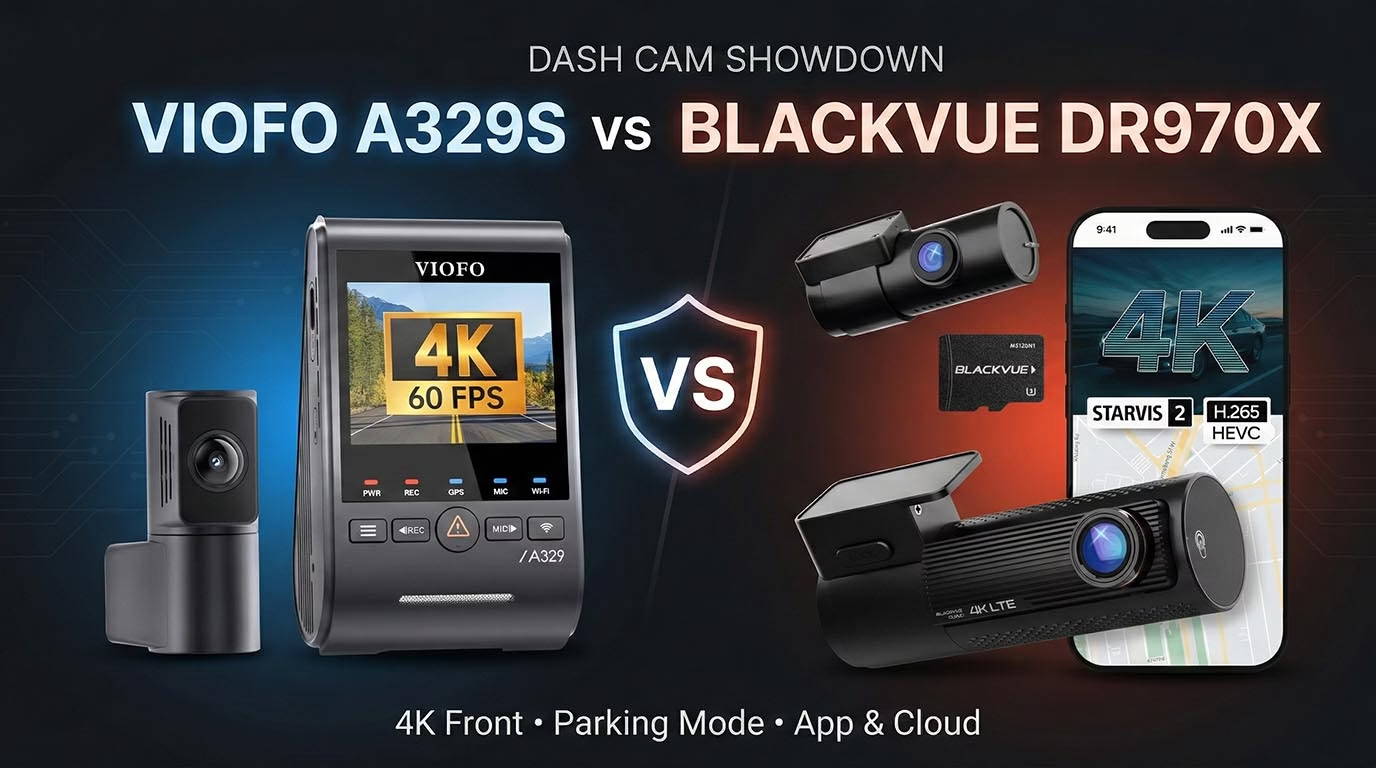
Today’s matchup is a true premium face-off | Viofo A329S vs BlackVue DR970X |
- Viofo A329S — a high-end, multi-channel powerhouse with Sony STARVIS 2 sensors, Wi‑Fi 6, and unusually flexible storage options.
- BlackVue DR970X — a premium, cloud-first system built for discreet installation, remote monitoring, and an ecosystem that feels like a product category of its own.
If you’re a daily commuter, rideshare driver, delivery worker, or fleet owner, this guide is built for you.
⚡ QUICK TOP PICKS⚡
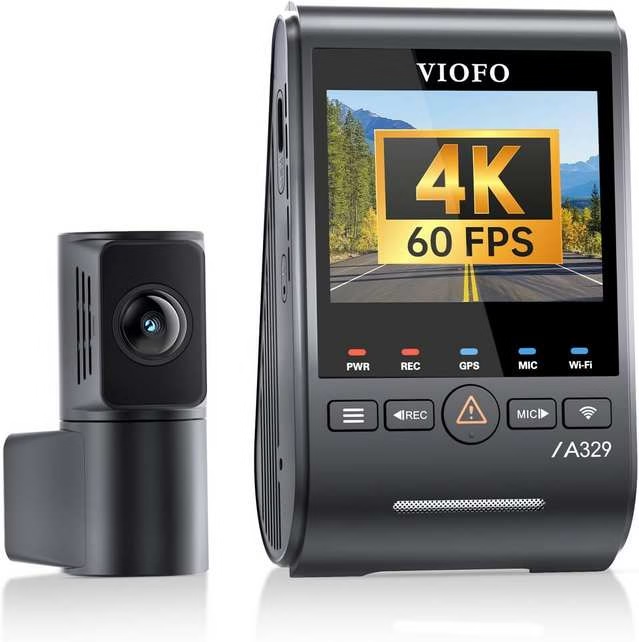
- Multiple configurations: 2CH, 3CH, and add-on options
- Strong sensor lineup: STARVIS 2 front and STARVIS 2 rear/cabin
- 2CH mode supports 4K 60fps front + 2K rear
- Built-in 2.4-inch LCD for easy operation
- Wi‑Fi 6 and fast transfers (up to 30MB/s)
- USB‑C direct transfer support (up to 55MB/s)
- Storage flexibility: microSD up to 512GB + external SSD up to 4TB
- Multiple parking modes: low-power impact, hybrid, time-lapse
- Slim coaxial cable for cleaner installs
- CPL filter included for the front (rear optional)
- Premium price frequently mentioned as a drawback
- Enabling HDR reduces front to 30fps in 2CH
- Reports of motion blur at higher speeds in some scenarios
- Some users mention under-bright night footage or minor color skew
- Firmware management can be more complex (variants/bootloader files)
- Full parking functionality requires an optional hardwire kit
- Isolated reports of SSD recognition issues or freezing
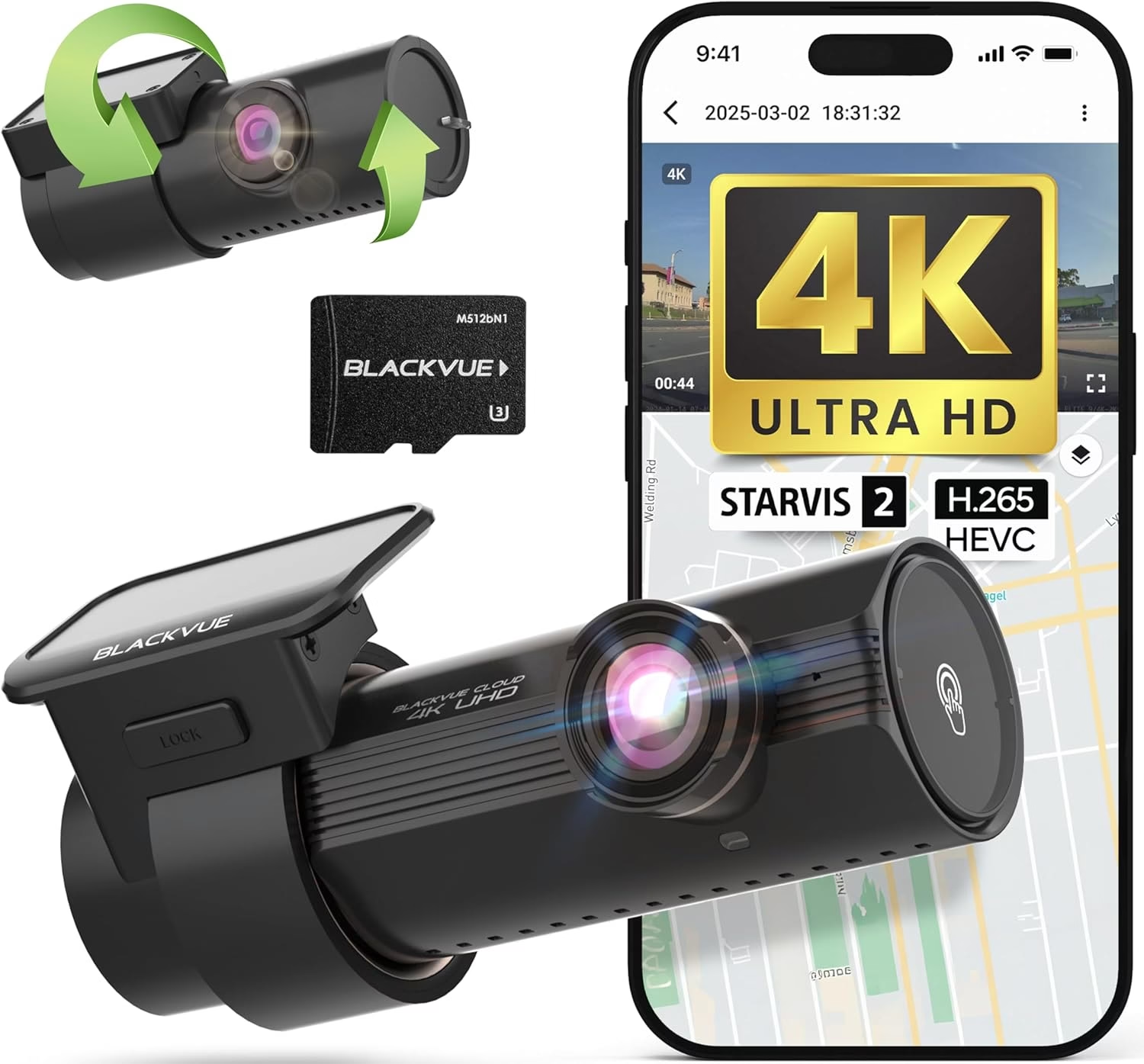
- Premium cloud ecosystem: remote live view, notifications, tracking, uploads/downloads
- Optional LTE support for real remote monitoring
- Discreet install options, including Box models with hidden main unit
- 4K front with high bitrate options (up to 60 Mbps in H.265 Extreme)
- Strong ecosystem integration via app and PC/Mac viewer
- Parking mode features with buffered recording and app‑configurable ignore zones
- High temperature design elements, including cut‑off range (75–80°C)
- Long‑term recording management designed to reduce frequent formatting
- Premium pricing is a common concern
- Some users report grainy low‑light footage (especially rear)
- Rear camera is 1080p, and some owners describe it as weaker in detail
- No built‑in screen; you live in the app
- Some reports of app slowness or connectivity frustration
- Full parking functionality commonly requires a separate hardwire kit
- Isolated system quirks and audio noise complaints appear in owner feedback
Images from reviewfriendly.com — specifications verified. Performance depends on setup.
Section 1: Brand Overview & Reputation
1.1 Viofo — What the Brand Feels Like in Real Life
Viofo’s reputation is built around one thing: giving drivers serious recording capability without turning the dash cam into a “subscription lifestyle.”
The A329S reflects that mindset. It’s designed as a premium multi-channel system that can be configured in multiple ways—front + rear, front + rear + interior, and even variants that prioritize cabin coverage with IR. It’s the kind of product line that tries to win on spec strength, sensor choice, and storage options, then backs it up with features like Wi‑Fi 6, USB‑C transfer, and a display built into the unit.
Typical Viofo buyers want evidence. Clean files. Plate capture. Parking protection. And control.
They’re also okay buying an optional hardwire kit if the parking features are worth it.
1.2 BlackVue — Premium Positioning With an Ecosystem
BlackVue plays a different game.
The DR970X lineup is built around discreet installation, cloud connectivity, and remote monitoring. That’s why you see options like LTE variants, Box models with a hidden main unit, and strong app-driven control.
In other words: BlackVue doesn’t just sell a camera. It sells a system.
If you’re the kind of driver who wants instant event notifications, remote live view, and vehicle tracking—the DR970X is designed for that exact lifestyle. It’s also popular in fleets and higher-security setups because of the tamper-resistant Box designs and the ecosystem approach.
1.3 Brand Comparison Summary (What Actually Matters)
Here’s the simplest way to think about the brands:
- Viofo is about capture power + flexibility. You’re buying recording performance and options.
- BlackVue is about remote access + ecosystem. You’re buying a connected experience and discreet hardware choices.
Both are premium. But they’re premium in different directions.
Section 3: Video Quality Comparison
Video quality isn’t just “4K.” It’s the whole stack: sensor, bitrate, codec, processing, and how it handles real motion.
Let’s break it down the way you’ll experience it—day, night, and the messy in-between.
3.1 Daytime Footage
Viofo A329S (front channel options):
- In 2-channel mode, it can record front 4K (3840×2160) at 60fps with rear 2K (2560×1440) at 30fps.
- In 3-channel mode, it records front 4K at 30fps, rear 2K at 30fps, and cabin 2K at 30fps.
The front sensor is a Sony STARVIS 2 IMX678 (1/1.8″, 8MP). That’s the kind of sensor choice that signals intent. And in reported experiences, users and testers consistently note exceptional daytime clarity and strong plate capture.
BlackVue DR970X:
- Front: 4K (3840×2160) at 30fps
- Rear/Interior: Full HD (1920×1080) at 30fps
The DR970X uses Sony STARVIS sensors with the front listed as Sony STARVIS 2 CMOS (~8.3–8.4 megapixels). It also supports H.265 (HEVC) and H.264, with bitrates reaching Front 60 Mbps (H.265 only) and Rear 10 Mbps on the Extreme setting.
In daytime, BlackVue owners often praise the sharpness and detail, especially compared to older cameras. Plate capture is frequently highlighted as improved, helped by bitrate and processing.
The real daylight difference:
- If you want smoother motion (like highway passes, fast merges, quick plate grabs), the A329S 4K 60fps (in 2CH) can be a big deal.
- If you want high bitrate 4K at 30fps with efficient codec support and a camera tuned for an app/cloud ecosystem, DR970X holds its own.
3.2 Nighttime Footage
Night driving is where dash cams earn their keep. And it’s also where compromises become obvious fast.
Viofo A329S supports HDR/WDR on all channels. Reported feedback commonly points to strong night clarity and plate capture—yet not without nuance. Some users say night plates are excellent. Others say you may need to be closer, especially when vehicles are moving fast. Some reports mention footage looking under-bright in certain conditions or showing minor color skew (like a slight green tint).
Also important: motion is motion. Several user observations mention motion blur at higher speeds, occasionally making distant or oncoming plates less legible even when overall footage looks sharp.
BlackVue DR970X is often praised for nighttime clarity and reduced motion blur compared to older generations. But the criticism pattern is consistent too: some owners report grainy footage in low light, and the rear camera is sometimes described as noticeably weaker because it’s 1080p.
So night performance is a tale of two truths:
- Viofo tends to win on raw sensor strength across channels (especially when you’re comparing 2K rear vs 1080p rear).
- BlackVue can feel more “polished” in processing and system stability, but grain and rear detail can be sticking points for some owners.
3.3 Comparison Tests / Real-World Scenarios (Urban + Highway)
Let’s talk about how this plays out where you actually drive.
Urban driving has constant stop-start motion, headlight glare, and reflective signs.
- Viofo’s HDR/WDR support across channels and reports of strong plate capture can be a major advantage.
- BlackVue’s processing and bitrate can deliver strong detail, but if you’re sensitive to grain, you may notice it more at night.
Highway driving is all about motion handling.
- The A329S 4K 60fps (2CH mode) is the standout spec here. More frames can mean smoother capture of fast-moving moments.
- But Viofo user feedback also flags that motion blur can still appear at higher speeds, which is a reminder: fps helps, but it’s not magic.
- BlackVue is often praised for reduced motion blur compared to older models, but the rear camera’s 1080p limitation can show up when you need detail behind you.
Bottom line on video:
If you want the system that’s built to push front capture to the edge, plus stronger rear resolution, the A329S looks like the more aggressive “record-first” option. If you want a premium 4K front cam paired with a cloud-ready system and strong bitrate options, DR970X stays in the fight.
Section 4: Hardware & Build Quality
4.1 Design & Mounting
The two brands take opposite design philosophies.
BlackVue DR970X is built for a discreet install. The standard front unit is compact, there’s no built-in screen, and control happens through the app or desktop viewer. Box models go further: the main unit is hidden, with small cameras mounted visibly—great for tamper resistance and stealth.
Viofo A329S includes a 2.4-inch high-resolution LCD. That changes the whole day-to-day experience. You can check angles, adjust settings, and verify recording without pulling out your phone.
Cable routing matters too.
- Viofo uses an ultra-slim 2.8mm coaxial cable for the rear (standard length 6m, with longer options available). That’s a practical win for clean installs.
- BlackVue’s ecosystem includes hardwire kits and battery packs for extended parking use, and its platform is built around “install and forget.”
4.2 Materials & Durability
Both are designed for heat and real-world use, and both rely on supercapacitors rather than internal batteries.
- Viofo A329S: supercapacitor, operating temperature –20°C to 65°C
- BlackVue DR970X: supercapacitor backup, operating temperature –20°C to 70°C, plus a high-temperature cut-off (75–80°C)
In plain terms: both are built to survive real summers.
4.3 Screen & Interface
This one is simple.
If you want a built-in screen and the convenience that comes with it, A329S is the obvious pick.
If you want a camera that stays out of sight and you’re happy running everything through an app, DR970X is designed exactly for that.
Viofo A329S vs BlackVue DR970X: Features Deep Dive
This is where the cameras stop being “recorders” and start being systems.
5.1 GPS & Speed Tracking
Viofo A329S includes built-in quad-mode GPS (GPS, BeiDou, Galileo, GLONASS) with speed and location data.
BlackVue DR970X includes GNSS (GPS/GLONASS), built-in on standard models (and external on Box models).
Both get you what most drivers want: a reliable speed/location layer on your footage.
5.2 Wi‑Fi & App Connectivity
Viofo A329S comes out swinging here:
- Wi‑Fi 6 (2.4/5GHz) with reported download speeds up to 30MB/s
- USB Type‑C (USB 3.0 compatible) for up to 55MB/s direct transfer
- Bluetooth support for an optional remote
This is the “I want my clips fast” setup.
BlackVue DR970X:
- Dual-band Wi‑Fi (802.11 a/b/g/n/ac)
- Bluetooth (V2.1+EDR/4.2)
- App and PC/Mac viewer control
- And, crucially, BlackVue Cloud support
BlackVue’s angle isn’t just transfer speed. It’s the experience of remote access, alerts, and ecosystem convenience.
5.3 Parking Mode Options
Parking mode is where premium dash cams justify themselves.
Viofo A329S supports multiple parking modes, including:
- Low-power impact detection (reported draw around 32–35mA, with ~2-second wakeup)
- Hybrid modes (time-lapse/low-bitrate + impact)
- Auto event detection
- Time-lapse options (1–10fps)
It also supports:
- Geo-fencing for automatic shutdown in safe zones
- Battery protection via voltage/time cutoffs (with optional HK4/HK6 hardwire kit)
BlackVue DR970X parking modes include:
- Impact detection
- Motion detection (camera-based)
- Buffered recording
- Automatic switch via hardwire (ACC+)
- Customizable voltage cut-off and timer
- Ignore zones via app
Both can do serious parking protection. The feel is different:
- Viofo emphasizes mode variety and power management tricks.
- BlackVue emphasizes a smoother app-driven experience, especially when paired with cloud connectivity.
Important shared point: for full parking functionality, both commonly require a separate hardwire setup.
5.4 Cloud & Smart Alerts
This is BlackVue territory.
BlackVue Cloud offers:
- Remote live view
- Event notifications
- Vehicle tracking
- Video upload/download (requires LTE or a Wi‑Fi hotspot)
The DR970X also supports optional LTE (4G via nano-SIM or an external module), which is a major differentiator if you want true remote monitoring without relying on a nearby hotspot.
Viofo A329S focuses more on local control, recording modes, and fast transfers. It’s not positioned as a cloud-first platform in the way BlackVue is.
5.5 Storage & Memory
This section alone can decide the purchase.
Viofo A329S supports:
- Up to 512GB microSD
- Plus external SSD/PSSD up to 4TB via optional Type‑C cable (with recommended models listed: Western Digital My Passport, SanDisk Extreme, Samsung T9)
That’s huge if you drive a lot, run multi-channel, or simply hate managing storage.
BlackVue DR970X supports:
- microSD up to 512GB
- with an Adaptive Format Free File Management System designed to support long-term recording without frequent formatting
So the difference is simple:
- Viofo is the storage flexibility king (microSD + external SSD).
- BlackVue is microSD-focused but tuned for long-term stability.
Section 6: Installation & User Experience
6.1 Ease of Installation
Both can be DIY-installed. Both can also benefit from professional installation—especially if you want clean cable routing and proper parking mode wiring.
Viofo’s slim coaxial cable can make routing feel cleaner, especially in tight trims.
BlackVue’s discreet design (and Box models) can make installs feel more “factory” when done right.
6.2 Daily Use & Interface
Here’s the real difference:
- With Viofo A329S, the built-in LCD makes daily checks easy. You can confirm angles, review clips quickly, and tweak settings without relying on your phone every time.
- With BlackVue DR970X, everything revolves around the app and viewer. It feels modern and streamlined when it works smoothly—especially if you’re leaning into cloud features.
6.3 Reliability & Firmware Updates
Both brands get firmware updates, and both have real-world quirks mentioned by users.
Viofo A329S: Some users mention storage recognition issues (especially SSD) or occasional freezing in isolated cases. Firmware management is also described as more complex due to multiple variants and bootloader files.
BlackVue DR970X: Users often praise frequent firmware updates that address bugs and improve functionality. But some also report app slowness or connectivity issues.
In plain terms:
Viofo can feel like a “power user” product. BlackVue can feel like a “system” product. Pick the personality you’ll enjoy living with.
Section 7: Price & Value (Without Guessing Numbers)
Both of these models sit in the premium category. And yes—price is a frequent talking point in user feedback for both.
Viofo A329S is often described as expensive, but many owners call it worth it when they want sharp clarity, strong parking features, and high storage flexibility.
BlackVue DR970X is also widely seen as premium-priced, and the value argument usually centers on cloud capabilities, discreet installation, and ecosystem strength rather than raw rear resolution.
7.1 Long-Term Value
Long-term value depends on your use case:
- If you’re recording long hours, multi-channel, and want to keep more footage before overwriting, Viofo’s SSD support can be a major value multiplier.
- If you’re protecting a vehicle that sits parked often, or you want remote alerts and tracking, BlackVue’s cloud ecosystem can justify its premium feel.
7.2 Who Each Is Best For
- Viofo A329S: Evidence-focused drivers, rideshare workers who want interior options, people who want storage flexibility, and anyone who values 4K 60fps (in 2CH) and a built-in screen.
- BlackVue DR970X: Drivers who want remote monitoring, cloud alerts, discreet installs, fleet/security users, and those who prioritize ecosystem convenience.
Section 8: Pros and Cons Summary
8.1 Viofo A329S — Pros & Cons
Pros
- Multiple configurations: 2CH, 3CH, and add-on options
- Strong sensor lineup: STARVIS 2 front and STARVIS 2 rear/cabin sensors
- 2CH mode supports 4K 60fps front + 2K rear
- Built-in 2.4-inch LCD
- Wi‑Fi 6 and fast transfers
- USB‑C direct transfer support
- Storage flexibility: microSD up to 512GB + external SSD up to 4TB
- Multiple parking modes, including low-power impact detection and hybrid modes
- Slim coaxial cable for cleaner installs
- CPL filter included for the front (rear optional)
Cons
- Premium price frequently mentioned as a drawback
- Enabling HDR can reduce the front to 30fps in 2CH
- Reports of motion blur at higher speeds in some scenarios
- Some users mention under-bright night footage or minor color skew
- Firmware management can be more complex (variants/bootloader files)
- Full parking functionality requires an optional hardwire kit
- Isolated reports of SSD recognition issues or freezing
8.2 BlackVue DR970X — Pros & Cons
Pros
- Premium cloud ecosystem: remote live view, notifications, tracking, uploads/downloads
- Optional LTE support for real remote monitoring
- Discreet install options, including Box models with hidden main unit
- 4K front with high bitrate options (up to 60 Mbps in H.265 Extreme)
- Strong ecosystem integration via app and viewer
- Parking mode features with buffered recording and app-configurable ignore zones
- High temperature design elements, including cut-off range
- Long-term recording management designed to reduce frequent formatting needs
Cons
- Premium pricing is a common concern
- Some users report grainy low-light footage
- Rear camera is 1080p, and some owners describe it as weaker in detail
- No built-in screen; you live in the app
- Some reports of app slowness or connectivity frustration
- Full parking functionality commonly requires a separate hardwire kit
- Isolated system quirks and audio noise complaints appear in owner feedback
Section 9: Real-World Use Cases
9.1 Rideshare & Delivery Drivers
If you drive for work, you need three things: clear evidence, reliable parking protection, and a setup you don’t have to babysit.
Viofo A329S shines if you want:
- A 3-channel option with a 2K cabin camera featuring a 210° fisheye and IR LEDs
- Storage flexibility so you can record longer without constant overwrites
- Quick clip access via Wi‑Fi 6 or USB‑C transfer
BlackVue DR970X shines if you want:
- Cloud alerts when your car is hit or bothered
- Remote live view (especially with LTE)
- A discreet setup that doesn’t draw attention
9.2 Personal / Family Cars
For family vehicles, parking mode and reliability often matter more than “tech excitement.”
If you park outside often, BlackVue’s cloud notifications can be extremely persuasive—because knowing something happened right away changes everything.
If you road-trip, commute long distances, or want stronger rear detail than 1080p, Viofo’s 2K rear option can be a strong practical advantage.
9.3 Fleet & Commercial Applications
Fleets care about:
- Reliability
- Discreet installs
- Monitoring and accountability
That’s where BlackVue DR970X—especially with cloud and LTE options—fits naturally. Remote access and notifications can reduce downtime and improve incident response.
But fleets that prioritize footage storage and want to retain longer recording histories may prefer Viofo’s storage flexibility, especially if they’re managing footage locally.
Section 10: Side-by-Side Feature Comparison
Core Recording + Hardware
Front Camera Resolution / FPS
- Viofo A329S: 4K @60fps (2CH) or 4K @30fps (3CH)
- BlackVue DR970X: 4K @30fps
Rear Camera Resolution / FPS
- Viofo A329S: 2K @30fps
- BlackVue DR970X: 1080p @30fps
Interior Camera Option
- Viofo A329S: 2K fisheye cabin cam, 210° FOV, IR LEDs (in 3CH)
- BlackVue DR970X: IR cabin option available, 180° diagonal (horizontal 150°, vertical 93°)
Sensors
- Viofo A329S: Front STARVIS 2 IMX678 (1/1.8″, 8MP); Rear/Cabin STARVIS 2 IMX675 (1/2.8″, 5MP)
- BlackVue DR970X: Front STARVIS 2 CMOS (~8.3–8.4MP); Rear/Cabin STARVIS CMOS (~2.1MP)
Field of View (Front / Rear)
- Viofo A329S: Front 140°; Rear 160°
- BlackVue DR970X: Front 146° diagonal (125° horizontal); Rear 131° diagonal (107° horizontal)
Display
- Viofo A329S: 2.4-inch LCD
- BlackVue DR970X: No screen (app/viewer control)
Connectivity + Storage
Wi‑Fi
- Viofo A329S: Wi‑Fi 6 (2.4/5GHz)
- BlackVue DR970X: Dual-band Wi‑Fi (802.11 a/b/g/n/ac)
USB / Transfer
- Viofo A329S: USB‑C (USB 3.0 compatible) up to 55MB/s direct transfer
- BlackVue DR970X: App + PC/Mac viewer workflow (no built-in screen)
Cloud
- Viofo A329S: Not positioned as cloud-first in the provided info
- BlackVue DR970X: BlackVue Cloud features (remote live view, notifications, tracking, uploads/downloads)
LTE
- Viofo A329S: Not listed
- BlackVue DR970X: Optional LTE (nano-SIM or external module)
Storage
- Viofo A329S: microSD up to 512GB + external SSD/PSSD up to 4TB (optional cable)
- BlackVue DR970X: microSD up to 512GB with long-term file management system
Power + Temperature
Power Source
- Both: Supercapacitor (no internal battery)
Operating Temperature
- Viofo A329S: –20°C to 65°C
- BlackVue DR970X: –20°C to 70°C + high-temp cut-off (75–80°C)
Section 11: Final Verdict (Short and Decisive)
Choose Viofo A329S if you want the most aggressive recording-focused setup:
- 4K 60fps front (in 2CH)
- 2K rear
- STARVIS 2 sensors across channels
- A built-in screen
- Wi‑Fi 6 + USB‑C speed
- And storage options that can scale all the way to external SSD
Choose BlackVue DR970X if you want a premium connected system that feels like a security product, not just a camera:
- BlackVue Cloud remote live view and notifications
- Optional LTE for true remote monitoring
- Discreet installation options, including Box designs
- Strong app ecosystem and premium “set it and forget it” vibe
If you’re purely optimizing for capture and flexibility, Viofo is the sharper tool.
If you’re optimizing for remote access and connected monitoring, BlackVue is the stronger system.
Section 12: FAQs
Is the BlackVue DR970X worth paying more for?
It can be—if you’ll actually use what you’re paying for. The DR970X makes the most sense when cloud features and remote monitoring are central to your needs. If you won’t use remote alerts, live view, or tracking, the value equation changes fast.
Can the Viofo A329S record in 4K continuously?
Yes. It records continuously with loop recording, and in 2CH configuration it supports 4K 60fps on the front with 2K on the rear. Storage size and your chosen recording settings will determine how long clips are retained before overwriting.
Which dash cam has better parking mode?
Both are strong, but they’re strong in different ways. Viofo offers multiple parking modes including low-power impact detection and hybrid setups. BlackVue offers buffered parking recording, motion/impact detection, and app-driven ignore zones—plus cloud-based alerts if your setup supports it. If remote alerts matter, BlackVue pulls ahead. If mode variety and power draw strategies matter, Viofo is extremely compelling.
What accessories should I plan for?
For both systems, plan on a hardwire kit if you want full parking mode functionality. Viofo also supports external SSD storage via an optional Type‑C cable if you want that expanded capacity. BlackVue users who want full remote features often pair the camera with a hotspot or LTE capability where applicable.
Which one is better for rideshare drivers?
If cabin recording is a priority, Viofo’s 3-channel option with a 2K fisheye cabin camera and IR LEDs is a strong fit. If remote monitoring and cloud alerts matter more—especially if the vehicle is parked outside often—BlackVue can be the better security-style solution.
📚 Related Reads & Guides
Conclusion
These are both premium dash cams. But they’re premium in different languages.
Viofo A329S speaks the language of footage. More frames. Strong sensors. Flexible storage. Lots of modes. Fast transfers. A screen that keeps you in control.
BlackVue DR970X speaks the language of systems. Cloud access. Remote alerts. Discreet installs. Optional LTE. An ecosystem designed to feel seamless when your goal is “monitor and respond,” not just “record and review.”
So don’t pick based on the badge.
Pick based on your life.
If you want the strongest recording toolkit with serious storage freedom, go Viofo A329S.
If you want a connected security system for your car with cloud-first strengths, go BlackVue DR970X.
Either way, you’ll end up with a setup that’s miles beyond basic “4K dash cam” marketing—and a lot closer to actual peace of mind.