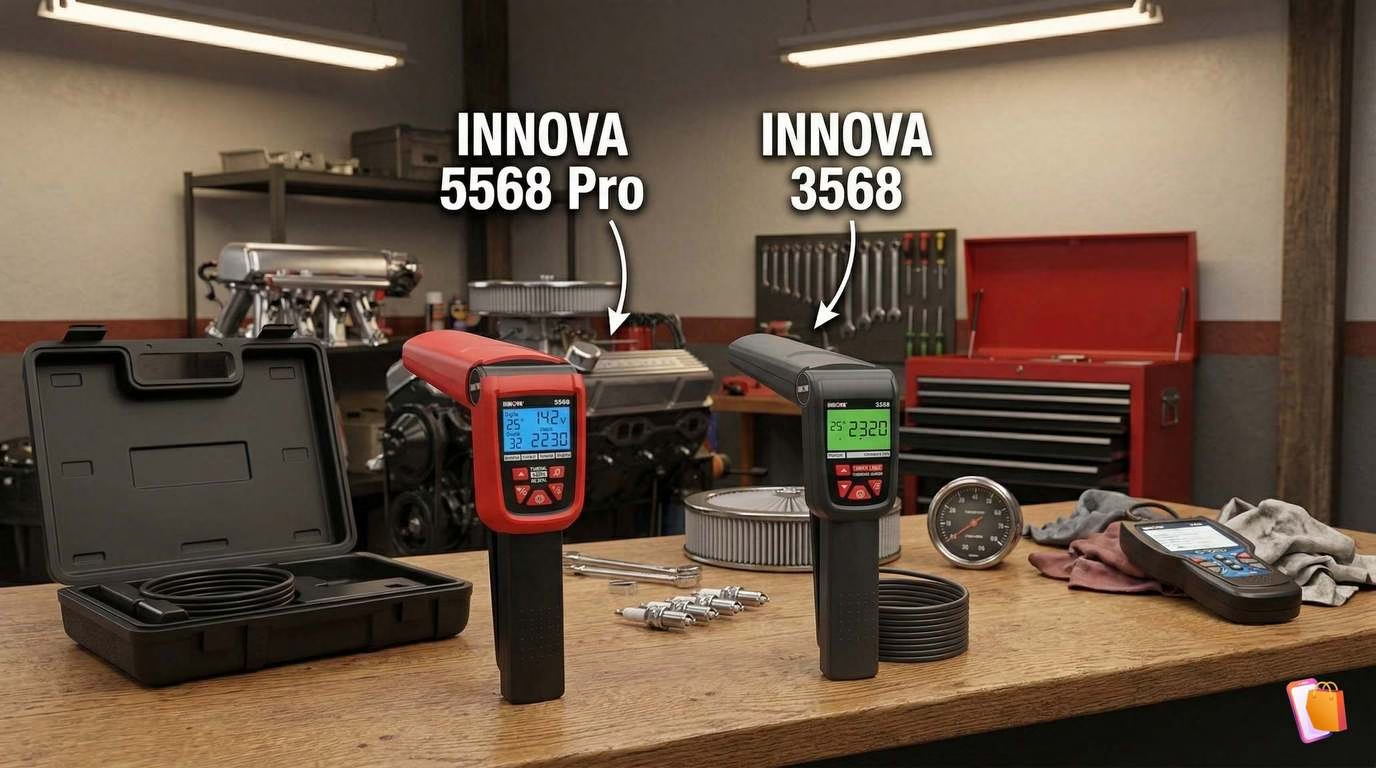
Innova 5568 vs 3568, Both tools come from a brand mechanics trust. Both give you digital precision. Yet they serve slightly different needs.
In this big guide, I’m breaking down the Innova 5568 vs 3568 in plain English. I’ll share real specs, honest pros and cons, what actual users say on forums, and clear advice on which one you should buy.
⚡ Timing Light Showdown
Innova 5568 Pro vs 3568 – Digital Precision for Any Garage

- Tachometer 249–9,990 RPM
- Advance 0–90° (2/4 Cycle)
- Dwell 0–180° (2–12 Cyl)
- Voltmeter 10–16V DC
- Shockproof / Replaceable Leads
- Storage Case Included
✓ Pros
- All-in-one: tach, dwell, advance, voltage
- Bright backlit LCD
- Rugged ABS + rubber boots
- Accurate timing / skip circuitry
- Great value vs. Snap‑on
✗ Cons
- Not for MSD / multi-spark
- Pertronix / Accuspark issues
- Dwell may be inconsistent (points)
- Short battery leads
- No 6V positive ground

- Split-screen tach + advance
- Tachometer 249–9,990 RPM
- Advance 0–90° digital
- Works with Pertronix / many electronic
- Rotating barrel · detachable leads
- 4-cycle only
✓ Pros
- Simultaneous RPM & advance display
- Compact, slim rotating barrel
- Excellent value, very accurate
- Friendly with Pertronix & conversions
- Bright xenon strobe
✗ Cons
- No dwell / voltmeter functions
- MSD / multi-spark incompatible
- Sensitive to solid-core wires
- Plastic case near exhaust
- No case included (some versions)
By the end, you’ll know exactly which timing light belongs in your toolbox. Let’s dive in.
Why Does Ignition Timing Even Matter?
Before we compare tools, let’s talk about why you need one.
Ignition timing controls when the spark plug fires inside each cylinder. Get it right, and your engine makes maximum power while running clean and cool. Get it wrong, and you lose horsepower. You might hear knocking. Fuel economy drops. In worst cases, you risk engine damage.
Old-school mechanics used basic lights with marks on the balancer. Modern digital tools like these Innova models make life much easier. You see exact RPM and advance numbers on a screen. No more guessing.
Both the 5568 and 3568 help you set base timing and check total advance. They work on most gasoline engines with distributors or even some distributorless systems. But they differ in extra features and price.
Ready to meet the two contenders?
Meet the Innova 5568 Pro Digital Timing Light
The Innova 5568 is the pro-level choice. People often call it the 5568A or Pro model. It packs four useful functions into one tough tool.
You get a clear backlit LCD screen. It shows tachometer readings, timing advance, dwell angle, and battery voltage. All at the touch of a button.
The tachometer reads from 249 up to 9,990 RPM. That covers idle all the way to redline on most engines. The advance goes from 0 to 90 degrees. You can switch between 2-cycle and 4-cycle engines easily.
Dwell measurement helps a lot if you have points-style ignition. It tells you the exact degrees your points stay closed. This is gold for tuning older cars. The voltage check lets you test your charging system quickly.
Build quality feels solid. Innova used heavy-duty ABS plastic with rubber protection. The slim rotating barrel lets you aim perfectly even in tight engine bays. Leads are detachable and six feet long. You can replace them if they ever wear out.
It comes with a nice molded storage case. That’s a big plus for keeping everything organized in your toolbox or truck.
Many serious hobbyists and professional mechanics love this model. It works on conventional points, electronic ignitions, and many DIS systems. Just remember it doesn’t play nice with multi-spark setups like MSD.
Price usually sits between $110 and $140 depending on where you shop. It costs more than basic lights, but you get way more capability.
Meet the Innova 3568 Digital Timing Light
The 3568 is the smart middle-ground option. It focuses on what most people need most – accurate timing and RPM readings.
This model features a split-screen digital display. You see both tachometer and advance degrees at the same time. No switching back and forth. That makes tuning faster and less frustrating.
Specs are strong. Tach range matches the 5568 at 249 to 9,990 RPM. Advance adjustment goes 0 to 90 degrees. It uses the same patented skip circuitry for stable high-RPM readings.
You get the same slim rotating barrel and built-in hand guard. Leads detach for easy storage. The inductive pickup clamps securely on your number one spark plug wire.
Unlike its bigger brother, this one sticks to 4-cycle engines mostly. It skips the dwell and voltage functions. No storage case comes standard either.
The 3568 shines for selective do-it-yourselfers. It delivers professional results without extra bells and whistles you might never use.
Current prices often range from $80 to $95. That makes it noticeably more affordable. Many weekend warriors pick this one and feel perfectly happy.
Head-to-Head: Innova 5568 vs 3568
Now comes the fun part. Let’s compare them feature by feature.
Design and Build Quality
Both tools feel tough enough for daily shop use. They share the same rotating barrel design. This feature is fantastic. You twist the barrel to point the bright xenon light exactly where you need it.
The 5568 edges ahead slightly with its shockproof housing and rubber boots. It also includes that handy storage case. If you throw tools in a truck bed or move between job sites, the case protects your investment.
The 3568 is no slouch though. Its hand guard keeps fingers safe from fans and belts. Many users say both models survive years of rough treatment.
Display and Readability
Here’s where differences show up clearly.
The 5568 uses a single backlit screen. You cycle through functions with buttons. The backlight helps in dark engine bays or under cars at night.
The 3568 offers a clever split-screen layout. Tach on one side. Advance on the other. You watch both numbers change in real time. Many people find this layout more convenient for actual tuning work.
Both screens are big enough and clear. You won’t struggle to read them unless you have very poor eyesight.
Features Comparison
This is the biggest difference.
The 5568 gives you four tools in one: timing advance, tachometer, dwell meter, and voltmeter. The dwell function proves super useful for classic cars with points distributors. You can set dwell first, then move to timing. The voltage check helps diagnose weak alternators or bad batteries quickly.
The 3568 keeps things simple. It focuses purely on timing and RPM with that excellent split screen. If you run electronic ignition or modern engines, you probably won’t miss the extra functions.
Performance and Accuracy
Both models earn praise for accuracy. The digital advance adjustment lets you set timing precisely without moving the distributor much. Just dial in the number you want and adjust until the marks line up.
Patented skip circuitry on both tools keeps readings stable at high RPM. This matters when checking total advance on performance engines.
Real users report consistent results on V8s, inline sixes, and four-cylinder cars. The xenon bulbs throw bright, focused light on timing marks. You can even paint marks white for extra visibility.
Engine Compatibility
Both work great on most 12-volt negative ground gasoline engines. They handle points, electronic, and many distributorless systems.
The 5568 adds support for 2-cycle engines. That opens doors if you tune motorcycles, boats, or small equipment.
Neither likes multi-spark ignitions such as MSD boxes. You may get erratic flashing or no trigger at all. Some aftermarket electronic conversions like Pertronix also cause occasional issues, though results vary by car.
Ease of Use
Beginners often prefer the 3568. The split screen feels intuitive right away. You connect the clips, clamp the pickup, and start reading numbers.
The 5568 requires a bit more learning. You need to select functions and set cylinder count for dwell. Once you spend ten minutes with the manual, it becomes second nature.
Both include decent instructions. YouTube videos make setup even easier for either model.
Price and Value
Here’s the money question.
The 3568 usually costs $25 to $50 less. If you only need to set base timing and check advance curves occasionally, it offers fantastic value.
The 5568 justifies its higher price if you work on older vehicles often. The added dwell and voltage functions save time and money on diagnostics. The included case adds convenience too.
Many mechanics say the Pro model pays for itself after a few big tuning jobs.
What Real Users Say About These Tools
I checked forums, car clubs, and review sites. Here’s the honest feedback from everyday owners just like you.
Corvette and muscle car owners love both models. Several C3 Corvette guys use the 5568 for its extra functions. They mention the built-in tach helps verify advance curves perfectly. One long-time owner said he has trusted his 5568 for over eight years. It made dialing in his distributor simple and accurate every time.
On classic British car forums like MG and MGB groups, opinions split. Some owners report the 5568 struggles with Pertronix conversions. They got no flash or weird readings. But many switched to the 3568 and it worked flawlessly on the same cars. One happy user wrote, “Cheap and cheerful wins again!” For stock setups, though, the 5568 still shines with its dwell checks.
Porsche 356 enthusiasts shared mixed results with the 5568’s dwell meter. A few saw odd fixed readings around 90 degrees. But for basic advance timing, both tools nailed it. Owners loved painting the marks white for better visibility in dim light.
Performance engine builders on sites like Speed-Talk and NastyZ28 praise the digital precision. One dyno shop owner kept his 3568 for years because the split screen made mapping advance curves fast and frustration-free. He said the steel-reinforced leads resist heat better than cheaper lights.
Muscle car fans on Chevelle and Mustang boards often pick the 5568 for full shop use. The case and extra features help when working on lots of different cars. Yet the 3568 gets strong nods for home garages. “It’s bright, focused, and dead simple,” one hot-rodder shared.
Common compliments include bright lights, solid construction, and accurate readings. A few users wish the leads were longer on big trucks or vans. Others mentioned occasional early failures, but Innova’s warranty usually fixes those quickly.
Overall ratings stay high for both. The 5568 scores a bit higher among professionals who need every diagnostic trick. The 3568 wins big with budget-conscious hobbyists who just want fast, reliable timing checks. Both sit around 4.4 stars from thousands of real buyers. People keep buying hundreds every month.
Which Timing Light Should You Buy?
Let’s make this simple and honest.
Choose the Innova 5568 Pro if:
- You work on classic cars with points ignition often
- You want to check dwell and system voltage regularly
- You tune multiple vehicles including 2-cycle engines
- You like having a protective storage case
- You don’t mind spending a bit more for extra features
Pick the Innova 3568 if:
- You mainly need accurate timing and RPM readings
- You run electronic or modern ignition systems
- You want to save money without losing digital precision
- The split-screen display appeals to you
- You’re a weekend warrior or home mechanic
Many people start with the 3568 and later upgrade to the 5568 when their needs grow. That path works well too. Either way, you win.
Step-by-Step: How to Use Your New Timing Light
Using either model follows the same basic steps. Here’s exactly how to do it safely and correctly.
First, park on level ground and warm up your engine to normal operating temperature. Connect the red clip to the positive battery terminal and black to negative. Double-check polarity – reversed clips can cause problems.
Find your number one spark plug wire. Attach the inductive clamp with the arrow pointing toward the spark plug. Make sure it snaps on tight and clean.
Start the engine and let it idle in park or neutral. The screen lights up with live RPM numbers right away.
For base timing, press the buttons to set advance to zero. Point the light at your harmonic balancer. Loosen the distributor and rotate it slowly until the timing marks line up perfectly.
To check total advance, raise engine RPM with the throttle. Dial in the advance number you want. Watch when the marks align again. This shows exactly how much advance your distributor or computer adds.
Always double-check your service manual for factory specs. Safety first – keep hands and clothes clear of moving parts like fans and belts.
Troubleshooting tip: If the light won’t flash, try a different spark plug wire or clean the pickup. Low battery voltage can also cause weak performance.
Pro Tips to Get the Most from Your Tool
Here are quick tricks that make a huge difference.
Paint your timing marks with white paint or correction fluid. They show up much better under the strobe light.
Keep the inductive pickup clean and free of oil. Dirt causes weak or no signals.
Route leads away from hot exhaust parts. Heat damages wires faster than anything else.
Check battery voltage first if your readings seem off. Low voltage affects everything.
For best results on high-mileage engines, clean the distributor cap and check plug wires before tuning.
Store the tool in its case (or a dry spot) when not in use. A little care means years of reliable service.
Common Questions About the Innova 5568 and 3568
Will these work on my diesel truck?
No. Both tools need spark plug wires to trigger. Diesels use different systems.
Can I use them with MSD ignition boxes?
Generally no. Multi-spark ignitions confuse most timing lights including these.
Do I need the extra features on the 5568?
Only if you tune older points distributors or want quick voltage checks. Many modern cars don’t need dwell measurement.
How accurate are the readings?
Both models deliver professional-level accuracy when used correctly. Users report results that match expensive shop equipment.
What about 6-volt classic cars?
You can use either with a 12-volt battery adapter and proper grounding. Check the manual for exact steps.
Which one is brighter?
Both use strong xenon bulbs. Brightness is very similar in real-world tests.
Is the storage case worth the extra money?
For many people yes. It keeps everything together and protected.
How long do these lights last?
With normal care, expect many years of service. Some users report over a decade of reliable use.
Can beginners use these tools?
Absolutely. The digital displays remove most of the guesswork compared to old analog lights.
Final Thoughts
Both the Innova 5568 and 3568 are excellent digital timing lights. They beat cheap no-name brands by a mile in quality and features.
The 3568 gives you fantastic performance at a friendlier price. It handles most timing jobs with ease.
The 5568 steps up with extra diagnostic power and pro touches. Serious enthusiasts and mechanics often prefer it.
Think about your current cars and future projects. Consider how often you’ll tune engines. Then pick the model that matches your real needs.
Either choice will help your engine run stronger, smoother, and more efficiently. You’ll feel proud every time you dial in perfect timing.
Ready to upgrade your garage? Grab the right Innova timing light today. Your engines will thank you – and so will your wallet in the long run.