Dead battery. Bad timing. Always.
A portable jump starter turns that nightmare into a two‑minute fix. But only if you buy the right one.
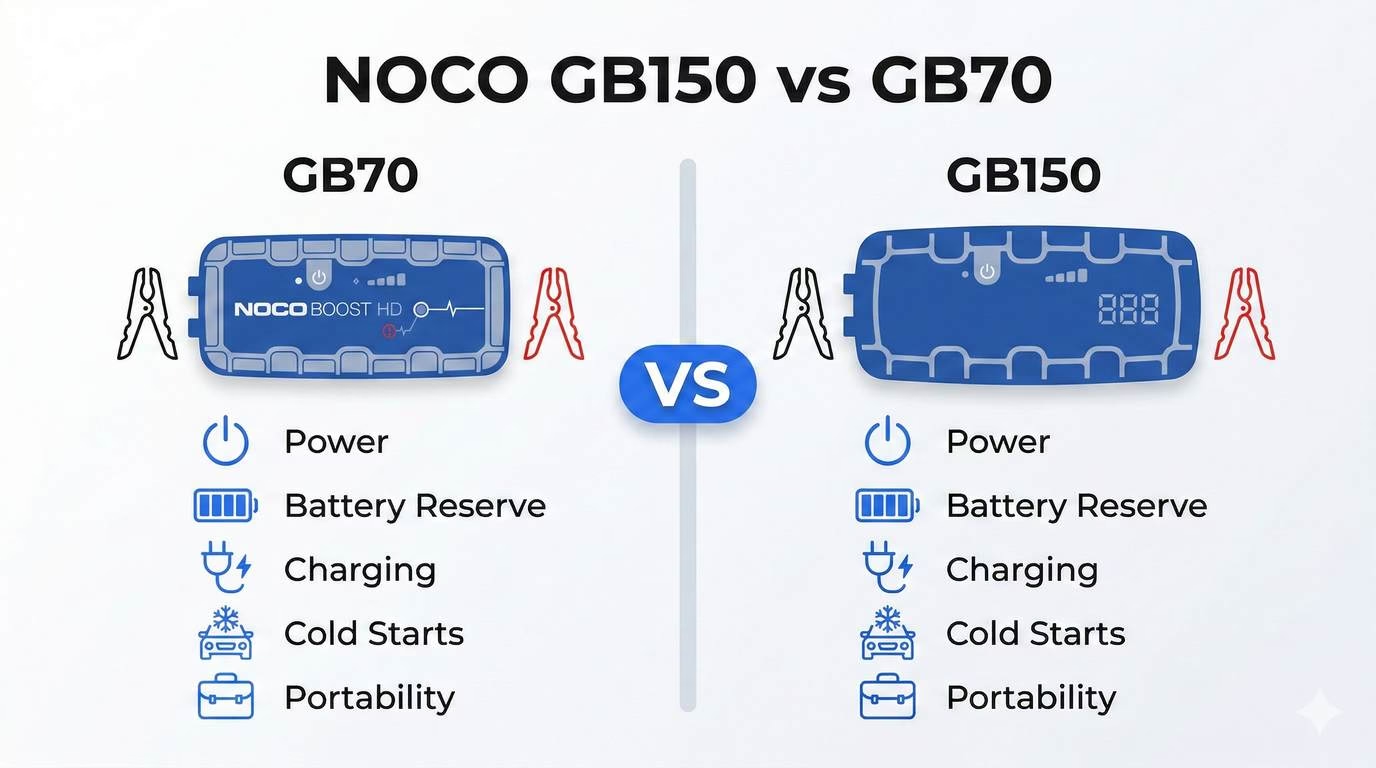
If you’re stuck between the NOCO GB150 vs GB70, you’re already looking at two of the most trusted “real” options. Not the flimsy toy packs that look impressive on paper. The question is simple:
Quick Verdict (The 10‑Second Answer)
Choose GB70 if…
You drive typical cars/SUVs, want strong power without bulky weight, and you’ll actually carry it year‑round.
Choose GB150 if…
You own big engines, deal with harsh winters, help others often, or want maximum “starts when everything is dead” margin.
Do you need more margin, or do you need more practicality?
This guide makes the choice obvious. No fluff. No jargon. Just the buying decision.
⚡ NOCO Boost GB70 vs GB150: Spec Showdown
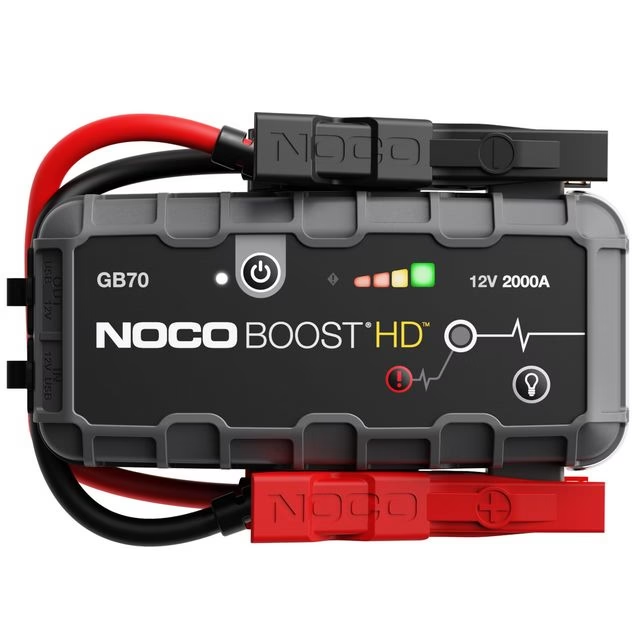
NOCO Boost GB70
Key Specifications
- Peak Current: 2000A
- Gas Engines: Up to 8.0L
- Diesel Engines: Up to 6.0L
- Internal Battery: 56Wh
- Fast Charge Input: 12V 3A (36W)
- Weight: ~5 lbs
- Water Resistance: IP65
Pros
- Lighter weight (5 lbs) – easier to handle
- More affordable price
- Proven, widely trusted model
- Sufficient for most cars & SUVs
- Compact form factor
Cons
- Lower peak current (2000A)
- Slower recharge (12V 3A input)
- Fewer starts per charge (~40)
- No USB-C fast charging
- Less reserve for large diesel engines
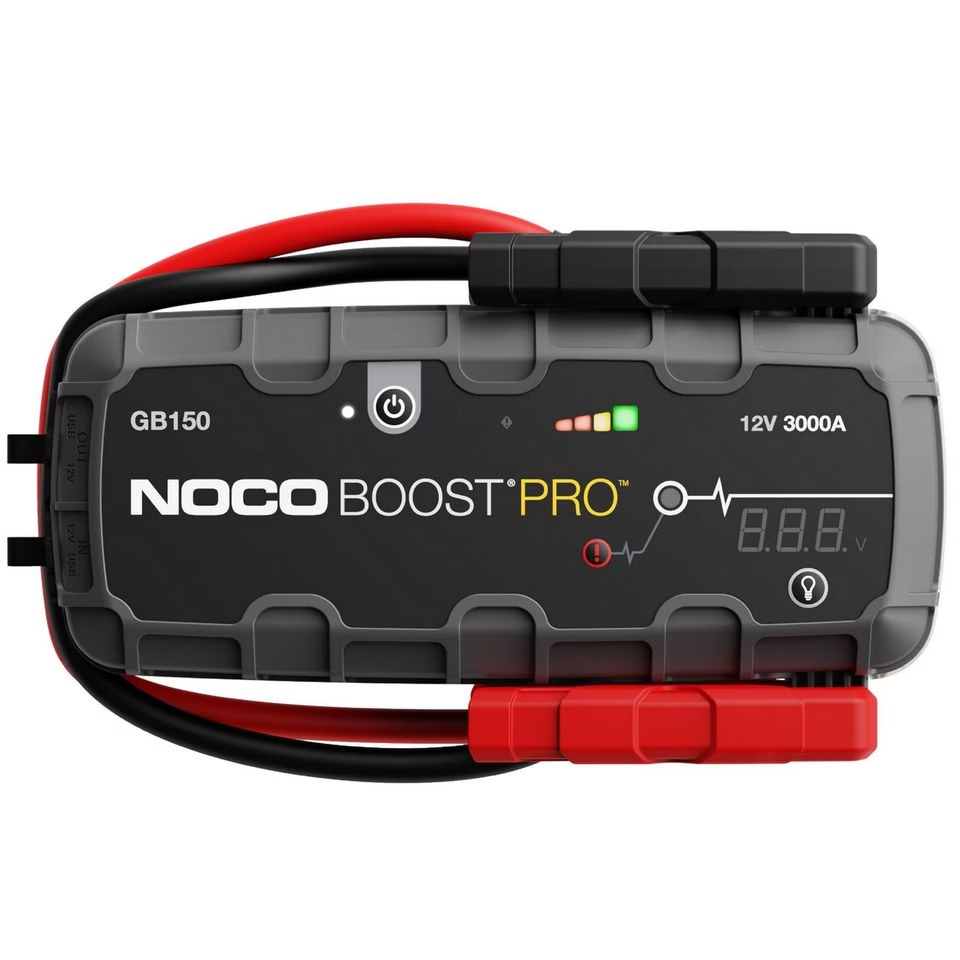
NOCO Boost GB150
Key Specifications
- Peak Current: 3000A
- Gas Engines: Up to 9.0L
- Diesel Engines: Up to 7.0L
- Internal Battery: 88Wh
- Fast Charge Input: 12V 5A (60W)
- Weight: ~7.5 lbs
- Water Resistance: IP65
Pros
- Massive 3000A peak – starts heavy-duty diesels
- Faster recharge (60W input)
- Up to 80 starts per charge
- 500 lumen flashlight with 7 modes
- Extra power reserve for larger rigs
Cons
- Heavier (7.5 lbs) – less portable
- Higher price point
- Bulkier footprint
- Overkill for compact cars
- Slightly lower customer rating (fewer reviews)
🔋 Final Verdict: GB70 vs GB150
Both jump starters deliver NOCO’s signature UltraSafe technology, but they target different needs. The GB70 (2000A) is the sweet spot for most drivers: lighter, more affordable, and easily starts V8 gas engines and mid-size diesels. It’s a proven road-trip companion. The GB150 (3000A) is the heavy hitter – built for commercial trucks, large RVs, and farm equipment. Its 88Wh battery and 60W fast recharge mean you’re ready for multiple jumps in quick succession. Choose the GB70 for everyday carry and value; pick the GB150 if you routinely face dead large-displacement engines or want maximum reserve power.
The Big Differences (Not the Marketing Stuff)
Let’s cut through the noise.
1) Power class: 2,000A vs 3,000A
The GB70 sits in the “serious” category. It starts big gas engines and plenty of diesels.
The GB150 is the “margin monster.” It’s what you buy when you want fewer failed attempts.
Here’s the truth: peak amps don’t tell the whole story.
But they do tell you where each model sits in the lineup.
2) Battery energy: 56Wh vs 88Wh
This matters more than people realize.
Watt-hours (Wh) isn’t a sexy number.
But it’s the number that decides:
- How many attempts you get when the battery is weak.
- How hard it cranks when it’s cold.
- How quickly it sags after repeated tries.
The GB150’s bigger energy reserve means more repeat tries with less drama.
3) Weight and carry reality: 5 lb vs 7.5 lb (with clamps/accessories)
This is the part that changes real life.
A jump starter doesn’t help you if it’s sitting in your garage.
The GB70 is easier to keep in the car without thinking about it.
The GB150 is heavier. You feel it. You store it in the trunk like a real tool.
4) Charging flexibility (both can do USB, both can do 12V fast charge)
Both models can be charged from a USB source.
Both have a 12V “faster” option.
But the GB150 can accept a higher 12V input rate than GB70, so it can recharge faster with the right setup.
And yes—most people undercharge their jump starter.
Then blame the jump starter.
We’ll fix that later.
The Real Question: How Do They Start Cars in the Real World?
Specs are nice. But your car won’t start because of a spec sheet.
It starts because your jump pack can deliver a clean hit of power when the battery is sick.
Let’s walk through real scenarios.
Scenario 1: “I left my lights on.” (Battery is low, not destroyed.)
This is where both models shine.
- GB70: Usually one attempt and you’re done.
- GB150: Same result, but with more headroom.
If your life is mostly normal vehicles and occasional oops moments, the GB70 already feels like a cheat code.
Scenario 2: “It cranks… but it won’t catch.” (Weak battery + resistance)
This is where differences start to show.
When the battery is weak, the vehicle often needs more than a quick jolt.
It needs sustained crank. Or multiple tries.
That eats energy.
- GB70: Still capable, but you might need a second attempt.
- GB150: More likely to feel effortless. It has extra reserve.
This is the first “buying moment.”
If you hate repeating attempts, you lean GB150.
Scenario 3: Cold weather starts (the silent killer)
Cold makes everything worse.
- Your car battery loses punch.
- Your engine oil thickens.
- The starter demands more.
- Lithium packs can deliver less when they’re cold-soaked.
Both models are rated for low operating temps.
But the bigger pack gives you more margin.
Practical reality:
- GB70 will work in cold. Many people use it successfully.
- GB150 gives you a larger “buffer” when the car is stubborn.
If your winters are brutal, or your car sits outside overnight often, the GB150 starts making more sense.
Scenario 4: Diesel starts (high compression, higher demand)
Diesels are the deciding factor for many buyers.
Diesel starts tend to demand more sustained cranking.
Especially when the battery is old.
Or the glow system pulls extra load.
Or it’s cold.
- GB70: Up to 6.0L diesel claims. Strong for many trucks.
- GB150: Up to 7.0L diesel claims. More headroom for repeated attempts.
Here’s the rule that saves money: If your diesel is near the GB70 ceiling, don’t gamble.
Buy the GB150 and sleep.
Scenario 5: You’re the “parking lot hero”
This happens more than you think.
You’ll jump:
- a neighbor’s car,
- a coworker’s truck,
- a stranger’s SUV in the rain.
And you won’t know:
- how dead their battery is,
- whether it has a bad cell,
- how long it’s been sitting.
This is where margin pays for itself.
GB70 is great.
GB150 is the one you bring when you don’t want surprises.
Manual Override: Powerful Feature. Dangerous If You Treat It Like a Toy.
Both models have a Manual Override function.
It exists for one reason:
Sometimes a battery is so discharged the jump starter can’t detect it.
So the pack refuses to engage.
Manual Override forces the boost output on.
Here’s what you need to know.
What Manual Override does
- It forces boost on when the pack can’t “see” the battery.
- It helps when voltage is extremely low.
What Manual Override does NOT do
- It does not give you “extra amps.”
- It does not fix a physically failed battery.
The risk
Manual Override can reduce/disable safety protections.
That means polarity matters. A lot.
Short version:
- Use it only when you understand what you’re doing.
- Don’t use it casually.
- Never let clamps touch each other.
If you want “the safest possible experience,” you should aim to use normal mode whenever possible.
Safety: Why People Pay for NOCO
This is the underrated reason NOCO wins.
With cheap jump packs, people fear:
- sparks,
- wrong connections,
- damaging electronics.
NOCO’s normal operating mode is built to reduce those risks.
That matters.
Especially if you’re buying this for a spouse, a teen driver, or your future self at 2 AM in the rain.
Manual Override is the exception.
Normal mode is the comfort zone.
Charging & Maintenance: The Part That Determines Whether It Works When You Need It
Most jump starter “failures” are user-caused.
Harsh truth. But true.
The #1 mistake: charging with a weak USB brick
Many people charge these packs with a random old phone charger.
Those can be low-output.
Then they say: “Wow, it takes forever.”
Or worse: “It didn’t work.”
Reality:
- If you want reliable performance, charge it properly.
Simple maintenance routine (do this and you’ll be ahead of 90% of owners)
- Top it up monthly if it lives in your vehicle.
- Top it up before road trips.
- Recharge after any serious use (especially multiple jump attempts).
Storage rules that extend life
- Don’t store it fully depleted for long.
- Avoid extreme heat storage when possible.
- Keep ports closed to protect against dust and moisture.
If you do just those things, your pack will be far more likely to work when it matters.
Portability: Will You Actually Carry It?
Be honest with yourself.
If it’s annoying to carry, you’ll stop carrying it.
That’s how emergencies become expensive again.
GB70 portability
The GB70 is the easy one.
It’s still heavy-duty, but it’s manageable.
- Easier to tuck into a trunk organizer.
- More realistic for under-seat storage in larger vehicles.
- More likely to be “always there.”
GB150 portability
The GB150 is bigger and heavier.
It feels like a real piece of gear.
- More of a trunk tool than a glovebox tool.
- Ideal if you treat it like equipment, not like a gadget.
If you’re the kind of person who carries a tire inflator and a toolkit, the GB150 fits your vibe.
If you want invisible convenience, the GB70 fits better.
Power Bank + Emergency Tool Value (Set Expectations)
Both GB70 and GB150 can charge phones and small devices through USB.
Both can power 12V accessories up to their rated limits.
But here’s the reality check:
- These are jump starters first.
- Power bank features are a bonus.
- They are not meant to replace a high-watt laptop power station.
Flashlight usefulness
Both lights are bright.
Both include multiple modes like SOS/strobe.
GB150’s 500-lumen light is stronger.
GB70’s 400-lumen light is still very usable.
If you’ve ever tried to connect clamps at night, you’ll appreciate that built-in light more than you think.
Reliability Audit: What Owners Usually Experience Over Time
This is where you need a grown-up answer.
Owners report two truths at the same time:
- Many people get years of solid performance.
- Some people run into early battery degradation or charging issues.
That’s not unique to NOCO.
That’s lithium reality plus storage habits.
What tends to improve longevity
- Regular top-ups.
- Avoiding long-term deep discharge storage.
- Keeping it out of extreme heat when possible.
- Not abusing Manual Override repeatedly.
What tends to shorten lifespan
- Leaving it dead for months.
- Storing it in extreme heat.
- Using it heavily on big engines without recharging promptly.
- Treating it like “set it and forget it.”
Want the best reliability?
Treat it like emergency equipment. Not a drawer item.
Which One Should You Buy? (Simple Buyer Profiles)
1) Daily commuter (small gas engine)
Buy the GB70.
You’ll get more than enough power.
And you’ll actually keep it with you.
Affiliate link: https://amzn.to/4aTiueY
2) Family SUV or crossover (most common use case)
Still GB70.
It’s the sweet spot.
Strong. Practical. Easy to store.
Affiliate link: https://amzn.to/4aTiueY
3) V8 gas truck (occasional use)
If it’s occasional and you live in mild weather, GB70 is fine.
If it’s frequent, or your battery is often stressed, move up.
Your deciding question: Do you want “usually works,” or “always works”?
4) Diesel truck owner
If your diesel is comfortably under the GB70 claim, you can still pick GB70.
But if you’re near that limit, or winter is part of your life, GB150 is the safer bet.
Affiliate link: https://amzn.to/46oZ5Bl
5) The helper / mechanic / fleet guy
Buy the GB150.
Why?
Because unknown batteries are chaos.
You’re buying margin, not just power.
Affiliate link: https://amzn.to/46oZ5Bl
6) The “I just want peace of mind” buyer
Pick the one you’ll actually carry and maintain.
That’s usually GB70.
Unless you know you need the extra headroom.
FAQ (Quick Answers That Remove Doubt)
1) Is the GB150 worth it over the GB70 for normal cars?
Usually, no.
For normal sedans and crossovers, GB70 is already strong.
GB150 is for bigger engines, harsh winters, or frequent use.
2) Will GB70 start a diesel truck?
Often yes, within its intended range.
But diesels near the limit or in cold conditions can benefit from the GB150’s extra reserve.
3) Why does “watt-hours” matter?
Because it’s the fuel tank.
More Wh means more attempts and less drop-off under stress.
4) Are the “up to 40” or “up to 80” starts realistic?
They’re best-case numbers.
Real-world results depend on engine size, battery condition, and temperature.
5) Can I leave it in my car year‑round?
You can, but be smart:
- avoid extreme heat when possible,
- top it up monthly,
- and keep ports closed.
6) What if my car battery is so dead the pack won’t detect it?
That’s when Manual Override exists.
Use it carefully. It’s not a casual mode.
7) Can these run a laptop?
Not reliably as a laptop solution.
They’re great for phones and small devices.
They can run some 12V accessories within the rated limits.
8) How often should I recharge if unused?
Monthly is a safe habit.
Before trips is even smarter.
9) Which one is better for cold weather?
Both can work in cold.
GB150 generally gives more headroom when cold makes everything harder.
10) How do I know my jump starter is still “good”?
Test it periodically:
- check the charge level,
- connect it to a healthy battery to verify it recognizes and engages normally,
- recharge after testing.
Final Verdict (No Waffling)
If you want the smartest buy for most people, it’s the NOCO GB70.
It hits the sweet spot.
Strong power. Manageable size. Easy to keep in the car.
That’s why it’s the better daily choice.
But if you own a larger engine, deal with harsh winters, or you’re the person everyone calls when their battery dies, buy the NOCO GB150.
It’s heavier. It’s pricier.
And it gives you the margin that prevents “almost started” frustration.
One final rule if you’re still on the fence:
If your biggest vehicle is close to the GB70’s ceiling, choose GB150.
If not, choose GB70 and don’t overthink it.