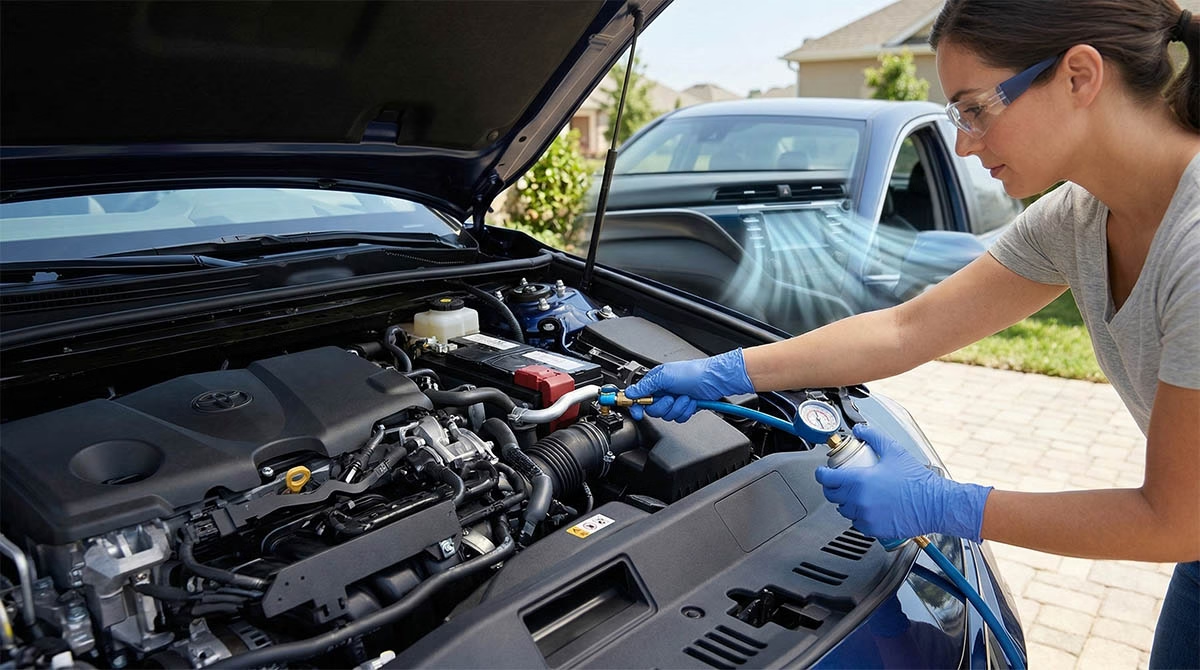
If your car AC is blowing warm air, a recharge may help — but only if the system is simply low on refrigerant. That is the part most articles get wrong. A recharge does not fix leaks, a bad compressor, electrical faults, or airflow problems. It only restores cooling when refrigerant level is slightly low.
That is why the smart approach is simple: confirm the problem first, check the correct refrigerant type, and avoid guessing. If the system is empty, leaking, or acting erratically, stop and let a qualified mechanic handle it.
This guide explains how a car air conditioner recharge works, when it makes sense, what tools you need, the mistakes to avoid, and when DIY is the wrong move.
Tools Needed To Prepare
The right tools make the difference between a smart small top-off and blind guessing.
🔧 Essential HVAC & Refrigeration Tools
Professional-Grade Equipment for Your Next Project
| Product Name | Image | Short Description | Action |
|---|---|---|---|
| R134a Industrial Replacement |  | High-quality R134a refrigerant replacement for industrial AC systems. Compatible with most automotive and commercial cooling units. Bundle pack for extended use. | Check on Amazon |
| A/C Manifold Gauge Set |  | Professional diagnostic tool for HVAC technicians. Features dual-scale gauges for accurate pressure readings. Essential for system troubleshooting and maintenance. | Check on Amazon |
| Refrigerant Dispenser Hose |  | Durable, high-pressure hose designed for safe refrigerant transfer. Kink-resistant construction with secure fittings. Compatible with standard AC systems. | Check on Amazon |
| Can Piercing Valve |  | Precision valve for safely piercing refrigerant cans. Leak-proof design with easy-grip handle. Ideal for small-scale AC repairs and maintenance tasks. | Check on Amazon |
| Safety Goggles |  | ANSI-certified protective eyewear for HVAC work. Anti-fog coating with UV protection. Comfortable fit for extended wear during demanding projects. | Check on Amazon |
| Mechanic Gloves |  | Heavy-duty work gloves with superior grip and dexterity. Cut-resistant material protects hands from sharp edges. Breathable design reduces hand fatigue. | Check on Amazon |
| Vacuum Pump | 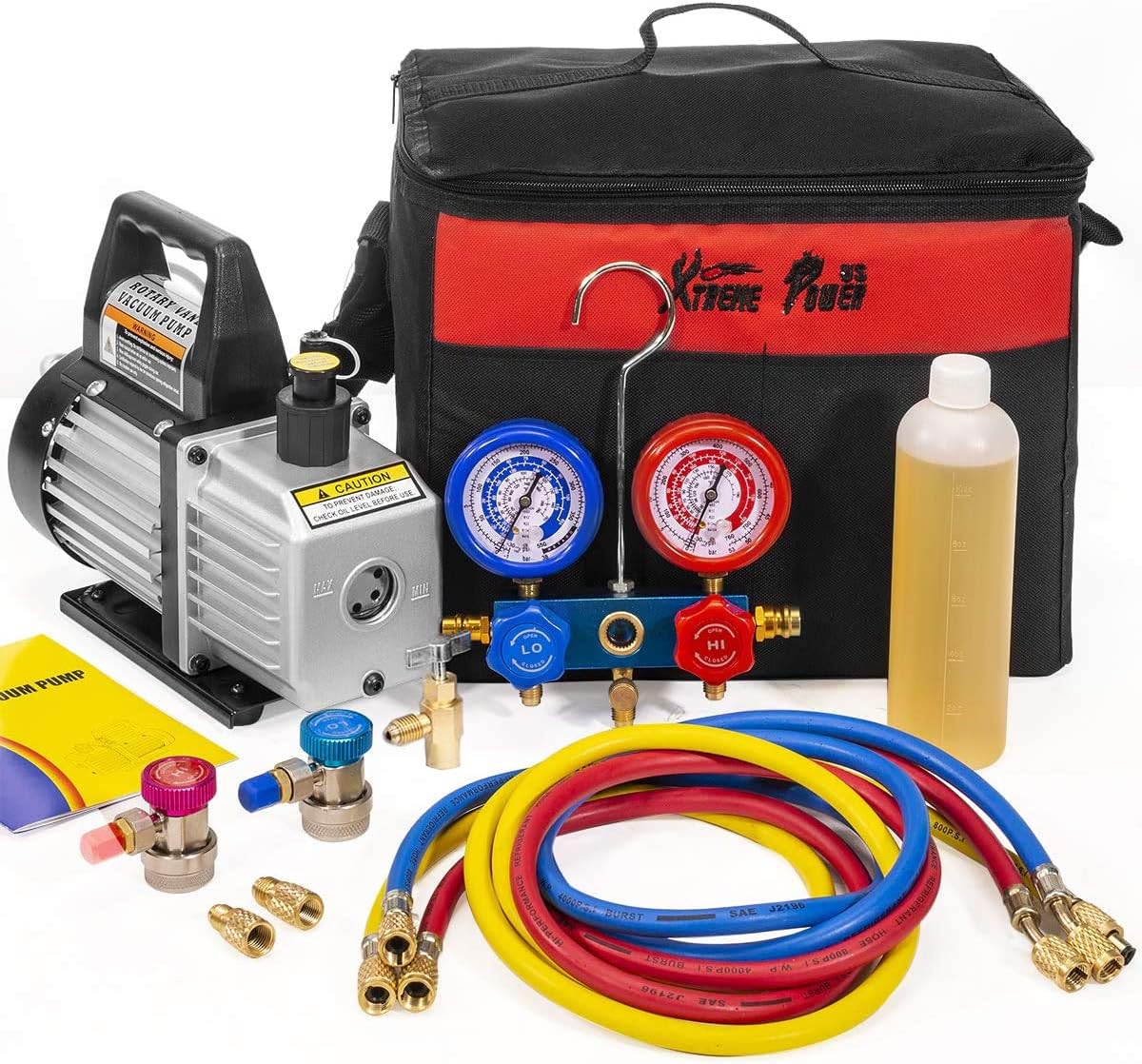 | High-performance vacuum pump for AC system evacuation. Removes moisture and contaminants efficiently. Quiet operation with durable metal construction. | Check on Amazon |
| Refrigerant Scale |  | Digital scale for precise refrigerant charging. LCD display with auto-shutoff feature. Accurate measurements ensure optimal system performance. | Check on Amazon |
| Leak Detection Tools | 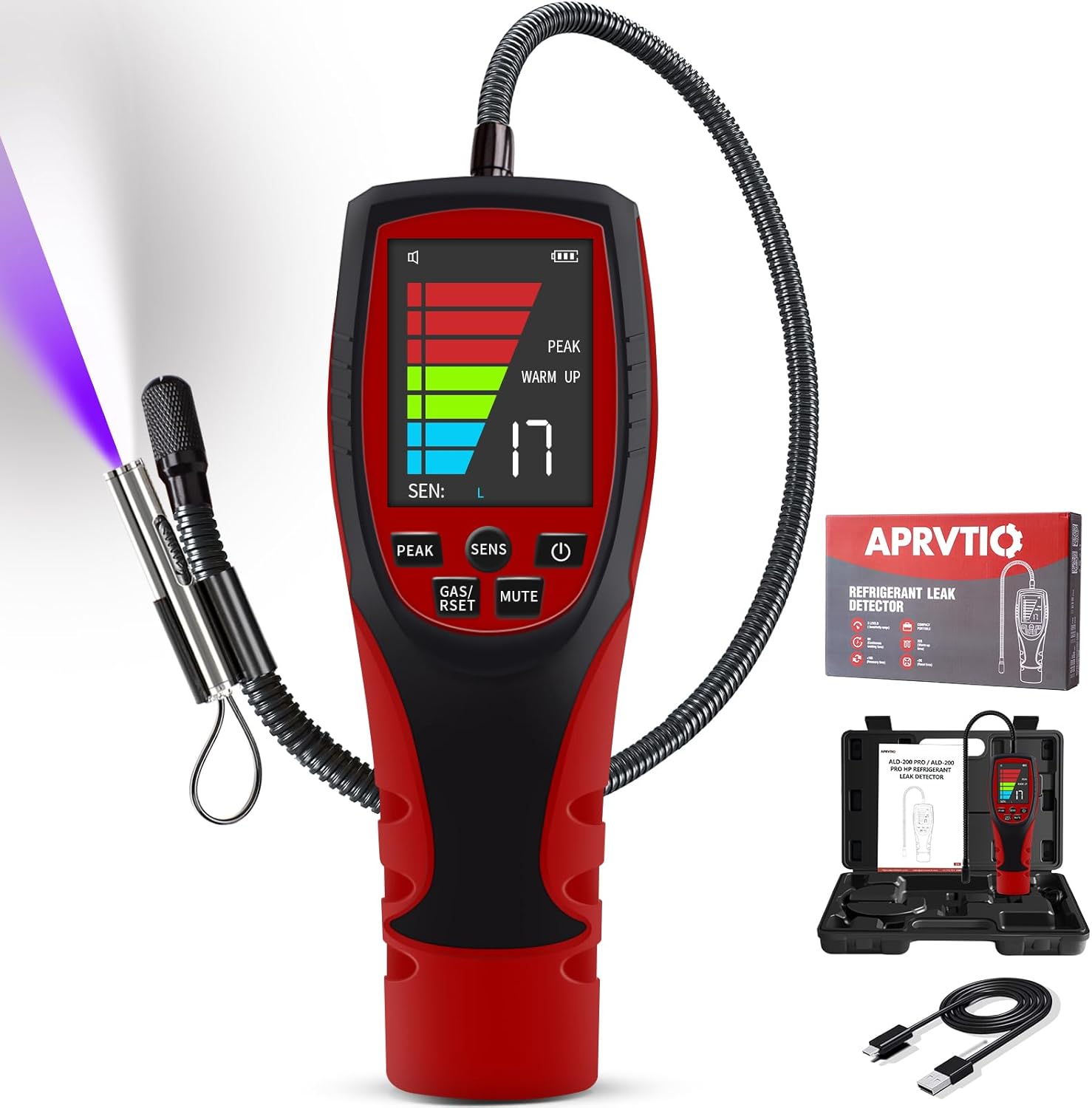 | Advanced electronic leak detector for HVAC systems. High sensitivity identifies even minor refrigerant leaks. Audible and visual alerts for quick detection. | Check on Amazon |
| Thermometer |  | Professional digital thermometer for temperature diagnostics. Fast response time with wide measurement range. Essential for system performance verification. | Check on Amazon |
⚠️ Disclosure: As an Amazon Associate, I earn from qualifying purchases at no extra cost to you.
Can You Recharge a Car Air Conditioner Yourself?
Yes, sometimes.
A DIY car AC recharge can make sense if all of the following are true:
- The AC still works, but cooling is weaker than it used to be
- The system is only slightly low on refrigerant
- You know the correct refrigerant type for your vehicle
- You are using the proper kit and following the product instructions exactly
A DIY recharge does not make sense if:
- The system is completely empty
- You see signs of a refrigerant leak
- The compressor does not engage
- The vehicle is a hybrid or EV
- You do not know the correct refrigerant type
- You are tempted to guess based on pressure alone
If you are in the second group, a recharge kit is not a fix. It is a shortcut to wasted money or bigg
Safe Step-by-Step Overview for a Minor Top-Off
This section is for a minor refrigerant top-off only. It is not a full AC repair procedure. If your system is empty, leaking, making abnormal noise, or the compressor will not engage, stop here and have the vehicle diagnosed professionally.
Before You Start
Only consider a DIY recharge if all of the following are true:
- The AC still cools somewhat, but performance has gradually weakened
- You know the exact refrigerant type your vehicle requires
- You are using a recharge kit designed for that refrigerant
- There are no obvious signs of a major leak or component failure
If any of those are false, do not continue.
Step 1: Confirm the Problem Looks Like Low Refrigerant
Start the engine and turn the AC to maximum cooling with the fan on high. If the air is only mildly cool, takes too long to cool, or cooling has faded over time, low refrigerant may be possible.
Do not assume refrigerant is the problem if:
- The compressor never engages
- The system is completely warm all the time
- Airflow is weak from the vents
- You hear grinding, squealing, or harsh clicking
- Warning lights or electrical issues are present
Those point to a larger problem than a simple top-off.
Step 2: Check the Correct Refrigerant Type
Read the under-hood label or owner’s manual and confirm the exact refrigerant specified for your vehicle. Use only a recharge kit that matches that refrigerant.
Never guess. Never mix refrigerants. If you are unsure what the system uses, stop.
Step 3: Inspect for Obvious Leak Signs
Before using any recharge kit, look for signs that the system may be leaking:
- Oily residue around AC hoses or fittings
- Damage near the condenser or compressor area
- Cracked or missing service port caps
- Sudden loss of cooling instead of gradual decline
If you see leak evidence, do not top it off and hope for the best. Fix the leak first.
Step 4: Wear Basic Safety Gear
Use eye protection and gloves. Work in an open, well-ventilated area and keep hands, clothing, and tools clear of moving engine components.
If the vehicle is a hybrid or EV, skip DIY AC work unless you are specifically trained for it.
Step 5: Use the Recharge Kit Exactly as Directed
Read the instructions that came with your recharge kit from start to finish before connecting anything. Different kits are not identical, and the product directions matter.
Use only the service connection the kit is designed for. Do not force fittings, use makeshift adapters, or improvise your way through the job.
Step 6: Add Refrigerant Slowly and Conservatively
If the kit instructions confirm that your situation is appropriate for a minor top-off, add refrigerant slowly and in small amounts while watching for improvement in vent temperature and system behavior.
Do not chase “extra cold” by adding more than needed. Overcharging can hurt performance and create more problems.
Step 7: Stop Immediately if Anything Seems Wrong
Do not continue if:
- Pressure behavior looks abnormal on the kit gauge
- Cooling does not improve
- The compressor cycles strangely
- The system becomes noisy
- Frost, leaks, or other unusual signs appear
A recharge only helps when slightly low refrigerant is the real issue. If the system reacts abnormally, stop and get it diagnosed.
Step 8: Recheck Cooling Performance
After a careful minor top-off, let the AC run and check whether cooling performance has improved in a normal, steady way.
If the air is still warm, fades again quickly, or performance is inconsistent, the problem is likely not a simple low-charge condition.
Step 9: Monitor the System Over the Next Several Days
If cooling improves, pay attention over the next few days. If performance drops again soon, the system likely has a leak or another fault that needs repair.
Repeatedly topping off the system is not maintenance. It is a sign the problem has not been fixed.
Important Limits of DIY Recharge
A DIY recharge can help in a narrow situation: the system is only slightly low and otherwise healthy.
It is not the right fix if:
- The system is empty
- Refrigerant loss returns quickly
- The compressor does not operate normally
- The vehicle uses a more sensitive AC setup
- You do not know the system’s condition
When in doubt, stop. A proper diagnosis is cheaper than turning a small AC problem into a major one.
Signs Your Car AC May Be Low on Refrigerant
Low refrigerant is common, but it is not the only reason a car AC stops cooling well. Before you assume the system needs a recharge, look for these clues:
Common symptoms of low refrigerant
- Air from the vents is cool at first, then turns lukewarm
- Cooling takes much longer than normal on hot days
- The compressor cycles on and off more than usual
- You hear hissing or notice oily residue around AC lines or fittings
- Cabin cooling improves briefly after driving, then fades again
Problems that can feel like low refrigerant but are not
- Dirty cabin air filter
- Weak blower motor
- Faulty AC compressor clutch
- Condenser fan problem
- Blend door or HVAC control issue
- Electrical faults or blown fuses
This matters because many people buy a recharge can when the actual problem is airflow or electrical. That wastes time and does nothing for cooling.
What a Car AC Recharge Actually Does
A recharge restores refrigerant to the system so it can absorb heat and cool the cabin properly again.
That is all it does.
It does not:
- Seal a real leak permanently
- Repair a bad compressor
- Fix contaminated refrigerant
- Solve an electrical problem
- Replace missing oil after component failure
If your car AC lost refrigerant once, there is usually a reason. A small loss over time can happen. A fully empty system is a red flag.
Check These Things Before You Buy Refrigerant
This is where most DIY mistakes begin.
Find the correct refrigerant type
Do not buy anything until you check the label under the hood or the owner’s manual.
Most older vehicles use R-134a. Many newer vehicles use R-1234yf. These are not interchangeable. Using the wrong refrigerant can damage the system and turn a simple problem into an expensive repair.
Never mix refrigerants
If you are not 100% sure what is already in the system, stop. Mixing refrigerants is a bad idea and can contaminate the entire system.
Make sure the system is not empty
If the system has no refrigerant left, that usually means there is a leak. In that case, a proper repair involves leak detection, evacuation, and a correct recharge by specification. A simple top-off can is not the right answer.
Look for obvious signs of a leak
Before you attempt a recharge, check for:
- Oily residue around hoses, fittings, condenser, or compressor
- Damaged AC lines
- Cracked service port caps
- Visible corrosion around fittings
- Recent drop in cooling performance after it was working normally
If you find leak evidence, fix the leak first. Recharging a leaking system is money down the drain.
The Safe Way to Approach a DIY Car AC Recharge
A car AC recharge is not something to rush. The safest mindset is this: treat it as a minor correction only, not a cure-all.
Step 1: Confirm the problem
If the AC is blowing warm air all the time, the compressor never engages, or the system is empty, do not proceed as if it only needs refrigerant. That assumption burns people.
Step 2: Verify the refrigerant type
Check the vehicle label. Then check the can. They must match.
Step 3: Use the low-side service port only
Recharge kits are designed to connect to the low-pressure side. Do not force fittings, improvise adapters, or assume both ports are interchangeable. They are not.
Step 4: Follow the product instructions exactly
Different recharge kits work differently. Use the can upright if the instructions say to. Watch for abnormal behavior. Stop if anything seems off.
Step 5: Do not guess your way through it
If the system responds strangely, pressure behavior looks wrong, cooling does not improve, or you hear unusual noise, stop. The problem is likely bigger than a simple recharge.
Common Mistakes That Ruin Car AC Systems
This is where people get into trouble fast.
Using the wrong refrigerant
This is the easiest mistake to avoid and one of the most expensive if you do it anyway.
Recharging a leaking system
A recharge is pointless if refrigerant is escaping. You will be back where you started, usually with less money and more contamination.
Treating a dead system like a low system
If the AC is completely flat, there is a reason. A proper repair starts with diagnosis, not a can.
Ignoring airflow problems
A filthy cabin filter, weak blower, or blocked condenser can make the AC feel weak even when refrigerant is fine.
Overcharging the system
More is not better. Overcharging can hurt cooling performance and increase system stress.
Relying on one reading or one symptom
AC systems are vehicle-specific. A single number or one online trick does not diagnose every car.
When a Car AC Recharge Will Not Fix the Problem
Be honest about this part. A recharge will not solve:
- Compressor failure
- Bad compressor clutch
- Condenser fan failure
- Electrical faults
- Pressure switch issues
- HVAC door actuator problems
- Major leaks
- Contaminated refrigerant
If your cooling does not improve after a careful minor recharge attempt, the problem is likely not refrigerant level alone.
When to Skip DIY and Call a Mechanic
Sometimes the smartest move is to stop.
You should skip DIY if:
- The system is empty
- You suspect a leak
- The compressor does not engage
- The vehicle uses R-1234yf and you are not equipped for it
- The vehicle is a hybrid or electric model
- You have already added refrigerant and cooling is still poor
- You are unsure what is in the system now
A qualified shop can test for leaks, confirm pressures correctly, evacuate the system, and recharge it to the vehicle specification. That is the right fix when the problem is more than minor refrigerant loss.
How Much Does a Car AC Recharge Cost?
DIY is cheaper up front, but only if the issue is small and you do not make mistakes.
Typical cost range
- DIY recharge kit: lower upfront cost
- Professional recharge service: higher cost, but includes diagnosis and proper service steps
- Leak repair or compressor work: much higher, depending on the fault
If the system leaks, the cheap route is usually fake savings. You pay once for the can, then again for the real repair.
How Long Does a Car AC Recharge Last?
That depends on why the refrigerant was low.
If the system is only slightly low
A small correction can last a long time if there is no meaningful leak and the system is otherwise healthy.
If there is a leak
It may cool again for a short time and then fade fast. In that case, the recharge did not solve anything. It only masked the problem.
How to Keep Your Car AC Working Longer
Prevention is boring, but it saves money.
Run the AC regularly
Use it for a few minutes even in cooler months. That helps keep seals lubricated.
Replace the cabin air filter on time
A dirty filter kills airflow and makes the AC feel weak even when it is functioning properly.
Keep the condenser area clean
Debris, bugs, and dirt reduce heat transfer and hurt cooling performance.
Pay attention to performance changes early
If cooling gets weaker over time, diagnose it before it turns into a larger repair.
Fix leaks instead of repeatedly topping off
If the system needs refrigerant again and again, it has a problem. Deal with the cause.
Can You Recharge a Car Air Conditioner at Home?
Yes, but only if the system is slightly low on the correct refrigerant and there are no signs of leaks, compressor failure, or electrical issues.
If the system is empty, leaking, or behaving abnormally, a DIY recharge is the wrong move. In that case, professional diagnosis is the smarter and cheaper decision in the long run.
Final Verdict
If your car AC has gradually lost cooling and everything else appears normal, a careful DIY recharge may restore performance.
If the system is empty, leaking, or not engaging properly, stop chasing a quick fix. A recharge is not magic. It works only when low refrigerant is the real problem.
The right way to think about it is simple: diagnose first, match the correct refrigerant, avoid guesswork, and know when to hand the job to a professional.
FAQ
How do I know if my car AC needs a recharge?
If the AC cools weakly, takes longer than normal to get cold, or cools inconsistently, low refrigerant is possible. But weak airflow, electrical faults, and compressor problems can cause similar symptoms.
Can I recharge my car AC without gauges?
You can buy simple recharge kits, but they do not replace proper diagnosis. If the problem is anything beyond a minor low-charge condition, basic kits are limited.
What happens if I put too much refrigerant in my car AC?
Overcharging can reduce cooling performance and stress the system. More refrigerant is not better.
Can I mix R-134a and R-1234yf?
No. Use only the refrigerant specified for the vehicle.
Why is my car AC still warm after a recharge?
Possible causes include a leak, compressor problem, bad condenser fan, electrical fault, contaminated refrigerant, or an incorrect charge.
Is a car AC recharge a permanent fix?
Only if the system was slightly low and has no meaningful leak. If refrigerant is escaping, the cooling loss will return.
Should I recharge the AC if the system is completely empty?
No. A fully empty system usually points to a leak or larger fault. That needs proper diagnosis and repair first.
Is DIY AC recharge safe for hybrid and electric cars?
That is not the place to experiment. Those systems can involve extra risks and should be handled by qualified technicians.