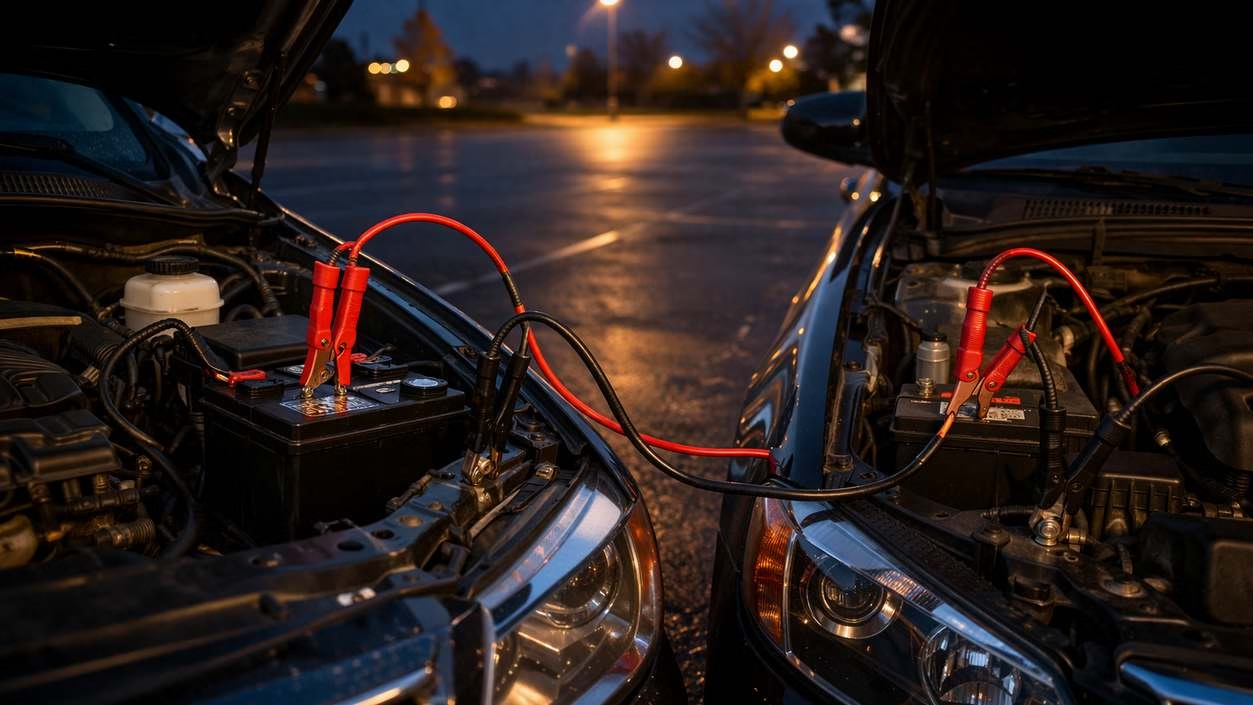
This guide walks you through everything from start to finish. We cover what you need, how to stay safe, and the exact order to connect your cables. We also explain what to do if the car still will not start and how to jump start a car without another car nearby. Whether you are a first-time driver or someone who just needs a refresher, this guide has you covered. By the end, you will feel confident handling a dead battery on your own.
What You Need Before You Jump Start a Car
Essential Tools
Before you get started, make sure you have the right gear on hand. You do not need anything fancy, but a few basic items make the whole process much smoother and safer.
- A pair of jumper cables (at least 10-12 feet long)
- Another working vehicle or a portable jump starter
- Safety gloves (optional but a smart idea)
- Your car’s owner’s manual for any model-specific advice
🔋 Never Get Stranded | Jump Starters & Safety Gear 🔧
Heavy-duty jumper cables, portable jump starters, and cut-resistant work gloves for roadside peace of mind


Quick Battery Safety Check
Take a close look at the battery before you touch anything. Check for cracks, leaks, or swelling on the casing. If you spot any of these, do not try to jump start the car. A damaged battery can leak acid or even explode. Also, make sure both vehicles are completely turned off before you connect any cables. This small step protects you and your car’s electronics from unexpected power surges.
Signs Your Car Battery Is Dead
Common Symptoms
Wondering about the signs of a dead battery? They are usually pretty hard to miss. The most obvious one is an engine that will not crank at all. You turn the key and get nothing but silence or a rapid clicking noise. Other signs of a dead battery include dim dashboard lights, weak or flickering headlights, and electrical systems that act strange. Your radio might cut out. Your power windows might move slowly. These are all clues that your battery is running on empty.
When It May Not Be the Battery
Sometimes the car won’t start, battery seems fine, but something else is going on. Keep in mind that a few other issues can mimic a dead battery. Here are some common culprits to watch for:
- A failing starter motor that does not engage properly
- An alternator that is not charging the battery while you drive
- Corroded or loose battery terminals that block the connection
- A blown fuse or ignition switch problem
If you have tried jump starting and nothing changes, one of these could be the real problem. In that case, it is time to call a professional.
Safety Tips Before You Connect Jumper Cables
Jump starting a car safely is just as important as getting it running. A little caution goes a long way. Start by parking both cars close enough for the cables to reach, but make sure they never touch each other. Metal-to-metal contact between vehicles can cause a short circuit.
Next, turn off everything in both cars. That means the ignition, headlights, radio, air conditioning, and any phone chargers. You want both electrical systems to be completely quiet. This protects sensitive electronics from voltage spikes when you make the connections.
Check that both vehicles use the same voltage. Almost all passenger cars run on a 12-volt system, so this is rarely an issue. But if you are helping someone with a larger truck or a specialty vehicle, double-check first. Mixing voltage levels can cause serious damage.
Finally, keep a few critical warnings in mind. Never connect the black cables first without following the proper sequence. Never let the metal clamps touch each other while the cables are live. And never lean directly over the battery when making connections. Batteries release hydrogen gas, which is flammable. A small spark near the battery can turn into a dangerous situation.
How to Jump Start a Car Step by Step
This is the main part you came here for. Follow these ten steps in order, and you will have your car running again in no time. Take it slow. There is no rush.
Step 1: Park Both Vehicles and Turn Them Off
Park the working car close to the dead one. The cables need to reach both batteries comfortably. Engage the parking brake on both vehicles. Put automatic cars in park and manual cars in neutral. Make sure both ignitions are completely off before you move to the next step.
Step 2: Locate the Battery Terminals
Open the hoods of both cars. Find the battery in each one. Look for two metal posts or terminals on top of the battery. The positive terminal is marked with a plus sign (+). The negative terminal has a minus sign (-). The positive post is usually larger and may have a red plastic cover over it. Remove the cover if needed.
Step 3: Connect the Red Cable to the Dead Battery
Take one end of the red jumper cable. Clamp it firmly onto the positive terminal (+) of the dead battery. Make sure the metal jaws of the clamp grip the metal post tightly. A loose connection will not work. You should feel the clamp lock into place.
Step 4: Connect the Other Red Cable to the Good Battery
Now take the other red clamp and attach it to the positive terminal (+) of the working battery. Both red cables are now connected to the positive sides. This completes the positive circuit. Do not let the other end of the black cable dangle and touch anything metal.
Step 5: Connect the Black Cable to the Good Battery
Take one end of the black jumper cable and clamp it to the negative terminal (-) of the working battery. This grounds the good battery’s electrical system and prepares the circuit for the final connection.
Step 6: Connect the Final Black Clamp to an Unpainted Metal Surface
This step trips up a lot of people. Do not connect the last black clamp directly to the negative terminal of the dead battery. Instead, find a clean, unpainted metal surface on the dead car. A bolt on the engine block works great. This acts as a ground point and keeps any sparks away from the battery itself. If your car’s manual says it is okay to connect to the negative terminal, you can follow that advice. But grounding to metal is the safer choice.
Step 7: Start the Working Car First
Get into the working car and start the engine. Let it run for a few minutes. This gives the dead battery a chance to receive some charge from the good battery. While you wait, keep both cars stationary. Do not rev the engine aggressively. A gentle idle is all you need.
Step 8: Try Starting the Dead Car
Now try to start the car with the dead battery. Turn the key gently and hold it for a few seconds. If the engine cranks and catches, you are in great shape. If it does not start right away, do not panic. Give it another minute or two and try again. Sometimes the battery just needs a bit more time to pull a charge.
Step 9: Remove the Cables in Reverse Order
Once the dead car is running, you need to disconnect everything. This is just as important as the connection process. Remove the cables in the exact reverse of how you put them on. Take the black clamp off the grounded metal surface first. Then remove the black clamp from the good battery. Next, take the red clamp off the good battery. Finally, remove the red clamp from the revived battery. Keep the clamps away from each other and any metal parts as you disconnect them.
Step 10: Let the Revived Car Run
Do not turn off the revived car right away. Let the engine idle for at least 15 to 30 minutes. This gives the alternator time to recharge the battery so it can hold a charge on its own. Even better, take the car for a short drive around the block. Driving helps the battery charge faster than just idling. If you shut the engine off too soon, the battery may not have enough juice to start again.
Jumper Cable Order: Which Cable Goes on First?
One of the most common questions people ask is about the cable connection order. Getting this wrong can cause sparks or damage your electronics. The question of what order do you connect jumper cables matters more than most people think.
The correct order to attach jumper cables is:
- Red clamp to the dead battery positive terminal (+)
- Red clamp to the good battery positive terminal (+)
- Black clamp to the good battery negative terminal (-)
- Black clamp to a grounded metal surface on the dead car
And for removal, simply reverse the process:
- Black from grounded metal
- Black from the good battery
- Red from the good battery
- Red from the revived battery
Think of it as positive first, then negative. When removing, think negative first, then positive. That simple pattern is easy to remember and keeps you safe every time.
How Long Should You Leave Jumper Cables Connected?
People often wonder how long to leave jumper cables on before trying to start the dead car. The short answer is: wait a few minutes. After you start the donor car, let it idle for about two to five minutes before you turn the key on the dead car. This gives the weak battery enough surface charge to turn the starter motor.
If the car does start, keep the cables connected for another minute or two to let the battery pull in a bit more charge. After you remove the cables, let the revived car run for at least 15 to 30 minutes. The longer you let it run, the more charge the battery will hold. If the battery dies again shortly after, it may be time for a replacement rather than a simple recharge.
What to Do If the Car Still Won’t Start
Sometimes jump starting does not work on the first try. Do not worry. There are several things you can check before you give up.
Check the Cable Connections
The most common reason a jump fails is a loose connection. Go around and wiggle each clamp. Make sure every clamp has a solid grip on the metal post. Also look for dirt or corrosion on the terminals. If you see crusty white or green buildup, that could be blocking the electrical flow. You can clean it with a wire brush or a small amount of baking soda and water.
Wait a Little Longer
Sometimes a battery that has been dead for a while just needs more time to pull a charge. Let the donor car run for five to ten minutes before you try again. Patience can make all the difference here.
Signs of a Bigger Problem
If nothing works after a few tries, the problem might not be the battery at all. Watch for these red flags:
- Rapid clicking when you turn the key, even with jumper cables
- No power at all in the car, not even dashboard lights
- The battery dies repeatedly, even after successful jumps
- A burning smell or smoke coming from the engine area
When to Stop Trying
Stop immediately if you notice any of these danger signs:
- A strong burning smell coming from the battery or cables
- Smoke rising from the engine compartment
- A cracked or visibly damaged battery casing
- Repeated failed attempts after checking all connections
When to Call Roadside Assistance
There is no shame in calling for help. Reach out to roadside assistance if:
- You are stuck in an unsafe location like a busy highway
- You drive a hybrid or electric vehicle and are unsure of the process
- You do not have jumper cables or a portable jump starter
- The problem persists after multiple jump attempts
Can You Jump Start a Car Without Another Car?
Yes, you absolutely can. Knowing how to jump start a car without another car is a game changer for solo drivers. The most reliable way is to use a portable jump starter. These compact devices pack enough power to crank your engine all on their own. No second vehicle required. They are small enough to fit in your trunk or glove box, and most of them double as a phone charger or flashlight.
Can You Push Start a Car?
Push starting, also called bump starting, is another option. But it only works on some manual transmission vehicles. The idea is simple: you push the car to build speed, then pop the clutch to turn the engine over. However, this method does not work on automatic cars at all. It can also be hard on your car’s components and is not recommended for modern vehicles with sensitive electronics. Stick to jumper cables or a portable jump starter for the best results.
What Not to Try
Avoid these unsafe shortcuts at all costs:
- Using random chargers or equipment not designed for car batteries
- Creating makeshift connections with wires or household items
- Touching battery terminals together to create a spark
- Trying to charge a visibly damaged or leaking battery
These shortcuts can cause fires, explosions, or permanent damage to your car’s electrical system. Always use the right tools for the job.
How to Jump Start a Car With a Portable Jump Starter
If you are wondering about portable jump starter how to use instructions, the process is straightforward. Many drivers now prefer this method over traditional jumper cables. It is faster, simpler, and does not depend on finding a willing stranger with a good battery.
Here is how it works. First, make sure your car is turned off. Connect the red clamp from the jump starter to the positive terminal (+) on your dead battery. Then connect the black clamp to the negative terminal (-) or to a ground point, depending on what the device instructions recommend. Turn on the jump starter. Wait a few seconds for the device to do its thing. Then try to start your car. Once the engine is running, disconnect the clamps in reverse order. Finally, recharge your portable jump starter when you get home so it is ready for next time.
The biggest advantages of a portable jump starter include:
- No second vehicle needed, which is perfect for solo drivers
- Much faster in an emergency since setup takes under a minute
- Compact and easy to store in your trunk or glove box
Common Mistakes to Avoid When Jump Starting a Car
Even experienced drivers make mistakes when jumping a car battery. Knowing what to avoid is just as important as knowing the correct steps. Here are the most common slip-ups that can turn a simple fix into a costly repair:
- Connecting the cables in the wrong order, which can cause sparks or damage electronics
- Letting the metal clamps touch each other while connected to a live battery
- Using old or frayed jumper cables that cannot carry enough current
- Trying to jump start a battery that is visibly cracked, leaking, or swollen
- Ignoring corrosion on the terminals, which blocks the electrical connection
- Turning on headlights, radio, or other accessories during the jump process
- Removing the cables in the wrong order and risking a power surge
- Assuming the battery is the only problem when the real issue might be the starter or alternator
Take a moment to double-check everything before you start. A little patience prevents a lot of headaches.
How to Prevent a Dead Car Battery in the Future
Battery Maintenance Tips
The best dead car battery fix is to never need one in the first place. A few simple habits can keep your battery healthy and reliable for years. Good battery maintenance does not take much effort, but it pays off big time when winter rolls around or you are running late for work.
- Clean your battery terminals regularly to prevent corrosion buildup
- Drive your car at least once a week, even if you work from home
- Replace your battery every three to five years, or as your mechanic recommends
- Have your battery tested before extreme weather seasons
- Always turn off headlights, interior lights, and electronics when you park
Warning Signs That Your Battery Needs Replacement
Do not wait for a complete failure. Watch for these early warning signs that your battery is on its last legs:
- The engine cranks slowly when you try to start the car
- You need to jump start the car more and more often
- Your battery is older than four years
- The dashboard battery warning light stays on after you start the car
If you notice any of these signs, get your battery tested at an auto parts store. Most will test it for free. Replacing a weak battery before it dies completely saves you time, stress, and the hassle of being stranded.
Special Cases: Cars You Should Be Careful With
Not all cars are the same under the hood. Some vehicles need extra care and attention when it comes to jump starting. If you drive one of these, take a little extra time to review your owner’s manual before you proceed.
- Newer vehicles with sensitive electronics: Many modern cars have complex computer systems that can be damaged by voltage spikes. Always check your manual first and follow the manufacturer’s specific instructions.
- Hybrid and electric vehicles: These cars often have a separate 12-volt auxiliary battery that works differently from a traditional car battery. Jump starting a hybrid or electric vehicle requires special care. If you are not sure, contact your dealer or a certified technician.
- Large vehicles and diesel engines: Trucks and diesel-powered vehicles may use higher-voltage batteries or require heavier-duty cables. Using standard jumper cables on a large diesel truck may not deliver enough current to turn the engine over.
When in doubt, always check the owner’s manual. A few minutes of reading can save you thousands of dollars in repairs.
Quick Reference: How to Jump Start a Car in 30 Seconds
Need a fast answer? Here is the entire process at a glance. Bookmark this section for the next time you are in a rush.
- Park both cars close together with engines off
- Red cable to the dead battery positive terminal
- Red cable to the good battery positive terminal
- Black cable to the good battery negative terminal
- Black cable to a metal ground on the dead car
- Start the donor car and let it idle
- Start the dead car
- Remove cables in reverse order
Frequently Asked Questions
What Is the Correct Order to Jump Start a Car?
The correct order is positive first, then negative. Connect the red cable to the dead battery positive, then red to the good battery positive. Next, connect the black cable to the good battery negative, and finally ground the last black clamp to unpainted metal on the dead car. Always remove cables in the reverse order.
Which Battery Terminal Do You Connect First When Jump Starting?
Always connect the positive terminal first. That means attaching the red cable to the positive (+) post before you touch any black cables to anything. This order reduces the risk of sparks and protects both vehicles’ electrical systems.
How Long Does It Take to Jump Start a Dead Car Battery?
The actual jump start process takes about five to ten minutes from start to finish. You will spend two to five minutes letting the donor car charge the dead battery before you try to crank the engine. After the car starts, you should let it run for at least 15 to 30 minutes so the alternator can recharge the battery. The total time commitment is usually under an hour.
Can You Jump Start a Completely Dead Battery?
Sometimes yes, but not always. A battery that is simply drained from leaving the lights on can usually be revived with a jump. But if the battery is old, damaged, or has been dead for a very long time, it may not hold a charge anymore. In those cases, you need a new battery rather than a jump start.
Is It Safe to Jump Start a Car in the Rain?
Yes, it is generally safe. The voltage from a car battery is only 12 volts, which is not enough to harm you through water. However, you should still take normal safety precautions. Avoid standing in deep puddles, do not let the cables touch water, and dry your hands before handling the clamps. If there is lightning, wait it out.
Can You Jump Start an Automatic Car?
Absolutely. The question of can you jump start an automatic car comes up often, and the answer is a clear yes. Automatic cars use the same 12-volt batteries as manual cars. You can use traditional jumper cables or a portable jump starter just like you would with any other vehicle. Push starting does not work on automatics, but cable jumping works perfectly fine.
Why Does My Car Die Again After a Jump Start?
If your car starts after a jump but dies again shortly after, the battery might be too old to hold a charge. Another common cause is a failing alternator. The alternator is responsible for keeping the battery charged while you drive. If it is not working properly, the battery will drain quickly and leave you stranded again. Have a mechanic check both the battery and alternator if this keeps happening.
Can a Bad Alternator Be Mistaken for a Dead Battery?
Yes, and it happens all the time. A failing alternator does not recharge the battery while you drive. So the battery slowly drains until the car will not start. Many people assume the battery is bad and replace it, only to have the same problem return. If your new battery keeps dying, the alternator is likely the real culprit. Most auto parts stores can test your alternator for free.
Final Thoughts
Learning how to jump start a car is one of those skills you hope you never need, but you are really glad to have when the moment arrives. The process is simple once you understand the basics. Park close, connect positive first, ground the negative, start the donor car, then start the dead one. Remove everything in reverse order and let the engine run.
Keep a good pair of jumper cables in your trunk at all times. Better yet, pick up a portable jump starter for extra peace of mind. If your battery keeps dying or your car shows signs of a bigger electrical problem, do not ignore it. Get the battery tested and replace it if needed. A healthy battery means a reliable car, and a reliable car means one less thing to worry about. Stay safe, take your time, and you will be back on the road before you know it.