If your car wont start with jump, do not panic. It feels like a dead battery problem at first. But a failed jump start does not always mean the battery is the real issue. In many cases, the fix is simple. You may have a bad cable connection, a weak donor battery, dirty terminals, a blown fuse, or a starter problem.
The good news is this. You can often narrow it down fast.
This guide walks you through the most common reasons a car won’t start even with jump power. It also shows you what to check, what you can fix yourself, and when it makes sense to stop and call for help.
Start Here: What Happens When You Turn the Key?
Before you do anything else, notice what the car does. That one detail can save you a lot of time.
Nothing happens at all
You turn the key or press the button. Nothing. No click. No crank. Maybe the dash lights stay dark too.
This often points to a power issue. Think battery, cable connection, main fuse, or a safety switch.
You hear clicking
A click tells you power is trying to go somewhere.
A rapid click usually means the battery is still too weak, or the battery connections are bad.
One heavy click often points to the starter or starter solenoid.
If your car clicks but won’t start with jump power, this clue matters a lot.
The engine cranks but will not fire up
This means the engine turns over, but the car does not start.
At that point, the battery may not be the main problem. You may be dealing with fuel, spark, key recognition, or a sensor issue.
This is why many people say their jumped car still won’t start even though the battery seems okay.
The car starts, then dies soon after
This often points to the charging system. In plain English, the alternator may not be doing its job.
A jump start may get the car going for a minute, but it cannot keep the car running if the battery is not being recharged.
🛞 Drive With Comfort & Style | Recommended Car Wheel Covers 🛞
Premium steering wheel covers – velvet, leather, ergonomic grip & lasting protection

Wheel Cover (Velvet)

Steering Wheel Cover

Wheel Cover

Wheel Cover
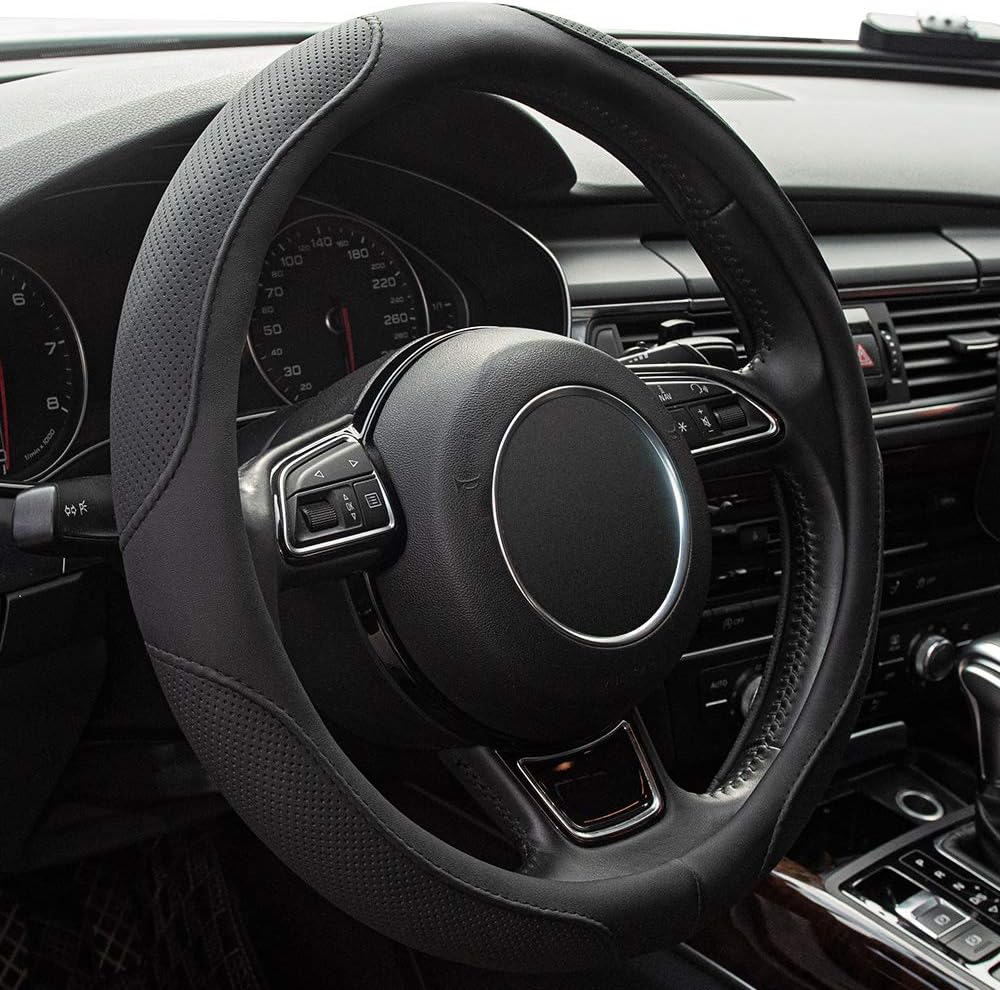
Steering Wheel Cover
Make Sure the Jump Start Was Done the Right Way
A surprising number of jump starts fail because of setup mistakes. Before you assume the worst, check the basics.
Common jump-start mistakes
These are the big ones:
- The clamps are on the wrong terminals
- The clamps look attached but do not grip well
- The battery posts are dirty or corroded
- The donor car is weak too
- You did not wait long enough before trying
- The jumper cables are too thin or poor quality
If you are wondering, why won’t my car start with jumper cables, start here first.
The right order matters
Use this simple process:
- Connect the red clamp to the dead battery’s positive terminal
- Connect the other red clamp to the donor battery’s positive terminal
- Connect the black clamp to the donor battery’s negative terminal
- Connect the last black clamp to bare metal on the dead car, away from the battery
- Start the donor car
- Wait a few minutes
- Try to start the dead car
If the battery jump doesn’t work, do not keep trying every few seconds. Give it time. A very weak battery may need a few minutes before it can do anything.
Check clamp contact
Sometimes the clamp is on the terminal, but not really making contact. Corrosion can block the flow of power.
If the clamps feel loose, reposition them. If the posts look crusty, clean them if it is safe to do so.
That alone can fix what looks like a major issue.
The Battery May Be Too Dead to Take a Jump
Yes, this happens.
A battery can be so weak, or so damaged, that a jump start does not help. That is one reason a dead battery won’t jump start.
Signs the battery may have failed
Look for these clues:
- The battery is old
- The lights are very dim or fully dead
- The jump start changes nothing
- The battery case looks swollen
- You see leaking fluid
- The car had slow starts for days before it quit
At that point, the battery may not just be low. It may be done.
Why a jump may fail on a bad battery
A jump start gives the car a burst of outside power. But if the battery has a dead cell or internal damage, it can drag the whole system down.
That means even a good donor battery may not be enough.
This is why some people assume, “My car won’t start battery not dead,” when the truth is that the battery is damaged, not just drained.
Easy DIY battery checks
You do not need to be a mechanic for these.
Turn on the headlights. Are they weak? Do they brighten when the donor car is connected? If nothing changes, the battery may be far gone or the connection may be poor.
If you have a multimeter, check battery voltage. A healthy battery at rest is usually around 12.6 volts. Much lower than that means trouble. If it is far below that, the battery may be too weak to recover.
If the battery is several years old, replacement may be the smart next step.
Check the Battery Terminals and Cables
This is one of the most common problems. It is also one of the most fixable.
A jump start only works if power can move through the cables and terminals. If those parts are dirty, loose, or damaged, the car may still act dead.
What bad terminals look like
Check for:
- White, green, or blue buildup on the battery posts
- Loose terminal clamps
- Frayed battery cables
- Cracked insulation
- A loose ground cable
Even a small amount of corrosion can block enough power to stop the car from starting.
DIY fix for dirty terminals
If you feel safe doing it, clean the battery posts and terminals. A battery cleaning brush helps, but even a simple cleaning method can work.
Tighten the terminals so they do not move by hand.
Then try the jump again.
This step is often the answer when a jump start didn’t work the first time.
Do not ignore the ground cable
The negative cable matters just as much as the positive cable. If the ground connection is weak, your car may have power for lights but not enough for starting.
A bad ground can mimic a dead battery, a bad starter, or a blown fuse.
If You Hear Clicking, The Starter Could Be the Problem
A click is a useful clue.
Rapid clicking usually means weak power
If you hear fast clicks, the battery may still be weak, or the cable connection may still be poor.
In this case, the car is trying to start but does not have enough power to finish the job.
One solid click can point to the starter
One heavy click often means the starter is getting power but not turning the engine.
This is a classic sign of a failing starter.
Other signs of a bad starter
Watch for these:
- The dash lights come on, but the engine does not crank
- The car had random no-start issues before
- You hear one click and then silence
- A jump start makes no real difference
If your car won’t crank after jump power is connected, the starter should be high on your list.
A simple DIY check
If the starter is easy to reach, some people lightly tap it while another person turns the key. A worn starter can sometimes respond one last time.
This is not a real fix. It is just a clue.
If the car starts after that, the starter likely needs replacement.
If the Engine Cranks But Still Will Not Start, The Battery May Not Be the Problem
This part confuses a lot of drivers.
If the engine turns over, the battery and starter may be doing enough. The issue may be somewhere else.
Know the difference
A car that won’t crank is different from a car that cranks but won’t start.
No crank means the engine does not turn at all.
Crank no start means the engine turns, but it does not fire up.
That second case often points to fuel, spark, air, or key system problems.
Common reasons for crank no start
Here are the most likely ones:
- No fuel in the tank
- Weak fuel pump
- Bad spark plugs or ignition parts
- Blown fuse
- Faulty sensor
- Anti-theft system issue
- Key or fob not recognized
This is why many DIY reasons car won’t start after jump go beyond the battery.
DIY checks you can do
Make sure the car actually has fuel. It sounds obvious, but it happens.
Turn the key to the on position and listen for a soft hum from the fuel pump.
Look at the dash. Is the security light flashing? That could point to an immobilizer issue.
Try a spare key if you have one.
If you have a code reader, scan for trouble codes. That can save a lot of guesswork.
The Alternator May Be the Real Problem
A bad alternator often hides behind what looks like a dead battery.
Here is how it works. The alternator charges the battery while the engine runs. If it stops working, the battery slowly drains. Then one day the car will not start.
Signs of alternator trouble
Watch for:
- Battery warning light on the dash
- Dim headlights
- Flickering interior lights
- Power windows moving slowly
- The car starts with a jump, then dies soon after
This is one of the top reasons a car still won’t start after a jump or starts only for a short time.
Easy alternator check
If you manage to start the car, watch what happens next.
If it runs rough, the lights fade, or the car dies again, the charging system may be failing.
A voltage check can help too. If the engine is running and the battery voltage does not rise above its resting level, the alternator may not be charging.
Do not forget the belt
The alternator needs its belt to work. If the belt is loose, damaged, or broken, the alternator cannot do its job.
So if the battery keeps dying, check the belt too.
Check Fuses and Relays
Sometimes the issue is small, cheap, and easy to miss.
A blown fuse or a bad relay can stop power from reaching the starter, fuel pump, ignition system, or control unit.
Fuses worth checking
Look in the fuse box for labels tied to:
- Starter
- Ignition
- Fuel pump
- Main fuse
- Engine control system
A blown fuse may be the reason what to do if jump start doesn’t work feels so confusing. The battery seems like the problem, but it is not.
What to look for
Pull the fuse and inspect the metal strip inside. If it is broken or burned, replace it with the same type and rating.
If a relay is suspected, and you have a matching one nearby, swap them as a test.
Do not guess with random fuse sizes. Use the correct one.
Make Sure the Car Is in Park or Neutral
This one is simple, but it matters.
Many cars will not start unless the transmission is fully in Park or Neutral. If that switch is not reading the gear right, the car may act dead.
Quick test
Put your foot on the brake and shift from Park to Neutral. Then try to start the car again.
If it starts in Neutral but not Park, the safety switch may be the issue.
For manual cars, press the clutch pedal all the way down. A clutch safety switch can also stop starting.
This tiny problem can look just like a dead battery or bad starter.
The Key or Anti-Theft System Could Be Blocking the Start
Modern cars rely on key chips and anti-theft systems. If the car does not recognize the key, it may crank and refuse to start, or it may not respond at all.
Signs of an anti-theft problem
Look for:
- Flashing security light
- Push-button start not responding
- Car cranks, then stops right away
- Spare key works better than your main key
What you can try
Use the spare key if you have one.
If your key fob battery is weak, replace it.
Lock and unlock the car, then try again.
For some push-button cars, holding the key fob close to the button can help if the fob battery is low.
Cold Weather Can Make Everything Worse
Cold weather makes batteries weaker. It also makes engine oil thicker. That means your car needs more power right when the battery has less to give.
What cold weather can do
In cold conditions, a weak battery may fail even with a jump.
The donor car may also need more time to send enough charge.
If you are dealing with winter weather, leave the jumper cables connected a bit longer before trying again.
But do not blame the weather for everything
Cold can expose a weak battery, but it does not create a bad starter, broken cable, or failed alternator out of nowhere.
If the same issue keeps happening, something deeper needs attention.
Step-by-Step DIY Checklist
If you want a clean path forward, use this checklist.
Quick troubleshooting steps
- Turn on the headlights and dash. Check for power
- Confirm the jumper cables are connected the right way
- Make sure the donor car is running
- Wait a few minutes before trying
- Clean and tighten the battery terminals
- Try starting again
- Listen for no sound, clicking, or cranking
- Try starting in Neutral
- Check the main fuses and starter-related fuses
- Watch for a flashing security light
- If the car starts, see if it stays running
- If it dies again, suspect the alternator
- If nothing changes, get the battery tested
This is the fastest way to work through the most common causes without wasting time or money.
When a Battery Charger Makes More Sense Than a Jump
A jump start is not always the best tool.
If the battery is deeply drained, it may need a slower charge instead of a quick burst.
Jump start vs charger
A jump start helps the car start now.
A battery charger helps restore the battery over time.
If the battery keeps dying, or if the car sat for weeks, charging may work better than repeated jump attempts.
A portable jump pack can also help if you do not have another car nearby.
When to Stop the DIY Process
Most no-start problems are safe to inspect. But not every repair should be done at home.
Call for help if you notice any of these
- The battery is leaking or swollen
- The cables get hot
- You smell burning
- The starter keeps clicking but will not turn
- The car starts, then dies right away
- You hear grinding or clunking noises
- Nothing changes after basic checks
At that point, blind part swapping gets expensive fast.
A proper test can tell you if the problem is the battery, starter, alternator, fuse, key system, or something more serious.
How to Prevent This From Happening Again
A little care goes a long way.
Smart habits that help
Replace an aging battery before it fails.
Clean the battery terminals from time to time.
Do not leave lights or accessories on when the engine is off.
Drive the car often enough to keep the battery charged.
Get the charging system checked if the battery dies more than once.
Keep jumper cables or a jump pack in the car.
If your battery is old and weak, replace it before winter.
Final Thoughts
If your car wont start with jump power, do not assume the battery is the only problem. A failed jump start can point to several issues. The battery may be too far gone. The terminals may be dirty. The cables may be loose. The starter may be failing. A fuse may be blown. Or the alternator may have drained the battery in the first place.
The key is to look at the symptom first.
No sound, clicking, cranking, or starting then dying. Each one tells a different story.
Start with the simple checks. Make sure the jump setup is right. Clean the terminals. Look for signs of a bad battery. Listen closely. Try Neutral. Check the fuses. Watch for security lights.
That is often enough to find the problem, or at least narrow it down.
And if the basics do not fix it, you will be in a much better position to get the right repair without guessing.
FAQs
Why won’t my car start even with jumper cables?
The most common causes are a failed battery, poor cable contact, corroded terminals, a bad starter, a blown fuse, or an alternator problem. If the engine cranks but does not start, the issue may be fuel, spark, or the anti-theft system.
Can a battery be too dead to jump-start?
Yes. A battery with internal damage or a dead cell may not respond to a jump at all. In that case, charging or replacement is often the better fix.
If my car clicks but won’t start, is it the battery or the starter?
Rapid clicking usually points to weak battery power or poor battery connections. One heavy click often points to the starter.
Why does my car crank but not start after a jump?
If the engine cranks, the battery may not be the main issue. Look at fuel delivery, ignition parts, key recognition, or a blown fuse.
Will a car start with a bad alternator if jumped?
Sometimes, yes. But it may run only for a short time and then die again because the alternator is not charging the battery.
How long should I leave jumper cables connected before trying to start?
A few minutes is a good start. If the battery is very low, waiting longer can help. Do not rush it.
Should I replace the battery if a jump does not work?
Not right away. Check the cable connections, battery age, terminal condition, starter signs, fuses, and alternator behavior first.