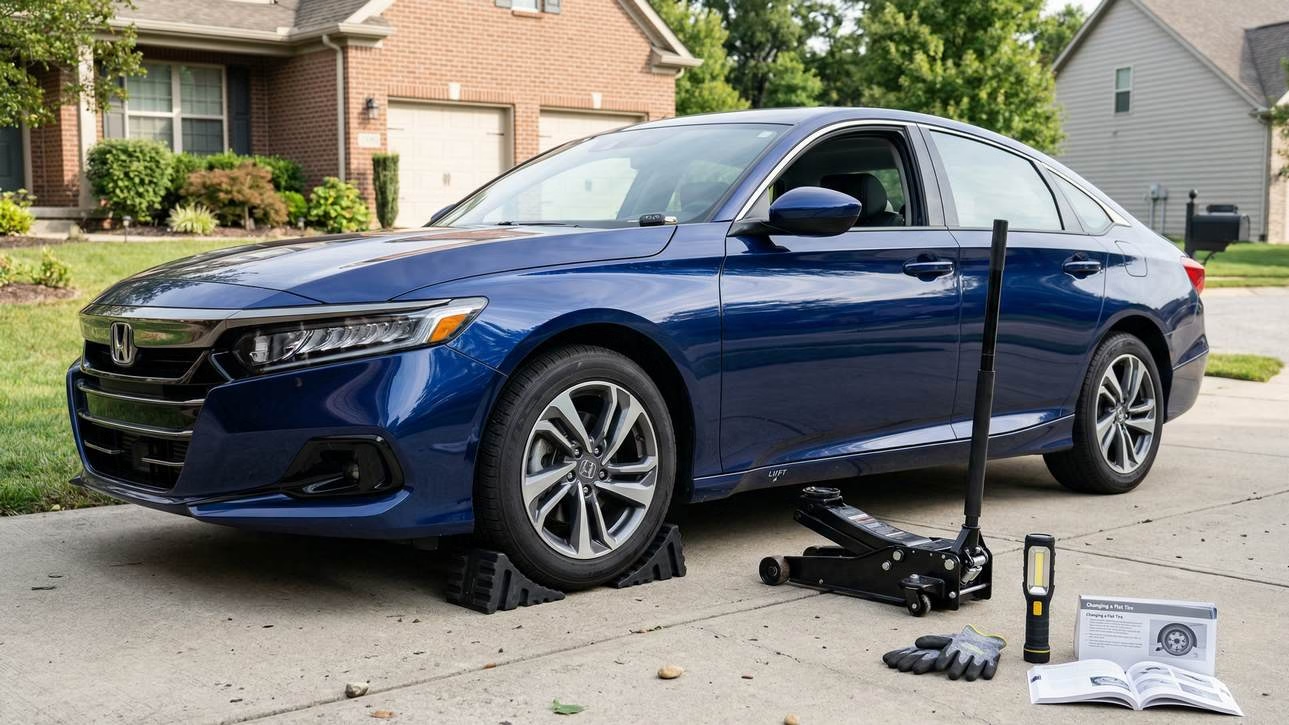
If you search for how to properly jack up a car, you probably want a quick fix. Before you start, confirm the right capacity with our free floor jack capacity calculator. Maybe you have a flat tire. Maybe you want to look under the car. Maybe you just want to feel more prepared. That makes sense.
But here is the truth. Lifting a vehicle is not a casual task. A small mistake can turn into a serious injury fast. That is why this guide takes a safety-first approach. Instead of walking you through risky actions, it helps you understand the dangers, the smart checks to make, and the moments when you should stop and call a pro.
If you are new to car care, this is the best place to start. Good decisions matter more than speed. And when it comes to vehicle lifting safety, caution is never overkill.
Why Car Lifting Safety Matters
A car looks steady when it sits on the ground. Once it is raised, everything changes. The vehicle becomes less stable. The margin for error gets smaller. And the consequences get bigger.
This is why car jack safety tips matter so much. People often assume the job is simple because they have seen it done before. But what works on one vehicle may not work on another. Cars differ in weight, shape, and support points. Ground conditions also change everything. A flat driveway is one thing. A soft shoulder on the side of the road is something else.
It is easy to underestimate the risk. That is where trouble starts. A rushed decision, a poor surface, or worn-out gear can create a dangerous situation in seconds. The smartest move is to slow down, look around, and think safety first.
When Someone Might Need to Raise a Car
There are a few common reasons people look up how to properly jack up a car. The most obvious one is a tire issue. A flat tire can happen anywhere, and it often happens at the worst time. Some drivers also want to inspect something under the car or reach a hard-to-see area. Others are trying to handle small maintenance tasks at home.
Those situations are normal. Still, not every job should become a DIY project. That is one of the most important lessons in beginner car maintenance safety. Just because a task seems small does not mean it is low risk.
A smart driver knows the difference between a basic situation and a dangerous one. If the setting feels wrong, the tools feel wrong, or your confidence drops, listen to that instinct. Safety is not about being fearless. It is about knowing when to stop.
The Biggest Car Lifting Risks People Overlook
Most accidents do not happen because someone planned to be careless. They happen because someone missed a detail. And with a raised vehicle, small details matter a lot.
Uneven or Soft Ground
This is one of the biggest car lifting risks. A surface may look fine at first glance, but still shift under pressure. Loose gravel, wet grass, dirt, or a sloped roadside can all create problems. A vehicle needs a stable base. If the ground is not solid, the setup is not safe.
The Wrong Equipment
Not all tools are equal. Some are meant for emergency use only. Others may be worn, damaged, or not suited to the weight of the vehicle. This is why car jack precautions start before anything leaves the trunk or garage. The condition and rating of the gear matter.
Guessing Instead of Checking
Many people assume they know where the vehicle can be supported. That is risky. Cars are not built the same way. Support points vary. If you are unsure, guessing is never a safe move.
Stress and Rushing
Roadside stress changes how people think. You may be late. You may feel pressure from traffic. You may just want the problem gone. That mental rush can lead to shortcuts. And shortcuts are a big part of the common mistakes when jacking up a car.
Working in a Bad Location
A busy road, poor lighting, bad weather, or a tight shoulder can turn an already risky task into a much worse one. In these cases, roadside car safety should come before everything else.
What to Check Before Any Vehicle Is Lifted
Before anything happens, stop and assess the situation. This one habit can prevent most problems.
Read the Owner’s Manual
This may sound obvious, but many people skip it. That is a mistake. The manual gives model-specific guidance. It tells you what your vehicle needs. It also helps you avoid bad assumptions.
Check the Surface
Ask one simple question. Is the ground firm, level, and stable? If the answer is not a clear yes, do not continue. This is one of the core ideas behind safe vehicle support basics.
Inspect the Equipment
Look for damage, wear, rust, bending, or missing parts. If anything looks off, do not trust it. Tools should inspire confidence, not doubt.
Think About the Environment
Are you near moving traffic? Is it dark? Is the weather poor? Is the area crowded? Good decisions depend on more than the vehicle alone. The environment matters just as much.
Keep the Area Clear
Children, pets, and bystanders should stay away from the work zone. Even a well-meaning helper can become a distraction at the wrong time.
Safety Equipment That Helps Reduce Risk
You do not need a huge pile of gear, but a few basic items can make a big difference.
Owner’s Manual
This is your first safety tool. It helps remove guesswork.
Wheel Chocks
These help reduce unwanted vehicle movement. They are simple, but they matter.
Gloves
Good gloves improve grip and help protect your hands from dirt, sharp edges, and rough surfaces.
Flashlight or Work Light
Poor light hides problems. Better visibility helps you notice hazards sooner.
Reflective Gear
If you are near a road, being seen matters. This is a key part of roadside car safety, especially at night or in bad weather.
Properly Rated Support Equipment
Anything used around a raised vehicle must be in good condition and appropriate for the vehicle. If you are not sure, it is better not to proceed.
Signs You Should Stop Immediately
A lot of people ask, is it safe to jack up a car at home or on the road? The honest answer is this: only when the setup is stable, the gear is right, and you know what you are doing. The second that confidence slips, stop.
Here are some clear warning signs:
The Vehicle Feels Unstable
If anything shifts, rocks, or feels off, do not keep going. Instability is not something to “work around.”
The Ground Seems Weak
Soft soil, sinking pressure points, or a slippery surface are major red flags.
You Are Not Sure About the Support Area
Uncertainty is a warning sign. If you cannot confirm a safe setup, stop.
The Tools Look Damaged
A bent, rusted, cracked, or unreliable tool is reason enough to walk away.
The Location Feels Dangerous
Fast traffic, poor lighting, rain, or a narrow roadside shoulder all increase risk. In these moments, the smartest move is often to call for help.
Common Mistakes Beginners Make
When people search for how to properly jack up a car, they often expect a quick answer. But the real issue is not speed. It is judgment. And beginners tend to make the same errors.
Assuming Every Car Is the Same
This is one of the most common mistakes. Different vehicles have different needs. What worked once may be wrong next time.
Ignoring the Manual
People do this because they feel confident or rushed. Both reasons can lead to trouble.
Using Whatever Tool Is Available
Improvising with poor equipment is a bad idea. Reliable gear is not optional.
Working Too Fast
Speed feels useful in a stressful moment. In reality, it often leads to poor choices. Slow is safer.
Trying to Force a Bad Situation
A bad location, bad weather, or bad gear does not become safe just because the task seems urgent.
These are some of the biggest common mistakes when jacking up a car, and they are all preventable.
When to Call a Professional Instead
Knowing when to call roadside assistance is part of being a smart driver. You do not need to prove anything. You just need to stay safe.
Call for help if:
You Are on a Busy Road
Traffic adds pressure and risk. If the shoulder is narrow or visibility is poor, let trained help handle it.
You Do Not Have the Right Tools
Missing gear is not something to “figure out later.” If the setup is incomplete, do not continue.
You Feel Unsure
If you are second-guessing the vehicle, the tools, or the conditions, trust that feeling. Uncertainty is a real risk factor.
The Ground Is Sloped or Soft
This is not a small problem. Surface stability is one of the most important parts of vehicle lifting safety.
The Job Goes Beyond a Simple Check
If the task needs more than a quick inspection, it may be better left to a mechanic. Some jobs are safer in a shop with proper equipment.
Smart Habits That Make You Safer
Good safety is not just about one moment. It is about habits. The better your habits, the lower your risk.
Stay Calm
Stress causes shortcuts. A calm mindset helps you notice problems before they become dangerous.
Prepare Before You Need It
Do not wait for an emergency to check your gear. Look at it now. Know what you have. Replace anything questionable.
Keep a Basic Emergency Kit
A few simple items can help you stay safer and more visible if you run into trouble on the road.
Accept Your Limits
This may be the most valuable habit of all. You do not need to do everything yourself. Sometimes the best choice is to stop and ask for help.
FAQs About Lifting a Car Safely
Is it safe to jack up a car at home?
It can be, but only when the surface is stable, the equipment is in good shape, and the vehicle’s requirements are clear. If any part of the setup feels uncertain, it is safer to stop.
Can you raise a car on uneven ground?
That is a major risk. Uneven or soft ground can make the vehicle unstable. A stable surface is one of the most important parts of safe vehicle support basics.
Why is the owner’s manual so important?
It gives vehicle-specific guidance and helps prevent dangerous guesswork. That matters because not all cars are supported the same way.
What should you do if the vehicle feels unstable?
Stop right away. Do not try to push through the problem. Instability is a clear sign that the situation may be unsafe.
When should you call roadside assistance?
Call if traffic is heavy, the location is unsafe, the ground is poor, your tools are not right, or your confidence is low. That is exactly when to call roadside assistance instead of trying to force the situation.
What are the top car jack safety tips for beginners?
Slow down, check the manual, inspect the ground, inspect the tools, avoid rushing, and stop if anything feels off. These simple car jack safety tips can prevent serious mistakes.
Final Thoughts
If you came here looking for how to properly jack up a car, the most useful thing to know is this: safety comes first, always. A raised vehicle is not something to improvise around. It is not something to rush. And it is not something to treat lightly.
The best approach is simple. Check the conditions. Respect the risks. Use good judgment. If the setup feels wrong, stop. If the location feels risky, stop. If you are unsure, call a professional.
That is not weakness. That is smart decision-making.
In the end, the goal is not just to fix a problem. The goal is to get through the situation safely. And that starts with choosing caution over confidence every single time.