
A shaky steering wheel when braking is never normal. Your car is trying to tell you something. In many cases, the issue starts in the front brakes. But that is not the only cause. Tires, wheels, and worn steering parts can also make the wheel shake when you slow down. We recommend reviewing this guide to learn about braking vibrations, effective fixes, and indicators of serious trouble.
The good news is this. You do not need to guess. You can narrow down the cause with a few simple checks. Some fixes are easy to do at home. Others need a pro because they affect how safely your car stops and steers.
In this guide, you will learn what causes the shaking, how to test each problem, and which DIY fixes make sense. You will also learn when to stop driving and get the car checked right away.
🛞 Drive With Comfort & Style | Recommended Car Wheel Covers 🛞
Premium steering wheel covers – velvet, leather, ergonomic grip & lasting protection

Wheel Cover (Velvet)

Steering Wheel Cover

Wheel Cover

Wheel Cover
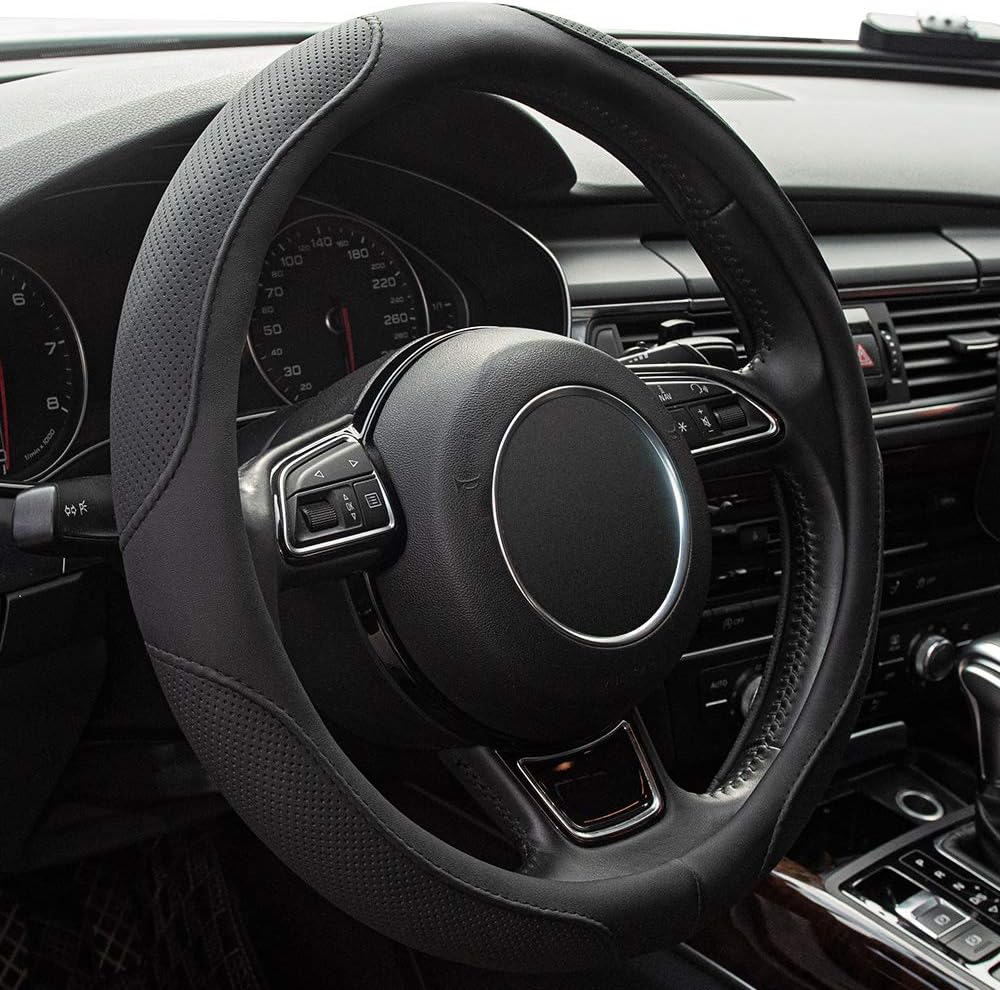
Steering Wheel Cover
What It Means When Your Steering Wheel Shakes While Braking
If the steering wheel stays smooth while driving but starts to shake as soon as you press the brake pedal, the problem is often in the brake system. The front brakes take most of the load when you slow down. That is why you usually feel the shake through the steering wheel.
Still, the timing of the shake matters.
If it happens only when braking, think brakes first.
If it happens all the time, even without braking, think tires, wheel balance, alignment, or worn front-end parts.
If the shake gets worse at higher speed, the issue may still be brake related, but speed can make it feel much stronger.
If you also feel a pulse in the brake pedal, the brake rotors may have worn unevenly.
If the car pulls left or right, a sticking brake caliper or worn suspension part may be part of the problem.
A quick way to think about it is this:
- Only when braking: Most likely brake rotors, pads, or calipers
- All the time: More likely tires, wheels, or suspension
- Shaking plus pulling: Often one side brakes harder than the other
- Shaking plus noise: Look closely at wheel bearings, brakes, or loose parts
Is It Safe to Drive With a Shaky Steering Wheel When Braking?
Sometimes the shake starts small. You may notice it only on the highway or during harder stops. That does not mean it is safe to ignore.
A light vibration may come from worn rotors or uneven brake pad contact. That still needs attention. Brake problems rarely fix themselves. They tend to get worse over time.
Stop driving and inspect the car as soon as you can if you notice any of these signs:
- The steering wheel shakes hard or jerks side to side
- The car pulls sharply when you brake
- You hear grinding or metal-on-metal noise
- The brake pedal feels soft or weak
- Stopping distance gets longer
- One wheel smells hot or burned
- You hear clunks from the front end
- The shake started right after brake or wheel work
If the car feels unstable, do not risk it. A brake or steering issue can turn serious fast.
Most Common Causes of a Shaky Steering Wheel When Braking
Uneven or Worn Brake Rotors
This is the most common cause. The brake rotor is the smooth metal disc that the brake pads clamp onto. Over time, the rotor can wear unevenly. It can also develop hot spots. When that happens, the brake pads no longer grip a smooth, even surface.
That uneven contact creates vibration. Since the front brakes do most of the work, the steering wheel often shakes first.
This problem usually shows up more at higher speeds. The faster the wheels spin, the easier it is to feel the uneven braking force.
Worn Brake Pads or Uneven Pad Deposits
Brake pads can wear down in odd ways. One pad may wear faster than the other. A cheap pad may also leave uneven material on the rotor surface. That patchy contact can feel a lot like a bad rotor.
If the pads are very thin, glazed, or worn at an angle, they can trigger shake during braking.
Sticking Brake Caliper
A sticking caliper can keep one brake pad pressed too hard against the rotor. That creates extra heat and uneven wear. It can also make the car pull to one side under braking.
This problem often shows up with one hot wheel, a burning smell, or faster pad wear on one side.
Loose or Worn Suspension Parts
Braking loads the front suspension hard. If a tie rod end, ball joint, or control arm bushing is worn out, the wheel can shift when you slow down. That movement can travel straight into the steering wheel.
This type of shake may come with clunks, wandering, or loose steering.
Tire or Wheel Problems
A damaged tire can also create a shaky steering wheel. So can a bent wheel. A tire with uneven wear, a bulge, or a separated belt may not roll smoothly. Braking can make that flaw more obvious.
If the wheel shake happens even when you are not braking, the tires and wheels move higher up the suspect list.
Wheel Bearing Wear
A worn wheel bearing can let the wheel move more than it should. That play can create vibration, especially when braking shifts weight to the front.
Wheel bearing issues may also bring a humming or growling sound that changes with speed.
Alignment Problems
Alignment alone does not usually cause a steering wheel to shake only when braking. But poor alignment can wear the tires in a way that adds vibration. It can also make other small problems feel worse.
Improper Lug Nut Torque
This one gets missed all the time. If the lug nuts were tightened unevenly after a tire change or brake job, the rotor may not sit flat. That can create a shake that feels a lot like rotor trouble.
If the shake started after recent service, check this first.
Quick Symptom Guide
Here is a simple way to match the symptom to the likely cause:
Shakes only when braking at high speed
Most likely uneven front brake rotors.
Shakes while braking and the pedal pulses
Very likely rotor wear or uneven pad contact.
Shakes all the time, even off the brakes
Check tire balance, tire damage, wheel damage, or worn front-end parts.
Shakes and pulls to one side
Look for a sticking caliper, uneven braking, or worn suspension parts.
Shakes after a recent brake job
Check rotor seating, lug nut torque, and caliper slide pins.
Shakes with a humming noise
A wheel bearing may be worn.
DIY Diagnosis: How to Find the Real Cause
You do not need fancy tools to get a good first answer. Start with the basics. Move from the easiest checks to the deeper ones.
Step 1: Notice Exactly When the Shake Starts
Ask yourself a few simple questions:
- Does it happen only when you brake?
- Is it worse at highway speed?
- Do you feel it in the steering wheel, the brake pedal, or the whole car?
- Does the car pull to one side?
- Did the problem begin after new brakes, new tires, or wheel work?
These clues matter. They help you avoid replacing the wrong parts.
Step 2: Inspect the Front Brake Rotors
Park on level ground. Let the brakes cool. Then look through the wheel or remove the wheel for a better view.
Look for:
- Deep grooves
- Blue or dark hot spots
- Cracks
- Heavy rust ridges
- A rough or uneven surface
A rotor does not need to look bent to cause vibration. Small surface changes can still create shake.
Step 3: Check the Brake Pads
If you can see the pads, inspect both sides. You want even wear. One pad worn much more than the other points to caliper trouble.
Look for:
- Very thin pads
- Uneven wear
- Shiny, glazed surfaces
- Crumbling edges
- Signs of heat damage
Step 4: Check for Loose Steering or Suspension Parts
Lift the front end safely with a jack and jack stands. Never rely on the jack alone.
Grab the tire at 3 and 9 o’clock and rock it. Too much play may point to tie rod wear.
Grab it at 12 and 6 o’clock and rock it again. That may reveal bearing or ball joint play.
Look under the front end for cracked bushings, leaking joints, or parts that move too much.
Step 5: Inspect Tires and Wheels
Check the front tires closely. Run your hand over the tread. It should feel smooth all the way around.
Look for:
- Cupping or scalloped wear
- Flat spots
- Sidewall bulges
- Cracks
- Uneven tread depth
- Bent wheel lips
A tire problem can hide in plain sight. If one section feels raised or wavy, do not ignore it.
Step 6: Check Lug Nut Torque
If the shake showed up after tire service, brake work, or a roadside wheel change, this check is a must.
Lug nuts should be tightened in a star pattern and to the correct spec. Too loose is dangerous. Too tight or uneven can also create problems.
Step 7: Take a Short Test Drive
If the car feels safe enough, do a careful road test.
Notice:
- What speed the shake begins
- Whether light braking feels better than hard braking
- Whether the vibration stops as soon as you release the brake pedal
- Whether the car pulls left or right
Those clues can point you in the right direction fast.
How to Fix a Shaky Steering Wheel When Braking Yourself
Now let’s talk about solutions. Start with the easy wins. Then move to bigger repairs only if the symptoms support them.
DIY Fix #1: Clean and Re-seat the Front Rotors
If the problem started after recent brake work, this fix makes a lot of sense.
Rust, dirt, or debris on the hub can keep the rotor from sitting flat. That tiny gap can create a big vibration.
What you need
- Floor jack
- Jack stands
- Lug wrench
- Socket set
- Brake cleaner
- Wire brush
- Torque wrench
- Gloves and eye protection
How to do it
- Park on a flat surface and secure the car.
- Lift the front end and remove the wheels.
- Remove the brake caliper and bracket if needed.
- Take off the rotor.
- Clean the hub face with a wire brush until it is smooth and free of rust.
- Clean the back of the rotor too.
- Reinstall the rotor so it sits flush.
- Reassemble the brakes.
- Tighten the lug nuts in a star pattern with a torque wrench.
- Test drive the car carefully.
This fix is simple, cheap, and often overlooked.
DIY Fix #2: Replace Brake Pads and Rotors
If the rotors look worn or the brake pedal pulses, replacing pads and rotors together is often the best move.
You can machine rotors on some cars, but new parts often make more sense. They save time. They also lower the chance of the shake coming back soon.
Basic steps
- Lift and secure the vehicle.
- Remove the front wheels.
- Remove the caliper and bracket.
- Remove the old brake pads and rotor.
- Inspect the caliper slide pins.
- Clean and grease the slide pins if they move freely.
- Install the new rotor.
- Install new hardware and brake pads.
- Reassemble everything.
- Torque all bolts and lug nuts correctly.
- Pump the brake pedal before driving.
- Follow the pad bedding steps that come with the new parts.
Always replace parts on both sides of the front axle. Never do just one side.
DIY Fix #3: Service the Caliper Slide Pins
If one brake pad is more worn than the other, the slide pins may be sticking. This is a common cause of uneven braking.
What to do
- Remove the slide pins
- Wipe off old grease and dirt
- Check for rust or damage
- Apply fresh high-temp brake grease
- Replace torn rubber boots if needed
- Make sure the pins slide freely before reassembly
If the caliper piston itself is seized, that repair is more advanced. In that case, replacing the caliper may be the safer route.
DIY Fix #4: Rotate or Replace a Damaged Tire
If the tire tread looks uneven or the sidewall has a bulge, act fast. A bad tire can make the steering wheel shake and can also fail without warning.
Rotate the tires only if all four are in safe shape. Replace any tire with a bulge, belt issue, or severe uneven wear.
After replacing a tire, get the wheel balanced. An out-of-balance tire can still cause shake.
DIY Fix #5: Retorque the Lug Nuts Properly
This fix is quick. It costs almost nothing if you already own a torque wrench.
How to do it
- Loosen the lug nuts slightly if needed.
- Tighten them in a star pattern.
- Use the correct torque setting for your vehicle.
- Recheck after a short drive if your manual suggests it.
If the shake fades after this, you may have solved the problem in ten minutes.
DIY Fix #6: Replace Worn Suspension Parts
This is the advanced fix. If you found play in a tie rod, ball joint, or control arm bushing, replace the bad part before it gets worse.
This job takes more skill and better tools. It also changes wheel alignment. So plan on getting an alignment after the repair.
If you are not comfortable with front-end work, this is a good place to call a mechanic.
Tools You May Need
For most brake and vibration checks, these tools cover the job:
- Floor jack
- Jack stands
- Wheel chocks
- Lug wrench
- Socket and ratchet set
- Torque wrench
- Brake cleaner
- Wire brush
- Brake grease
- Gloves
- Safety glasses
- Flashlight
Helpful extras:
- Infrared thermometer for checking hot wheels
- Pry bar for checking play in suspension parts
- Brake piston tool or C-clamp
Beginner-Friendly Repairs vs Advanced Repairs
Knowing your limits can save time, money, and stress.
Good DIY jobs for beginners
- Inspecting brake rotors and pads
- Checking tires for wear or damage
- Retorquing lug nuts
- Cleaning the hub and rotor seating surface
- Replacing pads and rotors on a simple setup
Better for advanced DIYers or a pro
- Caliper replacement
- Wheel bearing replacement
- Ball joint replacement
- Tie rod replacement
- Diagnosing deep steering or suspension issues
There is no shame in stopping when the repair gets too risky. Brakes and steering are not the place to guess.
When DIY Will Not Solve the Problem
Sometimes you replace the pads and rotors, and the shake is still there. That usually means the root cause sits somewhere else.
Possible hidden causes include:
- A worn wheel hub
- A bad wheel bearing
- A bent wheel
- Poor quality brake parts
- Loose steering parts
- Tire belt damage
- A brake caliper that still sticks under load
If the vibration stays after a careful brake repair, do not keep throwing parts at the problem. Get the car inspected. A good diagnosis costs less than replacing parts at random.
DIY vs Mechanic Repair Cost
The final cost depends on your vehicle, the parts you choose, and what has actually failed. But in general, brake work is cheaper than front-end suspension work.
A simple DIY rotor and pad job is often one of the most affordable fixes. A sticking caliper adds more cost. Tire replacement can range from modest to high, depending on the tire. Wheel bearings and suspension parts usually cost more because labor goes up.
If you enjoy wrenching and already own tools, DIY can save a lot. But if you are unsure, paying for a correct diagnosis first can save even more.
How to Prevent Steering Wheel Shake During Braking
You cannot stop every problem before it starts, but you can reduce the odds.
Use quality brake parts
Cheap parts may wear fast and create vibration sooner. Better pads and rotors usually last longer and feel smoother.
Torque the wheels the right way
Always tighten lug nuts with a torque wrench. Do not trust feel alone.
Do not ignore small brake pulsation
A tiny pulse now can become a bigger shake later. Catching it early may save the rotors and pads.
Keep the tires in good shape
Rotate them on time. Keep them inflated. Replace damaged tires before they start causing bigger issues.
Fix front-end play early
A small amount of looseness can grow fast. Worn parts do not stay “a little worn” for long.
Watch for heat-related brake trouble
Long downhill braking or repeated hard stops can overheat the brakes. If you drive hard or tow often, good parts matter even more.
Frequently Asked Questions
Can bad brake rotors make the steering wheel shake?
Yes. Uneven front rotors are one of the top reasons a steering wheel shakes during braking.
Why does my steering wheel shake only when braking at high speed?
Speed makes brake vibration easier to feel. A rotor issue that seems mild at low speed can feel much stronger on the highway.
Can wheel alignment cause steering wheel shake when braking?
Not by itself in most cases. But bad alignment can wear tires unevenly and make other problems feel worse.
Is it dangerous if my steering wheel shakes when I brake?
It can be. A mild shake may come from worn brakes. A severe shake may mean a serious brake, tire, or steering issue. If the car pulls, grinds, or feels unstable, stop driving.
Can new brakes still cause vibration?
Yes. New brakes can still shake if the rotor does not sit flat, the lug nuts were tightened unevenly, the slide pins stick, or the pads were not bedded in correctly.
Will balancing tires fix a shaky steering wheel when braking?
Only if the tire or wheel is part of the problem. If the shake happens only when braking, the brakes are still the first place to check.
How do I know if it is rotors or suspension?
If the shake happens only during braking and the pedal pulses, start with the rotors. If the steering feels loose, clunks over bumps, or the wheel has play when lifted, look harder at suspension parts.
Why did the shaking start right after a brake job?
The rotor may not be seated flat. The lug nuts may be unevenly tightened. The caliper slide pins may also need service.
Final Verdict: What to Check First
If your steering wheel shakes when braking, do not start by buying random parts. Start with the most likely causes in the smartest order.
Here is the best path:
- Check lug nut torque
- Inspect the front brake rotors
- Check the brake pads for uneven wear
- Look for pedal pulsation during braking
- Inspect the front tires and wheels
- Check for play in tie rods, ball joints, and wheel bearings
- Look for signs of a sticking caliper
In most cases, the front brakes are the real source of the problem. But tires, wheels, and loose steering parts can copy the same symptom. That is why a simple step-by-step check works better than guesswork.
If you want the fastest win, start with the brakes. If the shake stays after that, move outward to the tires, wheels, and suspension.
A shaky steering wheel when braking is not something to “wait and see.” Catch it early, fix it right, and your car will feel smoother, safer, and more predictable on every stop.