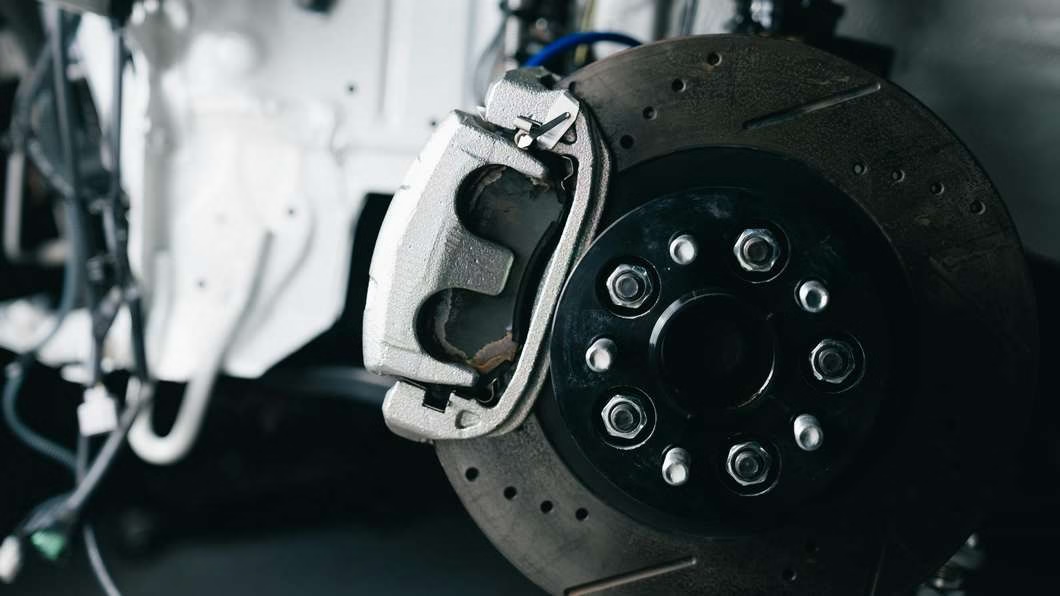
If your brakes are grinding, do not brush it off. That rough, metal-on-metal sound is your car asking for help. Sometimes the fix is small. A bit of rust or a pebble can cause a harsh noise. But in many cases, grinding means your brake pads are worn out or your rotors are getting damaged.
Understanding the underlying issue is key; explore this article on why your car is squeaking and how to resolve it for practical solutions.
The good news is this: you can often narrow down the cause at home. In some cases, you can fix it yourself. In this guide, I’ll walk you through what brake grinding means, how to spot the real cause, what DIY steps make sense, and when you should stop driving and get it fixed right away.
Quick Answer: Why Are My Brakes Grinding?
Brake grinding usually means one of five things. Your brake pads may be worn down. Your rotors may be damaged. Rust may have formed on the brake surface. Debris may be stuck near the rotor. Or a part like the backing plate or caliper may be rubbing when it should not. To determine why your vehicle vibrates during braking, refer to this guide on causes of car shaking when braking and how to fix them.
If the noise is loud, constant, or paired with weak braking, treat it as urgent. The longer you wait, the more damage it can do.
Is It Safe to Drive With Grinding Brakes?
Most of the time, no. Grinding brakes are a warning sign. Your car may still stop, but that does not mean it is safe. Brake damage can get worse fast. A simple pad job can turn into rotors, calipers, and a much bigger bill.
Stop driving right away if:
- The grinding happens every time you brake
- The pedal feels soft, hard, or shaky
- The car pulls to one side
- You smell something hot or burnt
- The stopping distance feels longer
- One wheel feels much hotter than the others
- The sound is loud and metallic
It may be minor if:
- The sound started after rain
- The car sat overnight
- The noise goes away after a few gentle stops
Even then, keep an eye on it. If it comes back, inspect the brakes.
What Does Brake Grinding Usually Mean?
Grinding means parts are rubbing in a way they should not. Brakes work by pressing pad material against a metal rotor. That creates smooth friction and slows the car down. But once the pad material wears away, the metal backing can hit the rotor. That is when the sound gets ugly.
Think of it this way. A soft layer is meant to do the stopping. When that layer is gone, hard metal takes over. That is bad for both safety and cost.
8 Common Reasons Your Brakes Are Grinding
Not all brake noises come from the same problem. Here are the most common causes.
1. Worn brake pads
This is the big one. Brake pads wear down over time. Once the friction material is gone, metal hits metal. That causes a harsh grinding sound.
You may also notice weaker braking, longer stops, or a rough feel in the pedal.
2. Rust on the rotors
Cars that sit in the rain or overnight often get light rust on the brake rotors. That rust can make a scraping or grinding sound at first. In many cases, it clears after a few stops.
If the sound stays, do not assume it is just rust. Check further.
3. A rock or debris stuck in the brake area
Small stones can get caught between the rotor and another part nearby. That can cause a sudden grinding or scraping noise. It often happens after driving on gravel, rough roads, or near road work.
The sound may come from one wheel only.
4. A bent backing plate
Behind the rotor is a thin metal shield. It helps block dirt and splash. If it gets bent, it can rub against the rotor and sound like a brake problem.
This can happen after a pothole, curb hit, or rough road.
5. A sticking caliper or slide pin
Your brake caliper has moving parts. If one sticks, the pad may stay pressed against the rotor. That can cause grinding, uneven wear, heat, and poor braking.
This problem often shows up on one side of the car.
6. Damaged or badly worn rotors
Rotors can get deep grooves. They can overheat. They can wear unevenly. Once that happens, they may grind even if the pads still have some life left.
If the rotor looks rough, scored, or blue from heat, it needs attention.
7. New brakes grinding
New brakes should not make a true grinding sound. A little noise during break-in can happen, but real grinding points to a problem. It may be the wrong parts, poor fit, missing clips, or a bad install.
If you just had brake work done and now hear grinding, inspect it soon.
8. The noise is not from the brakes at all
Sometimes a wheel bearing, tire rub, or loose metal part can sound like bad brakes. If the noise happens even when you are not braking, that is a clue.
Do not guess. Check it carefully.
How to Tell What Kind of Grinding Noise You Have
The timing of the sound tells you a lot. Pay close attention to when it happens.
Grinding only when braking
This usually points to pads, rotors, calipers, or brake hardware. If the sound starts the moment you touch the pedal, the brakes are the first place to look.
Grinding while driving, even without braking
This often points to a bent backing plate, trapped debris, or another part that is rubbing all the time. A wheel bearing can also make a rough, growling sound.
Grinding at low speed
Low speed makes brake noise easier to hear. If it sounds worse when you are creeping into a parking spot or slowing for a stop sign, check the brakes first.
Grinding from the front
Front brakes do most of the stopping. That is why front brake wear is so common. If the sound seems to come from the front, worn front pads are a strong suspect.
Grinding from the rear
Rear brakes can grind too. Rear pads, parking brake parts, or rear rotors may be at fault. Some cars also use drum brakes in the rear, and those can make harsh noises when worn or damaged.
DIY Brake Grinding Checklist
You can do a basic check at home before you start replacing parts. Work on a flat surface. Let the brakes cool down first. Use wheel chocks. And never trust a jack alone. Always use jack stands if you lift the car.
Step 1: Look through the wheel
Many wheels let you peek at the brake pad. If the pad looks paper-thin, that is a red flag. Compare both sides if you can. One side that looks much thinner than the other may point to a sticking caliper.
Step 2: Check the rotor surface
Look for deep grooves, rough edges, heavy rust, or blue spots from heat. A smooth rotor is normal. A badly scarred rotor is not.
Step 3: Find the loudest wheel
Listen closely while driving at a low speed in a safe area. Is the sound from the front or rear? Left or right? Does it happen only when braking? This helps you narrow the problem down.
Step 4: Look for debris
Use a flashlight. Check around the rotor and backing plate. A pebble or chunk of dirt can cause a lot of noise.
Step 5: Inspect the backing plate
If the thin metal shield sits too close to the rotor, it may rub. It should not touch the rotor at any point.
Step 6: Watch for other warning signs
Pay attention to pulling, shaking, heat, burning smells, or a brake light on the dash. These signs point to a bigger issue.
DIY Fixes for Grinding Brakes
Some brake problems are easy to fix at home. Others are not. Here are the most practical DIY solutions.
DIY Fix 1: Clear light surface rust
If the noise started after rain or after the car sat overnight, light rotor rust may be the cause. Start the car and drive slowly in a safe area. Make a few gentle stops. If the noise fades quickly, that was likely it.
If the sound stays, move on to a full inspection.
DIY Fix 2: Remove trapped debris
If a small rock is stuck, you may be able to free it without major work. First, inspect the gap around the rotor and backing plate. Sometimes a pebble falls out after careful movement of the car or after the wheel is removed.
If you remove the wheel, take your time. Do not force tools into tight spaces if you are not sure what you are touching.
DIY Fix 3: Reposition a bent backing plate
A backing plate can often be bent back by hand or with a simple tool. The goal is small, even clearance all around the rotor. It should never touch.
This is one of the easiest causes to fix. It also creates one of the most annoying sounds.
DIY Fix 4: Replace worn brake pads
If your pads are worn down, replace them soon. Always replace pads as a pair on the same axle. If the front left pad is worn, replace both front pads. If the rear right pad is worn, replace both rear pads.
When you replace pads, inspect the rotors too. If they are badly grooved or worn, do not throw new pads on a bad rotor and hope for the best.
Basic pad replacement tips:
- Use the correct parts for your car
- Replace brake hardware if the kit includes it
- Clean contact points
- Use brake grease only where needed
- Tighten bolts to the proper torque
- Pump the brake pedal before driving
- Follow the pad break-in steps
If you are new to brake work, go slow. Brakes are not a place to rush.
DIY Fix 5: Replace damaged rotors
Rotors that are deeply scored, cracked, warped, or worn too thin need to go. In many cases, replacement makes more sense than trying to save them.
New rotors work best with new pads. That gives you a clean, even braking surface and helps cut down on noise.
DIY Fix 6: Service sticky slide pins
If one pad is wearing much faster than the other, your slide pins may be sticking. Remove them, clean them, and use the right brake grease. Check the rubber boots too. If they are torn, dirt can get in and cause more trouble.
If the caliper piston itself is stuck, that is a bigger job. At that point, replacing the caliper may be the better move.
DIY Fix 7: Break in new brakes the right way
New pads and rotors need a proper break-in process. This helps them wear evenly and grip well. If new brakes are noisy, poor break-in could be part of the problem.
Follow the steps that come with your brake parts. Do not skip this. It matters more than people think.
When DIY Is the Wrong Move
Some brake jobs are still DIY-friendly. Others are not worth the risk. Step back and call a pro if:
- The sound is true metal-on-metal grinding
- The rotor is deeply damaged
- The caliper is seized or leaking
- The brake pedal feels wrong
- The car pulls hard when braking
- You are not sure what failed
- The noise returns right after your repair
There is no shame in handing off a brake job. Smart is better than stubborn.
Tools and Supplies You May Need
If you plan to inspect or repair the brakes yourself, keep it simple and safe.
Basic tools
- Lug wrench
- Jack
- Jack stands
- Socket set
- Torque wrench
- Flashlight
- Gloves
- Eye protection
Brake supplies
- Brake pads
- Rotors
- Brake cleaner
- Brake grease
- Shop towels
- C-clamp or brake piston tool
Do not start the job without the right tools. That is how simple repairs turn messy.
How Much Does It Cost to Fix Grinding Brakes?
The cost depends on the cause.
If the issue is just light rust or a bent backing plate, the fix may cost little or nothing. If you need pads, the cost is still manageable for many DIY jobs. Add rotors, and the total goes up. Add calipers, and it climbs fast.
The main lesson is simple. Grinding never gets cheaper with time. Catch it early, and you save money.
What Happens If You Ignore Grinding Brakes?
This is where a lot of drivers get burned. They hear a noise, keep driving, and turn a small repair into a full brake overhaul.
Ignoring grinding brakes can lead to:
- Longer stopping distance
- Rotor damage
- Caliper damage
- Uneven braking
- Higher repair costs
- More risk on the road
Brakes are one of those systems where delay almost always costs more.
A Simple Troubleshooting Flow
Use this quick guide if you want the fastest path to an answer.
If the noise happens after rain or overnight
It may be light rust. Try a few gentle stops. If the sound fades fast, that is likely the cause.
If it grinds only when braking
Check the pads and rotors first. Worn pads are the most common cause.
If it grinds all the time
Look for a bent backing plate, stuck debris, or a part that rubs while the wheel spins.
If it comes from one side only
Check for a sticking caliper, uneven pad wear, or a trapped stone.
If the brakes are new
Inspect the install. Confirm the correct parts were used and that everything sits where it should.
When to Call a Mechanic
Call a mechanic if you want peace of mind or if any of these apply:
- You hear loud grinding every time you brake
- The car shakes or pulls
- The pedal feels weak or strange
- You see severe rotor damage
- You suspect a seized caliper
- You do not have the tools to work safely
- You tried a DIY fix and the noise came back
A good brake inspection is cheaper than guessing wrong.
Final Thoughts
If your brakes are grinding, take it seriously. Sometimes the cause is mild. Often, it is not. The sound usually means something is worn, rubbing, or failing. The best move is to inspect it early, fix the small issue before it grows, and avoid driving if the brakes feel unsafe.
If you catch it in time, the repair may be simple. If you ignore it, the bill will almost always get worse.
FAQs
Why are my brakes grinding when I stop?
The most common cause is worn brake pads. It can also happen from damaged rotors, stuck brake parts, or debris near the rotor.
Why are my brakes grinding but the pads look fine?
The issue may be rust, a bent backing plate, a trapped rock, or rotor damage. In some cases, the noise may come from a wheel bearing or another nearby part.
Can new brakes make a grinding noise?
A small amount of noise during break-in can happen, but true grinding is not normal. It often points to a bad install, wrong parts, or missing hardware.
Why do my brakes grind only in the morning?
Light rust often forms overnight, especially in damp weather. If the noise goes away after a few gentle stops, that is a likely cause.
Can I drive with grinding brakes?
It is not a good idea. If the sound is loud or constant, or if braking feels weak, stop driving and inspect the problem.
Do rear brakes grind too?
Yes. Rear pads, rotors, parking brake parts, or drum brake parts can all cause grinding.
How do I know if the rotor is damaged?
Look for deep grooves, rough surfaces, heat spots, or a lip on the edge. If the rotor looks badly worn, it likely needs replacement.