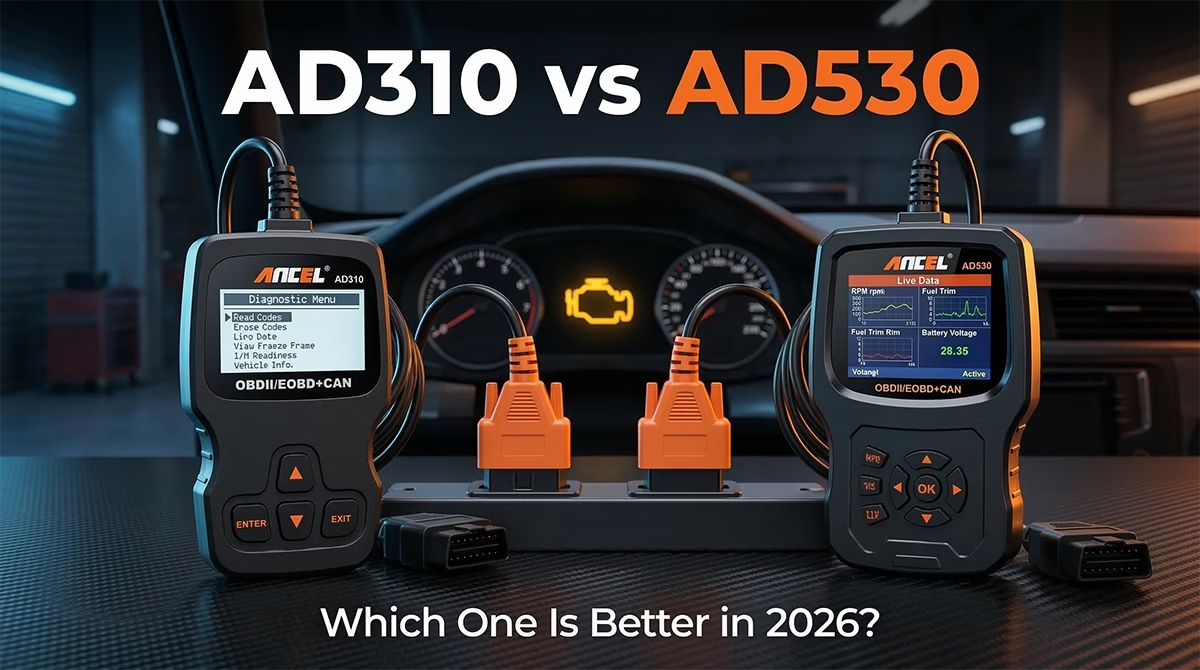
If your check engine light comes on during the Monday commute, you have two choices: panic and book a shop visit, or plug in a scanner and find out what is actually wrong before you spend a dollar. That is exactly why the ancel ad310 vs ad530 debate matters. Both are affordable handheld tools from ANCEL aimed at everyday drivers, DIY car owners, and home mechanics who want fast answers without paying diagnostic fees every time a warning light appears.

ANCEL AD310
A compact, handheld OBD-II diagnostic scanner designed for basic engine fault diagnosis in passenger vehicles. It serves as an affordable, entry-level tool for DIY enthusiasts, typically priced between $25 and $40.
- Display: 128 × 64 pixel backlit LCD screen.
- Power Source: Powered directly from the vehicle’s OBD-II port (8–18 V).
- Dimensions: Approximately 8.9 × 6.9 × 1.4 inches.
- Highly affordable and offers exceptional value.
- Extremely user-friendly with an intuitive menu system.
- Fast code reading, clearing, and live data access.
- Portable, lightweight design with a robust cable.
- Limited exclusively to engine and emissions-related codes.
- Monochrome screen with basic graphics can appear dated.
- Plastic housing feels lightweight and less premium.
- No wireless or Bluetooth connectivity in the standard model.

ANCEL AD530
An upgraded handheld OBD-II diagnostic scanner incorporating a color display, live data graphing, and an integrated battery testing function. It is typically priced between $35 and $60.
- Display: 2.8-inch TFT true color LCD.
- Power Source: Powered directly from the vehicle’s OBD-II port (8–18 V).
- Dimensions: Approximately 155 × 98 × 32 mm.
- Excellent value delivering color visuals and battery testing.
- Highly intuitive interface suitable for beginners.
- Battery testing function provides practical insights into electrical health.
- Lifetime free updates and report printing.
- Restricted exclusively to engine and emissions-related codes.
- The 2.8-inch screen remains relatively small compared to tablet-based scanners.
- Plastic housing is functional but feels basic.
- Occasional compatibility limitations with certain specialized or older vehicles.
That scenario is common for a reason. A warning light by itself tells you almost nothing. It does not tell you whether the issue is minor, whether the car is still safe to drive short-term, or whether you are about to waste money on the wrong repair. For most owners, that uncertainty is the worst part. A simple handheld scanner changes the situation immediately. Instead of guessing, you can pull the code, check the stored data, and decide whether you are dealing with a small emissions problem, a loose gas cap type issue, or something that needs proper repair before it gets worse.
At first glance, these scanners look similar because both focus on core OBD2 engine and emissions diagnostics. But once you use them, the differences become obvious. The AD310 is the stripped-down, low-cost workhorse with a monochrome display and a very simple menu. The AD530 adds a color screen, live data graphing, enhanced code help, and an integrated battery tester that can give you more context when a car is acting up. So even though they sit in the same budget category, they are built for slightly different types of owners.
This guide is built for people who want practical answers, not marketing fluff. We are going to break down what each tool does, where each one falls short, and which type of car owner gets the most value from each model. You will see how they compare for reading and clearing codes, checking emissions readiness, looking at freeze frame data, and deciding whether the extra money for the AD530 actually gives you something useful in daily ownership.
If you are shopping for the best budget obd2 scanner, trying to choose a reliable check engine light code reader, looking for a beginner-friendly live data scanner, or simply narrowing down your first diy car diagnostics tool, this comparison will save you time and likely save you money too. We will also look at where the AD530’s extra functions matter and where the AD310’s simplicity is actually an advantage. By the end of this guide, you will know exactly which one is right for your needs.
Quick Overview of the ANCEL AD310
The ANCEL AD310 is the classic entry-level handheld scanner for people who want a tool that does the basics quickly and without confusion. It is designed for passenger vehicles and is aimed at beginners, casual DIY users, and anyone who wants to stop guessing when the check engine light turns on. In practical terms, it is a no-frills dtc code reader that handles engine and emissions diagnostics without apps, subscriptions, batteries, or a learning curve.
Its typical price range sits between $25 and $40, which is a big reason it remains popular. For many car owners, that is less than the price of one diagnostic fee at a repair shop. If you only need to identify a fault code, clear it after a repair, check emissions readiness, or look at a few live data values, the AD310 gives you a lot for very little money. That is the heart of any honest ancel ad310 review: it solves the most common check-engine problems without turning a simple task into a tech project.
On the hardware side, the AD310 uses a 128 × 64 pixel backlit LCD with a white backlight and adjustable contrast. It is not fancy, but it is readable and gets the job done. It powers directly from the car’s OBD-II port, so there are no batteries or charger to worry about. The unit measures about 8.9 × 6.9 × 1.4 inches, weighs roughly 9.6 to 12 ounces, and includes a 2.5-foot cable with thick insulation. Navigation is handled through four buttons: Up, Down, Enter, and Exit. It supports multiple languages, operates between 0–60 °C, and uses a wired OBD-II connection with a Mini-B USB port for possible firmware updates.
Feature-wise, it covers the core jobs most owners need. It can read and erase generic, manufacturer-specific, pending, historic, and hard trouble codes, and it includes built-in code definitions. That matters because you do not have to immediately search elsewhere just to decode the number on the screen. It also displays real-time live sensor data, such as RPM, coolant temperature, fuel trim, and oxygen sensor readings. If your car runs rough only under certain conditions, the freeze frame data becomes useful because it shows the operating snapshot taken when the fault was triggered. That is especially helpful for intermittent issues, where the vehicle may seem fine by the time you finally check it.
The AD310 also performs an I/M readiness test for emissions compliance and EVAP checks, retrieves vehicle information including VIN, and can turn off the malfunction indicator lamp after repairs. It supports all major OBD-II protocols, including CAN, ISO9141, J1850 PWM/VPW, and KWP2000. If you need a scanner mainly for annual inspection prep, code clearing after a verified repair, or quick checks before visiting a mechanic, these are the exact features that matter.
Compatibility is broad for mainstream vehicles: most 1996 and newer OBD-II compliant vehicles in the United States, 2000 and newer in Europe, and 2005 and newer Asian models, including gasoline and 12V diesel passenger cars, light trucks, and SUVs. The limits are important too. It does not support hybrids, EVs, heavy trucks, pickups, vans, or certain non-standard vehicles. That means it is built for mainstream owner use, not edge-case fleet or specialty work.
The big strengths are obvious: it is affordable, simple, fast, portable, and reliable for basic use. The downsides are equally clear: engine and emissions systems only, a dated monochrome screen, lightweight plastic housing, no wireless features, and occasional compatibility quirks on edge-case vehicles. Still, if you want a tool that you can hand to a complete beginner and get results in minutes, the AD310 remains one of the most sensible budget choices.
Quick Overview of the ANCEL AD530
The ANCEL AD530 takes the basic idea of the AD310 and adds enough upgrades to make it feel more complete for hands-on owners. It is still compact, still wired, and still focused on engine and emissions diagnostics, but it is clearly positioned as a step-up option. If the AD310 is the bare-minimum tool you keep in the glovebox, the AD530 is the one you buy when you want richer data, a more modern display, and a few extra functions that can actually help during troubleshooting.
Its typical price range is $35 to $60, placing it only a little above the AD310 while adding several features that many DIYers appreciate right away. The target user is the home mechanic, the owner who checks cars regularly, or the buyer who wants more than a simple code reader without jumping into professional-level scan tool pricing. That is why a fair ancel ad530 review almost always frames it as a budget upgrade rather than a totally different class of tool.
The hardware changes are meaningful. The AD530 uses a 2.8-inch TFT true color LCD with 262K colors and approximately 320 × 240 resolution. Compared with the AD310’s monochrome display, that alone makes menus easier to read and live data easier to interpret. It also runs directly from the vehicle’s OBD-II port and does not require internal batteries. The unit measures approximately 155 × 98 × 32 mm, weighs about 0.45 kg, and uses an attached OBD-II cable for direct plug-in operation.
Internally, it adds an STM 32-bit CPU and 32 MB flash memory, which helps support its broader interface and added functions. Navigation is more expanded too, with directional arrows, OK/Enter, ESC, I/M, and dedicated info buttons. It supports a wide set of languages, operates between 0–60 °C, and offers lifetime free firmware updates via computer connection plus report printing capability in compatible setups.
The AD530 reads and erases generic, manufacturer-specific, pending, permanent, and historic DTCs. That “permanent” code support is worth noticing because some users run into situations where a code has been addressed but not fully cycled out yet. It also includes enhanced definitions and possible repair tips, accessible through the dedicated “i” button. That does not turn the scanner into a repair manual, but it does make the tool more informative for less experienced users who want an immediate clue before they start opening the hood.
Live data is where the AD530 starts separating itself. It shows real-time sensor data with graphing, and it can graph multiple parameters simultaneously, such as RPM, fuel trim, oxygen sensors, and engine load. For diagnosing a drivability issue, graphing is easier to interpret than watching changing raw numbers. It also includes freeze frame data, I/M readiness tests, EVAP checks, and vehicle information including VIN. If you have ever wished a budget code reader gave more context instead of just spitting out a fault number, this is where the AD530 earns its price difference.
Its most notable extra is the integrated battery tester, effectively giving you a basic battery tester obd2 function in the same handheld unit. It provides real-time voltage monitoring, a graphical battery health assessment, and cranking and charging system tests. If you have ever dealt with a no-start, dim lights, or an intermittent electrical complaint, this feature adds practical value without needing a separate battery tool.
Compatibility is similar to the AD310: most 1996+ U.S. OBD-II vehicles, 2000+ European models, and 2005+ Asian models, including gasoline and select 12V diesel passenger vehicles, light trucks, and SUVs. Like the AD310, it does not support hybrids, EVs, heavy-duty trucks, or certain non-standard models.
The strengths are easy to see: color visuals, graphing, repair tips, battery testing, lifetime free updates, and strong everyday usability. The weaknesses also remain: engine and emissions systems only, a small 2.8-inch screen, basic plastic housing, wired-only operation, and rare compatibility issues. In short, it is a budget scanner that gives you noticeably more context than an entry-level code reader without becoming expensive or complicated.
ANCEL AD310 vs AD530 Specs Comparison
Before talking about real-world use, it helps to compare the hardware and core specifications side by side. On paper, both scanners serve the same category, but the details explain why the AD530 feels more feature-rich.
The most obvious difference is the display. The AD310 is functional, but the AD530’s color TFT screen is easier on the eyes and more useful when reviewing changing data. That matters most when you are using the scanner for more than a quick code pull. A basic monochrome screen is fine for occasional checks, but repeated use is simply more comfortable on the AD530.
The second major difference is data presentation. Both show live data, but only the AD530 adds graphing and multi-parameter viewing, which makes trend spotting easier. If you only want a simple answer to “why is the light on,” the AD310 is enough. If you want to watch values move and compare how they react together, the AD530 gives you a clearer path.
The third big distinction is the battery tester. If you want one device to handle both basic OBD2 diagnostics and basic battery health checks, the AD530 is simply more versatile. On the other hand, if your goal is only reading codes, clearing them after repairs, and checking readiness monitors, the AD310 keeps the same core mission at a lower price.
There are also smaller but still meaningful differences. The AD530 includes a stated processor and memory setup, more buttons for dedicated functions, broader listed language support, lifetime free updates, and report printing capability. The AD310 stays lean and straightforward. So from a buyer’s standpoint, the spec table confirms what the pricing already suggests: the AD310 is the stripped-back essential tool, while the AD530 is the more complete budget package.
Features Head-to-Head: ANCEL AD310 vs AD530
This is where the ancel ad310 vs ad530 decision becomes practical. Most buyers are not choosing based on a spec sheet alone. They are choosing based on what happens when a warning light comes on, a vehicle hesitates, or emissions testing is due.
Code Reading & Clearing
Both scanners are built first and foremost to read and clear engine and emissions-related trouble codes.
What both can do:
- Read generic codes
- Read manufacturer-specific codes
- Read pending codes
- Clear codes after repairs
- Turn off the check engine light after the fault is addressed
- Show built-in code definitions
Where they differ:
- The AD310 reads historic and hard codes
- The AD530 reads historic and permanent codes and adds enhanced definitions plus possible repair tips through the info button
In real use, both tools help you answer the most important first question: What triggered the light? If your car throws a code related to oxygen sensors, fuel trim, or EVAP performance, either scanner gives you a starting point before you buy parts. That alone can save money because you are less likely to replace random components based on guesswork.
A simple step-by-step example looks like this:
- Plug the scanner into the OBD-II port.
- Turn the ignition on.
- Enter the code-reading menu.
- Read the stored and pending faults.
- Write down the code and definition.
- Repair the actual issue.
- Clear the code and confirm whether it returns.
The catch, and this matters, is that neither unit repairs the root problem. Clearing a code only turns the light off temporarily if the fault still exists. If the issue remains, the light will come back. That is not a scanner flaw. That is just how OBD2 works. A common mistake is using a scanner like a reset button instead of a diagnostic tool. Use it to guide the repair, not to hide the problem.
Live Data & Graphing
Both models can display live sensor data, but they do not present it the same way.
With the AD310, you can monitor values such as:
- RPM
- Coolant temperature
- Fuel trim
- Oxygen sensor activity
That is enough for many basic checks. For example, if you suspect a cooling issue, watching coolant temperature can tell you whether the engine is warming normally. If you are tracking a possible air-fuel problem, fuel trim values can point you in the right direction. For simple ownership tasks, the AD310 still works as a practical live data scanner.
The AD530 goes further by adding:
- Graphing of live data
- Multiple parameters at once
- Easier visual interpretation through the color screen
That makes a difference when numbers are changing quickly. If you are reviewing oxygen sensor switching or watching fuel trim react under throttle, a graph is easier to understand than a rapidly updating list. For frequent DIY users, this is one of the strongest reasons to buy the AD530 instead of the AD310.
A practical example helps here. Imagine you are comparing idle behavior and light-throttle behavior. On the AD310, you may scroll through values one by one and mentally compare them. On the AD530, you can look at a more visual presentation and catch patterns faster. That does not make the AD530 a pro-level scan tool, but it does make the diagnostic process more efficient.
Freeze Frame & I/M Readiness
Both scanners include freeze frame data and I/M readiness testing, and both features are more valuable than many beginners realize.
Freeze frame data is a snapshot of vehicle conditions captured when a fault was triggered. It may include things like RPM, load, or temperature at the moment the code set. If a problem happens only under a certain condition, freeze frame helps you avoid chasing the wrong cause. This is especially useful when the vehicle behaves normally by the time you scan it.
Example: if a code was set when the engine was cold and at light throttle, that gives you a better clue than just knowing the code number. Instead of guessing at random, you can focus your testing around the same conditions.
I/M readiness matters if you are preparing for an emissions inspection. After disconnecting the battery or clearing codes, readiness monitors may reset to “not ready.” A scanner lets you confirm whether the monitors have completed before you go for testing. That can save you a wasted trip, a failed test, and extra frustration. If you want a tool specifically for checking the im readiness test status before inspection day, both units do the job.
For this category, the two tools are very close. Both do the core job well, and both can help with EVAP-related readiness checks. The difference is more about presentation than function.
Battery Testing
This is the biggest feature gap in the entire comparison.
The AD310 does not include battery testing.
The AD530 includes:
- Real-time voltage monitoring
- Graphical battery health assessment
- Cranking tests
- Charging system tests
Why does that matter? Because not every starting or warning-light issue is an engine fault. Sometimes the real problem is low system voltage, a weak battery, or a charging issue. If your headlights dim during startup or the car cranks slowly on cold mornings, the AD530 can provide useful electrical health information without requiring a separate basic tester.
This feature does not turn the AD530 into a full professional electrical diagnostic system, but for everyday ownership it adds genuine value. If you maintain multiple family vehicles, this alone may justify the price difference. It is one of the biggest reasons the AD530 feels like more than just a nicer-looking code reader.
Vehicle Information
Both scanners can retrieve vehicle information including VIN. That is useful during record keeping, checking compatibility, or confirming details during a used-car inspection.
For example, if you are looking at a used vehicle and want to confirm its identity information while also checking for codes and readiness monitors, either scanner can help. The AD530 does not necessarily win this category outright, but it packages the information in a more modern interface.
Updates & Extras
The AD310 includes a Mini-B USB port for possible firmware updates, though the cable is often not included and the port is dated.
The AD530 is stronger here because it offers:
- Lifetime free firmware updates via computer connection
- Report printing capability in compatible setups
- A dedicated info button for enhanced code explanations and possible repair tips
For the average owner, updates may not be a weekly concern, but long-term support matters. Report printing also helps if you like keeping maintenance records or want a printout before discussing an issue with a mechanic. The info button is also useful when you want one more clue before deciding whether the issue looks minor or needs deeper diagnosis.
Overall, feature-by-feature, the AD310 covers the basics cleanly and affordably. The AD530 keeps those basics and adds more context, better presentation, and a useful battery function. That is why this ancel scanner comparison is really a question of simplicity versus added troubleshooting value.
Pros and Cons Comparison
Here is the cleanest way to look at trade-offs before choosing between these two scanners.
The AD310’s main advantage is blunt and simple: price. If you only need a reliable code reader for occasional check engine light issues, it is hard to argue against it. It gives you the essential features that matter most for routine engine diagnostics and emissions preparation. There is no extra fluff to pay for, and that is exactly why so many casual owners like it.
Its downsides become more noticeable only when your expectations grow. The monochrome screen is perfectly functional, but it is dated. The housing is lightweight. The menu can lag slightly when scrolling. None of those things break the tool’s value, but they remind you that the AD310 is built to hit a low price first and everything else second.
The AD530’s case is also straightforward: you get more useful information for not much more money. The color screen is not just cosmetic. The graphing is not just a gimmick. The battery testing is not just filler. All three can make diagnosing common ownership problems easier and faster. If you use a scanner regularly, those upgrades matter every time you plug it in.
Its own drawbacks are easier to accept because they are mostly category limitations. It is still engine-and-emissions only, still wired, and still built with a basic plastic shell. The screen is better than the AD310’s, but at 2.8 inches it is not huge. So the trade-off comes down to this: if your needs are minimal and your budget is tight, the AD310 is enough. If you plan to use the scanner more than a few times a year, maintain multiple vehicles, or want more confidence when interpreting data, the AD530 offers the better value despite costing slightly more.
A smart buying tip is to think beyond today’s problem. If you are only trying to clear one check engine light after a known repair, buy the cheaper tool. If you expect to keep diagnosing your own cars for years, the better screen, graphing, and battery function on the AD530 are easier to justify.
Real User Reviews & Community Feedback
Real-world feedback is where both scanners build credibility, and it also reveals the difference in buyer expectations.
The AD310 has the stronger reputation as a mass-market favorite. It carries 4.6 out of 5 stars from more than 62,000 global reviews, which is the kind of volume that tells you this is not a niche product. The most repeated praise is simple: it works, it is easy, and it saves money. Many buyers describe it as a plug-and-play tool that they were able to use immediately without reading much of a manual.
A common pattern in AD310 feedback is the first-time owner who buys it after a check engine light appears, plugs it in, reads the code within minutes, and avoids walking blindly into a shop visit. Several buyers essentially said the same thing in different words: knowing the code before seeing a mechanic gave them more control over the conversation. That is a big deal for budget-minded owners. One user summed up the appeal as “information is power,” while others focused on how quickly they could pull a code, see the definition, and decide what to do next.
Another common AD310 theme is value over polish. Users do not buy it for a premium feel. They buy it because it reads codes, shows pending faults, displays freeze frame data, and offers live data without fuss. Long-term owners often mention years of dependable service, and enthusiasts on forums regularly describe it as a “toolbox staple” for generic OBD-II work. It also gets recommended for used-car pre-purchase inspections, especially because it can help reveal whether readiness monitors are incomplete after recent code clearing.
Community comments also reinforce that the AD310 is popular because it is not intimidating. People who had never used a scanner before often report that they were able to open the box, plug it in, and start reading data immediately. That ease matters because many cheap tools look affordable until their menus become confusing. The AD310 seems to avoid that problem by keeping everything stripped down.
Criticism of the AD310 tends to stay minor. Some users point out that clearing a code does not fix the root problem, which is true for any scanner. A few mention compatibility quirks on certain vehicles, such as specific older diesels or edge-case models. Others eventually move to more advanced tools for ABS, airbag, or transmission diagnostics but still keep the AD310 as a backup because it remains useful for core engine checks.
The AD530 receives slightly lower but still strong ratings, typically around 4.4 to 4.5 out of 5 stars across thousands of reviews. The main difference in feedback is that buyers focus less on “it reads codes” and more on “it gives me more information.” The color screen, graphing, and battery testing are the most praised additions.
Users often describe the AD530 as easier to interpret during live-data monitoring because graphs make patterns more obvious. Home mechanics appreciate that they can watch values visually instead of trying to mentally track changing numbers. The dedicated info button and repair insights also come up often in positive comments, especially from users who want a little more guidance after seeing a code. Buyers who already understood the basics of OBD2 seem especially happy with the extra context the AD530 provides.
Community feedback around the AD530 also highlights battery testing as a practical bonus. People dealing with charging concerns, weak starts, or electrical uncertainty like having voltage and cranking information in the same device they already use for OBD2 checks. In forum discussions, it is often described as the smarter buy if you are stepping up from a basic scanner but still want to stay in the budget category. That “step-up toolbox essential” label fits it well.
The AD530 has fewer dedicated community mentions than the AD310, likely because the AD310 is the more famous entry-level model, but the tone stays positive. Complaints are familiar: the screen is still small, it is still limited to engine and emissions systems, and rare compatibility issues can appear on certain older or specialized vehicles. Even then, the criticism usually sounds like limitation awareness rather than disappointment.
If we judge long-term consistency, the AD310 wins on sheer volume and proven everyday trust. If we judge feature satisfaction, the AD530 tends to earn praise from users who specifically wanted something more capable than a bare-bones code reader. That makes the AD310 the safer “basic tool” pick, while the AD530 gets the edge for owners who value richer diagnostics.
[Image: Driver using an OBD2 scanner during a used car inspection while checking readiness monitors]
Performance in Real-World Scenarios
Specs matter, but the better question is how each tool fits the way you actually use your car.
For Beginners & Occasional Use
Winner: ANCEL AD310
If you are brand new to scanners and mainly want to know why the check engine light came on, the AD310 is the easier value play. It is intuitive, fast, and does not bury you in extra menus. For a driver who may only use a scanner a few times per year, the lower price makes sense. It is the kind of tool you buy once, keep in a drawer, and pull out only when a warning light appears.
For Frequent DIY Mechanics
Winner: ANCEL AD530
If you regularly maintain your own vehicles, the AD530’s graphing, enhanced code help, and broader interface make it more useful over time. Watching multiple live data values at once is a genuine advantage when diagnosing patterns instead of just reading a single stored code. The more often you use a scanner, the more you appreciate better data presentation.
Battery Health Monitoring Needs
Winner: ANCEL AD530
This one is not close. The AD530 includes real-time voltage monitoring, battery health assessment, and cranking and charging tests. The AD310 offers none of that. If battery condition is part of your ownership concerns, the AD530 is the obvious choice. It saves you from needing a second budget tool for basic electrical checks.
Pre-Purchase Used Car Inspections
Winner: Depends on your goal, slight edge to ANCEL AD530
Either scanner can check stored codes, pending codes, VIN information, and I/M readiness. That already makes both useful when inspecting a used car. The AD310 is enough if you just want a quick truth check. The AD530 gets a slight edge because live data graphing and battery checks add more context during the inspection. If you are trying to avoid buying someone else’s hidden problem, more information is usually better.
Emissions & I/M Readiness Testing
Winner: Tie
Both tools perform I/M readiness tests and can help you avoid going to inspection with incomplete monitors. If your only goal is confirming emissions readiness after a repair or after clearing codes, the AD310 and AD530 both cover the job well. In this scenario, paying extra does not buy a major functional advantage.
Taken together, these scenarios show the split clearly. The AD310 wins where cost and simplicity matter most. The AD530 wins where repeated use, richer data, and basic electrical insight matter more. That is the real-world version of the ancel ad310 vs ad530 choice.
Who Should Buy the ANCEL AD310 vs Who Should Buy the ANCEL AD530
Choose the ANCEL AD310 if you fit this profile:
- You want the cheapest reliable handheld scanner possible
- You only need engine and emissions diagnostics
- You are a beginner who values simplicity over extra features
- You mainly want to read and clear codes, view freeze frame data, and check I/M readiness
- You prefer a small no-subscription tool for occasional use
- You see the scanner as emergency equipment, not a regular part of your toolbox
Choose the ANCEL AD530 if you fit this profile:
- You are willing to spend a bit more for a more capable budget scanner
- You want a color screen and easier-to-read live data
- You want graphing and multi-parameter viewing for better troubleshooting
- You would benefit from battery voltage, cranking, and charging system checks
- You expect to use the scanner regularly on your own or family vehicles
- You like having more guidance on-screen through enhanced code definitions and repair tips
Simple Decision Flowchart
- Do you only want a low-cost scanner for reading and clearing check engine codes?
- Yes → Buy the AD310
- No → Go to step 2
- Do you want live data graphs, repair tips, or battery testing?
- Yes → Buy the AD530
- No → Go to step 3
- Are you trying to keep spending as low as possible?
- Yes → Buy the AD310
- No → Buy the AD530 for the better long-term value
- Do you plan to inspect several vehicles per year or maintain more than one car at home?
- Yes → Lean toward the AD530
- No → The AD310 is usually enough
The key point is simple: both tools are for mainstream OBD-II engine diagnostics, not full-system shop-level diagnostics. If you know that going in, it is easier to pick the right one and avoid disappointment. The AD310 is the smart buy for narrow, basic needs. The AD530 is the smart buy for broader ownership use where better visibility and a few extra checks can save time later.
Conclusion
When you compare these two scanners honestly, the result is clear. The ANCEL AD310 is the stronger pick for the owner who wants the simplest and cheapest dependable code reader. It handles stored and pending codes, live data, freeze frame information, VIN retrieval, and emissions readiness checks without asking you to spend more than necessary. For a first scanner, a backup scanner, or a no-frills tool that lives in the glovebox, that is a strong argument.
The ANCEL AD530, however, is the better all-around buy for many DIY owners. It keeps the same core engine and emissions functions but adds a color display, live data graphing, enhanced code explanations, possible repair tips, lifetime free updates, report printing capability, and a genuinely useful battery tester. That extra information can make troubleshooting faster and less frustrating, especially if you work on more than one vehicle or like to understand what the data is showing instead of just reading a fault number.
So the final verdict in the ancel ad310 vs ad530 matchup depends on how you use a scanner. If it is an emergency tool for occasional check engine light events, the AD310 is enough. If it is something you expect to use regularly for diagnostics and basic battery checks, the AD530 gives you more value for the extra money. Neither tool is meant for ABS, airbag, or transmission work, so the right choice is not about which one does everything. It is about which one matches your actual needs without overpaying.
If you want the absolute cheapest reliable code reader, go with the AD310. If you want color graphs, repair tips, and battery testing, the AD530 is the clear winner.
Frequently Asked Questions
1. Is the ANCEL AD310 vs AD530 better for beginners?
Both are beginner-friendly, but in different ways. The AD310 is simpler and cheaper, which makes it easier for first-time users who only want basic code reading. The AD530 is still intuitive, but it adds more menus and more information for users who want extra guidance.
2. Can either scanner read ABS or airbag codes?
No. Both models are limited to engine and emissions-related diagnostics. They do not diagnose ABS, SRS, transmission, or other vehicle systems, so buy accordingly and do not expect full-system scanning from either one.
3. Does the AD530’s battery tester work on all vehicles?
It is intended for compatible supported vehicles within the scanner’s normal coverage range. Since the device itself has stated vehicle compatibility limits, you should verify support for edge cases, non-standard vehicles, and anything outside the listed mainstream OBD-II coverage.
4. How do I update the firmware?
The AD530 supports lifetime free firmware updates via computer connection. The AD310 has a Mini-B USB port for possible firmware updates, although that port is dated and the cable is often not included. In short, the AD530 is the cleaner long-term update option.
5. Will it work on my 2008 Toyota, 2015 Ford, or diesel truck?
Both tools work with most 1996+ U.S. OBD-II vehicles, 2000+ European vehicles, and 2005+ Asian models, including gasoline and select 12V diesel passenger vehicles, light trucks, and SUVs. Heavy-duty trucks and certain non-standard vehicles are excluded.
6. What is the difference in screen quality?
The AD310 uses a monochrome 128 × 64 backlit LCD. The AD530 uses a 2.8-inch true color TFT screen with about 320 × 240 resolution, so it is easier to read, easier to navigate, and better suited to graph-based live data viewing.
7. How accurate is the live data graphing on the AD530?
The provided product data states that the AD530 offers real-time live data graphing and can display multiple parameters simultaneously. Its main advantage is easier visual interpretation, especially when values change quickly and you need to spot trends rather than read raw numbers one at a time.
8. Can I clear the check engine light permanently?
Only if the underlying problem is truly fixed. Both scanners can erase codes and turn off the malfunction indicator lamp, but if the fault remains, the light can return. Clearing a code is not the same as solving the cause.
9. Which one is more durable long-term?
Both have lightweight plastic housings, but user feedback describes each as reliable for routine use. The AD310 has especially strong long-term everyday feedback, while the AD530 is also considered dependable for regular diagnostics despite its basic shell.
10. Is the AD530 worth the extra money?
Yes, if you want graphing, a color screen, repair tips, battery testing, and long-term update support. No, if you only need a basic low-cost code reader for occasional check engine light use and care more about price than extra convenience.
11. Can both scanners check emissions readiness before inspection?
Yes. Both models can run I/M readiness tests and help you see whether emissions monitors are ready after a repair or after codes were cleared. This is one of the most practical money-saving uses of either scanner.
12. Which one is the better choice for used car inspections?
Both are useful because they can check codes, readiness monitors, and VIN information. The AD530 has the edge if you also want battery checks and easier live-data interpretation during the inspection, while the AD310 is enough for a quick budget-minded screening.