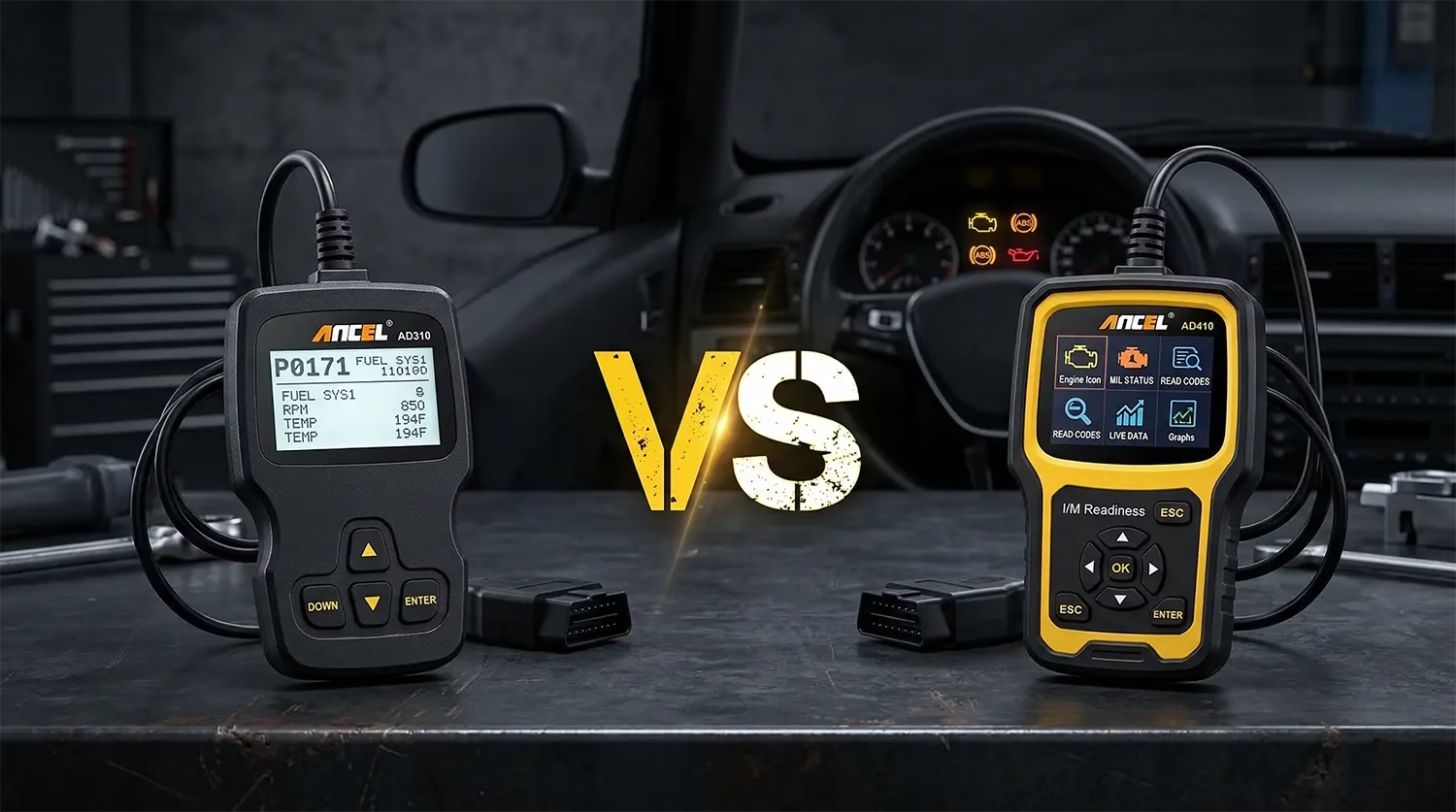
If you want the short answer for ANCEL AD310 vs AD410 who is the winner, here it is.
The ANCEL AD310 is the cheaper, simpler pick. It is built for one main job. Read and clear check engine codes. It does that job well.
The ANCEL AD410 costs more, but it gives you a better screen, a smoother menu, built-in code definitions, graphing, and a few extra diagnostic tools that make life easier.
So which one wins?
For most people, the AD410 is the better buy.
For the lowest budget, the AD310 still makes sense.
That is the real story behind ANCEL AD310 vs AD410.
This guide breaks it all down in plain English. No fluff. No fake hype. Just what matters.
⚡ Quick Comparison · At a Glance

- Read & Clear Engine/Emissions Codes
- I/M Readiness, Freeze Frame, Live Data (RPM, Temp)
- Monochrome LCD · 2.5 Ft Cable · No Battery Needed
Pros
- Glovebox‑friendly & durable
- Dead‑simple, no app pairing
- Budget price, reliable basics
Cons
- No ABS / Airbag / Transmission
- No graphing or color screen
- Generic data only, misses some PIDs

- 2.4” TFT Color Screen · Live Data Graphing
- Current/Pending/Permanent Codes + DTC Lookup
- O2 Sensor & EVAP System Tests · USB Updates
Pros
- Color screen & built‑in code definitions
- EVAP / O2 tests, graphing, I/M shortcut
- Permanent code reading & reports
Cons
- Still engine/emissions only
- No ABS/SRS/transmission
- Small 2.4” display, no bidirectional
Why this comparison matters
A lot of people buy an OBD2 scanner for one reason. The check engine light comes on, and they want answers fast.
That is smart.
A basic scanner can save you time. It can save you stress. Sometimes, it can save you money too. You can find out if the problem is small, like a loose gas cap, or something bigger that needs real repair.
But here is where buyers get tripped up.
Most budget scanners look the same at first glance. They all promise quick scans, easy use, and broad vehicle support. Once you start digging, the difference shows up.
That is exactly what happens with the ANCEL AD310 and ANCEL AD410.
Both are wired handheld scanners. Both are made for DIY users. Both focus on engine and emissions diagnostics. But they are not equal in daily use.
One is the bare-bones option.
The other is the better-rounded option.
If you choose the right one, you will feel good about the purchase every time you use it. If you choose the wrong one, you may outgrow it fast.
Let’s get into it.
What these scanners actually do
Before we compare them side by side, let’s be clear about what they are.
The ANCEL AD310 and AD410 are both entry-level OBD2 code readers. They are built mainly for engine and emissions diagnostics.
That means they are great for things like:
- Reading check engine light codes
- Clearing those codes after a repair
- Viewing basic live data
- Checking freeze-frame information
- Checking I/M readiness before emissions testing
- Pulling basic vehicle info like VIN
That also means they are not made for deep diagnostics.
They are not full-system scan tools.
They do not replace expensive garage scanners. They are not the tools you buy for ABS bleeding, airbag diagnosis, service resets, battery registration, or advanced module work.
This matters because too many people buy a cheap scanner and expect it to do pro-level jobs. Then they blame the tool.
That is not fair.
If your goal is simple engine code reading, both of these tools are valid. If your goal is full-system diagnosis, neither one is enough.
Now let’s compare them the right way.
ANCEL AD310 vs AD410 specs table
The table tells you the core difference fast.
The AD310 is simple.
The AD410 is more complete.
Now let’s talk about what that means when you actually plug one into a car.
Design and ease of use
This is where the AD410 starts pulling ahead.
The AD310 looks and feels like a classic budget scanner. It is simple. It has a backlit LCD screen. It uses a few buttons. It gets the job done, but that is about it.
There is nothing flashy here. That is part of the appeal.
If you like simple tools, the AD310 will not annoy you. It is small, light, and easy to toss in a glove box or tool bag.
The AD410 feels more modern. The color screen is the first thing you notice. Menus look cleaner. Data is easier to read. Navigation feels less dated. It also gives you a dedicated I/M button, which is useful if you check readiness often before emissions inspection.
That does not sound like a huge deal until you use both side by side.
Then it becomes obvious.
The AD310 feels like a budget tool.
The AD410 feels like a better budget tool.
That is the difference.
If you only use a scanner once in a blue moon, the AD310 is enough. If you use it more often, the AD410 is the one you will enjoy more.
Screen quality: this matters more than people think
Many people ignore the screen when shopping for a scanner. That is a mistake.
You stare at the screen the whole time you use the tool. If the screen is weak, the whole experience feels worse.
The AD310 has a basic backlit screen. It works. You can read it. But it is plain. It feels old-school.
The AD410 has a full color screen. That one upgrade changes a lot. Menus are easier to scan. Data is easier to follow. The whole tool feels less cheap.
This matters most if:
- You are new to scanners
- You want to check live data often
- You work in mixed lighting
- You do not want to squint at a tiny simple display
- You prefer a tool that feels easier and cleaner to use
The AD310 screen is fine for the price.
The AD410 screen is simply better.
Code reading and code clearing
This is the main job. So let’s be blunt.
Both scanners can read and clear engine trouble codes.
That means if your check engine light comes on, either tool can tell you what code triggered it. After you fix the issue, both tools can clear the code.
For basic code work, both tools do the job.
That is the good news.
The difference is in how they present the information.
The AD310 is more basic. It reads the code. It gives you the information. You may still need to look up what the code really means or do some extra digging.
The AD410 is more helpful. It supports current, pending, and permanent codes in a clearer way, and it includes built-in DTC lookup. That means the scanner itself does more of the work for you.
This makes a big difference for beginners.
If you are the kind of person who wants the scanner to explain more and reduce phone searching, the AD410 is easier to live with.
If you are okay with basic code reading and a little extra digging, the AD310 is still fine.
Live data: one gives numbers, one gives a better experience
Live data is where many budget scanners start to show their limits.
The AD310 can show live data. That includes things like rpm, speed, coolant temperature, voltage, and other basic sensor readings. That is useful. It gives you a real-time look at what the car is doing.
But it stays pretty basic.
The AD410 also shows live data, but it does more with it. It lets you see data in a clearer way and supports graphing. That matters because numbers alone are not always enough.
If a sensor is acting up, a graph can help you spot the issue faster. You can see a pattern. You can watch values change. You can focus on one reading instead of scrolling through a wall of raw numbers.
This makes the AD410 more useful for someone who wants to do more than read and erase codes.
If your needs stay simple, the AD310 is enough.
If you want a better chance of learning and using live data well, the AD410 is the smarter tool.
Extra functions: this is where the AD410 earns its higher price
The AD310 covers the basics well. That is why it has stayed popular.
The AD410 adds the kinds of features that make a scanner feel less limited over time.
Here is what gives the AD410 the edge:
- Built-in DTC lookup
- Permanent code reading
- O2 sensor test
- EVAP test
- Graphing for live data
- Better menu layout
- Report save and print support
- USB update support
- I/M hotkey for quick emissions checks
None of that makes the AD410 a pro scanner. Let’s not pretend.
But it does make the AD410 more useful, more beginner-friendly, and more satisfying to use for the average car owner.
That is why many people who start with basic readers later upgrade to something like the AD410.
It is still simple enough for home use.
It just feels less stripped down.
Real use case: when the ANCEL AD310 is the better choice
Let’s make this practical.
You want the cheapest scanner that still works
This is the strongest reason to buy the AD310.
If your budget is tight and you only want a tool for basic code reading, the AD310 makes sense. It gives you the core features you need without paying for extra polish you may not care about.
You only want to read and clear check engine codes
If the only thing you want is this:
- plug it in
- read the code
- clear the code after repair
- maybe check readiness
then the AD310 is enough.
That is its lane. It stays in that lane well.
You want a simple glovebox scanner
The AD310 works well as a basic emergency tool. Toss it in the car. Use it when the check engine light comes on. Keep driving with a little more peace of mind.
That is where it shines.
You do not care about a better screen or extra features
If color display, graphing, report printing, and built-in code definitions do not matter to you, then the AD410 may feel like overkill.
In that case, keep it simple. Get the AD310.
Real use case: when the ANCEL AD410 is the better choice
Now the other side.
You want the better all-around value
This is the main reason to buy the AD410.
It is not wildly expensive, but it gives you enough extra value to feel like a real step up. Better screen. Better interface. Better code lookup. Better live data handling.
For most people, that is worth it.
You are new to scanners
Beginners benefit more from the AD410. The built-in code lookup saves time. The screen is easier to read. The menus feel less confusing. The whole tool is friendlier.
If this is your first scanner, the AD410 is the easier entry point.
You want to grow into the tool
Many people buy a scanner thinking they only need code reading. Then they start using live data. Then they want to check readiness more often. Then they want a little more detail without buying a much more expensive tool.
That is where the AD410 makes more sense.
It gives you room to grow without jumping into pro-level prices.
You care about a better user experience
Not everyone does.
But if you do, the AD410 is the clear winner. It feels more polished. It feels less cheap. And when a tool is easier to use, you are more likely to keep using it.
What both scanners do not do
This part matters a lot.
Neither the AD310 nor the AD410 is a deep diagnostic scanner.
If you need any of this, look elsewhere:
- ABS code reading
- Airbag or SRS code reading
- Advanced transmission module diagnostics
- Service resets
- Oil reset
- Electronic parking brake service mode
- Steering angle reset
- Battery registration
- Injector coding
- Bidirectional control
- Relearn procedures
- Calibration functions
If you expect those features, you will be disappointed.
That is not a flaw in the comparison. That is the truth about entry-level code readers.
The AD410 gives you more than the AD310, but it is still an engine and emissions tool first.
Know that before you buy.
AD310 pros and cons
Pros
- Lower price
- Simple and easy to use
- Good for check engine light diagnosis
- Reads and clears codes
- Shows live data
- Shows freeze-frame data
- Checks I/M readiness
- Pulls basic vehicle info
- No batteries needed
- Small and easy to keep in the car
Cons
- Basic screen
- Feels more stripped down
- Less beginner-friendly than the AD410
- Fewer helpful extras
- Less polished interface
- Easy to outgrow if you want more diagnostic detail
- Still limited to engine and emissions work
AD410 pros and cons
Pros
- Better color screen
- More polished design
- Built-in DTC lookup
- Reads current, pending, and permanent codes
- Better live data display
- Graphing support
- O2 sensor test
- EVAP test
- Dedicated I/M button
- Save and print reports
- USB updates
- Better long-term value for most users
Cons
- Costs more than the AD310
- Still not a full-system scanner
- No ABS or airbag support
- No advanced service functions
- No bidirectional control
- Still limited compared with real pro-grade tools
AD310 vs AD410: side-by-side buying logic
If you are still stuck, use this simple logic.
Choose the AD310 if:
- You want the cheapest option
- You only care about basic check engine code reading
- You will use the scanner a few times a year
- You want a glovebox emergency tool
- You do not care about graphs, printing, or better visuals
Choose the AD410 if:
- You want the better overall scanner
- You want a better screen and easier menus
- You want built-in code definitions
- You want graphing and more useful live data
- You want permanent codes and more complete code access
- You want more value over time
- You are new to scanners and want something easier to understand
That is the whole buying decision in plain English.
Which one is better for beginners?
The AD410. Easy.
If you are new to OBD2 tools, the AD410 is the better pick because it reduces friction.
It shows more clearly. It explains more clearly. It gives you more useful features without becoming hard to use.
The AD310 is not bad for beginners. It is just more basic. If you are trying to keep costs down, it still works.
But if the question is which one is more beginner-friendly, the AD410 wins.
Which one gives better value for money?
This depends on your budget.
If your only goal is spending as little as possible while still getting a working code reader, the AD310 gives good value.
If your goal is getting the best mix of price, usability, and features, the AD410 gives better value.
That is an important difference.
Cheap is not always best value.
Sometimes spending a bit more saves you from upgrading later.
That is what happens here.
The AD310 is cheaper.
The AD410 is the better value.
Which one should most people buy?
Most people should buy the ANCEL AD410.
That is the honest answer.
Why?
Because most people do not just want a scanner that works. They want a scanner that feels easy to use, shows clear information, and keeps being useful after the first few times.
That is exactly where the AD410 does better.
You get a nicer screen. Better menus. Built-in code meanings. Better live data handling. A few extra tests. More overall polish.
It still stays in the budget lane.
That makes it the smarter buy for most people.
The AD310 still has a place. It is the low-cost pick. It is the no-frills pick. It is the scanner you buy when price matters most.
But if you can stretch a little, the AD410 is the one you are more likely to be happy with long term.
Final verdict: ANCEL AD310 vs AD410
Let’s keep this simple.
The ANCEL AD310 is a basic code reader that does the core job well. It is cheap, simple, and useful for basic check engine light work.
The ANCEL AD410 is the better version of that idea. It gives you a better screen, a better interface, built-in code lookup, graphing, more complete code access, and a smoother overall experience.
Neither one is a full-system tool.
Neither one is for advanced garage-level work.
But between the two, the AD410 is the better buy for most users.
Best ultra-budget choice
ANCEL AD310
Best overall value
ANCEL AD410
Best for total beginners
ANCEL AD410
Best for basic glovebox use
ANCEL AD310
If you want the cheapest tool that can read and clear engine codes, buy the AD310.
If you want the one you are less likely to outgrow, buy the AD410.
That is the real answer to ANCEL AD310 vs AD410.
Who should buy which?
Buy the ANCEL AD310 if you are:
- A budget-focused buyer
- A casual user
- Someone who only wants basic code reading
- Someone who wants a backup or glovebox scanner
Buy the ANCEL AD410 if you are:
- A first-time scanner buyer
- A DIY car owner who wants easier use
- Someone who wants better data display
- Someone who wants more useful features without stepping into pro-level prices
Bottom line
If price is your top concern, get the AD310.
If value is your top concern, get the AD410.
That is it.