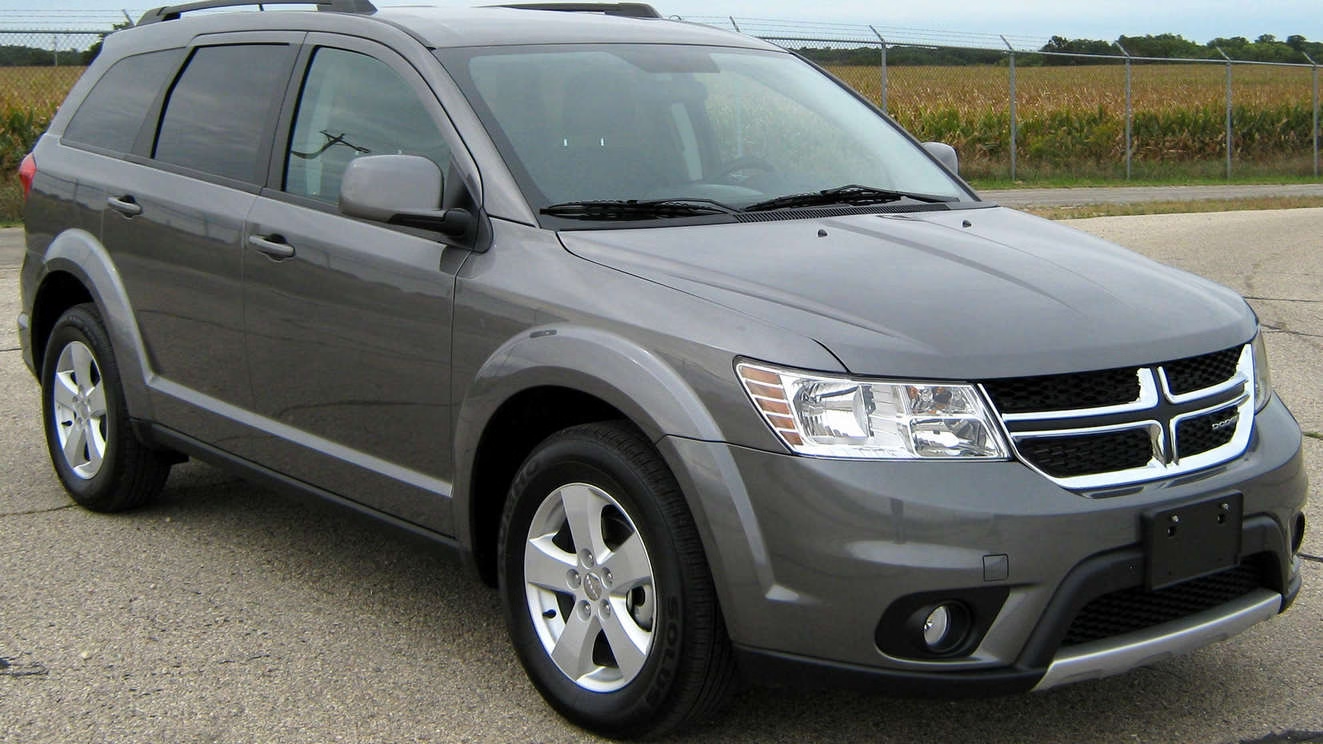
We’ve all been there. You hop into your SUV, turn the key, and nothing happens. Just that awful clicking sound. Or maybe your engine cranks slowly like it’s running on fumes. These are classic Dodge Journey dead battery symptoms you shouldn’t ignore.
Other red flags include dim headlights when you try to start the car. Your dashboard lights might flicker or look unusually weak. Sometimes the power windows move at a snail’s pace. Even your radio might act strange or reset itself for no reason.
Cold weather makes battery problems worse. If you live in an area with freezing winters, you’ll notice these issues more often. Age plays a big role too. Most car batteries last three to five years before they start causing trouble.
Signs it may not be the battery
Not every Dodge Journey won’t start situation points to a bad battery. Sometimes the culprit is something else entirely. A faulty starter motor can mimic dead battery symptoms perfectly. You might hear a single loud click instead of multiple clicks.
Bad alternators also cause confusion. Your battery might have plenty of charge, but the alternator isn’t doing its job. In this case, a jump start will get you going temporarily. However, your vehicle will die again once you turn off the engine.
Loose or corroded connections create similar problems too. Check your terminals for white or bluish buildup. This corrosion blocks electrical flow even when your battery works fine.
Fuel problems can trick you as well. An empty gas tank or clogged fuel filter prevents starting regardless of battery health.
Recommended Jump starter for Dodge Journey
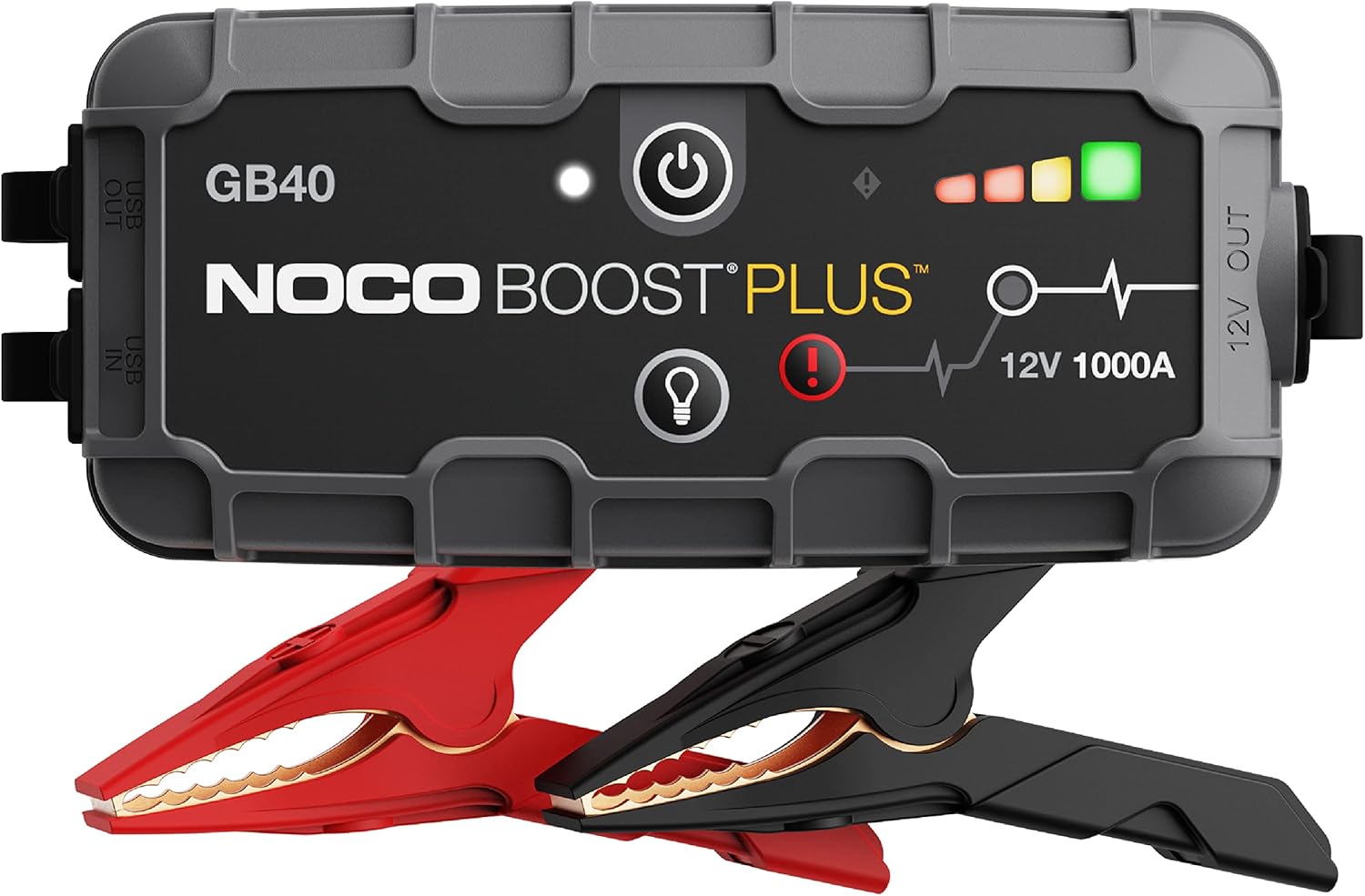
NOCO Boost GB40
UltraSafe Technology: Spark-proof, reverse polarity protection
Manual Override: Jump “stone dead” batteries (below 2V)
LED Flashlight: 100 lumen, 7 modes (SOS + strobe)
Power Bank: USB-C for phones/tablets
- Holds charge for 12+ months in storage
- Extreme cold reliability & rugged rubberized casing
- Up to 20 jump starts per charge
- Wall adapter not included (USB recharge only)
- Small print in manual

Clore Automotive JNC325
Total Zero-Volt Override: Jump batteries at 0.0V — fully dead rescue
UL2743 Safety: High-standard electrical compliance
Carry Case: Includes rugged storage case & wall charger
LED Work Light: Built-in flashlight for dark emergencies
- Massive cranking power for large V8 & diesel engines
- Holds charge for months, ready when needed
- Compact design, easy under-seat storage
- Clamp jaws smaller than expected (fits most terminals)
- Heavier than ultra-mini models, but still portable
Key Takeaway
Both jump starters are excellent for a Dodge Journey. GB40 is ultra-compact, with premium safety and all-season reliability. JNC325 delivers higher peak power for larger engines and includes a wall charger.
Winter Readiness
NOCO GB40 tested to -15°F; JNC325 holds charge over months — both handle extreme conditions, ideal for cold climates.
Dead Battery Rescue
GB40 Manual Override (<2V), JNC325 0V override — both can revive completely depleted batteries.
What You Need Before You Jump Start a Dodge Journey
Essential tools
Gather your supplies before you begin. You’ll need a good set of jumper cables with thick gauge wire. Cheap cables from dollar stores often fail when you need them most. Invest in quality cables with sturdy clamps that grip tightly.
A working donor vehicle is non-negotiable. This could be another car, truck, or SUV with a healthy 12-volt battery. The donor vehicle should have a battery with similar or greater capacity than yours.
Safety gear protects you during the process. Wear safety glasses and gloves if you have them. Keep a flashlight handy for low-light situations. A wire brush helps clean corroded terminals before connecting cables.
Safety checks before you begin
Never attempt a jump start without proper precautions first. Park both vehicles in a well-ventilated area away from open flames. Turn off all accessories in both cars including lights, radio, and air conditioning.
Inspect your jumper cables carefully before use. Look for frayed wires, damaged insulation, or loose clamps. Damaged cables pose serious risks during jump starting.
Remove any jewelry before handling battery terminals. Metal rings and bracelets can cause dangerous sparks or burns if they touch both terminals simultaneously.
Keep children and pets at a safe distance. Batteries contain acid that can leak or spray under certain conditions.
Where Is the Battery on a Dodge Journey?
Battery location basics
Finding your Dodge Journey battery location saves time and frustration. Unlike some vehicles where batteries hide in odd places, the Journey keeps things straightforward. Your battery sits under the hood in the engine compartment.
Open your hood using the release lever inside the driver’s side footwell. Prop it open securely with the support rod. Look toward the front of the engine bay on the passenger side.
Some model years might vary slightly, but the general area remains consistent across most Journeys. You’ll see a rectangular plastic box with two prominent posts on top.
How to find the positive and negative terminals
Understanding Dodge Journey battery terminal location prevents costly mistakes. Every car battery has two terminals: positive and negative. Getting them mixed up causes serious damage to your vehicle’s electrical system.
The positive terminal usually has a red cover or red markings nearby. It features a plus sign (+) symbol clearly visible. This terminal connects to your starter and main power distribution.
The negative terminal typically has black markings or a minus sign (-) symbol. Sometimes it connects directly to the vehicle’s metal frame or chassis. This completes the electrical circuit back to the battery.
Clean any corrosion from these terminals before attempting a jump start. Use baking soda and water or a dedicated terminal cleaner for best results.
How to Jump Start a Dodge Journey Step by Step
Step 1: Position the donor vehicle correctly
Park the helper vehicle close enough for your jumper cables to reach both batteries. Face both vehicles toward each other if possible. Leave about eighteen inches between bumpers for safety and cable length.
Engage parking brakes on both vehicles completely. Put both cars in park if they have automatic transmissions. Manual transmission vehicles go into neutral with the parking brake engaged.
Turn off both engines before proceeding further. Double-check that all lights and accessories are off in each vehicle.
Step 2: Turn off both vehicles
This step seems obvious but deserves emphasis. Remove keys from ignitions entirely. Verify that headlights, interior lights, and hazard lights are off.
Check that neither vehicle has any aftermarket electronics running. Amplifiers, dashcams, or GPS units draw power even when cars are off. These small drains complicate jump starting efforts.
Confirm doors are closed on both vehicles. Dome lights staying on creates unnecessary power drain during the process.
Step 3: Connect red to the dead battery positive terminal
Pick up your red positive jumper cable clamp first. Attach it firmly to the positive terminal of your dead battery Dodge Journey fix target. Ensure solid metal-to-metal contact between the clamp and terminal post.
Wiggle the clamp slightly after attaching. This action breaks through any remaining corrosion or oxidation on the surface. A secure connection transfers maximum current during the jump start process.
Avoid letting the other end of the red cable touch anything metal yet. Keep it controlled until you’re ready for the next step.
Step 4: Connect red to the good battery positive terminal
Move to the donor vehicle with the other end of your red cable. Connect this clamp to the positive terminal of the good battery. Match the same technique used on the dead battery side.
Double-check that both red clamps attach only to positive terminals. Mixing up polarity now would cause major electrical damage. Take your time and verify connections twice.
Positive-to-positive connections establish the charging pathway between vehicles. This allows electrical current to flow from the strong battery to the weak one.
Step 5: Connect black to the good battery negative terminal
Now grab one end of your black negative cable. Attach it to the negative terminal of the donor vehicle’s good battery. This completes the circuit on the helper car side.
The negative terminal provides the ground connection needed for proper electrical flow. Without this attachment, no current moves between the batteries regardless of other connections.
Make sure this clamp grips tightly just like the others. Loose connections generate heat and reduce jumping effectiveness significantly.
Step 6: Connect black to a grounded metal surface
This step confuses many people learning how to use jumper cables on Dodge Journey vehicles. The final black clamp does NOT connect to the dead battery’s negative terminal. Instead, attach it to bare metal on your Dodge Journey.
Look for unpainted metal surfaces away from moving parts and fuel lines. Engine bolts, metal brackets, or the engine block itself work perfectly. This technique called “grounding” reduces sparking near the battery.
Choose a spot at least twelve inches from the battery if possible. Good grounding points include suspension components or the vehicle frame.
Step 7: Start the donor vehicle
With all four cable connections secure, start the helper vehicle’s engine. Let it run for several minutes to build up charge. Revving the engine slightly helps the alternator produce more power.
Listen for any unusual sounds from either vehicle during this waiting period. Strange noises might indicate poor connections or other issues requiring attention.
Keep the donor vehicle running throughout the entire jump start process. Turning it off now would waste the charge building up in your system.
Step 8: Start the Dodge Journey
Attempt to start your Dodge Journey while the donor vehicle still runs. Turn the key normally and hold it for no more than five seconds. If the engine doesn’t catch immediately, wait thirty seconds before trying again.
Most successful jumps start within three attempts. Persistent cranking without success suggests additional problems beyond a simple dead battery. Multiple failed attempts warrant professional diagnosis rather than continued jumping.
Once your Journey starts, let it run immediately. Don’t turn it off again until you complete the next steps properly.
Step 9: Remove the cables in reverse order
Disconnecting cables requires careful attention to sequence. Reverse the order you used during attachment to prevent dangerous sparking.
First remove the black clamp from the grounded metal surface on your Journey. Then detach the black clamp from the donor vehicle’s negative terminal. Next take off the red clamp from the donor vehicle’s positive terminal. Finally remove the red clamp from your Journey’s positive terminal.
Keep clamps separated from each other and metal surfaces during removal. Touching clamps together while still connected causes arcing and potential damage.
Step 10: Let the Dodge Journey run
Your work isn’t finished simply because the engine runs. Allow your Dodge Journey to idle for at least twenty minutes after successful jumping. This time lets the alternator recharge the battery partially.
Driving the vehicle helps even more than idling. Take a fifteen to twenty minute drive if possible. Highway speeds allow the alternator to operate more efficiently than stop-and-go city traffic.
Avoid turning off the engine during this recharge period. Stopping too soon leaves you stranded again with another dead battery situation.
Jumper Cable Order for a Dodge Journey
Getting the Dodge Journey jumper cable order right matters more than many drivers realize. The correct sequence prevents electrical damage and personal injury during jump starting.
Remember this simple pattern: Red to dead positive, red to good positive, black to good negative, black to ground. Memorize this order before you ever need it in an emergency.
When disconnecting, reverse everything: Ground black first, then good negative, then good positive, then dead positive. Following this specific order minimizes risks at every stage.
Write down the sequence and keep it in your glove compartment. Stressful situations make even simple tasks difficult to remember clearly.
Common Mistakes to Avoid When Jump Starting a Dodge Journey
Many Dodge Journey battery problems stem from user error during jump starts. Learning what not to do protects your vehicle and yourself from harm.
Never connect both black clamps to battery terminals simultaneously. This creates a direct short circuit capable of exploding batteries. Always ground the final black clamp to bare metal instead.
Don’t rush the process or skip steps to save time. Each step exists for important safety reasons. Taking ten extra minutes beats thousands of dollars in repairs or hospital visits.
Avoid using damaged or undersized jumper cables. Thin wires overheat and melt during jump starts. Inspect your cables regularly and replace them when they show wear.
Never smoke or allow open flames near batteries during jumping. Batteries emit hydrogen gas that ignites explosively. One spark from a cigarette lighter causes catastrophic results.
What to Do If the Dodge Journey Still Won’t Start
Sometimes can you jump start a Dodge Journey becomes a frustrating question when standard methods fail. Several troubleshooting steps help identify deeper issues preventing success.
Check all cable connections again if jumping doesn’t work. Loose clamps or corroded terminals block necessary current flow. Wiggle each connection point and ensure tight contact everywhere.
Try a different donor vehicle if available. Some cars lack sufficient charging capacity for larger SUVs like the Journey. Trucks and vans often provide better jumping power than small sedans.
Allow more charging time before attempting to start. Weak batteries sometimes need ten or fifteen minutes of connected charging before they crank successfully. Patience pays off in these situations.
If repeated attempts fail completely, your problem likely extends beyond the battery. Starter motors, alternators, or ignition systems might require professional repair. Towing to a mechanic becomes the safest option at this point.
How Long Should You Let a Dodge Journey Run After a Jump Start?
Proper post-jump procedures prevent future Dodge Journey starting issues. Running time depends heavily on how drained your battery was initially.
Moderately depleted batteries need twenty to thirty minutes of running time. Severely discharged batteries might require an hour or more of driving to reach acceptable charge levels.
Short trips immediately after jumping often lead to repeat dead battery situations. The alternator cannot fully recharge a very empty battery during brief drives. Plan longer routes when possible after jump starting.
Consider using a battery charger overnight for best results. These devices provide slow, thorough charging that extends battery life compared to quick jumps. Many auto parts stores offer free battery testing and charging services.
Can You Use a Portable Jump Starter on a Dodge Journey?
Modern portable jump starters offer convenience traditional methods lack. These compact devices store enough power to start most vehicles without needing a second car.
Quality portable starters handle SUVs like the Dodge Journey easily. Look for models rated for eight-cylinder engines or higher. Lower-rated units struggle with larger vehicle demands.
Follow manufacturer instructions precisely when using portable units. Connection orders and procedures differ slightly from traditional jumper cables. Most portable starters attach directly to battery terminals without grounding steps.
Keep your portable starter charged and ready for emergencies. Store it in your vehicle where temperature extremes won’t degrade the internal battery. Test it every few months to ensure reliability when needed.
When to Replace the Battery in a Dodge Journey
Knowing when Dodge Journey battery replacement becomes necessary saves you from repeated inconveniences. Most batteries show clear warning signs before complete failure.
Age remains the primary indicator for replacement consideration. Batteries older than four years risk sudden failure without warning. Extreme climates shorten expected lifespan considerably.
Frequent jump starts indicate declining battery health. Healthy batteries hold charges for weeks without starting difficulties. Needing jumps every few weeks means replacement time has arrived.
Physical inspection reveals battery condition too. Swollen cases, leaking acid, or cracked containers require immediate replacement. Corrosion that returns quickly after cleaning suggests internal problems.
Professional testing provides definitive answers about battery status. Most auto parts stores offer free battery tests using sophisticated equipment. These tests measure cold cranking amps and overall health accurately.
Dodge Journey Jump Start FAQs
How long do jumper cables need to be for a Dodge Journey?
Standard sixteen-foot cables work fine for most situations. Longer cables provide flexibility in tight parking scenarios. Avoid extremely long cables as they lose efficiency over distance.
Can I jump start a Dodge Journey alone?
Technically yes, but having help makes the process much easier. An assistant can start the donor vehicle while you monitor connections. Solo jumping requires careful planning and cable management.
Will jump starting void my warranty?
Properly executed jump starts never affect warranty coverage. Manufacturers expect owners to deal with dead batteries occasionally. Documented improper procedures might raise questions about related electrical damage claims.
What if my Dodge Journey has a battery cover?
Some models include plastic covers over the battery. Remove these covers before attempting connections. Covers snap off easily or require simple tool removal depending on design.
Is it safe to jump start in the rain?
Extra caution applies during wet conditions but jumping remains possible. Keep connections as dry as possible and avoid standing water. Consider waiting for better weather when options exist.
Final Thoughts on How to Jump Start a Dodge Journey
Mastering how to jump start a Dodge Journey battery empowers you to handle common roadside emergencies confidently. Dead batteries happen to everyone eventually regardless of vehicle maintenance quality.
Preparation prevents panic when problems strike. Keep quality jumper cables in your vehicle at all times. Know your battery location and terminal identification before trouble occurs.
Regular battery maintenance reduces jump start frequency dramatically. Clean terminals annually and test battery health seasonally. Replace aging batteries proactively rather than reactively.
Share this knowledge with family members who drive your Dodge Journey. Everyone who operates the vehicle should understand basic jump start procedures. Prepared drivers face fewer stressful situations on the road.
Safe travels depend partly on readiness for minor mechanical issues. A dead battery needn’t ruin your day or leave you stranded indefinitely. With the right knowledge and tools, you’ll be back on the road quickly and safely.