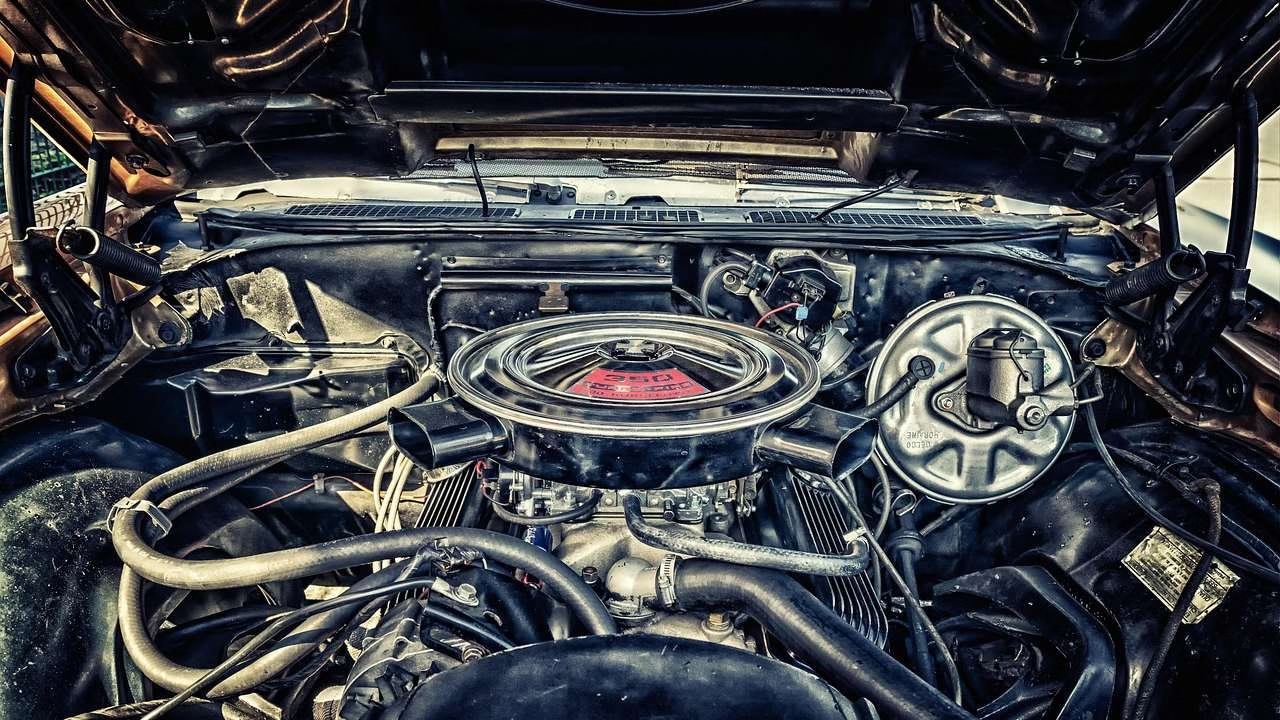
A car that stalls while driving can shake your confidence fast. One second, everything feels normal. The next, the engine cuts out and the car loses power.
That is not just annoying. It can be dangerous. For a comprehensive look at engine performance issues, consult this resource on diagnosing a rough idle and knowing when to seek help.
The good news is this. A stalling engine often gives clues before it quits. You may notice rough idling, weak power, slow starts, warning lights, or odd sounds. Those clues can help you narrow down the cause.
In many cases, the problem comes from one of five areas: fuel, air, spark, power, or sensors. Some fixes are simple. A dirty throttle body, loose battery terminal, or cracked hose can trigger a stall. Other issues need a shop. A failing fuel pump, bad alternator, or wiring fault can leave you stranded.
This guide walks you through the most common causes, the signs to watch for, and the safe DIY checks you can try at home. It also shows you when to stop guessing and call a mechanic.
Is It Safe to Drive a Car That Keeps Stalling?
Short answer: no, not for long.
A car that stalls can put you in a risky spot. It may die in traffic, in the middle of a turn, or while crossing an intersection. In some cars, the steering gets heavier and braking feels harder once the engine shuts off. That can turn a small issue into a big one.
If your car stalls once, treat it as a warning. If it stalls more than once, stop driving it until you know why.
Stop Driving Right Away If You Notice These Signs
Battery warning light stays on
This can point to a charging problem. If the alternator stops working, the engine may run for a short time and then die.
Oil pressure light comes on
Low oil pressure can damage the engine fast. Do not keep driving.
Engine temperature climbs
If the car overheats and then stalls, pulling over is the smart move.
Loud knocking or harsh shaking
A rough engine plus stalling can mean a serious internal issue.
The car stalls and will not restart
This often points to a fuel, spark, or sensor problem that needs proper testing.
What Causes a Car Engine to Stall While Driving?
A stall happens when the engine stops getting what it needs to keep running. That can mean not enough fuel, too much air, weak spark, lost electrical power, or bad timing data from a sensor.
Here are the most common causes.
Failing Fuel Pump
The fuel pump sends gas from the tank to the engine. If it gets weak, fuel pressure drops. The engine may hesitate, lose power, or shut off under load.
This problem often shows up at highway speed or during hard acceleration. Some drivers also hear a whining sound from the fuel tank area.
Clogged Fuel Filter
A blocked fuel filter can starve the engine, especially when you ask for more power. The car may stumble first. Then it may stall.
Not every car has an easy-to-replace external filter. Some have it built into the tank assembly.
Bad Crankshaft Position Sensor
This sensor tells the engine when to fire. If it sends bad data or cuts out, the engine can shut off without warning.
This is one of the most common causes of random stalling. Some cars restart after the sensor cools down. That makes the issue feel confusing and on-and-off.
Faulty Camshaft Position Sensor
This sensor also helps manage timing. When it fails, the engine may run rough, misfire, or stall.
It can act a lot like a crank sensor problem, which is why a scan tool helps.
Dirty or Failing Throttle Body
The throttle body controls airflow into the engine. When carbon builds up around it, the engine may struggle to idle or respond smoothly.
This issue often causes stalling at low speed, when stopping, or right after startup.
Mass Air Flow Sensor Problems
The mass air flow sensor measures incoming air. If it reads wrong, the fuel mix can go off. The engine may run too lean or too rich.
That can lead to weak acceleration, rough idle, and stalling.
Vacuum Leak
A vacuum leak lets extra air into the engine. The computer does not expect that air, so the fuel mix gets thrown off.
Common signs include rough idle, surging, hissing noises, and stalling at stoplights.
Bad Alternator
The alternator keeps the battery charged while the engine runs. If it fails, the car will use up the battery and then die.
At first, you may notice dim lights, flickering screens, or warning lights. Then the engine may stall.
Loose Battery Terminals or Bad Ground
A weak connection at the battery or ground cable can cut power to key systems. That can cause random shutdowns, hard starts, or strange electrical issues.
This is one of the easiest things to check. It is also one of the easiest to miss.
Worn Spark Plugs or Bad Ignition Coils
The engine needs a strong spark to keep running. If the spark goes weak, the car may misfire, shake, lose power, or stall.
This problem often shows up under load, on hills, or during quick acceleration.
EGR Valve Stuck Open
The EGR system sends a small amount of exhaust gas back into the engine. If the valve sticks open, the engine may idle poorly or stall when slowing down.
This issue often feels worse at low speed than at highway speed.
Clogged Catalytic Converter
A clogged converter restricts exhaust flow. The engine cannot breathe well, so power drops and heat builds.
The car may feel weak, struggle to rev, and stall after trying to accelerate.
Idle Air Control Valve Problems
Some older cars use an idle air control valve to manage idle speed. If it sticks or fails, the engine may stall at red lights or after startup.
Transmission or Torque Converter Issues
In automatic cars, a transmission problem can feel like an engine problem. If the torque converter does not release properly, the car may stall when coming to a stop.
Wiring or Computer Fault
This is less common, but it happens. Damaged wires, corroded connectors, or a failing engine computer can cause random stalls that are hard to trace.
Symptoms That Help You Find the Cause Faster
The way your car stalls matters. The timing can point you in the right direction.
If the Car Stalls While Accelerating
Look at fuel delivery first. A weak fuel pump, clogged filter, dirty air sensor, bad ignition coil, or restricted exhaust can all cause a stall under load.
If the car feels weak before it dies, fuel or airflow is a strong clue.
If the Car Stalls at Idle or When Stopping
Focus on airflow and idle control. A dirty throttle body, vacuum leak, stuck EGR valve, or idle control issue often causes this pattern.
This type of stall is common at red lights, stop signs, or when parking.
If the Car Stalls Randomly While Driving
Think sensors and power supply. A crankshaft sensor, loose battery cable, bad ground, failing alternator, or wiring fault can all cut the engine without much warning.
If the Car Stalls but Starts Again Right Away
That points to an intermittent problem. Loose electrical connections, a sensor that drops out, or an early-stage fuel pump failure often fit this pattern.
If the Car Stalls and Will Not Restart
Start with the basics. Is the battery dead? Is the fuel pump silent? Is there a crank-no-start condition? In many cases, the cause is a failed fuel pump, bad crank sensor, major charging problem, or no spark.
DIY Diagnosis Checklist: What to Check First
You do not need to tear the car apart. Start with simple checks. Go in order. Write down what you notice.
Step 1: Look for Warning Lights
Turn the key on and check the dash. If the battery, oil, or temperature light was on before the stall, that matters.
Do not ignore those clues.
Step 2: Scan for Trouble Codes
Use a basic scan tool if you have one. Read the codes before clearing anything. Even if the check engine light is off now, stored codes may still be there.
Write the codes down. They can save hours of guesswork.
Step 3: Check Battery Terminals and Ground Cables
Open the hood with the engine off. Look for white or blue corrosion on the battery posts. Grab the cable ends gently. They should not move easily.
Then look at the ground cable where it bolts to the body or engine. A bad ground can cause all kinds of strange behavior.
Step 4: Listen for the Fuel Pump
Turn the key to the on position without starting the car. In many cars, you will hear a soft humming sound from the rear for a second or two.
No sound does not always mean a dead pump. But it is an important clue.
Step 5: Inspect the Air Filter and Intake Hose
Check the air filter. If it is packed with dirt, replace it. Then inspect the intake tube for cracks, loose clamps, or a hose that popped off.
Unmetered air can cause stalling.
Step 6: Look at the Throttle Body
If the throttle body is easy to access, look for dark carbon buildup around the plate. Heavy buildup can cause rough idle and stalling.
Do not force anything open with the key on.
Step 7: Look for Vacuum Leaks
Inspect small rubber hoses around the engine bay. Look for cracks, splits, or hoses that came loose. Listen for a hissing sound with the engine running, if it still runs.
Step 8: Check Spark Plugs and Coil Connections
If you are comfortable doing so, inspect visible ignition connectors. Make sure coil plugs are seated well. If the car has old spark plugs, worn plugs may be part of the issue.
Step 9: Test Battery and Charging Voltage
If you own a multimeter, check battery voltage with the engine off and then while running. A weak battery or poor charging system can lead to stalls.
If you do not know how to test voltage safely, skip this step and get help.
Step 10: Track When the Stall Happens
This is simple, but it helps. Ask yourself:
- Does it happen when the engine is cold?
- Only after it warms up?
- At idle?
- During hard acceleration?
- When you stop?
- With the AC on?
Patterns matter.
Extended DIY Fixes You Can Try at Home
Keep this part safe and simple. If a job involves fuel pressure, major wiring, or a hot exhaust, leave it to a mechanic.
Clean the Battery Terminals
If the battery posts look dirty or crusted, clean them. Disconnect the negative cable first. Then the positive. Clean the posts and clamps. Reconnect positive first, then negative. Tighten both.
A clean, tight battery connection can fix random cut-outs and weak starts.
Clean the Throttle Body
If carbon buildup is visible, cleaning the throttle body may help. Use a cleaner made for that job. Wipe away buildup carefully. Do not soak electrical parts.
After cleaning, the idle may need a short relearn period. Some cars settle on their own after a few drives.
Replace the Air Filter
This is one of the easiest fixes on the list. A clogged filter can choke airflow and make other issues feel worse.
If it looks dirty, swap it out.
Replace Cracked Vacuum Hoses
Old rubber hoses dry out and split. If you find one that is brittle, loose, or cracked, replace it with the correct size hose.
This can fix rough idle and low-speed stalling.
Clean the Mass Air Flow Sensor
If your car has a mass air flow sensor in the intake tube, it may be dirty. Use a cleaner made for that sensor only. Let it dry fully before reinstalling.
Do not touch the tiny sensor wires. They are delicate.
Replace Worn Spark Plugs
If the plugs are overdue and you are comfortable doing basic maintenance, replacing them can improve idle, power, and starting.
Use the correct plug type for your car. Tighten them properly. If the plugs are hard to reach, do not force it.
Reseat Loose Electrical Connectors
Gently check connectors at easy-to-access sensors and ignition coils. If a plug looks loose, snap it back in place.
Do not tug on wires. Do not probe connectors with metal tools.
Replace the Fuel Filter If Your Car Has an External Serviceable One
Some older cars have an easy-to-replace fuel filter outside the tank. If yours does and it is overdue, replacing it may help.
If the filter is in the tank or fuel pressure must be released, let a pro handle it.
Test the Charging System
If you suspect the alternator, a simple charging test can help. Many parts stores also test batteries and alternators.
If the battery keeps going flat or the battery light stays on, get the charging system checked soon.
Clear Codes Only After You Fix Something
Do not erase codes just to make the light go away. Fix the issue first. Then clear codes and drive the car to see if they return.
That gives you a cleaner test.
Tools That Make DIY Diagnosis Easier
You do not need a full shop. A few basic tools can go a long way.
Useful tools to have
- Basic scan tool
- Flashlight
- Screwdriver set
- Socket set
- Gloves
- Safety glasses
- Battery terminal brush
- Mass air flow sensor cleaner
- Throttle body cleaner
- Multimeter
If you do not have these tools, start with the scan tool and flashlight. Those two alone can reveal a lot.
Problems People Often Misdiagnose
Stalling can trick you. Some problems look like something else.
A Dead Battery Is Not Always the Real Problem
If the battery is weak, many people replace it and move on. But the real issue may be a failing alternator or bad ground cable.
If the new battery also drains, the battery was not the main problem.
A Fuel Pump Issue Can Feel Like a Sensor Problem
A weak fuel pump may cause random stalls, hard starts, and poor power. A bad crank sensor can do almost the same thing.
That is why symptoms alone are not always enough.
A Dirty Throttle Body Can Feel Like a Transmission Problem
If the car lurches, drops idle, and stalls when stopping, some drivers blame the transmission. In reality, the engine may just be struggling to manage airflow at low speed.
A Bad Crank Sensor Can Act Fine Until It Gets Hot
This one fools a lot of people. The car may run well cold, then stall after a long drive. Later, it starts again like nothing happened.
Heat-related failure is common with some sensors.
Repair Cost Guide by Problem Type
The cost depends on the car, the part, and labor in your area. Still, here is a simple way to think about it.
Low-cost fixes
- Clean battery terminals
- Replace air filter
- Clean throttle body
- Clean mass air flow sensor
- Replace small vacuum hoses
Moderate repairs
- Spark plugs
- Ignition coils
- Battery replacement
- External fuel filter
- Idle control parts
Higher-cost repairs
- Fuel pump
- Alternator
- Catalytic converter
- Wiring diagnosis
- Computer-related issues
- Transmission or torque converter repairs
If the problem is simple, DIY can save money. If the stall is random and dangerous, the cheapest move may be a proper diagnosis first.
When to Call a Mechanic Instead of Doing It Yourself
DIY works best for basic maintenance and simple checks. A mechanic is the better choice when the risk or complexity climbs.
Get professional help if:
- The car stalls on the highway
- The battery light stays on
- The oil light comes on
- The car stalls and will not restart
- You smell raw fuel
- You suspect a fuel pump inside the tank
- The problem points to wiring or computer faults
- The transmission may be involved
- You are not comfortable doing the work safely
There is no shame in stopping early. A clear diagnosis beats random parts swapping every time.
How to Prevent Engine Stalling in the Future
Not every stall can be prevented. But many can.
Stay on top of basic maintenance
Replace filters on time. Change spark plugs when due. Keep the battery healthy.
Fix small signs early
If the car hesitates, idles rough, or struggles to start, do not wait for it to get worse.
Keep the intake system clean
A clean throttle body and air sensor can help the engine idle and respond better.
Check battery terminals now and then
Corrosion grows slowly. A quick look once in a while can prevent a surprise.
Do not ignore warning lights
A small issue today can become a roadside problem later.
Quick Answer: What Should You Do If Your Engine Stalls in Traffic?
Stay calm. Turn on your hazard lights. Try to steer the car to a safe spot. Do not keep cranking the engine over and over. If it restarts, drive only far enough to get out of danger. Then diagnose the issue or call for help.
Your goal is safety first. Repair comes second.
FAQs
Why does my car stall while driving but start again?
That usually points to an intermittent problem. Common causes include a weak crank sensor, loose battery connection, early fuel pump failure, or a charging problem that comes and goes.
Can a bad alternator make a car stall while driving?
Yes. If the alternator stops charging, the car runs on battery power for a short time. Once voltage drops too low, the engine can shut off.
Can a dirty throttle body cause stalling?
Yes. It often causes stalling at idle, low speed, or when coming to a stop. It can also make the idle feel rough or uneven.
What sensor most often causes a car to stall while driving?
A crankshaft position sensor is one of the most common sensor-related causes. It can fail without much warning and may act worse when hot.
Is engine stalling while driving expensive to fix?
Sometimes yes. Sometimes no. A dirty throttle body or loose battery cable is often cheap to fix. A fuel pump, alternator, converter, or wiring issue can cost much more.
Can low oil cause a car to stall?
Very low oil can lead to serious engine trouble. But in most cases, stalling is more often tied to fuel, spark, sensors, airflow, or electrical power.
What if my car stalls only when stopping?
That often points to a dirty throttle body, vacuum leak, stuck EGR valve, idle control issue, or in some automatic cars, a torque converter problem.
Final Thoughts
A car engine stalling while driving can feel random. Most of the time, it is not. The engine is usually losing fuel, airflow balance, spark, electrical power, or sensor timing.
Start with the easy checks. Look for warning lights. Scan for codes. Inspect the battery, air intake, hoses, and throttle body. Those simple steps can uncover a lot.
If the stall keeps happening, do not keep gambling with it. Repeated stalling is a safety issue. Get the car checked before it leaves you stuck in the worst possible place.