
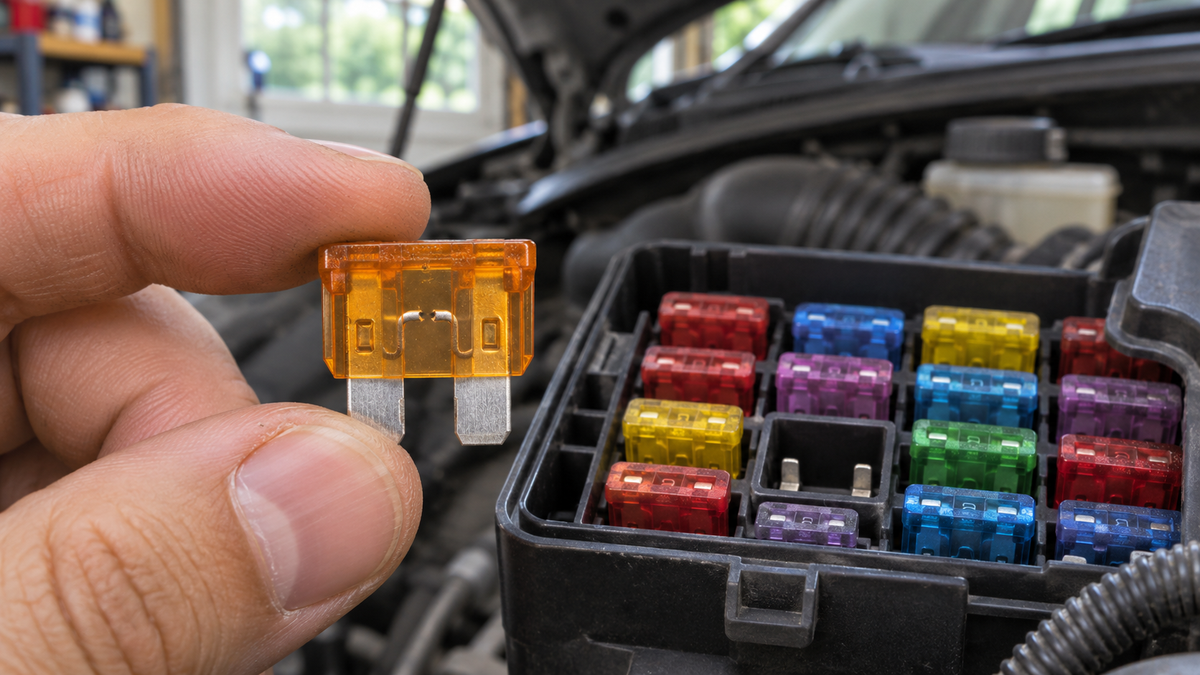
Why does my car fuse keep blowing?
A car fuse keeps blowing when too much current flows through the circuit. A bare power wire can touch metal and cause a short to ground. A worn motor or added gear can overload the circuit. Note when the fuse blows and what it feeds. Always stick with the specified fuse rating.
If a new fuse has already blown, leave it out for now. Write down the label on the fuse chart and what you did just before the power cut out. Those two clues tell you where to start.
What the timing of a blown fuse tells you
Start the clock when the faulty branch gets power. Some fuses have power with the key off. Other feeds go live with the key on or when a relay switches on a part.
| When the fuse blows | Where to look first |
|---|---|
| Right when the circuit gets power | A bare feed wire touching metal or a short inside a part |
| When you switch on one feature | The wires, plug, and parts on the branch that just got power |
| After the feature runs for a while | A part drawing too much current or a short that comes and goes |
| Over bumps, when a door moves, or after rain | A rubbed or flexed wire, a wet plug, or a leak near the fuse box |
It blows as soon as the circuit gets power
A hard short is high on the list. Say a bracket pinches a power wire and cuts through its insulation. The bare wire makes contact with the body, and the fuse can open as soon as the feed goes live.
If it blows when you turn on the wipers, start with that branch. A pinched wire, an internal short, or a motor that can’t turn can all cause a fuse to blow at switch-on. The timing helps you pick a branch to test.
If the fuse is intact but your wipers only work on high speed, start by checking which modes still work.
It blows after running or only once in a while
A fuse can take time to open under a small but steady overload. It tends to open much faster under a large fault. If the blower runs for a few minutes first, note the speed setting and whether the motor slows or makes noise.
If the fuse goes on a bump or as you move a door, check where wires flex or rub. If it goes after rain, note where you see damp trim or water marks. Write down what happened each time so you can look for a pattern.
If your headlights flicker over bumps, check the bulb plug, ground, and nearby wiring.
Four common reasons a car fuse keeps blowing
Start with the clue that best fits your car. A fuse that first blew after a stereo swap sends you to a different spot than one that blew after a rainstorm.
Chafed or pinched wiring
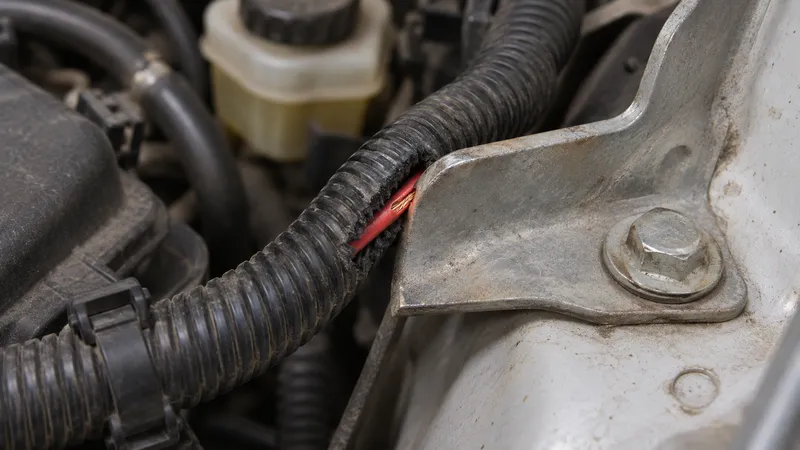
Look for wires that run past a metal bracket or through the rubber seal at the firewall. Door and liftgate boots are worth a look if the fault shows up as you move them. A loose clip can let a wire rub on a sharp edge until bare copper shows. If the fuse holds but your interior lights stay on, check the lamp switches and door-ajar warning first.
Check the part of the wire run that was moved during recent work. Look for flat spots, shiny rub marks, split wrap, or a bare strand. A loom can look fine from above, so use a light to check the side that faces the metal. If you find a rubbed wire, the fix also needs to keep it from touching that edge again.
If the fuse stays intact but one turn signal blinks fast, start with that side’s bulbs, sockets, and ground.
Poorly installed stereos, dashcams, or LED bars
An add-on can cause a fault in two ways. A bare splice or a wire caught under trim can touch the car body. A light bar or other add-on can also draw more current than the stock circuit has room to supply.
Start where the new gear gets power. Look for loose splices, damaged fuse taps, and wires trapped under screws or trim. If the add-on has an accessible plug or its own inline fuse, switch power off and unplug it or pull that fuse. Then check the branch as shown below.
A motor that binds or a solenoid that shorts internally
A window that crawls, a blower that squeals, or a wiper that stalls can point to a part under strain. A motor can draw more current when it has to fight a bind. A motor that can’t turn may draw high stall current. Look for a jam, stiff linkage, or debris before you buy a motor.
A solenoid can also draw too much current if its coil shorts inside. First isolate that branch. Check the part against the test and specs for your model before you order a new one.
If the blown fuse feeds the fan on a 2017 Qashqai, follow these Qashqai cooling fan checks before buying a motor.
Water intrusion or corrosion at a fuse box or connector
Look for water tracks, damp plugs, or green or white crust. Check the box lid, seals, and the area above the wet spot. Water mixed with dirt or road salt can leave a path for current between pins.
A loose or corroded fuse terminal can get hot from poor contact. It can melt the socket while the strip inside the fuse stays whole. If you see a brown, warped, or melted slot, leave the fuse out and get it checked.
How to find the fault without wasting fuses
Get the fuse chart for your car and a wiring diagram for that circuit. The chart tells you which slot to check and what fuse it takes. The diagram shows which parts share the feed and where their wires split off.
1. Identify the fuse and inspect the circuit with power off
- Write down the fuse label, slot, type, and amp rating from the manual. Note which features quit and what was on at the time.
- Turn the car off and follow the manual to shut off power to the circuit before you pull the fuse or unplug parts. If the fuse strip is hard to see, check the removed fuse with your meter in continuity mode. A blown fuse reads open.
- Use a light to check the slot, plugs, loose wires, and any recent work. If the fuse feeds a 12V socket, unplug all gear and look for a coin, debris, or a damaged plug. Keep metal tools out of the socket. Stop if you spot melted parts or charred wires.
2. Unplug accessible loads one by one
Use the diagram to see what the fuse feeds. Begin with the part tied to the fault. For instance, start at the blower branch if the fuse blows when you turn on the fan. Switch power off before each plug change.
Check what changes after each step with the right test below. If the fault clears when you unplug a branch, check the part and any length of wire that came out of the test with it. If the short stays with all the loads unplugged, trace the feed wire that is still hooked up.
3. Use a 12V test light across the empty fuse slot
Use this test on a standard 12V circuit only if your service manual allows a test light there. Park the car and keep the engine off. If a relay must close to feed the suspect branch, follow the service test for that branch. If the fuse feeds several branches, isolate every normal load the lamp can reach. If you can’t do that at the fuse, use the branch test point shown in the service manual.
- Shut off power, remove the fuse, and unplug the normal loads on the branch under test. Use probes that fit the slot without spreading the metal contacts.
- Put one lead of the test light on each terminal of the empty fuse slot. Restore power in the key or switch position the manual calls for.
- If the light comes on with the loads unplugged, look for a path to ground. Gently move one reachable stretch of wiring at a time. If the light flickers or goes out, look where you just moved the wires.
A bulb or motor left plugged in can light the tester through its normal path to ground. If the test light stays dark, check that the feed is live and the test point still reaches the suspect branch. The lamp limits current during this test. To check for a motor that draws too much as it runs, use a current test.
4. Confirm with a multimeter or check current draw
For a short check, remove the fuse and isolate power and loads as the manual directs. Use DC volts to make sure the wire is dead before you switch to ohms. Probe from the load side of the slot to a known good body ground. A steady reading near zero ohms points to a short once the normal paths to ground are out of the test.
For a running load, a DC clamp meter goes around one feed wire. If the part can run safely, check the draw at start-up and as it runs. Use the test conditions and limits for your car. Never put a handheld meter set to amps across a live fuse slot.
Once you repair the fault, shut off power, remove the test leads, and reconnect the loads. Then fit the specified fuse. With the car parked, check the feature under the same conditions if you can do so safely. If the fuse blows again, stop and have the circuit checked.
Critical safety rules for a fuse that keeps blowing
- Never fit a fuse with a higher amp rating. If the slot calls for 15A, a 20A fuse can let the wire get too hot and catch fire. Match both the fuse type and its amp rating to the manual.
- Never bridge the slot with foil, bare wire, or a jumper. That leaves the wire without a fuse to cut power during a fault. Leave the fuse out while you track down the cause.
- Only probe circuits covered by the test in your service manual. Leave airbag and seat belt restraint wires, high-voltage hybrid or EV parts, and control module pins to a trained tech.
When to stop and call an auto electrician
Stop if you find a melted fuse slot, charred wires, or a burnt smell that won’t go away. If there’s smoke or fire while you’re driving, pull over as soon as it’s safe. Turn the car off, get everyone out and well away from traffic, and call emergency services.
Get help if the main wiring behind the dash is damaged or fuses in several slots keep opening. The same goes for a fault on a body control module (BCM) or engine control unit (ECU) feed. A tech can check the module’s power feed and the wires it shares before calling the module bad.
Have the car towed if it stalls or the fault makes it unsafe to drive. Tell the shop which fuse failed, what brought it on, and which features quit. Share any recent work and the tests you’ve done.
Frequently asked questions
Why does my car keep blowing fuses in different slots?
Check the slot labels to see how many circuits are affected. If a few fuses blew after a leak or wiring work, tell the tech when each one failed. A diagram can show where those feeds pass through the same area or share a plug.
Why would a fuse keep blowing in my car when I turn on the AC?
Check which fuse blows when you switch on the AC. It could feed the cabin fan, the cooling fan, or the compressor clutch if your car has one. Trace that feed before you buy a part.
If the radiator fan fuse blows on your 3.7L or 4.7L Commander, use these 2008 Jeep Commander fan fuse and relay checks.
If the fuse stays intact but the fan runs only on high, start with these blower speed checks.
Can a bad relay make a fuse keep blowing?
Yes. A relay can short inside, or a good relay can switch power to a short farther down the line. If the fuse holds with the relay out, use the diagram to check which side of the relay the fuse feeds.
Why does my 12V outlet fuse blow when I plug in a charger?
Unplug the charger and any splitter. Look for a bent plug tip or metal debris in the socket with power off. If the fault is still there with nothing plugged in, check the socket and its wires.
If your OBD2 scanner also stays dark, check whether the diagnostic port and the 12V outlet share a fuse.
Can I drive with a blown fuse?
Check what the fuse feeds and read the guidance in your owner’s manual. A dead power socket may leave you without a phone charger. If the fault takes out brake lights, wipers you need, or a circuit that keeps the engine running, have the car towed.
If your brake lights stay on after you shut off the car, start by checking the pedal stopper and brake light switch.
If you’re still asking, “Why does my car fuse keep blowing?” go back to the fuse label and the timing. Write down both before you test or call a shop. They give you a place to start without using up another fuse.