
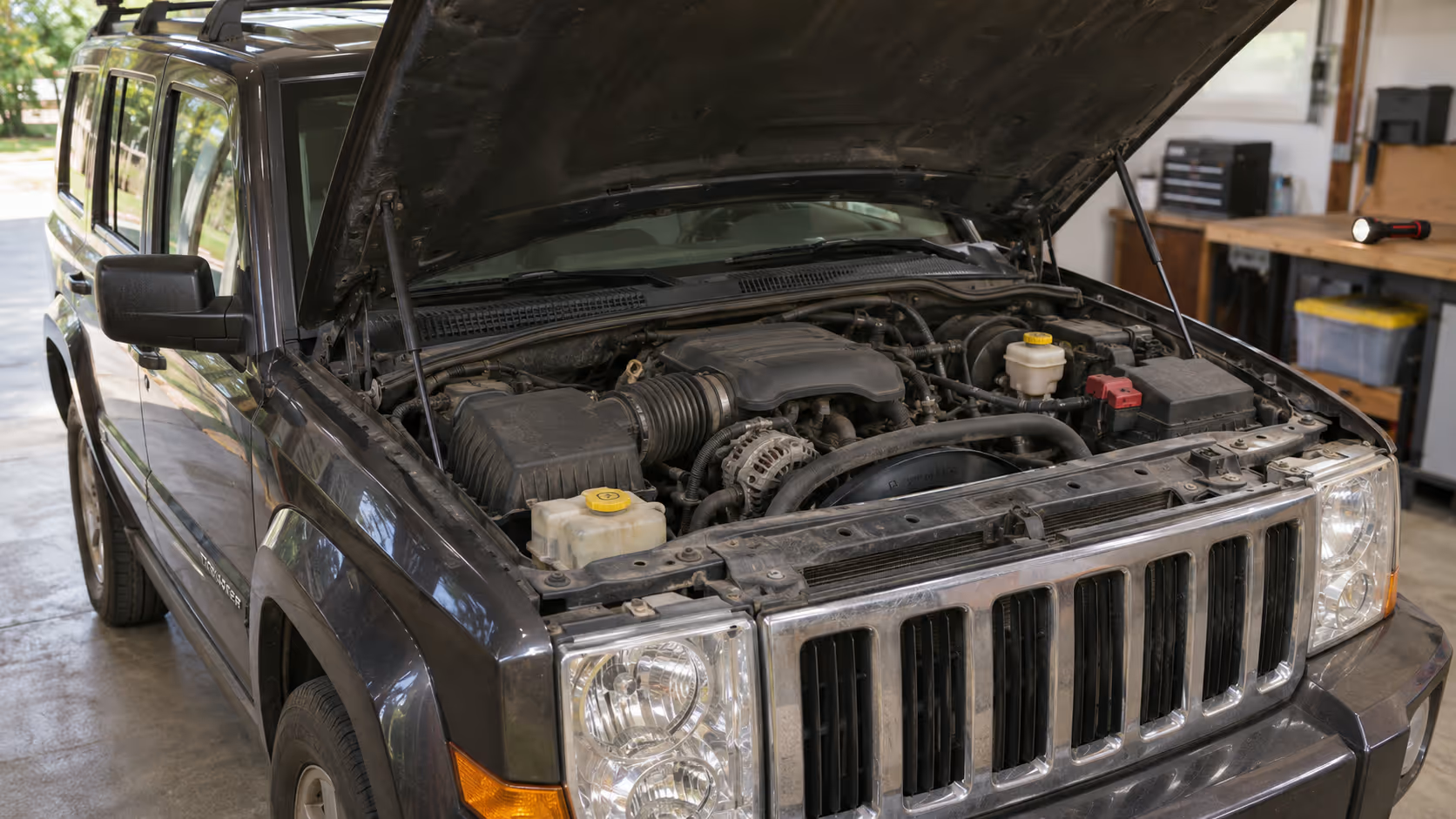
Is your ’08 Jeep Commander radiator fan not turning on? If the gauge hits H or you see steam, pull over and shut the engine off. Once it cools, check the coolant level and find out which engine you have.
On the 3.7L and 4.7L, start with the electric fan fuse, relays, and plug. The 5.7L Hemi uses a fan driven by the power steering pump, so start with the fluid, lines, and control plug. An electric fan can stay off while the engine is cold.
Is It Safe to Drive With the Radiator Fan Off?
Pull over if the gauge reaches H or the Jeep throws an overheat warning. Turn off the A/C as you pull over. Shut the engine off if the gauge reaches H, you see steam, or you see coolant leaking. If the Jeep has already overheated and the cause is still unclear, call for a tow.
When the engine is cold, a stopped electric fan can be normal. The gauge and the fan command give you more to go on. If you know the fan fails when called for, tow it for repair. Heat can build fast in slow traffic.
Let the engine cool all the way before you lift a radiator or coolant pressure cap. Keep your hands, clothes, and tools clear of the fan and belts. An electric fan can start as soon as it gets a command.
Identify Your Engine and Confirm the Fan Should Be Running
Check the label under the hood or look up the VIN to find your engine size. Note when the heat rises and which fan you see. Write down whether the A/C was on and whether any coolant work came first.
3.7L V6 and 4.7L V8
The 3.7L uses an electric radiator fan. The 4.7L has two fans: an electric one and a belt-driven one with a clutch. You may see the belt-driven fan spin while the electric fan is off.
The A/C button alone is a poor fan test. Fan demand can change with coolant heat and A/C pressure. A scan tool that can request fan speeds gives you a clearer test.
5.7L Hemi V8
The power steering pump drives the fan through fluid pressure. The Front Control Module, or FCM, uses a solenoid to change fan speed. The fan may turn at low speed but fail to speed up as the engine heats up.
Look for a change in speed under a known fan command. A quick look at the blades can’t tell you how much air the fan moves.
Start With the Cheapest Checks
Park on level ground and let the engine cool. Start with a light and a meter. The costs below are U.S. estimates. Your quote can change with the engine and local labor rates.
Low Coolant or Trapped Air — All Three Engines
Did the heat rise after you changed a hose or drained coolant? Does the heater blow warm, then cool? Check for low coolant or air in the system before you blame the fan. Both can cause the Jeep to run hot with a good fan.
If the coolant level keeps dropping, start by looking for the source of the coolant leak.
- Check and tools. With the engine cold, use a light to check the coolant level at the bottle. Use the cold fill guidance for your engine. Look for wet spots or dried coolant near the tank, hoses, and radiator.
- Difficulty and cost. The check is easy. A full shop coolant change can run $284–$358 as a U.S. guide. A leak repair costs extra. The fill and air purge steps vary by engine.
- When to stop. Get help if the bottle is empty, the level keeps dropping, or the Jeep heats up again. Ask the shop to find the leak and bleed the system as needed.
Blown Fan Fuse or Faulty Relay — 3.7L and 4.7L
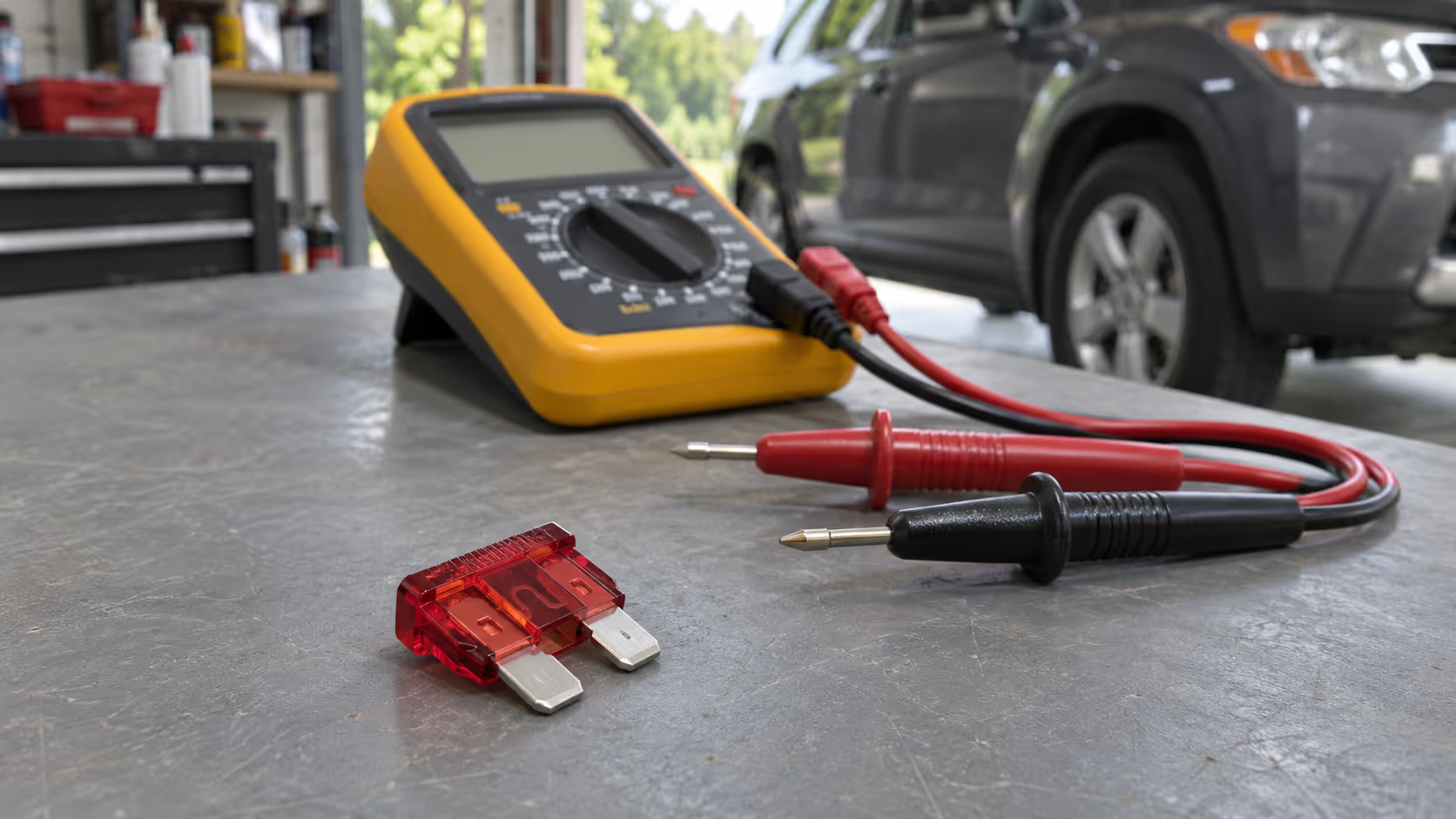
A blown fuse can cut power to the fan. If one speed works and the other fails, trace the relay and wiring for the speed you lost.
- Check and tools. Use the fuse-box lid and a wiring diagram that matches your Jeep. With the key off, pull the right fuse and check it with a multimeter in continuity mode. Find both fan relays on the diagram. If the diagram shows a removable relay and you have an identical spare, use it to check for a change. Confirm the fan was called for during the test.
- Difficulty and cost. The fuse check is easy. Relay tests take more skill. A fuse or relay is a low-cost part. Get a price for the one that fits your Jeep.
- When to stop. Stop if a new fuse blows again or you see a melted socket. The fan may draw too much current, or a wire may be shorted. Use the specified fuse rating every time.
If the new fan fuse blows again, trace why the fuse keeps blowing before trying another.
Loose Connector, Corrosion, or Damaged Wiring — All Three Engines
A fan that cuts in and out may have a poor link at the plug or a wire that rubs on the shroud. The electric motor and the Hemi fan solenoid each have a plug you can check.
- Check and tools. With the key out and the engine cold, use a light to look for loose clips, green buildup, dark pins, or worn wire wrap. Check what you can see without reaching past the blades.
- Difficulty and cost. The visual check is easy. A connector repair and a harness fault are separate jobs. A general shop diagnosis can run $122–$179 before any wiring repair.
- When to stop. Let a shop trace the circuit if the plug has melted or you need to test live wires near the fan. On the 3.7L and 4.7L, have it check the relay controls and grounds before it blames a module.
Check the Signals That Tell the Fan When to Run
Once the basic checks pass, look at what the Jeep sees. A scan tool can show a bad reading even when the part looks fine.
Engine Coolant Temperature Sensor or Circuit — All Three Engines
The coolant sensor tells the Jeep how hot the engine is. If that reading is too low when the engine is warm, the fan may come in late. A reading that jumps can point to the sensor, its plug, or a wire.
- Check and tools. Use an OBD-II scanner with live data. After the Jeep sits overnight, compare cold coolant temperature with the air temperature. Watch for a steady rise on a safe warm-up. Stop the test if the engine starts to run hot.
- Difficulty and cost. The scan check is easy. Circuit tests take more skill. A shop sensor swap can run $226–$249 before taxes and related work.
- When to stop. Have a shop check the sensor circuit if the reading stays far off or jumps after you check the plug.
A/C Refrigerant Pressure Sensor or Circuit
Does the A/C feel warm at a stop and cool again once you move? That can point to poor airflow. A fault in the A/C pressure signal can also change when the Jeep asks for fan speed.
- Check and tools. With a scan tool that can read A/C data on your Jeep, look for pressure codes and note how the reading changes as the A/C runs. A code may point to wiring, and a low reading may reflect actual low pressure.
- Difficulty and cost. This is a moderate scan check. Two listed sensor options were about $67–$70 for the part alone. Check fit by VIN and get a quote for the test and labor.
- When to stop. Leave gauge tests and work on pressurized A/C lines to a shop. Ask it to check the pressure and the signal before you buy a sensor.
Test the Fan and Check for Coolant-Flow Problems
If you can see a fan command, check how the fan responds. If the fan runs and the Jeep still gets hot, turn your focus to coolant flow or a second fan.
Electric Fan Motor or Assembly — 3.7L and 4.7L
A fan that stays still, groans, or spins weakly when called for may have a worn motor. It may also have poor power or ground.
For Nissan’s J11, see the 2017 Qashqai radiator fan checks for the fuse, fan speeds and motor.
- Check and tools. Use a scan tool that can send fan commands on your Jeep. Try the low and high settings it supports and watch from clear of the blades. A shop can use a meter and the right diagram to check power and ground under load.
- Difficulty and cost. The scan test is moderate. Live circuit tests are advanced. A model-year fan assembly quote may be near $455–$495. Confirm it for your engine.
- When to stop. Get help if you lack a tool that can command the fan or would need to probe near moving parts. Ask the shop to test power and ground before it replaces the motor.
Thermostat Stuck Shut or Open — All Three Engines
A thermostat stuck shut can block flow to the radiator. The engine may heat up fast while the fan runs. A thermostat stuck open can make warm-up slow.
- Check and tools. Use live coolant data to track the warm-up. An infrared thermometer can give a clue at a hose you can see from a safe spot. A hose reading alone can’t prove the thermostat is stuck.
- Difficulty and cost. The check is moderate. A shop thermostat swap can run $289–$379. Fix low coolant and rule out air before you buy a thermostat.
- When to stop. Shut down if the heat climbs fast. If the fan works and the Jeep still runs hot, have the shop check flow and test for leaks.
Mechanical Fan Clutch — 4.7L Only
The belt-driven fan can turn and still move too little air. If your 4.7L gets hot at a stop while the electric fan runs, check the clutch as well.
- Check and tools. With the engine off and cold, use a light to look for fluid stains on the clutch, blade damage, or rub marks on the shroud. A shop can check whether the clutch grabs as it warms.
- Difficulty and cost. The visual check is easy. The swap may need special tools. Across Commander model years, clutch replacement can run $223–$518. Get a quote for the 2008 4.7L.
- When to stop. If the fan seems loose, looks bent, or has struck the shroud, leave the engine off and get help.
Hydraulic Fan Drive, Control Solenoid, and Front Control Module — 5.7L
A Hemi fan that turns but stays slow under load may have a fluid supply fault or a control fault. Steering whine, a drop in fluid, or a wet hose can help point you toward the fluid side.
- Check and tools. With the engine off, check the power steering fluid as shown in the manual. Use a light to look at the hoses and the solenoid plug. Keep the hydraulic lines closed.
- Difficulty and cost. The visual check is easy. The command, pressure, and flow tests are shop work. A general diagnosis can run $122–$179. A line, pump, solenoid, fan assembly, and module each need a separate quote.
- When to stop. Get help if the fan stays slow as heat climbs, steering gets heavy, or you find a leak. Ask the shop to check fan command, wiring, and pump flow before it prices a fan or module.

How to Prevent Repeat Overheating and Fan Problems
Check coolant on a cold engine and keep track if the level falls. Fix the leak and use the coolant type listed for your Jeep. After a drain or repair, follow the fill and bleed steps for your engine.
With the engine off and cool, clear leaves from the front of the A/C condenser. Look for worn wire wrap or hoses that rub. If the gauge starts to climb at stops, note when it happens and get it checked early.
08 Jeep Commander Radiator Fan Not Turning On? Your Next Check
If the Jeep runs hot, stop and let it cool. On the 3.7L or 4.7L, start with the electric fan circuit. On the 5.7L, check the fluid and look for leaks. If the fan works and the heat still climbs, have the coolant flow checked before you pay for a fan.
Frequently Asked Questions
These checks can help you narrow the fault. Start with the one that matches how your Commander acts.
Why does my fan only run when the A/C is on?
The A/C can call for airflow before the engine gets hot enough to need it. If the fan runs with the A/C but stays off while the engine runs hot, check the live coolant reading and fan command. One working fan speed tells you little about the other.
Where is the radiator fan fuse or relay on a 2008 Jeep Commander?
On the 3.7L and 4.7L, start at the under-hood power box. Match the lid and the wiring diagram to your Jeep before you pull a fuse or relay. The 5.7L uses hydraulic fan controls.
Why does my Commander overheat at idle but cool down on the highway?
At road speed, more air flows through the radiator. That can hide a weak fan until you stop. On a 4.7L, check both fans. On a 5.7L, check whether the hydraulic fan speeds up when called for.
If the fan works but the gauge still climbs at a stop, check other causes of overheating at idle.
Why is the electric fan still off when the mechanical fan is spinning on my 4.7L?
The belt turns the clutch fan. The electric fan runs when the Jeep calls for it. A scan tool that can command the fan helps you check for a response.
How can I tell whether my 5.7L hydraulic fan is running too slowly?
A shop can ask the fan to speed up and see if it responds. If it stays slow, the shop can check the command circuit and test pump pressure and flow. This can help narrow the fault to the fluid supply, control circuit, or fan drive.
What does code P0481 mean on a 2008 Jeep Commander?
It points to the fan 2 control circuit. Check the wiring and control path for your engine before you buy a part. An old version of the factory StarSCAN tool could set this code during a vehicle configuration update. Mention that history if it applies to your Jeep.