
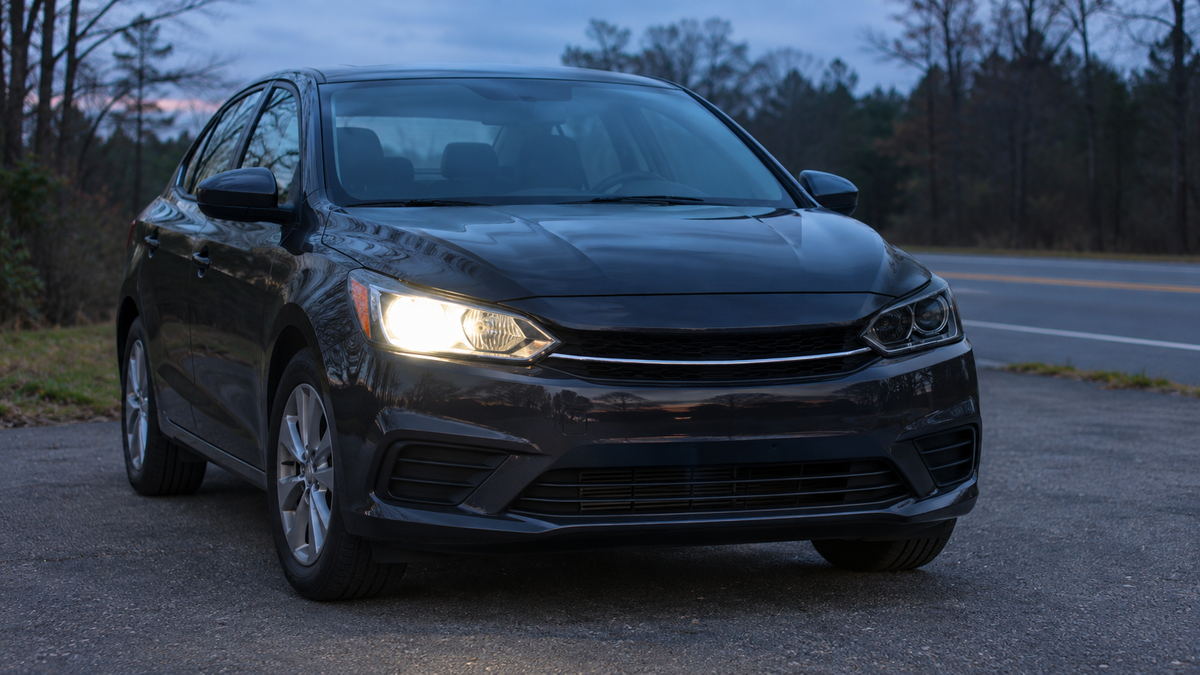
Headlights flickering while driving — should you pull over?
If you notice your headlights flickering while driving, watch for a drop in visibility. If the beams keep cutting out or you can’t see well, ease off the gas. Pull off the road as soon as you can do so safely. Use your hazard lights to warn others. If the lights stay unreliable, call for roadside help.
Once parked, point the car at a wall and turn on the low beams. Does one beam blink, or do both fade at once? If the dash or cabin lights dim too, start with the battery clamps and the charging system.
Try the high beams as well. A beam that jumps but stays bright can point to a loose lamp mount. Write down whether the charge light came on or the flicker started after a new bulb went in.
What the flicker pattern tells you
Start with the lights that flicker. Then think about what set it off. A bump can shake a plug at one lamp or a loose main cable that feeds several lights.
| What you see | Where to look | First check |
|---|---|---|
| One low beam blinks | Loose bulb, worn socket, bad ground, or fault inside the lamp | Find out what type of bulb you have. Check the plug on that side. |
| Both beams and the dash pulse at idle | Loose battery clamp, poor main ground, worn belt, or weak charging output | Check the clamps with the engine off. Then check battery voltage with the engine on. |
| Both beams dip when the blower or rear defroster starts | A sudden rise in electrical demand | See if the beams settle. If they keep pulsing, check charging voltage with that load on. |
| Lights flicker when you speed up | A charging fault that changes with engine speed, or wiring that shifts as the engine moves | See if the dash dims too. Check the belt and cables with the engine off. |
| One beam cuts out over bumps | Loose bulb, plug, or wire near the lamp | Check how the bulb sits. Look for a broken plug clip. |
| Both low beams cut out, but high beams stay on | Low-beam switch input, relay, fuse holder, or shared feed | Check the fuse chart. A wiring diagram can show what both low beams share. |
| New LED bulbs flash in daytime mode | An LED driver that reacts to pulsed power | Try the manual low beams. If the old bulbs still work, refit them and compare. |
| One HID beam flashes, goes dark, then lights again after a restart | HID bulb, igniter, ballast, or power feed | Note which side fails and how long it stays on. Let a shop test the lamp. |
Use the pattern to pick your first check. If the fault only shows up on the road, note when it happened after you park. You can give that detail to the shop if the lights behave at home.
If the car also needs a jump after sitting, check why your car battery keeps draining.
Seven checks to find out why your headlights flicker
If one light blinks, start at that lamp. If both beams and the dash pulse in step, go to checks 4 and 6. After a fix, try the same light mode or switch on the same load while parked to see if the fault comes back.
1. Check a halogen bulb and its fit
Switch the lights off and let the bulb cool. Check that it sits flat and that the clip and plug latch hold it in place. Look for a broken filament or a dark spot on the glass. A weak beam can also come from a poor feed or ground.
If both sides use the same bulb and your manual shows how to reach it, swap the bulbs with the lights off. Hold them by the base to keep oil off the glass. If the flicker moves to the other side, fit a new bulb of the listed type. If it stays on the same side, check the socket and wires.
2. Check when an LED or HID headlight cuts out
Replacement LED bulbs
Did the flicker start with the new LEDs? Some cars feed the lights in fast pulses. The pulses can be too quick to see with a hot halogen bulb, yet show up as flashes with some LED bulbs.
Try daytime mode and then turn the low beams on by hand. If the old bulbs still work, put them back in and try the same modes. Check the LED maker’s fit guide for your car and lamp before you buy a CANbus adapter.
Factory LED headlights
See if one strip, one beam mode, or the whole lamp goes out. With the car off, look for pooled water inside the lamp or damage to the plug. A shop can scan the light control unit and check the feed and ground with the lamp on. Some cars let you change the driver, while others need a full lamp.
HID or xenon headlights
An HID beam that lights and then goes dark can have a bad bulb, igniter, ballast, or feed. Note which side fails and how long it takes to go out. The igniter can send out tens of thousands of volts. Keep your checks outside the lamp and let a shop test the parts.
3. Inspect the plug, ground, and nearby wiring
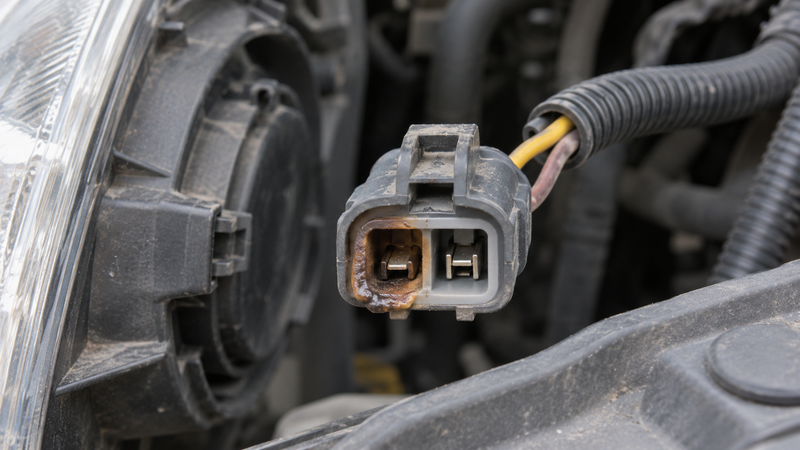
With the engine and lights off, look at the plug and the nearby wires. Look for a broken clip, green crust, pins that sit too far back, or brown or melted plastic. Check where the wires pass close to a metal edge. A rub mark can show where a wire has worn through.
On a basic halogen lamp with sound wires and a clean plug, you can try a gentle wiggle test. Park at a wall, leave the engine off, and turn on the lights. Stay clear of fans and move only the covered wires behind the plug. Skip the test if the plug shows heat damage, the wires are bare, or the lamp uses HID.
If the beam cuts out, turn the lights off. A loose pin, a worn wire, or a bad ground near that spot needs a closer look. If you see no damage, ask for a voltage-drop test with the lamp on. A poor joint can pass a check with the lamp off and still lose voltage under load.
If your turn signal blinks fast while the bulb still works, check every lamp on that side before testing the ground.
4. Check the battery terminals and resting voltage
With the car off, look for white or green crust on the battery posts. Check for a clamp that shifts by hand or a frayed ground cable where it meets the body or engine. Follow your manual if you need to take off and clean a clamp. Stop if the battery case is cracked, swollen, or leaking.
If you find white or green buildup, see how to clean battery terminals safely.
Set your meter to DC volts. Plug the black lead into COM and the red lead into V. Touch black to the negative post and red to the positive post. Read at the posts with the car and its lights off, after the battery has had time to rest.
A rested 12-volt lead-acid battery near 12.6 V is a useful reference for a full charge. A check right after a drive can read high. If the charge is low, charge the battery as the manual directs and test it again. A good reading at rest still calls for a load test if you suspect a weak battery.
5. Check the headlight fuse and relay, if fitted
Find the low-beam fuse in your manual. Some cars use a fuse for each side. With the power off, check that the fuse sits snug in its slot. A blown fuse tends to leave the lamp dark, while a loose or burned holder can make it cut in and out.
Use the same fuse type and amp rating if one is blown. If the new fuse blows or the slot looks burned, stop. If the manual allows a relay swap, use a known-good one with the same part number, pins, and rating.
Some cars use a light control module in place of a plug-in relay. If your fuse chart shows no relay you can swap, a shop can trace the feed with a wiring diagram and a scan tool that reads body faults.
If the headlight fuse keeps blowing, note whether it happens at switch-on or after the lights have been on for a while.
6. Measure running voltage and check for alternator ripple
On a car with a belt-driven alternator, check for a loose or worn belt with the engine off. Move the car outdoors before you run the engine. Set the parking brake, keep meter leads away from belts and fans, and measure DC volts at the battery posts. Leave both battery cables attached.
Note the volts at idle with the lights and blower off. Then turn on the low beams and blower and note the volts again. Use the test speed in your service manual for a reading above idle. On a hybrid or EV, use the maker’s 12-volt test steps.
Many cars with a standard charge system run near 13.8–14.4 V. Use your car’s spec to judge the reading. Some smart charge systems vary their target as the load, battery charge, or temperature changes. For example, some GM models target 13.9–14.5 V with the headlights on. A single reading outside that range gives you a reason to check the spec first.
If the DC volts stay above spec, a shop can check the control circuit and its sense wires. If the volts look right but the lights pulse, ask for a ripple test. A bad diode can leave a wave in the output that a basic DC reading hides. A scope or bench test can pick up that pattern.
Ask the shop to test the charge system under load and check the voltage drop across the main cables. A poor cable or ground can make the charge system look weak. Those checks help pin down the fault before you buy an alternator.
If charging voltage stays outside your car’s spec, this guide to common causes of alternator failure covers what to check before replacing it.
7. Trace an intermittent headlight switch or control-module fault
While parked, try the manual low beams, auto mode, and high beams. Note if the fault shows up in one mode or when you move the stalk as you normally would. Tell the shop which setting makes it happen.
A tech can check whether the light module sees the switch command and still sends power when the beam goes dark. They can also check the feed and ground at the lamp. That helps trace the fault to the switch, wiring, or module.
Tools you need for a basic headlight check
You can do most of the first checks with a light and your owner’s manual. Get the right parts once you’ve found the fault.
- To look things over: Use a flashlight, safety glasses, gloves, and the fuse chart. Park at a wall to compare beams.
- To read volts: Use a digital meter with sound, insulated leads. Keep the red lead in the volts jack. A meter set to read amps can short the battery if you place it across the posts.
- To fix a known fault: Use the right bulb or fuse and a brush and cleaner for safe battery terminal work. Use dielectric grease only where your service guide calls for it. A loose pin or burned plug needs repair.
Jot down the side, beam mode, and trigger as you check each one. Add the meter readings and what you had switched on. These notes can help a shop repeat a fault that comes and goes.
When to stop DIY and call a mechanic
Pull over if the beams keep going dark or you can’t see the road well. Do the same if the charge light comes on while the dash and other lights fade. Call for roadside help if the car can’t keep its lights on or you have a confirmed charging failure.
Stop your checks if you smell burnt plastic, see smoke, find a melted plug, or blow a fresh fuse. Leave HID tests and repairs to burned wiring to a shop. Book a check if charge voltage stays outside your car’s spec or a sealed LED lamp keeps cutting out.
Ask what the quote covers. A bulb that’s easy to reach takes less work than a plug with burned wires or a sealed headlamp. Time spent tracing an on-and-off fault, setting the beam aim, or coding a new light module can also affect the bill.
Frequently asked questions
Is it safe to drive with flickering headlights?
If the beams keep going dark or you can’t see well, slow down and pull off the road when safe. Call for help if you can’t get steady lights back. Wait for a fix before you drive in the dark or in poor light.
Why do my headlights flicker when I accelerate?
If both beams and the dash pulse as you speed up, check the belt, main cables, and charging output. If one light cuts out, start with its plug and wires. That helps you tell where to test first.
Why does one headlight flicker when I hit a bump?
A loose bulb, plug, or wire can break contact when the car jolts. Check the bulb fit and plug with the car parked. If the beam just shakes on the wall, check the lamp mount too.
Can the alternator cause flicker if my meter reads 14 volts?
Yes. A DC reading near 14 volts can miss short drops or ripple from a bad diode. If several lights pulse at once, ask for a ripple test and a charge test under load.
Why do my new LED headlights flicker only in daytime mode?
Your car may send short pulses of power to the daytime lights. The new LED driver may flash with each pulse. Try the full low beams and check the bulb maker’s fit guide for your car.
If you still have headlights flickering while driving, use the pattern to choose your next step. One lamp that cuts out over bumps points you to that side. Both beams and the dash pulsing together call for a check of the main power feeds and charging system.