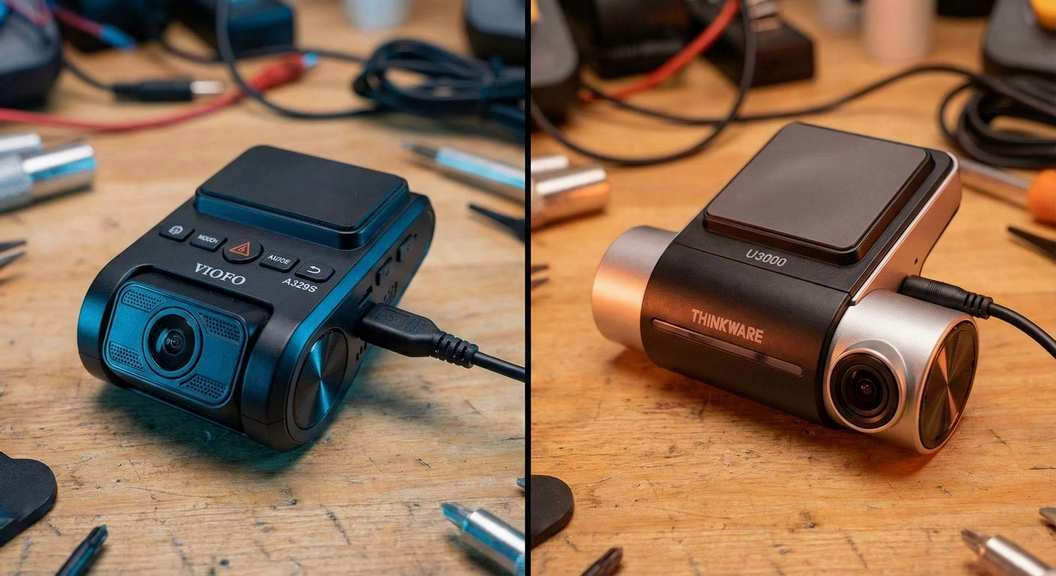
You’re not shopping for a cheap dash cam. You’re buying a “premium” model because you want clean plates, dependable parking mode, and footage that doesn’t vanish when you actually need it. Here’s the problem: in real ownership, both of these models develop frustrating reliability issues after months of use. So this isn’t “which is best.” It’s “which set of compromises hurts you less.”
Affiliate disclaimer: [If you decide to purchase a product through a link on the site, I may earn a commission without additional cost to you.]
1) “At a Glance” Quick Verdict
If you care most about raw front-video performance and long local storage loops, the A329S is the better fit on paper. If you care most about remote alerts, cloud features, and driver-assist extras, the U3000 is the better concept.
🏆 Quick Verdict At a Glance
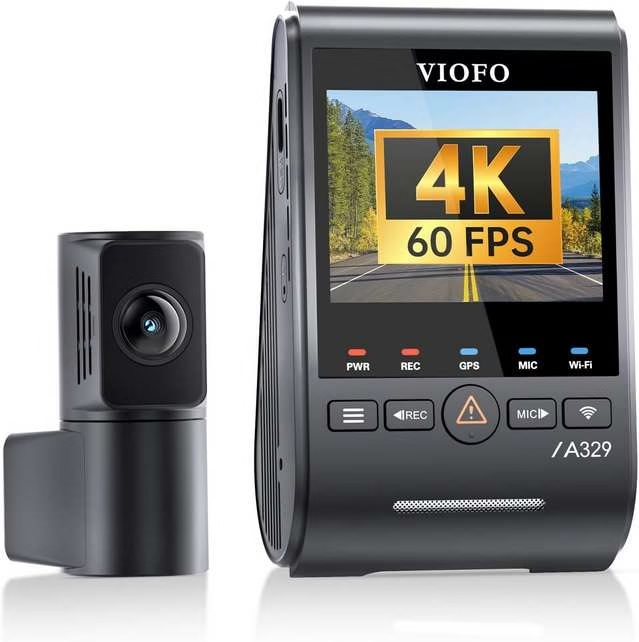
- Video King: 4K @ 60fps (Smoother motion)
- Storage: Supports Ext. SSD (Up to 4TB)
- Con: Parking mode drains battery faster
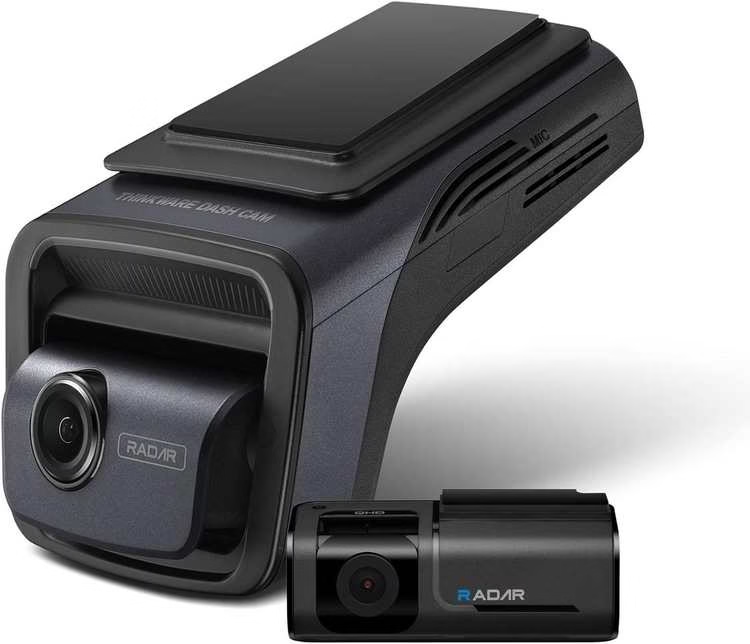
- Parking King: Radar = Weeks of standby
- Smart: Cloud Alerts & Geo-Fencing
- Con: Rear cam is older technology
But here’s the brutal truth: reliability is the deciding factor, and both have recurring owner-reported problems after months.
Bottom line:
- Pick Viofo A329S if you can tolerate occasional storage/cable quirks to get 4K/60 and SSD recording.
- Pick Thinkware U3000 if you’re buying for cloud + radar parking, AND you’re prepared to troubleshoot app/setup issues if they show up.
2) The Main Battleground: Reliability vs “Premium Features”
These two don’t really fight on “can it record.” They fight on what breaks first and what annoys you more:
- A329S tries to win with higher frame rate (4K/60) and big local storage options.
- U3000 tries to win with cloud connectivity, radar parking mode, and a feature-rich ecosystem.
In real ownership, both can fail in ways that completely defeat the point of paying premium money: frozen cameras, corrupted/fragmented clips, connection dropouts, or cloud/app features that stop working.
Winner of this battleground (for most buyers):
- If you prioritize “footage integrity first” and you’re okay living without cloud: A329S.
- If you prioritize “remote awareness” and parking alerts and you’re willing to troubleshoot: U3000.
3) Real-World Reliability Audit (what owners complain about months later)
No sugarcoating: these are the patterns that show up after 3–6+ months, not just DOA shipping noise.
Viofo A329S: recurring complaints
- Rear camera cable/connection issues can trigger front camera freezing after months, often worsening with real car electrical conditions.
- “Card Slow Error” problems show up during extended recording (like long trips), sometimes even with recommended cards, forcing users to lower settings.
- Vibration-sensitive connector design can loosen over time, causing intermittent dropouts.
Thinkware U3000: recurring complaints
- Continuous footage can degrade into very short clips (1–2 seconds) after months, even when using known high-end microSD cards.
- Rear radar / parking detection can silently fail if the cable isn’t fully seated (even if the unit announces it’s connected).
- App/account registration loops and Wi‑Fi setup failures can lock you out of the cloud features you paid for, turning “Connected” into a paperweight.
Brutal takeaway:
- The A329S issues are more “recording pipeline” (storage + connections).
- The U3000 issues are more “ecosystem” (app/cloud + radar/parking integrations) plus the scary short-clips symptom.
4) Hard Specs Snapshot
7-spec comparison (anything unknown stays unknown; no guessing):
- Front sensor:
- A329S: Sony STARVIS 2 IMX678
- U3000: Sony STARVIS 2 IMX678
- Front recording modes:
- A329S: 4K@60fps
- U3000: 4K@30fps OR 2K@60fps
- Front field of view (diagonal):
- A329S: NOT VERIFIED
- U3000: 152°
- Parking mode types:
- A329S: Hybrid (time-lapse 1fps + impact)
- U3000: Radar, Smart, Time Lapse, Motion/Impact
- GPS:
- A329S: built-in mount option
- U3000: built-in
- Storage:
- A329S: up to 512GB microSD + external SSD support
- U3000: up to 256GB microSD (UHS-I)
- Driver assistance / alerts:
- A329S: voice control (no full ADAS set listed)
- U3000: LDWS, FCWS, FVDW, safety alerts
Spec winner (purely on what matters most for footage):
- Video performance + storage flexibility: A329S
- Parking/alerts ecosystem: U3000
5) Feature Set & Usability (what you actually feel day-to-day)
Viofo A329S: what it does best
- 4K@60fps: smoother motion can help reduce blur in fast-moving scenes.
- External SSD support: big advantage if you hate managing cards or want longer loop retention.
- “Performance-first” mindset: fewer “cloud layers” to depend on.
Where it can bite you
- If your install has any weak cable points or the environment causes vibration/connection looseness, your “best camera” becomes a “randomly frozen camera.”
- If the unit throws “card slow” under real-world heat/long recording, you lose the settings you bought it for.
Thinkware U3000: what it does best
- Cloud connectivity: remote alerts, location, and “connected” features are the reason to buy this model.
- Radar-based parking: strong concept for reducing false triggers and capturing meaningful events.
- ADAS/safety alerts: extra warnings if you like them (or can turn them off if you don’t).
Where it can bite you
- If the app or registration breaks, “Connected” is gone—your premium feature stack collapses.
- If rear/radar cabling isn’t perfectly seated or loosens, parking detection can quietly fail.
- The short-clip symptom is unacceptable if it happens to you; it defeats the core job of a dash cam.
6) Drawbacks of Viofo A329S vs Thinkware U3000 (“Gotchas” that matter more than marketing)
Viofo A329S gotchas
- Cable/connector sensitivity: install quality matters more than it should at this price.
- Storage errors under long runs: if you do long highway trips, this is the exact failure mode you don’t want.
- If you’re buying for “set and forget,” the A329S owner reports suggest you may end up babysitting it.
Thinkware U3000 gotchas
- Cloud/app dependency: the more you want cloud, the more you’re exposed to cloud/app failure.
- Setup loops and Wi‑Fi weirdness: you can lose access to features you already paid for.
- Short clips instead of continuous footage: if it hits your unit, it’s a deal-breaker.
7) Killer Feature Differentiator (the one thing the other can’t copy)
Viofo A329S killer advantage
- External SSD support: massive loop recording capacity and fewer card-management headaches than a microSD-only approach.
Thinkware U3000 killer advantage
- Built-in cloud ecosystem (THINKWARE CONNECTED): remote live view/alerts/location features that Viofo simply doesn’t offer in this model line.