
A steering wheel that shakes at high speed can feel scary. It can also make a simple drive feel stressful. The good news is this problem often starts with something basic, like a tire that is out of balance or a wheel that took a hit. The bad news is that the shake can also point to a safety issue you should not ignore.
In most cases, the cause sits in one of four areas: tires, wheels, brakes, or front-end parts. If the shake happens only at higher speeds, the tires and wheels are often the first place to look. If it gets worse when you brake, the brakes may be the real problem.
This guide will help you sort it out. You will learn the most common causes, what each one feels like, which checks you can do at home, and when it is smarter to stop driving and call a shop.
🛞 Drive With Comfort & Style | Recommended Car Wheel Covers 🛞
Premium steering wheel covers – velvet, leather, ergonomic grip & lasting protection

Wheel Cover (Velvet)

Steering Wheel Cover

Wheel Cover

Wheel Cover
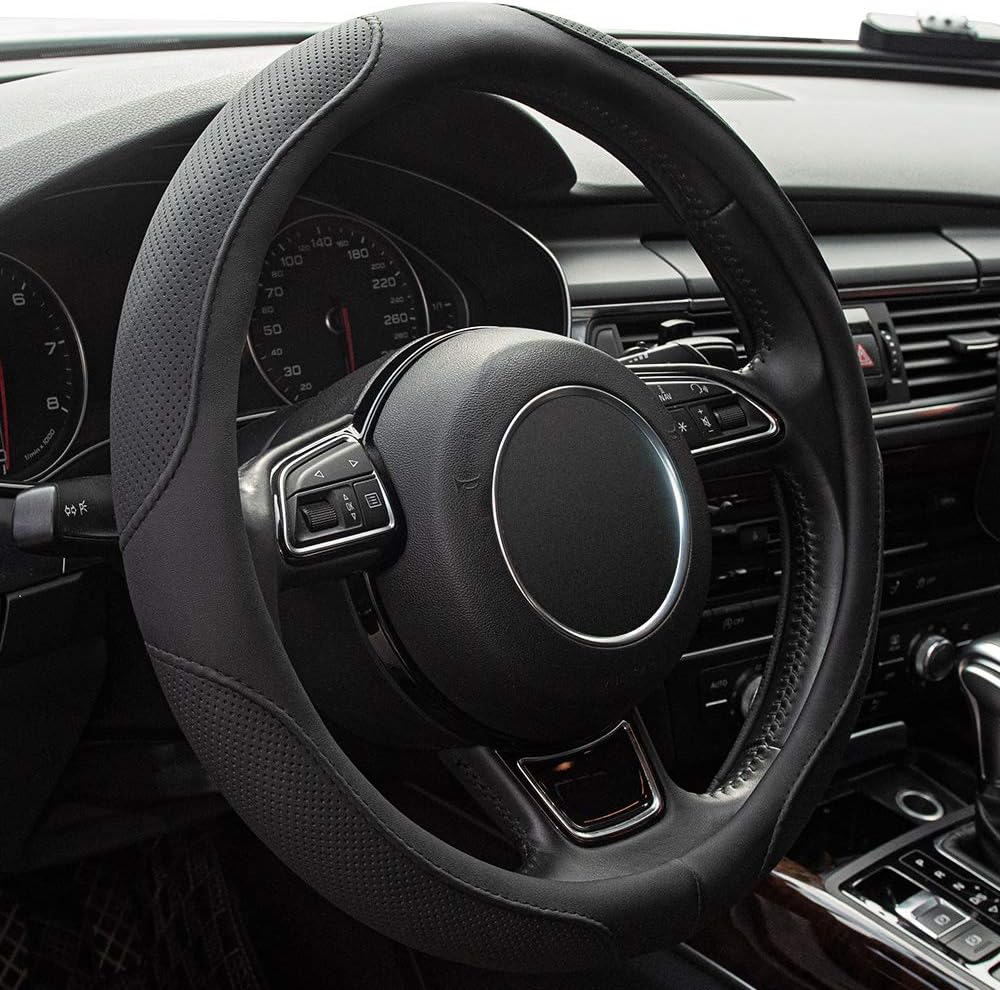
Steering Wheel Cover
Is It Safe to Drive If the Steering Wheel Shakes at High Speed?
Sometimes the answer is yes, but only for a short trip to get the car checked. Other times, the answer is no.
A light shake that starts around highway speed often comes from tire balance. That is annoying, but it is not always an emergency. A hard shake is different. If the steering wheel jumps in your hands, the car drifts, or the whole front end feels loose, take it seriously.
Stop driving and get the car checked right away if you notice any of these signs:
- The shaking gets stronger fast
- The car pulls hard to one side
- You hear clunking, thumping, or grinding
- One tire has a bulge, crack, or torn sidewall
- The steering feels loose or delayed
- The shake shows up when you brake from speed
A mild vibration can turn into a bigger repair if you ignore it. Worse, it can put you at risk. If the car feels unstable, trust that feeling.
What Causes a Steering Wheel to Shake at High Speed?
The trick is not just knowing the list. The trick is matching the symptom to the cause. Let’s break it down in plain language.
Unbalanced Tires
This is the most common cause. A tire and wheel should spin in a smooth, even circle. If the weight is off, even by a little, the wobble gets worse as speed rises.
That is why the steering wheel may feel fine in town but start to shake at 55, 65, or 75 mph. At low speed, you may not notice it. At high speed, it becomes hard to ignore.
This often happens after new tires, a pothole hit, or a lost wheel weight.
Common signs include:
- Shake starts at one speed range
- Vibration feels strongest in the steering wheel
- The car is smoother at low speed
The fix is simple in most cases. A shop can rebalance the wheels. That is often the first thing to try.
Uneven Tire Wear or Tire Damage
A worn tire does not roll the way it should. It can slap the road, bounce, or wobble. That sends vibration into the steering wheel.
Tire wear can happen from poor alignment, weak shocks, low pressure, or just age. Damage can come from potholes, nails, rough roads, or long periods of sitting.
Look for these clues:
- The tread feels choppy or rough
- One edge of the tire is more worn than the other
- The tire has a bulge or flat spot
- The car hums or drones at speed
A damaged tire is not a “wait and see” problem. If you spot a bulge, split, or exposed cords, replace the tire. Do not try to drive it out.
Bent Wheel or Damaged Rim
A hard hit can bend a wheel. Even a small bend can throw the wheel off and cause a shake at highway speed.
This problem often starts right after you hit a pothole or curb. You may also notice slow air loss if the wheel does not seal well anymore.
Signs of a bent wheel include:
- The shake began after an impact
- Balancing helps, but only a little
- One wheel looks like it wobbles when it spins
- You keep losing air in one tire
A bent wheel may be repairable in some cases. Other times, replacement is the better move.
Wheel Alignment Problems
Many drivers blame alignment first. Sometimes that is right, but not always.
Alignment by itself does not always cause a steering wheel shake. More often, it causes the tires to wear the wrong way. Then those worn tires create the vibration.
You may have an alignment issue if:
- The steering wheel sits off center
- The car drifts left or right
- Tire wear keeps showing up on one side
- The shake builds slowly over time
If your car hit a curb, got new front-end parts, or has uneven tire wear, an alignment check makes sense.
Worn Steering or Suspension Parts
Your front end has parts that hold the wheels steady and keep them pointed where you want. If these parts wear out, the wheel can shake, wander, or feel loose.
The parts may include tie rods, ball joints, bushings, wheel bearings, and struts. You do not need to know every name to notice the warning signs.
Look out for:
- Loose steering feel
- Clunks over bumps
- The car feels nervous at speed
- Tire wear keeps coming back after repairs
This kind of wear can go from minor to serious fast. If the steering feels vague or sloppy, get it checked.
Brake Rotor Problems
Here is a key detail that helps a lot. If the steering wheel mostly shakes when you brake, the brakes move higher on the suspect list.
A brake rotor that is worn or uneven can cause the wheel to shimmy during braking, especially from highway speed. The brake pedal may pulse too.
Common signs include:
- The shake shows up while braking
- It is worse from higher speeds
- The brake pedal pulses under your foot
If your car shakes while cruising and also shakes while braking, you may have more than one problem at once.
Wheel Bearing or Hub Issues
A bad wheel bearing can cause vibration, noise, and looseness. It may start as a hum, then grow into a growl or shake.
This problem can feel worse when turning one way or the other. It often gets louder with speed.
Warning signs include:
- Humming or growling from one corner
- Vibration that changes in turns
- Play in the wheel when lifted
This is not a repair to ignore. A bad bearing can get dangerous.
Axle or Driveshaft Problems
Some vehicles send shake through the seat, floor, and steering wheel at the same time. That can point to axle or driveshaft trouble.
This is more common in rear-wheel drive, all-wheel drive, SUVs, and trucks. It may show up under acceleration or at a narrow speed range.
Possible signs include:
- Vibration under throttle
- Clicking in turns
- Shake in the floor as well as the wheel
This type of problem can be harder to spot at home, but it belongs on the list if the usual tire fixes do not help.
Fast Diagnosis Chart: What the Symptom Usually Means
The pattern matters. Use this quick guide to narrow things down.
If the shake starts only above 60 mph
The likely cause is tire balance, tire wear, or wheel damage.
If the shake gets worse when braking
The brakes may be the main problem, especially the front rotors.
If the car pulls to one side
Look at alignment, tire pressure, or worn front-end parts.
If the shake began after a pothole hit
Check for a bent wheel, tire damage, or alignment trouble.
If the steering feels loose too
Worn tie rods, ball joints, or other front-end parts may be involved.
If there is a humming noise with the vibration
A bad tire or wheel bearing becomes more likely.
DIY Inspection Checklist Before You Visit a Shop
You can learn a lot in ten or fifteen minutes. Start with the easy checks. They often point you in the right direction.
Before you begin, park on level ground. Let the car cool down. If you lift the car, use proper support and never work under a vehicle held up only by a jack.
Check Tire Pressure First
This is the fastest check and one of the most overlooked.
Use a tire gauge and compare each tire to the pressure listed on the sticker inside the driver’s door area. Do not use the number on the tire sidewall as your target.
If one front tire is much lower than the other, the car may feel odd at speed. Low pressure can also make wear worse.
Inspect the Tread
Run your hand across the tread. Look at it from the front and the side.
You want to spot:
- One-sided wear
- Choppy or scalloped patches
- Bald spots
- Cracks
- Bulges
- Anything stuck in the tire
If the tread feels rough in one direction and smooth in the other, the tire may have worn unevenly. That can cause shake and noise.
Look for Missing Wheel Weights
Small weights are used to balance the wheel. If one falls off, the shake may start out of nowhere.
Look near the rim edge or inside the wheel. Sometimes you can see a clean mark where a weight used to sit.
You do not need to fix this yourself to learn something useful. If a weight is missing, balancing moves way up the list.
Check for a Bent Rim
If you can see the wheel clearly, inspect the inner and outer edges. Damage is often on the inside, where it is easy to miss.
If you safely raise the car and turn the wheel by hand, watch for any side-to-side wobble. A bent wheel will not spin true.
Check the Lug Nuts
Loose lug nuts can cause a shake and can also be dangerous.
If a wheel was removed recently, double-check that the lug nuts are tight. If you use a wrench, follow the proper pattern and the correct spec for your vehicle. If you are not sure, leave this step to a shop.
Pay Attention During a Test Drive
A short, careful drive can tell you a lot.
Ask yourself:
- At what speed does the shake start?
- Does it get worse with more speed?
- Does braking change it?
- Does turning make it better or worse?
- Do you feel it mostly in the wheel, or in the seat and floor too?
These details help you and also help the mechanic. Better clues mean faster answers.
Swap Front and Rear Tires If It Makes Sense
If the front tires are the issue, moving them to the rear may change the feel of the shake. Sometimes the steering wheel gets smoother and the vibration shifts more into the body of the car.
This is only worth doing if the tires are safe and the swap fits your setup. If you are not sure, skip it.
DIY Fixes You Can Try Yourself
Not every fix needs a shop. Some simple steps can solve the problem or at least narrow it down.
Set Tire Pressure Correctly
Start here. It is easy, fast, and free.
Make sure all four tires match the pressure target for your car. Then drive again. If the shake improves, pressure was part of the problem.
Remove Packed Dirt, Mud, or Debris
This sounds too simple, but it matters. Mud packed inside a wheel can throw off balance. Snow and road grime can do it too.
If you see built-up dirt inside the wheel, clean it out and test drive again.
Recheck After a Recent Tire or Brake Job
If the problem started right after service, do not assume it is a mystery. A missing wheel weight, uneven lug nut tightening, or a wheel not seated right can cause a shake.
Go back over the basics and inspect what was touched.
Rotate Tires if Wear Is Mild
If the tires are safe and wear is not severe, a rotation may improve the feel. It will not fix a damaged tire, but it can help if the front tires are the main source of the steering wheel vibration.
If the shake changes after a rotation, that is a clue. The tire or wheel is likely involved.
Replace a Clearly Damaged Tire
If you find a bulge, split, broken belt, or serious flat spot, replace the tire. This is one of the few times when the answer is simple and urgent.
Do not gamble on a bad tire. It can fail without much warning.
Do a Basic Brake Check
If the shake happens under braking, inspect the brakes if you already know how to do that safely.
Look for:
- Deep grooves in the rotor
- Blue or dark hot spots
- Uneven pad wear
- Cracks or obvious damage
If anything looks off, let a shop take the next step.
Fixes That Usually Need a Shop
This is where many people waste money. They guess. They replace random parts. The better move is to use the right equipment and test in the right order.
A shop is usually the best choice for these repairs:
Wheel Balancing
This takes special equipment. It is often the first paid fix to try because it is simple and often solves the issue.
Alignment
If the car pulls, the wheel sits off center, or the tires wear oddly, an alignment check makes sense. Just remember that alignment may not be the root cause. It may be the result of worn parts or a past impact.
Wheel Repair or Replacement
A bent wheel needs a close look. Some can be repaired. Some should be replaced.
Brake Rotor Measurement
A rotor can look fine and still cause vibration. Proper measurement tells the real story.
Suspension and Steering Diagnosis
Loose front-end parts are not always obvious in the driveway. A shop can inspect them more deeply and spot movement you might miss.
Bearing, Axle, and Driveshaft Repairs
These repairs often need more tools, more time, and more experience. If the problem points this way, skip the guesswork.
How Much Does It Cost to Fix a Steering Wheel Shake at High Speed?
The cost depends on the cause, but the range is wide.
A basic tire balance or pressure fix is usually the cheapest path. A new tire, brake work, or alignment lands in the middle. Bearing, axle, and bigger front-end repairs can cost much more.
In plain terms:
Low-cost fixes
- Tire pressure correction
- Cleaning packed debris
- Tire balancing
Mid-range fixes
- Wheel alignment
- One or two tire replacements
- Brake pads and rotors
- Minor wheel repair
Higher-cost fixes
- Wheel bearing replacement
- Several worn front-end parts
- Driveshaft or axle work
- Full suspension refresh
The smartest way to save money is not to start with parts. Start with diagnosis.
When Tire Balancing Is Not the Real Problem
Balancing gets blamed for almost every highway vibration. Sometimes that is right. Sometimes it sends you in the wrong direction.
Balancing may not be the real fix if:
- The shake happens mostly while braking
- The steering feels loose
- You hear clunks over bumps
- One tire keeps wearing oddly
- There is a humming or growling noise
- The vibration gets worse under acceleration
- A recent balance did not change much
When those signs show up, widen the search. The problem may sit in the brakes, bearings, suspension, or driveline.
The Best Order to Check Things
If you want to move in a smart order, use this list.
Step 1: Check tire pressure
It is quick and often overlooked.
Step 2: Inspect each tire
Look for wear, damage, bulges, and flat spots.
Step 3: Inspect the wheels
Check for bends, cracks, and missing wheel weights.
Step 4: Think about when the problem started
Did it begin after new tires, a pothole hit, or a brake job? That timing matters.
Step 5: Balance the wheels
If the tires look decent, this is often the next best move.
Step 6: Check alignment
Do this if the car pulls, the wheel sits crooked, or the tires wear unevenly.
Step 7: Inspect the brakes
Move this step higher if braking makes the shake worse.
Step 8: Inspect front-end parts and bearings
Go here if the steering feels loose, noisy, or unstable.
Step 9: Consider axle or driveshaft issues
Use this step when the usual tire and brake fixes do not solve it.
Can Bad Alignment Alone Cause Steering Wheel Shake at High Speed?
Usually not by itself.
Alignment problems often lead to uneven tire wear. Then the worn tires cause the shake. That is why some people get an alignment and still feel a vibration. The bad wear is already there.
So yes, alignment matters. It just may not be the whole story.
Frequently Asked Questions
Why does my steering wheel shake only above 60 mph?
Because speed makes small tire and wheel problems feel much bigger. A tiny balance issue at low speed can become obvious on the highway.
Can low tire pressure cause steering wheel vibration?
Yes. If one front tire is much lower than the others, the car may shake, wander, or feel off balance.
Will an alignment fix a shaking steering wheel?
Sometimes, but not always. Alignment helps if the tires are wearing wrong or the steering geometry is off. If the tires are damaged or out of balance, alignment alone will not fix it.
Why does my steering wheel shake when I brake from high speed?
That often points to a brake issue, especially the front rotors.
Can a bad wheel bearing make the steering wheel shake?
Yes. It can also cause a hum or growl that gets louder with speed.
Is this an expensive repair?
It can be cheap or costly. Tire balance is often on the low end. Bearings, axle work, and worn front-end parts can cost more.
Final Verdict
If your steering wheel shakes at high speed, start with the basics. Check tire pressure. Inspect the tread. Look for damage. Think about when the problem began. If it started after a pothole hit or recent service, that clue matters.
Most of the time, the cause is tied to tires or wheels. That is the first lane to check. If braking makes the shake worse, look harder at the brakes. If the steering feels loose, unstable, or noisy, move front-end parts and bearings higher on the list.
Do not ignore a strong shake. Cars rarely fix themselves. A small vibration today can turn into a bigger bill tomorrow. Worse, it can become a safety problem at the exact speed where you want the car to feel calm and steady.
Start simple. Stay smart. And if the car feels unsafe, stop driving and get it checked.
Quick Recap
Most likely causes
- Unbalanced tires
- Uneven tire wear
- Damaged tire
- Bent wheel
- Brake rotor issue
- Bad alignment
- Worn front-end parts
- Wheel bearing or axle trouble
Best first checks
- Tire pressure
- Tread wear
- Missing wheel weights
- Wheel damage
- Whether the shake changes when braking
Biggest red flags
- Bulging tire
- Loose steering
- Strong pull to one side
- Clunking or grinding
- Rapidly worsening shake