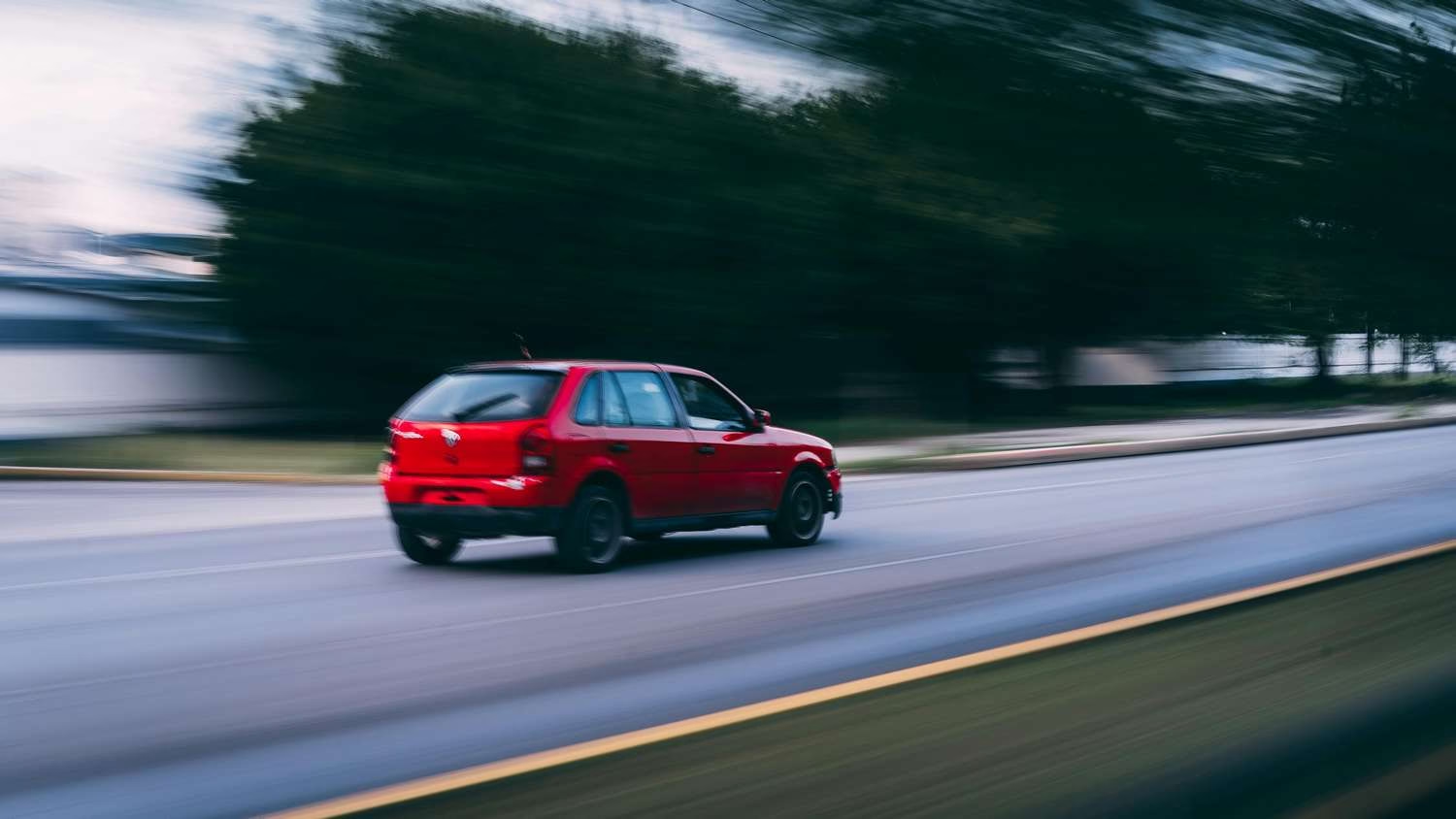
A car that shakes at high speed can feel scary. One minute the ride feels fine. The next minute the wheel starts to buzz, the seat starts to hum, or the whole car feels off. If that happens to you, do not ignore it.
In many cases, the cause is simple. Your tires may be out of balance. Your wheels may need alignment. One tire may have damage you cannot see at a glance. But sometimes the shake points to a bigger problem, such as worn steering parts, bad brakes, or a failing axle.
The good news is this: the pattern of the shake often tells you a lot. Does it start at 55 mph? Does the steering wheel shake more than the seat? Does it get worse when you brake? Does it only happen when you speed up? Those clues can help you narrow the problem fast.
This guide will walk you through the most common reasons a car shakes at high speed. It will also show you what the type of shake means, what you can check on your own, what a shop may need to inspect, and when you should stop driving and get help right away.
If your car shakes at high speed, this article will help you move from panic to a smart next step.
Is It Dangerous If Your Car Shakes at High Speed?
Sometimes yes. Sometimes no. It depends on what is causing the shake and how bad it is.
A light vibration that starts at highway speed can come from a tire balance issue. That is common. It is often easy to fix. But a hard shake, a loud thump, or a sudden wobble can point to something more serious. That may include tire damage, loose steering parts, or brake trouble.
Here is a simple rule. If the shake is new, strong, or getting worse, treat it like a real problem. Do not assume it will go away on its own. Problems that start small often grow fast. A small tire issue can turn into uneven wear. A loose front-end part can affect steering. A bad rotor can make braking less smooth and less safe.
You should be extra careful if your car shows any of these warning signs:
The shaking gets worse fast
If the vibration grows stronger as you drive, that is a red flag. A small balance issue may stay steady. A worsening shake can mean a damaged tire, bent wheel, or part that is coming loose.
The car pulls left or right
A car should track straight on a flat road. If it pulls to one side and also shakes, the cause may be alignment, tire damage, or worn steering parts.
You hear a thump, hum, or clunk
Noise matters. A steady hum can come from tires. A thump can mean a flat spot, bent wheel, or tire problem. A clunk over bumps can point to worn suspension parts.
The steering feels loose
If the steering wheel feels vague, sloppy, or slow to respond, do not ignore it. Shaking plus loose steering can point to worn tie rods, ball joints, or other steering parts.
The car shakes when you brake
If the car feels smooth until you touch the brakes, the problem may be in the brake system. Warped rotors often cause this kind of shake.
You smell something hot or burning
A burning smell is never something to brush off. It can come from overheated brakes, a rubbing tire, or another mechanical issue.
You see odd tire wear
If one edge of the tire is worn more than the other, or if you see cups, waves, or bald spots, the shake may be tied to alignment, balance, or suspension wear.
Can you still drive if your car shakes at high speed? Maybe for a short distance if the vibration is mild and you are on the way to a repair shop. But if the shake is strong, sudden, or tied to noise, pulling, or loose steering, the safest move is to stop driving and have the car checked.
A shake is not just an annoyance. It is your car telling you something is wrong.
The Most Common Reasons a Car Shakes at High Speed
When a car shakes at high speed, the cause usually falls into one of a few groups. Tires are the most common. Wheels come next. Then brakes, suspension, steering, and axle parts.
Let’s break them down one by one.
Unbalanced Tires
This is one of the top reasons a car shakes at high speed.
Your tires and wheels need even weight around the full circle. If the weight is off, the wheel spins unevenly. At low speed, you may not notice much. At 55, 65, or 75 mph, that small issue can turn into a strong vibration.
A tire can go out of balance over time. A weight may fall off. Tire wear can change the feel. Even a recent tire install can leave you with a balance issue if the job was not done well.
Signs of unbalanced tires include:
- The shake starts at a certain speed
- The steering wheel vibrates on the highway
- The vibration gets stronger as speed rises
- The ride feels smoother again when you slow down
The fix is simple. A shop removes the wheel and uses a balancing machine. The machine finds the heavy and light spots. The tech adds small weights to even it out.
This fix is often quick and low cost. That is why it is one of the first things to check when a car shakes at high speed.
Wheel Alignment Problems
Alignment is about where your wheels point and how they sit on the road. When the angles are off, the car does not roll as cleanly as it should.
A bad alignment may not always cause a hard shake by itself, but it often plays a big role. It can make the car wander, wear tires unevenly, and make a small vibration feel much worse.
You may have an alignment issue if:
- The car pulls to one side
- The steering wheel is not centered
- Tire wear looks uneven
- The car feels loose or drifts on the highway
Alignment problems often start after hitting a pothole, curb, or rough road. They can also show up after suspension work or tire replacement.
The fix is a professional alignment. A shop uses special equipment to adjust the wheel angles. Once the wheels sit right, the car should track straighter and feel more stable.
If your car shakes at high speed and also pulls, alignment should be high on your list.
Damaged Tires or Flat Spots
Not every tire problem is easy to see. A tire can look almost fine and still cause a major shake.
A tire may have a flat spot, a weak area inside, a bulge in the sidewall, or a worn patch in the tread. Any of those can make the tire roll unevenly. That uneven roll becomes more obvious at highway speed.
Flat spots can happen if a car sits for a long time. Tire damage can come from potholes, road debris, age, underinflation, or simple wear.
Common signs include:
- A thumping or pulsing feel
- A shake that does not go away after balancing
- Visible cracks, bulges, or worn sections
- Vibration that feels rhythmic
Run your hand over the tread. Look for waves, dips, or strange wear. Check the sidewall for bubbles or cuts. If you see a bulge, stop driving. A bulging tire can fail without much warning.
The fix may be a tire replacement. If the tire is badly worn, damaged, or out of shape, no amount of balancing will solve it.
Bent Wheel or Rim Damage
A bent wheel can make your car shake at high speed even if the tire itself is fine.
Wheels can bend after a hard hit from a pothole, curb, or road hazard. The wheel may still hold air, but it no longer spins in a clean circle. That throws off the ride and often causes a steady shake.
You may notice:
- Vibration that starts at highway speed
- A tire that loses air over time
- Visible damage on the rim edge
- Balance that helps only a little
A bent wheel can be hard to spot with the naked eye. Sometimes the damage is small. A shop can inspect the wheel while it spins and check for wobble.
Some wheels can be repaired. Others need replacement. It depends on how bad the bend is and what type of wheel you have.
If you hit a pothole recently and now the car shakes at high speed, a bent wheel is a strong possibility.
Warped Brake Rotors
Brake rotors are the discs your brake pads press against when you slow down. If a rotor wears unevenly or gets too hot, it can stop being flat. When that happens, you may feel a shake, especially while braking from high speed.
This type of problem has a very clear pattern. The car may feel normal when you cruise, but the steering wheel or brake pedal starts to pulse when you slow down.
Signs include:
- The steering wheel shakes during braking
- The brake pedal pulses under your foot
- The shake is strongest during slowdown
- The issue gets worse after repeated braking
Warped rotors do not always cause a shake when you are just cruising, but they can make highway driving feel rough if you brake often.
The fix is to inspect the brake system. The rotors may need resurfacing or replacement. The pads may need replacement too.
If the shake only shows up when you brake, start with the brakes.
Worn Suspension or Steering Parts
Your suspension and steering parts keep the car stable and the wheels pointed where they should be. When these parts wear out, the car can shake, wander, clunk, or feel loose.
This group includes parts like tie rods, ball joints, control arms, bushings, shocks, and struts. You do not need to know every name. What matters is the job they do. They help your tires stay planted and your steering stay tight.
When these parts wear, the car may react badly to bumps or speed. At highway speed, that can show up as vibration, wobble, or poor control.
Watch for:
- Loose or vague steering
- Clunks over bumps
- Tire wear that looks chopped or cupped
- The car bouncing too much
- Shaking plus poor handling
These problems are not ideal for DIY work unless you have experience. A shop should inspect the front end and suspension.
This kind of repair can range from moderate to expensive, but it matters. Worn steering and suspension parts affect both comfort and safety.
Axle or Drivetrain Problems
If your car shakes at high speed only when you press the gas, the problem may not be the tires at all. It may come from the axle, driveshaft, or other parts that send power to the wheels.
This type of shake often feels different. It may come up through the floor. It may get worse under load. It may fade when you let off the gas.
Signs include:
- The vibration is stronger when you accelerate
- You feel it through the floor or seat
- You hear clicking when turning
- The shake is not tied to braking
A worn axle joint, damaged shaft, or bad mount can cause this kind of problem. These issues are less common than tire balance, but they do happen.
The fix is a proper inspection. A mechanic can check for play, damage, and worn joints.
If your car feels smooth at speed until you accelerate, think beyond the tires.
What the Type of Shaking Can Tell You
Not all shaking feels the same. That is good news, because the way the shake shows up can help you narrow the cause.
Think of the shake like a clue.
If the steering wheel shakes
When the steering wheel vibrates, the problem often starts in the front of the car.
Common causes include:
- Front tires out of balance
- Front wheel alignment issues
- Bent front wheel
- Brake rotor problem if it happens while braking
- Worn front-end steering parts
This is one of the most common patterns. If the wheel shakes at 60 mph, start with the front tires and wheels.
If the whole car vibrates
If the seat, floor, and body all seem to buzz, the problem may be in the rear tires, rear wheels, or the parts under the car that spin with speed.
Common causes include:
- Rear tires out of balance
- Tire damage
- Bent rear wheel
- Axle or driveshaft issue
This kind of shake can feel less obvious in your hands and more obvious in your body.
If the shaking happens only when braking
This is a big clue. It often points to the brake rotors or other brake parts.
Common causes include:
- Warped front brake rotors
- Uneven rotor wear
- Brake parts that do not move smoothly
If the car feels fine until you slow down, focus on the brakes first.
If the shaking happens only when accelerating
This pattern often points to a power-delivery problem.
Common causes include:
- Axle issue
- Joint wear
- Driveshaft problem
- Engine or transmission mount issue
A tire problem does not always care whether you are on or off the gas. But an axle issue often does.
If the shake starts at a certain speed
This is the classic sign of a wheel or tire issue.
Common causes include:
- Tire balance problem
- Bent wheel
- Tire wear or damage
- Alignment issue that has already worn the tire
A car that feels fine at 40 mph and shakes at 65 mph is often telling you to inspect the rolling parts first.
How to Diagnose a Car That Shakes at High Speed
You do not need a full shop to gather useful clues. A few smart checks can save time and help you explain the issue clearly if you take the car in.
Here is a simple step-by-step process.
Step 1: Notice when the shaking starts
Ask yourself:
- What speed does it begin?
- Does it always start at the same speed?
- Does it go away if I slow down?
If the shake is tied to one speed range, a tire or wheel problem is likely.
Step 2: Notice where you feel it
This matters more than most people think.
Ask:
- Is it in the steering wheel?
- Is it in the seat?
- Is it in the floor?
- Do I feel it in the brake pedal?
Your answer helps point to the front wheels, rear wheels, brakes, or drivetrain.
Step 3: Test braking
Find a safe road and slow down gently from highway speed.
Ask:
- Does the steering wheel shake more when I brake?
- Does the brake pedal pulse?
- Is the shake still there when I coast?
If braking changes the feel, inspect the brakes.
Step 4: Check tire pressure
Low or uneven tire pressure can make a car feel unstable. It can also speed up uneven wear.
Check all four tires when they are cold. Use the pressure listed on the sticker inside the driver’s door, not the number on the tire sidewall.
If one tire is much lower than the others, find out why. A slow leak can lead to heat, wear, and vibration.
Step 5: Inspect the tires closely
Look for:
- Bulges in the sidewall
- Cuts or cracks
- Nails or screws
- Uneven tread wear
- Cupping or patches that look low
- Flat spots
Also look at the inside edge if you can. Some wear hides there.
If anything looks odd, do not push your luck at high speed.
Step 6: Think about recent events
Ask yourself:
- Did I hit a pothole?
- Did I hit a curb?
- Did I just get new tires?
- Was any front-end work done recently?
- Has the car been sitting for a long time?
These details matter. A new shake often starts after an impact, tire work, or long storage.
Step 7: Pay attention to how the car tracks
On a straight, flat road, does the car drift or pull? Is the steering wheel centered? Does the car feel loose in turns?
These signs can point to alignment or worn steering parts.
Step 8: Look at the wheels if you can
If a wheel is bent badly, you may see it. Check the rim edges for dents or flat spots. Also look for missing balance weights.
Step 9: Get a proper inspection if the cause is not obvious
If the shake remains after simple checks, a shop should inspect:
- Tire balance
- Wheel condition
- Alignment
- Brakes
- Steering parts
- Suspension parts
- Axles and mounts
The better you describe the symptoms, the faster they can find the cause.
Can You Fix It Yourself?
Maybe. It depends on the cause and on your comfort level.
Some checks are simple and safe. Others need proper tools and training. A smart DIY approach starts with basic inspection, not guesswork.
DIY checks you can do now
Check tire pressure
This is easy, fast, and worth doing. Wrong pressure can make a small issue feel bigger.
Inspect the tires
Look for damage, odd wear, or objects stuck in the tread. If a tire has a bulge, replace it. Do not try to drive on it.
Check wheel lug nuts if you suspect recent wheel work
If the wheels were removed recently, make sure the lug nuts are properly tightened. Do not overtighten them. If you are not sure, have a shop check them.
Clean out packed mud or debris
Sometimes mud stuck inside a wheel can throw off balance. It is not the most common cause, but it happens.
Note the pattern of the shake
Even if you cannot fix it yourself, good notes help. Speed, road type, braking, and steering feel all matter.
Jobs best left to a mechanic
Tire balancing
This needs a balancing machine.
Wheel alignment
This needs special measuring gear and adjustment tools.
Brake inspection and rotor repair
Brake work affects safety. If you are not experienced, leave this to a pro.
Steering and suspension repairs
Loose front-end parts can be hard to spot without the car lifted and checked the right way.
Axle or drivetrain work
These parts need the right tools and a trained eye.
DIY can save money when the problem is simple. But if your car shakes at high speed and the cause is not obvious, guessing can cost more in the long run.
How Much Does It Cost to Fix?
Repair cost depends on what is wrong, what kind of car you drive, and labor rates in your area. Still, it helps to know the rough shape of the cost before you head to a shop.
Tire balancing
This is often one of the lowest-cost fixes. If the issue is just balance, you may be lucky. It is usually quick and much cheaper than replacing parts.
Wheel alignment
This is also often a low to mid-range repair cost. The price can rise if worn parts must be replaced first.
Tire replacement
A single tire may cost less than a full set, but matching matters. If the tire is badly worn and the others are near the end too, a full set may make more sense.
Bent wheel repair or replacement
This can range from moderate to fairly high. It depends on the wheel type and the damage.
Brake rotor and pad work
This usually falls in the moderate range. Front brakes tend to wear faster, so many drivers face this repair at some point.
Suspension or steering repairs
Costs vary a lot here. One worn part may not be terrible. Several worn parts can add up fast.
Axle or drivetrain repair
This often sits on the higher side. The parts and labor can be more involved.
Here is the part many drivers miss: delaying a small repair can lead to a bigger one. A cheap balance job may prevent early tire wear. A worn front-end part can chew through new tires if you ignore it. Fixing the root cause early is often the cheapest path.
When You Should See a Mechanic Immediately
Some symptoms should move you to the front of the line. If you notice any of these, do not wait for next week.
Severe shaking at any speed
A hard shake is never normal. If the car feels like it is wobbling, hopping, or jerking, stop driving and have it checked.
Shaking after hitting a pothole or curb
An impact can damage a tire, bend a wheel, or knock the alignment out. If the shake began right after a hit, get it inspected soon.
Visible tire bulge, split, or major wear
A damaged tire can fail without much warning. That is not something to risk at highway speed.
Loose steering
If the steering feels sloppy, slow, or uncertain, that is a safety issue.
Strong vibration while braking
Bad brake feel can mean longer stopping distance and poor control.
Burning smell, smoke, or loud clunking
Those signs point to a bigger problem. Pull over if needed and call for help.
A mechanic should not be your last option after weeks of guesswork. In many cases, a quick inspection can save you money, stress, and risk.
How to Prevent High-Speed Car Vibration
You cannot prevent every issue. Roads are rough. Potholes happen. Parts wear out. But you can lower the odds of dealing with a car that shakes at high speed.
Rotate your tires on time
Tire rotation helps the tread wear more evenly. Even wear means smoother rolling and fewer surprises at highway speed.
Balance tires when needed
New tires should be balanced at install. If you notice a highway shake later, a rebalance may help. Balance is not a one-time thing forever.
Check alignment after impacts
If you hit a pothole or curb hard, do not just hope for the best. A quick alignment check can catch a problem before it ruins your tires.
Keep tires inflated the right way
Wrong pressure changes how the tire sits on the road. That can lead to heat, wear, and vibration.
Inspect the tires often
You do not need to be a mechanic to spot trouble. Look for bulges, cracks, odd wear, and low tread.
Pay attention to small changes
Most car problems whisper before they shout. A faint highway buzz today can turn into a strong shake next month.
Do not ignore clunks or loose steering
Suspension and steering issues often start with small signs. The sooner you fix them, the less likely they are to wear out other parts.
Get regular brake checks
Brakes wear slowly, so changes can sneak up on you. A routine inspection can catch uneven wear early.
Prevention is not exciting. But it is cheaper than replacing tires early or dealing with a major repair later.
Quick Diagnosis Chart: What Most Articles Miss
Most articles stop at a list of causes. That helps, but it does not help enough. What really helps is matching the type of shake to the most likely cause.
Use this quick guide when your car shakes at high speed.
If the steering wheel shakes most
Most likely causes:
- Front tires out of balance
- Front wheel alignment issue
- Bent front wheel
- Front brake rotor issue if braking makes it worse
Best next step:
- Inspect front tires
- Check balance and wheel condition
- Test for brake pulse
If the seat or floor shakes most
Most likely causes:
- Rear tire balance problem
- Rear wheel issue
- Tire damage
- Axle or driveshaft problem
Best next step:
- Inspect rear tires and wheels
- Note if the shake changes with throttle
If the shake starts around 55 to 70 mph
Most likely causes:
- Tire balance issue
- Bent wheel
- Tire wear problem
Best next step:
- Start with balance and tire inspection
If the shake happens only when braking
Most likely causes:
- Warped brake rotors
- Brake wear or uneven rotor surface
Best next step:
- Have the brakes inspected before the problem gets worse
If the shake happens only when accelerating
Most likely causes:
- Axle issue
- Joint wear
- Mount problem
Best next step:
- Have the drivetrain checked
If the car pulls and shakes
Most likely causes:
- Alignment issue
- Tire wear
- Steering or suspension wear
Best next step:
- Inspect tires
- Check alignment
- Inspect front-end parts
This quick diagnosis angle is what many articles miss. Readers do not just want a list. They want a way to connect symptoms to likely fixes. That is what turns confusion into action.
Frequently Asked Questions
Why does my car shake only above 60 mph?
This often points to a tire or wheel issue. Unbalanced tires, bent wheels, or damaged tires tend to show up more at higher speed because the spin becomes faster and the vibration grows stronger.
Can bad tires cause a car to shake at high speed?
Yes. Tires are one of the most common causes. Uneven wear, flat spots, sidewall bulges, and internal damage can all make the car shake once you get up to highway speed.
Why does my steering wheel shake on the highway?
A shaking steering wheel often points to the front tires or front wheels. Common causes include poor tire balance, bent wheels, alignment problems, or brake issues if the shake gets worse when you slow down.
Can I drive my car if it vibrates at high speed?
If the vibration is mild, you may be able to drive a short distance to a repair shop. But if the shake is strong, sudden, or paired with tire damage, loose steering, or brake problems, stop driving and get it checked.
Why does my car shake after getting new tires?
New tires can still cause vibration if they were not balanced well, if one tire has a defect, or if an old alignment problem is still present. A wheel may also have hidden damage that the new tires did not fix.
Is it alignment or tire balance?
If the shake starts at one speed and fades when you slow down, tire balance is often more likely. If the car pulls, the steering wheel sits off-center, or tire wear looks uneven, alignment may be the better guess. In many cases, both issues can exist at once.
Do warped rotors cause shaking at high speed?
They often cause shaking while braking from high speed. If your car feels smooth until you press the brake pedal, the brake rotors move much higher on the suspect list.
🚗 Car Shaking?
Find the cause & fix it fast
Explore expert guides — from shaky steering wheels to vibrations at high speed. Click any card for complete insights.
Car Shaking When Driving Fast?
Highway vibrations? Unbalanced tires, bent wheels, or alignment issues. Get causes, fixes & safety tips.
Read full guide →What Does It Mean When Your Car Is Shaking?
General trembling or vibrations? Understand common triggers: tires, suspension, drivetrain & early warning signs.
Explore causes →Car Shaking When Applying Brakes
Pulsing brake pedal or steering wheel shake? Worn rotors, uneven pads — brake-specific diagnosis & repairs.
Brake solutions →Car Shaking When AC Is On
Idle shakes & vibrations after turning A/C? Engine load, mounts, or compressor issues explained step-by-step.
AC diagnosis →Car Shaking When Accelerating at Low Speeds
Hesitation & shudder from stop? Axle wear, engine misfire, or drivetrain issues — low-speed vibration deep dive.
Acceleration fixes →Car Shaking When Braking
Warped rotors, caliper issues, or uneven pad wear — learn how to restore smooth braking safely.
Brake repair guide →Car Shaking When Accelerating
Engine hesitation, shaking under throttle? Fuel system, motor mounts, or CV axle — comprehensive troubleshooting.
Throttle solutions →Final Thoughts
If your car shakes at high speed, do not brush it off as “just one of those things.” Cars are not supposed to shake on the highway. Even a mild vibration means something is off.
Start with the basics. Check tire pressure. Look at the tires. Think about recent potholes, curbs, or new tire work. Pay close attention to when the shake starts and where you feel it most. Those simple clues can point you in the right direction fast.
In many cases, the fix is not dramatic. Tire balancing, alignment, or a single tire replacement may solve the problem. But if the shake comes with brake pulse, loose steering, loud noise, or visible tire damage, treat it like a safety issue and get help right away.
The smartest move is not to wait for the problem to get worse. The smartest move is to catch it early, fix the real cause, and get back to smooth, calm driving.
When a car shakes at high speed, it is asking for attention. Listen early, and you will usually spend less, stress less, and drive safer.