
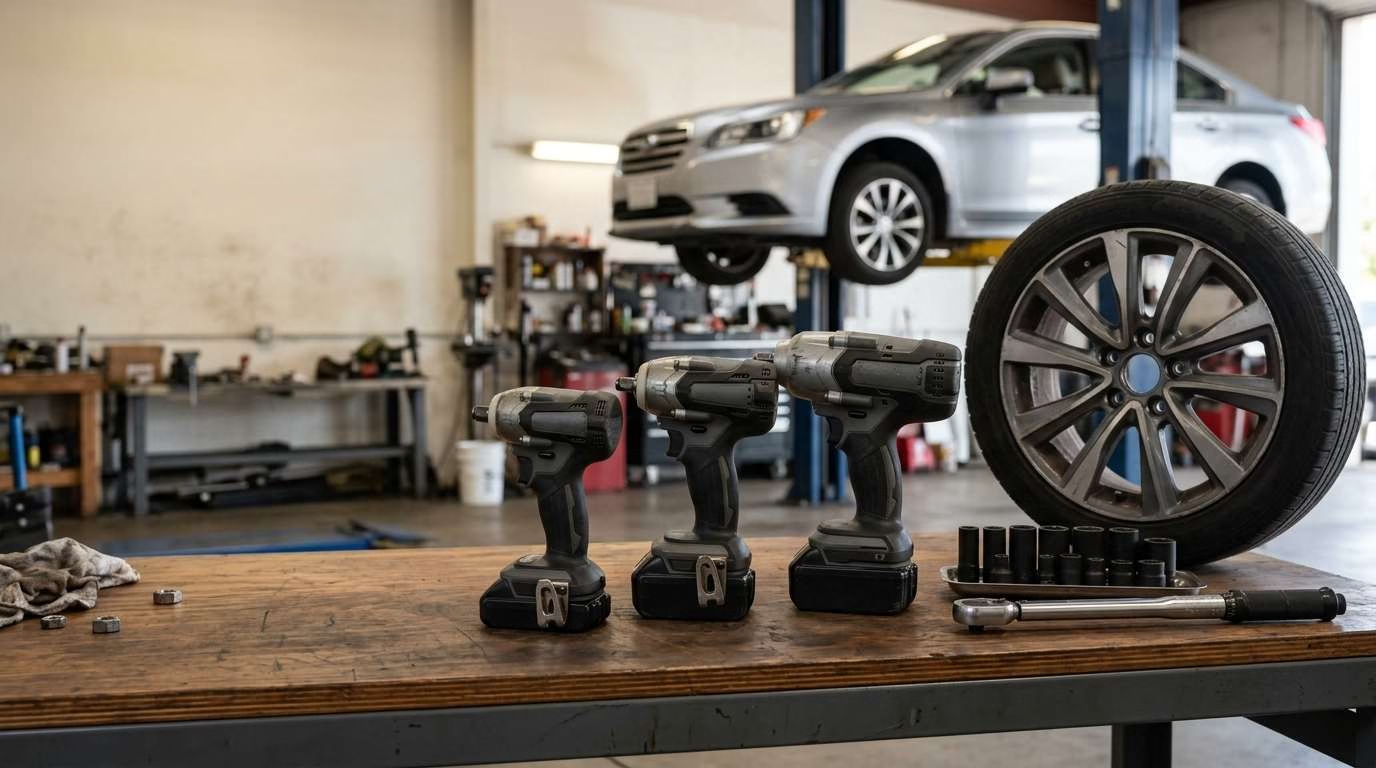
How these tools were ranked: I reviewed thousands of owner comments, customer reviews, and buyer discussions before building this list. The rankings reflect patterns from real use, not just the claims printed on a box.
The best impact wrenches for automotive work combine strong removal power with a useful size. They should remove lug nuts and suspension bolts without wearing out your arm.

For most people, the DeWalt DCF891 offers the best overall balance. It is powerful, easy to handle, and compact enough for common car repairs. If space is tight, the Milwaukee M12 Fuel Stubby 2562 makes more sense. For severe rust or truck work, consider the Milwaukee M18 Fuel 2967.
You do not always need the largest impact gun. In fact, a mid-torque model is often the best impact wrench for working on cars.
Best Impact Wrenches for Automotive Work at a Glance
Torque numbers are manufacturer claims. Actual removal power depends on the battery, socket, fastener, and working conditions.
This page contains Amazon affiliate links. If you buy through them, I may earn a small commission at no additional cost to you.
Our top three recommendations
If you want a fast answer, start here:
- Best overall: DeWalt DCF891
- Best for tight spaces: Milwaukee M12 Fuel Stubby 2562
- Best for maximum power: Milwaukee M18 Fuel 2967
The DCF891 is the safest choice for most home garages. It covers wheels, brakes, suspension, and many axle nuts.
The M12 Stubby is better for crowded wheel wells. The 2967 is better for trucks and badly rusted hardware.
Which impact wrench should most people buy?
Most people should buy a 1/2-inch mid-torque impact wrench.
This type can handle common jobs such as:
- Removing passenger car lug nuts
- Taking off brake caliper brackets
- Loosening suspension bolts
- Working on light trucks
- Removing some axle nuts
- Handling general garage repairs
A high-torque model offers more force. Yet it also adds weight and bulk. You may struggle to fit it inside a wheel well.
A compact model feels better in tight spaces. However, it may run out of power on old suspension parts.
A mid-torque wrench sits between those two extremes. That makes it the best starting point for most users.
How We Chose the Best Automotive Impact Wrenches
Product labels tell part of the story. Real owner feedback fills in the gaps.
A well-rated impact wrench can still be unpleasant to use. It may feel heavy, run hot, or need an expensive battery.
Product specifications considered
Each tool was reviewed using the following factors:
- Breakaway torque
- Fastening torque
- Drive size
- Tool length
- Working weight
- Speed settings
- Automatic shutoff
- Bolt-removal control
- Battery needs
- Warranty support
- Socket retention
- Lighting around the anvil
Breakaway torque means claimed removal force. Fastening torque means claimed tightening force.
Neither figure tells you how the tool will feel. Size and weight often matter just as much.
Real-world owner and mechanic feedback
Owner discussions reveal problems that specifications may hide.
The most common points included:
- Lug-nut performance
- Axle-nut removal
- Suspension work
- Battery life
- Heat buildup
- Tool balance
- Access inside wheel wells
- Reliability
- Loose battery mounts
- Gearbox noises
- Warranty service
One online complaint does not prove a fault. A repeated pattern deserves more attention.
That is why this list gives more weight to issues mentioned by many owners.
Why advertised torque is not the whole story
Torque claims are useful for comparing tools. They are not a promise that every bolt will come loose.
Actual performance may change due to:
- Battery size
- Battery charge
- Battery cell design
- Air pressure
- Hose diameter
- Restrictive air fittings
- Socket weight
- Long extensions
- Rust
- Damaged threads
- Previous overtightening
- Cold temperatures
A weak battery can make a strong wrench feel slow. A long extension can also absorb impact energy.
The fastener itself matters too. A rusted bolt may break before its threads move.
7 Best Impact Wrenches for Automotive Work
The seven tools below cover different needs. Some favor access. Others focus on raw removal power.
Choose based on your normal work, not the hardest bolt you can imagine.
1. DeWalt DCF891: Best Overall Impact Wrench for Automotive Work
The DeWalt DCF891 is a 1/2-inch mid-torque wrench. It offers a strong mix of power, size, and control.
It is a smart option if you want one tool for most repairs.
Quick specifications
- Drive: 1/2 inch
- Power source: 20V Max battery
- Fastening torque: 600 ft-lb
- Breakaway torque: 800 ft-lb
- Modes: Four
- Bare-tool weight: Under four pounds
- Motor: Brushless [less wear and heat]
Why it is our best overall choice
The DCF891 provides enough force for most car and light-truck work. Yet it remains easier to handle than a full high-torque model.
Its four modes help you match the tool to the fastener. Precision Wrench mode limits excess force and helps control loose hardware.
It is not the smallest wrench here. It is also not the strongest. That middle ground makes it useful.
Best automotive uses
The DCF891 works well for:
- Tire rotations
- Brake repairs
- Caliper bracket bolts
- Shock bolts
- Control-arm hardware
- Light-truck repairs
- Many axle nuts
It is also a strong choice for roadside wheel changes. Pair it with a charged battery and the correct socket.
For more wheel-focused choices, see these best impact wrenches for lug nuts.
What owners and mechanics like
Positive feedback often centers on:
- Strong output for its size
- Comfortable balance
- Low weight for a mid-torque tool
- Useful speed settings
- Good lug-nut performance
- Less vibration than large impact guns
- Fast socket changes
Many users find it powerful enough to skip a high-torque model.
Common complaints
The main concern is battery choice. A small 2Ah pack may restrict the tool.
A 4Ah or 5Ah-class pack is a better match. High-output packs may improve performance further.
Other concerns include:
- Limited access in very tight spots
- Higher kit cost for new DeWalt users
- Possible trouble with severe rust
- Less reserve power than a full high-torque model
Who should buy it?
The DCF891 suits:
- Home mechanics
- Automotive students
- Mobile repair workers
- Car owners
- Light-truck owners
- Buyers who want one main impact wrench
Who should skip it?
Choose another tool if you service heavy trucks. You may also prefer a compact model for engine bays.
A full high-torque wrench may suit you better if rust is severe.
Verdict: The DeWalt DCF891 offers the best balance for most drivers. It is strong, light, and easy to control.
2. Milwaukee M12 Fuel Stubby 2562: Best for Tight Spaces
The Milwaukee M12 Fuel Stubby 2562 packs high claimed torque into a short body.
Its 3/8-inch drive works well around brakes and suspension parts. It also weighs far less than a high-torque impact.

Quick specifications
- Drive: 3/8 inch
- Power source: M12 battery
- Breakaway torque: Up to 550 ft-lb
- Bare-tool weight: 2.2 pounds
- Modes: Four
- Motor: Brushless
- Lighting: Three LEDs
Why it stands out
Many car repairs happen in cramped spaces. A large wrench may have enough power but no room to work.
The Stubby solves that problem. Its short head reaches bolts near struts, control arms, and brake parts.
Its low weight also helps on long jobs.
Best automotive uses
The M12 Stubby works best for:
- Brake caliper hardware
- Underbody panels
- Engine brackets
- Steering components
- Smaller suspension bolts
- Tight wheel wells
- Junkyard work
It can remove many wheel nuts. Still, it should not be your only option for heavy truck work.
What owners and mechanics like
Common praise includes:
- Easy one-handed use
- Strong output for its size
- Low fatigue
- Useful work lights
- Good access
- Fast bolt removal
- Compact storage
Many mechanics reach for a compact wrench first. They use a larger tool only when needed.
Common complaints
The mode control uses the trigger and direction switch. Some users find this odd at first.
You can also change modes by accident. The control becomes easier with use.
Other concerns include:
- Heat during hard use
- Fast battery drain under heavy loads
- Higher cost with a premium battery
- Less power with smaller packs
- Limited use on very large fasteners
Who should buy it?
This tool suits:
- Brake and suspension work
- Professional technicians
- Existing M12 owners
- Users with a larger backup wrench
- Anyone who values access over maximum force
Who should skip it?
Skip it if you need one tool for large truck bolts. It may also be too small for frequent crankshaft work.
3. Milwaukee M18 Fuel 2967: Best High-Torque Cordless Impact Wrench
The Milwaukee 2967 is built for stubborn fasteners. It delivers far more claimed torque than most car repairs need.
That surplus helps with trucks, old vehicles, and heavy rust.

Quick specifications
- Drive: 1/2 inch
- Power source: M18 battery
- Fastening torque: Up to 1,200 ft-lb
- Breakaway torque: Up to 1,600 ft-lb
- Length: 7.6 inches
- Modes: Four
- Lighting: Three LEDs
Why it stands out
The 2967 combines high output with a shorter body than many older high-torque tools.
It also includes a battery isolation system. This limits vibration reaching the battery mount.
Bolt-removal mode slows the socket after the nut breaks free. That helps keep loose parts under control.
Best automotive uses
The 2967 works well for:
- Axle nuts
- Crankshaft bolts
- Large control-arm bolts
- Truck lug nuts
- Rusted chassis hardware
- Commercial vehicles
- Farm vehicles
If you work on old trucks, its extra force can save time.
What owners and mechanics like
Positive feedback tends to focus on:
- Very strong removal power
- Short body for its class
- Useful work modes
- Fast removal speed
- Good lighting
- Secure battery mounting
- Strong performance on rusted hardware
It is a useful backup when a mid-torque wrench stops moving a fastener.
Common complaints
The 2967 is heavy. That becomes clear during repeated wheel work.
It may also be too large for some suspension areas. A compact wrench can fit where the 2967 cannot.
Other drawbacks include:
- Large battery cost
- More arm fatigue
- Risk of broken bolts
- Too much power for small parts
- More expensive kits
- Less control for new users
Who should buy it?
Consider the 2967 if you work on:
- Pickups
- Commercial vans
- Farm equipment
- Rusted vehicles
- Large suspension parts
- Older cars in snowy areas
Who should skip it?
You do not need this much power for basic tire rotations. A mid-torque wrench will feel better and fit more places.
4. Milwaukee M18 Fuel 2962: Best for Daily Professional Use
The Milwaukee 2962 is the more practical M18 choice for normal car repairs.
It weighs less than the 2967. Its six-inch body also fits into more spaces.

Quick specifications
- Drive: 1/2 inch
- Power source: M18 battery
- Breakaway torque: 650 ft-lb
- Length: Six inches
- Working weight: About 5.1 pounds with 5Ah battery
- Modes: Four
- Motor: Brushless
Why it stands out
A professional may remove dozens of fasteners each day. Weight then matters more than peak torque.
The 2962 handles most wheels, brakes, and suspension work. It does so without the bulk of a high-torque wrench.
Automatic shutoff also helps run bolts down with less risk.
Best automotive uses
The 2962 is well suited to:
- Passenger-car lug nuts
- Van wheel nuts
- Brake work
- Shock bolts
- Routine suspension repairs
- Roadside tire service
- Daily shop use
What owners and mechanics like
Owners often praise its:
- Power-to-weight balance
- Short body
- Fast removal speed
- Clear work lights
- Useful bolt-removal mode
- Comfortable grip
- Broad M18 battery support
It is the type of tool you can use each day.
Common complaints
The front housing has a flat shape. That can limit access at certain angles.
Some owners have also reported odd gearbox noise in new tools. A new wrench should not make harsh or uneven sounds.
Other concerns include:
- Less power than the 2967
- Trouble with severe axle nuts
- Limited reach in deep areas
- Warranty concerns from marketplace sellers
Who should buy it?
The 2962 makes sense for:
- Professional car mechanics
- Mobile repair workers
- Active home garages
- M18 battery owners
- Users who value low weight
Who should skip it?
Choose the 2967 for heavy trucks or severe rust. Choose the M12 Stubby for very tight spaces.
5. Ingersoll Rand 2235TiMAX: Best Pneumatic Impact Wrench
The Ingersoll Rand 2235TiMAX is an air-powered impact wrench. It is light, strong, and built for repeated shop use.
It makes the most sense if you already own a suitable compressor.

Quick specifications
- Drive: 1/2 inch
- Power source: Compressed air
- Breakaway torque: 1,350 ft-lb
- Weight: 4.6 pounds
- Power control: Four positions
- Impact system: Twin hammer [two striking parts]
- Hammer case: Titanium
Why it stands out
Air tools can provide strong output without a heavy battery. The 2235TiMAX weighs less than many cordless high-torque models.
It also runs as long as your air system can keep up. There is no battery to recharge between jobs.
Best automotive uses
This tool works well in:
- Tire shops
- Fleet garages
- Repair bays
- Suspension service
- Truck repair
- High-volume wheel work
- General shop maintenance
What owners and mechanics like
Common praise includes:
- High power for its weight
- Fast impact speed
- Smooth operation
- Durable housing
- Good balance
- Strong performance with extensions
- No battery downtime
A good air system lets the tool work hard all day.
Common complaints
The tool depends on your compressor. A weak air supply can cut power.
Small hoses and narrow fittings also restrict airflow. Pressure at the tank does not always match pressure at the tool.
Other drawbacks include:
- Hose drag
- Loud operation
- Regular oiling
- Low roadside use
- Compressor noise
- Limited movement around a vehicle
If you need help choosing an air setup, compare these garage air compressors for tires. Remember that an impact wrench may need more airflow than tire inflation.
Check PriceWho should buy it?
The 2235TiMAX suits:
- Professional repair shops
- Tire technicians
- Fleet garages
- Users with strong air systems
- Mechanics who prefer light tools
Who should skip it?
A cordless model makes more sense for driveway repairs. It is also better for roadside use.
6. Makita XWT08: Best for Rusted Automotive Fasteners
The Makita XWT08 is a proven high-torque wrench. It is large and heavy, but it delivers strong removal power.
It works best as a problem-solving tool.

Quick specifications
- Drive: 1/2 inch
- Power source: Makita 18V LXT battery
- Fastening torque: 740 ft-lb
- Breakaway torque: 1,180 ft-lb
- Speed settings: Three
- Length: Nine inches
- Weight: About 7.9 pounds with battery
Why it stands out
The XWT08 has enough power for seized axle nuts and large suspension bolts.
Its battery mount has some planned movement. This helps isolate the battery from impact vibration.
That movement may look like damage. In many cases, it is part of the design.
Best automotive uses
The XWT08 works best for:
- Rusted axle nuts
- Old truck repairs
- Large suspension bolts
- Commercial vehicles
- Farm equipment
- Seized chassis hardware
What owners and mechanics like
Owners often mention:
- Strong removal force
- Durable construction
- Good long-term service
- Effective low-speed control
- Reliable battery protection
- Performance on seized parts
It can remove fasteners that fight long breaker bars.
Common complaints
Weight is the main issue. The XWT08 can tire your arms during long jobs.
Its nine-inch body also limits access. Many newer mid-torque models fit more places.
Other concerns include:
- More power than most car jobs need
- Older design
- Large storage size
- High working weight
- Possible concern over the moving battery mount
Who should buy it?
Choose it if you:
- Own Makita LXT batteries
- Work on old vehicles
- Deal with heavy rust
- Need high torque only at times
- Value a proven design
Who should skip it?
A mid-torque Makita will suit most routine repairs better. It will feel lighter and fit more spaces.
7. Ryobi PBLIW01B: Best Value High-Torque Impact Wrench
The Ryobi PBLIW01B offers high claimed torque at a lower tool price than many pro models.
It also works with Ryobi’s large One+ battery range.

Quick specifications
- Drive: 1/2 inch
- Power source: Ryobi 18V One+ battery
- Fastening torque: 700 ft-lb
- Breakaway torque: Up to 1,170 ft-lb
- Modes: Three speeds plus Auto
- Lighting: Three LEDs
- Motor: Brushless
Why it stands out
The PBLIW01B gives home users access to high-torque power. It is useful for cars, trailers, and light farm work.
Auto mode also limits wild socket speed after a fastener comes loose.
Best automotive uses
This tool suits:
- Truck lug nuts
- Trailer hardware
- Axle nuts
- Large suspension bolts
- Rusted vehicle repairs
- Tractor maintenance
- Occasional heavy jobs
What owners and mechanics like
Common positive points include:
- Strong power for the price
- Broad battery support
- Bright work lights
- Useful Auto mode
- Good performance on large nuts
- Easy socket changes
It is especially attractive if you already own Ryobi batteries.
Check PriceCommon complaints
The PBLIW01B is bulky. It may not fit around brakes or tight suspension parts.
It also needs a strong battery. A small 2Ah pack can hold it back.
Other complaints include:
- High working weight
- Too much force for small bolts
- Less refined balance
- Limited access
- Need for a premium battery
Who should buy it?
It works well for:
- Home mechanics
- Ryobi One+ owners
- Truck owners
- Trailer owners
- Occasional heavy repair work
Who should skip it?
A compact or mid-torque model will suit frequent car repairs better. Professional users may also prefer a lighter daily tool.
Which Impact Wrench Is Best for Your Type of Automotive Work?
The right wrench depends on the fastener and its location. Match the tool to the task.
Best impact wrench for lug nuts
A 1/2-inch mid-torque wrench is the best choice for most lug nuts.
It offers enough removal power without excess weight. The DeWalt DCF891 and Milwaukee 2962 both fit this role.
Use a six-point impact socket. Six-point sockets grip the flat sides of the nut.
Always finish with a torque wrench. See how to torque lug nuts correctly before your next tire change.
Best impact wrench for brake jobs
A compact 3/8-inch impact wrench works best around brakes.
It fits between the wheel hub, strut, and control arm. It also offers more control on smaller bolts.
Avoid using full power on caliper guide pins. These parts can strip or snap.
An impact wrench should help with removal. It should not replace careful hand tightening.
Best impact wrench for suspension work
A mid-torque 1/2-inch wrench can handle most suspension jobs.
It works well on:
- Shock bolts
- Strut bolts
- Sway bar brackets
- Control-arm fasteners
- Subframe hardware
Severe rust may call for a high-torque backup. Penetrating oil and a wire brush may help first.
Best impact wrench for axle nuts
Axle nuts can be tight, staked, and badly rusted.
A premium mid-torque wrench may remove them. A high-torque 1/2-inch model gives you more reserve.
Check for a locking stake before using the tool. Release that lock first.
Trying to force a staked nut can damage the axle threads.
Best impact wrench for trucks and sport utility vehicles
Larger vehicles often use bigger fasteners. They may also have higher wheel torque settings.
A strong mid-torque model can handle many light trucks. Heavy pickups may need a high-torque wrench.
The Milwaukee 2967 suits larger fasteners. The Ryobi PBLIW01B offers a lower-cost choice for home use.
Best impact wrench for roadside tire changes
A mid-torque cordless tool works best for roadside use.
It should be:
- Charged
- Easy to lift
- Stored with the right socket
- Strong enough for your vehicle
- Protected from heat and moisture
Check the battery every few months. Do not find out it is empty during a storm.
Best impact wrench for professional mechanics
A professional tool should feel good after hours of work.
Look for:
- Low working weight
- Short body length
- Quick socket changes
- Oil-resistant batteries
- Clear work lights
- Local warranty support
- Durable battery mounts
Many mechanics use three tools. A compact model handles small work. A mid-torque covers daily jobs. A high-torque handles problem bolts.
Good lighting also helps you spot damaged threads and leaking parts. Review these garage lighting options for car detailing if your work area has dark corners.
What Size Impact Wrench Is Best for Automotive Work?
Drive size tells you which sockets fit the tool. It does not tell you the full torque output.
A compact 1/2-inch wrench may be weaker than a large 3/8-inch model.
3/8-inch impact wrench
A 3/8-inch drive suits small and medium fasteners.
It works well for:
- Brake parts
- Engine brackets
- Underbody panels
- Steering parts
- Tight suspension areas
- Moderate wheel hardware
Its smaller sockets fit crowded spaces. The tool body is often compact too.
However, large 3/8-inch sockets can be hard to find. It is not the best option for big axle nuts.
1/2-inch impact wrench
A 1/2-inch drive is the standard choice for general car work.
It works well for:
- Lug nuts
- Suspension bolts
- Axle nuts
- Truck repairs
- Hub hardware
- Chassis fasteners
Most first-time buyers should start here. Socket choices are broad, and the drive can handle high loads.
3/4-inch impact wrench
A 3/4-inch drive is too large for most passenger cars.
It makes sense for:
- Heavy trucks
- Farm equipment
- Large trailers
- Industrial machinery
- Construction equipment
The sockets are heavy and expensive. The tools are also harder to fit around a normal car.
Should you use a drive adapter?
An adapter lets you use another socket drive size. That sounds useful, but it has tradeoffs.
Adapters can:
- Add length
- Reduce access
- Absorb impact energy
- Increase socket wobble
- Break under high loads
Use impact-rated adapters only. A native socket drive is better for hard work.
Compact vs. Mid-Torque vs. High-Torque Impact Wrenches
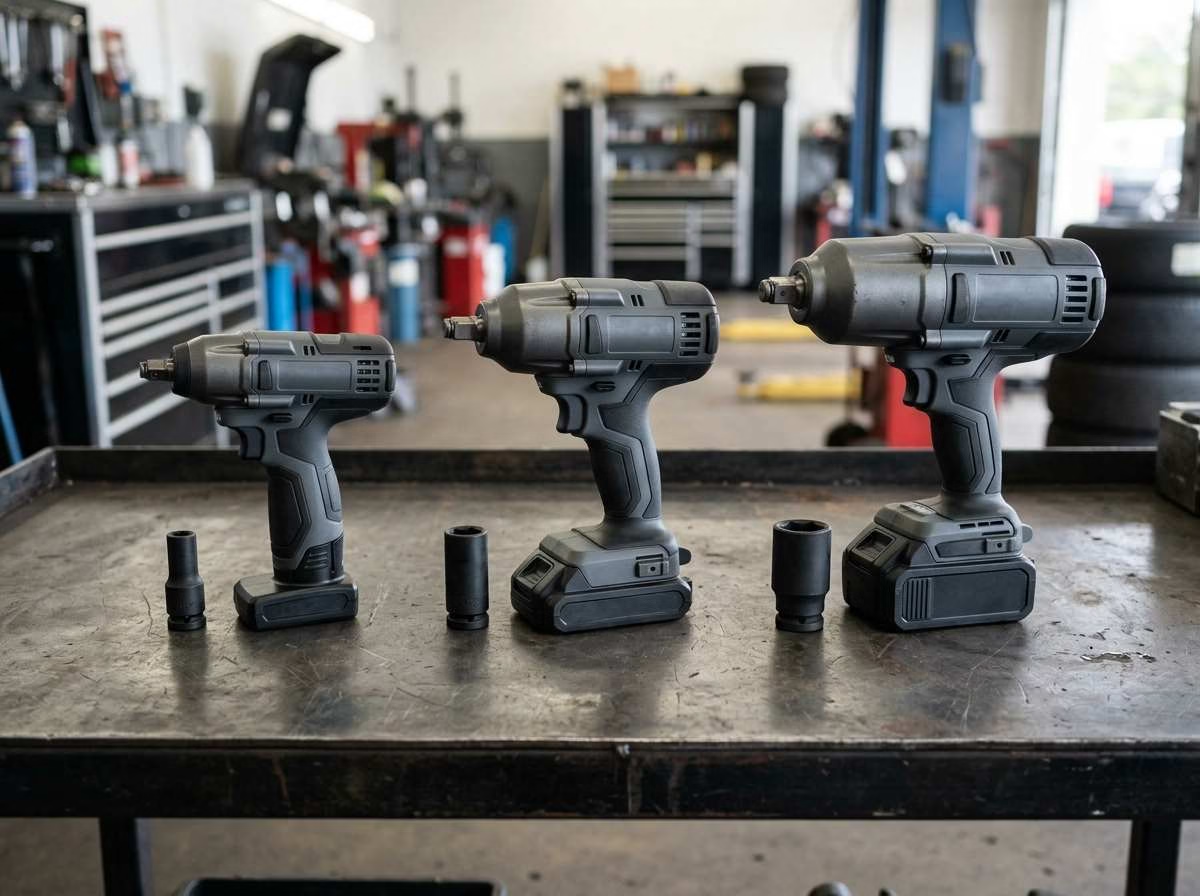
Torque class affects power, weight, and access. Each class has a clear role.
Compact impact wrenches
Compact tools are short and light.
Their strengths include:
- Easy access
- Low arm strain
- Better control
- Fast use on small parts
- Simple storage
Their limits include:
- Lower removal force
- Greater battery sensitivity
- Trouble with axle nuts
- Limited power on severe rust
A compact wrench is often the best impact gun for working on cars in tight spaces.
Mid-torque impact wrenches
Mid-torque models offer the best balance for most users.
They provide:
- Good lug-nut power
- Useful suspension performance
- Lower weight than high-torque models
- Better access
- More control
They may still struggle with:
- Seized axle nuts
- Crankshaft bolts
- Heavy truck wheels
- Severe rust
- Damaged threads
If you need one tool, choose this class.
High-torque impact wrenches
High-torque models focus on removal power.
They work best for:
- Large axle nuts
- Crankshaft bolts
- Truck work
- Rusted suspension bolts
- Farm equipment
Their downsides include:
- High weight
- Large bodies
- Higher cost
- Greater battery demand
- Increased risk of broken bolts
Do not use full power just because it is available.
The ideal two-impact setup
A good two-tool setup includes:
- Compact 3/8-inch impact wrench
- High-torque 1/2-inch impact wrench
The compact tool handles most daily work. The high-torque model waits for stubborn jobs.
This setup gives you better access than one large tool.
The ideal three-tool professional setup
A full professional setup includes:
- Compact 3/8-inch wrench
- Mid-torque 1/2-inch wrench
- High-torque 1/2-inch wrench
The compact tool handles brakes and brackets. The mid-torque covers wheels and normal suspension work.
The high-torque tool deals with axle nuts and severe rust.
Cordless vs. Pneumatic Impact Wrenches for Automotive Work
Cordless tools now serve most home garages. Air tools still make sense in busy shops.
Your work area should guide the choice.
Advantages of cordless impact wrenches
Cordless models offer:
- Easy movement
- No air hose
- Fast setup
- Roadside use
- Outdoor use
- Strong modern performance
- Simple home storage
They are ideal for driveways and mobile work.
Disadvantages of cordless impact wrenches
Cordless tools also bring some costs:
- Battery weight
- Charger cost
- Battery wear
- Heat during long use
- Reduced power with weak packs
- Brand-specific batteries
A bare tool may look cheap. The full kit can cost much more.
Advantages of pneumatic impact wrenches
Air tools offer:
- Good power-to-weight ratios
- Long work cycles
- No battery charging
- Proven shop life
- Lower tool cost in some cases
They work well in fixed repair bays.
Disadvantages of pneumatic impact wrenches
Air systems add their own limits:
- Compressor cost
- Hose drag
- Loud operation
- Air leaks
- Regular oiling
- Less roadside use
- Pressure loss
A small air compressor may fill tires well. That does not mean it can run an impact wrench well.
Which type should you choose?
Choose cordless if you work at home or on the road. It is also better for most mobile mechanics.
Choose pneumatic if you already have strong shop air. It can be lighter during long shifts.
Do not buy a small compressor only for an impact wrench. A quality cordless model may cost less overall.
How Much Torque Do You Need for Automotive Work?
You need enough force to loosen the fastener. More is not always safer.
Torque ratings can also be hard to compare across brands.
Understanding fastening torque and breakaway torque
Fastening torque means claimed tightening force.
Breakaway torque means claimed removal force.
Breakaway figures are often much higher. They do not show precise output at the socket.
An impact wrench is not a measuring tool. Use a torque wrench for final tightening.
If you are choosing one, read this guide to beam vs. click vs. digital torque wrenches.
Recommended torque class by application
Use this general guide:
- Small brackets: Compact impact or power ratchet
- Brake hardware: Compact or mid-torque
- Passenger-car lug nuts: Mid-torque
- Suspension bolts: Mid-torque
- Axle nuts: Strong mid-torque or high-torque
- Crankshaft bolts: High-torque
- Truck hardware: High-torque
- Heavy equipment: High-torque or 3/4-inch drive
Fastener condition can change these needs. Rust may demand far more removal force.
Why more torque can create new problems
Too much force can cause:
- Broken wheel studs
- Stripped threads
- Snapped bolts
- Damaged nuts
- Crushed parts
- Warped brake rotors
- Unsafe wheel installation
Use the lowest setting that works. Save full power for stubborn removal jobs.
Impact Wrench Features That Matter for Automotive Work
A big torque number grabs attention. Smaller design details often shape daily use.
Tool length and head size
A short tool can reach behind brake parts and suspension arms.
Check the full length with a socket installed. A short body paired with a deep socket may still be too long.
Head width matters too. A narrow nose can fit beside struts and brackets.
Weight with the battery installed
Bare-tool weight can mislead you.
A large battery may add several pounds. It can also shift the balance toward your wrist.
Compare working weight where possible. That is the weight you will feel.
Variable speed and power modes
Power modes help protect smaller fasteners.
A useful impact wrench should offer:
- Low mode for small parts
- Medium mode for common bolts
- High mode for stubborn hardware
- Automatic mode for controlled removal
The trigger should also give smooth speed control.
Automatic shutoff
Automatic shutoff stops or slows the tool after light tightening.
This feature helps seat a nut without hammering it. It is useful on wheels and brackets.
It does not replace a torque wrench.
Bolt-removal control
Bolt-removal control slows the socket after breakaway.
This helps prevent:
- Flying nuts
- Lost bolts
- Dropped washers
- Damaged threads
- Spinning parts
It is useful when you work over drains or inside crowded bays.
Friction ring vs. detent pin
A friction ring holds the socket through spring pressure. It allows fast socket changes.
A detent pin locks into a hole in the socket. It holds more firmly but takes longer to release.
Most automotive users prefer a friction ring. Fleet workers may want a detent pin for better retention.
Work lights
Lights around the anvil reduce shadows. They shine closer to the fastener.
A handle-mounted light can be blocked by your hand or socket.
Three small lights often provide more even coverage than one large light.
Battery-isolation systems
Impact vibration can stress battery mounts and electrical contacts.
An isolation system allows controlled movement. This reduces force reaching the battery.
A small amount of planned movement may be normal. Check the manual before assuming a fault.
Warranty and authorized sellers
Buy from an authorized seller when possible.
Also:
- Keep your receipt.
- Record the serial number.
- Register the tool if needed.
- Check local service options.
- Avoid suspicious battery deals.
Fake batteries can perform poorly. They may also lack safe heat controls.
Why Battery Choice Matters More Than Many Buyers Expect
The battery powers the motor. It also limits how much current the motor can draw.
A powerful tool with a weak battery may disappoint you.
Why small batteries can make an impact wrench feel weak
Battery capacity is measured in amp-hours. That number mainly relates to stored energy.
Power output also depends on:
- Cell type
- Cell count
- Pack design
- Connection quality
- Battery temperature
- Charge level
A larger pack often delivers more current. Yet amp-hours alone do not tell the full story.
Use the battery class suggested by the tool maker.
Recommended battery sizes
General guidance looks like this:
- Compact wrench: Small pack for access
- Compact wrench under load: High-output pack
- Mid-torque wrench: 4Ah or 5Ah-class pack
- High-torque wrench: Premium high-output pack
A larger pack adds weight. Choose the smallest pack that still supplies full power.
Battery care for roadside storage
A roadside impact wrench is useless with a dead pack.
Follow these steps:
- Check the charge every few months.
- Do not store it fully drained.
- Avoid extreme heat.
- Protect it from water.
- Rotate it with garage batteries.
- Carry the correct socket.
- Test the wrench before long trips.
Do not leave lithium batteries inside a very hot car for long periods.
Common Impact Wrench Problems Reported by Automotive Users
Many tool problems come from the battery, socket, or air supply. The wrench itself may be fine.
The wrench will not remove lug nuts
Possible causes include:
- Small battery
- Low charge
- Wrong power mode
- Overtightened lug nuts
- Rusted threads
- Long extension
- Weak air supply
- Wrong socket
- Cross-threaded wheel stud
Start with a charged battery and a short impact socket.
If the nut still will not move, stop and inspect it. Endless hammering can damage the stud.
The tool becomes hot
Impact wrenches produce heat under heavy load.
Common causes include:
- Long impact cycles
- Small batteries
- Blocked vents
- Severe fasteners
- High air temperature
- Using a compact tool for heavy work
Release the trigger and let the tool cool. Do not keep hammering for several minutes.
The battery feels loose
Some tools use planned movement to reduce vibration.
Check whether the battery:
- Clicks into place
- Maintains electrical contact
- Shows visible damage
- Moves beyond the normal range
Read the manual before opening the tool.
The socket falls off
The cause may be:
- Worn friction ring
- Damaged socket
- Wrong socket size
- Broken detent pin
- Poor adapter fit
- Debris around the anvil
Replace worn parts. Do not tape a socket to the tool.
The impact wrench makes an unusual gearbox noise
Some impact noise is normal. New grinding, scraping, or uneven clacking is not.
If the sound is new:
- Stop using the tool.
- Remove the battery.
- Inspect the anvil.
- Try another socket.
- Contact the seller or service center.
Do not open a new tool if that may affect its warranty.
The wrench breaks bolts instead of loosening them
Rust can lock the threads while weakening the bolt shaft.
Before using full power:
- Clean exposed threads.
- Apply penetrating oil.
- Let the oil work.
- Use short reverse pulses.
- Try small forward pulses.
- Check for locking tabs.
Replace hardware with heavy rust. Reusing a weakened bolt can create a safety risk.
How to Use an Impact Wrench Safely on a Car
An impact wrench saves time. It can also break parts very fast.
Good habits protect you and the vehicle.
Use impact-rated sockets
Impact sockets are made for repeated shock.
Standard chrome sockets may crack. Small metal pieces can fly toward your face.
Look for dark impact-rated sockets. Check them for splits before use.
Start with the lowest useful setting
Begin in the lowest mode.
Increase power only if the fastener does not move. Short bursts give you better control.
This approach also reduces battery use and heat.
Thread fasteners by hand first
Start every nut or bolt by hand.
Turn it several full threads before using power. This helps prevent cross-threading.
If it feels tight from the start, stop. Remove it and inspect the threads.
Do not use an impact wrench for final wheel torque
Use this safer order:
- Start each lug nut by hand.
- Run each nut down lightly.
- Tighten them in the correct pattern.
- Lower the vehicle until the tire grips.
- Set your torque wrench.
- Tighten each nut to the correct value.
Your vehicle manual lists the required torque.
Wear eye and hearing protection
An impact wrench can release:
- Rust flakes
- Broken socket pieces
- Metal chips
- Damaged fasteners
- Dirt from the wheel well
Wear safety glasses. Use hearing protection during long or loud jobs.
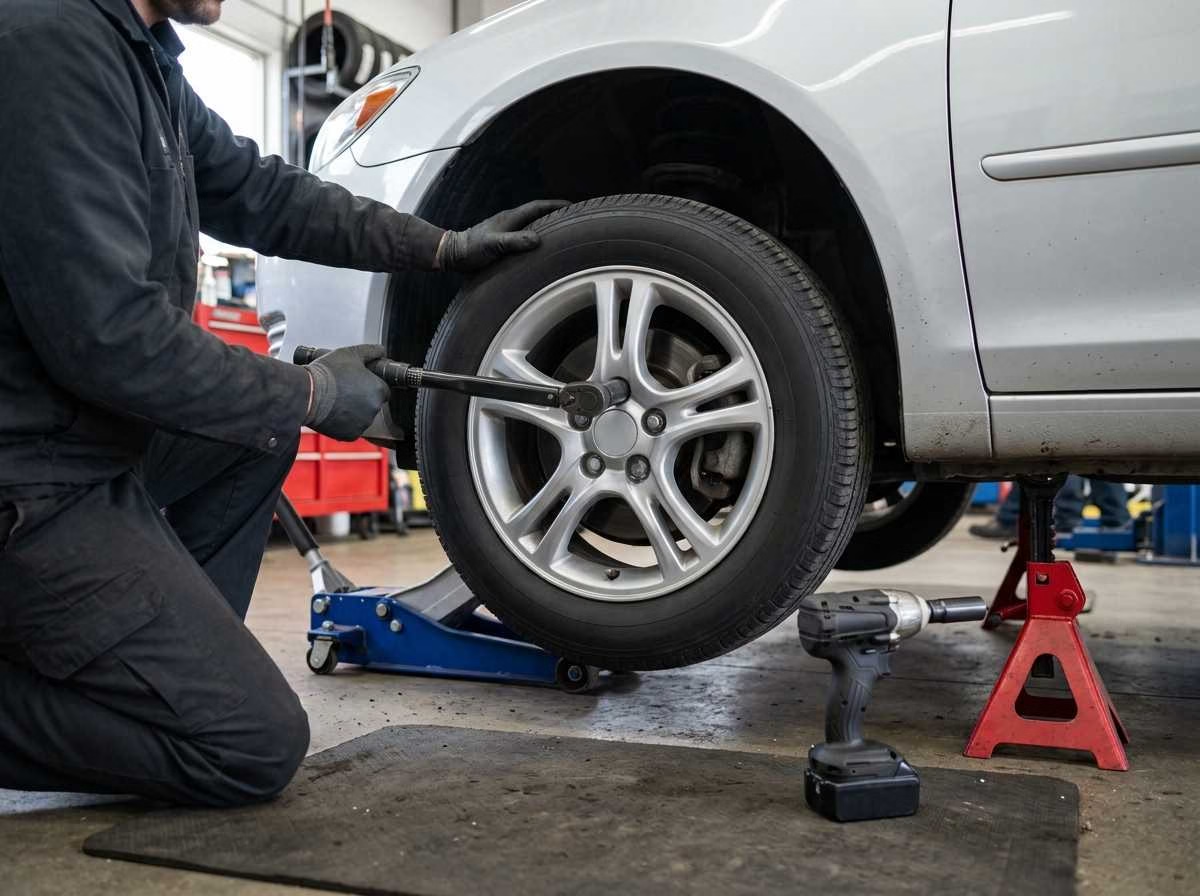
Support the vehicle correctly
Never work under a car held by a jack alone.
Use:
- A flat surface
- Correct lift points
- Rated jack stands
- Wheel chocks
- A stable floor jack
Push the vehicle gently before going under it. It should feel secure.
Essential Accessories to Buy With an Automotive Impact Wrench
The impact wrench is only one part of the setup.
Impact-rated socket set
Choose six-point impact sockets.
A useful automotive set should include:
- Metric sizes
- Standard depth sockets
- Deep sockets
- Common wheel sizes
- A storage case
Thin-wall impact sockets can help with tight wheel openings.
Torque wrench
Every impact wrench owner should also have a torque wrench.
Use it for final tightening on:
- Lug nuts
- Brake parts
- Suspension bolts
- Hub fasteners
- Engine parts
Store a click-style torque wrench at its lowest marked setting.
Protective tool boot
A rubber boot protects the wrench from:
- Scratches
- Small drops
- Grease
- Contact with wheels
- Paint damage
A boot can add bulk. Make sure the tool still fits your working area.
Extensions and swivel sockets
Extensions help reach recessed fasteners.
Swivels help when the tool cannot line up straight. Both may absorb impact force.
Use the shortest setup that reaches the part.
Spare battery
A spare battery helps with:
- Long repairs
- Roadside work
- Cold weather
- Mobile service
- High-torque jobs
Keep one pack charging while you use the other.
Carrying case
A good case should hold:
- Impact wrench
- Battery
- Charger
- Wheel sockets
- Gloves
- Safety glasses
- Wheel-lock key
Keeping the wheel-lock key with the tool can prevent a bad roadside surprise.
Penetrating lubricant and wire brush
Cleaning rust first can reduce the force needed.
Brush exposed threads. Then apply penetrating oil around the nut.
Give the oil time to move into the threads.
Mistakes to Avoid When Buying an Automotive Impact Wrench
A poor choice may still be a good tool. It simply may not suit your work.
Buying the model with the highest torque number
Peak torque does not tell you about:
- Weight
- Access
- Grip comfort
- Battery cost
- Low-speed control
- Socket fit
A lighter mid-torque tool often gets more use.
Confusing an impact driver with an impact wrench
An impact driver usually has a 1/4-inch hex holder. It is designed for bits and screws.
An impact wrench has a square drive. It is designed for sockets.
Some drivers can remove light wheel nuts with an adapter. That does not make them the best impact driver for automotive work.
Use a true impact wrench for high-load car repairs.
Ignoring the cost of batteries and chargers
Bare tools do not include a battery or charger.
Compare the total cost of:
- Tool
- Battery
- Charger
- Sockets
- Spare battery
- Protective boot
An existing battery platform may save you a lot.
Buying a weak kit battery
Some kits include small batteries. These lower the price but may also limit power.
Check the battery type and size. Do not assume every pack gives equal output.
Choosing a high-torque wrench for every job
A large impact wrench can feel clumsy around brakes and struts.
It can also damage small hardware. Use a compact or mid-torque model for normal work.
Save high torque for large fasteners.
Using ordinary chrome sockets
Chrome sockets are not designed for impact shock.
They may split without much warning. Use sockets marked for impact use.
Trusting the impact wrench to tighten by feel
Counting impact sounds does not provide a set torque.
Battery charge, socket weight, and bolt condition all change the result.
Use a torque wrench for the final setting.
Final Verdict
The best tool is not the one with the largest number. It is the one that fits your work.
Best impact wrench for most automotive work
The DeWalt DCF891 is the best overall choice.
It offers:
- Strong mid-torque output
- Low bare-tool weight
- Useful control modes
- A practical 1/2-inch drive
- Enough power for most car repairs
Pair it with a capable battery. Avoid relying on the smallest pack for hard work.
Best compact choice
The Milwaukee M12 Fuel Stubby 2562 is the best compact option.
It fits crowded areas and weighs very little. Its 3/8-inch drive suits brakes, brackets, and suspension work.
It also works well beside a larger 1/2-inch wrench.
Best for maximum power
The Milwaukee M18 Fuel 2967 is the clear power pick.
Use it for:
- Trucks
- Axle nuts
- Crankshaft bolts
- Severe corrosion
- Large suspension fasteners
Its high output comes with extra weight. It is not the best daily tool for small cars.
Best professional shop choice
The Milwaukee M18 Fuel 2962 is a strong cordless shop tool.
It balances weight, size, and removal power. That makes it useful for daily wheel and suspension work.
Choose the Ingersoll Rand 2235TiMAX if your shop has a capable air system. It offers high power without battery weight.
Best budget high-torque choice
The Ryobi PBLIW01B is the strongest value option on this list.
It offers high claimed torque and broad battery support. That makes it useful for Ryobi owners.
It is large, so it works better as a heavy-job tool.
If you are buying your first wrench, start with a 1/2-inch mid-torque model. It is the most useful type for cars and light trucks.
Frequently Asked Questions
What is the best impact wrench for automotive work?
The DeWalt DCF891 is the best choice for most people. It combines strong removal power with a manageable body.
The right choice still depends on your vehicle. Trucks and heavy rust may require a high-torque wrench.
How much torque should an automotive impact wrench have?
A mid-torque wrench is enough for most passenger cars. These tools commonly handle wheel, brake, and suspension work.
Large axle nuts and truck parts may need high torque. Fastener condition matters as much as size.
Is a 3/8-inch or 1/2-inch impact wrench better for automotive work?
A 1/2-inch wrench is better for general use. It works with larger sockets and higher loads.
A 3/8-inch wrench is better for tight spaces. It feels more natural around brakes and engine parts.
Can a cordless impact wrench remove lug nuts?
Yes, a suitable cordless impact wrench can remove most lug nuts.
Use a charged battery and an impact socket. Rusted or overtightened nuts may need more power.
Can I tighten lug nuts with an impact wrench?
You can run lug nuts down lightly. Do not use the impact wrench for final torque.
Finish each nut with a calibrated torque wrench.
Is 600 ft-lb enough for lug nuts?
Yes, 600 ft-lb of claimed removal power is more than enough for most passenger-car lug nuts.
However, rust and overtightening can raise the force needed. A weak battery may also limit the tool.
Do I need a high-torque impact wrench for car repairs?
Most people do not need one for daily car repairs.
A mid-torque wrench handles most tasks. High-torque tools are better for trucks, axle nuts, and severe rust.
Is an impact driver strong enough to remove lug nuts?
Some powerful impact drivers can remove light lug nuts. They need a square-drive adapter.
A true impact wrench is the better tool. It is made for sockets and higher loads.
Are air impact wrenches stronger than cordless models?
Not always. Modern cordless impact wrenches can match or beat many air tools.
Air performance depends on airflow, hose size, fittings, and pressure at the tool.
Why will my impact wrench not remove a lug nut?
Possible reasons include:
- Weak battery
- Low charge
- Wrong mode
- Long extension
- Small tool
- Heavy corrosion
- Overtightened nut
- Damaged threads
Try a charged high-output battery and a short impact socket first.
Do impact extensions reduce torque?
They can reduce the force reaching the fastener.
Long, thin, or flexible extensions absorb more impact energy. Use the shortest extension possible.
What battery size is best for an impact wrench?
A 4Ah or 5Ah-class battery works well on many mid-torque tools.
High-torque models often perform best with premium high-output packs. Follow the tool maker’s guidance.
Can an impact wrench break bolts?
Yes. High torque can snap weak, rusted, or small bolts.
Start on a low setting. Use short bursts and inspect heavily corroded hardware.
Do I need special sockets for an impact wrench?
Yes. Use impact-rated sockets.
They are built to handle repeated shock. Standard chrome sockets may crack.
What is the best impact wrench setup for a mechanic?
A complete setup includes:
- Compact 3/8-inch wrench for tight spaces
- Mid-torque 1/2-inch wrench for daily work
- High-torque 1/2-inch wrench for stubborn fasteners
If you can buy only one, choose the mid-torque 1/2-inch wrench.