
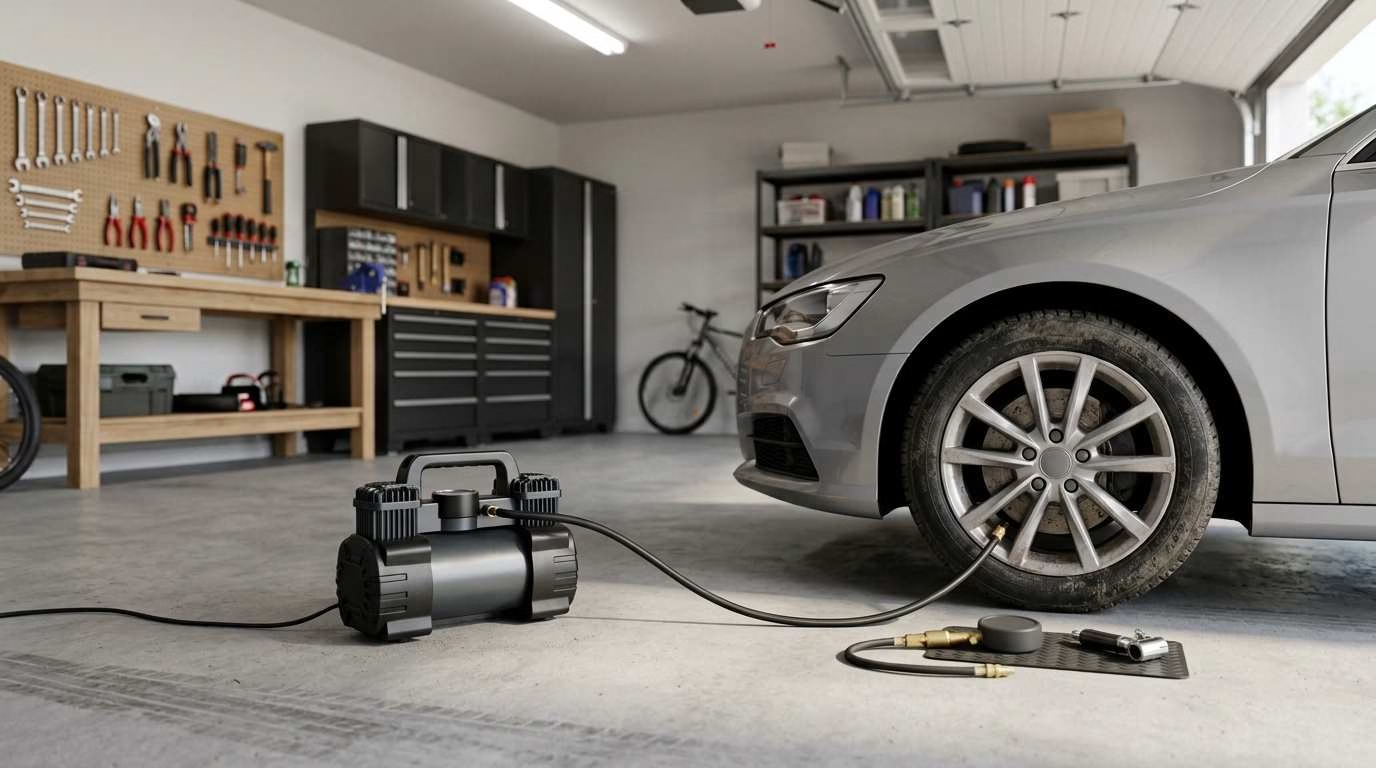
How these products were chosen: I reviewed thousands of owner comments, customer reviews, and detailed buyer discussions before ranking these compressors. The list reflects how these machines perform in real garages, not just what their product pages promise.

The California Air Tools 8010 is the best garage air compressor for tires for most homes. It is quiet, easy to move, and large enough for several vehicles. You can also use it for cleaning, nailers, and light garage work.
If you only check tire pressure, consider a cordless inflator instead. It starts at once and takes up less room. A tank compressor makes more sense if you want extra uses.
Best Garage Air Compressors for Tires at a Glance
This page contains Amazon affiliate links. If you buy through them, I may earn a small commission at no additional cost to you.
My short list:
- Choose the California Air Tools 8010 for the best balance.
- Choose the Craftsman CMEC6150K for a low-cost complete kit.
- Choose the Fortress FT2135UQ if noise bothers you.
- Choose the Metabo HPT EC914S for more airflow.
- Choose a cordless inflator if tires are your only task.
Prices and stock can change by region. Voltage and fitting types may also differ.
How We Chose the Best Garage Air Compressors
A large tank does not always mean better performance. Maximum pressure can also be misleading. I focused on the details that affect daily use.
Tire Inflation Performance
Almost any compressor can top off a car tire. The main difference is how long the task takes.
I looked at four main factors:
- Delivered airflow: How much usable air the pump supplies.
- Tank capacity: How much air is ready before refilling.
- Recovery speed: How fast the pump replaces used air.
- Maximum pressure: How much pressure the tank can hold.
Airflow is often shown as CFM. That means cubic feet per minute. In plain terms, it tells you how fast air moves.
For tire inflation, you do not need huge airflow. However, faster airflow helps with large tires and several vehicles.
Noise and Garage Comfort
A loud compressor may work well yet feel awful to use. Bare walls and concrete floors make the sound worse.
Most quiet models sit near 60 dB. Standard pancake units may reach 80 dB or more. That gap feels large inside a small garage.
Noise matters most if:
- Your garage shares a wall with the house.
- You work early or late.
- You live near other homes.
- Your garage serves as a gym or hobby room.
- You need to speak while the pump runs.
Portability and Storage
Air compressors can be hard to move. Even a small tank may come with a heavy pump and steel frame.
I considered:
- Total weight
- Handle comfort
- Wheel size
- Tank shape
- Cord storage
- Hose storage
- Height and floor space
A vertical tank saves floor space. A low, horizontal unit may fit under a bench.
Owner and Forum Feedback
Short product tests cannot show long-term faults. That is why real owner feedback matters.
I looked for repeat reports about:
- Air leaks
- Failed regulators
- Slow tank recovery
- Excessive noise
- Weak gauges
- Pressure-switch faults
- Motor starting problems
- Rust and trapped moisture
- Warranty service
- Replacement part access
One fault report does not prove a product is bad. A clear pattern deserves more weight.
Value for Money
The cheapest compressor is not always the least costly setup. You may still need a hose, chuck, gauge, and fittings.
I considered:
- Base price
- Included accessories
- Expected pump life
- Warranty terms
- Maintenance needs
- Local parts support
- Uses beyond tire inflation
A quiet compressor may also offer better daily value. You may use it more often because it causes less stress.
The 10 Best Garage Air Compressors for Tires
The following picks serve different types of garages. Each review covers benefits, limits, and common owner concerns.
1. California Air Tools 8010: Best Overall
The California Air Tools 8010 offers the best balance for most homes. Its 8-gallon tank holds enough air for several tire checks. Wheels make it easier to move than many smaller models.
The pump runs at a low speed. This helps keep noise near 60 dB. You can often speak without raising your voice.
Key Specifications
- 8-gallon steel tank
- 120 PSI maximum pressure
- 2.2 CFM at 90 PSI
- 60 dB noise rating
- Oil-free dual-piston pump
- Wheeled frame
- About 48 pounds
Best Features
The tank is large enough for more than tire work. You can run a blow gun, brad nailer, or airbrush. Short jobs rarely feel rushed.
Its low noise is the main draw. This model works well in attached garages.
The pump needs no oil changes. You must still drain water from the tank.
Real Owner Feedback
Owners often praise its calm sound. Many compare it with a loud fridge or firm conversation.
Users also like its simple controls. The two gauges help you track tank and outlet pressure.
Long-term feedback is mostly positive. Yet some owners report air leaks or valve trouble over time.
Common Problems
Possible drawbacks include:
- Slow recovery during long blow-gun use
- Leaks around threaded fittings
- Hard starts on weak circuits
- Awkward lifting on stairs
- Limited power for grinders and sanders
Avoid thin extension cords. Low voltage can make the motor hum or fail to start.
Who Should Buy It
Choose this model if you want:
- A quiet home-garage compressor
- Enough air for several cars
- Light nailer or blow-gun use
- Wheels for easy movement
- Low pump maintenance
Who Should Skip It
Skip it if you plan to run:
- A grinder for long periods
- A large paint gun
- A sandblaster
- A high-demand air sander
- Several tools at once
Final Verdict
The 8010 is the best garage air compressor for tires for most people. It has useful capacity without becoming a large shop machine.
2. Craftsman CMEC6150K: Best Budget Air Compressor Kit

The Craftsman CMEC6150K gives you a full starter setup. The kit includes a hose, tire chuck, gauge, blow gun, and adapters.
Its 6-gallon pancake tank stores more air than tiny portable units. The pump also recovers at a fair rate.
Key Specifications
- 6-gallon tank
- 150 PSI maximum pressure
- 2.6 SCFM at 90 PSI
- 78.5 dBA noise rating
- Oil-free pump
- Dual air outlets
- Accessory kit included
SCFM is a standard airflow rating. It helps you compare compressor output.
Best Features
You can set up this compressor with few added parts. That helps first-time buyers avoid fitting mistakes.
The 150 PSI tank stores plenty of pressure for normal tires. Its two outlets can support two hoses.
Real Owner Feedback
Owners like its price and simple design. Many use it for tire inflation, trim nailers, and cleaning.
Noise is the main complaint. The pump sounds sharp inside a bare garage.
Common Problems
Reported issues include:
- Broken regulator parts
- Air leaks around fittings
- Motor running without building pressure
- Weak included gauges
- Pump noise after long use
The included hose works for basic jobs. A softer rubber hose may feel better in cold weather.
Who Should Buy It
This kit suits:
- First-time compressor owners
- Budget-focused shoppers
- Tire inflation and nailer use
- Garages where noise is not a major issue
Who Should Skip It
Skip it if:
- Your garage joins a bedroom.
- You work late at night.
- You need steady airflow.
- You want premium controls.
Final Verdict
This is a useful budget kit. It costs less than many quiet models and includes key tire tools.
3. Fortress FT2135UQ: Best Ultra-Quiet Compact Compressor

The Fortress FT2135UQ packs good airflow into a small frame. Its 2-gallon aluminum tank also avoids internal rust.
At about 60 dBA, it is far calmer than most pancake units. The protective cage helps guard the pump and controls.
Key Specifications
- 2-gallon aluminum tank
- 135 PSI maximum pressure
- About 2.1 SCFM at 90 PSI
- 60 dBA noise rating
- Oil-free pump
- Dual quick-connect outlets
- Full protective cage
Best Features
The compressor fills its small tank quickly. It also sits well under a bench.
Its aluminum tank lowers rust risk. You should still drain moisture after use.
Real Owner Feedback
Owners often mention the low sound first. Some say they use it more than their old compressor.
It performs well on car and light truck tires. It can also handle short cleaning and nailer jobs.
Common Problems
Its main limits are clear:
- Small air reserve
- Frequent cycling
- Limited regional availability
- Shorter standard warranty than some rivals
- Poor fit for continuous tools
Who Should Buy It
Choose it for:
- Attached garages
- Compact workshops
- Tire inflation
- Light painting or cleaning
- Brad nailers
- Noise-sensitive work areas
Who Should Skip It
Look elsewhere if you need:
- A large tank
- Long blow-gun sessions
- Heavy air tools
- Service outside the US
Final Verdict
The Fortress is a smart small-garage pick. It stays quiet without giving up too much airflow.
4. Metabo HPT The Tank EC914S: Best High-Performance Portable

The Metabo HPT EC914S focuses on output. It delivers 4 CFM at 90 PSI, which beats many portable pancake models.
Its tank stores air at up to 200 PSI. That gives you more usable air in a compact tank.
Key Specifications
- 6-gallon tank
- 200 PSI maximum pressure
- 4 CFM at 90 PSI
- About 73 dB
- Oil-free pump
- About 41 pounds
- Metal carry handle
Best Features
The higher airflow speeds recovery. This helps with large tires, nailers, and short tool use.
The compressor remains portable. You do not need a permanent corner or a 240V circuit.
Real Owner Feedback
Owners often praise its output and fast recovery. Many use it with several nailers.
The high pressure sounds impressive. Yet airflow at working pressure is the more useful number.
Common Problems
Keep these limits in mind:
- Louder than 60 dB models
- Higher price than basic pancake units
- No match for large shop compressors
- Too small for steady grinding or sanding
- High stored pressure needs sound hoses and fittings
Who Should Buy It
Choose this model for:
- Several vehicles
- Larger tires
- Frequent nailer use
- Short impact-wrench jobs
- Fast recovery in a portable frame
Who Should Skip It
Skip it if silence matters more than speed. It may also be too small for serious bodywork.
Check PriceFinal Verdict
The EC914S is the strongest portable option here. It suits owners who need more than tire inflation.
5. Makita MAC210Q: Best Rugged Compact Compressor

The Makita MAC210Q uses a full roll cage. This protects the pump, motor, and gauges during transport.
Its low-speed pump keeps sound near 60 dB. The 2-gallon tank fills in about one minute.
Key Specifications
- 2-gallon tank
- 135 PSI maximum pressure
- 2 CFM at 90 PSI
- 60 dB noise rating
- Low-speed motor
- Oil-free dual-piston pump
- About 45 pounds
Best Features
The cage is the main advantage. It reduces the risk of damage in a busy garage or work van.
Large gauges are easy to read. The lever drain is also simpler than a small twist valve.
Real Owner Feedback
Owners like its steady sound and solid build. Many see it as a premium jobsite compressor.
Weight gets frequent criticism. It feels heavy for a 2-gallon machine.
Common Problems
Potential drawbacks include:
- High weight for its tank size
- Premium price
- No wheels
- Frequent cycling during cleaning
- Small air reserve
Who Should Buy It
Choose it if you:
- Move the compressor often
- Want strong pump protection
- Need low noise
- Use nailers and tire tools
- Prefer large, clear gauges
Who Should Skip It
Skip it if you need a light hand-carry machine. The Fortress offers similar output at a lower price.
Check PriceFinal Verdict
The MAC210Q suits hard use and frequent transport. Its tough frame matters more than its tank size.
6. Rolair JC10 Plus: Best Premium Quiet Compressor

Rolair has a strong name among tool users. The JC10 Plus pairs a low-speed pump with a 2.5-gallon tank.
It delivers 2.4 CFM at 90 PSI. That is enough for tires, nailers, and short cleaning jobs.
Key Specifications
- 2.5-gallon tank
- 125 PSI cut-out pressure
- 2.4 CFM at 90 PSI
- 60 dBA noise rating
- Two-cylinder pump
- Protective roll cage
- About 50 pounds
Best Features
Recovery is quick for a compact model. The upward-facing gauges are easy to view.
Its cage feels firm and well planned. The controls also sit away from common impact points.
Real Owner Feedback
Owners praise its sound and build quality. Rolair often appears beside Makita and California Air Tools in owner discussions.
Its weight is the main trade-off. Fifty pounds is a lot for such a small tank.
Common Problems
Consider these points:
- High price
- Heavy frame
- Small tank for its weight
- Lower maximum pressure than some rivals
- Limited value for tires alone
Who Should Buy It
The JC10 Plus works for:
- Regular DIY use
- Quiet indoor work
- Finish carpentry
- Tire service
- Buyers who keep tools for many years
Who Should Skip It
Skip it if price matters most. A budget pancake unit can inflate the same tires.
Check PriceFinal Verdict
Rolair offers a polished quiet compressor. Its value lies in build quality, not raw tank size.
7. Milwaukee M18 Fuel 2840-20: Best Cordless Compressor

The Milwaukee 2840-20 runs on M18 batteries. You can use it in a driveway, shed, or garage without an outlet.
Its 2-gallon tank gives it more range than a hand inflator. Yet its airflow remains modest.
Key Specifications
- 2-gallon tank
- 135 PSI maximum pressure
- About 1.2 SCFM at 90 PSI
- 68 dBA noise rating
- Cordless brushless motor
- M18 battery system
- Low-profile body
Best Features
Cordless power is the clear benefit. You can move around a vehicle without dragging a power cord.
The low shape stores well. You can also stack some Milwaukee storage gear on it.
Real Owner Feedback
Existing M18 users like the shared battery system. They also praise its calm sound and easy controls.
New buyers may dislike the total cost. A large battery and charger can add a lot.
Common Problems
The main concerns are:
- Low airflow
- Cost of batteries
- Limited running time
- Slow recovery under heavy use
- More setup than a tire inflator
Who Should Buy It
Choose it if:
- You already own M18 batteries.
- Your garage lacks easy power.
- You work outside often.
- You want a cordless nailer compressor.
Who Should Skip It
Skip it if tires are your only need. A dedicated cordless inflator is smaller and faster to set up.
Check PriceFinal Verdict
The Milwaukee solves a power-access problem. It is less appealing if you need high airflow.
8. Porter-Cable C2002: Best Inexpensive Pancake Compressor

The Porter-Cable C2002 is a classic 6-gallon pancake compressor. It is light, simple, and easy to find.
It has enough stored air for tires and nailers. Its low price remains a core strength.
Key Specifications
- 6-gallon tank
- 150 PSI maximum pressure
- 2.6 SCFM at 90 PSI
- About 82 dB
- Oil-free pump
- Two air outlets
- About 30 pounds
Best Features
The C2002 weighs less than several 2-gallon quiet models. Its broad base also feels stable.
Parts and repair help are easy to find. Many owners have used this design for years.
Real Owner Feedback
Owners value its price and simple controls. It performs well for tires, trim work, and light cleaning.
Noise is the repeat complaint. The sharp pump sound can fill an enclosed garage.
Common Problems
Common concerns include:
- High noise
- Floor vibration
- Regulator wear
- Leaking fittings
- Restricted check valves
- Slow output with demanding tools
Who Should Buy It
It suits:
- Occasional users
- Detached garages
- Budget projects
- Tire and nailer work
- Buyers who want a light 6-gallon tank
Who Should Skip It
Avoid it if noise is a top concern. Modern quiet compressors feel much calmer.
Check PriceFinal Verdict
The C2002 remains a sound budget choice. Its age shows most in its noise level.
9. Einhell TE-AC 270/50 Silent Plus: Best for UK Garages
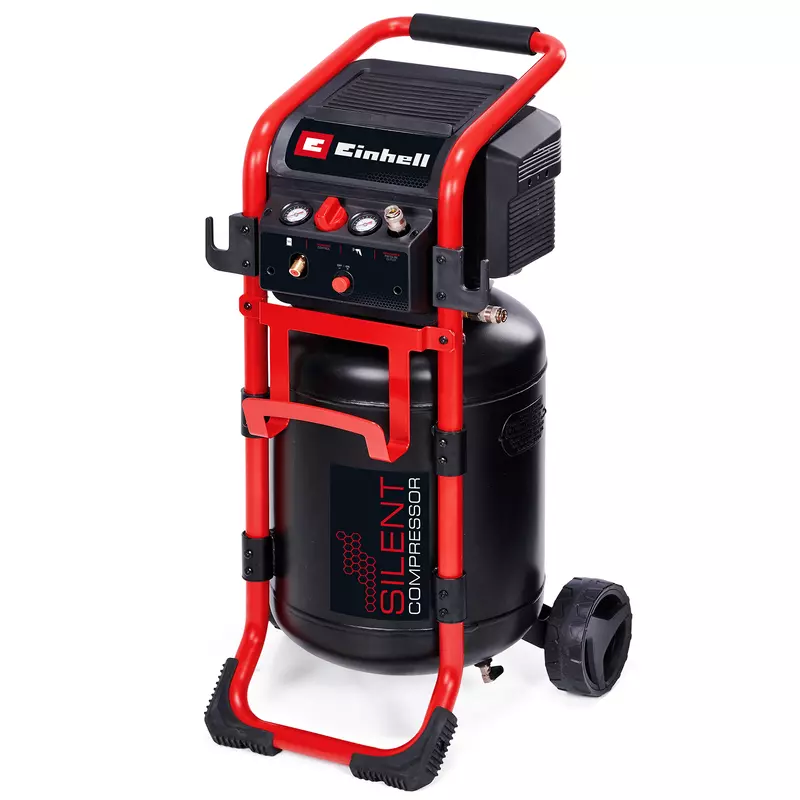
The Einhell offers a much larger air reserve. Its 50-litre tank suits a fixed home workshop.
It runs on regional 230V power. This avoids the voltage mismatch found with imported US models.
Key Specifications
- 50-litre tank
- 1,500-watt motor
- 8-bar maximum pressure
- Oil-free pump
- 54 dB LpA rating
- Wheels and transport handle
- Two pressure outlets
Best Features
The large tank reduces frequent cycling. It also supports longer jobs than a 2-gallon machine.
Its low-noise design makes it appealing for residential garages. The wheels help with movement on level floors.
Real Owner Feedback
Users tend to value the tank size and calm sound. The model suits those who want more than a tire pump.
Direct airflow comparisons can be hard. Some brands list intake flow, while others list delivered flow.
Common Problems
Consider these limits:
- Large storage footprint
- Greater weight
- More capacity than tires need
- Regional fitting differences
- Less convenient for stairs or mobile work
Who Should Buy It
Choose it for:
- UK home garages
- Several vehicles
- General workshop tasks
- Light spraying
- Users who prefer a larger tank
Who Should Skip It
Skip it if you lack floor space. A compact 6- to 8-gallon unit may suit you better.
Check PriceFinal Verdict
This Einhell is a strong UK workshop option. It gives you room to grow beyond tire work.
10. Ozito SAC-2110: Best for Australian Garages
The Ozito SAC-2110 fits Australian home power and local store support. Its 24-litre tank is a useful middle size.
It works well for car tires and light DIY tasks. The oil-free pump keeps service simple.

Key Specifications
- 24-litre tank
- 750-watt motor
- 116 PSI maximum pressure
- 50 L/min free-air delivery
- 230 to 240V power
- Oil-free pump
- About 21 kilograms
Best Features
Local access is a big benefit. You can avoid import voltage and fitting problems.
The tank is much larger than a hand-carry unit. Yet it remains easier to store than a full shop compressor.
Real Owner Feedback
Owners value its simple setup and local warranty. Its output suits tires, inflatables, and small nailers.
The modest airflow limits tool use. A grinder or large spray gun will drain it fast.
Common Problems
Potential concerns include:
- Limited airflow
- Domestic-use warranty terms
- Basic gauges
- Slow recovery during tool use
- Limited professional value
Who Should Buy It
Choose it for:
- Australian garages
- Routine tire care
- Light home projects
- Nailers and blow guns
- Local parts and returns
Who Should Skip It
Skip it if you need commercial duty. It is built for home use.
Check PriceFinal Verdict
The Ozito is a practical regional pick. It covers routine garage tasks without a costly import.
What Garage and Tool Owners Say About Air Compressors
Product specifications tell only part of the story. Owner comments show what these machines feel like over time.
Quiet Compressors Get Used More Often
A quiet compressor causes less disruption. You can check tires without waking the house.
Owners also use quiet units for more small jobs. They do not need to brace for a loud pump each time.
Quiet operation matters if your garage has several uses. If you exercise there, see our guide to the best garage heaters for home gyms.
Small Compressors Are Enough for Tires
You do not need a huge tank for tire top-ups. A 1- or 2-gallon model can handle most car tires.
A larger tank offers two gains:
- It cycles less often.
- It supports more garage tools.
Filling a low tire differs from seating a loose tire bead. Bead work needs fast air flow and proper safety gear.
Noise Is a Common Source of Buyer Regret
Many owners regret buying a loud compressor. Few regret choosing a quiet one.
A loud model may seem fine in a large store. It can feel harsh inside a closed garage.
Noise also changes where you place the unit. A quiet pump can stay near your work. A loud one may need a long hose and remote spot.
Airflow Matters More Than Maximum Pressure
Pressure shows how hard the air can push. Airflow shows how much air keeps moving.
A compressor may hold 200 PSI yet supply modest airflow. That is fine for tires but less useful for a grinder.
Check the tool’s airflow need at its working pressure. Compare that figure with the compressor’s output.
Common Long-Term Problems Reported by Owners
Reports vary by brand, but the same faults appear often:
- Air leaking from threaded joints
- Cracked regulator parts
- Failed check valves
- Weak pressure switches
- Damaged gauges
- Rust in wet steel tanks
- Excessive pump vibration
- Hard starts on weak circuits
- Poor access to replacement parts
Regular draining prevents many tank issues. Sound fittings and the right power supply also help.
Air Compressor or Tire Inflator: Which One Do You Need?
A garage compressor gives you more options. A tire inflator offers less fuss.
Your planned tasks should guide the choice.
Choose a Tire Inflator If You Only Top Off Tires
A tire inflator makes sense if you:
- Check one or two cars
- Want automatic shutoff
- Need trunk storage
- Do not use air tools
- Want no hose setup
- Have little garage space
Many cordless inflators let you set a target pressure. They stop once the tire reaches that point.
Choose a Tank Air Compressor If You Want More Versatility
Choose a compressor if you also want to:
- Use a blow gun
- Run a nailer
- Clean tools and filters
- Inflate several tires
- Use an airbrush
- Run an impact wrench in short bursts
A tank also releases air faster. That helps with jobs that need a brief rush of air.
The Unconventional Two-Tool Solution
You do not need one machine for every task.
A smart setup uses:
- A cordless inflator for routine tire checks.
- A quiet compressor for workshop jobs.
This setup costs more at first. Yet each tool does its main job better.
What Size Air Compressor Is Best for a Home Garage?
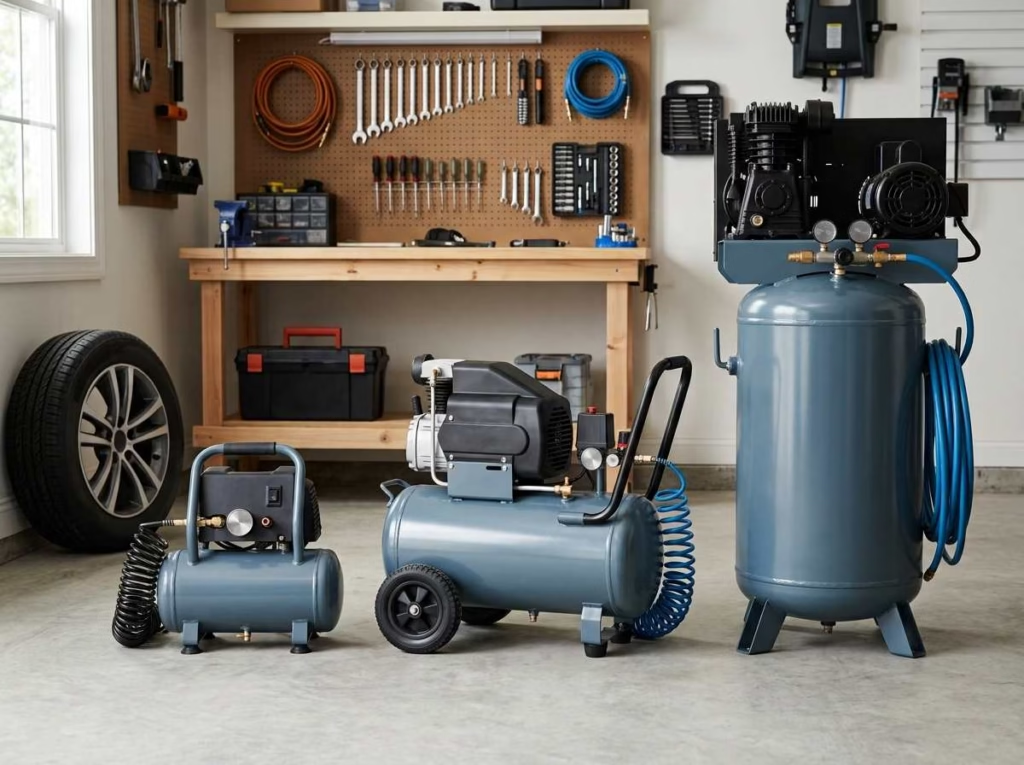
The best size depends on what you plan to run. Buying too large wastes space. Buying too small limits future work.
1 to 2 Gallons
These compressors suit:
- Tire top-ups
- Airbrushing
- Brad nailers
- Small inflatables
- Short cleaning jobs
They fill fast and store well. However, they cycle often and lack stored air.
4 to 8 Gallons
This range suits most home garages. You get useful capacity without a huge frame.
Common uses include:
- Several car tires
- Blow guns
- Finish nailers
- Small air tools
- Short impact-wrench use
For most readers, this is the best size air compressor for a home garage.
20 to 30 Gallons
Move up to this range for:
- Regular impact-wrench use
- Air ratchets
- Small paint work
- Longer tool sessions
- Tire-changing gear
These units need more room. Some also draw high starting current.
60 Gallons and Larger
Large shop units suit:
- Vehicle painting
- Sanding
- Grinding
- Sandblasting
- Plasma cutting
- Tire-service gear
They often need a fixed 240V circuit. Installation may also require moisture control and fixed air lines.
If you are building a full service area, compare the best car lifts for home garages.
How Much Airflow Do You Need for Tires and Garage Tools?
Airflow needs change by task. Always check the air tool’s label or manual.
Tire Inflation
Tire top-ups need little steady airflow. Almost any tank compressor can handle them.
More airflow helps when:
- The tire is almost empty.
- You have several vehicles.
- You own large SUV tires.
- Your tires need high pressure.
- You want shorter wait times.
Impact Wrenches
Impact wrenches use air in short bursts. A small compressor may run one, then need time to recover.
Look for at least 4 CFM at 90 PSI for better results. The exact need depends on the wrench.
A modern cordless impact may be simpler. It avoids the compressor and hose.
Air Ratchets, Grinders, and Sanders
These tools need a steady air supply. Small tanks drain fast.
A compressor may start the tool without sustaining it. This can lead to weak power after a few seconds.
For regular grinding or sanding, choose a large shop compressor. Check the tool’s listed airflow first.
Paint Sprayers
Spray guns often use lots of air at low pressure. They also need clean, dry air.
A small compressor may handle tiny touch-ups. It may struggle with full panels.
For paint work, plan for:
- High delivered airflow
- A water separator
- A clean hose
- Stable pressure
- Enough tank capacity
How Quiet Should a Garage Air Compressor Be?
The best quiet air compressor for a home garage should allow normal work nearby. A rating near 60 dB is a good target.
Understanding Compressor Noise Ratings
Use these ranges as a rough guide:
- 55 to 60 dB: Calm for a compressor
- 65 to 70 dB: Clear but manageable noise
- 75 to 80 dB: Loud in an enclosed room
- Above 80 dB: Harsh during long use
Sound tests differ by distance and room type. Use ratings for broad comparisons, not exact promises.
Why Attached Garages Need Quieter Compressors
Sound can travel through shared walls. It may also move through the room above your garage.
A quiet model helps reduce:
- Disturbed sleep
- Echo
- Neighbor complaints
- Stress during long jobs
- The need for remote placement
Ways to Reduce Compressor Noise
Try these steps:
- Set the unit on a rubber mat.
- Keep it away from corners.
- Tighten loose covers and feet.
- Use a longer air hose.
- Avoid long, thin extension cords.
- Add sound panels to bare walls.
- Keep all cooling vents open.
Never seal a running compressor in a closed box. Heat can damage the pump and motor.
Good light also makes pressure checks easier. See the best garage lighting options for car detailing.
Essential Features to Look For
Small design details can shape your daily experience. Look beyond tank size and peak pressure.
Delivered Airflow at 90 PSI
This number shows pump output under load. It helps you judge air-tool support.
For tires alone, modest airflow works. For tools, compare the compressor with each tool’s need.
Tank Capacity
A larger tank:
- Stores more air
- Reduces short-term cycling
- Supports brief tool bursts
- Adds weight
- Takes longer to fill
- Needs more storage space
Tank size does not fix a weak pump. It only delays the drop in pressure.
Maximum Pressure
Most car tires need far less than 100 PSI. Therefore, extreme tank pressure is not required.
Higher tank pressure can store more usable air. It may extend the time before the pump restarts.
Oil-Free Versus Oil-Lubricated Pumps
Oil-Free Advantages
- No oil changes
- Less mess
- Easy transport
- Good for occasional use
- Often lighter
Oil-Lubricated Advantages
- Good for frequent work
- Often used in larger shop units
- May offer longer pump life
- Better suited to steady service
Oil-Lubricated Disadvantages
- Needs oil checks
- Needs oil changes
- May weigh more
- Can leak during poor transport
Steel Versus Aluminum Tanks
Steel tanks cost less and feel strong. Yet trapped water can cause rust.
Aluminum tanks weigh less and resist rust. They often cost more.
Both types need regular draining. Water can still harm valves, hoses, and tools.
Drain-Valve Design
A good drain saves time.
Common types include:
- Ball valves
- Twist drains
- Pull-ring drains
- Automatic drains
A ball valve is usually easiest to reach and use. A tiny twist drain can be hard with cold hands.
Hose, Fittings, and Tire Chuck
Check these parts before use:
- Hose length
- Hose inner width
- Chuck grip
- Gauge scale
- Fitting type
- Quick connector quality
- Pressure release button
A narrow or blocked fitting can slow tire inflation. A clip-on chuck frees both hands.
Power and Circuit Requirements
North American portable compressors often use 120V power. UK and Australian models use 230 to 240V.
Check:
- Plug type
- Starting current
- Circuit size
- Extension-cord rating
- Other loads on the circuit
A long, thin extension cord can cut voltage. Use a longer air hose instead when possible.
Warranty and Replacement Parts
Read the full warranty before choosing a model.
Check for:
- Pump coverage
- Tank coverage
- Labor terms
- Commercial-use limits
- Return fees
- Local service points
- Replacement regulator access
- Pressure-switch availability
A simple machine with easy parts can outlast a sealed budget unit.
Garage Air Compressor Setup for Tire Inflation
A clean setup reduces leaks, trips, and wasted time. You do not need an advanced shop system.
What Accessories You Need
A basic tire setup includes:
- Air hose
- Tire chuck
- Separate tire gauge
- Quick-connect fittings
- Thread seal tape or sealant
- Safety glasses
- Valve-cap storage cup
Optional additions include:
- Water separator
- Retractable hose reel
- Digital tire gauge
- Wall-mounted tool holder
- Inline pressure gauge
Recommended Garage Layout
Place the compressor in a dry area with fresh air.
Follow these tips:
- Leave space around cooling vents.
- Keep it away from open flames.
- Protect it from vehicle impact.
- Keep the drain easy to reach.
- Route hoses away from walkways.
- Avoid wet floor areas.
- Keep controls facing the work area.
Cold weather can make hoses stiff and motors harder to start. Compare the best garage heaters for an uninsulated garage if winter use is a concern.
Should You Use a Hose Reel?
A hose reel keeps the floor clear. It can also prevent kinks and damage.
Choose a reel with suitable airflow. Small fittings can restrict the air supply.
A reel makes sense if you serve several parking spots. It may be unnecessary in a one-car garage.
How to Inflate Tires With a Garage Air Compressor
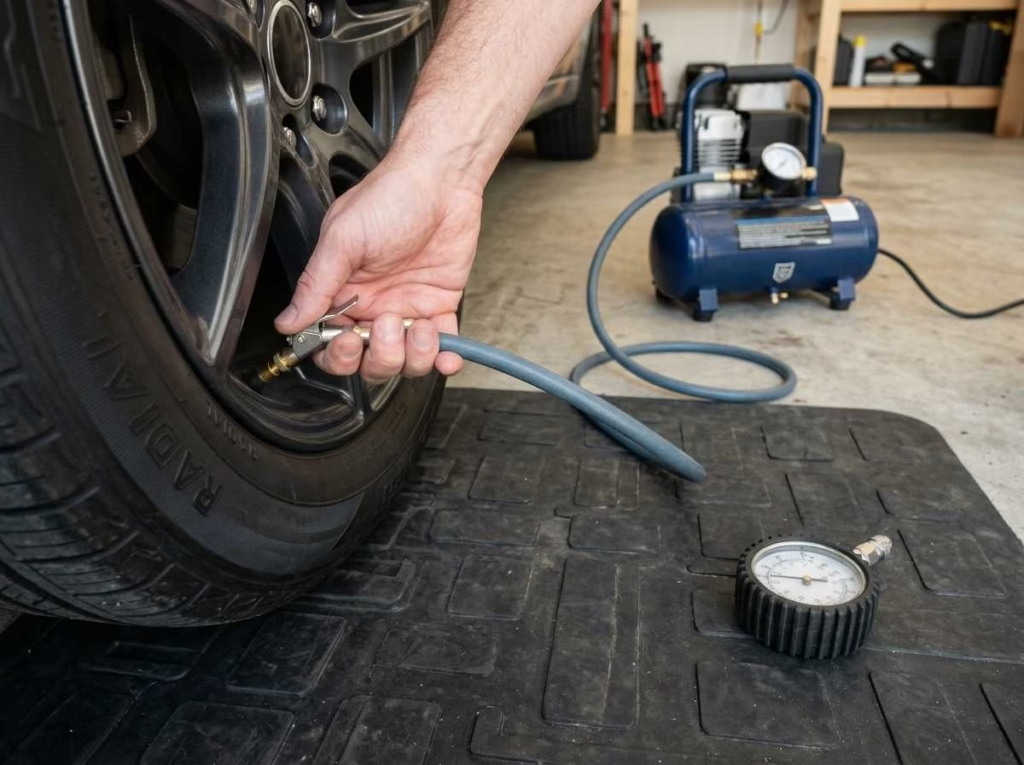
Tire inflation is simple, but accuracy matters. Too much or too little air affects grip and tire wear.
Step 1: Check the Recommended Tire Pressure
Find the pressure label inside the driver’s door. You can also check the owner’s manual.
Do not use the maximum pressure on the tire sidewall. That number is not the normal vehicle setting.
Step 2: Check Tire Pressure While the Tires Are Cold
Check pressure before a long drive. Driving heats the tires and raises the reading.
A short, slow trip may have little effect. For the best result, check them before leaving home.
Step 3: Fill the Compressor Tank
Before starting:
- Place the compressor on a firm surface.
- Close the tank drain.
- Connect the air hose.
- Plug into a suitable outlet.
- Turn on the compressor.
- Wait until it stops filling.
Never leave a running compressor where children can reach it.
Step 4: Set the Outlet Pressure
Set the outlet above your target tire pressure. You do not need the full tank pressure at the hose.
For most car tires, a moderate outlet setting works well. Follow the compressor manual.
Step 5: Connect the Tire Chuck
Remove the valve cap. Press or clip the chuck firmly onto the valve.
Add air in short bursts. Pause to check the reading.
If you hear steady leaking, reseat the chuck. A poor seal slows the job.
Step 6: Verify Pressure With a Separate Gauge
Low-cost chuck gauges can be inaccurate. Check the final pressure with a trusted handheld gauge.
If you add too much air, press the valve pin briefly. Recheck after each release.
Step 7: Drain the Compressor Tank
Switch off the pump and release line pressure. Open the drain as the manual directs.
Water may spray from the valve. Keep your face and eyes away from the outlet.
Common Air Compressor Problems and Solutions
Many compressor faults have simple causes. Start with the power, drain, hose, and fittings.
The Compressor Runs but Does Not Build Pressure
Possible causes include:
- Open tank drain
- Loose fitting
- Split hose
- Leaking safety valve
- Worn piston seal
- Damaged reed valve
- Faulty check valve
Apply soapy water around fittings. Bubbles reveal small leaks.
Internal pump work may need a trained repair shop. Unplug and empty the tank first.
The Compressor Will Not Start
Check for:
- Tripped breaker
- Loose plug
- Weak extension cord
- Thermal overload
- Low voltage
- High tank pressure
- Faulty switch
Let an overheated motor cool. Do not keep resetting a breaker without finding the cause.
The Compressor Cycles Too Often
Frequent cycling may point to:
- A small tank
- A hose leak
- A leaking fitting
- High tool demand
- A weak check valve
- An open drain
- Wrong regulator settings
Some cycling is normal with small tanks. Constant cycling while idle suggests a leak.
The Tire Inflates Too Slowly
Check for:
- A weak compressor
- A blocked chuck
- A narrow hose
- A loose valve connection
- Low outlet pressure
- A large tire
- A hot pump
- A restricted connector
Remove unneeded adapters. Each small passage can reduce airflow.
The Pressure Gauge Is Inaccurate
Compare it with a separate tire gauge. Test both on the same tire.
Replace gauges that stick or return slowly. Do not confuse tank pressure with tire pressure.
Water Comes Out of the Air Hose
Air releases water as it cools inside the tank. This is normal.
To reduce moisture:
- Drain the tank often.
- Keep the compressor in a dry place.
- Add a water separator.
- Let the tank cool before draining.
- Avoid leaving water inside a steel tank.
Paint work may need a better dryer. A simple filter may not remove all moisture.
Garage Air Compressor Maintenance Tips
Routine care takes little time. It can prevent leaks, rust, and hard starts.
Drain the Tank After Use
Water collects in every tank. Humid air creates more of it.
Open the drain as directed by the maker. Tilt the tank only if the manual permits it.
Check Fittings for Air Leaks
Listen for hissing after the tank fills. Use soapy water on threaded joints.
Tighten loose parts with the right tool. Do not overtighten soft metal fittings.
Inspect the Air Filter
Dust blocks airflow and raises pump heat. Check the filter often in dirty garages.
Clean or replace it as the manual states. Never run the pump without its intake filter.
Check the Safety Valve
The safety valve protects the tank from excess pressure. Follow the manual’s test steps.
Never block or modify this valve. Replace it if it sticks or leaks.
Inspect the Hose and Power Cord
Look for:
- Cracks
- Cuts
- Soft spots
- Burn marks
- Loose plugs
- Bent pins
- Worn couplers
Replace damaged parts before use. Do not repair pressure hoses with tape.
Follow Oil and Break-In Requirements
Some new oil-free models still need a break-in run. Read the manual before first use.
Oil-lubed pumps need the correct oil type. Too much or too little oil can cause damage.
Protect the Compressor From Extreme Cold
Cold weather thickens oil and stiffens rubber. It can also make starting harder.
For winter use:
- Store the unit in a dry space.
- Use the right oil where required.
- Avoid weak extension cords.
- Check hoses for cracks.
- Let frozen parts warm safely.
- Drain water before storage.
Do not point a heater straight at the compressor. Keep safe space around all heat sources.
Buying Recommendations by User Type
The best model depends on your garage, vehicles, and future plans.
Best for Tire Inflation Only
Choose a cordless inflator if tires are your sole task. It is easier to store and start.
If you still want a tank, choose a quiet 1- or 2-gallon model.
Best for a Small Home Garage
Strong compact choices include:
- Fortress FT2135UQ
- Makita MAC210Q
- Rolair JC10 Plus
All three offer low noise and small footprints. Their tanks limit long tool use.
Best for an Attached Garage
Aim for a sound rating near 60 dB.
Also look for:
- Rubber feet
- Low pump speed
- Short fill time
- Low vibration
- Compact storage
- A long air hose
The California Air Tools 8010 gives you more tank capacity. The Fortress takes less room.
Best for Several Cars or SUVs
An 8-gallon tank is a useful choice. It offers more reserve without becoming huge.
Consider:
- California Air Tools 8010
- Metabo HPT EC914S
- A quiet 6- to 8-gallon alternative
A long hose can help you reach cars outside the garage.
Best for Truck and High-Pressure Tires
Focus on:
- Maximum outlet pressure
- Delivered airflow
- Pump duty cycle
- Tank reserve
- Gauge accuracy
- Hose quality
Large commercial truck tires may need shop-grade gear. Do not exceed the tire maker’s limits.
Best for Tires and Air Tools
Choose the Metabo HPT EC914S for portable work. Its airflow beats most compact rivals.
Move to a 20- or 30-gallon unit for regular tool use. Choose a larger fixed compressor for steady sanding or grinding.
Best for UK Buyers
Check for:
- 230V power
- UK plug type
- Local warranty support
- BSP fitting compatibility
- Delivered airflow ratings
- Parts availability
The Einhell TE-AC 270/50 Silent Plus suits a larger home workshop.
Best for Australian Buyers
Check:
- 230 to 240V power
- Local service
- Warranty use limits
- Hose fitting type
- Free-air delivery
- Tank drain access
The Ozito SAC-2110 fits light home use. Larger local models suit regular air tools.
Frequently Asked Questions
What is the best garage air compressor for tires?
The California Air Tools 8010 is the best overall choice for most homes. It has an 8-gallon tank and quiet 60 dB operation. Choose the Craftsman CMEC6150K for a budget kit. Pick the Fortress FT2135UQ if you want a smaller quiet model.
What size air compressor do I need to inflate car tires?
A 1- or 2-gallon compressor can top off car tires. A 4- to 8-gallon tank suits several cars and general garage work. Larger tanks become useful when you add demanding air tools.
How many CFM do I need to inflate tires?
Tire inflation needs little steady airflow. Around 1 to 2 CFM can handle normal top-ups. More airflow cuts waiting time for large or empty tires. Compare delivered airflow, not just intake flow.
Is a 6-gallon air compressor enough for car tires?
Yes. A 6-gallon compressor is more than enough for normal car tires. It can also run nailers, blow guns, and some tools in short bursts.
Is a pancake air compressor good for tires?
Yes. Pancake compressors store enough air and are easy to carry. Their main drawback is noise. Many older designs run near 80 dB or more.
Is a 2-gallon air compressor enough for tires?
Yes. A 2-gallon model can fill and top off passenger-car tires. It will cycle more often than a larger compressor.
Is 100 PSI enough to inflate car tires?
Yes. Most passenger-car tires use far less pressure. Always follow the vehicle’s door label, not the tire’s maximum sidewall number.
Can a small compressor inflate truck tires?
It depends on tire size and target pressure. A small compressor may handle light truck tires but take longer. Check its pressure limit and duty cycle first.
Can I run an impact wrench with a small air compressor?
You may run one in short bursts. The tank will drain fast if compressor output falls below the wrench’s need. Compare both ratings at 90 PSI.
What is the quietest air compressor for a home garage?
Several compact models operate near 60 dB. Good options include California Air Tools, Fortress, Makita, and Rolair. Room shape and distance can change how loud they feel.
Is an oil-free compressor good for a home garage?
Yes. Oil-free pumps need less care and handle occasional jobs well. They suit tires, nailers, cleaning, and light DIY work.
Should I buy an air compressor or a cordless tire inflator?
Choose an inflator for tires alone. Choose a compressor if you also want a blow gun, nailer, airbrush, or light pneumatic tool.
How often should I drain my air compressor tank?
Follow the product manual. Draining after each use is a sound habit in humid areas. Never leave water sitting in a steel tank.
Can I leave an air compressor pressurized?
Some owners do, but releasing pressure helps with inspection and draining. Follow the maker’s storage rules. Never service a pressurized unit.
Can an air compressor reseat a tire bead?
It may, but bead seating needs a fast rush of air. The task also carries more risk than topping off pressure. Use proper tire-service gear or seek professional help.
Final Verdict
The California Air Tools 8010 is the best garage air compressor for tires for most homeowners. Its 8-gallon tank, low noise, and wheeled frame suit daily garage life.
The Craftsman CMEC6150K offers better value for a first setup. It includes the hose and tire accessories you need. However, it is much louder.
Choose the Fortress FT2135UQ if you want a compact, quiet machine. Pick the Metabo HPT EC914S if airflow matters more than sound.
The simplest rule is this:
- Buy a cordless inflator for tires alone.
- Buy a quiet 4- to 8-gallon compressor for mixed garage work.
- Buy a 20-gallon or larger model for regular air-tool use.
- Choose a fixed shop compressor for steady sanding, grinding, or painting.