
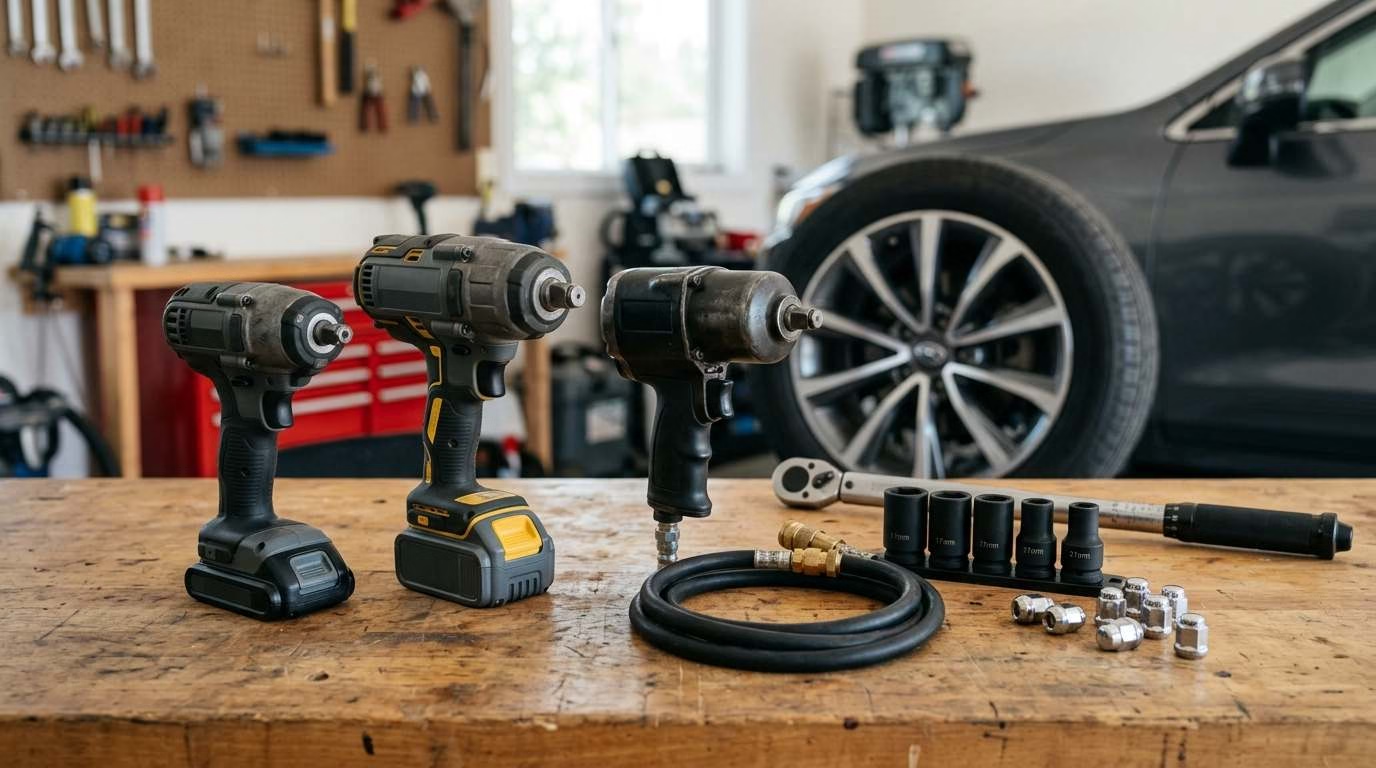
How I chose these tools: Before ranking any model, I reviewed thousands of owner comments, customer reviews, and detailed tool discussions. These picks reflect how the tools perform in real garages, not just what their marketing claims.

The best impact wrench for lug nuts is the DeWalt DCF891B for most people. It has enough power for cars, SUVs, pickups, and stubborn wheel nuts. Yet it remains smaller and easier to handle than a full-size high-torque wrench.
The Milwaukee 2962-20 is a close second. It makes more sense if you already own M18 batteries. Budget shoppers should consider the Ryobi P262.
One safety note matters above all. Use an impact wrench to remove lug nuts and lightly seat them. Final tightening should always be done with a torque wrench.
Best Impact Wrenches for Lug Nuts at a Glance
Torque claims can help you compare models within one brand. However, they do not tell the full story.
Battery size, socket type, rust, and tool mode all affect performance. Air tools also depend on hose size and airflow.
Our Top Picks for the Best Impact Wrench for Lug Nuts
A mid-torque wrench fits most drivers best. It has enough force for wheel work without the bulk of a large shop tool.
Still, no single model suits every garage. Your vehicle, budget, and current battery tools should guide your choice.
1. DeWalt DCF891B: Best Overall Impact Wrench for Lug Nuts
The DeWalt DCF891B offers the best mix of power, size, and control. It is a 1/2-inch cordless mid-torque wrench with four working modes.
DeWalt rates it at 800 ft-lb of breakaway torque. That means removal force for stuck nuts. Its 600 ft-lb fastening rating gives it plenty of room for other repair jobs.
You can use it on cars, SUVs, pickups, and small trailers. It also has enough force for brake and suspension work.
The DCF891B weighs less than many high-torque tools. It is also shorter, which helps near control arms and brake parts.
Its Precision Wrench mode slows the tool after a nut breaks loose. This can help stop the lug nut from flying across your garage. In forward mode, it helps limit overtightening.
What Owners Like
Owners often praise its balance. It feels much stronger than a compact wrench but far less bulky than a high-torque model.
Common positive feedback includes:
- Fast removal of correctly torqued wheel nuts
- Strong performance on pickups and SUVs
- Useful power for suspension and brake bolts
- Good trigger control
- A bright work light
- Less bulk than full-size models
The DCF891B also makes sense as your only impact wrench. It can handle wheel changes and many harder repairs.
Common Complaints
A few owners have reported internal gear or bearing failures. These reports do not affect every tool. Still, they are worth keeping in mind.
The tool may also be excessive for a small car. If you change one set of wheels twice a year, a compact model may feel better.
It normally comes as a bare tool. The battery and charger may add a large cost.
Check PriceBest For
The DeWalt DCF891B fits you if you:
- Want one impact wrench for several jobs
- Work on cars, SUVs, or pickups
- Already own DeWalt 20V batteries
- Need more force than a compact wrench
- Want to avoid a heavy high-torque model
Pros
- Strong removal power
- Useful four-mode control
- Good size for its power class
- Suitable for wheel and suspension work
- Easy socket changes
Cons
- Battery may cost extra
- More tool than some car owners need
- Isolated internal gear complaints
- Heavier than compact models
2. Milwaukee M18 Fuel 2962-20: Best Milwaukee Impact Wrench for Lug Nuts

The Milwaukee 2962-20 is the best Milwaukee impact wrench for lug nuts for most drivers. It sits in the middle of Milwaukee’s M18 range.
It produces up to 650 ft-lb of nut-busting torque. That is Milwaukee’s term for removal force. The tool is also just six inches long.
Its short body helps in cramped spaces. You can use it for wheels, brakes, suspension parts, and larger engine bolts.
Four drive modes let you adjust its speed and force. Its automatic mode can stop at a low fastening level. That lets you seat a lug nut without fully tightening it.
Bolt-removal mode also slows the tool after the nut breaks free. This makes the wrench easier to control.
What Owners Like
Owners often call the 2962-20 a strong all-purpose choice. It has enough power for most personal vehicles but remains easy to move.
Frequently praised features include:
- Strong size-to-power balance
- Short body
- Three lights around the socket
- Quick socket changes
- Controlled removal mode
- Large M18 tool range
The friction-ring anvil is also useful. It holds the socket with a metal ring while allowing quick changes.
Common Complaints
Mode 1 can feel weak during removal. It uses fewer impacts and runs at a lower speed. Mode 2 or 3 usually works better for lug nuts.
The tool also needs a healthy battery. A small or worn pack can limit its output.
For severe rust, the 2962-20 may need more hammering time. A high-torque model has more reserve force for those cases.
Check PriceBest For
The Milwaukee 2962-20 suits you if you:
- Already own M18 batteries
- Change wheels several times per year
- Work on cars, vans, SUVs, or light trucks
- Need power without a huge tool
- Want one wrench for most home repairs
Pros
- Compact for a mid-torque tool
- Strong removal performance
- Helpful automatic modes
- Good work lights
- Wide battery and tool range
Cons
- Costs more than budget models
- Lower modes may feel slow
- Battery usually costs extra
- Not the strongest choice for extreme rust
3. Ryobi P262: Best Budget Cordless Impact Wrench for Lug Nuts

The Ryobi P262 is the best budget impact wrench for lug nuts on this list. It gives home users strong performance without a high tool price.
Ryobi rates it at 600 ft-lb of breakaway torque. It also offers three speed settings and an automatic mode.
Automatic mode helps limit force while installing a nut. In reverse, it slows the socket after the nut comes loose.
The P262 works well for home tire rotations. It can also handle many brake and suspension jobs.
What Owners Like
The P262 gets positive feedback from sedan, SUV, and pickup owners. Many users say it removes normal lug nuts with little delay.
Owners often mention:
- Good power for the price
- Easy wheel-nut removal
- Useful automatic mode
- Three work lights
- A large One+ battery range
- Frequent tool and battery deals
Ryobi has kept the One+ battery design for many years. That adds value if you own other Ryobi tools.
Common Complaints
The P262 is bulky. Its size can make suspension work awkward.
Battery choice also matters. A small 2.0Ah battery may not supply enough power under load. A 4.0Ah high-performance pack is a better match.
The friction ring can feel very tight when new. You may need firm pressure to install the socket.
Be sure you are buying the P262. Older Ryobi models may look similar but offer less power.
Recommended Battery
Use a healthy 4.0Ah high-performance battery when possible. It can supply more current during hard work.
A larger battery does not raise the tool’s rated limit. Still, it helps the tool reach its planned output.
Cold, old, or partly charged batteries can also reduce power.
Check PriceBest For
The Ryobi P262 fits you if you:
- Want strong value
- Change your own wheels
- Already own Ryobi One+ tools
- Work on cars or light trucks
- Do not need a daily professional tool
Pros
- Fair price
- Strong removal force
- Useful automatic mode
- Large battery range
- Good choice for home garages
Cons
- Bulky design
- Small batteries limit output
- Tight socket fit when new
- Less refined than premium tools
4. DeWalt DCF921B: Best Compact Impact Wrench for Lug Nuts

The DeWalt DCF921B is a small 1/2-inch cordless impact wrench. It suits drivers who care more about size than maximum force.
It fits easily in a car tool bag. Its short body also reaches areas that block larger impact wrenches.
The DCF921B can remove properly tightened car and light-truck lug nuts. It works best on vehicles that receive regular care.
It also weighs less than the DCF891B. That makes it more comfortable during long brake or suspension jobs.
What Owners Like
Owners like the DCF921B because it feels fast and easy to control.
Its main strengths include:
- Compact size
- Low weight
- Easy roadside storage
- Good access near brakes
- Enough power for maintained vehicles
- Compatibility with DeWalt 20V batteries
Many users reach for a compact wrench first. They only use a larger model when the small tool fails.
Common Complaints
The DCF921B has less reserve force than a mid-torque wrench. Rusted or overtightened lug nuts can stop it.
It may also struggle with large brake brackets or suspension bolts. Those fasteners often face heat, salt, and years of corrosion.
A weak battery can make these limits more clear. Use a charged pack in good condition.
Check PriceBest For
The DeWalt DCF921B suits you if you:
- Drive a sedan or small SUV
- Keep your wheels and studs in good shape
- Want a compact roadside tool
- Already use DeWalt batteries
- Prefer light tools
Pros
- Easy to carry
- Compact body
- Good access in small spaces
- Comfortable for repeat work
- Useful for more than lug nuts
Cons
- Less force than the DCF891B
- May fail on severe rust
- Not ideal for large trucks
- Battery condition affects results
5. Milwaukee M18 Fuel 2967-20: Best for Rusted or Overtightened Lug Nuts

The Milwaukee 2967-20 is a high-torque impact wrench. It is built for fasteners that stop smaller tools.
This model makes sense if you work near road salt. It also suits old pickups, farm trucks, and large trailers.
Its extra force helps with axle nuts and major suspension bolts. It may also save you from using long breaker bars under a vehicle.
However, that power comes with added size and weight. The 2967-20 feels excessive during normal car wheel changes.
What Owners Like
Owners choose this model for its reserve power. It can keep working where compact and mid-torque tools stall.
Common strengths include:
- Strong performance on seized hardware
- Good fit for heavy vehicles
- Cordless use away from a shop
- Useful control modes
- Enough force for many axle nuts
- Less need for long breaker bars
It is the safer choice if your work often involves old, rusty vehicles.
Common Complaints
The 2967-20 is large and heavy. Your wrists may notice that during repeat wheel changes.
Its power can also break weak studs or rusted bolts. Start with a lower mode and increase force only when needed.
A high-torque wrench also costs more. You may not use its full power on a normal car.
Check PriceBest For
The Milwaukee 2967-20 fits you if you:
- Work on rusty vehicles
- Service heavy pickups or trailers
- Remove axle nuts
- Need high power away from an air line
- Often face overtightened wheel nuts
Pros
- Very high removal force
- Suitable for severe rust
- Cordless mobility
- Useful for large repairs
- Strong M18 battery range
Cons
- Heavy
- Large
- Costly
- Excessive for normal cars
- Can damage weak hardware
6. Ingersoll Rand 2235TiMAX: Best Air Impact Wrench for Lug Nuts

The Ingersoll Rand 2235TiMAX is the best air impact wrench for lug nuts on this list. It suits a fixed garage with a capable compressor.
Its rated nut-busting torque reaches 1,350 ft-lb. Yet the tool weighs about 4.6 pounds.
A titanium hammer case protects the impact parts. Its twin-hammer system delivers hard, steady hits.
The 2235TiMAX works well in tire shops and busy garages. It can remove many wheel nuts each day without waiting for batteries.
What Owners Like
Long-term users often praise its strength and life span. It is also lighter than many cordless high-torque tools.
Common positive points include:
- High power for its weight
- Strong performance on truck lug nuts
- Durable outer case
- Fast operation
- No batteries to charge
- Good fit for repeat work
The quiet QTiMAX version cuts some noise. It still needs hearing protection during regular use.
Common Complaints
The tool is only as good as its air supply. A small compressor or narrow hose can make it feel weak.
Water inside the air line can also shorten the tool’s life. The motor needs clean, dry, and oiled air.
A hose limits movement around the vehicle. That makes air tools less useful on the road.
Air-System Requirements to Check
Before using this wrench, check:
- Compressor airflow at working pressure
- Pressure while the trigger is held
- Minimum hose size
- Fitting size and flow
- Water separator condition
- Tool oil level
- Hose leaks
A tank pressure reading does not show the full picture. The system must maintain airflow while the tool runs.
Check PriceBest For
The Ingersoll Rand 2235TiMAX suits you if you:
- Already own a capable compressor
- Remove wheels often
- Run a tire or repair shop
- Prefer air tools
- Need high power without a heavy battery
Pros
- Strong power-to-weight ratio
- Built for repeat use
- Proven air-tool design
- No battery downtime
- Good control
Cons
- Needs a capable air system
- Limited road use
- Requires oil and dry air
- Hose restricts movement
- High noise level
7. Porter-Cable PCE211: Best Corded Electric Impact Wrench for Lug Nuts

The Porter-Cable PCE211 is a simple corded impact wrench. It suits occasional work near a wall outlet.
Its 7.5-amp motor produces up to 450 ft-lb of turning force. It also uses a 1/2-inch hog-ring anvil.
There are no batteries to charge or replace. You also avoid the cost and care of an air compressor.
This setup works well for seasonal wheel swaps. It is less suited to professional work or severe rust.
What Owners Like
The PCE211 offers simple ownership. Plug it in, fit the socket, and start working.
Owners often like:
- No battery cost
- No charging delay
- No compressor
- Easy controls
- Enough force for many car lug nuts
- A fair entry price
It makes sense if you only use an impact wrench a few times each year.
Common Complaints
The tool weighs almost nine pounds. That is heavy for its output.
Its cord also limits movement. You may need a suitable extension cord, which adds more setup.
Modern cordless mid-torque tools often provide more usable power. The PCE211 may struggle with seized axle nuts or badly rusted lugs.
Check PriceBest For
The Porter-Cable PCE211 suits you if you:
- Work near an outlet
- Change wheels only a few times per year
- Do not want batteries
- Do not own an air compressor
- Work on maintained passenger vehicles
Pros
- No battery required
- Simple operation
- Fair price
- Suitable for light garage use
- Standard 1/2-inch drive
Cons
- Heavy
- Limited mobility
- Less force than premium cordless tools
- Poor roadside choice
- Weak fit for severe rust
How We Chose the Best Impact Wrenches for Lug Nuts
A large torque number did not earn a tool an automatic place. A useful wrench must also be easy to carry and control.
Real owner feedback played a major role. Reports about weak batteries, tight anvils, broken parts, and heavy bodies were included.
Real-World Lug-Nut Removal
A wrench should remove normal lug nuts without a long fight. It should also have some reserve force for light rust.
That does not mean every tool must beat years of corrosion. Compact, mid-torque, and high-torque models serve different needs.
Breakaway Power
Breakaway torque means the force used to loosen a nut. This is the key figure for lug-nut removal.
Fastening torque covers force in the forward direction. It matters less because you should not fully tighten wheel nuts with an impact wrench.
Tool Size and Weight
A huge tool can be hard to use near suspension parts. It may also cause arm strain during repeat work.
The best model gives you enough force without needless bulk. That is why mid-torque tools rank so well for home mechanics.
Battery and Air-System Demands
Cordless tools need a battery that can supply high current. Small packs may reduce real output.
Air tools need strong airflow. A small fitting or hose can limit even a powerful wrench.
Owner Feedback
Owner comments reveal problems that feature lists miss. These include battery limits, tight friction rings, odd mode behavior, and repair issues.
One complaint does not prove a broad fault. Repeated reports deserve more weight.
Value and Battery Compatibility
The best tool on paper may not offer the best value. A new battery and charger can cost almost as much as the wrench.
If you already own good batteries, staying with that brand often saves money. It also reduces clutter.
Safety and Control Features
A variable trigger gives you better control. Automatic shut-off can help prevent hard seating.
Removal modes can slow the socket after the nut breaks free. Good lights also help you seat the socket straight.
What Size Impact Wrench Do You Need for Lug Nuts?
For most cars and trucks, choose a 1/2-inch impact wrench. It fits common wheel sockets and gives you useful reserve strength.
Drive size refers to the square part that holds the socket. It does not describe the lug nut size.
Why a 1/2-Inch Drive Is the Best General Choice
A 1/2-inch drive works well with large automotive fasteners. It also handles thick impact sockets without an adapter.
Other benefits include:
- Wide socket choice
- Strong anvil design
- Good fit for car and truck lug nuts
- Fewer broken adapters
- Better transfer of impact force
A direct socket connection also wastes less energy.
Can a 3/8-Inch Impact Wrench Remove Lug Nuts?
Yes, some strong 3/8-inch models can remove lug nuts. They work best on maintained passenger vehicles.
Still, they offer less reserve strength. A 1/2-inch wrench remains the safer primary choice for wheels.
A 3/8-inch model works well as a second tool. Its smaller sockets fit tight brake and engine areas.
Why a 1/4-Inch Impact Driver Is Not the Same Thing
An impact driver uses a 1/4-inch hex holder. It is meant for screws and smaller fasteners.
You can add a socket adapter. However, the adapter can flex, twist, or break.
An impact wrench uses a square drive made for sockets. It transfers force more directly and handles hard removal jobs better.
How Much Torque Does an Impact Wrench Need for Lug Nuts?
There is no perfect torque number for every vehicle. Lug condition matters as much as the factory setting.
A lug nut tightened to 100 ft-lb may need more force to remove. Heat, rust, and time raise the effort needed.
Minimum Practical Power
A good compact impact wrench can handle many car lug nuts. Look for a proven model, not just a large claimed number.
A mid-torque wrench gives you more room for:
- Light rust
- Pickup lug nuts
- Shop-overtightened wheels
- Brake bracket bolts
- Suspension work
- Trailer wheels
You rarely need a full high-torque wrench for a maintained car.
Compact, Mid-Torque, and High-Torque Models
Use these groups as a simple guide:
- Compact: Cars, small SUVs, and road kits
- Mid-torque: Cars, pickups, trailers, brakes, and suspension
- High-torque: Severe rust, axle nuts, and heavy vehicles
Most home mechanics should start with mid-torque.
Why Advertised Torque Numbers Can Be Misleading
Brands do not always test tools the same way. One torque label may reflect a short peak. Another may use a different fixture.
Real output may also change due to:
- Battery size
- Charge level
- Cold weather
- Socket weight
- Extensions
- Tool mode
- Rust
- Air pressure
Use torque claims as a rough guide. Owner results provide needed context.
Why More Torque Is Not Always Better
More force often means more weight and size. It can also raise the risk of broken studs.
A high-torque tool may not fit behind a brake part. A smaller wrench may finish more jobs because it reaches the fastener.
Choose enough power, not the biggest number.
Cordless vs. Corded vs. Air Impact Wrenches
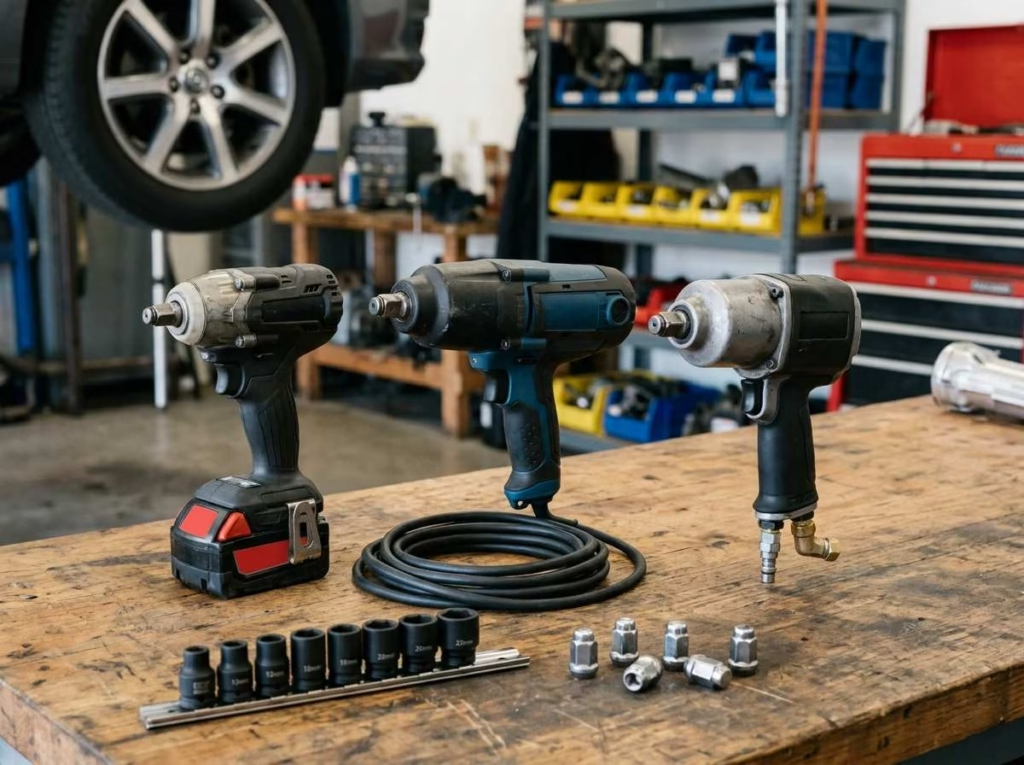
All three types can remove lug nuts. The best choice depends on where and how often you work.
Cordless tools fit most home users. Air tools still suit busy shops.
Cordless Impact Wrenches
Cordless wrenches offer the easiest setup. Fit a battery and start working.
Advantages:
- Easy to carry
- No hose
- No power cord
- Good for roadside use
- Wide tool ranges
- Strong modern performance
Disadvantages:
- Batteries add cost
- Battery weight affects balance
- Cold can reduce output
- Packs age over time
- Small batteries may limit force
Corded Electric Impact Wrenches
Corded tools avoid batteries. They work best in a home garage with easy outlet access.
Advantages:
- No charging
- No battery aging
- Simple care
- Often lower purchase cost
Disadvantages:
- Limited movement
- Poor road use
- Often heavy
- Cord management takes time
- Many models lack modern control modes
Pneumatic Impact Wrenches
Pneumatic means powered by compressed air. These tools remain common in repair and tire shops.
Advantages:
- High power for low tool weight
- Good for constant use
- Long service life with proper care
- No battery delays
Disadvantages:
- Compressor required
- Hose limits movement
- Needs oil
- Moisture can cause damage
- Loud operation
- Poor roadside use
Which Power Source Is Best for Most People?
Cordless is the most practical choice for most drivers. It works in the garage, driveway, or roadside.
Choose air if you already own a good compressor. Choose corded if use will be rare and always near an outlet.
How Battery Size Affects Impact-Wrench Performance
An impact wrench draws a lot of power in short bursts. A small battery may struggle to supply that demand.
This can make a strong tool feel weak. It may run, hammer, and still fail to move the nut.
Why Small Batteries Can Make a Strong Tool Feel Weak
Battery capacity is shown in amp-hours, or Ah. This mainly tells you how much energy the pack stores.
Larger packs often use more battery cells. That can help them supply more current under load.
A small pack may trigger heat or overload protection sooner.
Recommended Battery Capacity for Lug-Nut Removal
A 4.0Ah to 6.0Ah performance battery is a good match for many mid-torque tools.
Also follow these habits:
- Start with a full charge
- Keep a spare battery ready
- Warm cold packs before use
- Avoid damaged batteries
- Check the brand’s battery advice
- Let overheated packs cool
A compact wrench may work well with a smaller pack. High-torque tools often benefit from larger packs.
Battery Capacity Is Not the Whole Story
Two batteries with the same Ah rating may perform differently. Cell type and internal design also matter.
Age, heat, and charge level affect output too. A new 4.0Ah pack may beat an old 5.0Ah pack.
Impact Sockets and Accessories You Will Need
The wrench is only one part of the setup. The right socket and hand tools make the job safer.
Use a socket that fits the lug nut fully. A loose fit can round its corners.
Use Impact-Rated Sockets
Impact sockets are made for repeated hammer blows. They are usually black and have thicker walls.
Standard chrome sockets can crack under impact use. Pieces may break away at high speed.
If wheel clearance is tight, see this guide to the best impact sockets for thin-wall lug nuts.
Choose the Correct Lug-Nut Socket Size
Many vehicles use metric lug nuts. Common sizes include 17, 19, 21, and 22 millimeters.
Other vehicles may use SAE sizes. Check your manual or test the fit before starting.
The socket should sit flat with very little movement.
Deep vs. Shallow Impact Sockets
Deep sockets fit long wheel studs and tall lug nuts. They are the common choice for wheel work.
Shallow sockets are shorter. They may transfer slightly more impact energy and fit cramped areas.
Use the shortest socket that fits the full fastener.
Protective Wheel Sockets
Protective sockets have a plastic sleeve around the outside. The sleeve helps guard painted or alloy wheels.
Some also include a protective insert near the socket opening. This reduces marks on the face of the lug nut.
Avoid Unnecessary Extensions and Adapters
Extensions flex during each impact. That can absorb part of the tool’s force.
For the best removal power:
- Use the correct drive size
- Place the socket on the anvil
- Avoid wobble joints
- Remove long extensions
- Skip drive adapters
Add an extension only when space requires it.
Friction Ring vs. Detent Pin
A friction ring holds the socket with spring pressure. It allows fast socket changes.
A detent pin locks into a hole in the socket. It holds more firmly but takes longer to release.
Most home mechanics prefer a friction ring. Tire work often requires quick socket changes.
Other Useful Accessories
Keep these items near your wheel tools:
- Calibrated torque wrench
- Breaker bar
- Wheel chocks
- Jack stands
- Floor jack
- Work gloves
- Charged spare battery
- Correct impact socket
- Carry case
If you are unsure which torque tool fits your needs, compare a beam, click, and digital torque wrench.
How to Safely Remove Lug Nuts With an Impact Wrench
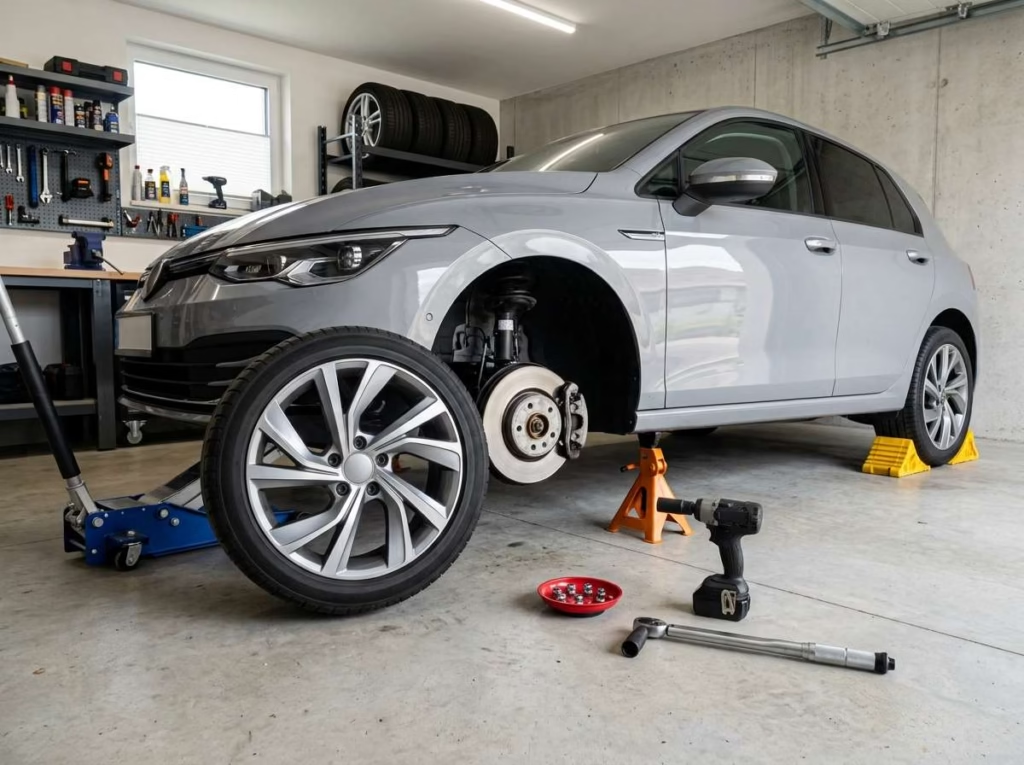
A strong wrench saves time, but the lifting process still needs care. Work on firm, flat ground.
Read your vehicle manual before using its lift points.
Step 1: Park on a Stable, Level Surface
Shift into park or first gear. Apply the parking brake.
Place wheel chocks around a wheel that will stay on the ground.
Step 2: Confirm the Correct Socket Size
Push the socket fully over the lug nut. It should not rock from side to side.
Never force a near-fit socket onto a lug nut. That can round the corners.
Step 3: Loosen the Lug Nuts Before Raising the Vehicle
Keep the tire touching the ground during the first loosening step. This stops the wheel from spinning.
Break each lug nut free. Do not remove them yet.
Step 4: Use the Lowest Effective Setting
Start with a medium removal mode. Move higher if the nut does not move.
This gives you better control. It also lowers stress on the tool and stud.
Step 5: Keep the Socket Straight
Hold the wrench in line with the wheel stud. Side pressure can damage the nut or socket.
Make sure the socket stays fully seated while the tool hammers.
Step 6: Stop if the Lug Nut Does Not Move
Do not hammer one lug nut for minutes. Stop and inspect the setup.
Check:
- The direction switch
- Battery charge
- Power mode
- Socket size
- Extensions
- Visible rust
- Lug-nut damage
- Signs of cross-threading
A breaker bar may help. Severe damage may need a repair shop.
Step 7: Support the Vehicle Correctly
Raise the vehicle at its approved lift point. Place a jack stand at the correct support point.
Never work under a vehicle held only by a jack. Jacks can shift or lose pressure.
Can You Tighten Lug Nuts With an Impact Wrench?
You can use an impact wrench to lightly seat lug nuts. Do not use it for final tightening.
A calibrated torque wrench gives you far better control. Your vehicle manual lists the correct torque setting.
Why an Impact Wrench Is Not a Precision Torque Tool
Impact output changes each time you use it. Trigger time alone can alter the final result.
Other factors include:
- Battery charge
- Tool mode
- Socket weight
- Thread condition
- Rust
- Lubrication
- Temperature
A low mode is not a true torque setting unless the maker states that it is.
The Correct Lug-Nut Tightening Process
Follow these steps:
- Clean the mating surfaces.
- Start every lug nut by hand.
- Make sure each nut turns with ease.
- Follow the correct star or cross pattern.
- Lightly seat the nuts with a low tool mode.
- Lower the vehicle until the tire cannot spin.
- Tighten each nut with a torque wrench.
- Follow any wheel maker recheck advice.
For full steps, read how to torque lug nuts correctly.
Should You Use a Torque Stick?
A torque stick is a flexible extension. It limits some force by twisting under load.
It can reduce severe overtightening. However, it is affected by the gun, air pressure, and use method.
Treat it as a first limit, not the final check. Finish with a calibrated torque wrench.
Common Reasons an Impact Wrench Will Not Remove Lug Nuts
A failed removal does not always mean the tool is weak. The battery, socket, or fastener may be the real cause.
Work through the simple checks first.
The Lug Nuts Were Overtightened
A shop may have installed the nuts with too much impact time. This can place heavy stress on the studs.
Overtightened nuts may stop a compact wrench. A breaker bar or mid-torque tool may be needed.
Rust or Corrosion Has Seized the Threads
Road salt and moisture can bind the nut to the stud. Rust also raises removal force far above the normal torque setting.
Do not keep hammering forever. You could break the wheel stud.
The Battery Is Too Small, Weak, Cold, or Discharged
Try a larger, charged battery in good condition.
Check for:
- Low charge
- Warning lights
- Hot battery case
- Cold storage
- Dirty contacts
- Old or damaged cells
Let a hot battery cool before trying again.
The Tool Is in the Wrong Mode
Some tools limit speed and impacts in Mode 1. This can make them feel much weaker.
Switch to the highest removal mode if needed. Make sure the direction switch is set to reverse.
Extensions Are Absorbing Impact Energy
Remove long extensions, wobble joints, and adapters. Fit the impact socket straight onto the tool.
This simple change can produce a clear gain.
The Air System Cannot Supply Enough Air
For an air tool, check the pressure while the trigger is held. Static tank pressure can look fine even with poor flow.
Inspect the hose, fittings, filter, and regulator. A narrow fitting can restrict the whole system.
The Tool Is an Impact Driver, Not an Impact Wrench
An impact driver uses a small hex holder. It may lack useful reverse force for lug nuts.
A true impact wrench uses a square anvil. It is the better tool for automotive sockets.
The Lug Nut Is Cross-Threaded or Damaged
A cross-threaded nut may bind hard against the stud. More impact force can snap the stud.
Stop if the nut turns partway and locks again. It may need careful removal and new parts.
The Socket Does Not Fit Correctly
Some capped lug nuts swell with age. A normal socket may no longer fit them.
Rounded nuts also prevent full contact. Use the correct removal socket rather than hammering with a loose fit.
Impact-Wrench Maintenance Tips
Basic care keeps your wrench working at full output. It also helps you spot damage early.
Unplug the tool or remove its battery before cleaning it.
Cordless Tool Maintenance
For a cordless wrench:
- Brush dust from the vents
- Wipe the anvil clean
- Check battery contacts
- Inspect the friction ring
- Keep brake fluid off the case
- Store batteries in a dry place
- Avoid leaving packs empty for months
Do not soak the tool in cleaner. Use a lightly damp cloth.
Pneumatic Tool Maintenance
Air tools need clean, dry air and proper oil.
Follow these steps:
- Drain the compressor tank
- Check the water separator
- Inspect hoses for leaks
- Use approved air-tool oil
- Maintain the correct pressure
- Check fittings for restriction
Too much oil can also cause problems. Follow the tool manual.
Corded Tool Maintenance
Check the cord before every use. Stop using the tool if the cover is cut or cracked.
Keep air vents free of dust. Use an extension cord rated for the tool’s current and working distance.
Inspect Sockets Regularly
Replace an impact socket if you find:
- Cracks
- Rounded corners
- A stretched drive hole
- Deep surface damage
- A worn retaining groove
- Heavy deformation
Do not weld or grind a damaged socket back into service.
Which Impact Wrench Should You Buy?
Your current battery tools may settle the choice. If not, start with vehicle size and local rust conditions.
Most drivers will be happy with a 1/2-inch mid-torque model.
Buy the DeWalt DCF891B If You Want the Best Overall Balance
The DCF891B provides enough force for most home automotive work. It also stays smaller than a high-torque tool.
It is the leading choice for mixed work on cars, pickups, brakes, and suspension.
Buy the Milwaukee 2962-20 If You Already Own M18 Batteries
The 2962-20 offers a strong mix of size and force. Its control modes also suit wheel maintenance.
Existing M18 batteries can lower your total cost.
Buy the Ryobi P262 If You Want the Best Value
The P262 handles normal wheel work without a premium price. Pair it with a healthy high-performance battery.
It is best for home users rather than daily shop work.
Buy the DeWalt DCF921B If Compact Size Is Your Priority
The DCF921B fits road kits and tight spaces. It works well on maintained passenger vehicles.
Choose the DCF891B instead if you often face rust or pickup lug nuts.
Buy the Milwaukee 2967-20 If You Regularly Face Severe Rust
The 2967-20 gives you more reserve force. It suits heavy trucks, old suspension parts, and axle nuts.
Accept its added weight only if your work needs that power.
Buy the Ingersoll Rand 2235TiMAX for a Compressor-Equipped Shop
This air wrench offers high power at a low tool weight. It suits repeat wheel work.
Make sure your compressor, hose, and fittings can feed it.
Buy the Porter-Cable PCE211 for Occasional Corded Use
The PCE211 suits rare wheel changes near an outlet. It avoids battery and compressor costs.
It is less useful for severe rust or mobile repairs.
Frequently Asked Questions
What is the best impact wrench for lug nuts?
The DeWalt DCF891B is the best overall choice for most drivers. It offers strong removal force without the bulk of a full high-torque wrench.
The Milwaukee 2962-20 is a close alternative. Choose it if you already own M18 batteries.
What size impact wrench is best for lug nuts?
A 1/2-inch impact wrench is the best general size. It works with common automotive impact sockets and provides good reserve strength.
Strong 3/8-inch models can remove some lug nuts. However, a 1/2-inch wrench is more dependable.
How much torque should an impact wrench have for lug nuts?
There is no single required rating. A strong compact model may handle clean car lug nuts. A mid-torque model gives you more room for rust and overtightening.
Real performance also depends on the battery, socket, and tool mode.
Can a 3/8-inch impact wrench remove lug nuts?
Yes, some 3/8-inch impact wrenches can remove properly tightened car lug nuts. They work best with a charged battery and direct socket connection.
For trucks or rusted fasteners, a 1/2-inch mid-torque wrench is the safer choice.
Can an impact driver remove lug nuts?
Some powerful impact drivers can remove lightly tightened lug nuts. Results are not always reliable.
The socket adapter may also flex or break. A square-drive impact wrench is built for this work and provides better force transfer.
Is a cordless impact wrench strong enough for lug nuts?
Yes. Modern cordless mid-torque wrenches can remove lug nuts from most cars, SUVs, and light trucks.
Use a healthy battery and an impact-rated socket. Small or worn batteries may limit performance.
What is the best cordless impact wrench for lug nuts?
The DeWalt DCF891B is the best all-around cordless pick. It balances strong breakaway force with a manageable body.
The Milwaukee 2962-20 offers a similar mix for M18 users.
What is the best budget impact wrench for lug nuts?
The Ryobi P262 is the best budget cordless choice here. It has enough power for most personal vehicles.
Use a 4.0Ah high-performance battery for better results.
What is the best Milwaukee impact wrench for lug nuts?
The Milwaukee 2962-20 is best for most cars and light trucks. It is smaller and lighter than Milwaukee’s high-torque model.
Choose the 2967-20 for severe rust, large trucks, or heavy suspension work.
What is the best DeWalt impact wrench for lug nuts?
The DeWalt DCF891B is the best all-purpose DeWalt model. It provides more reserve force than the compact DCF921B.
The DCF921B is better for light weight, small size, and road storage.
What is the best air impact wrench for lug nuts?
The Ingersoll Rand 2235TiMAX is a strong pneumatic option. It offers high removal force in a light body.
It needs a capable compressor, proper hose, dry air, and regular oil.
Can I use an impact wrench to tighten lug nuts?
You can use one to lightly seat the nuts. Start each nut by hand to prevent cross-threading.
Finish with a calibrated torque wrench. Tighten to your vehicle maker’s stated setting.
Will an impact wrench damage lug nuts or wheel studs?
It can if used with too much force. A poor socket fit or cross-threaded nut also raises the risk.
Use the lowest useful mode. Stop if the fastener behaves in an odd way.
Is 250 ft-lb enough to remove lug nuts?
It may be enough for clean passenger-car lug nuts. However, rust and past overtightening can raise the needed force.
A mid-torque wrench offers a better safety margin for mixed vehicles.
Why will my impact wrench not remove a lug nut?
Common causes include:
- Weak battery
- Wrong tool mode
- Rust
- Overtightening
- Long extensions
- Poor socket fit
- Cross-threading
- Weak air supply
- Using an impact driver
Start by using a charged battery and a short impact socket.
Should I keep an impact wrench in my vehicle?
A compact cordless wrench can be useful on the road. Keep its battery charged and test it on your lug nuts first.
Also carry the correct socket, breaker bar, jack, wheel chocks, and basic safety gear.
Final Verdict
The best impact wrench for lug nuts is the DeWalt DCF891B for most home mechanics. It gives you useful removal force without full-size weight.
The Milwaukee 2962-20 is the best fit for M18 owners. The Ryobi P262 offers the strongest budget value. Choose the DeWalt DCF921B if compact size matters most.
Severe rust calls for more force. That is where the Milwaukee 2967-20 earns its place. For shop air, the Ingersoll Rand 2235TiMAX remains a smart option. The Porter-Cable PCE211 covers rare corded use.
Whichever model you use, pair it with a correct impact socket. Then finish each wheel with a calibrated torque wrench.