
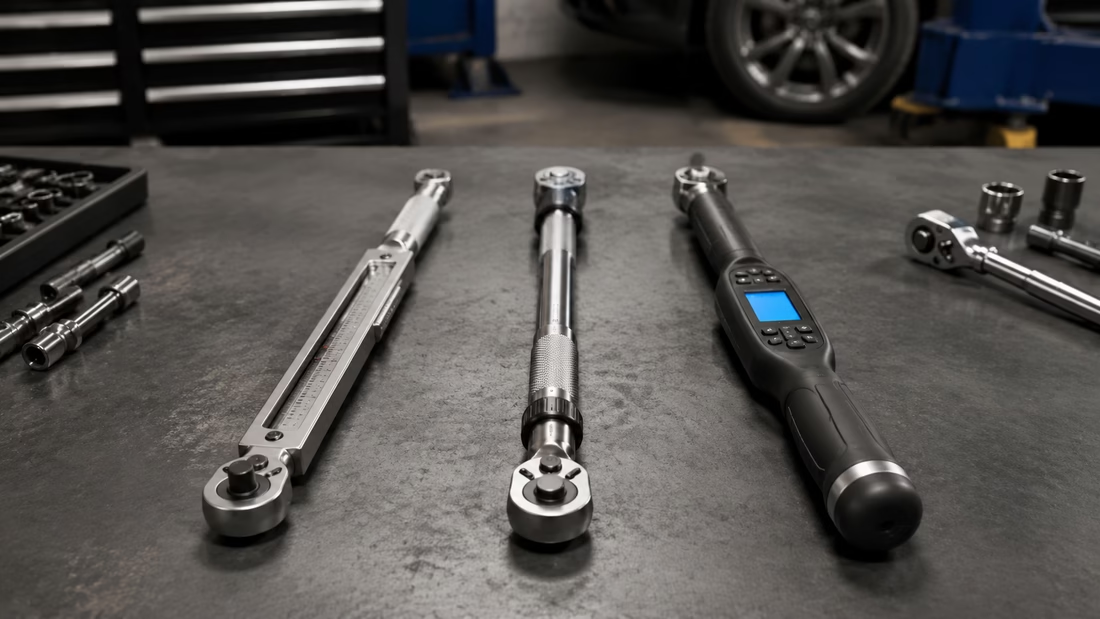
A torque wrench helps you tighten a bolt to the right force. Too loose, and the bolt may back out. Too tight, and you may strip the threads or damage the part.
In the beam vs click vs digital torque wrench debate, there is no single winner. Each type suits a different user and task.
Here is the short answer:
- Beam: Best for low cost and simple upkeep.
- Click: Best for most home and auto work.
- Digital: Best for clear feedback and advanced jobs.
Let’s look at how each type works and where it fits.
To config Torque Wrench Extension Calculator, see this guide.
Why Torque Wrench Choice Matters
A normal ratchet tells you nothing about torque. You only know how hard the bolt feels to turn. That leaves a lot of room for error.
A torque wrench gives you more control. It helps you reach the force set by the part maker.
That matters for jobs such as:
- Tightening wheel lug nuts
- Fitting spark plugs
- Installing brake parts
- Working on engine parts
- Tightening bike bolts
- Fitting suspension parts
The wrong tool can make these jobs harder. For example, a beam wrench needs a clear view of its scale. That may not work well under a car.
A click wrench solves that issue. You can hear and feel when you hit the set force. Yet you can still pull past the click by mistake.
A digital wrench adds a screen, lights, and sound. Some models also track the turn angle. However, they cost more and need batteries.
Your choice should match the task, not the trend.
Beam Torque Wrench (Pros/Cons/Uses)
A beam torque wrench has a long metal beam. The beam bends as you pull the handle. A pointer moves across a scale to show the torque.
It gives you a live reading. You watch the pointer and stop at your target.
Do not confuse this with a split-beam wrench. A split-beam model has a set value and gives a click. It acts more like a click wrench during use.
Pros of a Beam Torque Wrench
Simple Design
A beam wrench has few moving parts. It does not use a battery or screen.
There is also no spring to set before each job. You place the socket, pull the handle, and watch the scale.
Low Cost
A basic beam wrench is often the cheapest type. This makes it a good first tool for light home use.
It also works well as a spare wrench. You can keep it in your garage for rare jobs.
Live Torque Reading
The scale shows the force as it rises. This lets you see how fast you are nearing the target.
A click wrench does not give the same live view. It stays quiet until you hit its set point.
No Battery Problems
A beam wrench is always ready. There is no battery to charge, replace, or remove before storage.
That makes it handy for a roadside kit or tool chest.
Easy Long-Term Storage
You do not need to reset a standard beam wrench after use. Just keep it clean, dry, and safe from knocks.
Still, check that the pointer rests at zero. A bent pointer may give a bad reading.
Cons of a Beam Torque Wrench
You Must See the Scale
You need a clear view of the pointer. This can be hard under a car or inside a tight engine bay.
You should also look at the scale straight on. A side view may make the pointer seem off its true mark.
No Click or Beep
The tool will not tell you when to stop. You must watch the scale during the full pull.
This takes more care and can slow down jobs with many bolts.
Hard to Use in Low Light
Small scale marks can be hard to read. Dirt, glare, and poor light make this worse.
A bright work lamp can help. Yet a click or digital wrench is still easier in dark spaces.
Less Handy in Tight Areas
You may have room to pull the handle but no way to view the scale. In that case, the wrench is not very useful.
Best Uses for a Beam Torque Wrench
A beam wrench is a good fit if:
- You use a torque wrench only a few times per year.
- You want a low-cost option.
- You can see the scale during the job.
- You do not want to deal with batteries.
- You need a simple backup tool.
- You want to watch torque rise in real time.
It works best in open areas. It is less useful when the scale faces away from you.
Click Torque Wrench
A click torque wrench lets you set a target before you start. When you reach that target, the wrench gives a clear click.
You may hear the click and feel it through the handle. That is your sign to stop pulling.
The wrench does not stop the bolt for you. If you keep pulling, you can add more torque.
Pros of a Click Torque Wrench
Easy to Use
Set the torque, lock the handle, and pull with steady force. Stop as soon as you hear or feel the click.
You do not need to watch a scale while you work. This helps in tight or dark spaces.
Good for Repeat Jobs
A click wrench is fast when several bolts need the same torque. Wheel lug nuts are a good example.
Set the value once. Then work through the correct tightening pattern.
No Batteries
A click wrench uses a mechanical system. It does not need power, apps, or charging.
This gives you the ease of a clear alert without battery care.
Good Mix of Price and Ease
Click wrenches often sit between beam and digital tools in price. You get simple use without paying for a screen or data features.
For most home garages, that balance makes sense.
Wide Choice of Sizes
Click wrenches come in many drive sizes and torque ranges. Common drive sizes include:
- 1/4-inch for small bolts
- 3/8-inch for many repair jobs
- 1/2-inch for wheels and larger bolts
Drive size means the square part that holds the socket.
Cons of a Click Torque Wrench
You Can Pull Past the Click
The click is only a warning. It does not cut off the force.
Pulling again “to make sure” can also add more torque. One smooth pull is usually the better method.
The Scale Can Be Misread
Some handles have two scales and small marks. Check the unit before you set the wrench.
Foot-pounds and Newton-meters are not the same. A unit error can cause far more harm than a small tool error.
Some Models Need Careful Storage
Many micrometer-style click wrenches use an inner spring. You should often return them to the lowest marked setting after use.
Do not turn the handle below that mark. Follow the care guide for your exact model.
A split-beam wrench may have different storage needs. Its design does not always keep the inner parts under load.
Wear Can Change the Reading
Drops, overload, rust, and long use can affect the tool. A wrench may still click even when its reading is off.
If you doubt the result, learn how to calibrate a torque wrench at home. A basic check can help you spot a large error.
Best Uses for a Click Torque Wrench
A click wrench suits you if:
- You do regular car repairs.
- You rotate your own tires.
- You work in tight spaces.
- You want a tool with no batteries.
- You often tighten many bolts to one value.
- You want a good mix of cost and ease.
If you are comparing common tool brands, this Icon vs Tekton torque wrench comparison can help explain the points worth checking.
Digital Torque Wrench
A digital torque wrench uses an electric sensor. A screen shows the torque while you pull.
Most models warn you as you near the target. The warning may use lights, sound, or handle vibration.
Some digital models also measure torque angle. That is the number of degrees you turn the bolt after the first torque step.
Pros of a Digital Torque Wrench
Clear Live Reading
The screen shows how much force you apply. You can slow down as you near the set value.
Many models also hold the peak reading. That means the screen shows the highest force from your last pull.
More Than One Alert
A digital wrench may beep, flash, and vibrate. These alerts are hard to miss.
That helps in a loud garage or poor light. It can also help a new user learn a smooth pull.
Easy Unit Changes
Many digital models let you switch units with a button. This can save time when a repair guide uses a different unit.
Common options include:
- Foot-pounds
- Inch-pounds
- Newton-meters
- Kilogram-force units
Always check the selected unit before you pull.
Torque-Angle Mode
Some engine bolts use two steps. First, you tighten to a set torque. Then, you turn the bolt through a set angle.
A digital torque-angle wrench can handle both steps. This can remove the need for a separate angle gauge.
Not every digital model has this mode. Check the tool features before you rely on it.
Saved Targets and Readings
Some models save common torque values. Others store past results.
This can help if you repeat the same jobs. It may also help when you need a record of your work.
Cons of a Digital Torque Wrench
Higher Cost
You pay more for the screen, sensor, alerts, and extra modes. A basic home user may not need all those features.
The cost makes more sense if you use the tool often.
It Needs Batteries
A digital wrench will not work well with a weak or dead battery. Keep spare batteries if the tool matters to your job.
Remove the batteries before long storage. A battery leak can damage the wrench.
More Setup
You may need to:
- Turn on the wrench.
- Pick the right unit.
- Set the target.
- Pick peak or track mode.
- Clear the last reading.
- Check the battery level.
This is not hard. Still, it takes more time than using a beam wrench.
A Digital Display Can Still Be Wrong
A screen may show exact digits, but that does not prove the reading is right. The sensor can drift over time.
Drops and overload can also cause an error. Digital tools still need checks and care.
Screens Can Be Hard to View
A bright screen helps in low light. Yet the viewing angle may still be poor in a tight spot.
The beep and vibration often matter more than the screen during the final pull.
Best Uses for a Digital Torque Wrench
A digital wrench is a good fit if:
- You rebuild engines.
- You work with torque-angle bolts.
- You want live torque on a screen.
- You need strong sound and light alerts.
- You switch between torque units often.
- You want saved targets or past readings.
- You use a torque wrench as part of your job.
Quick Comparison Table
| Feature | Beam Torque Wrench | Click Torque Wrench | Digital Torque Wrench |
|---|---|---|---|
| Torque signal | Pointer and scale | Sound and handle click | Screen, lights, beep, or vibration |
| Live reading | Yes | No on most models | Yes |
| Ease of use | Fair | Very good | Very good |
| Typical cost | Low | Medium | High |
| Needs batteries | No | No | Yes |
| Works well in low light | No | Yes | Yes |
| Easy in tight spaces | Not always | Yes | Yes |
| Torque-angle option | No | Rare | Available on some models |
| Saved readings | No | No | Available on some models |
| Storage needs | Simple | Depends on design | Battery care needed |
| Best fit | Light use and backup | Most garage work | Advanced or frequent work |
Accuracy is not based on type alone. Tool quality, care, range, and user skill all play a part.
A well-kept click wrench may beat a cheap digital wrench. A beam wrench may also work well if you can read it with ease.
How to Choose / Best Use Cases
Start with the work you plan to do. Then choose a range that puts your target near the middle of the scale.
Do not use a large wrench for a very small bolt. The low end of the scale may be harder to control.
Best for Basic Home Car Care
Choose a click torque wrench.
It is easy to set and easy to use. It works well for wheels, brakes, and many repair jobs.
A 1/2-inch drive often suits wheel lug nuts. A 3/8-inch drive can cover many smaller car parts.
Best for a Tight Budget
Choose a beam torque wrench.
It costs less and needs little care. It is a fine option if you have a clear view of the scale.
It can also serve as a spare tool.
Best for Engine Work
Choose a digital torque wrench with angle mode.
Many engine jobs need close control. Some also call for a set turn angle after the first torque step.
A clear display and early warning can help you avoid pulling too fast.
Best for Tire Rotation
Choose a click wrench for simple home use. Choose digital if you want live readings and more alerts.
Both types are faster than a beam wrench for several lug nuts.
Best for Rare Use
A beam wrench may be enough. It has no battery and no spring setting to store.
Still, check that the pointer sits at zero before each job.
Best for Work in Dark or Tight Areas
Choose a click or digital wrench.
A click wrench lets you work by feel and sound. A digital wrench may add lights and vibration.
A beam wrench is a poor fit if you cannot see its scale.
Best as a Backup Tool
Choose a beam torque wrench.
Its simple design makes it useful as a rough check against another tool. It should not replace a proper test or service if you suspect an error.
Check These Points Before You Choose
Ask yourself:
- What torque range do your jobs need?
- Can you see the wrench scale while working?
- Do you need torque-angle mode?
- Are you willing to manage batteries?
- How often will you use the wrench?
- Do you need saved readings?
- Can you feel a light click at low torque?
- Do you work in a loud shop?
Also check the torque direction. Some wrenches measure only while turning right. Others work in both directions.
Final Thoughts: Beam vs Click vs Digital Torque Wrench
The right choice should make your work safer and less stressful.
A beam wrench gives you low cost and simple care. It works best when you can see the scale.
A click wrench gives you the best mix for most garage jobs. It is quick, clear, and free from battery fuss.
A digital wrench gives you the most feedback. It suits engine work, torque-angle jobs, and frequent use.
For most home users, start with a good click wrench in the right range. Add a smaller or larger wrench when your work calls for it. If you need live data or angle control, step up to digital.
In the end, the beam vs click vs digital torque wrench choice is less about which type looks best. It is about which one you can use well, care for, and trust on the job.