
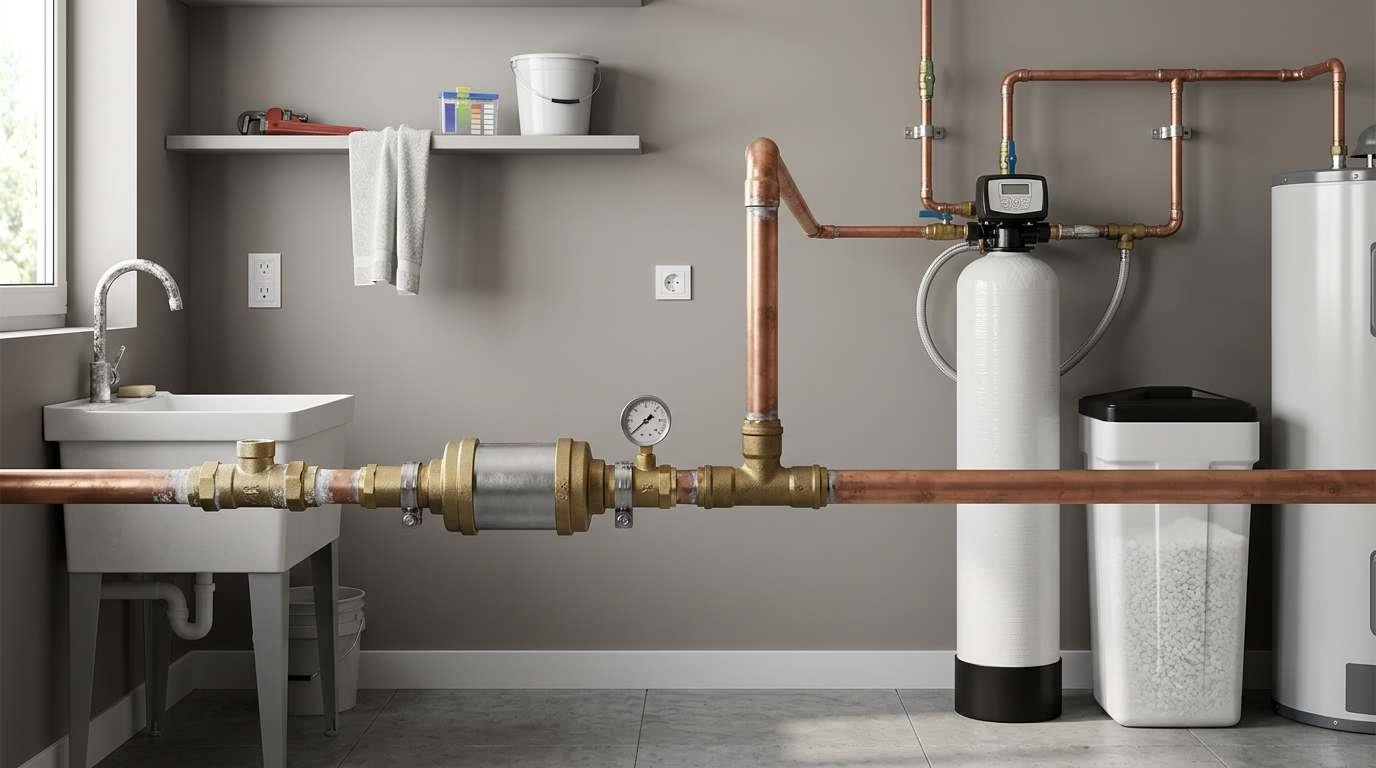
Hard water can leave spots, soap scum, and chalky scale around your home. If you want to treat it, the Aquabion vs water softener choice comes down to one key question.
Do you want to reduce scale, or do you want truly soft water?
Aquabion aims to make scale less likely to stick. It uses no salt or outside power. However, it does not remove the calcium and magnesium that make water hard.
A water softener takes those minerals out through ion exchange. This gives you soft water. It also improves soap lather and helps reduce hard water residue. Yet it needs salt, cleaning, and regular regeneration.
This guide compares how both systems work. You will also learn about costs, care, installation, results, and ideal use cases. You might want to read: 8 Best Water Leak Detectors for Your Home.
Quick answer: Choose Aquabion if your main goal is scale control without salt. Choose a water softener if you want measurable soft water and better soap performance. Aquabion treats how some scale may form. A softener removes the minerals that cause hardness.
What Is Hard Water?
Hard water contains a high level of dissolved minerals. Calcium and magnesium cause most household water hardness.
Water picks up these minerals as it moves through rock and soil. This is common with well water. It can also affect public water supplies.
Hard water is not always easy to spot at first. Over time, you may notice:
- White crust around taps
- Cloudy spots on glasses
- Soap scum in sinks and showers
- Stiff or dull laundry
- Weak soap lather
- Dry-feeling skin
- Scale inside kettles
- Falling water pressure
The effects go beyond visible marks.
Scale can build inside pipes and reduce water flow. It can coat heating parts in water heaters. That layer may reduce heat transfer and strain the unit.
Dishwashers can leave cloudy film on glasses. Washing machines may need more detergent. Clothes can feel rough after a wash.
Hard water can also react with soap. This makes a sticky residue that is hard to rinse away. Your skin or hair may feel dry, coated, or dull.
Water hardness has several test units. You may see grains per gallon, parts per million, or milligrams per liter. These figures help you choose and size a treatment system.
What Is Aquabion?
Aquabion is a salt-free water conditioning device. It fits directly into your main water pipe.
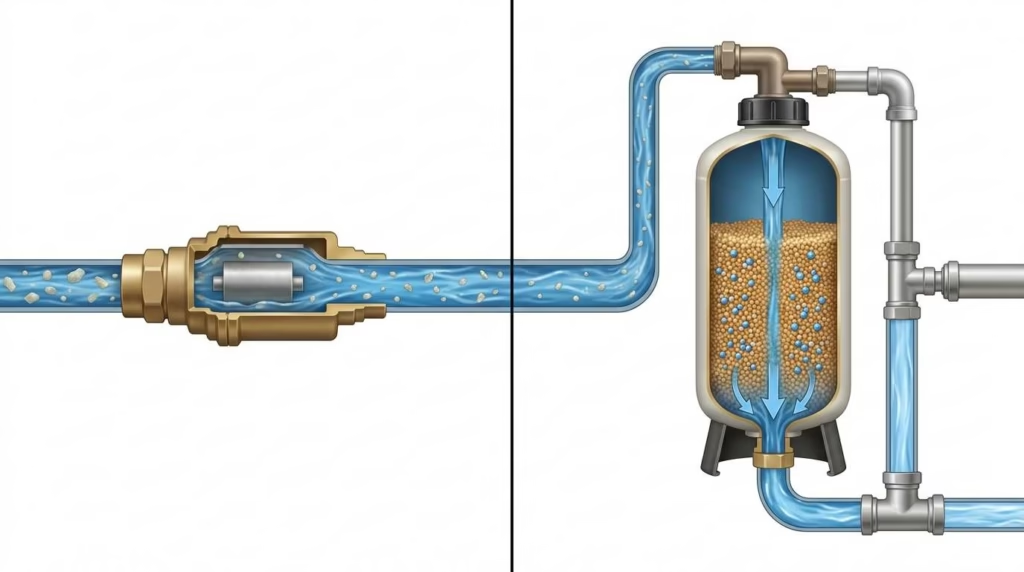
The device uses a galvanic process. This means two different metals create a small natural electrical reaction in water. Aquabion uses a zinc sacrificial anode inside a metal body.
As water passes through, the zinc anode releases small amounts of zinc ions. The system claims these ions affect how calcium carbonate crystals form.
The goal is to create scale that sticks less firmly. The minerals then stay in the water and move through your plumbing.
Aquabion is not an ion-exchange softener. It does not remove calcium or magnesium. Your water hardness normally remains measurable after treatment.
That point matters. A hardness test may show almost the same reading before and after Aquabion. This does not always mean the device has failed. It tests mineral levels, not how firmly scale sticks.
Aquabion needs no salt, chemical refill, or outside power. The sealed unit has no routine settings to adjust. Still, it has a limited service life because the zinc anode wears down.
The maker gives an expected service period of several years. Actual life can change with water chemistry, flow, and use. The full unit may need replacement after that period.
How Aquabion Claims to Reduce Scale
Aquabion does not catch minerals in a filter. It tries to change how calcium carbonate forms.
Water flows around the zinc anode and internal swirl parts. This creates movement inside the unit. A natural galvanic reaction then releases zinc ions.
These ions are meant to provide tiny sites where calcium carbonate can form. The resulting particles may stay in the moving water instead of bonding to hot surfaces and pipe walls.
In plain terms, Aquabion tries to make scale:
- Form as suspended particles
- Stick less firmly
- Pass through your pipes
- Leave softer residue
- Become easier to wipe away
This process differs from softening. Calcium and magnesium remain present. You may still see mineral marks when water dries on a surface.
Where Aquabion Works Best
Aquabion may fit homes where scale is the main concern.
Possible use cases include:
- Protecting pipes from hard deposits
- Limiting scale around heating parts
- Avoiding salt and brine discharge
- Reducing routine system care
- Keeping calcium and magnesium in the water
- Treating a property with limited drain access
It may also suit homes where local rules limit softener discharge. You should still check local plumbing and water rules.
Correct sizing and fitting matter. Pipe material, water flow, and the installation point can affect results.
Potential Limitations
Aquabion cannot promise the same result as a water softener.
Its main limits include:
- It does not remove hardness minerals.
- It does not produce measurable soft water.
- It may not improve soap lather.
- It may not create the slick feel of soft water.
- Dried water may still leave mineral dust or spots.
- Results can vary with water chemistry.
- The complete unit will need eventual replacement.
Aquabion performance evidence also needs careful reading. Some test results support changes in crystal growth under set conditions. That does not prove identical results in every home.
Your water may differ in pH, temperature, flow, and mineral balance. These factors can affect scale formation.
What Aquabion Cannot Do
Aquabion cannot fix every water problem.
It does not remove:
- Calcium
- Magnesium
- Iron
- Sediment
- Chlorine
- Bacteria
- Lead
- Salt
- Unwanted tastes or odors
It is not a water filter or purifier. It is also not a replacement for testing well water.
If you have iron stains, bad smells, or health concerns, start with a full water test. You may need a separate filter or treatment system.
What Is a Water Softener?
A traditional water softener removes calcium and magnesium from water. It uses a process called ion exchange.
The system contains a tank filled with resin beads. These beads hold sodium or potassium ions.
As hard water passes through the tank, calcium and magnesium attach to the resin. Sodium or potassium enters the water in exchange.
The treated water is now soft. Its hardness reading should fall when the system works and is sized well.
Most systems also have a brine tank. This tank holds salt and water for the cleaning cycle.
How Water Softeners Work
The softening process has two main stages.
- Normal service Hard water moves through the resin tank. The resin traps calcium and magnesium. Soft water then flows through your home.
- Regeneration The resin will become full of hardness minerals. The system washes it with strong saltwater. This releases trapped minerals and sends them to a drain.
Modern units often track water use. They regenerate only after treating a set amount of water.
Older timer units may clean on a fixed schedule. This can waste salt and water if the timing does not match your use.
Benefits
A water softener treats the source of hardness.
Its main benefits include:
- Removes calcium and magnesium
- Produces measurable soft water
- Reduces new scale formation
- Improves soap lather
- Helps detergent work with less waste
- Reduces mineral spots
- Makes soap easier to rinse
- Helps protect water-using appliances
- Can make laundry feel softer
Soft water can also change how your skin feels. Some people enjoy the smooth feel. Others find it slippery at first.
Drawbacks
Water softeners need more care than passive conditioners.
Common drawbacks include:
- Salt must be added.
- The brine tank needs checks.
- Regeneration uses water.
- The unit needs a drain.
- Some systems need electricity.
- Poor settings can waste salt and water.
- Salt bridges can form in the tank.
- Resin can foul from iron or sediment.
- The system takes up floor space.
Regeneration also creates salty wastewater. This can be a concern in areas with strict discharge rules.
A softener does not remove most water pollutants. You may still need a separate filter.
For a closer look at those jobs, read whole-house water filter vs water softener.
Electronic Descaler vs Water Softener
An electronic water descaler is not a softener.
Most electronic units have wires wrapped around your main pipe. A powered control box sends changing signals through those wires.
The device creates an electromagnetic field around the pipe. Makers claim this field changes how scale crystals form.
An electromagnetic descaler uses a related idea. A magnetic descaler may use fixed magnets instead of powered coils.
A salt-free conditioner is a wider category. It can include:
- Electronic descalers
- Electromagnetic units
- Magnetic devices
- Template-assisted crystallization systems
- Galvanic units such as Aquabion
These terms should not be treated as equal.
Aquabion uses direct water flow through a zinc anode. It relies on a galvanic reaction inside the pipe.
An electronic descaler uses powered coils outside the pipe. It does not add a zinc anode to the water line.
Both aim to reduce scale without removing hardness minerals. Yet their methods differ.
A water softener takes another route. It removes calcium and magnesium through ion exchange. That is why it changes measured hardness.
The simple breakdown is:
- Electronic descaler: Uses an outside electrical field.
- Magnetic descaler: Uses fixed magnets.
- Aquabion: Uses an internal zinc anode.
- Salt-free TAC system: Forms tiny stable crystals.
- Water softener: Removes hardness minerals.
Aquabion vs Water Softener (Comparison Table)
| Feature | Aquabion | Water Softener |
|---|---|---|
| Removes hardness minerals | No | Yes |
| Prevents scale | Aims to reduce hard scale | Strong scale control when working well |
| Soft water | No | Yes |
| Salt required | No | Usually |
| Electricity required | No outside power | Often required for controls |
| Water waste | No regeneration wastewater | Uses water during regeneration |
| Maintenance | Little routine care | Salt refills and routine checks |
| Installation | Cut into the main pipe | Main-line plumbing, drain, and space |
| Operating cost | Low between replacements | Salt, water, power, and service |
| Environmental impact | No salt discharge | Creates brine discharge |
| Best for | Low-care scale control | Whole-home soft water |
The table shows the key split. Aquabion is a scale conditioner. A water softener changes water hardness.
Do Electronic Water Descalers Actually Work?
This question has no clean yes-or-no answer.
Manufacturers claim electronic descalers alter how mineral crystals form. They say the minerals become less likely to attach to pipes and heating parts.
Some controlled tests have found changes under certain flow and water conditions. Yet other tests have found little or no useful reduction.
The evidence is mixed because these devices face many variables:
- Water hardness
- Mineral balance
- Pipe material
- Flow rate
- Water temperature
- Signal strength
- Installation quality
- Distance from the treatment point
Some users report less crust around taps. Others find scale easier to wipe away. A few notice no clear difference.
These reports can help you form questions. They do not prove that a device works in every home.
Expectations also matter. An electronic descaler will not remove hardness minerals. It will not give you soft-water lather. It may not stop all marks on glass or taps.
Very hard water presents a tougher test. A powered descaler may not give enough protection for heaters and appliances.
Independent research has not shown steady results across all electronic or magnetic systems. Some studies report a scale effect under set conditions. Others find no meaningful difference.
Aquabion should not be judged as a standard electronic descaler. Its zinc-anode method is different. Even so, you should still measure results in your own home.
Useful checks include:
- Scale on a kettle or heating part
- Buildup on shower glass
- Crust around hot taps
- Water heater service findings
- Cleaning effort over several months
Take photos before installation. Use the same cleaning routine. Compare similar areas after enough time has passed.
Aquabion vs Water Softener: Pros and Cons
Advantages of Aquabion
Aquabion keeps daily care simple.
Its main advantages are:
- No salt bags to carry
- No brine tank to fill
- No regeneration cycle
- No drain needed for backwash
- No outside power
- No routine control settings
- Compact pipe-mounted design
- Hardness minerals stay in the water
It may be useful where space is tight. It also avoids the slippery feel that some people notice with soft water.
Disadvantages of Aquabion
Aquabion does not solve all hard water effects.
Its disadvantages include:
- Hardness remains measurable.
- Soap may still lather poorly.
- Water may still leave dry mineral spots.
- Results can differ between homes.
- The unit needs skilled pipe fitting.
- Replacement is needed after its service life.
- It does not filter pollutants.
- It may not suit extreme hardness.
You also have fewer simple ways to confirm treatment. A hardness strip will not measure scale adhesion.
Advantages of Water Softeners
A water softener gives a clear and testable result.
Its advantages include:
- Removes calcium and magnesium
- Produces truly soft water
- Works well across the whole home
- Improves soap and detergent performance
- Cuts hard water film
- Reduces mineral spotting
- Protects hot water equipment
- Delivers more predictable results
You can test the output with a hardness kit. This makes faults easier to spot.
Disadvantages of Water Softeners
A water softener needs ongoing input.
Its disadvantages include:
- Regular salt use
- Water use during regeneration
- Brine discharge
- More floor space
- A nearby drain
- Periodic cleaning
- Setup and control checks
- Higher risk of waste from poor sizing
The water also gains some sodium during ion exchange. The amount depends on the starting hardness.
If you want filtered drinking water, softening alone may not be enough. Read water softener vs reverse osmosis to see how those systems differ.
Which One Should You Choose?
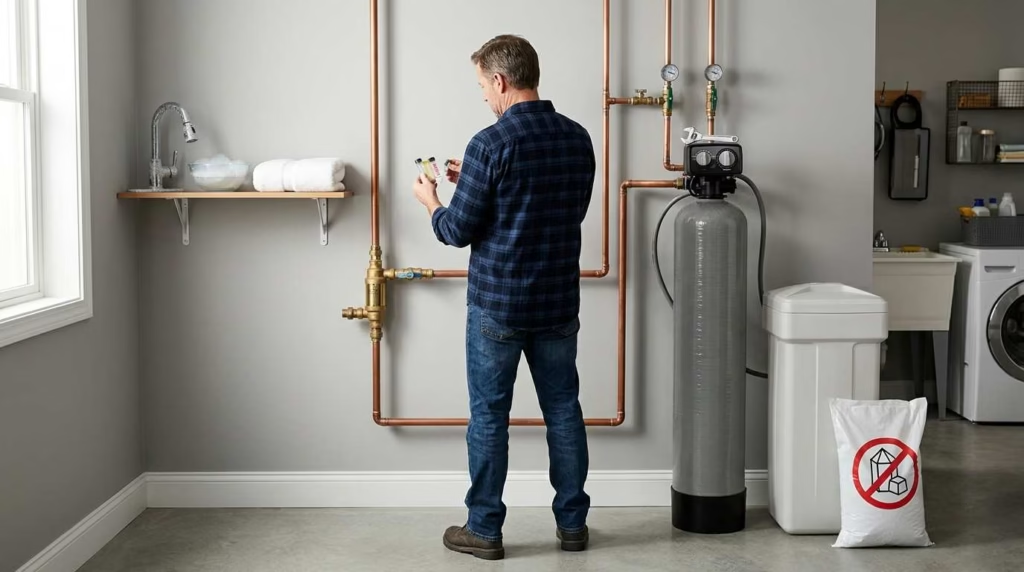
Test your water before making this choice.
A simple hardness kit gives you a useful starting point. A laboratory test is better for well water. It can check hardness, iron, manganese, pH, bacteria, and other concerns.
Do not choose a scale system for an iron problem. Do not choose a softener to remove unsafe pollutants.
Match the system to your main goal:
- Scale protection: Either may help, but a softener removes the cause.
- Soft-water feel: Choose a water softener.
- Better soap performance: Choose a water softener.
- Low maintenance: Aquabion has the edge.
- No salt discharge: Choose Aquabion or another salt-free system.
Choose Aquabion If…
Aquabion may suit you if:
- You dislike using salt.
- You want minimal routine care.
- Your main goal is scale reduction.
- You do not need a soft-water feel.
- Local rules discourage brine discharge.
- You lack space for two large tanks.
- You have no suitable drain nearby.
- You accept that hardness minerals will remain.
Make sure your expectations match the product. You may still see spots where treated water dries.
Choose a Water Softener If…
A traditional softener may suit you if:
- You want truly soft water.
- Your water is very hard.
- Soap performance matters.
- You want less soap scum.
- You want softer-feeling laundry.
- You need a measurable result.
- Scale is harming water heaters.
- You can manage salt and regeneration.
A softener is often the stronger choice for severe hardness. It removes the minerals instead of trying to change their behavior.
If your home uses a private well, hardness may be only one issue. The guide to the best whole-house water filter for well water explains why testing comes first.
Are Salt-Free Water Conditioners a Good Alternative?
Salt-free systems can be useful. However, “salt-free” does not mean “soft water.”
Each type works in a different way.
TAC systems use template-assisted crystallization. The media helps dissolved minerals form tiny crystals. These crystals may stay suspended rather than stick to surfaces.
TAC units need no salt. Many also need no power. The media has a set life and must be replaced.
Electronic descalers use powered coils around the pipe. They are easy to fit because the pipe may not need cutting. Their results can vary by water chemistry and installation.
Magnetic descalers use fixed magnets. They need no power. Yet evidence for reliable home scale control remains weak and mixed.
Aquabion uses water flow, a metal body, and a zinc sacrificial anode. It is not an external electronic or magnetic device.
Traditional water softeners remove hardness minerals. They remain the direct choice when your goal is soft water.
Here is a practical way to decide:
- Choose TAC for salt-free scale control with replaceable media.
- Choose an electronic unit only if variable results are acceptable.
- Choose Aquabion for passive galvanic scale treatment.
- Choose a softener for low measured hardness.
- Choose filtration for sediment, chlorine, iron, or odors.
No salt-free conditioner can remove every water concern. You may need more than one treatment stage.
Cost Comparison
Costs depend on the pipe size, home layout, water use, and local labor. Product capacity also affects the final price.
Aquabion often has a simple ownership pattern:
- Purchase the correct unit
- Pay for pipe installation
- Use it without salt or outside power
- Replace the unit after its service life
Installation may still cost more than expected. The plumber must cut into the main supply. Some pipe setups may need extra work.
A water softener has more cost categories:
- Softener and brine tank
- Plumbing labor
- Drain connection
- Bypass valves
- Salt
- Regeneration water
- Electricity for controls
- Cleaning and service
- Resin or part replacement
The lowest-priced softener is not always the cheapest to own. An oversized or timer-based unit may waste salt and water.
A demand-based softener regenerates after measured water use. This can cut waste compared with a fixed timer.
Aquabion avoids monthly salt costs. However, eventual whole-unit replacement can be a large one-time expense.
TAC systems sit between these options. They avoid salt and brine. Yet the media cartridge or tank media needs replacement.
For a fair cost comparison, ask:
- What is included in installation?
- Does the system need a drain?
- How often will it use salt?
- How much water does regeneration use?
- What parts need replacement?
- How long is the expected service life?
- Can local technicians service it?
- What happens when the main treatment part wears out?
Compare costs over several years. Do not focus only on the purchase price.
Frequently Asked Questions
Is Aquabion better than a water softener?
Aquabion may be better for low-care scale treatment without salt. A water softener is better for truly soft water.
The right choice depends on your goal. Neither option is best for every home.
Does Aquabion remove calcium?
No. Aquabion does not remove calcium from the water.
It aims to affect how calcium carbonate forms and sticks. Your hardness reading normally stays measurable.
Do electronic water descalers really work?
Some users report less scale. Tests have also found effects under certain conditions.
However, results are not steady across all homes. Electronic units do not remove calcium or magnesium.
Can Aquabion replace a water softener?
Aquabion can replace a softener only if you want scale control rather than soft water.
It will not give you the same soap lather or hardness reading. It also leaves hardness minerals in the water.
Is salt-free water treatment effective?
It can be effective for certain goals. Salt-free conditioners may help control scale.
They do not produce soft water unless they remove calcium and magnesium. Most salt-free systems do not.
Does Aquabion require electricity?
Aquabion does not need an outside electrical supply. Its galvanic reaction occurs as water flows through the device.
This differs from an electronic descaler, which needs power for its control box.
Does Aquabion reduce limescale?
Aquabion is designed to reduce hard, attached limescale. It aims to make mineral particles less likely to stick.
Results can depend on the water and installation. Mineral marks may still appear after water dries.
Will a descaler make water soft?
No. A descaler does not remove calcium or magnesium.
The water remains hard by standard test methods. The device only aims to change scale behavior.
Which is better for very hard water?
A water softener is usually more predictable for very hard water. It removes the minerals that cause hardness.
A salt-free conditioner may struggle to control all scale under severe conditions.
Is Aquabion maintenance-free?
Aquabion needs little routine care. You do not add salt or change settings.
However, “maintenance-free” does not mean “lasts forever.” The zinc anode wears down, so the sealed unit needs eventual replacement.
Final Verdict
The Aquabion vs water softener decision is not about finding one universal winner. These systems handle hard water in different ways.
Aquabion may be a sensible fit if you want low-care scale control. It uses no salt, discharge cycle, or outside power. Yet it does not remove hardness minerals or create soft water.
A water softener is the clearer choice if you want softer laundry, better soap lather, and low measured hardness. It provides a more direct treatment. In return, you must manage salt, regeneration, and routine care.
Start with a water test. Then choose based on the result you can measure and use:
- Pick Aquabion for passive, salt-free scale treatment.
- Pick a water softener for genuine soft water.
- Pick a filter if your main issue is iron, sediment, odor, chlorine, or other pollutants.
The best system is the one that solves your actual water problem without promising a result it cannot deliver.