
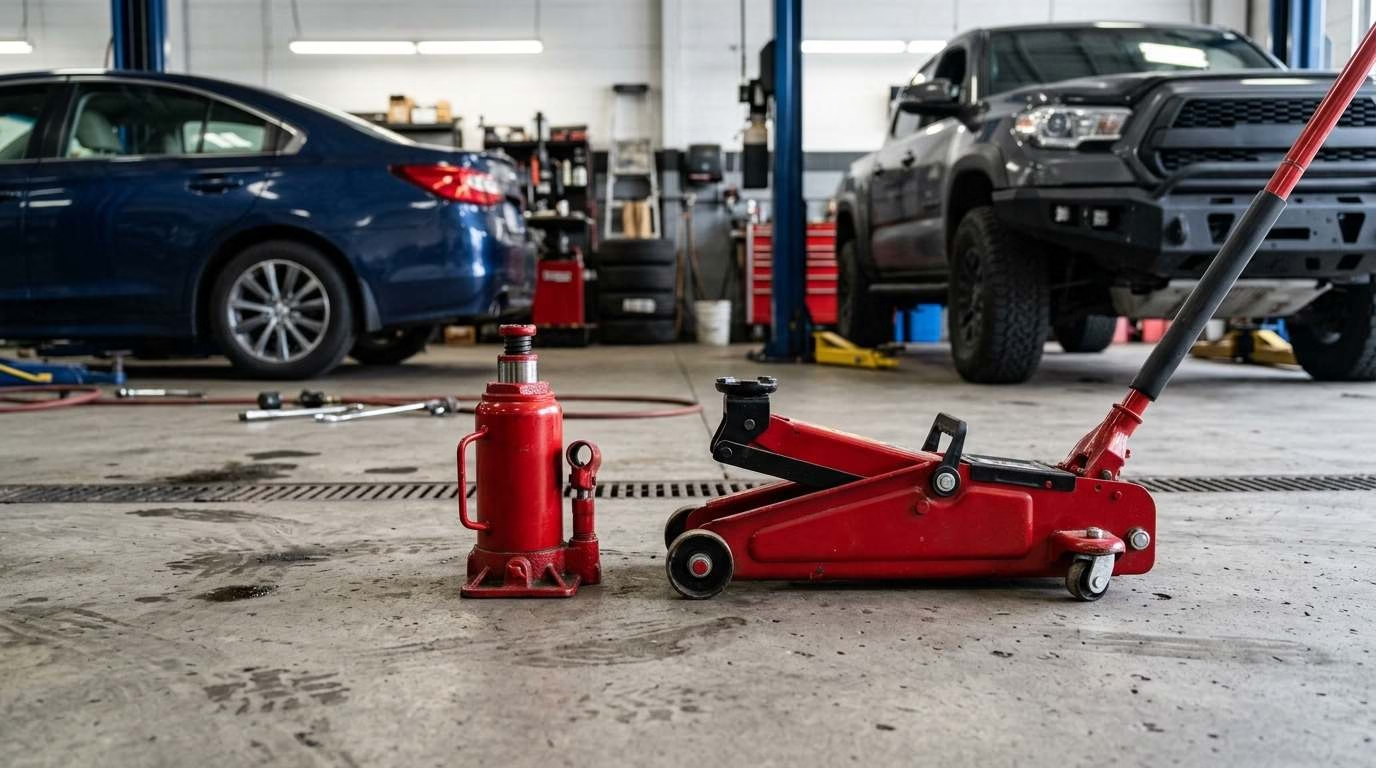
Choosing between a bottle jack vs floor jack comes down to your vehicle and work area.
A floor jack is usually best for cars and garage repairs. It sits low, rolls with ease, and offers good reach. Not sure what capacity you need? Check our floor jack capacity calculator for a quick recommendation. A bottle jack suits trucks, trailers, and heavy gear. It is small, strong, and easy to store.
Neither jack should hold a vehicle during repairs. Once you lift the vehicle, support it with rated jack stands.
Bottle Jack vs Floor Jack at a Glance
Both tools use hydraulic pressure to lift heavy loads. Yet their shape and purpose are quite different.
A floor jack has a long, low frame. Wheels help it roll under your vehicle. Its wide base and long handle make it handy for home garage work. For a reliable option that covers most home setups, the Torin Big Red Hydraulic Floor Jack offers solid capacity and a low-profile design for everyday garage use.
A bottle jack stands upright. Its piston, also called a ram, rises from the top. The small body can lift a lot of weight. If you work on trucks, SUVs, or farm equipment, the Pro-Lift Bottle Jack is a compact powerhouse that stores easily in a cab or toolbox.
Here is the quick answer:
- Choose a floor jack for cars, regular repairs, and smooth garage floors.
- Choose a bottle jack for trucks, farm gear, and compact storage.
- Check clearance first if your car sits low.
- Use jack stands with either type.
The right option depends on more than weight capacity. You must also check ground clearance, lift height, surface type, and jack points.
What Is a Bottle Jack?
A bottle jack is a short, upright hydraulic jack. Its shape looks much like a bottle. That is where the name comes from.
The jack has a base, pump, oil chamber, and vertical ram. Pumping the handle forces oil through the jack. That pressure pushes the ram upward.
Bottle jacks offer high lift capacity for their size. Many fit inside a truck toolbox or storage bin. This makes them useful for roadside kits and mobile work.
However, their upright body can be too tall for some cars. A standard model may not fit under a low sedan. It may also fail to fit after a tire goes flat.
How Does a Bottle Jack Work?
A bottle jack turns hand force into hydraulic pressure. The oil inside the jack transfers that force to the ram.
The basic process looks like this:
- Park on a hard, level surface.
- Secure the vehicle and chock the wheels.
- Close the jack’s release valve.
- Place the saddle under an approved lift point.
- Pump the handle to raise the vehicle.
- Place rated jack stands under approved support points.
- Lower the vehicle onto the stands.
- Remove the stands before lowering the vehicle fully.
Some bottle jacks include an extension screw. You can turn it upward before lifting. This reduces the amount of pumping needed.
Do not extend it so far that the saddle loses firm contact. Follow the jack manual and your vehicle manual.
What Is a Floor Jack?
A floor jack is a low hydraulic jack with wheels. It is also called a trolley jack in some regions.
Its long frame slides under a vehicle. A lifting arm raises a round saddle toward the jack point. You control the lift with a long handle.
Most floor jacks have front wheels and rear casters. Casters are small wheels that turn in several directions. They help you line up the saddle.
The low body makes this jack useful for cars. Some low-profile models fit under sports cars and modified vehicles.
How Does a Floor Jack Work?
A floor jack uses oil pressure to raise its lifting arm. Pumping the handle moves oil into the lifting chamber.
The usual steps are simple:
- Find a hard, level work area.
- Apply the parking brake.
- Chock the wheels that stay on the ground.
- Close the jack’s release valve.
- Roll the saddle under an approved lift point.
- Pump the handle until the vehicle reaches the needed height.
- Place jack stands at approved support points.
- Lower the vehicle onto the stands.
The long handle gives you good reach. You may not need to crawl far beneath the vehicle to position or pump the jack.
A floor jack may roll slightly while lifting. This movement helps the saddle follow the lift point’s path. The wheels need a firm, smooth surface to do this safely.
Bottle Jack vs Floor Jack: Key Differences
The main difference between bottle jack and floor jack designs is their shape. That one change affects clearance, storage, reach, and ease of use.
1. Design and Lifting Direction
A bottle jack lifts straight up through a vertical ram. Its saddle sits right above its compact base.
A floor jack uses a longer lifting arm. The arm swings upward as you pump the handle. Its saddle also moves slightly as the arm rises.
This creates clear differences:
- Bottle jacks take up little storage space.
- Floor jacks need more floor space.
- Bottle jacks must sit under the lift point.
- Floor jacks can reach farther beneath a vehicle.
- Floor jacks need space to roll during the lift.
Both are hydraulic jacks. Their layout is what changes how you use them.
2. Minimum Height and Vehicle Clearance
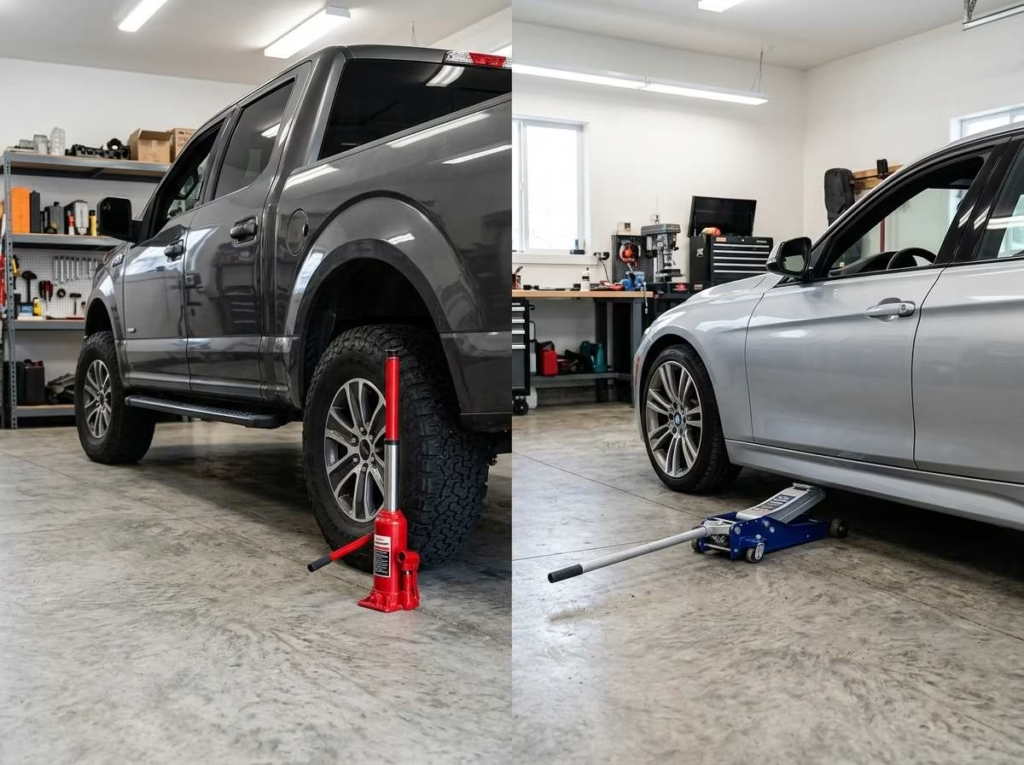
Minimum height is the jack’s height when fully lowered. It tells you if the jack will fit under your vehicle.
A floor jack usually has a lower entry point. A low-profile model may fit under cars with very little clearance.
Bottle jacks tend to start much taller. This is not a problem under many trucks. It can be a major issue under a car.
Measure the gap between the ground and the approved jack point. Do not measure only under a bumper or body panel.
If you need a jack for tire changes, plan for a flat tire. A flat can lower the jack point by several inches. A jack that fits today may not fit after a blowout.
For very low vehicles, see this guide to choosing a floor jack for lowered cars.
3. Lifting Capacity
Capacity means the most weight the jack can lift within its rated limits.
Bottle jacks often provide high capacity in a small body. Models made for trucks and heavy gear may carry much higher ratings than common home floor jacks.
Floor jacks also come in many sizes. Two-ton and three-ton units are common in home garages. Heavier service jacks are available for large vehicles.
Do not choose based on the vehicle’s total weight alone. A jack often lifts one end or one corner. Load balance still varies by vehicle and lift point.
Use these rules:
- Follow the vehicle maker’s lifting advice.
- Read the jack’s marked capacity.
- Leave a safe margin when possible.
- Never exceed the rated load.
- Do not use an unmarked jack.
A higher rating does not fix poor fit. The jack must still reach the lift point and raise it high enough.
4. Stability and Base Size
A floor jack has a long and wide frame. This gives it a broad footprint on a smooth floor.
A bottle jack uses a smaller base. That makes it compact, but placement needs more care. The base must sit flat and remain under the load.
Still, base size is only one part of safe use. Stability also depends on:
- The surface
- Saddle contact
- Jack condition
- Lift-point shape
- Vehicle movement
- Weight balance
- Correct wheel chocks
Never use either jack on loose soil, wet ground, or a steep slope. Do not balance a jack on blocks to gain height.
5. Portability and Storage
Bottle jacks are easy to store. Their compact shape works well in trucks, trailers, and small shops.
A floor jack is larger. A steel model can also be very heavy. You may not want to lift it into a vehicle after each use.
However, floor jack wheels make shop movement easy. You can roll the jack across a clean concrete floor.
Aluminum floor jacks weigh less than many steel models. They still take up more room than a bottle jack.
For travel, the bottle jack has a clear space advantage. For garage use, the floor jack is often easier to move into place.
6. Ease of Positioning
A floor jack’s long handle helps you guide it under a car. You can make small changes without reaching far beneath the body.
The rear casters also help with side-to-side movement. This is useful when the jack point sits deep under the vehicle.
A bottle jack needs direct access below the lift point. It has little reach of its own. You often need to place it by hand.
This can be awkward under wide trucks. It can also be hard if steps, body panels, or suspension parts block access.
Check saddle contact before each lift. The load should sit near the saddle’s center.
7. Lifting Speed and Effort
Floor jacks often feel faster during routine garage work. Their long handles allow full, smooth pump strokes.
Some models have dual pumps. These move the saddle toward the jack point with fewer strokes. The jack slows once it meets the load.
Bottle jacks use a shorter handle. You may need more small strokes in a tight space. An extension screw can reduce the free space above the ram.
Do not judge every jack by its type alone. Pump size, oil level, load, and design all affect lifting speed.
A slow or weak lift may mean air has entered the system. If your floor jack feels soft, learn how to fix a spongy floor jack before using it again.
8. Price and Long-Term Value
Bottle jacks are often less costly at the same rated capacity. Their simple, compact design helps keep the price down.
Floor jacks need more material. They also have a lifting arm, wheels, and casters. This can raise the cost.
Price should not be your only guide. Check these points:
- Build quality
- Minimum height
- Maximum lift
- Saddle size
- Handle control
- Warranty terms
- Parts support
- Clear safety labels
- Repair options
A cheap jack that does not fit your car has little value. The same applies to a damaged used jack with no known service history.
If you are comparing popular garage models, this Daytona vs Arcan floor jack guide covers common points raised in owner discussions.
Suggested Comparison Table
| Feature | Bottle Jack | Floor Jack |
|---|---|---|
| Body design | Compact and upright | Long, low, and wheeled |
| Best suited to | Trucks, equipment, and travel | Cars and garage repairs |
| Minimum clearance | Often taller | Usually lower |
| Capacity for its size | Often high | Varies by model |
| Positioning | Sits below the lift point | Rolls under the vehicle |
| Handle reach | Short | Long |
| Storage needs | Low | Moderate to high |
| Smooth floor needed | Firm surface required | Firm, smooth floor preferred |
| Low-car use | Often limited | Usually better |
| Vehicle support | Requires jack stands | Requires jack stands |
Bottle Jack Pros and Cons
The main bottle jack vs floor jack pros and cons reflect how each tool is built. A bottle jack packs great lift force into a small body. That compact form also creates limits.
Advantages of a Bottle Jack
A bottle jack makes sense when storage space is tight. It can fit where a full floor jack cannot.
The key benefits include:
- Compact size: Easy to store in a truck or shop.
- High capacity: Strong lifting power for its size.
- Simple design: Fewer moving frame parts.
- Easy transport: Useful for mobile work.
- Good truck fit: Tall vehicles often offer enough clearance.
- Wide model range: Standard and low-profile types exist.
- Heavy-duty use: Suitable models can lift large gear.
Bottle jacks also work well where a long floor jack cannot reach. You still need firm ground and safe saddle contact.
Disadvantages of a Bottle Jack
The biggest issue is often minimum height. A standard bottle jack may not fit beneath a passenger car.
Other limits include:
- A small base needs careful placement.
- A short handle gives you less reach.
- The jack must sit below the lift point.
- It may not fit under a vehicle with a flat.
- It is less handy for frequent garage work.
- It can feel slow in a cramped space.
- It must remain within its approved angle.
Do not place a bottle jack on its side. Most models are made for upright use. An angled load can damage the jack or cause it to slip.
Floor Jack Pros and Cons
A floor jack suits repeat work on cars. Its low body and long reach make many garage jobs easier.
The tradeoff is size. It needs storage room and a suitable floor.
Advantages of a Floor Jack
A floor jack is often the better all-purpose tool for home vehicle care.
Its main benefits include:
- Low entry height: Better access under cars.
- Long reach: Useful for lift points farther inside.
- Easy control: The long handle gives good leverage.
- Simple positioning: Wheels help line up the saddle.
- Broad footprint: The chassis spreads across more floor area.
- Fast lifting: Many models reach the load in fewer strokes.
- Garage versatility: Useful for brakes, tires, and suspension work.
The floor jack often wins for a car because it saves time. You can position it without crawling far under the vehicle.
Disadvantages of a Floor Jack
Floor jacks are not ideal for every setting. Their wheels work best on smooth, hard floors.
Common drawbacks include:
- They are larger than bottle jacks.
- Steel models can be hard to carry.
- They need more storage space.
- Small wheels struggle on rough ground.
- Good low-profile models may cost more.
- Wheels and casters need regular checks.
- Hydraulic faults can cause a weak lift.
A floor jack also cannot support a vehicle by itself. Its wide body does not change that rule.
Best Uses for a Bottle Jack
Bottle jacks work best when you have enough ground clearance. They also suit jobs that need a high lift rating in a small package.
Trucks and High-Clearance Vehicles
The bottle jack vs floor jack for truck choice often favors the bottle jack. Trucks tend to have more room beneath their lift points.
A bottle jack can also carry a high load rating without filling a truck bed. That makes it useful for work trucks and pickups.
Yet clearance alone is not enough. Check the jack’s maximum lift height. A tall truck may need more travel than a small bottle jack can provide.
You must also match the saddle to the approved lift point. Never lift from a body panel, fuel tank, or thin metal cover.
Farm and Construction Equipment
Bottle jacks can suit tractors, trailers, and some heavy machines. Their compact body fits into tight work areas.
These loads can be less balanced than a car. The work site may also have soft or uneven soil.
Do not create a lift point with loose boards or scrap blocks. If you cannot form an approved firm base, use proper lifting gear or seek trained help.
Roadside and Mobile Tool Kits
A bottle jack takes up little cargo room. This makes it a practical option for high-clearance vehicles.
Pack the full safety setup, not just the jack:
- Rated jack stands, where practical
- Wheel chocks
- Work gloves
- A warning triangle
- A flashlight
- The correct wheel tools
- Your vehicle manual
Do not change a tire beside fast traffic if you lack safe space. Move well away from the road when possible. If the ground slopes or feels soft, call for roadside help.
Heavy Loads With Limited Storage Space
A bottle jack gives you strong lift power in a small area. This can help in a crowded shop or service vehicle.
It may also suit owners who use a jack only now and then. You do not need to keep a large trolley jack on the floor.
However, choose the tool for the load. Compact size does not make every bottle jack suitable for every heavy item.
Best Uses for a Floor Jack
A floor jack is at home on smooth concrete. It suits regular service work and vehicles with low lift points.
Routine Garage Maintenance
A floor jack makes many common jobs easier:
- Oil changes
- Brake checks
- Wheel changes
- Tire rotations
- Suspension work
- Steering checks
- Exhaust inspections
The long handle helps you lift from outside the vehicle’s edge. Its low saddle can reach under many cars.
Always move the vehicle onto stands before starting work. Even a quick oil change can place you in danger beneath the car.
Low-Clearance Cars
A low-profile floor jack is usually the best pick for a low car. Its lowered saddle can slide beneath lift points that a bottle jack cannot reach.
Do not look only at the nose height. Some floor jacks rise farther back along the frame. That thicker section may hit the vehicle before the saddle reaches the jack point.
Check these measurements:
- Saddle height when lowered
- Frame height behind the saddle
- Reach to the lift point
- Maximum lift height
- Space for the handle
Never drive onto loose blocks just to make space for the jack. Use approved ramps if your setup calls for more access.
Frequent DIY Repairs
A floor jack saves effort if you service your vehicle often. It rolls into place and gives you smooth control.
The broad saddle may also accept maker-approved pads. These can help match certain pinch welds or shaped jack points.
Frequent use means more checks. Inspect the wheels, saddle, handle, valve, and oil seals before each lift.
Lifting From Central Jacking Points
Some vehicles have a central front or rear jack point. A long-reach floor jack may access it with ease.
Using a central point can help you raise one end. You can then place a stand near each side.
Only use a point listed in the vehicle manual. A crossmember may look strong yet still be an unsafe lift point.
Bottle Jack vs Floor Jack: Which Is Better for Your Vehicle?
There is no single winner for every driver. The better jack is the one that fits your vehicle and task.
Choose a Bottle Jack If:
A bottle jack may suit you if:
- You own a truck or high-clearance sport utility vehicle.
- You need high lift capacity in a compact form.
- You have very little storage space.
- You want a jack for a mobile tool kit.
- You work with farm or heavy gear.
- Your lift points sit above the jack’s minimum height.
- The jack can reach the required lift height.
For a travel trailer, check the maker’s lift instructions first. Trailer frames, axles, and suspension parts have set lift rules. Do not assume the axle tube is a safe point.
Also, never use a jack as a trailer stabilizer. Lifting and stabilizing are different tasks.
Choose a Floor Jack If:
A floor jack may suit you if:
- You work on passenger cars.
- Your car has low ground clearance.
- You service your vehicle often.
- You have a firm garage floor.
- You need to reach a central jack point.
- You want a long pump handle.
- You have room to store a larger tool.
For an SUV, either jack may work. A floor jack is often easier in the garage. A bottle jack may be easier to carry.
Consider Owning Both
A mixed garage may benefit from both jack types.
You could use:
- A low-profile floor jack for cars.
- A high-capacity bottle jack for trucks.
- Jack stands rated for your heaviest load.
- Wheel chocks suited to your tire size.
This setup also gives you more options for different lift points. Still, do not use one jack as a stand while lifting with another.
If you must choose one tool, base the choice on your main vehicle. Do not buy for a rare job you may never do.
Essential Jack Safety Tips
A hydraulic jack lifts a vehicle. It does not support one during repairs.
Never crawl under a vehicle held by a jack alone. A seal, valve, saddle, or lift point could fail without warning.
Work Only on a Hard, Level Surface
Concrete is often the best home work surface. It should be clean, dry, flat, and strong enough for the load.
Avoid:
- Dirt
- Sand
- Loose gravel
- Soft asphalt
- Slopes
- Broken concrete
- Wet or oily floors
Do not use bricks, hollow blocks, logs, or scrap metal as supports. These items can crack, roll, or shift.
If the base does not feel firm, stop the job. A safer location matters more than a quick repair.
Confirm the Jack’s Rated Capacity
Find the load rating on the jack label. Make sure it is easy to read.
Do not use the jack if:
- The rating label is missing.
- The body has deep rust or dents.
- The frame looks bent.
- The jack leaks oil.
- The valve will not hold pressure.
- The lift feels rough or weak.
Never test capacity by pushing the jack past its limit. An overload valve is a backup, not a target.
Use the Correct Vehicle Lifting Points
Your owner’s manual shows safe jack locations. Use those points even if another part looks stronger.
Common lift points may include:
- Reinforced pinch welds
- Frame sections
- Subframe points
- Axle areas approved by the maker
- Marked central lift points
A pinch weld is a folded seam below the body. Some require a shaped saddle pad. Use only an adapter made for your jack and vehicle.
Secure the Vehicle Before Lifting
Prepare the vehicle before the jack touches it.
Follow these steps:
- Park on flat, firm ground.
- Shift into Park or the correct gear.
- Turn off the engine.
- Apply the parking brake when advised.
- Chock the wheels that remain down.
- Keep all people away from the vehicle.
- Remove loose gear that may shift.
Do not lift a vehicle while someone sits inside. Their movement can change the load.
Use Properly Rated Jack Stands
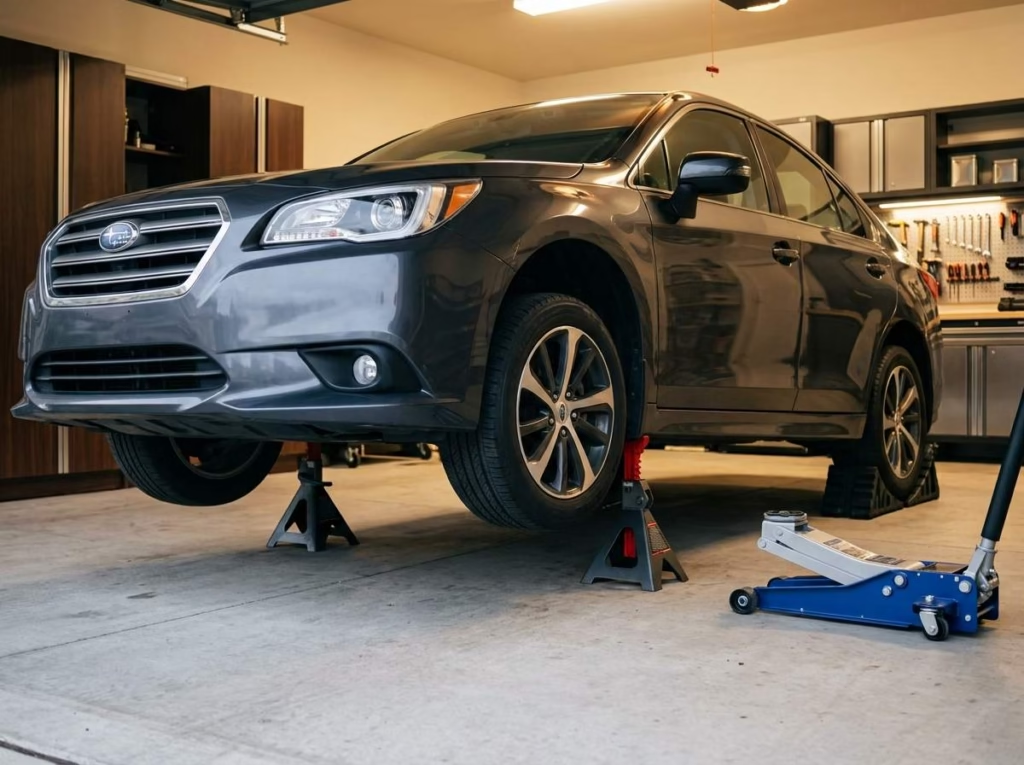
Place jack stands at approved support points. Use a matched pair when supporting one end of a vehicle.
The stand rating must suit the load. Read whether the listed rating applies to one stand or the pair.
Once the stands are in place:
- Lower the vehicle onto them slowly.
- Check that each saddle sits flat.
- Confirm both stands carry the load.
- Remove the jack only if your task allows.
- Give the vehicle a careful stability check from outside.
Do not work under the vehicle if anything shifts, tilts, or creaks.
Inspect the Jack Before Every Use
A short check can reveal trouble before the lift begins.
Look for:
- Oil leaks
- Cracked welds
- Bent parts
- Loose bolts
- Missing clips
- Damaged wheels
- Stuck casters
- A worn saddle
- A damaged handle
- Faded safety labels
Raise and lower the jack without a load if the manual allows it. The motion should feel smooth and controlled.
Stop using the jack after a hard drop or shock load. Have it checked before the next lift.
Lower the Vehicle Slowly
Clear all tools and people before lowering the vehicle.
Raise the vehicle enough to remove the stands. Move them out of the work area. Then open the release valve in small steps.
Do not make a fast turn. The vehicle may drop too quickly.
Keep your hands away from suspension parts and pinch points. Watch the saddle until the vehicle rests fully on the ground.
How to Choose Between a Bottle Jack and a Floor Jack
A good buying choice starts with measurements. Do not choose on tonnage or price alone.
1. Check the Vehicle’s Weight and Lifting Requirements
Find your vehicle’s weight in its manual or label data. Then read the lifting section.
Check:
- Approved jack points
- Approved support points
- Lift method
- Vehicle weight
- Wheel-chock advice
- Any air suspension steps
Some vehicles need a special mode before lifting. This may apply to active or air suspension systems.
Your jack must suit both the load and the lift method. A large rating cannot make the wrong jack shape work.
2. Measure the Minimum Clearance
Measure from the floor to the approved lift point. Keep the vehicle on level ground.
If the jack is for tire changes, account for a flat tire. The lift point may sit much closer to the road.
Leave room to position the saddle. A jack that barely fits may be hard to center.
For a floor jack, measure the whole front section. The frame behind the saddle may be taller than the saddle itself.
3. Compare Maximum Lift Height
The jack must raise the vehicle high enough to place your stands. It must also create enough space for your task.
Large trucks may need more lift because their suspension can hang down. The body may rise before the tire leaves the ground.
Check:
- Maximum saddle height
- Hydraulic travel
- Extension screw range
- Stand height settings
- Vehicle suspension travel
Do not place loose blocks between the jack and vehicle. Use only approved extensions or adapters.
4. Consider the Working Surface
A floor jack needs room for its wheels to move. Smooth concrete allows this movement.
A bottle jack does not roll. Its base must stay flat and centered beneath the load.
If you work outside, think twice before lifting. Soil can look dry on top yet sink under weight.
Your safest choice may be moving the vehicle indoors. If that is not possible, professional help may be the better plan.
5. Look for Relevant Safety Standards
Read the product label and manual before use. Look for a clear load rating and safety instructions.
Useful features include:
- Load-limit protection
- An overtravel stop
- A wide saddle
- Clear control labels
- A slow release valve
- Approved adapters
- Parts support
- Inspection guidance
A safety claim does not remove your duty to use stands. No jack design can replace proper vehicle support.
6. Evaluate Construction and Durability
Steel floor jacks tend to feel solid. They can also be heavy.
Aluminum models reduce weight. This helps if you move the jack often. Build quality still matters more than the base material alone.
For either jack type, inspect:
- Weld quality
- Base shape
- Saddle grip
- Handle fit
- Wheel strength
- Valve control
- Rust protection
- Seal access
A larger saddle may spread contact over more area. It must still fit the approved jack point.
7. Check Warranty and Manufacturer Support
A clear manual is a good sign. You should know how to inspect, bleed, fill, and store the jack.
Look for:
- A full user manual
- Clear model details
- Replacement seal options
- Service instructions
- Spare parts
- Support contact details
- Written warranty terms
Avoid used jacks with an unknown past. Internal damage may not show during a quick test.
8. Budget for the Complete Lifting Setup
The jack is only one part of safe vehicle lifting.
Your setup may also need:
- Two or four rated jack stands
- Wheel chocks
- An approved saddle pad
- Work gloves
- Eye protection
- A firm storage space
- Hydraulic jack oil
- Good lighting
Spend based on the whole setup. A strong jack without safe stands leaves the job half finished.
Conclusion: Is a Bottle Jack or Floor Jack Better?
For most passenger cars, a floor jack is the more useful choice. It sits lower, reaches farther, and moves with ease on a garage floor.
For trucks and heavy equipment, a bottle jack often makes more sense. It offers high capacity without taking up much space.
So, is a bottle jack better than a floor jack? Not by default. The better tool fits your lift point, load, clearance, and work area.
Use these final checks:
- Pick a floor jack for low cars and repeat garage work.
- Pick a bottle jack for high-clearance vehicles and compact storage.
- Check minimum and maximum height before use.
- Match the rating to the load.
- Work only on a firm, level surface.
- Support every lifted vehicle with rated jack stands.
The safest jack is not the biggest one. It is the jack that fits the job and gets used as directed.
Frequently Asked Questions
Is a Bottle Jack Better Than a Floor Jack?
A bottle jack is better for some trucks, trailers, and heavy gear. It offers high lift capacity in a small body.
A floor jack is often better for cars and home garage work. Its low body and long handle make vehicle access easier.
Is a Bottle Jack Safe for a Car?
Yes, if it fits and has the right rating. You must use it at an approved lift point on firm, level ground.
The main problem is clearance. Many bottle jacks are too tall for low cars or cars with a flat tire.
Support the vehicle with jack stands right after lifting.
Can I Use a Bottle Jack on a Low-Profile Car?
You can use one only if it fits beneath the approved lift point. It must also have enough travel to raise the vehicle.
Low-profile bottle jacks exist. However, a low-profile floor jack is often easier to position.
Measure clearance with a flat tire if you plan to use the jack for roadside wheel changes.
Are Floor Jacks More Stable Than Bottle Jacks?
Floor jacks tend to have a wider and longer base. This can provide a broad footprint on smooth concrete.
Yet jack style alone does not ensure stability. Surface quality, saddle contact, lift points, and vehicle balance all matter.
Neither type is safe as the only support.
Can I Work Under a Vehicle Supported by a Floor Jack?
No. Never work under a vehicle held by a floor jack alone.
Place rated jack stands at approved support points. Lower the vehicle onto them before going underneath.
Can I Work Under a Vehicle Supported by a Bottle Jack?
No. A bottle jack is also a lift tool, not a support stand.
Hydraulic pressure can fall due to a leak or valve fault. The saddle can also shift if the load moves.
Use rated jack stands every time.
What Size Jack Do I Need for an SUV or Truck?
There is no one size for every SUV or truck. Check the vehicle’s weight, lift points, ground clearance, and needed lift height.
The jack must fit under the vehicle and lift it high enough for stands. Choose a rating that meets the maker’s rules and gives you a safe margin.
A high ton rating means little if the jack is too short.
Can a 2-Ton Jack Lift a 3-Ton Vehicle?
A jack may lift only one end or corner, not the full vehicle. Still, that does not make a two-ton jack the right choice in every case.
Weight balance varies by vehicle. The chosen lift point can also change how much load reaches the jack.
Follow the vehicle manual and jack maker’s rating. If the load is unclear, use a higher-rated jack or ask a trained technician.
Is a Floor Jack Good for Changing Tires?
Yes. A floor jack works well for tire changes on a hard, level garage floor.
It rolls under the car and often lifts faster than a bottle jack. Its low saddle also fits many passenger cars.
A floor jack is less handy for roadside use. It is heavy, bulky, and hard to roll on rough ground.
Is a Bottle Jack Good for Changing Tires?
A bottle jack can work well for trucks and high-clearance vehicles. Its compact size makes it easy to carry.
Check that it fits under the lift point with the tire fully flat. Also make sure it can lift high enough to install the spare.
Do not use it on a slope or soft shoulder.
Which Jack Is Better for a Travel Trailer?
A bottle jack is easy to store and may have enough capacity. However, the trailer maker must approve the lift method and jack point.
Do not place the jack beneath an axle unless the manual allows it. Some axles can bend or suffer damage.
A floor jack may offer better reach at home. It is less practical to carry due to its size and weight.
Which Jack Is Better for an SUV?
Either type may suit an SUV.
A floor jack works well for garage repairs. A bottle jack can be easier to store in the vehicle.
Measure the lift point and suspension travel. Some SUVs sit high yet need much more jack travel to lift a tire.
Bottle Jack vs Floor Jack vs Scissor Jack: What Is the Difference?
Each jack has a different design:
- Bottle jack: Compact hydraulic tool with high capacity.
- Floor jack: Low hydraulic tool with wheels and a long handle.
- Scissor jack: Mechanical jack turned with a screw handle.
A scissor jack is often supplied for emergency tire changes. It is light and easy to store. It is usually slower and less useful for repair work.
A floor jack suits regular garage use. A bottle jack suits high-clearance vehicles and compact storage.
Always follow the tool’s limits. None of these jacks should replace jack stands during repairs.
Which Is Better, a Trolley Jack or Bottle Jack?
A trolley jack is another name for a floor jack.
Choose the trolley jack for cars, low clearance, and frequent garage work. Choose the bottle jack for trucks, high capacity, and easy storage.
The best option is the one that fits the vehicle before lifting and reaches the needed height safely.