
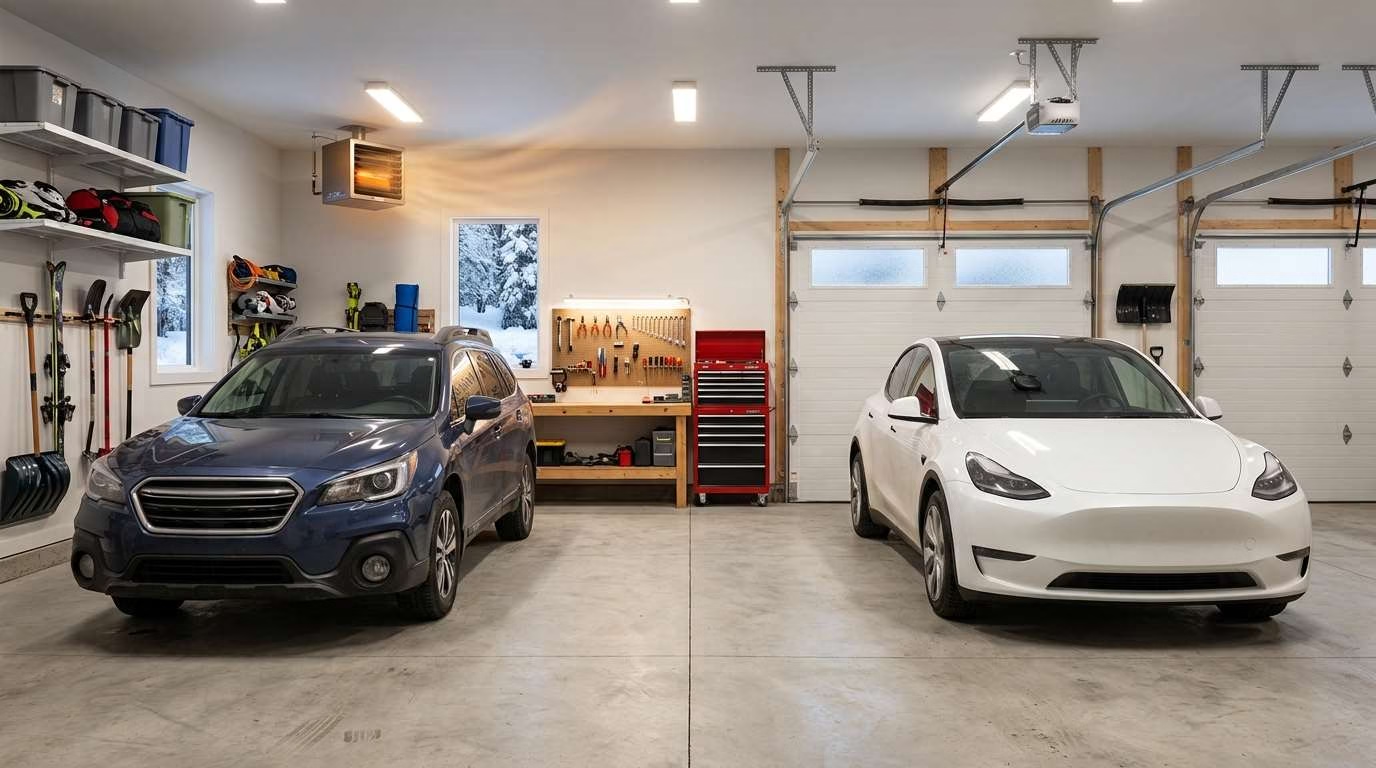
Before I ranked these heaters, I reviewed thousands of owner comments, buyer reviews, and forum posts. The list reflects how these units perform after real use. It does not rely on product claims alone.
The best garage heater for a 2 car garage should heat the whole space without wasting power. For most insulated garages, a 7,500-watt electric heater offers the best balance. If you face harsh winters, a vented gas heater may work better.
Your insulation, ceiling height, and local climate matter too. A powerful heater can still struggle in a drafty garage.
This guide covers electric, natural gas, propane, and heat-pump models. It also explains sizing, costs, common problems, and safe setup.
Best Garage Heaters for a 2-Car Garage at a Glance
This page contains Amazon affiliate links. If you buy through them, I may earn a small commission at no additional cost to you.
These coverage levels are estimates. A 500-square-foot garage with open rafters can lose more heat than a sealed 600-square-foot garage.
How We Chose the Best Two-Car Garage Heaters
A large heat rating does not always mean better results. The heater must suit your garage, climate, and work habits.
Heating Performance
I looked at more than peak heat output. Warm-up speed matters, but so does steady comfort.
Each heater was judged on:
- Total wattage or BTU output
- Warm-up time
- Air movement
- Heat spread
- Recovery after opening the garage door
- Ability to hold a set temperature
Forced-air heaters warm the air. Radiant heaters warm you and nearby objects. Each style feels different, even with similar output.
Suitability for a Two-Car Garage
Most two-car garages cover 400 to 600 square feet. Yet floor space tells only part of the story.
A 10-foot ceiling adds much more air to heat. An unsealed door also lets warm air escape fast.
The strongest choices suit common two-car garage layouts. Some work best with good insulation. Others can handle more heat loss.
Installation Requirements
Installation can change the true cost of a heater.
I considered whether each unit needs:
- A standard 120V outlet
- A dedicated 240V circuit
- Hardwired power
- A natural gas line
- A propane tank
- An exhaust vent
- An outdoor condenser
- Professional installation
A low-cost heater is not always cheap after setup. Check your garage before choosing a model.
Operating Costs
Electric resistance heaters are simple. However, large units draw a lot of power.
Gas heat may cost less during long winters. That depends on your local rates. Propane can work well for short jobs but may cost more with daily use.
A mini-split often uses less power for steady heat. Its upfront cost is much higher.
Owner Experiences and Recurring Problems
Product pages show features. Long-term owners reveal the problems.
I looked for repeated comments about:
- Heating speed
- Fan noise
- Thermostat accuracy
- Failed parts
- Rust and moisture
- Fuel use
- Control issues
- Replacement parts
- Support after the sale
One bad review proves little. The same complaint across many owners deserves attention.
Safety and Workshop Use
A garage may hold fuel, paint, sawdust, and hot tools. That makes heater choice more complex.
I considered:
- Overheat protection
- Stable mounting
- Tip-over shutoff
- Exhaust needs
- Carbon monoxide risks
- Dust exposure
- Safe clearances
- Combustion-air design
A heater that suits a clean garage gym may not suit a dusty woodshop.
8 Best Garage Heaters for a 2-Car Garage
The following picks cover different budgets and garage setups. Use the categories to find your best match.
1. TURBRO GH7500: Best Overall Electric Garage Heater
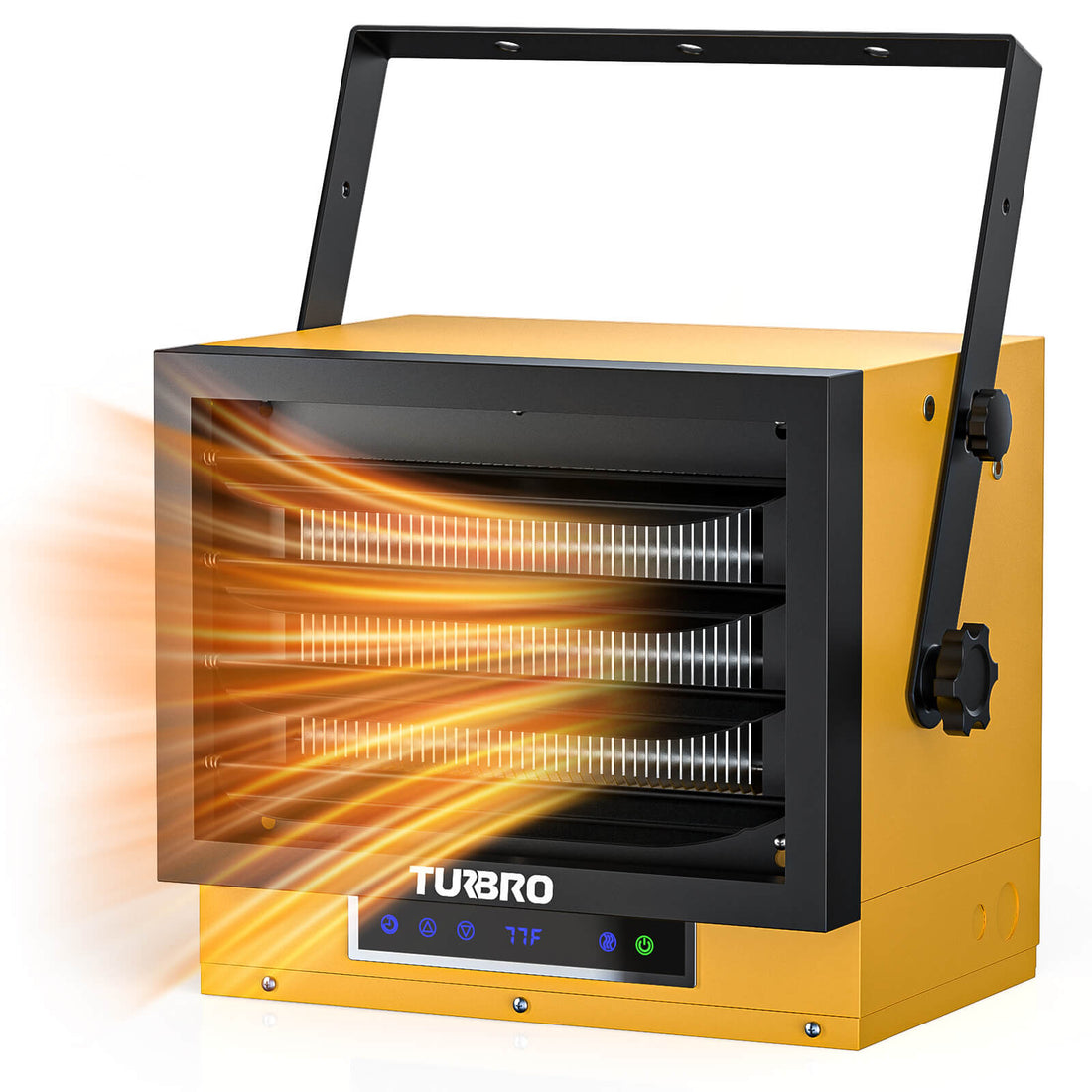
The TURBRO GH7500 is a strong fit for an insulated two-car garage. It produces 7,500 watts, or about 25,600 BTU.
That output gives it an edge over common 5,000-watt heaters. It can raise room temperature faster and recover better after the door opens.
Key features
- 7,500-watt maximum output
- 240V hardwired power
- High and low heat modes
- Ceiling-mounted design
- Digital thermostat
- Timer and remote control
- Fan-only setting
Owners often praise its quick heat and compact body. The remote also helps because the controls sit near the ceiling.
The main concern is power use. At full output, it consumes 7.5 kilowatt-hours per hour. Your actual cost depends on your power rate and runtime.
Some owners also find the fan less forceful than expected. A ceiling fan may help in garages with high ceilings.
Check PriceBest for: An insulated garage used for repairs, detailing, or weekend projects.
If you detail cars at home, good heat is only part of the setup. These garage lighting options for car detailing can improve visibility during winter work.
2. Fahrenheat FUH54: Best Proven Electric Heater

The Fahrenheat FUH54 uses a simple, proven design. It offers up to 5,000 watts of heat from a 240V supply.
It lacks the polished controls found on newer models. Yet simpler controls can mean fewer parts that may fail.
What works well
- Solid metal case
- Adjustable wall or ceiling mount
- Moveable air louvers
- Simple control dial
- Good output for insulated spaces
- Long track record with garage owners
Many users report comfortable working conditions after 30 to 60 minutes. Results vary with outdoor temperature and air leaks.
The FUH54 is less suited to a cold, bare garage. Five thousand watts may hold a mild temperature, but recovery can be slow.
Its built-in thermostat is also basic. If hot air blows toward the sensor, the heater may stop too soon.
Check PriceBest for: A smaller or well-insulated garage in a mild or average winter climate.
3. NewAir G56: Best Portable 240V Garage Heater
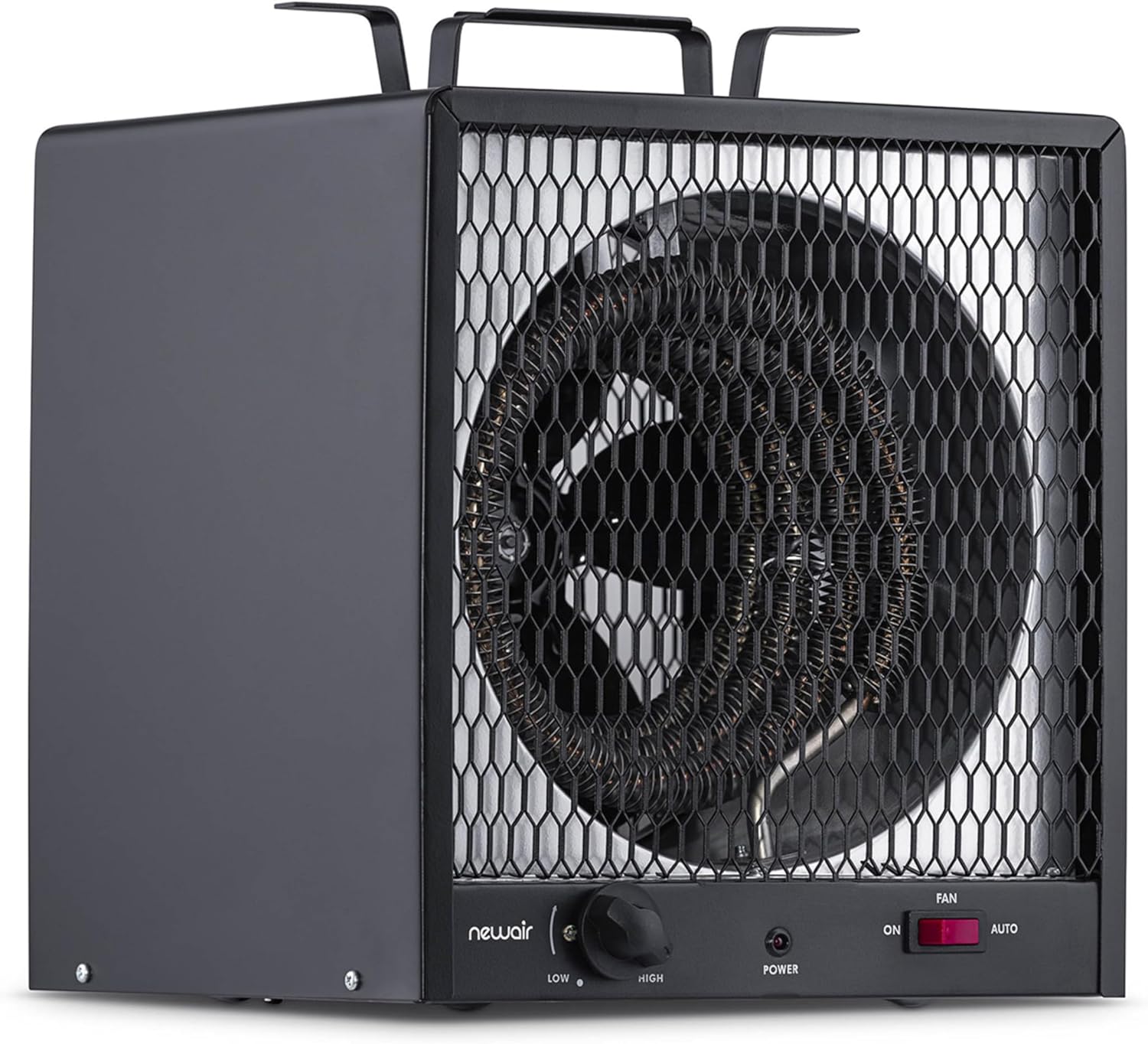
The NewAir G56 gives you 5,600 watts without permanent mounting. It plugs into a compatible 240V outlet.
That makes it useful for shared work areas. You can move it closer to your bench, car, or project.
Why owners like it
- Portable steel case
- Built-in carrying handle
- Forced-air fan
- No fuel fumes
- No added combustion moisture
- Easy seasonal storage
A 5,600-watt heater can make a clear difference in a sealed garage. It may not create shirt-sleeve warmth during extreme cold, though.
The biggest issue is the power connection. It does not plug into a normal wall outlet. You need the correct 240V receptacle and circuit.
Avoid ordinary extension cords or homemade adapters. High loads create heat at weak plugs and poor connections.
Check PriceBest for: A garage with a compatible 240V outlet and no need for fixed mounting.
A portable heater also leaves more room for tools. If you maintain your own vehicle, see these garage air compressors for tires.
4. DuraHeat EWH5510: Best Budget Ceiling-Mounted Heater

The DuraHeat EWH5510 produces 5,000 watts. Its fan moves warm air through adjustable front louvers.
You can mount it on a wall or ceiling. That keeps cords and hot parts away from your work area.
Useful features
- 5,000-watt heat output
- 240V hardwired connection
- Digital temperature control
- Remote control
- Built-in timer
- Wall or ceiling bracket
- Fan-only mode
This heater makes sense for occasional projects. It should work well in a sealed garage during mild winters.
Do not rely too much on broad coverage claims. A 5,000-watt unit may heat 500 square feet with good insulation. It may struggle in 400 square feet with open rafters.
Warm air may also collect overhead. Point the louvers down and use gentle air circulation.
Check PriceBest for: A budget setup in an insulated garage with moderate winters.
5. Modine Hot Dawg HD45: Best Natural Gas Garage Heater

The Modine Hot Dawg HD45 produces 45,000 BTU. It mounts overhead and vents combustion gases outdoors.
This unit suits cold regions and regular garage use. It can warm a cold space much faster than a small electric heater.
Why it works well
- Strong 45,000-BTU output
- Fast recovery
- Ceiling-mounted body
- External thermostat support
- Vented combustion
- Established parts supply
Gas heat often makes sense if you work in the garage each day. It can also hold a low base temperature all winter.
Installation costs more than electric setup. You need a gas line, vent, power connection, and safe clearances.
Owners sometimes report pressure-switch or ignition faults. Blocked vents and damaged tubes can also stop startup.
Check PriceBest for: Frequent use in a cold climate, especially with a gas line nearby.
6. Reznor UDXC-30: Best Premium Heater for a Workshop
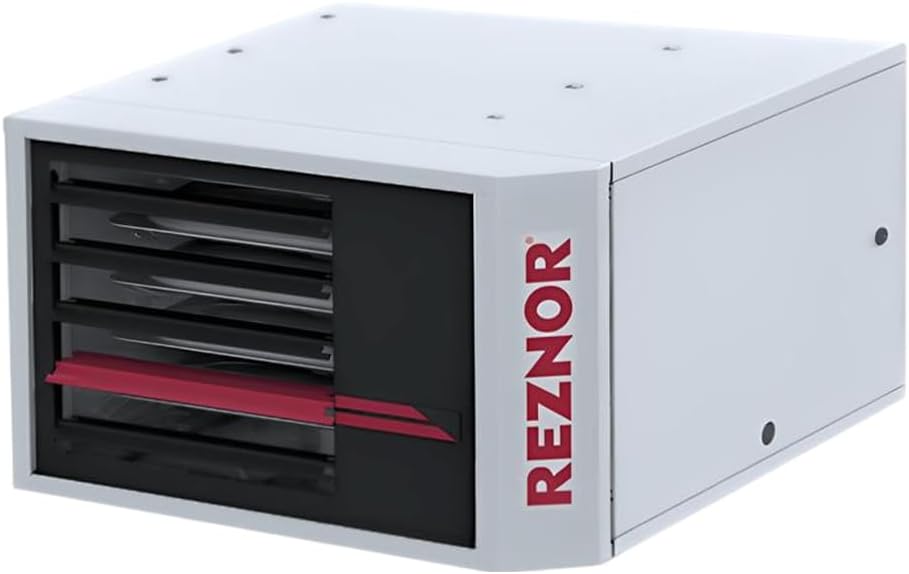
The Reznor UDXC-30 provides 30,000 BTU. It stands out because it supports separated combustion.
Separated combustion means the heater takes burn air from outdoors. This helps keep shop dust away from the flame path.
Why it suits serious shops
- Outside combustion air
- Vented exhaust
- Commercial-style build
- Strong cold-weather output
- Ceiling-mounted design
- Better fit for dusty work
Thirty thousand BTU can suit a sealed two-car workshop. It may also run more evenly than a larger unit.
Do not assume bigger is always better. An oversized gas heater may cycle too often. That creates wide temperature swings.
The Reznor costs more to buy and install. Vent placement also needs careful planning.
Check PriceBest for: Woodworking, fabrication, and regular shop use.
7. Mitsubishi Hyper-Heat Mini-Split: Best for Heating and Cooling
A Mitsubishi Hyper-Heat mini-split heats and cools your garage. It uses a heat pump, which moves heat instead of making it through resistance coils.
This approach can use less power during steady operation. It also gives you air conditioning during summer.
Main benefits
- Heating and cooling
- Quiet indoor operation
- Steady room temperature
- Summer moisture control
- No open flame
- Strong cold-weather models available
A mini-split works best in a finished garage. Good door seals and ceiling insulation help it hold a set temperature.
It costs more upfront than a basic electric heater. Output can also fall during extreme cold.
Dust is another concern. Woodworking dust can clog filters and indoor coils. You will need frequent cleaning.
Best for: A garage gym, office, detailing bay, or hobby room.
If exercise is your main use, compare more garage heaters for home gyms before choosing.
8. Mr. Heater Big Buddy: Best Emergency Propane Heater
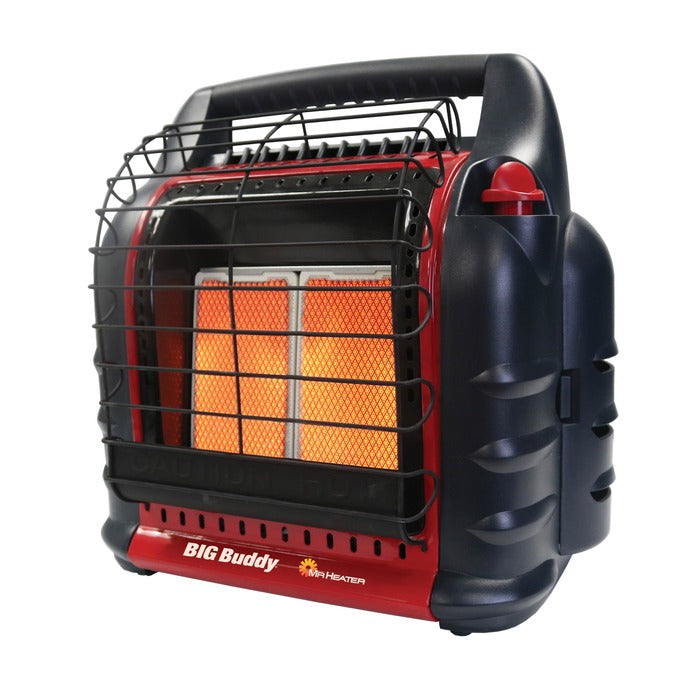
The Mr. Heater Big Buddy offers 4,000, 9,000, or 18,000 BTU. It works without household power.
It gives fast heat near your body or bench. However, it should not be your first choice for steady whole-garage heat.
Where it makes sense
- Short repair jobs
- Power outages
- Spot heating
- Garages without 240V
- Temporary winter use
- Portable backup heat
The Big Buddy uses small propane bottles. Some setups also support larger tanks with approved parts.
Small bottles can run out fast on high heat. The heater also lacks the airflow of a large forced-air unit.
Unvented propane creates water vapor. That can lead to damp walls, fogged windows, and rusty tools.
Follow all ventilation rules. Keep a working carbon monoxide alarm in the garage.
Check PriceBest for: Emergency backup and short tasks near one work area.
Which Type of Heater Is Best for a Two-Car Garage?
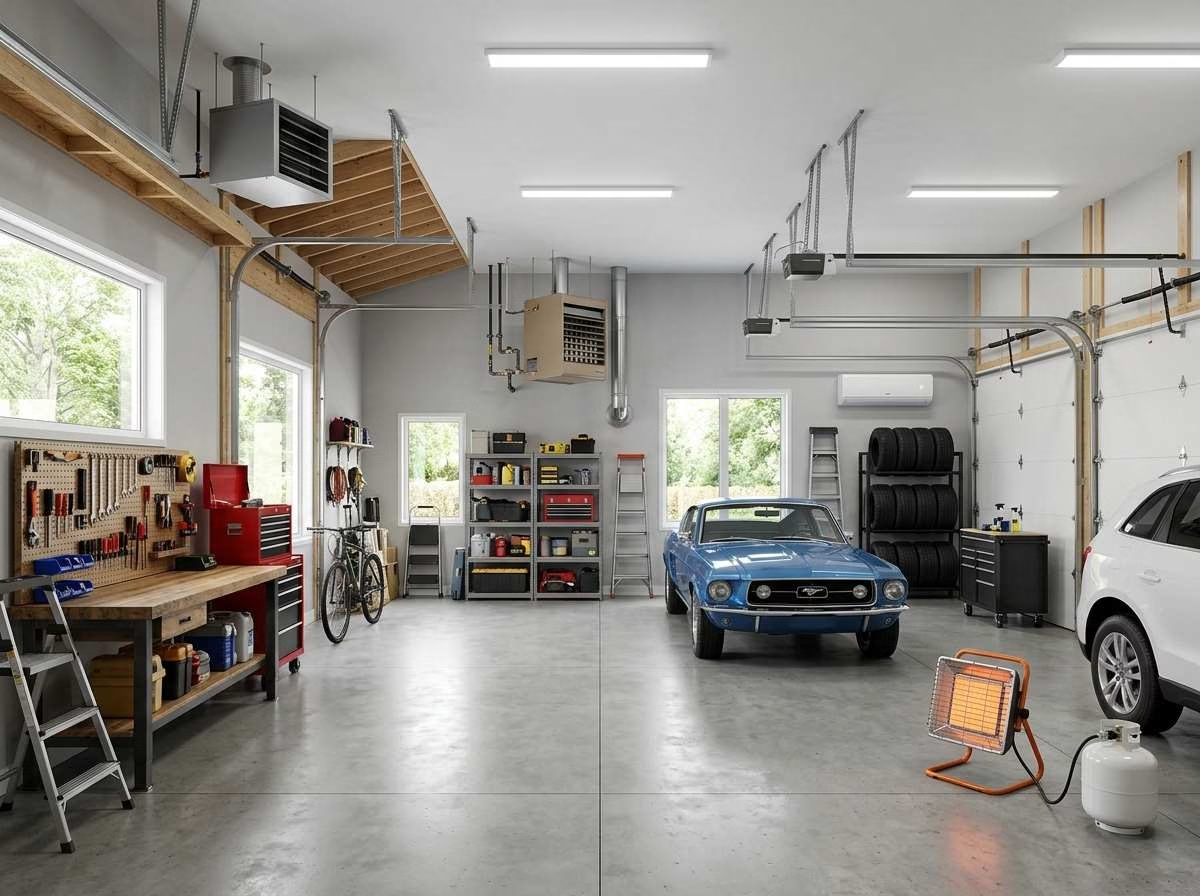
The best type depends on how you use the space. A weekend garage has different needs than a daily shop.
Electric Resistance Heater
An electric resistance heater passes power through a hot element. A fan then pushes that heat into the garage.
These units are clean at the point of use. They do not burn fuel or add moisture.
Choose electric if:
- Your garage has good insulation.
- You heat it for short periods.
- You can add a 240V circuit.
- You want low maintenance.
- You want no indoor combustion.
The downside is power use. A large electric heater can raise your winter bill fast.
Natural Gas Heater
Natural gas heaters offer high output and quick recovery. They work well in cold regions.
Choose natural gas if:
- You use the garage often.
- A gas line is close.
- Winters are harsh.
- You need fast warm-up.
- You can install proper venting.
The setup costs more. Still, regular users may recover that cost through lower fuel bills.
Propane Heater
Propane heaters can provide a lot of heat without major electrical work. Portable models are easy to move and store.
Choose propane if:
- You heat the garage on rare days.
- You need backup heat.
- You cannot add a fixed heater.
- Portability matters most.
Propane needs safe storage and fresh air. Unvented models also release moisture indoors.
Mini-Split Heat Pump
A mini-split offers steady heat with summer cooling. It works best when you maintain a set temperature.
Choose a mini-split if:
- You use the garage all year.
- The space is well insulated.
- You also need cooling.
- Quiet operation matters.
- You want steady comfort.
It may not heat a frozen garage as fast as gas. Yet it can be cheaper for long daily use.
Infrared or Radiant Heater
A radiant heater warms people and solid objects. It does not need to warm all the room air first.
Choose infrared heat if:
- You stay near one workbench.
- The garage door opens often.
- The room has air leaks.
- You need fast personal warmth.
Radiant heat can feel great within range. It may leave distant parts of the garage cold.
What Size Heater Do You Need for a Two-Car Garage?
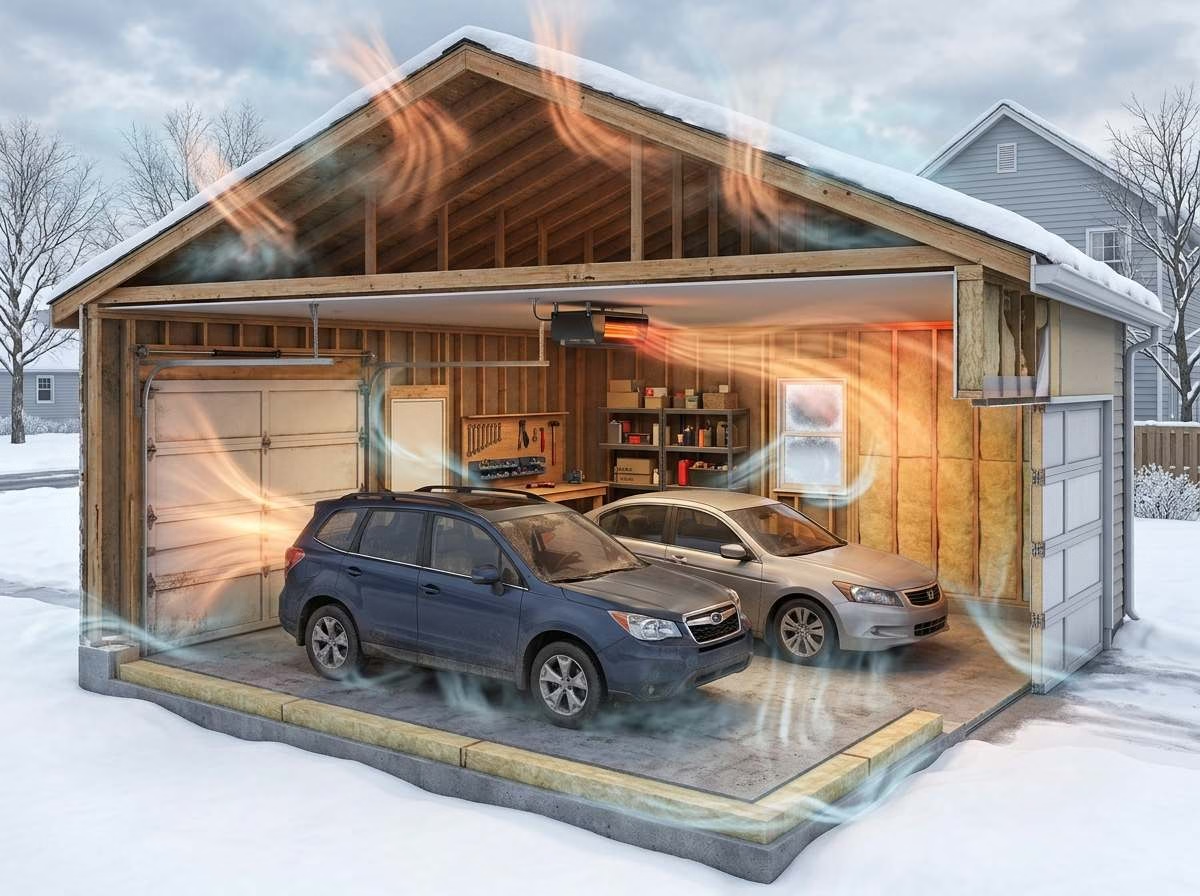
Heater size depends on heat loss. Floor area gives you a starting point, not a final answer.
Start With Garage Size
Measure the garage length and width. Multiply them to find square footage.
Common examples include:
- 20 by 20 feet: 400 square feet
- 22 by 22 feet: 484 square feet
- 24 by 24 feet: 576 square feet
Then check ceiling height. A 12-foot ceiling holds 50% more air than an 8-foot ceiling.
Recommended Electric Heater Wattage
Use these ranges as a rough starting point:
- Mild climate with good insulation: 4,000 to 5,000 watts
- Average insulated garage: 5,000 to 7,500 watts
- Large garage or cold climate: 7,500 to 10,000 watts
- Poor insulation: Seal the space before sizing
A 5,000-watt unit can maintain comfort in a tight garage. A 7,500-watt unit will usually warm it faster.
Recommended BTU Range
Gas and propane heaters use BTU ratings. BTU measures heat output.
Useful starting ranges include:
- Well insulated: 15,000 to 25,000 BTU
- Average insulation: 20,000 to 35,000 BTU
- Poor insulation or harsh cold: 30,000 to 50,000 BTU
A proper heat-loss check gives a better answer. It accounts for walls, doors, windows, climate, and air leaks.
Factors That Increase Heating Requirements
You may need more output if your garage has:
- Bare walls
- Open rafters
- High ceilings
- Thin metal doors
- Worn door seals
- Single-pane windows
- Strong drafts
- Frequent door use
- Detached construction
- Very low outdoor temperatures
A cold concrete floor also absorbs heat. It may take hours to warm after a long freeze.
Why an Oversized Heater Is Not Always Better
More heat can shorten warm-up time. Yet an oversized unit may create new problems.
It can:
- Cost more to install
- Cycle on and off too often
- Cause hot and cold spots
- Blow harsh heat at one area
- Place extra load on your electrical panel
Size the heater for normal use. Do not size it only for the coldest hour of the year.
Is 120V Enough to Heat a Two-Car Garage?
In most cases, no. A normal 120V heater cannot heat an entire two-car garage during cold weather.
The Limitation of a Standard Outlet
Most plug-in heaters produce about 1,500 watts. The outlet and circuit limit how much power they can draw.
A ceramic heater does not make extra heat from the same power. Neither does an oil-filled model.
The designs change how heat feels and spreads. They do not remove the power limit.
When a 120V Heater Can Still Make Sense
A small heater can still help if you use it for:
- A single workbench
- Hand and foot warmth
- A small enclosed corner
- Mild winter mornings
- Extra heat beside another system
A radiant model may feel warmer than a fan heater. It directs energy toward you instead of the whole room.
Why 240V Is Usually the Better Choice
A 240V circuit can support much larger heaters. Common garage units range from 5,000 to 10,000 watts.
That gives you:
- Faster warm-up
- Better room coverage
- Less need for portable cords
- More ceiling-mount choices
- Better recovery after door use
A new circuit adds cost. Have the panel capacity checked before installation.
How Much Does It Cost to Run a Garage Heater?
The heater’s label tells you its maximum draw. Your bill depends on runtime and energy price.
Electric Heater Operating-Cost Formula
Use this simple formula:
Watts ÷ 1,000 × electricity rate = hourly cost
If electricity costs $0.15 per kilowatt-hour:
- A 5,000-watt heater costs about $0.75 per hour.
- A 7,500-watt heater costs about $1.13 per hour.
- A 10,000-watt heater costs about $1.50 per hour.
These examples assume full output. A thermostat can reduce use after the room warms.
Natural Gas and Propane Costs
Fuel costs vary by region. Heater efficiency also affects the total.
Your real cost depends on:
- Local fuel price
- Heater output
- Unit efficiency
- Daily runtime
- Garage insulation
- Target temperature
- Door-opening habits
Natural gas often makes sense for daily heating. Portable propane may suit short, rare jobs.
Why Mini-Splits Can Cost Less to Operate
An electric resistance heater turns electrical energy into heat. A heat pump moves heat from outside.
That lets a mini-split deliver more room heat per unit of power. The gap becomes smaller during severe cold.
A mini-split saves the most when you hold a steady temperature. It may offer less value for one short job each month.
The Cheapest Heating Strategy May Be Better Insulation
Before adding more heat, reduce heat loss.
Start with:
- Replace worn garage-door seals.
- Seal gaps around side doors.
- Insulate the ceiling.
- Add insulation to thin door panels.
- Seal wall holes and pipe gaps.
- Use gentle air circulation.
A tighter garage warms faster. It also stays warm after the heater shuts off.
Important Features to Look For
Features should improve control, safety, or service life. Extra buttons do not always add real value.
An Accurate Thermostat
A thermostat should measure the room, not the heater’s hot air.
Built-in sensors can read too high. An external wall thermostat often gives better control.
Place it away from:
- Direct heater airflow
- Exterior doors
- Cold windows
- Sunlight
- Drafty wall gaps
Multiple Heat Settings
Two heat levels give you more control.
Use high heat for warm-up. Switch to low heat once the garage feels comfortable.
This can reduce noise and power use. It may also create steadier room temperatures.
Remote Control
A remote helps with ceiling-mounted units. You can change settings without a ladder.
Treat it as a convenience, not a main buying reason. Replacement remotes can be hard to find.
Timer Function
A timer can prevent wasted heat. It also helps if you often forget to shut the heater down.
Useful timer settings include:
- One-hour warm-up
- Two-hour repair session
- Evening shutoff
- Delayed start
Do not use a timer to bypass required safety checks.
Adjustable Louvers
Louvers guide warm air toward your work zone. They matter most with high mounting points.
Aim the air slightly downward. Avoid blowing it at the thermostat.
Fan-Only Mode
Fan-only mode can move stale air during mild weather. It may also help mix warm air near the ceiling.
It does not replace proper exhaust for fumes, dust, or paint work.
Overheat Protection
Overheat protection shuts the heater down when internal parts become too hot.
You still need to:
- Keep the intake clean.
- Maintain safe clearances.
- Remove dust from the housing.
- Avoid blocked airflow.
- Follow mounting instructions.
Replacement Parts and Warranty Support
A heater may last longer if basic parts remain available.
Before choosing, check access to:
- Heating elements
- Fan motors
- Control boards
- Thermostats
- Pressure switches
- Igniters
- Replacement remotes
A cheap unit becomes waste if one small part cannot be replaced.
Common Garage Heater Problems Reported by Owners
Most heater complaints fall into a few groups. Some have simple fixes. Others need a trained technician.
The Heater Runs but the Garage Stays Cold
The heater may be too small. More often, the garage loses heat too fast.
Check for:
- Gaps around the main door
- Open ceiling spaces
- Poor wall insulation
- Wrong louver direction
- Heat trapped overhead
- A blocked fan intake
Also check your expectations. Raising a frozen garage by 30 degrees takes time.
The Heater Shuts Off Too Soon
The thermostat may sit in the hot air stream. The heater then thinks the whole room is warm.
Other causes include:
- Blocked airflow
- Low mounting clearance
- Dust buildup
- Overheat protection
- Faulty control parts
- Poor thermostat placement
Do not bypass safety switches. Find the cause of the shutdown.
The Fan Runs but the Air Is Cold
This often points to an element or control problem.
Possible causes include:
- Failed heating element
- Loose electrical connection
- Bad relay
- Faulty high-limit switch
- Wrong supply voltage
- Damaged control board
A heater can still draw power with a failed element. Shut it down if the air stays cold.
The Gas Heater Will Not Ignite
Gas units use a set startup process. One failed safety check can stop ignition.
Common causes include:
- Blocked exhaust
- Pressure-switch fault
- Cracked pressure tube
- Dirty igniter
- Gas supply issue
- Poor thermostat wiring
- Failed inducer fan
Gas repairs can create fire or carbon monoxide risks. Use a qualified technician.
Propane Heat Causes Condensation
Burning propane creates water vapor. An unvented heater releases that water indoors.
You may notice:
- Wet windows
- Damp door panels
- Rust on tools
- Moisture on cars
- Musty smells
- Water on cold walls
Fresh air can reduce moisture, but it also lets heat escape. A vented heater avoids much of this problem.
The Garage Is Warm at the Ceiling but Cold at Floor Level
Warm air rises. This effect becomes worse with tall ceilings.
Try these steps:
- Aim heater louvers down.
- Run a ceiling fan slowly.
- Use a floor fan on low.
- Reduce ceiling air leaks.
- Add radiant heat near the bench.
Do not create strong drafts. Slow mixing works better than a hard blast.
How to Heat an Uninsulated Two-Car Garage
An uninsulated garage can consume huge amounts of heat. Fixing basic leaks often helps more than adding a larger heater.
For more focused options, see these garage heaters for an uninsulated garage.
Seal Air Leaks Before Adding More Heat
Start with obvious gaps.
Check:
- Garage-door sides
- Door bottom seal
- Top door gap
- Window edges
- Entry-door frame
- Pipe openings
- Wall joints
Hold a strip of tissue near each area on a windy day. Movement can reveal hidden drafts.
Use Radiant Heat for Short Work Sessions
Radiant heat warms your body and nearby tools. It wastes less energy on air that soon escapes.
Place it near your normal work zone. Keep all required space around it.
This method works well for short repairs. It is less useful if you need the whole room warm.
Choose Higher Output Carefully
You may need:
- A 7,500 to 10,000-watt electric heater
- A 30,000 to 50,000-BTU gas unit
- A vented propane heater
- More than one radiant zone
Large output also means higher running costs. Check the panel, fuel supply, and ventilation first.
Create a Smaller Heated Work Zone
You do not always need to heat both car bays.
Consider:
- Insulated curtains
- Removable wall panels
- A small work enclosure
- Radiant heat over one bench
- A lower ceiling above one area
This can cut the heated volume by half. It also gets you comfortable much faster.
Garage Heater Safety Tips
Garage heat involves high power, hot surfaces, or burning fuel. A safe setup starts before the heater turns on.
Use the Correct Electrical Circuit
Large electric heaters need the circuit listed in the manual.
That includes the correct:
- Voltage
- Breaker size
- Wire size
- Connection type
- Disconnect method
- Grounding
Do not assume an old welder or dryer outlet is suitable. Have an electrician inspect it.
Keep Flammable Materials Away
Store fuels and chemicals far from heat.
Watch for:
- Gas cans
- Paint thinner
- Spray cans
- Oily cloths
- Propane cylinders
- Cardboard
- Sawdust piles
Do not aim hot air at a fuel shelf or parked vehicle.
Provide Proper Ventilation for Combustion Heaters
Fuel-burning heaters need air. They also create waste gases.
Three common designs are:
- Vented: Exhaust goes outdoors.
- Unvented: Exhaust remains indoors.
- Separated combustion: Burn air comes from outdoors.
Separated combustion often suits active workshops best. It keeps room dust away from the burn-air path.
Install Carbon Monoxide Alarms
Use a working carbon monoxide alarm with any fuel-burning heater.
Test it often. Replace batteries on schedule. Follow its placement guide.
An alarm adds protection. It does not replace proper setup and fresh air.
Follow Required Clearances
Keep the heater away from:
- Ceilings
- Walls
- Shelves
- Vehicles
- Doors
- Stored materials
- Work surfaces
Use the exact clearances in the product manual. Different heaters need different amounts of space.
Consider Workshop Dust
Fine dust can coat heating parts and block airflow.
It may also:
- Clog filters
- Reduce fan output
- Affect combustion
- Trigger overheat shutdown
- Increase fire risk
Clean the heater and nearby surfaces on a regular schedule.
Best Garage Heater by Situation
Here is the short version:
- Best overall electric: TURBRO GH7500
- Best proven electric: Fahrenheat FUH54
- Best portable 240V heater: NewAir G56
- Best budget ceiling heater: DuraHeat EWH5510
- Best for frequent cold-weather use: Modine Hot Dawg HD45
- Best for woodworking: Reznor UDXC-30
- Best for a garage gym: Mitsubishi Hyper-Heat Mini-Split
- Best for power outages: Mr. Heater Big Buddy
- Best for an uninsulated garage: Vented gas or targeted radiant heat
- Best for occasional projects: A 5,000 to 7,500-watt electric heater
- Best for year-round comfort: A cold-climate mini-split
Our Verdict
The best garage heater for 2 car garage use is the TURBRO GH7500 for most insulated spaces. Its 7,500-watt output offers useful warm-up speed without indoor combustion.
The best choice changes with your setup:
- Choose the Fahrenheat FUH54 for a simpler electric design.
- Choose the NewAir G56 if you need portable 240V heat.
- Choose the Modine Hot Dawg HD45 for daily cold-climate use.
- Choose the Reznor UDXC-30 for a dusty workshop.
- Choose Mitsubishi Hyper-Heat for heating and cooling.
- Keep the Big Buddy for backup or short sessions.
Before spending more on heat, inspect the garage door and ceiling. A smaller heater in a sealed room can beat a larger heater in a drafty one.
Frequently Asked Questions
What is the best garage heater for a two-car garage?
A 7,500-watt electric heater suits many insulated two-car garages. It offers clean heat and good warm-up speed.
For daily use in severe cold, consider a 30,000 to 45,000-BTU vented gas heater. A mini-split works well for steady year-round comfort.
How many BTUs do I need to heat a two-car garage?
Many insulated two-car garages need 15,000 to 35,000 BTU. A drafty garage in a cold area may need 30,000 to 50,000 BTU.
Ceiling height, wall insulation, and door leaks can change this range.
Is a 5,000-watt heater enough for a two-car garage?
It can be enough for a sealed garage in a mild climate. It may also maintain comfort after a longer warm-up.
Choose 7,500 watts if you need faster recovery. This is more useful in cold regions or larger garages.
Can a 1,500-watt heater warm a two-car garage?
It can warm one person or a small work zone. It will rarely heat the whole garage during cold weather.
For full-room electric heat, 240V is usually the practical choice.
Is electric or propane heat better for a garage?
Electric heat is clean and simple. It works well for short sessions in insulated spaces.
Propane offers portable, fast heat. Yet it needs safe airflow and can add a lot of moisture.
What is the cheapest way to heat a two-car garage?
Start by sealing air leaks. Then insulate the ceiling and garage door.
Heat only the work zone if possible. Compare local power and fuel rates before selecting a permanent system.
Are propane heaters safe to use in a garage?
Some models are approved for indoor use under set conditions. Follow the exact product instructions.
Provide required airflow. Maintain safe clearances and use a carbon monoxide alarm.
Can I use a 240V garage heater with an electric vehicle outlet?
It may be possible with the right outlet, circuit, and listed equipment. The heater load must match the available circuit.
Do not rely on a homemade adapter. Ask an electrician to inspect the setup.
Where should a garage heater be installed?
Mount it where air can move across the garage. Aim the output toward your main work area.
Keep it away from fuel, shelves, vehicles, and stored items. Avoid blowing hot air at the thermostat.
Should I leave my garage heater running all winter?
You can maintain a low temperature in a well-insulated garage. This may protect tools and shorten warm-up time.
Continuous heat can cost a lot in a drafty garage. Use a thermostat or schedule to limit waste.
Is a mini-split better than a garage heater?
A mini-split is better for steady heating and summer cooling. It also tends to run quietly.
A high-output gas or electric heater may warm a frozen garage faster. Your usage pattern should guide the choice.
How can I make a garage heater work more efficiently?
Take these steps:
- Replace worn door seals.
- Insulate the ceiling.
- Insulate thin door panels.
- Aim warm air downward.
- Run a ceiling fan slowly.
- Clean filters and fan intakes.
- Lower the setting when the garage is empty.
- Keep door-opening time short.