
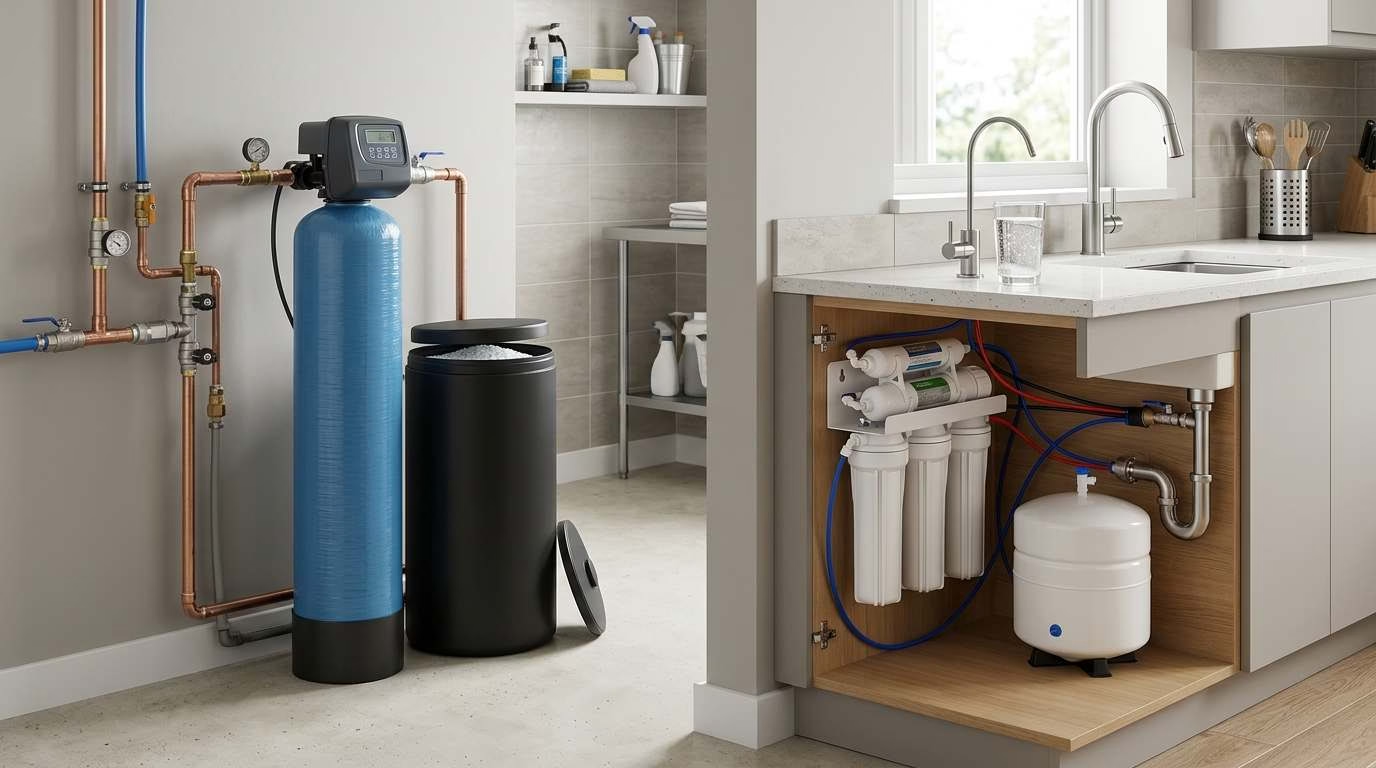
A water softener and a reverse osmosis system solve different problems. A softener controls hard water throughout your home. Reverse osmosis filters drinking water at one or more taps.
So, which is better? That depends on your water. Also read: 8 Best Water Leak Detectors for Your Home.
Choose a water softener if you see scale, soap scum, or mineral spots. Choose reverse osmosis, often called RO, if you want to reduce dissolved substances in drinking water. You may need both if your water is hard and has other concerns.
What Is the Difference Between a Water Softener and Reverse Osmosis?
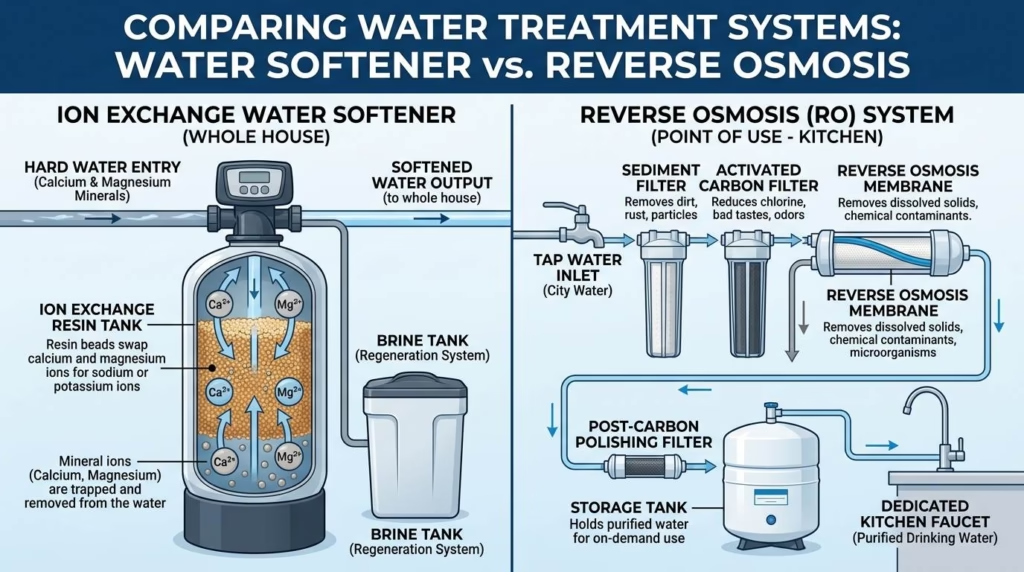
The main difference is simple. A water softener treats hardness. A reverse osmosis system filters many dissolved substances.
Hard water contains high levels of calcium and magnesium. These minerals can leave scale on pipes, taps, showers, and appliances. A softener changes these minerals through a process called ion exchange.
An RO system works in another way. It pushes water through a very fine membrane. This membrane blocks many dissolved substances while clean water passes through.
Most home softeners treat water for the whole house. Most RO systems serve one drinking tap.
A water softener removes hardness minerals such as calcium and magnesium, while reverse osmosis filters dissolved contaminants from drinking water. A softener usually treats the whole house, while an RO system is commonly installed under the kitchen sink. Homes with hard and contaminated water may benefit from using both.
The simplest way to understand the difference
Match the system to the problem you want to solve:
- Hard water and mineral scale: Choose a water softener.
- Filtered drinking water: Consider reverse osmosis.
- Scale across the whole home: Choose a whole-house softener.
- Dissolved substances at the kitchen sink: Consider an under-sink RO unit.
- Hard water plus drinking water concerns: You may need both.
This is why asking which system is “best” can confuse the issue. The better question is: What is wrong with your water?
A water test gives you the clearest answer.
Is a water softener and reverse osmosis the same thing?
No. A water softener and reverse osmosis system are not the same thing.
A softener reduces hardness through ion exchange. An RO unit filters water through a membrane. One protects your plumbing from scale. The other prepares filtered water for drinking and cooking.
Both may improve how your water feels or tastes. Still, they do different jobs.
Also read: Whole House Water Filter vs Water Softener
Water Softener vs Reverse Osmosis Comparison Table
This table shows the main difference between a water softener and reverse osmosis.
| Feature | Water Softener | Reverse Osmosis System |
|---|---|---|
| Main purpose | Reduces water hardness | Reduces many dissolved substances |
| Common method | Ion exchange | Membrane filtration |
| Usual location | Main water line | Under the kitchen sink |
| Typical coverage | Most of the home | One tap or appliance |
| Helps control scale | Yes | Only at the treated outlet |
| Treats calcium and magnesium | Yes | Reduces them in filtered water |
| Improves drinking water taste | Not its main job | Often |
| Produces reject water | Not during normal use | Yes |
| Needs supplies | Salt or potassium | Filters and a membrane |
| Best use | Whole-home hard water | Drinking and cooking water |
| Can work with the other system? | Yes | Yes |
An RO system’s results depend on the model. Water pressure and upkeep also affect its work. Always check what a specific unit is designed to reduce.
How Does a Water Softener Work?
Most salt-based softeners use ion exchange. Despite the technical name, the process is easy to understand.
Water flows through a tank filled with tiny resin beads. Calcium and magnesium stick to those beads. The system releases a small amount of sodium or potassium in their place.
The result is softened water.
Ion exchange explained in plain language
The resin beads can only hold so many hardness minerals. They need cleaning once they become full.
The softener cleans them during a cycle called regeneration. Salt water flows over the resin and carries the trapped minerals away. The system then rinses itself and returns to normal use.
A standard system has two main tanks:
- Resin tank: Holds the treatment beads.
- Brine tank: Holds salt and water for cleaning.
Many newer units track how much water you use. They regenerate only when needed. This can save salt and water compared with a fixed timer.
What problems does a water softener solve?
A softener may help if you notice:
- White scale on taps and showerheads
- Cloudy marks on dishes
- Soap scum in sinks and tubs
- Weak soap lather
- Rough or stiff laundry
- Mineral buildup in your water heater
- Scale inside pipes and appliances
- Dry-feeling residue after a shower
Soft water also helps soap work better. You may need less shampoo, dish soap, and laundry detergent.
A softener does not make every surface spotless. It can, however, stop new hardness scale from forming.
What does a water softener not remove?
A softener is not a complete water filter. It does not normally remove:
- Most germs
- Dirt and loose particles
- Many chemicals
- All unwanted tastes
- All unwanted odors
- Every metal or dissolved substance
Some systems combine softening with other filter media. Check each stage before assuming it treats a certain issue.
How Does a Reverse Osmosis System Work?
Reverse osmosis uses water pressure to push water through a thin membrane. The membrane lets water pass while blocking many dissolved substances.
Most home RO systems use several filters. Each stage has a separate task.
The reverse osmosis filtration process
A common under-sink system works in this order:
- A sediment filter catches dirt.
- A carbon filter reduces chlorine and odors.
- The RO membrane filters dissolved substances.
- A small tank stores the treated water.
- A final filter improves taste.
- A separate tap delivers the water.
Some systems add more stages. These may adjust taste or add minerals back into the water. More stages do not always mean better results.
The performance of each stage matters more than the total count.
What can reverse osmosis reduce?
A suitable RO system may reduce:
- Total dissolved solids
- Sodium
- Chloride
- Nitrate
- Fluoride
- Lead
- Arsenic
- Calcium
- Magnesium
- Other dissolved substances
No RO system removes everything. Different membranes also have different limits.
Match the system to your water test. Check its verified reduction claims for the substance you need to treat.
What are the limitations of reverse osmosis?
RO has several trade-offs:
- It creates reject water.
- It needs enough water pressure.
- Its filters need regular changes.
- Its membrane will wear out.
- Its tap may flow more slowly.
- It removes some useful minerals too.
- Hard water may cause membrane scale.
- A whole-house system needs more space.
An under-sink unit also treats a small volume. It will not protect showers, pipes, or water heaters elsewhere in your home.
Does Reverse Osmosis Soften Water?
Yes, reverse osmosis can reduce calcium and magnesium. In that limited sense, RO can soften the water it filters.
However, a standard under-sink unit does not soften your whole house. It only treats water sent through its membrane.
Your shower, washer, water heater, and other taps may still receive hard water.
Why RO is not usually a replacement for a whole-house softener
An under-sink RO unit makes a few gallons of treated water at a time. Your home may use far more water during showers, washing, and cleaning.
Using a small unit for the whole house would not work well. It lacks the flow and storage needed for that job.
Hardness can also form scale on the RO membrane. This lowers output and may shorten membrane life. A softener before the RO unit can help in homes with very hard water.
What does “water softening by reverse osmosis method” mean?
This phrase means the RO membrane reduces hardness in its product water. “Product water” is the clean water that passes through the membrane.
This differs from a whole-house ion exchange softener. A softener treats a high flow at the main supply line. Standard RO treats a much smaller flow.
Whole-house RO is possible. Yet it needs large tanks, pumps, drains, and other treatment steps. It is rarely the simplest answer for hardness alone.
Whole-House Water Softener vs Reverse Osmosis
A whole-house water softener and an under-sink RO system serve different areas.
The softener treats water as it enters your home. The RO unit treats water near the tap where you drink it.
Where each system is installed
A water softener often sits near:
- The main water supply
- A floor drain
- A power outlet
- The water heater
- A garage, basement, or utility room
The system may treat most indoor water. Some plumbing plans leave outdoor taps untreated. This avoids wasting soft water on lawns and gardens.
An RO system often sits beneath the kitchen sink. It may feed:
- A separate drinking tap
- A refrigerator
- An ice maker
- A second nearby tap
Long supply lines can reduce flow. The installer must size and place the tubing with care.
Point-of-entry vs point-of-use treatment
A point-of-entry system treats water near your home’s main supply. It serves many rooms and fixtures. A whole-house softener is a common example.
A point-of-use system treats water near one outlet. An under-sink RO unit is a common example.
This difference affects cost, flow, and upkeep. Treating one tap takes far less equipment than treating every gallon your home uses.
Whole-house reverse osmosis system vs water softener
A whole-house RO system can treat a much wider range of water issues. However, it is more complex than a normal softener.
A full system may need:
- Sediment pretreatment
- A water softener
- Carbon filtration
- One or more RO membranes
- A large water tank
- A delivery pump
- A drain connection
- pH adjustment
- Mineral treatment after the membrane
RO water may be low in minerals. It can also have a low pH. Post-treatment can help make it less harsh on plumbing.
Whole-house RO may suit a serious dissolved water problem. It is rarely needed when hardness is your only concern.
Water Softener vs Reverse Osmosis: Pros and Cons
Both systems have clear strengths. Both also add work and cost.
Here is what you should weigh before making a choice.
Water softener advantages
A whole-house softener can:
- Control scale throughout your home
- Protect water heaters and appliances
- Improve soap and detergent use
- Reduce spots on dishes
- Improve laundry results
- Supply water at a high flow
- Help an RO membrane last longer
The effect is easy to notice if your water is very hard. Soap lathers faster. New mineral scale forms less often.
Water softener disadvantages
A water softener may:
- Need regular salt refills
- Use water during regeneration
- Need a drain and power supply
- Add some sodium to the water
- Need resin cleaning or service
- Face local rules on brine discharge
- Fail to remove many contaminants
You must also choose the right size. A unit that is too small may regenerate too often. One that is far too large may not run as planned.
Reverse osmosis advantages
An RO system can:
- Reduce many dissolved substances
- Improve drinking water taste
- Serve drinking and cooking needs
- Fit under many kitchen sinks
- Connect to a fridge or ice maker
- Reduce the need for bottled water
- Target one tap without treating all water
It can make sense when your main concern is what you drink. You do not need RO water for flushing toilets or washing floors.
Reverse osmosis disadvantages
An RO system may:
- Produce reject water
- Deliver water at a slower rate
- Need several filter changes
- Lose output as the membrane ages
- Need a pump in low-pressure homes
- Take up cabinet space
- Remove useful minerals
- Struggle with very hard water
Poor upkeep can also harm water quality. Replace filters on time. Clean the storage tank and system as directed.
You might like to read: Best Whole House Water Filter for Well Water
Water Softener vs Reverse Osmosis Cost
Water softener vs reverse osmosis cost is not a direct match. A softener often treats the entire home. A common RO unit treats one tap.
Your total cost depends on the equipment and your water. Installation can also change the price a great deal.
Water softener cost factors
A softener’s cost depends on:
- System size
- Water hardness
- Daily water use
- Plumbing changes
- Drain access
- Salt use
- Regeneration settings
- Local labor
- Resin type
- Service needs
A demand-based unit may cost more at first. Yet it can use less salt and water than a basic timer unit.
Hardness also affects running cost. Very hard water needs more treatment per gallon.
Reverse osmosis cost factors
An RO system’s cost depends on:
- Under-sink or whole-house use
- Number and type of filters
- Membrane size
- Water pressure
- Storage tank size
- Pump needs
- Drain access
- Filter change schedule
- Remineralization stage
- Installation work
Under-sink units tend to have lower setup costs than whole-house systems. Whole-house RO often needs a custom design.
Which system costs more over time?
An under-sink RO unit and a whole-house softener have different running costs.
A softener needs salt and regeneration water. An RO unit needs filters, membranes, and reject water. Whole-house RO tends to need the most equipment and service.
Compare costs over five years. Include:
- Purchase price
- Installation
- Salt
- Filters
- Membranes
- Water use
- Power use
- Service calls
- Parts
- Cleaning
The cheapest option can waste your money if it treats the wrong problem.
| Cost Category | Water Softener | Under-Sink RO | Whole-House RO |
|---|---|---|---|
| Initial equipment | Moderate | Low to moderate | High |
| Installation work | Moderate | Low to moderate | High |
| Main supplies | Salt or potassium | Filters and membrane | Filters and membranes |
| Extra water use | Regeneration water | Reject water | More reject water |
| Service level | Periodic care | Regular filter changes | More expert care |
Water Softener vs Water Conditioner vs Reverse Osmosis
A water conditioner adds a third choice. The term can mean several things, so read the product details with care.
Some conditioners aim to change how scale forms. They may reduce how strongly it sticks to surfaces. They often do not remove calcium or magnesium.
What is a water conditioner?
“Water conditioner” is a broad label. It can describe:
- A salt-free scale control system
- A carbon filter
- A system that treats chlorine
- A unit with several kinds of media
- Another form of non-salt treatment
Do not judge a conditioner by its name. Check what it treats and what it leaves in the water.
A salt-free conditioner may help with some scale. Yet your water can still test as hard because the minerals remain.
Also read: Do Water Filters Remove Bacteria?
Three-way comparison
| System | Main Job | Removes Hardness Minerals? | Filters Dissolved Substances? | Typical Coverage |
|---|---|---|---|---|
| Salt-based softener | Reduces hardness | Yes | Limited | Whole house |
| Salt-free conditioner | May help manage scale | Usually no | Usually limited | Whole house |
| Reverse osmosis | Filters dissolved substances | At the treated tap | Yes, based on the unit | Usually one tap |
The best choice depends on your goal. If you want true soft water, confirm that the system removes hardness. Scale control and water softening are not always the same.
Water softener vs filter vs reverse osmosis
A “water filter” can mean many things.
- Sediment filters catch sand, rust, and dirt.
- Carbon filters reduce chlorine, odors, and some chemicals.
- Water softeners control calcium and magnesium.
- RO systems reduce many dissolved substances.
- Special media filters treat set issues, such as iron.
One device may not solve every problem. Your treatment plan may need more than one stage.
Which System Should You Choose for Common Water Problems?
Start with the signs you see. Then use a water test to confirm the cause.
Looks and taste can point you in the right direction. They cannot tell you everything in the water.
Choose a water softener if…
A softener may be the right starting point if:
- You see white mineral scale.
- Soap leaves a film.
- Dishes have hard spots.
- Your laundry feels stiff.
- Your water heater has scale.
- Your skin feels coated after washing.
- A test confirms hard water.
A softener treats these issues across the home. It is not just for the kitchen sink.
Choose reverse osmosis if…
Consider an RO system if:
- You want filtered drinking water.
- Your water tastes salty or mineral-heavy.
- A test finds substances RO can reduce.
- You want filtered water for cooking.
- You want to reduce bottled water use.
- You only need treatment at one tap.
Check the unit’s stated treatment ability. Do not assume every membrane reduces every substance to the same level.
Consider both systems if…
You may need both when:
- Your whole home has hard water.
- You also want filtered drinking water.
- Hardness may scale the RO membrane.
- You want to protect pipes and appliances.
- Your test shows several water concerns.
A common plan uses a softener at the main line. The RO unit then treats water beneath the kitchen sink.
Consider another treatment system if…
Neither system may solve your main problem.
You may need another treatment method for:
- Bacteria
- Viruses
- Iron
- Manganese
- Sulfur odor
- Sand or sediment
- Acidic water
- High chlorine
- Certain farm or factory chemicals
Do not guess with well water. Test it first. Then match each issue to the right treatment stage.
Is Reverse Osmosis or a Water Softener Better?
Neither system is better in every home.
A water softener is better for whole-house hardness. Reverse osmosis is better for many drinking water concerns. The right answer may also be both—or neither.
Best water treatment system for municipal water
Municipal water has already received public treatment. Still, your home may have local concerns.
Check for:
- Chlorine taste or smell
- High hardness
- Old service pipes
- Lead risk at the tap
- Sediment from nearby work
- Dissolved substances
- Building plumbing issues
A carbon filter may solve a chlorine taste. A softener may solve scale. RO may help with a tested dissolved substance.
Do not add more equipment than you need.
Best water treatment system for well water
Private well water needs close attention. You are in charge of testing and treatment.
A useful test may check:
- Hardness
- pH
- Iron
- Manganese
- Nitrate
- Arsenic
- Bacteria
- Sediment
- Total dissolved solids
- Sulfur-related issues
Well water can change after floods, repairs, or nearby land changes. Test again if the color, smell, or taste shifts.
Your treatment order also matters. Iron or sediment may need treatment before a softener or RO unit.
Can You Use a Water Softener and Reverse Osmosis Together?
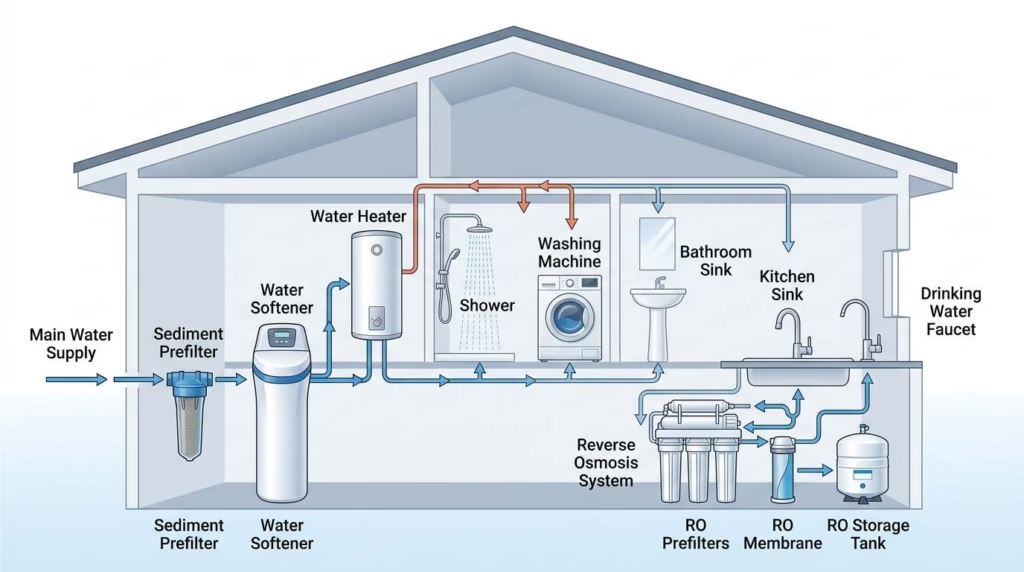
Yes. A water softener and reverse osmosis system can work well together.
The softener handles hardness across your home. The RO system then treats drinking and cooking water.
Recommended treatment order
A common setup follows this order:
- Sediment treatment, if needed
- Special treatment for iron or other issues
- Water softener
- Home plumbing
- Under-sink RO system
- Drinking tap or fridge line
This order is not right for every home. Chlorine, iron, pH, and water pressure can change the plan.
Follow the equipment maker’s limits. A local water test can also guide the final layout.
Benefits of a combined system
Using both may give you:
- Less scale in pipes
- Better appliance protection
- Soft water for washing
- Filtered water for drinking
- Less scale on the RO membrane
- Treatment aimed at each water use
This setup avoids making RO water for toilets and showers. You use it where its fine filtration matters most.
Possible drawbacks
A combined setup also means:
- Higher setup cost
- More equipment
- More space
- Salt refills
- Filter changes
- More service tasks
- More chances for poor setup
Keep a simple care calendar. Mark salt checks, filter changes, cleaning, and test dates.
What Homeowners Say Online—and What Reddit Cannot Tell You
Online reports can help you learn what ownership feels like. They can reveal common annoyances and upkeep tasks.
Still, they cannot diagnose your water.
Two homes on the same street may have different pipes, pressure, and treatment needs.
Common themes in homeowner discussions
In water softener vs reverse osmosis Reddit threads, homeowners often mention:
- The work of carrying softener salt
- The feel of soft water in the shower
- Fewer mineral marks after softening
- Better drinking water taste after adding RO
- Slow flow from small RO tanks
- Filters that cost more than expected
- Leaks caused by poor installation
- Problems caused by missed upkeep
These experiences can help you form better questions. They cannot prove which system your home needs.
Why online opinions should not replace a water test
Online users may have very different:
- Hardness levels
- Water sources
- Pipe materials
- Water pressure
- Contaminants
- System sizes
- Maintenance habits
- Local rules
A reverse osmosis vs water softener Reddit debate often compares personal tastes. Your choice should start with measured facts.
Use online comments to spot daily ownership issues. Use your test results to choose the equipment.
How to Choose the Best Water Treatment System for Your Home
Do not start with a brand or price. Start with your water.
A clear process can stop you from buying the wrong system.
Step 1: Test your water
Your test should match your water source and local risks. Common items include:
- Hardness
- pH
- Iron
- Manganese
- Nitrate
- Total dissolved solids
- Lead at the tap
- Arsenic where it is a local concern
- Bacteria in private wells
A simple home strip can show rough hardness. It cannot replace a full test for health-related concerns.
Step 2: Identify where treatment is needed
Ask these questions:
- Is the issue at one tap?
- Does it affect every room?
- Do you see scale on hot and cold fixtures?
- Is the concern about drinking water?
- Are appliances showing mineral damage?
- Do you have stains, odors, or sediment?
Your answers show whether you need whole-house or point-of-use treatment.
Step 3: Match the system to the test result
Check that the system can handle:
- The type of water problem
- The measured level
- Your water pressure
- Your peak flow
- Your daily water use
- Your plumbing layout
Avoid a system based only on a quick sink test. Ask for clear treatment limits in writing.
Step 4: Compare total ownership costs
Look beyond the first price. Add up:
- Installation
- Salt
- Filters
- Membranes
- Water use
- Power
- Cleaning
- Service calls
- Repair parts
- Waste disposal
Also consider your time. A system that you will not maintain is a poor choice.
Step 5: Get more than one installation quote
Ask each installer for:
- A treatment plan
- System size
- Expected flow rate
- Drain needs
- Power needs
- A care schedule
- Yearly supply costs
- Warranty terms
- Clear treatment claims
Compare the reasons behind each plan. Be cautious if a quote does not mention your water test.
Quick Decision Guide
Use this chart as a starting point.
| Your Main Concern | Likely Starting Point |
|---|---|
| White scale and soap scum | Water softener |
| Spots on dishes | Water softener |
| Hard-water appliance damage | Water softener |
| Better drinking and cooking water | Under-sink RO system |
| Tested dissolved substances | A suitable RO unit or targeted treatment |
| Hard water plus drinking water concerns | Softener and under-sink RO |
| Iron, sulfur, sediment, or bacteria | Water test and special treatment |
| Serious whole-home dissolved contamination | A custom treatment plan |
This guide is not a final treatment plan. Test your water before choosing equipment.
Frequently Asked Questions
Is a water softener the same as reverse osmosis?
No. A water softener controls calcium and magnesium hardness. Reverse osmosis filters many dissolved substances through a membrane.
Does reverse osmosis soften water?
RO reduces hardness in the water it filters. A normal under-sink unit does not soften water throughout your home.
Do I need reverse osmosis if I already have a water softener?
You might. A softener does not provide broad drinking water filtration. Your water test and taste goals should guide the choice.
Do I need a water softener if I have reverse osmosis?
You may need one if scale affects your home. An under-sink RO unit will not protect showers, pipes, or your water heater.
Can I drink softened water?
Many people drink softened water. Salt-based systems add some sodium during ion exchange.
The amount depends on how hard your water is. If you limit sodium, ask a health professional for personal guidance. You can also use RO at the drinking tap.
Should reverse osmosis be installed before or after a water softener?
An under-sink RO unit is often placed after the softener. Soft water can reduce scale on the RO membrane.
Your water may need another order. Iron, chlorine, sediment, and pH can affect the design.
Does an RO system waste water?
RO creates a reject stream while making filtered water. The amount varies by system, pressure, temperature, and membrane condition.
A clogged filter or weak pressure can make the system less efficient.
Which system requires more maintenance?
Both need care.
A softener needs salt checks and periodic cleaning. An RO system needs filter changes, tank care, and a new membrane after it wears out.
Is whole-house reverse osmosis better than a water softener?
Not for hardness alone. A softener usually treats hard water with less equipment.
Whole-house RO can address wider water concerns. It also costs more and needs more space, pumps, storage, and service.
What is the best water treatment system for a home?
The best water treatment system for your home matches your test results. It must also fit your water use, pressure, space, and budget.
For many homes, that means a softener for hardness and RO for one drinking tap. Other homes need only one system.
Conclusion: Water Softener vs Reverse Osmosis—The Final Verdict
The water softener vs reverse osmosis choice starts with one question: What do you need to fix?
Choose a water softener for scale and hard water throughout your home. Choose reverse osmosis for filtered drinking and cooking water. Use both if you have hard water and tested drinking water concerns.
Do not treat a taste, stain, or smell as a full diagnosis. Get your water tested first. Then choose the smallest system that solves the measured problem.
Get a Water Test and Local Installation Quote
If you are unsure, start with a proper water test. It can help you avoid needless filters and poor system choices.
You can also contact a qualified local installer for an assessment. Ask for a written plan that explains:
- What your water test found
- Which issue each treatment stage solves
- Where the equipment will go
- How much water it will treat
- What upkeep it needs
- What it may cost to run
- Which problems it will not solve
Get at least two quotes if you can. Compare the treatment plans, not just the prices.
Useful next steps include:
- Schedule a home water test
- Request a clear treatment plan
- Compare local installation quotes
- Review long-term upkeep costs
- Check system size and flow needs