You turn the key. You hear a dreadful click. Your engine will not start. We have all been there. It is the worst way to start your day. A dead battery ruins your plans fast. But what cause car battery to drain in the first place? It could be a simple mistake. Or, it might be a hidden electrical issue.
Identifying excessive power consumption starts with proper diagnosis; explore this resource on diagnosing parasitic battery drain for step-by-step instructions.
You do not need to be a mechanic to figure it out. This guide will show you the top reasons for a dead battery. We will also share easy DIY fixes. You can save time and money. Let us get your car started again.
The Usual Suspects – Common Causes of Battery Drain
Human Error: The “Doh!” Moment
We all make mistakes. The most common cause is human error. Did you leave your headlights on? How about that interior dome light? Even a small trunk light can cause a car battery drain overnight. Leaving phone chargers or dashcams plugged in also draws power. Sometimes, a door does not shut all the way. This keeps the computer and lights awake. Always double-check your cabin before you walk away.
Parasitic Drain: The Hidden Vampire
Your car uses a tiny bit of power when it is off. This keeps the clock and alarm running. But sometimes, a broken part pulls too much power. This is called a parasitic draw. It sucks the life out of your battery while you sleep. A common cause is a glove box light that stays on. Bad relays or cheap aftermarket stereos also cause this. If your car battery keeps dying, a vampire draw is a prime suspect.
Mechanical & Electrical Failures
Sometimes, parts just wear out. Loose or corroded battery cables cause big problems. Crud on the terminals blocks the charge. Your battery will not charge right. A bad alternator is another huge issue. The alternator charges your battery while you drive. If it fails, your battery drains while you are driving. Then, your car dies on the road. Finally, batteries just get old. Most last about three to five years. When they age, they cannot hold a charge anymore.
Environmental & Driving Habits
Your daily life hurts your battery too. Very hot or freezing weather hurts battery health. Cold weather slows down the chemicals inside. Hot weather makes them burn out faster. Short trips are also bad. Starting your car takes a lot of power. The alternator needs time to refill that power. A five-minute drive does not give it enough time. If you rarely drive your car, the battery slowly dies. Sitting unused is tough on a battery.
Extended DIY Solutions & Step-by-Step Fixes
Quick Checks & Simple Fixes
Let us start with the easy stuff. Look around your car. Make sure all switches are off. Check the trunk and glove box lights. Look at your battery under the hood. Do you see white or green fuzz on the posts? That is corrosion. Mix some baking soda with water. Scrub the posts with an old toothbrush. Rinse it off with water. Make sure the cables are tight. Finally, take your car for a nice long drive. Drive for at least thirty minutes. This gives the alternator time to do its job.
The Core DIY Skill: Testing for Parasitic Draw
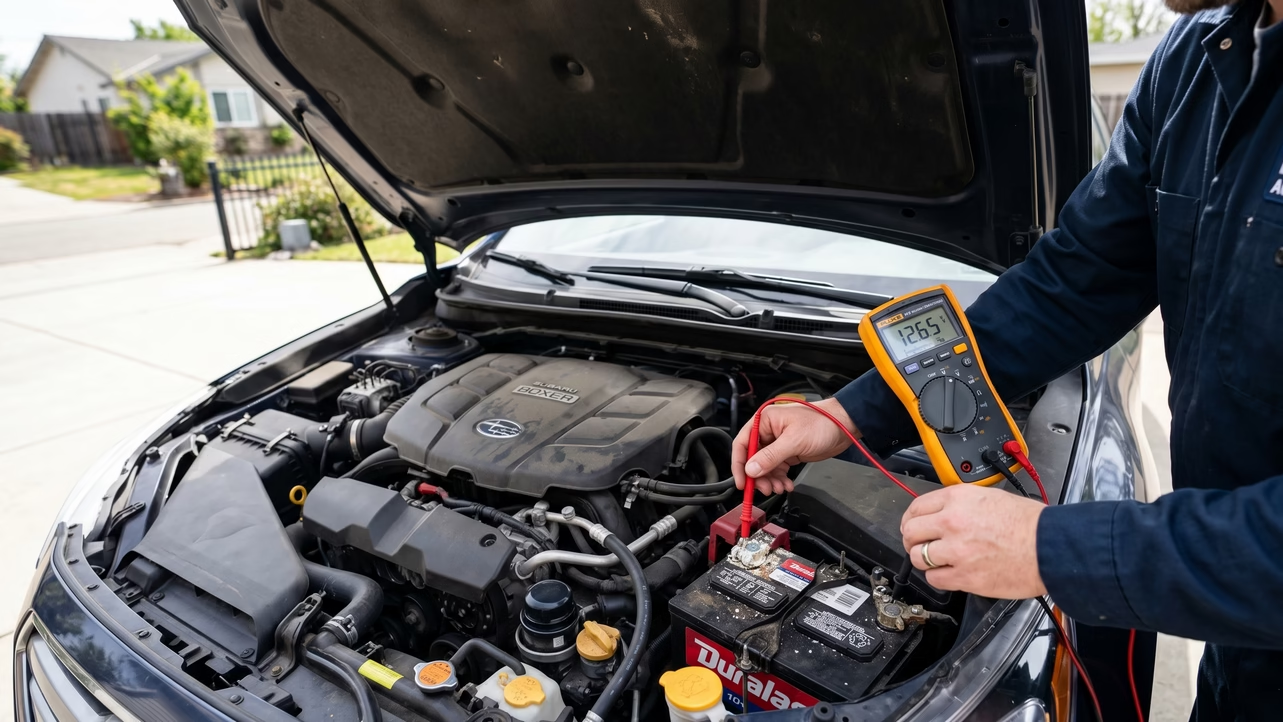
Did the quick fixes fail? You might have a hidden electrical drain. You need to test car battery drain using a multimeter. You can buy a cheap multimeter at any auto parts store. This tool measures electricity. It is the best way to find a vampire draw. Follow these simple steps carefully.
Detailed Step-by-Step Parasitic Draw Test with a Multimeter
- Prep the car. Turn off the radio, AC, and lights. Close all the doors. Let the car sit for thirty minutes. Cars need time to go to sleep.
- Set up your tool. Turn your multimeter dial to DC Amps. Use the 10 Amp setting. Plug the red wire into the 10A port. Plug the black wire into the COM port.
- Connect the meter. Take off the negative battery cable first. Clip the red meter lead to the negative cable. Touch the black meter lead to the negative battery post. Do not turn the key on while the meter is hooked up. It will blow a fuse.
- Read the number. Look at the screen. A normal reading is under 50 milliamps. If the number is higher, you have a drain.
- Pull fuses. Find your fuse box. While watching the meter, pull out one fuse at a time. Put it back in if the number does not change. When the number drops a lot, you found the bad circuit.
- Find the bad part. Check your manual to see what that fuse controls. Inspect those parts. A sticky switch or bad wire is likely the issue.
- Fix and test. Replace the broken part. Hook the battery back up. Check the meter again to be sure the drain is gone.
Solution Summary Table
This table makes it easy to pick your next step. Match your problem to the fix.
| Cause | Difficulty | Key DIY Solution | Tools Needed |
|---|---|---|---|
| Lights left on | Easy | Check switches, set reminders | None |
| Corroded terminals | Easy | Clean and tighten posts | Baking soda, brush, wrench |
| Parasitic draw | Hard | Multimeter test & pull fuses | Digital multimeter |
| Bad alternator | Medium | Test voltage while running | Multimeter |
| Old battery | Easy | Replace the battery | Wrench |
| Short trips | Easy | Drive longer or use a charger | Trickle charger |
Preventive Maintenance – Stop Drain Before It Starts
You can stop battery problems before they start. Make a habit of checking your lights every month. Clean your battery posts before winter. If you park your car for a long time, hook up a smart charger. This little device keeps your battery full without overcharging it. In freezing weather, a battery blanket helps a lot. It keeps the cold away. Have a shop test your charging system once a year. They can spot a weak battery before it leaves you stranded.
Take Control of Your Car’s Electrical Health
A dead battery is a huge pain. But now you know what cause car battery to drain. You also know how to fix dead battery issues yourself. Start with the easy checks first. Look for lights and clean the posts. If you suspect a deeper issue, grab a multimeter. You can track down that sneaky parasitic draw. Take care of your battery, and it will take care of you. You have the skills to keep your car running strong.