Choosing sunscreen should be simple. Yet one look at a mineral sunscreen label can make it feel like a science quiz.
You see zinc oxide. You see titanium dioxide. Sometimes you see both. So which one should you trust on your face?
Here is the short answer.
Zinc oxide is usually the better all-around mineral sunscreen filter. It gives stronger broad protection, especially against UVA rays. Titanium dioxide is also useful. It feels lighter, blends well, and does a great job against UVB rays, which cause sunburn.
If you have sensitive skin, start with a good zinc-based formula. You can also check this guide to the for more product-focused help.
And if you are still unsure how mineral filters compare with chemical filters, this guide on mineral vs chemical sunscreen for sensitive skin will help you choose with more confidence.
Now let’s break it all down in plain English.
Quick Comparison: Zinc Oxide vs Titanium Dioxide Sunscreen
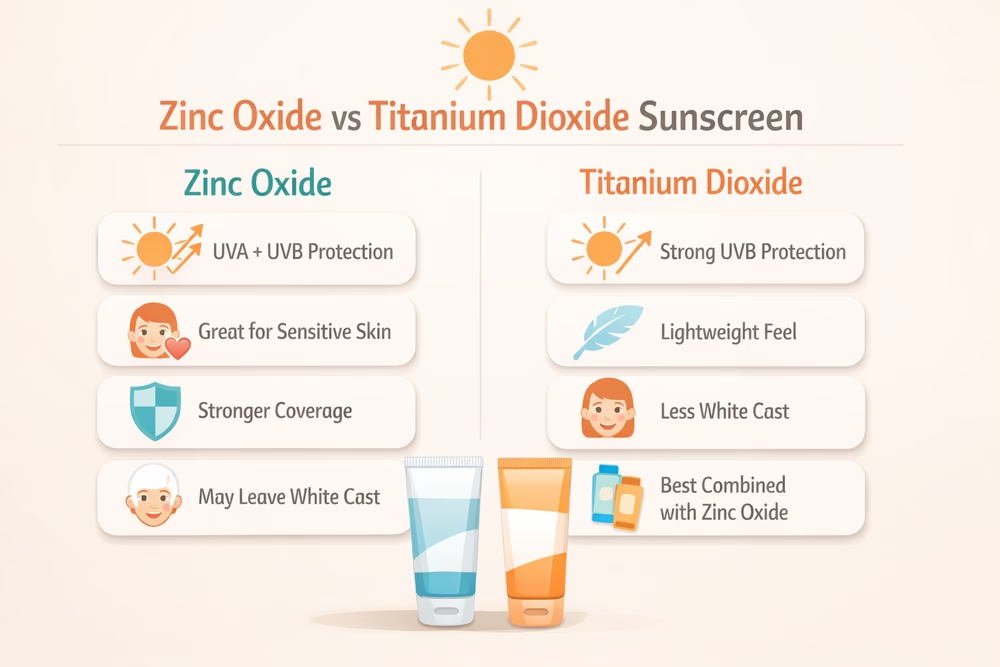
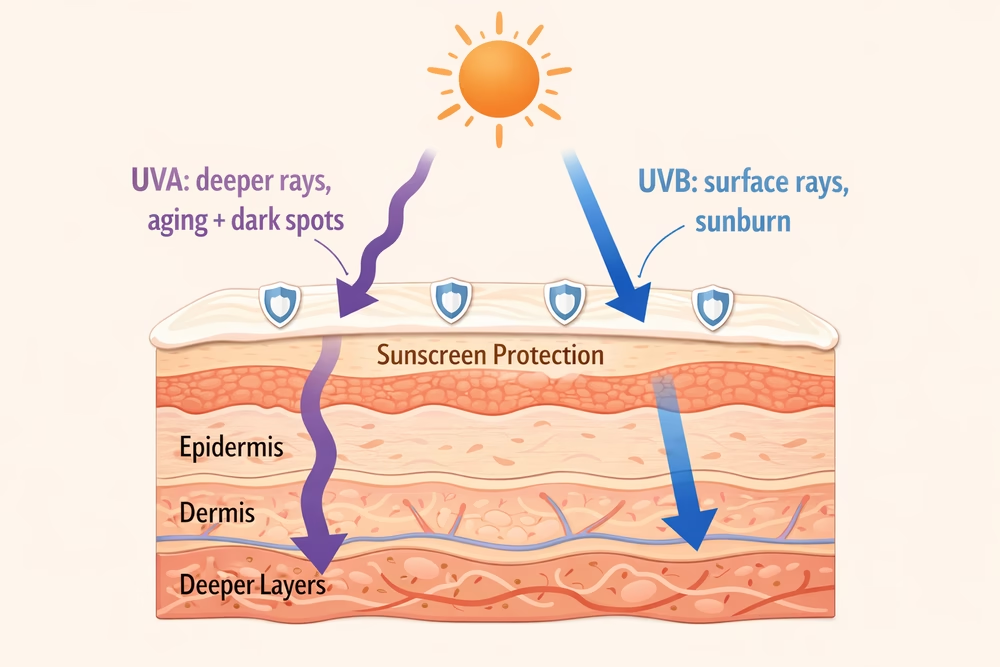
Zinc oxide gives wider protection. It covers both UVA and UVB rays well. UVA rays are linked to early aging, dark spots, and deeper skin damage. UVB rays are the ones that cause sunburn.
| Feature | Zinc Oxide | Titanium Dioxide |
|---|---|---|
| UVB protection | Strong | Very strong |
| UVA protection | Better, especially long-wave UVA | Good, but weaker than zinc oxide |
| White cast | More likely | Usually less noticeable |
| Skin feel | Can feel thicker | Often lighter |
| Sensitive skin | Excellent choice | Also good |
| Best for | Full mineral coverage, sensitive skin, outdoor use | Daily wear, lighter formulas, less chalky finish |
| Best formula type | Zinc-only or zinc-heavy blend | Often best when paired with zinc oxide |
Titanium dioxide is very good at blocking UVB rays. It also protects against some UVA rays. But it does not cover the deeper UVA range as well as zinc oxide.
So, if you want one simple answer, here it is.
Zinc oxide wins for protection. Titanium dioxide wins for feel.
That is why many of the best mineral sunscreen formulas use both. Zinc oxide brings stronger coverage. Titanium dioxide helps the formula feel lighter and look better on skin.
What Is Zinc Oxide in Sunscreen?
Zinc oxide is a white mineral powder used in many physical sunscreens. It is one of the most trusted sunscreen filters for sensitive skin.
It works by creating a protective layer on your skin. This layer helps block the sun’s rays before they can damage your skin.
Zinc oxide is popular because it protects against a wide range of UV rays. That makes it a strong choice for daily use, beach days, outdoor work, and long drives.
It is also gentle. That is why you often see it in baby sunscreen, sensitive skin sunscreen, and calming skin products.
If you want the best zinc oxide sunscreen, look for one that says broad spectrum, SPF 30 or higher, and water resistant if you plan to sweat or swim.
Benefits of Zinc Oxide Sunscreen
Zinc oxide has a lot going for it.
It gives broad protection. It is gentle on skin. It is stable in sunlight. It starts working as soon as you apply it well.
It is also a smart choice if your skin gets red, itchy, or angry after using regular sunscreen.
Many people with rosacea, acne-prone skin, or eczema-prone skin prefer zinc oxide. It tends to be less irritating than many chemical filters.
Zinc oxide is also a good pick if you care about long-term skin aging. Since it covers UVA rays well, it can help protect against dark spots, fine lines, and sun-related dullness.
Downsides of Zinc Oxide Sunscreen
Zinc oxide is not perfect.
It can feel thick. It can look white or grey on the skin. This is more common with high-zinc formulas, non-nano formulas, or old-school pastes.
If you have medium or deep skin, a basic zinc sunscreen may leave a cast. That is the pale film nobody wants.
The good news is that newer formulas are much better. A tinted sunscreen, sheer zinc formula, or mineral sunscreen without white cast can solve most of this problem.
What Is Titanium Dioxide in Sunscreen?
Titanium dioxide is another mineral sunscreen filter. It is also white, but it often feels lighter than zinc oxide in sunscreen.
It is very good at blocking UVB rays. These are the rays that burn your skin.
Titanium dioxide also protects against some UVA rays. But it does not cover the full UVA range as well as zinc oxide.
This does not make it bad. It just means it works best as part of a smart formula.
You will often find titanium dioxide in mineral sunscreen for face products. It helps the texture feel smoother. It can also make sunscreen easier to spread.
Benefits of Titanium Dioxide Sunscreen
Titanium dioxide is great for daily wear.
It tends to feel lighter than zinc oxide. It may leave less white cast. It works well in tinted formulas. It is also useful in a mineral spf moisturizer because it can help keep the formula smooth.
If you hate heavy sunscreen, titanium dioxide may feel more comfortable.
It also pairs well with zinc oxide. Together, they can create a sunscreen that protects well and feels better on the skin.
Downsides of Titanium Dioxide Sunscreen
Titanium dioxide has one big weakness.
It does not protect as strongly against long UVA rays.
That matters because UVA rays go deeper into the skin. They play a role in early aging, dark spots, and long-term skin damage.
So, a sunscreen that uses titanium dioxide alone may not be the best choice if you want the strongest broad protection.
If you choose titanium dioxide sunscreen, look for one that also includes zinc oxide. Or make sure the label says broad spectrum.
Zinc Oxide vs Titanium Dioxide: UV Protection Differences
This is the most important part.
Sunscreen is not just about SPF. It is also about which rays it blocks.
SPF mostly tells you how well a sunscreen protects against UVB rays. Those are the rays that cause sunburn.
But your skin also needs UVA protection.
UVA rays are sneaky. They pass through clouds and windows more than UVB rays. They do not always burn your skin right away. But they can still damage it over time.
That is why broad spectrum matters.
A broad-spectrum sunscreen protects against both UVA and UVB rays.
Which One Has Better UVA Protection?
Zinc oxide has better UVA protection.
This is the main reason many skin experts prefer it as a single mineral filter. It covers a wider range, including long UVA rays.
If your main goal is to prevent dark spots, early wrinkles, and sun damage, zinc oxide is the stronger choice.
Which One Has Better UVB Protection?
Titanium dioxide is very strong against UVB rays.
That makes it great for sunburn protection. Zinc oxide also protects against UVB, but titanium dioxide is often used to boost the UVB side of a formula.
This is why a blend can work so well.
Zinc oxide helps with broad UVA coverage. Titanium dioxide helps with UVB strength and a lighter feel.
Which One Is More Broad Spectrum?
Zinc oxide is more complete on its own.
If you are choosing a simple mineral sunscreen with only one active filter, zinc oxide is usually the safer bet.
But if the formula is well made, a zinc oxide and titanium dioxide blend can be excellent too.
Which One Is Better for Sensitive Skin?
For sensitive skin, zinc oxide usually wins.
It is gentle. It is stable. It is less likely to sting than many other sunscreen filters.
That is why many sensitive skin sunscreens use zinc oxide as the main active ingredient.
Still, titanium dioxide can also work well. The key is the full formula.
A sunscreen can have good mineral filters but still irritate your skin if it has fragrance, drying alcohol, or harsh extras.
So, if your skin reacts easily, look for these label clues:
Fragrance-free.
Non-comedogenic.
Oil-free if you break out.
Broad spectrum.
SPF 30 or higher.
Made for sensitive skin.
If you want a tinted sunscreen for sensitive skin, check the ingredient list with care. A tint can help with white cast, but the formula should still be gentle.
Which One Is Better for Acne-Prone Skin?
Zinc oxide is often a strong choice for acne-prone skin.
But here is the honest truth.
The active sunscreen filter is only part of the story.
A zinc oxide sunscreen can still break you out if the base is too heavy. A titanium dioxide sunscreen can also work well if the texture is light and oil-free.
If you have acne-prone skin, look for a non comedogenic mineral sunscreen. That means it is made not to clog pores.
You may also want a gel-cream, fluid, or matte lotion. These tend to feel better on oily skin.
If your skin gets shiny fast, look for mineral sunscreen for oily skin. These formulas often have a lighter finish and less slip.
Avoid thick balms unless you need them for sport or heavy outdoor use.
Also, patch test if you can. Apply a small amount near your jaw for a day or two. If your skin stays calm, use it on your full face.
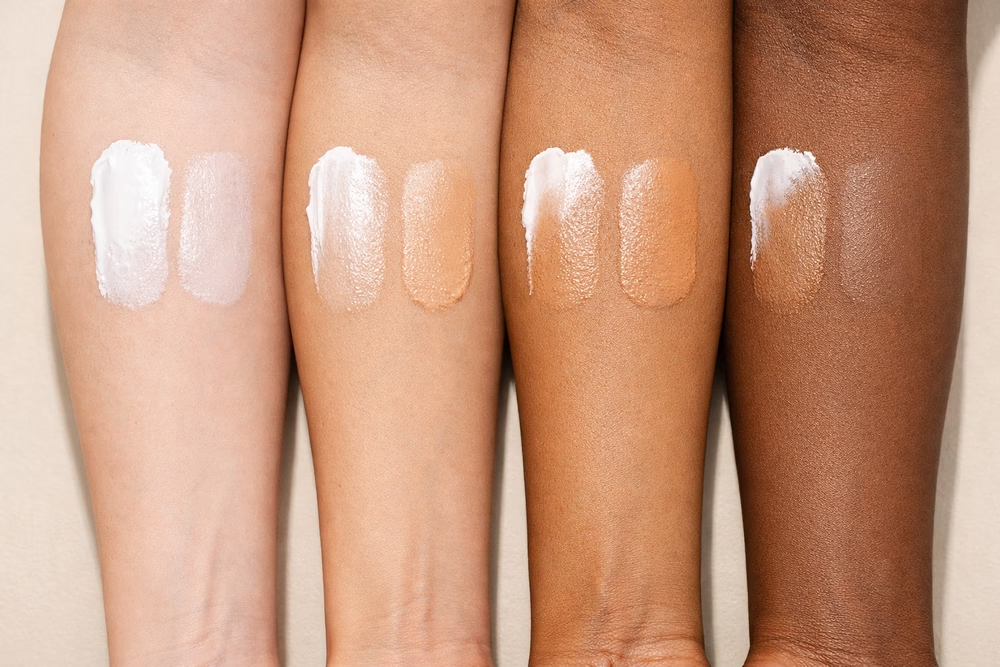
Which One Leaves Less White Cast?
Titanium dioxide usually leaves less white cast than zinc oxide.
But that does not mean it is invisible.
Both ingredients are white minerals. Both can show on skin if the formula is not well made.
Zinc oxide often looks more obvious because it is more opaque. High-zinc sunscreens can leave a pale film, especially on deeper skin tones.
This is where formula quality matters.
A good sunscreen without white cast may use a tint, smaller mineral particles, or a smart base that spreads evenly.
If you want a mineral sunscreen without white cast, try one of these options:
- A tinted mineral sunscreen.
- A sheer zinc formula.
- A zinc and titanium dioxide blend.
- A lightweight mineral sunscreen for face.
- A mineral spf moisturizer with a natural tint.
The best tinted mineral sunscreen can look more like skincare than sunscreen. It can blur redness, even the skin tone, and avoid that ghostly finish.
For deeper skin tones, tinted is often the easiest win.
Nano vs Non-Nano Zinc Oxide and Titanium Dioxide
You may see the words nano and non-nano on sunscreen labels.
Here is what they mean.
Nano particles are very small. They help mineral sunscreen look more sheer. They also help it feel smoother.
Non-nano particles are larger. They are more visible on the skin. That means they may leave more white cast.
Some people prefer non-nano because they want a more traditional mineral formula. That is fine. But you should know it may not blend as well.
If you want a clear finish, nano or micronized mineral sunscreen may be better.
If you want the most conservative mineral option and do not mind a cast, non-nano zinc oxide may suit you.
For sprays and powders, be careful. Try not to breathe them in. Lotions and creams are easier to apply well and control.
Zinc Oxide vs Titanium Dioxide: Safety Comparison
Both zinc oxide and titanium dioxide have long histories in sunscreen.
They are widely used in mineral formulas for adults, kids, and sensitive skin. They are also common in face sunscreens for daily wear.
For most people, both are safe when used as directed.
The bigger safety issue is not zinc vs titanium.
It is skipping sunscreen.
Sun damage adds up. It can lead to burns, early aging, dark spots, and higher skin cancer risk.
So choose a sunscreen you like enough to use every day.
That may be the best physical sunscreen with zinc oxide. It may be a hydrating mineral sunscreen for dry skin. It may be the best mineral sunscreen for face that feels weightless under makeup.
The best sunscreen is the one you will use enough of, and use again.
Which One Is Better for Daily Face Sunscreen?
For daily face sunscreen, zinc oxide gives stronger protection. Titanium dioxide gives a nicer feel.
So the best answer is simple.
Choose a broad-spectrum SPF 30 or higher that contains zinc oxide alone or zinc oxide plus titanium dioxide.
If you hate white cast, go tinted.
If your skin is dry, choose a hydrating mineral sunscreen. Look for a creamy texture and moisturizing ingredients.
If your skin is oily, choose a light fluid or matte mineral sunscreen.
If your skin breaks out, choose a non comedogenic mineral sunscreen.
If you want one product for quick mornings, a mineral spf moisturizer can work well. Just make sure you apply enough. A tiny dab will not give you the SPF on the label.
Best Daily Choice by Skin Type
For dry skin, choose a creamy mineral sunscreen with a soft finish. A hydrating mineral sunscreen can help your skin feel calm and smooth.
For oily skin, choose a matte or oil-free formula. A mineral sunscreen for oily skin should feel light, not greasy.
For sensitive skin, choose fragrance-free zinc oxide or a zinc blend.
For deeper skin tones, choose a tinted sunscreen or mineral sunscreen without white cast.
For acne-prone skin, choose non-comedogenic and avoid heavy balms.
Which One Is Better for Outdoor Use?
For outdoor use, zinc oxide is usually the better choice.
You want strong broad protection when you spend hours outside. Think beach days, hiking, yard work, sports, fishing, driving, or outdoor jobs.
A zinc-heavy sunscreen or a zinc and titanium blend can work well.
- Look for these features:
- Broad spectrum.
- SPF 30 or higher.
- SPF 50 for long outdoor time.
- Water resistant.
- Comfortable texture.
- Easy reapplication.
Do not rely on sunscreen alone. Wear a hat. Use sunglasses. Seek shade when the sun is harsh. Cover your skin when you can.
And reapply.
Most people do not apply enough sunscreen. They also forget to reapply after sweat or water. That makes even a great sunscreen perform poorly.
Should You Use Zinc Oxide and Titanium Dioxide Together?
Yes, you can. In fact, many good mineral sunscreens use both.
This is not a bad sign. It is often a smart formula choice.
Zinc oxide helps with broad UVA and UVB coverage.
Titanium dioxide helps with UVB protection and texture.
Together, they can create a lighter mineral sunscreen that still protects well.
This blend can be great for face products. It can also work well in tinted formulas, moisturizers with SPF, and daily sunscreens.
Choose a zinc and titanium dioxide blend if you want a balance of protection, comfort, and finish.
Choose zinc oxide alone if you want the strongest single mineral filter and do not mind a richer feel.
How to Read a Mineral Sunscreen Label
A sunscreen label can tell you a lot.
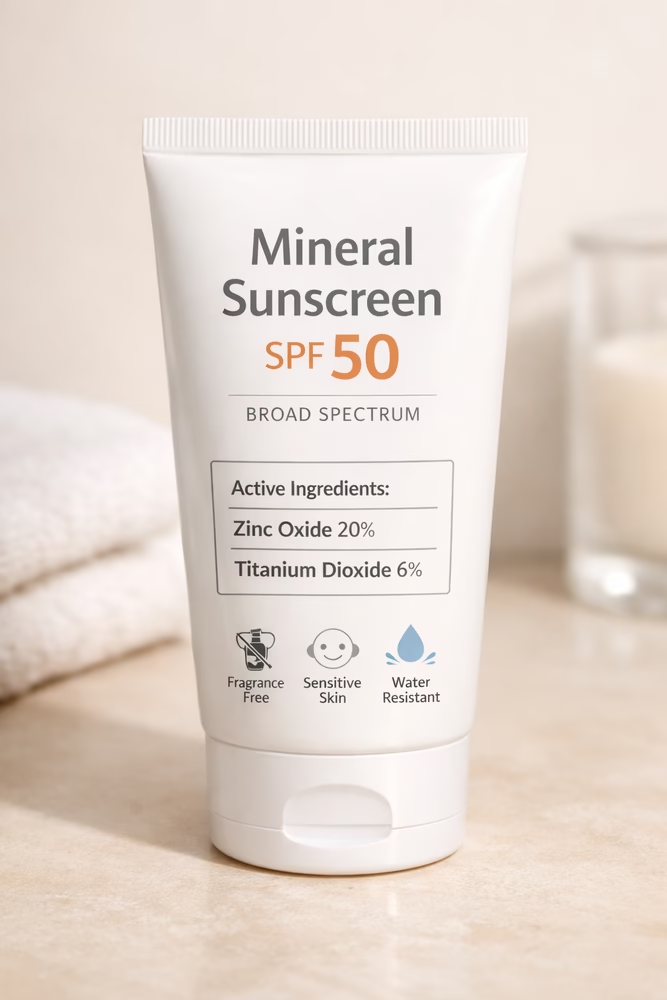
Start with the active ingredients. Look for zinc oxide, titanium dioxide, or both.
Then check for broad spectrum. This matters because it means the sunscreen protects against both UVA and UVB rays.
Next, check the SPF.
For daily use, SPF 30 or higher is a smart choice. For long outdoor time, SPF 50 can give you more room for error.
Then check water resistance. If you sweat or swim, choose water resistant 40 minutes or 80 minutes.
Now look at the skin claims.
- If your skin is sensitive, choose fragrance-free.
- If you break out, choose non-comedogenic.
- If you hate shine, choose oil-free or matte.
- If you hate cast, choose tinted or sheer.
- If your skin feels tight, choose hydrating.
This is how you find the best mineral sunscreen for your real life, not just the one with the prettiest bottle.
Common Myths About Zinc Oxide and Titanium Dioxide Sunscreen
Myth 1: Mineral Sunscreen Blocks 100% of UV Rays
No sunscreen blocks every ray.
That is why you still need shade, hats, and smart sun habits.
Sunscreen helps a lot. But it is not a magic shield.
Myth 2: Titanium Dioxide Is Bad
Titanium dioxide is not bad.
It is a useful mineral filter. It works very well against UVB rays. It also helps make formulas lighter and easier to wear.
It is just not as strong as zinc oxide for long UVA protection.
Myth 3: Zinc Oxide Always Looks White
Old zinc sunscreens were often thick and pasty.
New ones can look much better.
Tinted formulas, sheer fluids, and modern textures can reduce cast a lot.
If one zinc sunscreen looks awful on your skin, do not give up. Try a different formula.
Myth 4: Higher SPF Always Means Better Protection
Higher SPF can help with UVB protection.
But SPF is not the whole story.
You still need broad spectrum protection. You also need to apply enough and reapply.
A broad-spectrum SPF 30 that you use well is better than an SPF 70 you barely apply.
Myth 5: Mineral Sunscreen Does Not Need Reapplication
It does.
Mineral sunscreen can rub off. Sweat can move it. Water can wash it away. Towels can remove it fast.
Reapply every two hours outdoors. Reapply sooner after swimming, sweating, or wiping your face.
Zinc Oxide vs Titanium Dioxide: Which Should You Choose?
Choose zinc oxide if you want stronger broad protection.
It is the better pick for sensitive skin, outdoor use, long UVA protection, and simple mineral formulas.
Choose titanium dioxide if you want a lighter feel and less cast.
But for best results, choose titanium dioxide in a formula that also has zinc oxide.
Choose both if you want balance.
This is often the sweet spot for daily face sunscreen. You get better coverage than titanium dioxide alone, plus a nicer texture than many zinc-only formulas.
If you want the best mineral sunscreen for face, focus on the whole formula. Do not judge by the active ingredient alone.
Ask yourself:
- Will I wear this every day?
- Does it sting?
- Does it leave a cast?
- Does it make me greasy?
- Does it work under makeup?
- Can I reapply it?
That matters more than chasing a perfect label.
Best Choice Based on Your Main Concern
- If your main concern is UVA protection, choose zinc oxide.
- If your main concern is sunburn protection, titanium dioxide can help, but zinc oxide also works.
- If your main concern is white cast, choose tinted mineral sunscreen.
- If your main concern is acne, choose non-comedogenic mineral sunscreen.
- If your main concern is oily skin, choose mineral sunscreen for oily skin with a matte finish.
- If your main concern is dry skin, choose hydrating mineral sunscreen.
- If your main concern is simple daily use, choose mineral sunscreen for face with SPF 30 or higher.
- If your main concern is comfort, choose the sunscreen you will use every morning without excuses.
Final Verdict: Zinc Oxide or Titanium Dioxide?
Zinc oxide is the better all-around mineral sunscreen ingredient. It gives stronger broad protection and covers more UVA rays.
Titanium dioxide is still very useful. It feels lighter, blends well, and gives strong UVB protection.
For most people, the best choice is a broad-spectrum SPF 30 or higher sunscreen with zinc oxide alone or a blend of zinc oxide and titanium dioxide.
- If white cast bothers you, choose tinted.
- If your skin is dry, choose hydrating.
- If your skin is oily or acne-prone, choose oil-free and non-comedogenic.
- If your skin is sensitive, keep it simple and fragrance-free.
The best mineral sunscreen is not always the most expensive one. It is the one that protects well, feels good, and makes you want to use it every day.
FAQs About Zinc Oxide vs Titanium Dioxide Sunscreen
Is zinc oxide better than titanium dioxide sunscreen?
Yes, zinc oxide is usually better for broad protection. It covers more UVA and UVB rays. Titanium dioxide feels lighter and works well against UVB rays, but it is weaker for long UVA coverage.
Is titanium dioxide sunscreen safe?
Yes. Titanium dioxide is widely used in mineral sunscreen. It is common in face sunscreens, tinted formulas, and daily SPF products.
Is zinc oxide sunscreen safe?
Yes. Zinc oxide is one of the most trusted mineral sunscreen filters. It is often used in sensitive skin, baby, and daily face sunscreen formulas.
Which is better for sensitive skin?
Zinc oxide is usually better for sensitive skin. Still, titanium dioxide can also work if the formula is gentle, fragrance-free, and made for sensitive skin.
Which one leaves less white cast?
Titanium dioxide usually leaves less white cast. But a tinted zinc sunscreen or mineral sunscreen without white cast can also look natural.
Can a sunscreen have both zinc oxide and titanium dioxide?
Yes. Many mineral sunscreens use both. This can give a good mix of protection, texture, and finish.
Which is better for acne-prone skin?
Zinc oxide is often a good choice. But the full formula matters more. Look for a non comedogenic mineral sunscreen that feels light and oil-free.
What is the best mineral sunscreen for face?
The best mineral sunscreen for face is broad spectrum, SPF 30 or higher, comfortable, and suited to your skin type. For most people, zinc oxide or a zinc and titanium dioxide blend works best.
What is the best tinted mineral sunscreen for white cast?
The best tinted mineral sunscreen should match your skin tone, feel light, and offer broad-spectrum SPF 30 or higher. A tint helps reduce the grey or white look that mineral filters can leave.
Should I choose mineral spf moisturizer or sunscreen?
A mineral spf moisturizer is fine for daily use if you apply enough. If you spend a lot of time outdoors, use a proper water-resistant sunscreen and reapply often.
Once you’ve chosen your preferred filter, explore our guide to the best mineral sunscreen for sensitive skin for product‑specific advice.