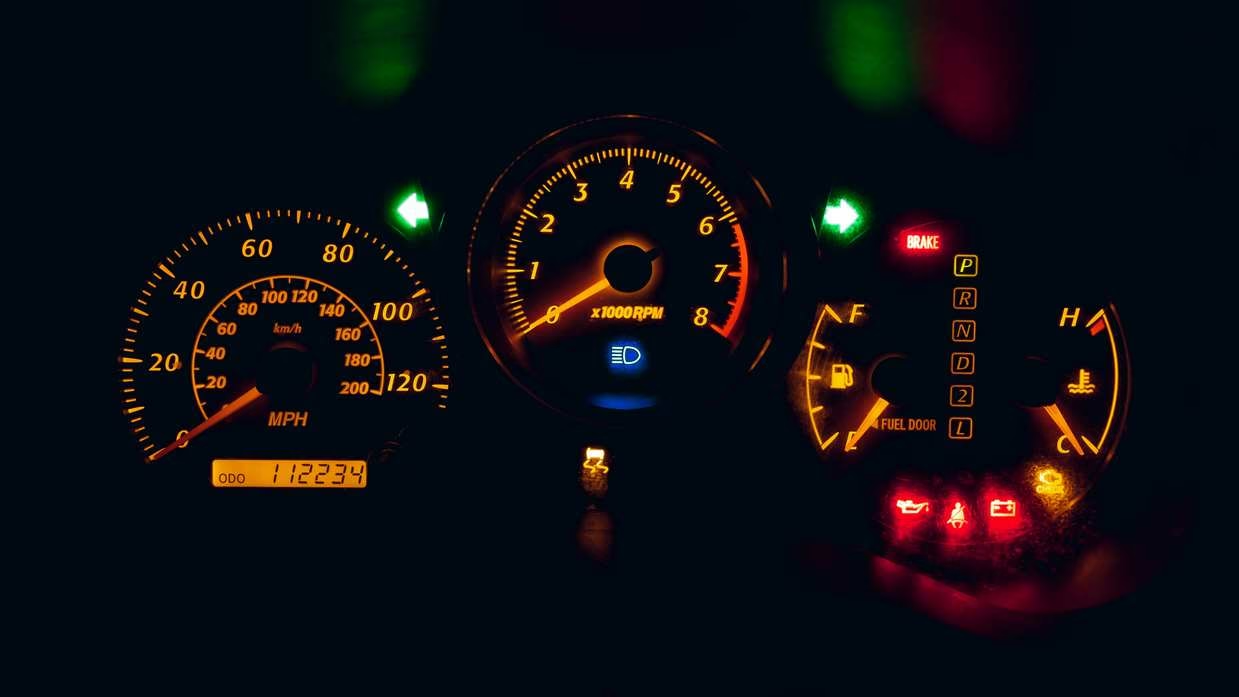
You’re driving along, and then it happens. A little battery-shaped light pops up on your dashboard.
It’s easy to assume the battery is dead. But that is not always the case.
In many cars, that light points to a charging problem, not just a bad battery. Your car may still run for a while. But if you ignore the warning, it can lose power and leave you stuck on the side of the road.
The good news is this. The problem is often easy to spot once you know what to look for.
In this guide, you’ll learn why your car battery light is on, what it really means, what you should check first, and when it is time to get help.
What Does the Battery Light Mean?
The battery light tells you that your car’s charging system is not working the way it should.
Your battery helps start the car. After that, the charging system keeps power flowing while you drive. If that system has a problem, the battery light may come on.
So when people ask, “why is my car battery light on?” the answer is often bigger than the battery itself.
The issue could be:
- A weak battery
- A failing alternator
- Loose battery cables
- A worn belt
- Damaged wires
That warning light is your car’s way of saying, “Something is wrong. Check me now.”
Why Is My Car Battery Light On? The Most Common Causes
There are a few main reasons this light shows up. Some are simple. Others need fast repair.
A Failing Alternator
This is one of the most common causes.
The alternator keeps the battery charged while the engine runs. If it starts to fail, the battery stops getting the power it needs. The light comes on because the car knows the system is not charging well.
If the alternator stops working, your car may run only until the battery runs out of power.
A Weak or Dying Battery
A battery does not last forever.
Over time, it loses strength. It may still start the car some days and struggle on others. If the battery is old or damaged, the light may turn on because it can no longer hold a steady charge.
This is more likely if your car has slow starts, weak lights, or a clicking sound when you turn the key.
Loose or Corroded Battery Terminals
Sometimes the fix is simple.
If the battery cables are loose, power cannot move well through the system. If the terminals have white or blue buildup on them, that can also block the connection.
This can trigger the battery light even if the battery itself is still good.
A Worn or Broken Serpentine Belt
Your alternator depends on a belt to work.
If that belt is worn, loose, or broken, the alternator may stop charging the battery. In some cars, you may also notice other problems at the same time, like stiff steering or weak air flow.
A bad belt can turn a small warning into a big breakdown fast.
Damaged Wires or a Blown Fuse
Cars rely on wires and fuses to move power where it needs to go.
If a wire gets loose or damaged, or a fuse fails, the charging system may stop working right. This can be harder to spot because the problem is not always easy to see.
Still, it is a real reason the battery light may come on.
A Faulty Sensor or Computer Glitch
Some cars use sensors to track battery health and charging levels.
If one of those sensors gives the wrong reading, the battery light may turn on even when the main parts still work. This is less common, but it does happen.
If everything seems fine but the light stays on, this could be the reason.
Battery Light On While Driving: Is It Safe?
This is the question most drivers really want answered.
Can you keep driving?
Maybe for a short distance. But it is not a good idea to push your luck.
If the charging system is failing, your car may be running on battery power alone. That power will not last long. Once it drops too low, the engine may stall. Your lights may dim. Your radio may cut out. In some cases, other systems can stop working too.
If the battery light comes on while driving, do this right away:
- Turn off anything you do not need
- Shut off seat heaters, extra lights, and phone chargers
- Avoid long trips
- Head to a safe place or repair shop
- Watch for signs of power loss
Do not treat the battery light like a “check later” problem. Treat it like a “deal with this soon” warning.
Signs Your Car Has a Charging Problem
The battery light is often not the only clue.
Your car may show other signs before it quits.
Watch for these problems:
- Headlights look dim
- Dashboard lights flicker
- The engine cranks slowly
- The car struggles to start
- Power windows move slowly
- The radio cuts in and out
- You smell something burning
- The car stalls or feels weak
If you notice two or more of these signs, the charging system likely needs attention now.
What to Check First If Your Battery Light Is On
You do not need to be a mechanic to do a few quick checks.
Start with the easy stuff.
Check the Battery Terminals
Open the hood and look at the battery.
Do the cable ends look loose? Do you see white, green, or blue crust around the posts?
If yes, poor contact may be the problem.
Do not touch battery parts with bare hands if there is buildup. Use care. If you know how to clean the terminals safely, that may help. If not, let a pro handle it.
Look at the Belt
Find the belt near the front of the engine.
Does it look cracked, loose, or worn? If the belt is missing or badly damaged, the alternator may not be working at all.
A squealing sound is another clue that the belt may be slipping.
Notice How the Car Feels
Is the car starting slowly? Do the lights look weak? Is the dash flickering?
These signs help point to a charging issue. They also tell you how urgent the problem may be.
Restart the Car
If it is safe, turn the engine off and restart it.
Sometimes the light may disappear for a moment. But if it comes back, do not ignore it. A warning that comes and goes is still a warning.
Get the Battery and Charging System Tested
This is the best next step.
A simple test can often tell whether the problem is the battery, the alternator, or something else in the system.
Do not guess if you can avoid it. Guessing often leads to wasted money.
How to Fix a Car Battery Light
The right fix depends on the real cause.
Here are the most common solutions.
Clean Dirty Battery Terminals
If corrosion is blocking the connection, cleaning the terminals can solve the issue.
This is one of the easiest fixes. Still, safety matters. If you are unsure, let a professional do it.
Tighten Loose Battery Cables
Loose cables can stop power from flowing the right way.
If the battery connections are not secure, tightening them may fix the problem fast.
Replace the Battery
If the battery is old, weak, or damaged, it may need to be replaced.
A new battery can solve the issue if the battery is the real problem. But do not replace it blindly. Test the system first.
Replace the Alternator
If the alternator has failed, the battery light will often stay on until it is replaced.
This is a common repair. Once fixed, the battery should start charging normally again.
Replace the Belt
If the belt is slipping or broken, replacing it can restore charging power.
This is a repair you should not delay. A failed belt can affect more than just the battery.
Repair Wires or Fuses
If the issue comes from damaged wiring or a blown fuse, the bad part needs repair or replacement.
Electrical problems can be tricky. If you suspect this type of issue, it is smart to get expert help.
Can a Bad Battery Cause the Battery Light to Come On?
Yes, it can.
But here is the part many people miss.
A bad battery is not always the main reason the light turns on. In many cases, the actual problem is the alternator or another part of the charging system.
This matters because many drivers replace the battery first. Then the light comes back a few days later.
That is why testing is so important. It helps you fix the real cause the first time.
Why Is My Battery Light On If the Battery Is New?
This happens more often than you might think.
A new battery does not rule out other problems.
If the light stays on after a battery replacement, the cause may be:
- A failing alternator
- Loose battery connections
- Dirty terminals
- A belt problem
- A wiring fault
- A bad sensor
A new battery only solves one possible issue. If the charging system still has trouble, the light will still come on.
Battery Light vs Check Engine Light: What’s the Difference?
These two lights are not the same.
The battery light usually points to a power or charging issue.
The check engine light can mean many different things. It may involve the engine, fuel system, sensors, or emissions parts.
The battery light is often more urgent in one key way. If the charging system fails, the car may stop running once the battery drains out.
So if the battery light comes on, take it seriously.
When to Stop Driving Right Away
Sometimes you can make it a short distance. Sometimes you should stop as soon as it is safe.
Pull over and get help if you notice any of these:
- The headlights get very dim
- The dashboard starts flashing
- The steering feels much harder than normal
- The engine begins to stall
- You smell burning
- The car loses power fast
These signs suggest the problem is getting worse. Waiting too long can turn a simple repair into a tow truck call.
When to Call a Mechanic
You should get professional help if:
- The battery light stays on after restart
- The car will not start
- The battery was replaced, but the light is still on
- You hear a squealing sound from under the hood
- The car keeps losing power
- The light comes on again and again
A quick test can save you time, stress, and money.
What Happens If You Ignore the Battery Light?
At first, maybe nothing dramatic.
The car may seem fine for a while. That is what makes this warning easy to ignore.
But if the charging system is not working, the battery will slowly drain. Then the real trouble starts.
Your lights may dim. The engine may crank slower. The car may die at a stoplight. Or it may refuse to start after you park it.
Ignoring the light does not make the problem go away. It just gives it time to get worse.
Simple Ways to Lower the Chance of Battery Light Problems
You cannot prevent every issue, but you can lower the odds.
Here are a few smart habits:
- Check battery terminals now and then
- Replace old batteries before they fail
- Pay attention to dim lights or slow starts
- Listen for belt noise
- Get the charging system tested if something feels off
- Avoid putting off small warning signs
A little attention now can help you avoid a much bigger problem later.
Final Answer: Why Is My Car Battery Light On?
If your battery light is on, your car is warning you about a problem in the charging system.
The cause may be a weak battery. It may be a bad alternator. It could also be loose cables, dirty terminals, a worn belt, or damaged wiring.
The key is simple. Do not ignore it.
Check the basics first. Watch for signs of power loss. And get the system tested before the car leaves you stranded.
A battery light may look small on the dash. But it is one warning that deserves quick action.
FAQs
Can I drive with the battery light on?
You may be able to drive a short distance, but it is risky. If the charging system is not working, your car can lose power without much warning.
Does the battery light mean I need a new battery?
Not always. A bad battery can cause the light, but the issue could also be the alternator, belt, wiring, or battery connections.
How long can I drive with the battery light on?
There is no safe set time. Some cars may run for a while. Others may lose power fast. It depends on the cause and how much charge is left.
Why does my battery light come on and off?
This may point to a loose cable, a belt that slips, a weak alternator, or a wiring issue. An on-and-off warning still needs attention.
Will my car die if the battery light is on?
It can. If the battery is no longer getting charged, the car may keep running only until the remaining power is used up.
Is it the alternator or the battery?
It could be either one. The only sure way to know is to test the charging system. That helps you avoid replacing the wrong part.