This guide cuts through the noise. We will walk through every common sluggish acceleration causes in plain English. You will learn how to spot the problem, test it at home, and apply a safe engine hesitation fix. No guesswork. Just a clear path back to a smooth ride. I do not push parts you do not need.
I share proven DIY car acceleration troubleshooting steps that actually work. Some fixes take five minutes. Others need a trained mechanic. I will tell you exactly which is which. Grab your tools. Let us solve your vehicle power loss diagnosis together. The right steps save you money and keep you safe.
Quick Self-Check: 3 Questions to Narrow Down the Problem (Before You Touch a Wrench)
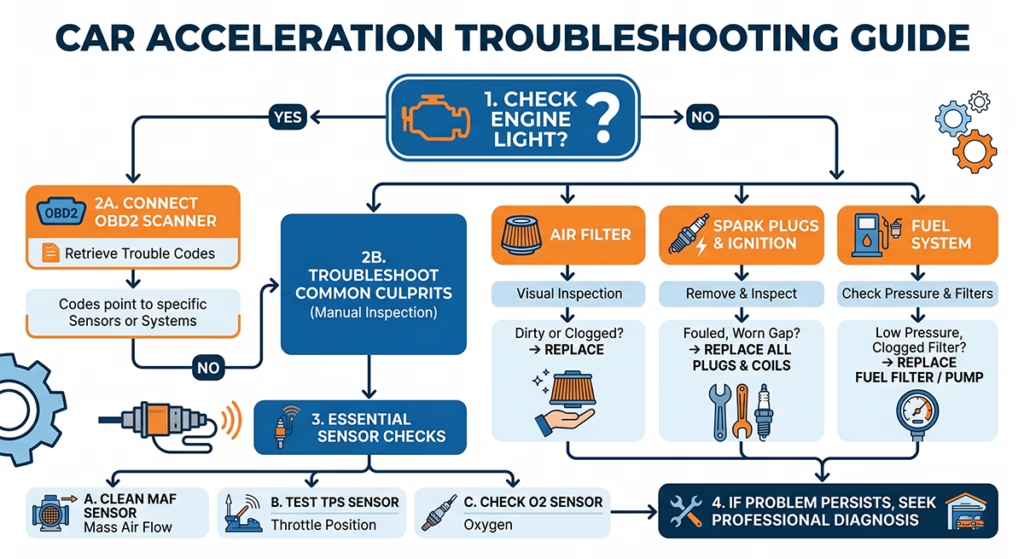
You do not need a degree to start fixing your car. You just need a sharp eye and a few simple answers. Grab a notepad. Write down what you see. These three questions cut your options in half before you buy a single tool.
1. When does the car struggle most?
Watch the pedal response closely. Does the lag happen only when you push hard? That usually points to fuel or air flow issues. Does it drag during light throttle or stoplight starts? That often signals a weak spark or sensor glitch. Note if the trouble only hits when the engine runs hot or cold. Temperature swings point to failing sensors or thick fluids. Write it down. This simple step saves hours of random guessing.
2. Do any warning lights glow on the dash?
The check engine light holds the first clue. A steady glow means the computer logged a fault. A flashing light means stop driving now. It signals a severe misfire. Even if no light appears, the problem still exists. Older systems hide faults well. Scan the codes first. A basic reader gives you the exact system name. You fix the root cause, not just the symptom.
3. What sounds or feelings match the lag?
Listen close. Sputtering or jerking points to ignition trouble. A loud hiss often means a vacuum leak. A heavy whine under load suggests a clogged exhaust. If the engine revs but speed stays flat, your transmission might slip. Match the symptom to the system. Your car tells you what it needs. You just have to listen.
✅ Pro Tip: Keep this list handy. It becomes your personal diagnostic map. Follow it step by step. You will save time, avoid bad parts, and drive with confidence again.
The 12 Most Common Causes of Power Loss When Accelerating
You need a clear path when a car loses power during acceleration. Random part swaps waste money. System checks save it. I rank these fixes by how often they occur and how easy they are to tackle at home. Follow the list from top to bottom. Most drivers solve the issue before item six. Keep your notes handy. Start simple. Trust the steps.
🟢 1. Clogged or Dirty Air Filter
Symptom: The engine feels weak. Fuel use drops. The car sounds strained.
Why: Your engine breathes air. Dust and dirt plug the paper. Less air means weak fire. Power fades fast.
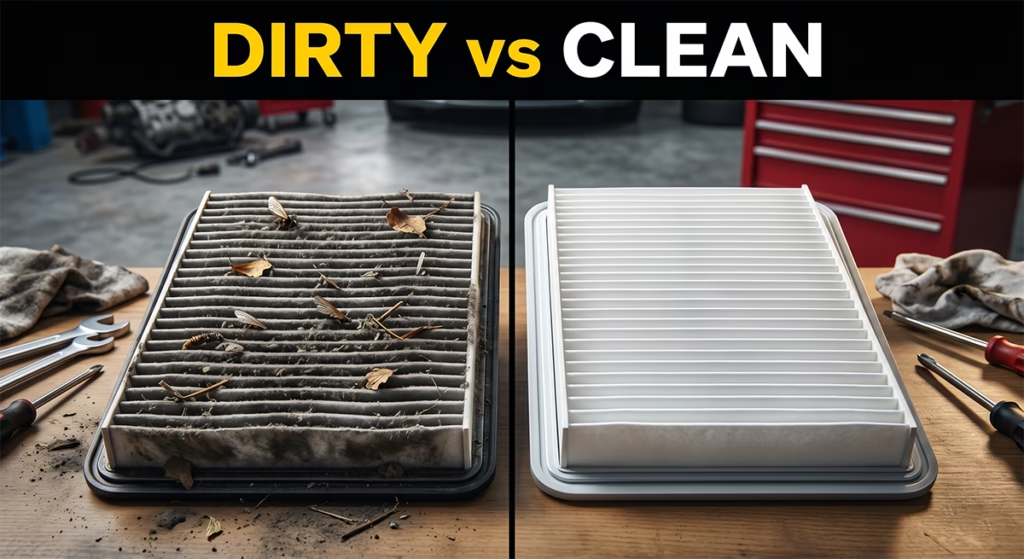
DIY Test: Pop the hood. Lift the filter box. Hold the filter to a bright bulb. Light should pass through. A solid gray block fails the test.
Fix: Toss the old one. Drop in a fresh unit. Five minutes max.
Cost: $15 to $30.
Shop: [Amazon: High-Flow Reusable Air Filter]
Tip: Check it every spring. Clean roads create clean engines.
🟢 2. Worn or Fouled Spark Plugs
Symptom: The car shakes at idle. It hesitates on hills. Cold starts feel rough.
Why: Plugs light the fuel mix. Old tips wear thin. The spark gets weak. The engine stumbles under load.
DIY Test: Pull one plug with a socket. Check the tip. Look for black soot, oil, or a wide gap. Healthy tips look clean and sharp.
Fix: Replace the full set. Match the gap to your manual.
Cost: $20 to $60.
Shop: [Amazon: OEM-Spec Spark Plug Kit + Gap Tool]
Warning: Stick to the correct heat range. Wrong plugs cause more trouble.
🟢 3. Dirty Fuel Injectors
Symptom: Power comes in waves. The pedal feels uneven. Gas mileage drops.
Why: Injectors spray fuel in a fine mist. Road dust and old gas leave film. The spray turns heavy. The mix runs rich or lean.
DIY Test: Add a trusted cleaner to your next tank. Drive two full tanks. Watch for smoother pulls. This simple engine hesitation fix works for mild buildup.
Fix: Use a quality additive first. Skip harsh chemicals.
Cost: $10 to $25 per bottle.
Shop: [Amazon: Top-Rated Fuel System Cleaner]
Note: Severe clogs need a pro flush. Know your limits.
🟡 4. Clogged Fuel Filter
Symptom: Power fades at high speed. The engine sputters past 3,000 RPM.
Why: The filter traps rust from the tank. It plugs slowly. Fuel flow drops when you press hard.
DIY Test: Check your service log. Has it passed 30,000 miles? If yes, suspect the filter. This ranks high among sluggish acceleration causes in older cars.
Fix: Swap it out. Find the location in your manual. It sits under the car or near the tank.
Cost: $25 to $50.
Shop: [Amazon: Vehicle-Specific Fuel Filter]
Safety: Relieve fuel pressure first. Work outside. Wear gloves.
🟡 5. Failing Fuel Pump
Symptom: Power cuts out on hard pulls. The car stalls on steep hills.
Why: The pump pushes gas to the engine. Worn parts lose pressure. The engine starves at high demand.
DIY Test: Turn the key to ON. Do not start it. Listen near the rear seat. A strong hum means good flow. A weak click or silence means trouble.
Fix: Replace the pump. You may need to drop the tank.
Cost: $80 to $200.
Shop: [Amazon: Electric Fuel Pump Test Kit]
Pro Note: Skip this if tank access needs heavy tools. Call a shop.
🟡 6. Faulty Mass Airflow (MAF) or Oxygen (O2) Sensors
Symptom: Rough acceleration. Poor gas mileage. Check engine light glows steady.
Why: These sensors read air and exhaust flow. The computer uses that data to mix fuel. Bad data means bad mix. Power drops fast.
DIY Test: Scan for codes. P0100 points to the MAF. P0130 points to an O2 sensor. Spray MAF cleaner on the wire inside. Let it dry. Reset the light. This is a staple in DIY car acceleration troubleshooting.
Fix: Clean first. Replace only if the lag returns.
Cost: $10 for cleaner. $40 to $120 per sensor.
Shop: [Amazon: MAF Sensor Cleaner + OEM Replacement Sensors]
Critical: Never use brake cleaner. It ruins the sensor wire.
🟡 7. Clogged Catalytic Converter
Symptom: Heavy power loss. Hot hood smell. Sulfur or rotten egg scent.
Why: The converter cleans exhaust gases. It melts or clogs over time. Exhaust backs up. The engine chokes.
DIY Test: Use a temp gun. Check the pipe before the unit. Then check after. A gap over 100°F means a block.
Fix: Replace the unit. It bolts on. The work takes patience.
Cost: $150 to $500+.
Shop: [Amazon: Exhaust Backpressure Gauge]
Warning: Do not remove it. It breaks emission laws. Keep it legal.
🟡 8. Faulty Throttle Position Sensor (TPS)
Symptom: Dead spots in pedal response. Sudden surges. Erratic idle.
Why: The TPS tells the computer how far you press. Worn tracks send wrong signals. The engine reacts late.
DIY Test: Scan for P0120 codes. Use a multimeter. Watch the voltage as you press. It should rise smooth. Jumps mean a bad sensor.
Fix: Swap it out. Most plug right in.
Cost: $30 to $90.
Shop: [Amazon: Digital Multimeter + TPS Replacement Parts]
Tip: Run a throttle relearn after install. It resets the idle.
🔴 9. Ignition Coil Failure
Symptom: Rough ride. Misfire codes. Power drops under load.
Why: Coils boost voltage for the plugs. Heat cracks the casing. The spark dies. The cylinder stops working.
DIY Test: Swap coils between cylinders. Clear codes. Drive it. If the misfire moves, the coil failed.
Fix: Replace the bad coil. Bolt it off. Plug the new one on.
Cost: $40 to $100 per coil.
Shop: [Amazon: Coil-on-Plug Replacement Kit]
Prevention: Change plugs with the coils. They wear together.
🔴 10. Vacuum Leaks
Symptom: High idle. Hesitation. Hissing from the engine bay.
Why: Rubber hoses age and crack. Air sneaks past the sensors. The mix runs lean. The engine stumbles.
DIY Test: Spray soapy water on hoses while idle. Bubbles show the leak. Or use a smoke machine for hidden spots. This step speeds up any vehicle power loss diagnosis.
Fix: Replace cracked hoses or intake seals.
Cost: $10 to $40 for hose kits.
Shop: [Amazon: Vacuum Hose Assortment + DIY Smoke Tester]
Pro Move: Check PCV and brake booster lines first. They fail most.
🔴 11. Transmission Issues (Slipping, Low Fluid)
Symptom: RPMs climb. Speed stays flat. Shifts feel late or harsh.
Why: Low fluid or worn clutches drop grip. Power leaves the drivetrain. The engine spins free.
DIY Test: Check the dipstick. Fluid should read full and pink. Dark or burnt smell means trouble.
Fix: Drain and refill fluid. Change the filter if your model allows.
Cost: $50 to $100 for fluid kits.
Shop: [Amazon: Transmission Fluid + Funnel Kits]
Warning: Do not drive hard with slipping. It kills the gearbox fast.
🔴 12. Timing Chain/Belt Wear or Jumped Timing
Symptom: Heavy power loss. Loud rattles. Engine refuses to start.
Why: Chains and belts sync the engine breath. Stretched links skip teeth. Valves hit pistons. Power vanishes.
DIY Test: Listen on cold start. A sharp rattle means worn guides. Check service history for belt age.
Fix: Replace the full timing set. It demands special tools.
Cost: $200 to $800 for parts.
Shop: [Amazon: Engine Timing Tool Kits]
Critical: Stop cranking if you suspect a skip. You risk total engine ruin.
When to STOP DIY and Call a Professional
You know your limits. That keeps you safe. Some jobs belong in home garages. Others need a lift and trained hands. I want you to save money. I also want you to avoid costly mistakes. Use these clear signs to pick the right path.
Stay DIY when:
You own basic tools. You can read a service manual or follow a trusted guide. The fix bolts right on. Filters, plugs, and sensors fall here. You can test the part before you buy it. You feel sure about each step.
Call a pro when:
The job needs special gear. Compression tests, live data scopes, or smoke machines cost more than the repair itself. The work touches the engine core. Timing chains or internal gears demand exact torque specs. Safety systems link to the fault. Brakes, steering, or airbags never guess. You feel stuck. A hunch is not a plan.
Smart move: Pay for a quick scan first. Many shops charge fifty to one hundred dollars for a true read. You get the exact code. You see the part list. Then decide. Do you buy the part and install it? Or hand the whole job to them. You stay in control. You avoid wasted trips to the auto store. A small fee now beats a big bill later. Trust your gut. Step back when doubt grows. Safe cars run best.
Prevention: 5 Habits to Avoid Power Loss in the Future
Fixing a problem feels good. Stopping it first feels better. Simple habits keep your engine strong. They save fuel. They cut repair bills. Follow these five steps. Your car will thank you.
1. Stick to the maintenance calendar.
Replace air and fuel filters on time. Swap spark plugs at the right miles. Change your oil when it turns dark. Fresh parts burn clean. Clean engines pull strong. Set phone alerts. Out of sight leads to expensive bills.
2. Fill up with quality gas.
Cheap fuel leaves heavy residue. It coats injectors and chokes flow. Pick stations that sell top-tier brands. The extra cents pay off fast. You get a steady mix every trip. Your throttle stays sharp.
3. Never ignore warning lights.
A soft glow means early trouble. A quick scan catches weak parts. You fix a ten-dollar sensor today. You skip a five-hundred pump swap tomorrow. Pull the code right away. Act before the lag turns heavy.
4. Warm up with gentle pulls.
Cold metal needs time to move. Thick oil flows slow at first. Hard starts strain weak seals. Drive soft for the first three miles. Let fluids spread. Let gaskets settle. Then press with confidence.
5. Keep a simple repair log.
Write down every part you change. Note the date and the mileage. Patterns show up fast. You see which filters clog first. You spot weak sensors early. Data beats memory every time. Share the log with your next mechanic. It speeds up every visit.
Quick wrap: Small steps build long life. You do not need a garage full of tools. You just need steady care. Your car runs smooth. Your wallet stays full.
Frequently Asked Questions
Q: Can low oil cause loss of power when accelerating?
A: Yes, but indirectly. Low oil raises engine friction. The computer may trigger limp mode to protect parts. Always check your dipstick first. It takes ten seconds. It solves many sluggish acceleration causes fast.
Q: Why does my car lose power only when the AC is on?
A: The AC compressor adds heavy load. A weak fuel pump or dirty sensor struggles under extra demand. The lag shows up only then. Fix the root issue. Your DIY car acceleration troubleshooting starts with a full system check.
Q: How much does it cost to fix acceleration power loss?
A: It ranges wide. A $20 air filter solves one case. A $400 fuel pump fixes another. Severe vehicle power loss diagnosis can hit $1,200 for catalytic work. Scan first. Test second. Buy parts last. You avoid costly guesswork.
Q: Can bad gas cause power loss?
A: Absolutely. Contaminated or low-octane fuel burns uneven. The engine misfires. Power drops. Try one tank of top-tier gas. Add a quality injector cleaner. Many drivers see a smooth engine hesitation fix in two fill-ups.
Q: Is it safe to drive with power loss?
A: Only if the lag is mild and you know the cause. Severe hesitation or stalling means pull over. You risk losing power on a merge or hill. Safety beats schedule. When a car loses power during acceleration, trust your gut. Stop. Diagnose. Drive smart.
Conclusion
You now hold a clear map. Power loss has logical roots. Start with simple checks. Air filters. Spark plugs. Fuel flow. Most drivers fix the issue fast. You save cash. You gain skill. But know your limits. If doubt grows, pause.
A small diagnostic fee beats a big repair bill. I share honest steps. No fluff. No fake promises. Just real fixes that work. Bookmark this guide. Share it with a friend who needs help. And if you grab a tool through our links, thank you. It keeps this content free and truthful. Drive safe. Drive strong. Your car deserves steady care. You deserve a smooth ride. Let us get you back on the road with confidence.