
A shaking steering wheel can feel scary. It can also be easy to ignore at first. Maybe it only shows up on the highway. Maybe it starts when you hit the brakes. Maybe it comes and goes.
Do not brush it off.
When your steering wheel shakes while driving, your car is telling you something is wrong. In some cases, the fix is simple. Low tire pressure. Mud packed inside a wheel. Tires that need balancing. In other cases, the problem can be more serious. Worn front-end parts. Brake trouble. A damaged wheel.
The good news is this: the timing of the shake gives you clues. If you notice when it happens, you can narrow the cause fast. That saves time, stress, and money.
This guide will help you do exactly that. You will learn the most common causes, what you can safely check at home, which DIY fixes are worth trying first, and when it is time to stop driving and call a mechanic.
🛞 Drive With Comfort & Style | Recommended Car Wheel Covers 🛞
Premium steering wheel covers – velvet, leather, ergonomic grip & lasting protection

Wheel Cover (Velvet)

Steering Wheel Cover

Wheel Cover

Wheel Cover
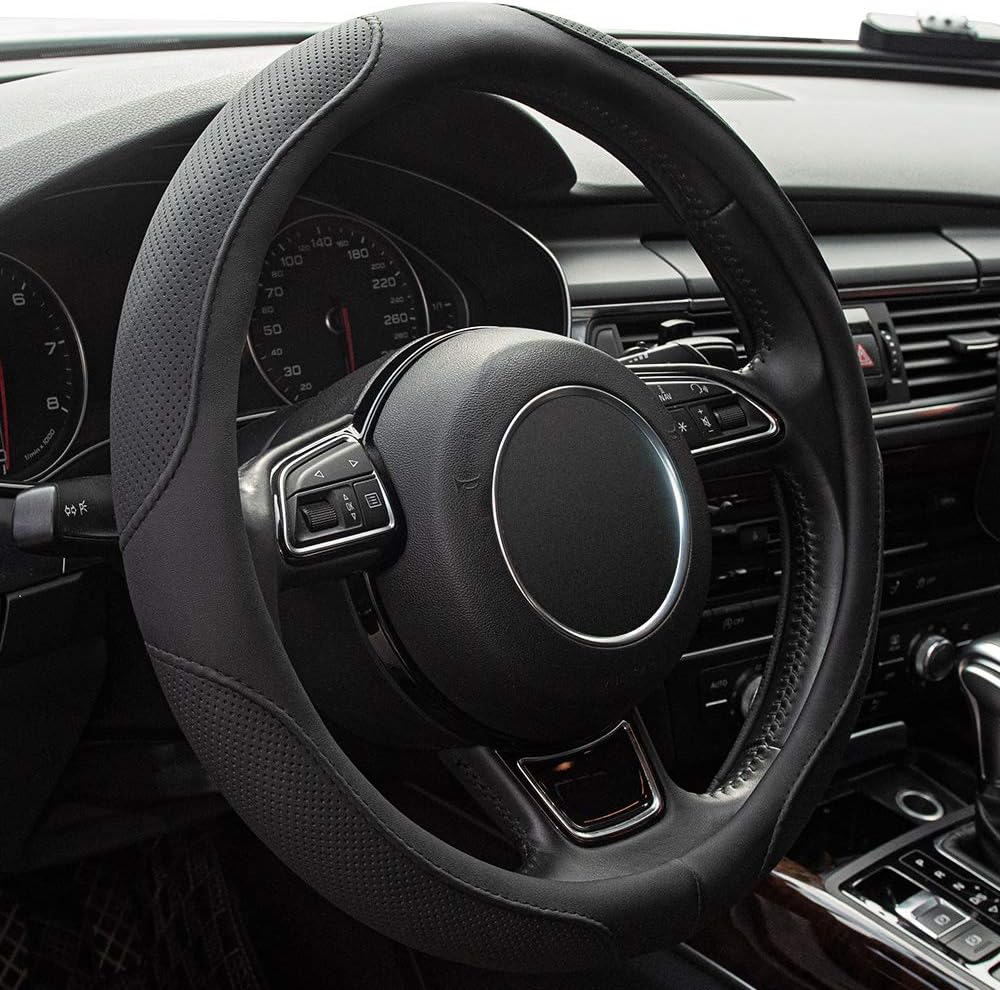
Steering Wheel Cover
Is It Safe to Drive With a Shaking Steering Wheel?
Sometimes, yes. Sometimes, no.
A mild shake that starts at one speed may point to a tire balance issue. That is still worth fixing soon, but it may not mean the car is about to fail.
A strong shake is different. If the wheel jerks hard, the car pulls, or the steering feels loose, treat it as a safety problem.
It may be a smaller issue if:
- the shake is light
- it only happens at one speed range
- you recently drove through mud or snow
- your tire pressure has been low
- the car still feels steady and easy to control
Stop driving and get help right away if:
- the shaking is strong or getting worse
- the car pulls hard to one side
- the steering feels loose or vague
- you hear clunking, grinding, or humming
- the shake started after hitting a pothole or curb
- the brake pedal pulses hard and the wheel shakes when braking
- you smell something hot or burning
- you see a tire bulge or obvious wheel damage
If you are ever unsure, play it safe. A cheap inspection now can stop a big repair later.
Quick Diagnosis: When Does the Steering Wheel Shake?
This is the fastest way to narrow the problem. Ask one simple question:
When does the shaking happen?
The answer can point you in the right direction fast.
If the steering wheel shakes at high speed
This often points to a tire or wheel issue. The most common causes are:
- unbalanced tires
- uneven tire wear
- a bent wheel
- alignment problems
This type of shake often starts around highway speed. It may feel better at lower speeds. Then it comes back as you go faster.
If the steering wheel shakes when braking
This often points to brake trouble. The most common cause is a worn or uneven brake rotor. That is the metal disc your brakes squeeze to slow the car down.
Other causes can include:
- brake parts sticking on one side
- worn front-end parts that make the shake feel worse
- wheel or tire issues that only become obvious during braking
If the car drives fine until you press the brake pedal, start by thinking brakes.
If the steering wheel shakes during acceleration
This can point to a few different problems. In many cases, it still comes back to tires or wheels. But it can also mean there is wear in the front suspension or axle area.
Common causes include:
- tire or wheel problems
- worn steering or suspension parts
- axle trouble, especially on front-wheel-drive cars
If the steering wheel shakes all the time
This can be more serious. A constant shake may mean:
- a damaged tire
- a bad wheel bearing
- loose steering parts
- worn suspension parts
- major wheel or alignment damage
If it shakes at low speed, city speed, and highway speed, do not wait too long to deal with it.
Most Common Causes of a Shaking Steering Wheel While Driving
Now let’s break down the usual suspects.
Unbalanced Tires
This is one of the most common reasons for steering wheel shake. Tires need even weight around the wheel to spin smoothly. If that balance is off, the wheel can wobble at speed.
Signs of unbalanced tires include:
- shaking mostly at highway speed
- vibration that comes and goes with speed
- no major noise or brake issues
The fix is often simple. A tire shop can rebalance the wheels.
Uneven Tire Wear or Tire Damage
A tire does not have to be flat to cause a problem. If the tread wears unevenly, the tire can roll badly and shake the steering wheel. The same goes for a tire with a bulge, flat spot, or hidden internal damage.
Look for:
- bald patches
- choppy tread
- a sidewall bulge
- cracks
- tread that looks wavy or rough
A damaged tire should not be ignored. Even if the shake is mild now, the risk can grow fast.
Incorrect Tire Pressure
Low or uneven tire pressure can make your car ride badly. It can also cause poor wear and weak handling. On its own, it may not always cause a harsh shake, but it can trigger or worsen one.
This is why tire pressure should be your first check. It is quick, easy, and free if you already have a gauge.
Bent Wheel
A hard hit from a pothole or curb can bend a wheel. Even a small bend can create a big vibration.
Signs of a bent wheel include:
- shaking that started after an impact
- air loss from one tire
- vibration that balancing does not fix
Sometimes the bend is easy to spot. Sometimes it is not. A shop can confirm it fast.
Wheel Alignment Problems
Alignment means the wheels point in the right direction and sit at the right angle. If alignment is off, the car may pull, the steering wheel may sit crooked, and tires can wear in odd ways.
Alignment issues do not always cause a steering wheel shake by themselves. But they often make other problems worse.
Warped or Uneven Brake Rotors
If your steering wheel shakes when you brake, this is high on the list. The brake rotor may no longer have a smooth surface. When the brake pads press against it, the force changes over and over. That creates a shake you feel in the wheel.
This is one of the clearest symptom patterns in this whole issue.
Worn Suspension Parts
Your suspension helps the car stay stable over bumps and during turns. If parts wear out, the front end can start to feel loose and shaky.
Possible signs include:
- clunking over bumps
- extra bouncing
- shaky steering
- poor control on rough roads
Worn Steering Parts
Parts like tie rods help connect your steering wheel to the front wheels. If these parts wear out, the wheel may shake, wander, or feel loose.
This is not a problem to ignore. Steering parts affect control. If the car feels unstable, have it checked soon.
Bad Wheel Bearing
A wheel bearing helps the wheel spin smoothly. When it wears out, it can cause vibration and noise.
Common clues include:
- a humming or growling sound
- vibration that gets worse over time
- a rough feel that changes with speed
Axle or Drivetrain Problems
If the shake shows up more during acceleration than during cruising, the axle area may be involved. This is less common than a tire issue, but it does happen.
If the problem gets stronger under power, do not rule this out.
Extended DIY Diagnosis: What You Can Safely Check at Home
You do not need to take your car apart to learn a lot. A few safe checks can help you narrow the problem before you spend money.
Before You Start: Safety First
Keep it simple and safe.
- Park on flat ground
- Turn the engine off
- Let the brakes cool down
- Use wheel chocks if needed
- Never go under a car supported only by a jack
- If anything looks loose or dangerous, stop and get help
Now let’s move through the checks.
DIY Check 1: Check Tire Pressure
Start here every time.
Use a tire pressure gauge and compare the reading to the number on the sticker inside the driver’s door. Do not guess. Do not use the number printed on the tire sidewall.
Make sure all four tires are set correctly. One low tire can throw the whole car off.
DIY Check 2: Inspect the Tires Closely
Walk around the car and look at each tire.
Check for:
- uneven tread wear
- bald spots
- bulges
- cuts
- nails or screws
- cracks
- rough or wavy tread
If one tire looks much worse than the others, you may have found your problem.
DIY Check 3: Look for Mud, Snow, or Debris Inside the Wheels
This one gets missed all the time.
If mud, wet dirt, snow, or small stones stick inside the wheel, they can upset the balance. That can create a shake at speed.
If you see packed debris, clean it out and test drive again.
DIY Check 4: Pay Attention to the Speed Range
Take a mental note or write it down.
Ask yourself:
- Does the shake start at 50 mph?
- Does it get worse at 60 or 70?
- Does it fade at lower speed?
- Does it only happen when I brake?
- Does it happen during acceleration?
This pattern matters. It helps separate tire, brake, and front-end issues.
DIY Check 5: Notice Any Pulling or Noise
While driving, pay attention to what the car does along with the shake.
Watch for:
- pulling left or right
- a humming sound
- clunking over bumps
- grinding when braking
- a loose or wandering feel in the steering
Vibration by itself is one clue. Vibration plus noise is a bigger clue.
DIY Check 6: Do a Simple Visual Brake Check
You do not need to remove anything. Just look through the wheel if you can.
See if you notice:
- deep grooves on the brake rotor
- heavy rust buildup
- obvious scoring
- one side looking much worse than the other
This will not confirm everything, but it may point you toward a brake issue.
DIY Check 7: Think Back to What Happened Before the Shake Started
This step is more useful than people think.
Ask yourself:
- Did I hit a pothole?
- Did I hit a curb?
- Did I get new tires?
- Did I rotate the tires recently?
- Did I have brake work done?
Many steering wheel shake problems start right after an event. That event often reveals the cause.
DIY Check 8: Look at How the Car Sits
Stand back and look at the car on level ground.
Does one side sit lower? Does the front look uneven? Does the car bounce too much when you push down on a corner?
These signs can point to suspension wear.
DIY Fixes You Can Try First
Not every fix is safe to do at home. But a few simple ones are worth trying.
Correct the Tire Pressure
This is the easiest first step. It costs almost nothing and can improve both ride and handling.
Remove Debris From the Wheels
Clean out mud, snow, or packed dirt from the inside of the wheel. Then test drive again.
Replace a Damaged Tire
If you see a bulge, split, or severe wear, do not keep driving on that tire. Replace it.
A bad tire can mimic bigger problems. It can also become a dangerous one.
Book a Tire Balancing Service
This is often the smartest first paid step. It is usually cheaper than brake or suspension work, and it solves a very common cause.
Get a Wheel Alignment
If the car pulls, the steering wheel sits off-center, or the tires show uneven wear, an alignment is worth doing.
Rotate the Tires Only If You Know the Correct Pattern
This can help in some cases, but it is not a cure for a damaged tire or bent wheel. If you are not sure how to do it right, skip it.
Problems a DIY Check Usually Cannot Confirm
Home checks are useful, but they have limits.
Some issues need shop tools or a trained eye. These include:
Brake Rotor Runout
A rotor can look okay but still be uneven enough to cause shaking during braking.
Hidden Wheel Damage
A wheel may be bent on the inner side where you cannot easily see it.
Worn Tie Rods or Ball Joints
These are steering and suspension parts that can loosen over time. They affect control and need proper inspection.
Wheel Bearing Play
A bad wheel bearing may not be obvious without lifting the car and checking for movement.
Axle Trouble
This can be hard to spot without a closer look from below.
Steering Rack Issues
These are less common, but they can cause vague or shaky steering.
If your DIY checks do not reveal a clear cause, that does not mean nothing is wrong. It just means the next step should be a professional inspection.
What Does It Cost to Fix a Shaking Steering Wheel?
The cost depends on the cause. Some fixes are cheap. Others are not.
Lower-Cost Fixes
These are often the first things to check:
- tire pressure correction
- wheel balancing
- debris removal
Mid-Range Fixes
These can cost more, but they are still common:
- wheel alignment
- tire replacement
- brake service
Higher-Cost Fixes
These tend to be more expensive because of parts and labor:
- wheel bearing replacement
- suspension repair
- steering part replacement
- axle repair
The smartest money move is not guessing. Start with the simple checks. Then pay for the most likely fix first.
What Happens If You Ignore a Shaking Steering Wheel?
Ignoring the problem rarely saves money. It usually does the opposite.
A small vibration can turn into:
Faster Tire Wear
Bad tires wear out even faster when left alone.
Poor Braking
If brakes are part of the issue, stopping power can suffer.
More Damage to Front-End Parts
A tire or wheel problem can put extra stress on suspension and steering parts.
Worse Fuel Economy
A car that rolls badly often wastes more fuel.
Bigger Repair Bills
What starts as a balance issue can lead to tire damage. What starts as a worn part can affect other parts.
More Risk on the Road
If the problem involves steering or a failing tire, the safety risk can rise fast.
When to Call a Mechanic Right Away
You should book an inspection as soon as possible if:
- the steering wheel shakes hard
- the car pulls or wanders
- the steering feels loose
- the vibration gets worse quickly
- braking makes the wheel shake badly
- you hear grinding, clunking, or loud humming
- you hit a pothole or curb hard
- you see tire damage or a wheel problem
If your gut says the car feels unsafe, trust that feeling.
Frequently Asked Questions
Why is my steering wheel shaking only at 60 mph?
That often points to tire balance, uneven tire wear, or a bent wheel. Speed-specific vibration is a strong clue that the problem starts in the tire and wheel area.
Why does my steering wheel shake when I brake?
Brake rotor issues are a common reason. Worn front-end parts can also make the shake worse when braking.
Can bad tires cause steering wheel vibration?
Yes. Bad tires are one of the most common causes. Uneven wear, internal damage, low pressure, or poor balance can all lead to steering wheel shake.
Can an alignment fix a shaking steering wheel?
Sometimes. If poor alignment is part of the issue, it can help. But alignment will not fix a damaged tire, bent wheel, or bad brake rotor.
Is a shaking steering wheel always serious?
Not always. Sometimes the fix is simple. But the feeling can be similar whether the issue is minor or serious. That is why you should never ignore it.
Can I fix steering wheel vibration myself?
You can safely check tire pressure, inspect the tires, remove wheel debris, and track the symptom pattern. More complex brake, steering, and suspension issues should be checked by a professional.
Final Thoughts
A shaking steering wheel while driving is not something to “wait and see” forever. The problem might be simple. It might be serious. Either way, the sooner you narrow it down, the better.
Start with the easy checks.
Check tire pressure. Inspect the tires. Look for debris in the wheels. Notice when the shake happens. Pay attention to noise, pulling, and braking.
Those simple steps can point you in the right direction fast.
If the cause still is not clear, do not guess. Get the car checked before the problem gets worse. That one decision can save you money and make your next drive a lot safer.