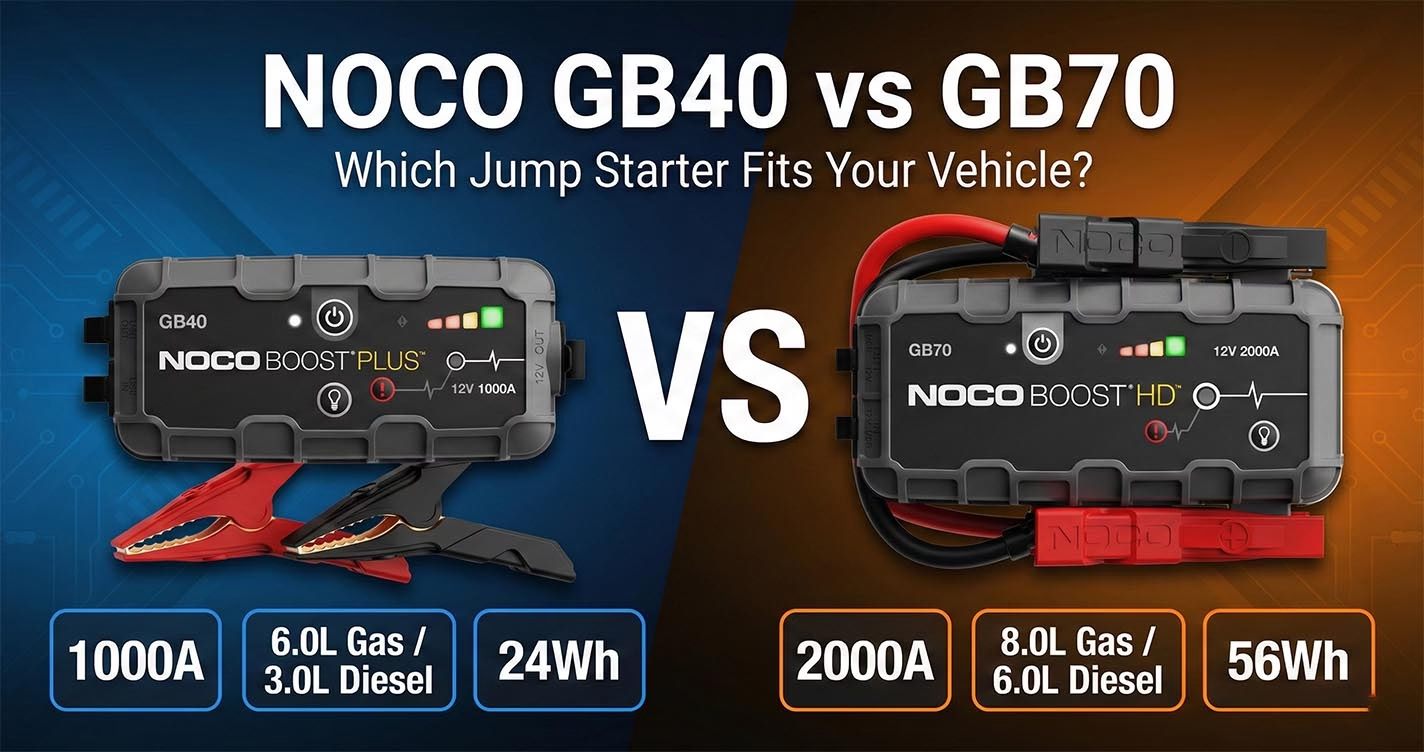
If you’re stuck between NOCO GB40 vs 70, here’s the simple truth:
The GB40 is the compact “everyday insurance policy.”
The GB70 is the “I drive a truck / I see winter / I don’t want excuses” upgrade.Today, we are cutting through the noise. We are conducting a deep, truthful comparison between two of the most popular units on the market: the NOCO Boost GB40 and the NOCO Boost HD GB70.
This is not a copy-paste of manufacturer claims. This analysis is based on technical data sheets, user feedback from enthusiast forums, and real-world electrical physics. My goal is to ensure you spend your money on the device that will actually start your car when you need it, not the one that looks best on a shelf.
At a Glance: Side-by-Side Specifications
Before we dive into the nuanced performance details, let us look at the hard data. I have compiled the official specifications into a clear comparison below. Note the significant difference in internal energy (Watt-hours), which is often more important than peak amps.
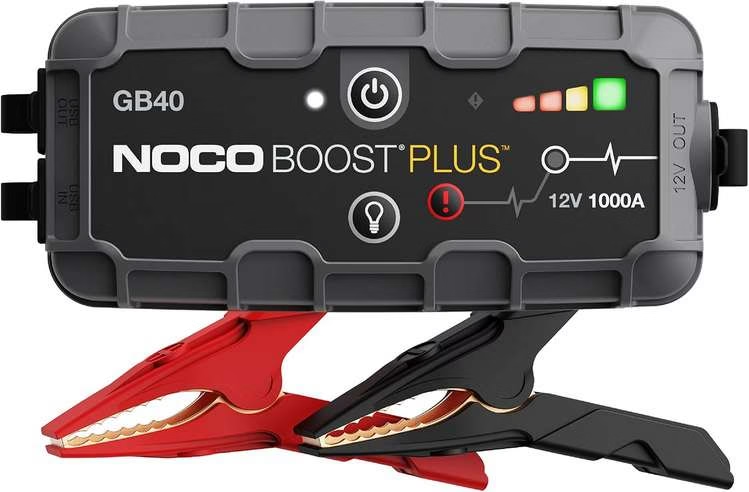
NOCO Boost GB40
Compact 1000A
- ⚡ Peak Current1000A
- 🔋 Internal Energy24 Wh STANDARD
- 🚗 Engine Limit6.0L Gas / 3.0L Diesel
- 🔌 USB Output5V / 2.1A
- 🚗 12V OutputNone
- 💡 Flashlight100 Lumens
- ⚖️ Weight~2.4 lb
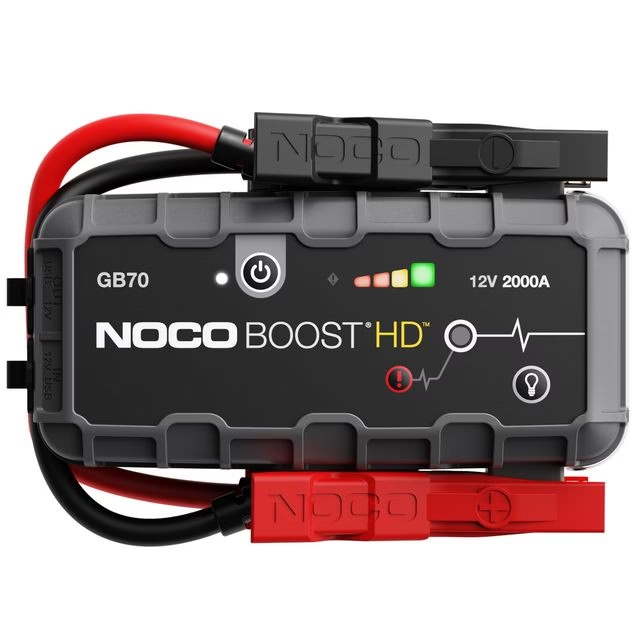
NOCO Boost GB70
HD 2000A
- ⚡ Peak Current2000A
- 🔋 Internal Energy56 Wh HIGH CAPACITY
- 🚗 Engine Limit8.0L Gas / 6.0L Diesel
- 🔌 USB Output5V / 2.1A
- 🚗 12V Output12V / 15A ACCESSORY POWER
- 💡 Flashlight400 Lumens
- ⚖️ Weight~5.0 lb
The Real Difference: It’s Not Just “1000A vs 2000A”
On paper, peak amps look like the whole story. In practice, they’re not. What matters more is reserve and how forgiving the pack is when the battery is truly struggling.
The GB40’s internal battery is 24Wh. The GB70 is 56Wh. That extra energy is what helps when:
- the battery is deeply discharged,
- it’s cold,
- or the engine needs a stronger initial hit.
If you want the short version:
GB40 is “enough” more often than you’d think. GB70 is “enough” in more situations—and with fewer second attempts.
Power & Engine Size Ratings (the safe way to choose)
NOCO’s own guidance is straightforward:
- GB40: up to 6.0L gas / 3.0L diesel, 1000A peak.
- GB70: up to 8.0L gas / 6.0L diesel, 2000A peak.
If you’re already near the GB40’s limit (big V6, V8, small diesel), don’t overthink it. Buy the GB70. It’s the “margin of safety” model.
Ports & Charging: GB70 is in a Different League
This is where the GB70 quietly wins a lot of buyers.
GB40 ports
- USB input: 5V / 2.1A
- USB output: 5V / 2.1A
GB70 ports
- USB input: 5V / 2.1A
- USB output: 5V / 2.1A
- 12V input (fast charge): 12V / 3A
- 12V output (power supply): 12V / 15A
That 12V/15A output is the key. It means you can run things like tire inflators and certain 12V accessories directly—something the GB40 simply isn’t designed to do.
Charging times (realistic expectations)
- GB40: about 3 hours at 2A USB, slower on weaker chargers.
- GB70: about 7 hours at 2A USB, but 2–3 hours with 12V fast charge.
So yes—the GB70 can take longer on regular USB, but it also gives you a faster “proper” way to top it up.
Flashlight: Nice on GB40, Seriously Useful on GB70
- GB40 flashlight: 100 lumens, 7 modes.
- GB70 flashlight: 400 lumens, 7 modes.
If you’ve ever had to mess with battery terminals in the dark, you already know: 400 lumens feels like a real tool, not a bonus feature.
Size & Weight: GB40 Wins Convenience, GB70 Wins Capability
- GB40: about 2.4 lb with clamps/accessories.
- GB70: about 5 lb with clamps/accessories.
GB40 belongs in a glovebox.
GB70 belongs in a trunk, under-seat storage, or the “always-in-the-truck” kit.
Cold Weather Reality (what owners keep repeating)
Lithium jump starters don’t love extreme cold. They can work—but output drops, and you may need to warm the unit.
GB40 owners on Reddit report mixed cold-weather results and sometimes needing to warm the unit or try multiple times, especially when temperatures dip below freezing.
GB70 owners are more likely to report successful jumps on larger engines in cold conditions, including diesel trucks, but it’s still not magic—battery state and technique matter.
Rule of thumb: if winter is a real factor where you live, the GB70’s extra reserve is worth it.
Manual Override: The Feature That Saves You… and the One That Trips People Up
Both GB40 and GB70 can jump-start down to a 2V battery detection threshold. Below that, they may not detect the battery normally.
That’s why NOCO includes Manual Override—to force the unit “on” for very low-voltage batteries.
But here’s the catch:
Manual Override disables spark-proof and reverse polarity protection. NOCO is explicit about this risk.
Owners frequently mention that “it didn’t work” moments are often tied to:
- battery being extremely dead,
- not waiting long enough,
- not using override when needed,
- or simple clamp/connection issues.
Real Owner Feedback (Reddit + Forums): What People Love vs What They Hate
What people love about GB40
- Small, easy to store, simple interface, works well for typical cars under the rating.
- Holds usefulness as a power bank and emergency light.
What people complain about with GB40
- Cold weather can make it feel weak, and truly dead batteries can require multiple tries or warming the unit.
- Users sometimes discover too late that their pack wasn’t “ready for battle” because they never tested it before needing it.
What people love about GB70
- Owners report jumping trucks/SUVs and even diesels successfully, and keeping it as a “family rescuer” pack.
- The 12V output and brighter light make it more than a jump starter—it’s a legit roadside tool.
What people complain about with GB70
- Occasional stories of “it wouldn’t crank my diesel” often involve complex vehicle electronics, battery condition, technique, and the gap between peak current ratings and sustained delivery expectations.
If you want a perfect example of that debate, a Jeep diesel owner reported a no-start with a fully charged GB70, later started by a different pack; replies discussed reserve delivery, clamp placement, and the battery being extremely depleted.
Pros and Cons:
NOCO Boost GB40
1000A UltraSafe Lithium Jump Starter — Comprehensive Pros & Cons Review
The Pros
- +
Ultra-Compact Design
Fits easily in glovebox or trunk while still handling most passenger vehicles. Perfect for emergency storage.
- +
Beginner-Friendly Safety
Spark-proof and reverse polarity protection makes it less stressful than traditional jumper cables for novices.
- +
Multi-Function Utility
Doubles as a USB power bank (5V/2.1A) and features a 100-lumen emergency flashlight with 7 modes including SOS.
- +
Proven Real-World Performance
Consistently praised in Jeep Wrangler and Tacoma communities for reliable starts on common engines.
- +
Rugged Build Quality
IP65 water resistance and operating range of -20°C to +50°C handles tough conditions.
The Cons
- −
Engine Size Limitations
Capped at 6.0L gasoline and 3.0L diesel. Not suitable for large V8s, high-compression engines, or heavy diesels.
- −
Cold Weather Sensitivity
Lithium output drops in freezing temps. Users report needing to warm the unit (under jacket) to get results.
- −
Manual Override Confusion
Disables safety protections and frustrates novices. Common “I’m stuck” point when battery is below 2V detection.
- −
Heat Storage Risks
Long-term hot-car storage accelerates lithium aging. Users report swelling and degraded performance over time.
- −
Maintenance Required
Needs periodic charging (every few months) and testing. “It didn’t work” often tied to dead/untreated units.
The GB40 is a strong “everyday vehicle” jump starter with excellent safety design and portability. Best for typical gasoline cars and small diesels in moderate climates. Skip it if you have large engines, live in extreme cold, or can’t commit to periodic maintenance. Consider the GB50/GB70 for heavy-duty needs.
Advantages
- +
Serious Power for Trucks & SUVs
2000A peak handles V8s and diesels that smaller units struggle with. Real-world tested on Tundras, Wranglers, and Powerstrokes.
- +
12V Accessory Port (15A)
Runs tire inflators, inverters, and 12V tools—not just jump starting. Major versatility upgrade over basic models.
- +
Fast Charging Option
XGC 12V input charges in 2-3 hours vs 7+ hours via USB. Critical when you need quick turnaround between uses.
- +
UltraSafe Protection
Spark-proof and reverse polarity protection builds confidence. Users pick NOCO specifically for safety over random Amazon brands.
- +
Bright Emergency Light
400 lumens with SOS/strobe modes. Actually useful for roadside repairs and signaling, not just an afterthought.
Limitations
- −
Peak vs Sustained Reality
2000A is peak, not sustained. Extremely dead batteries can drain it raising voltage before cranking. Not a shop-grade unit.
- −
Manual Override Confusion
Below 2V detection requires override mode, which disables all protections. Intimidating for novices—common failure point.
- −
Slow USB Recharge
7+ hours via USB unless you use the 12V fast charge. Plan ahead or buy the XGC adapter for vehicle charging.
- −
Bulkier Than Compact Units
~5 lbs with clamps. Not glovebox-friendly like the GB40. You’re trading portability for raw capability.
- −
Lithium Degradation Risk
Heat and age degrade any lithium pack. “Set and forget” storage leads to dead units when emergencies hit.
The GB70 is the sweet spot for truck/SUV owners who need real power without going commercial-grade. Perfect for V8s, diesels, and off-road rigs where the 12V port is genuinely useful. Skip it if you only drive compact cars (get the GB40) or need fleet-shop reliability (go GB150). Test it before you need it—lithium packs age silently.
Which One Should You Buy? (Use-Case Matchups)
Buy GB40 if you want the smallest NOCO that still covers most cars
GB40 is the right call if:
- you drive a normal gas car or small SUV,
- you want something compact,
- and you’re inside NOCO’s rating range.
Best for: commuters, small vehicles, occasional emergencies, glovebox carry.
Buy GB70 if you want fewer “second tries” and more real-world flexibility
GB70 is the better buy if:
- you drive a truck/SUV,
- you want coverage for bigger engines and diesel up to the rating,
- you want 12V output for accessories,
- or you live where batteries die in the cold.
Best for: trucks, towing, boats, winter drivers, “help the whole family” use.
How to Use These Correctly (so you don’t waste the pack)
Standard method (both GB40 and GB70)
- Turn off vehicle loads (lights, HVAC, accessories).
- Clamp positive to positive, negative to negative/chassis.
- Power on the NOCO.
- Try starting. If it doesn’t start immediately, wait 20–30 seconds and try again.
- Don’t spam it. NOCO advises max 5 attempts in 15 minutes, then rest the unit.
If the battery is extremely dead
If the pack doesn’t detect the battery (especially below ~2V), you may need Manual Override—but only if you understand the safety tradeoff.
Maintenance & Storage (this is why some people “fail”)
- Both units can discharge over time if unused; periodic checks are smart.
- Avoid extreme heat storage when possible; owners in hot climates often suspect heat accelerates degradation.
- Test it once in a controlled situation before you depend on it. People regularly learn this lesson too late.
NOCO GB40 vs 70 FAQs
Is the GB40 enough for most cars?
If you’re within NOCO’s rating (up to 6.0L gas / 3.0L diesel), yes—GB40 is designed for that.
Is the GB70 worth the extra money?
If you drive bigger engines, want more reserve, want 12V accessory power, or face cold-weather starts, yes. The spec jump is real: 2000A peak, 56Wh, and 12V output.
Can the GB70 power a tire inflator?
Yes, it provides a 12V output rated up to 15A (with compatible accessories/adapters).
Why did my NOCO not work even when charged?
Common causes: battery is extremely depleted, poor clamp contact/placement, cold-soaked lithium pack, or not using Manual Override when required. The manual explicitly calls out low-voltage detection behavior and temperature limits.
Final Verdict: The One You’ll Regret Buying Is the One That’s Too Small
If you just want a compact emergency tool for a regular car, GB40 is a solid pick. It’s small, simple, and well-specced for most normal driving.
But if you drive anything remotely “truck-ish,” deal with winter, or you want one jump starter that covers your household and your friends… GB70 is the safer bet. More reserve. More capability. More flexibility.
My buy recommendation for most readers searching “noco gb40 vs 70”: get the GB70 unless you’re 100% sure the GB40 fits your vehicle and climate.