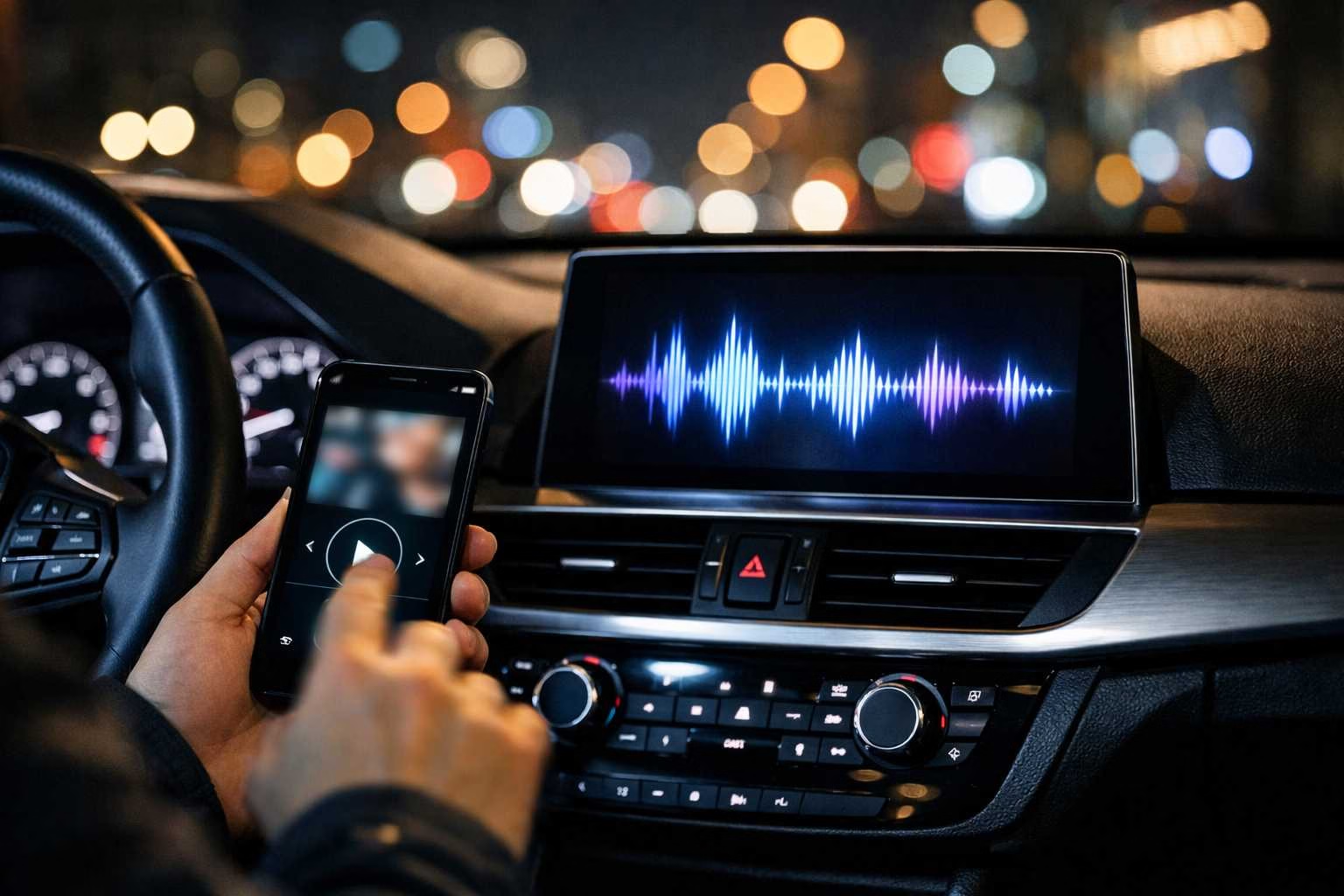
Ever tapped “pause” but heard music keep playing? Or gotten a navigation prompt a half-second too late? You’re not imagining it. CarPlay audio lag makes the whole system feel “off.”
Most drivers call this “lag.” But it’s actually latency. Your system works fine. It just isn’t instant.
Here’s the truth that matters most:
“Some delay is unavoidable. It depends on your connection and hardware.”
That doesn’t mean you must live with it. But wireless CarPlay has limits. Understanding them helps set realistic expectations.
1) What “CarPlay Lag” Actually Is
When people say “lag,” they usually mean one of two things:
Audio latency (the common problem)
Audio latency is the gap between action and sound. Examples:
- Press skip. Next song starts late.
- Hit pause. Music plays on for a beat.
- Start talking on calls. The other person hears you delayed.
- Navigation prompts feel “behind” your actual turn.
This is true CarPlay audio delay.
UI lag (less annoying, different cause)
UI lag means your screen feels slow. Scrolling stutters. Touches register late. Album art loads slowly. Maps drag behind your finger. This often comes from your head unit’s graphics power and memory.
Why audio delay stands out more than video delay
We tolerate small visual delays. But audio timing matters. Our brains notice when sound doesn’t match action.
Delay feels worse during:
- Navigation: “Turn right” that comes late seems wrong.
- Phone calls: Even small delays make people talk over each other.
- Music controls: Real-time actions need instant response.
The frustration is real. But predictable once you know why it happens.
2) The Real Causes of CarPlay Audio Delay
CarPlay latency is rarely one issue. It’s usually many small delays adding up.
Think of it like a relay race. Small slowdowns at each handoff create a big delay at the finish.
A) Wireless CarPlay buffering
Wireless CarPlay needs stability. Cars have radio interference, distance changes, and signal drops. To prevent audio stutter, the system uses buffering.
Buffering is like an “audio waiting room.” Your phone sends sound. The system stores a tiny slice. Then it plays smoothly. This waiting room creates delay by design.
Why it exists:
- Prevents dropouts during weak signals
- Smooths uneven audio packet arrivals
- Keeps experience consistent instead of glitchy
Tradeoff:
- More stability means more delay
That’s why wireless feels smooth yet “behind.” Wired feels immediate.
B) Bluetooth vs Wi‑Fi handoff (where delay sneaks in)
Many think “Bluetooth causes all lag.” That’s too simple.
In CarPlay:
- Bluetooth handles pairing, calls, and some controls
- Wi‑Fi carries heavy data (audio streams, UI, maps)
Even with Wi‑Fi audio, Bluetooth helps coordinate tasks. This adds delay during:
- Starting or ending calls
- Switching audio focus
- Handling microphones and echo cancellation
When delay worsens on calls, look at the call audio path. Not just music streaming.
C) Head unit processing power
Your car’s infotainment is a computer. Some are slow.
Older factory head units (and cheap aftermarket ones) add delay because they multitask:
- Decoding audio streams
- Syncing CarPlay UI
- Managing native car audio
- Running navigation, cameras, and safety alerts
If the processor lacks power or memory, it uses deeper buffers. That increases CarPlay latency.
Factory vs aftermarket differences:
- Factory units integrate tightly with your car (extra processing for DSP, chimes, safety mixing).
- Aftermarket units vary wildly—some are fast, others struggle even with nice screens.
If your UI also feels sluggish, your head unit is part of the problem.
D) Phone-side processing
Your iPhone does more than “send audio.” It:
- Runs apps (music, maps, podcasts)
- Encodes audio for transmission
- Manages wireless radios (Wi‑Fi and Bluetooth)
- Handles Siri voice processing
- Manages power and heat
Phone factors that increase Wireless CarPlay delay:
- Too many background apps: Heavy apps steal CPU time.
- Hot phone: Sunlight + charging + wireless radios cause thermal throttling.
- Old hardware: Newer chips handle real-time tasks better.
If lag worsens on long drives or in hot weather, your phone is likely the culprit.
E) Vehicle audio DSP & amplifiers
Your car’s sound system itself can add delay. Especially premium systems with:
- Digital signal processors (DSP)
- Active noise cancellation
- Time alignment features
- Surround sound upmixing
- Dynamic equalizers
- External amplifiers
Each adds small delays. They stack up.
Example:
- Basic speakers + simple amp: Feels immediate
- Premium branded system: Sounds “smoother” but slower to respond
That’s why two cars with the same phone can feel totally different.
Bottom line: delays stack
CarPlay latency adds up:
- Wireless buffering
- Connection handoffs
- Head unit processing
- DSP and amp delays
Fix one small delay. You may only see small improvement. This is normal.
3) Why It’s Often NOT the Adapter’s Fault
Wireless CarPlay adapters get blamed first. Sometimes fairly. Often not.
What wireless adapters actually do
Most adapters act as translators:
- They pretend to be a wired CarPlay device (USB side)
- They connect to your iPhone wirelessly (Wi‑Fi + Bluetooth side)
- They pass CarPlay data between phone and head unit
They don’t magically “speed up” your slow head unit. If your car’s audio system adds delay, the adapter can’t remove that.
When an adapter really does add delay
Adapters increase CarPlay audio delay when:
- Using heavy buffering to avoid dropouts
- Having weak Wi‑Fi radios
- Using underpowered processors
- Struggling with your car’s USB port
- Running buggy firmware
In these cases, lag comes with other symptoms:
- Random disconnects
- Audio stutters
- Long startup times
- Delayed steering wheel controls
- “Processed” sounding calls
Cheap adapters vs good adapters vs built-in wireless
The reality:
- Cheap adapters prioritize “works most of the time” over speed. They buffer deeply to avoid dropouts.
- Quality adapters have better radios, firmware, and timing. They reduce delay slightly. More importantly, they make it consistent.
- Built-in wireless CarPlay is integrated at the head unit level. Sometimes excellent. Sometimes still delayed due to head unit limits.
An adapter can contribute to lag. But if your infotainment adds significant delay, swapping adapters won’t fix much.
This is key: the adapter is only one link in the chain.
4) Settings & Adjustments That Can Reduce Lag
Let’s get practical. These steps won’t create “zero-lag wireless.” But they can help. Improvements are usually slight to moderate. Not miraculous.
1) Compare wired vs wireless (your baseline test)
First, check reality:
- Plug in for wired CarPlay
- Play music. Test pause/skip
- Make a short call (even voicemail)
If wired feels immediate but wireless feels delayed, that’s normal. Wireless buffering is the main cause.
If wired is also delayed, your head unit or audio system is likely the problem. No adapter swap will fix that.
Improvement: This doesn’t fix anything. But it shows where the problem lives.
2) Look for audio delay settings (if available)
Some head units have audio delay, A/V sync, or lip-sync adjustments. If set too high, they slow CarPlay.
What to do:
- Check audio menus for “A/V sync,” “lip sync,” or “audio delay”
- Reduce it slightly. Test again.
Improvement: Sometimes noticeable. Sometimes none (many factory systems hide this control).
3) Reduce DSP processing (test mode)
If your car offers EQ presets or surround modes, test this:
- Switch to flat EQ
- Disable surround/upmix features
- Turn off loudness normalization if available
You’re not fixing “EQ lag.” You’re testing if extra audio processing adds delay.
Improvement: Usually slight. But on premium systems, it can turn “annoying” into “acceptable.”
Pro tip: For more audio system insights, check our guide on best LED headlight bulbs that won’t blind other drivers—good visibility helps with navigation timing too.
4) Cut phone background load
This is one of the most effective free fixes. It reduces your phone’s need to buffer.
Try:
- Close heavy apps you aren’t using
- Turn off Low Power Mode while driving
- Keep iOS updated
- Keep your phone cool (move it from direct sun)
Improvement: Usually small. But prevents lag from getting worse.
5) Update software
Update your infotainment system. Update your adapter firmware if used.
Improvement: Inconsistent—sometimes nothing, sometimes it fixes specific delay bugs.
6) Check your wireless environment
Wireless CarPlay uses Wi‑Fi in a noisy space. Interference triggers deeper buffering.
Tips:
- If your adapter allows it, try a different Wi‑Fi channel
- Don’t hide your phone behind metal objects
- Disable auto-join for phones you don’t use
Improvement: Usually “more consistent,” not necessarily “faster.”
7) Use good cables
If wired tests feel flaky, don’t blame the head unit first. A bad cable causes renegotiations that feel like lag.
Use:
- Short, high-quality cables
- Clean USB ports (lint and corrosion are real problems)
Improvement: Better stability, which indirectly reduces perceived delay.
5) Wired vs Wireless CarPlay — Latency Comparison
Here’s the simple truth:
Why wired CarPlay feels near-instant
Wired CarPlay has:
- Direct data path
- Less buffering needed
- Fewer radio handoffs
- Consistent throughput
This means very low latency for music controls and navigation prompts.
Why wireless always has some latency
Wireless adds:
- Wi‑Fi buffering to prevent dropouts
- Extra encoding and packet handling
- Bluetooth coordination
- Variable conditions (interference, signal strength)
So Wireless CarPlay delay isn’t a defect. It’s the price of convenience.
For deeper insights on wireless connections, see our detailed comparison of Wireless CarPlay & Android Auto explained.
When wired is better
Choose wired CarPlay when timing matters most:
- Phone calls (natural conversation flow)
- Fast navigation (city turns, complex interchanges)
- If you notice audio timing (musicians notice this fast)
- Older head units that struggle with wireless
Wireless is great for casual listening. Wired is better when timing matters.
Looking for the best adapter? Our Reddit-vetted best wireless CarPlay adapters guide can help.
6) When You’ve Hit a Hardware Limitation
This is hard to hear. But it saves time and money.
Sometimes no setting change helps. The slowest part is fixed in hardware.
Signs the delay is “baked in”
You’re likely at a hardware limit if:
- Wired CarPlay is also delayed. This points away from wireless issues.
- Delay is always consistent (same amount), even after updates.
- UI is sluggish too (slow animations, delayed touch). Your head unit is underpowered.
- Premium audio processing can’t be reduced, and the system always feels behind.
- Multiple phones behave the same (different iPhones, same latency). Your vehicle is the issue.
Why replacing adapters won’t help (sometimes)
If your head unit adds significant delay, swapping adapters is like changing a garden hose nozzle when water pressure is low. You might change the feel slightly. But you won’t fix the core problem.
Resetting helps if something is bugged. But it won’t reduce built-in processing delay.
Realistic options at that point
If you’ve tested wired vs wireless, tried settings, and delay still bothers you:
- Use wired CarPlay for calls and navigation-heavy trips
- Accept minor wireless latency if convenience matters more than perfect timing
- Upgrade your head unit (where possible) to a newer platform
This isn’t a sales pitch. It’s how latency works when hardware limits you.
Conclusion
CarPlay lag is usually system latency. Not a defect. Not proof your wireless adapter is “bad.” Wireless trades immediacy for stability and convenience. Your car’s head unit and audio processing add their own delay.
The best approach is diagnostic, not reactive:
- Compare wired vs wireless to find the source
- Reduce obvious processing (DSP modes, phone background load)
- Keep phone and infotainment software updated
- Know when you’ve hit a hardware limit
Most importantly, stop chasing “zero-lag wireless.” With buffering and vehicle audio chains, some delay is part of the package. Once you know why it happens, you can decide—confidently—whether to tweak, plug in, upgrade, or just enjoy the drive.
For more car tech insights that actually work in real life, check our ultimate dash cam guide tested by real drivers.