
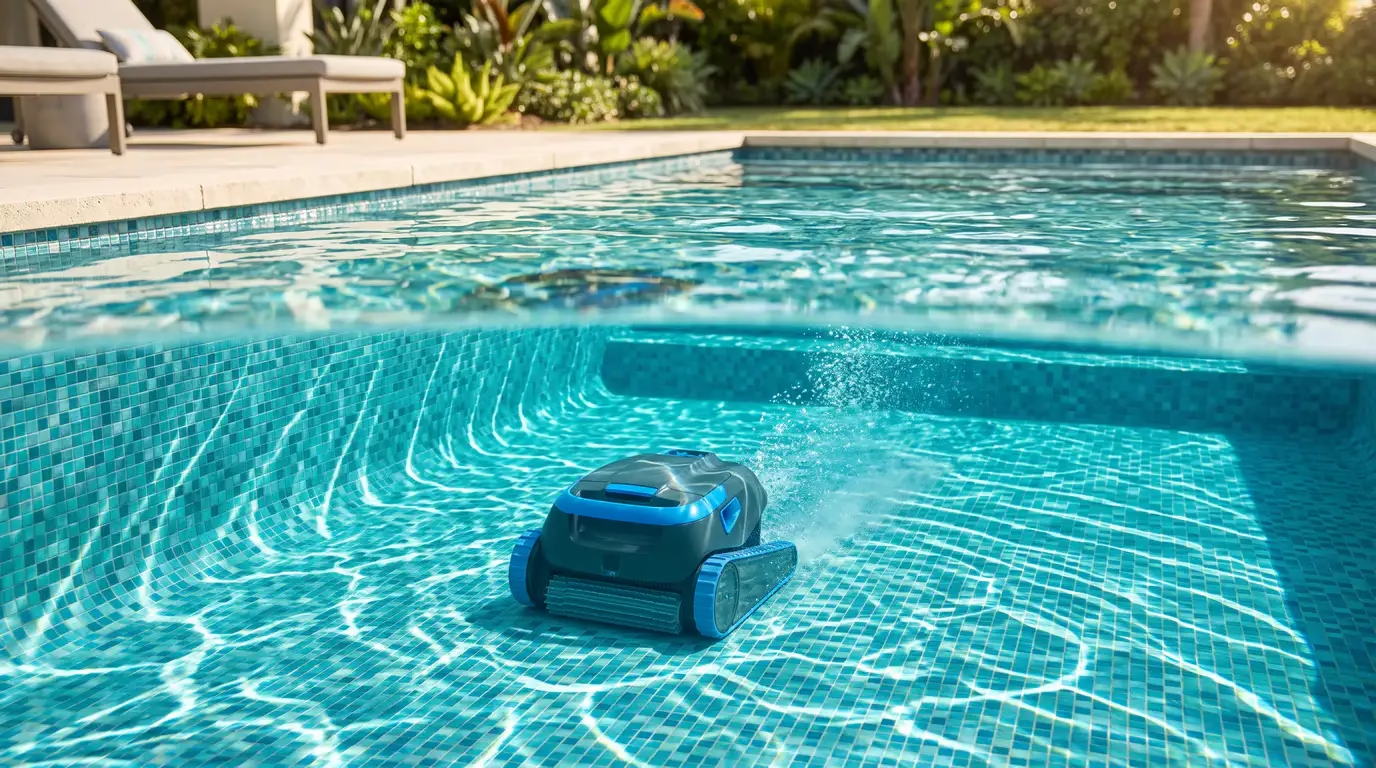
Cleaning an inground pool can take hours each week. You must skim leaves, brush the walls, and vacuum dirt from the deep end.
The best robotic pool cleaners inground owners can buy remove much of that work. A cordless model moves without a hose or power cable. You charge it, place it in the pool, and start the cleaning cycle.
For most pools, the Aiper Scuba V3 offers the best mix of coverage, smart cleaning, and easy handling. Larger or harder pools may need a stronger model.
This guide compares six Aiper options. It covers vinyl, fiberglass, concrete, slopes, deep ends, and large pools.
This post contains affiliate links. If you buy through them, we may earn a commission at no extra cost to you.
Skip to: Top picks at a glance | Buying guide | FAQ
Our Top Cordless Robotic Pool Cleaners for Inground Pools at a Glance
Here is the short answer if you want to buy now.
Field guide · 6 picks
Which Scuba is your pool’s match?
Runtime, coverage and smart features — lined up side by side so you can stop guessing and start swimming.
- Best overall
- All-in-one
- Leafy pools
- Large pools
- Best value
- Surface only
| Pick | Best for | Claimed runtime | Max pool size | Cleaning coverage | Smart features | Price level |
|---|---|---|---|---|---|---|
01
Aiper Scuba V3 | Best overall | Up to 240 min* | Up to 1,600 sq. ft. | FloorWallsWaterline | Camera, sensors, app, smart paths | Premium |
02
Aiper Scuba X1 Pro Max | Best all-in-one | Up to 5 h underwater / 10 h on surface | Up to 3,200 sq. ft. | SurfaceFloorWallsWaterline | Pool mapping, app control, live status | High-end |
03
Aiper Scuba S3 | Best for leaves | Check current listing | Check current listing | FloorWallsWaterline | Model-dependent smart controls | Premium |
04
Aiper Scuba V3 Ultra | Best for large pools | Up to 8 h in surface mode | Up to 3,875 sq. ft. | Six-zone coverage | Dual cameras, sensors, schedules | High-end |
05
Aiper Scuba X1 | Best value for full-pool cleaning | Up to 3 hours | Check current listing | FloorWallsWaterline | Smart paths and app support | Midrange |
06
Aiper EcoSurfer S2 | Best surface skimmer | Up to 35 hours per charge | Most residential pool shapes | Surface | Solar charging, app, schedules | Midrange |
* Claimed runtime varies with water temperature, debris load and cleaning mode.
Specs and availability change — confirm details on the current listing before buying.
*The Scuba V3 runtime comes from Aiper’s current store listing. Product details can change before the final retail release. Check the current offer before ordering.
Fast decision guide:
- Choose the Scuba V3 for a modern, easy-to-lift cleaner.
- Choose the X1 Pro Max for top-to-bottom cleaning.
- Choose the V3 Ultra for a very large or complex pool.
- Choose the Scuba X1 if you want strong core features for less.
- Choose the EcoSurfer S2 if floating debris is your main issue.
- Check the Scuba S3 if your yard drops many large leaves.
Skip to: Cleaner by pool type | Buying guide | FAQ
Why Choose a Cordless Robotic Pool Cleaner for an Inground Pool?
A pool robot saves effort rather than replacing all pool care. You will still test the water and clean the main filter.
Yet the robot handles the slow physical work. That includes vacuuming, scrubbing, and collecting loose debris.
How a robot pool cleaner works
A swimming pool robot cleaner has its own motor and filter. It moves water through an intake port. Dirt and leaves then enter a filter basket.
Rotating brushes loosen grime from the pool surface. Tracks or wheels move the cleaner across the floor. Stronger models can also climb walls.
A robot vacuum pool cleaner works apart from your pool pump. It does not need a suction hose. It also does not send collected dirt into the pool filter.
Inground robots often have stronger drive systems. They may also support:
- Wall climbing
- Waterline scrubbing
- Sloped floors
- Deeper water
- Larger cleaning areas
- Smart route planning
An above-ground cleaner may only cover flat floors. Do not assume it can handle steep slopes or walls.
Own an above-ground pool instead? See our picks for the best robotic pool cleaners for above-ground pools.
Cordless vs corded: what changes for inground pools
A cordless cleaner has no floating power cable. That gives it more freedom around steps and odd pool shapes.
Setup is also simple. Charge the battery, choose a mode, and place the robot in the water.
Cordless models offer three clear benefits:
- No cable to untangle
- No socket needed near the pool
- Easier storage after each cycle
However, the battery sets a firm time limit. A huge pool may need a long cycle or a second run.
Charging also creates a break between cycles. A corded cleaner can often run longer if the job demands it.
Cordless is the better fit if ease matters most. Corded can still make sense for very large pools or long daily cycles.
This guide focuses on Aiper models. To compare other brands, see our roundup of the best cordless robot pool cleaners. For a closer look at cables, runtime, and battery trade-offs, read our corded vs cordless robotic pool cleaner comparison.
Robotic vs suction-side vs pressure cleaners (short version)
A robotic cleaner uses its own motor and filter. It offers the best hands-off cleaning, but costs more upfront.
A suction-side cleaner uses your pool pump. It costs less, but it places more debris in the main filtration system.
A pressure cleaner uses water pressure to move. Some models need a booster pump and separate debris bag.
For most buyers, a robot offers the easiest setup. It also puts less cleaning load on the main pool filter.
How We Picked the Best Robotic Pool Cleaners for Inground Pools
The products in this guide were not personally tested. The list is based on current manufacturer data and product positioning.
Each cleaner was compared using these points:
- Pool coverage
- Battery runtime
- Floor, wall, and waterline cleaning
- Surface cleaning
- Filter design
- Suction rate
- Route planning
- App features
- Weight and retrieval
- Warranty information
- Current product availability
- Price and overall value
Official specifications explain what a cleaner was built to do. They do not promise the same result in every pool.
Pool shape can affect climbing and coverage. Debris type also matters. Fine dust needs a different filter than wet leaves.
Prices can change during sales. The buttons in this post lead to the full Aiper store. Check the current product page before buying.
The Best Robotic Pool Cleaners for Inground Pools, Reviewed
These six picks suit different needs. Focus on your pool size, surface, and debris load.
Best overall: Aiper Scuba V3
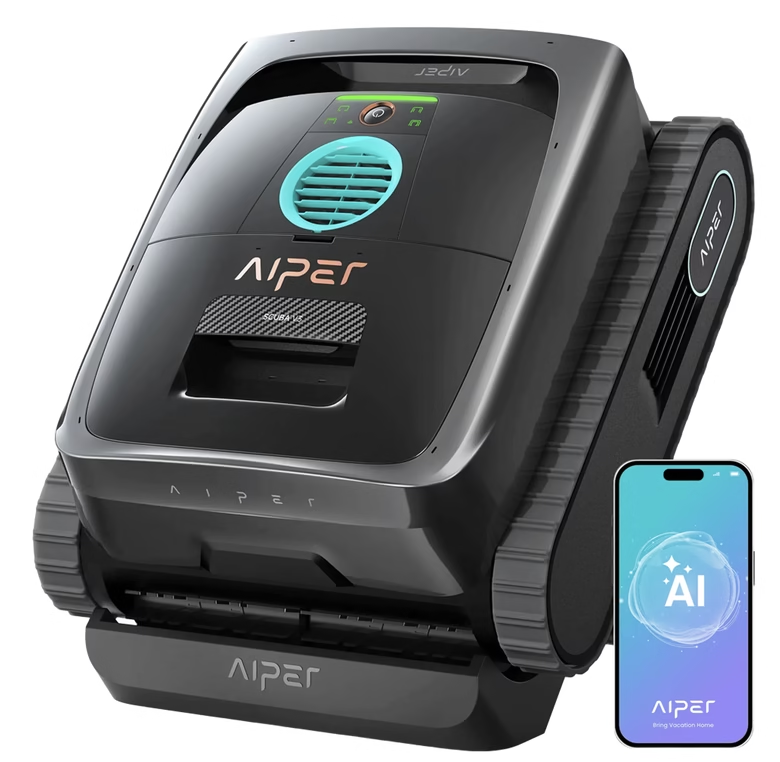
Short verdict: The Scuba V3 is the best fit for most pool owners. It blends strong cleaning with a light, cordless build.
Aiper lists a 4,800-gallon-per-hour suction rate. The system uses dual brushes and layered fine filtration. It also supports waterline cleaning and planned routes.
The cleaner weighs about 18.1 pounds. That is useful if you struggle with heavy wet equipment. It also returns to the waterline for easier removal.
A front camera looks for debris and obstacles. Distance sensors help the robot plan its route. It can also use past cleaning data to set a weekly plan.
Best for:
- Medium and large residential pools
- Owners who want easy handling
- Floor, wall, and waterline care
- Pools with mixed fine and medium debris
- Buyers who value smart cleaning
Key specs:
- 4,800 GPH suction
- Dual cleaning brushes
- Layered fine filter
- About 18.1 pounds
- Up to 1,600 square feet
- Waterline retrieval
- App alerts and charging dock
Pros:
- Light for a full-pool robot
- Smart obstacle detection
- Cleans the waterline
- Fine filtration
- Simple one-button start
Cons:
- Newer technology may cost more
- Smart features may be more than basic pools need
- A camera cannot guarantee perfect coverage
- Final retail details may change
What to expect: The V3 makes the most sense for regular upkeep. It may still need two passes after a storm.
Check the Aiper Scuba V3Best all-in-one (floor, walls, waterline): Aiper Scuba X1 Pro Max
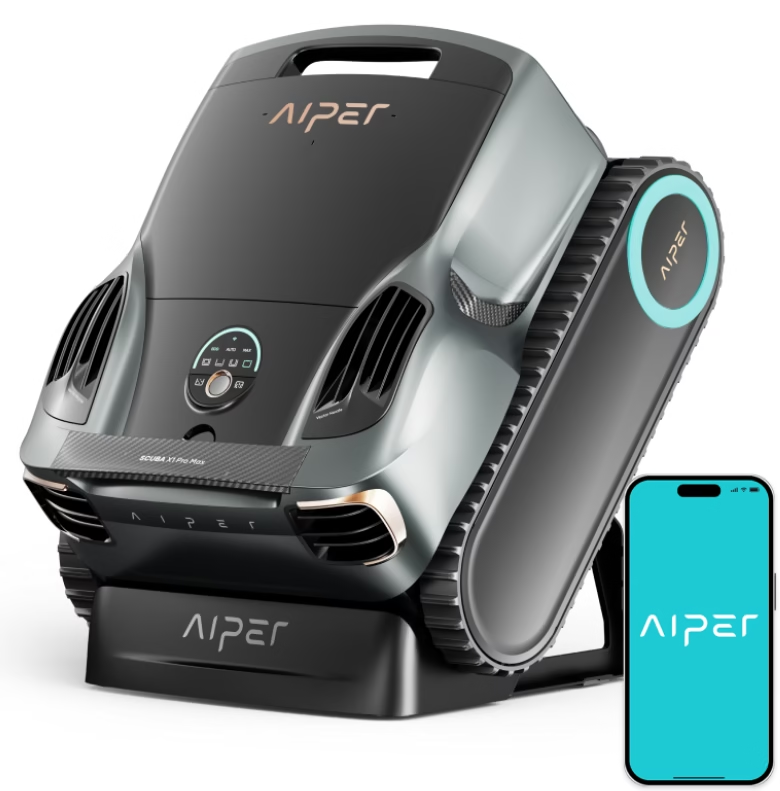
Short verdict: Choose the Scuba X1 Pro Max if you want one machine to clean almost every pool zone.
This model covers the water surface, floor, walls, and waterline. Nine motors produce a claimed suction rate of 8,500 gallons per hour. Its filter can capture fine debris down to three microns.
Aiper rates it for pools up to 3,200 square feet. It can run up to five hours on the pool floor. Surface mode can run for up to ten hours.
Its floating communication unit supports live status updates. You can also switch modes while the cleaner remains underwater.
Best for:
- Large inground pools
- Pools with surface and floor debris
- Complex shapes
- Deep ends
- Buyers who want advanced app control
Key specs:
- 8,500 GPH suction
- Up to 3,200 square feet
- Up to five hours of floor cleaning
- Up to ten hours of surface cleaning
- Surface, floor, wall, and waterline coverage
- Pool mapping
- Wireless charging dock
Pros:
- Broad cleaning coverage
- Strong suction
- Long runtime
- Fine filtration
- Smart pool mapping
- Live battery and cycle updates
Cons:
- High purchase price
- Large body may feel heavy
- More features mean more setup
- A skimmer-only unit may be cheaper for surface debris
What to expect: This is the premium choice. It suits buyers who want fewer separate pool tools.
Check the Aiper Scuba X1 Pro MaxBest for leaves and heavy debris: Aiper Scuba S3
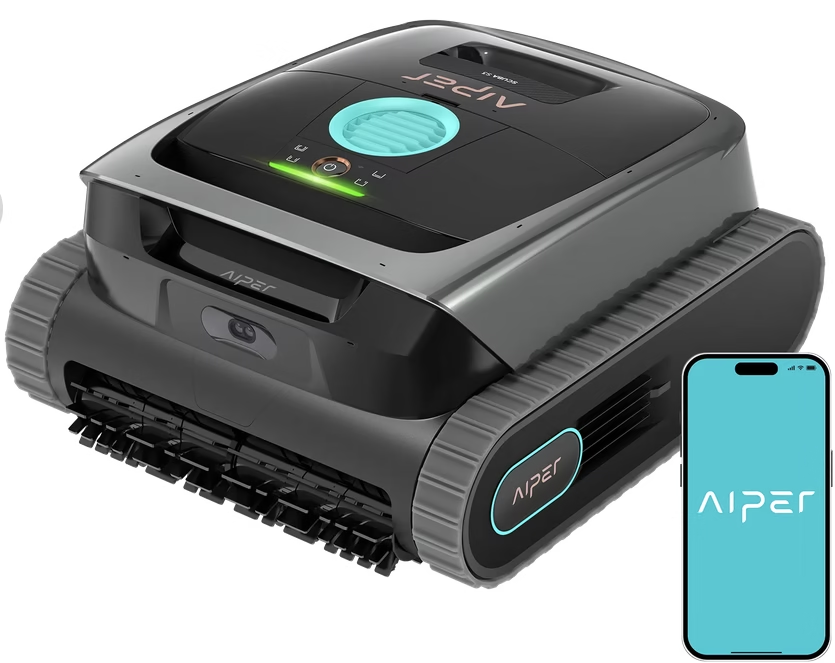
Short verdict: Consider the Scuba S3 if large leaves are your main problem. Confirm current stock and final specifications before buying.
Leaf-heavy pools need a wide intake and roomy basket. Fine filters matter less when the basket fills with large debris.
The S3 can make sense for pools near trees. Yet wet leaves may still block an intake if you wait too long between cycles.
Best for:
- Pools near trees
- Heavy seasonal leaf fall
- Mixed dirt and plant debris
- Owners who clean several times per week
What to check before buying:
- Current basket capacity
- Maximum intake width
- Runtime
- Pool-size rating
- Wall and waterline support
- Replacement filter stock
- Current warranty
Pros:
- Aimed at demanding debris loads
- Cordless setup
- May reduce manual leaf vacuuming
- Useful during fall cleanups
Cons:
- Availability may vary
- Current specifications need checking
- No robot can prevent a full basket
- Surface leaves may sink before pickup
Run it often during leaf season. A shorter daily cycle can work better than one long weekly cycle.
Check Current Scuba S3 AvailabilityBest for large inground pools
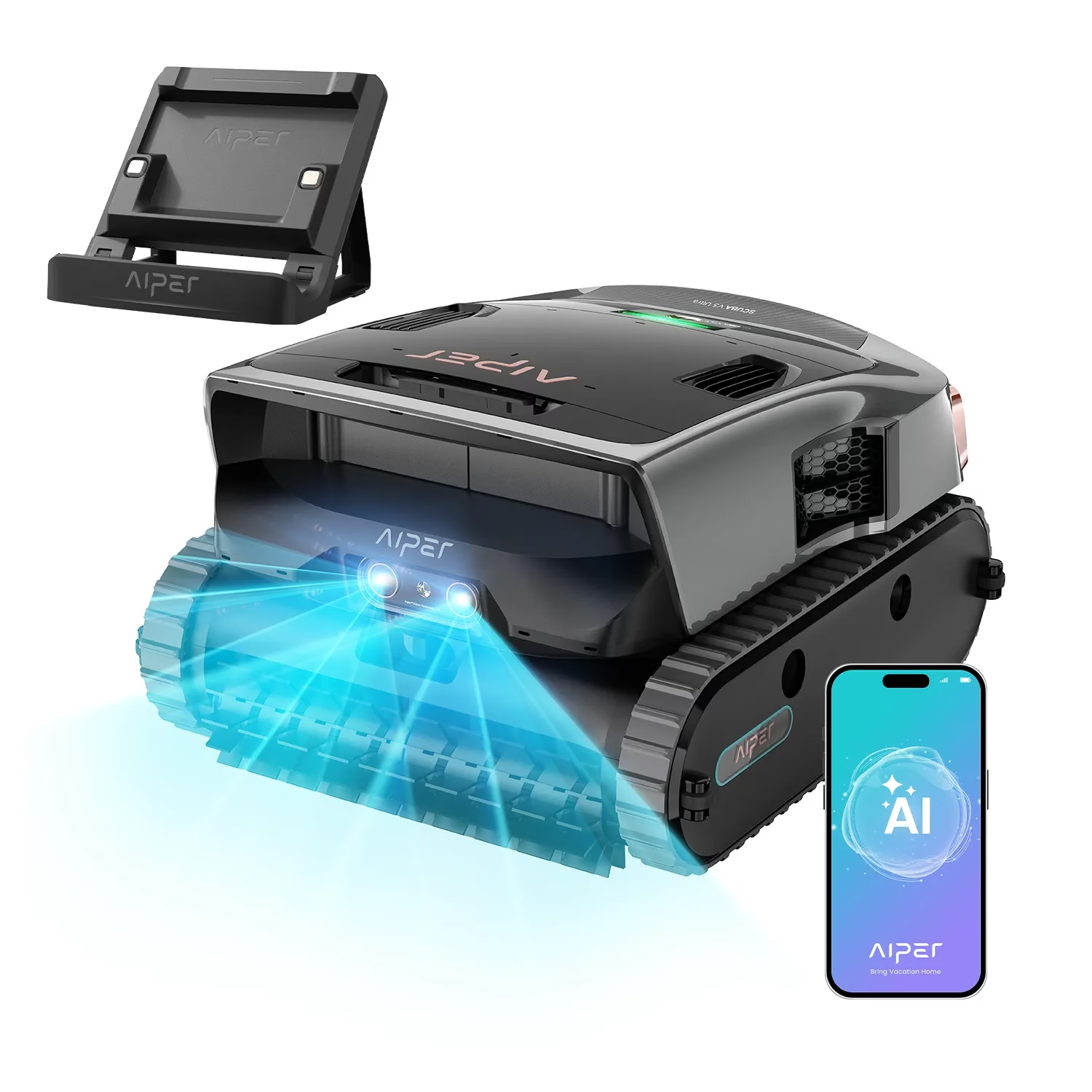
Best pick: Aiper Scuba V3 Ultra
Short verdict: The Scuba V3 Ultra is built for large pools and complex cleaning jobs. It is the better large-pool pick than the older S1 Pro.
Aiper rates the V3 Ultra for up to 3,875 square feet. It has 8,500 GPH suction and a 3.5-liter basket. Surface mode can run for up to eight hours.
It also cleans shallow ledges down to about 7.9 inches. Anti-fall sensors help it stay on shallow areas without dropping at once.
Its six-zone coverage includes the floor, walls, waterline, surface, and shallow shelves. A built-in tablet chamber can also hold chlorine tablets.
Best for:
- Very large residential pools
- Sun shelves and shallow ledges
- Raised platforms
- Complex pool shapes
- Fine and large debris
- Buyers who want one premium unit
Key specs:
- Up to 3,875 square feet
- 8,500 GPH suction
- 3.5-liter debris basket
- Dual-camera detection
- Ten cleaning path types
- Surface cleaning
- Shallow-area cleaning
- Smart schedules
Pros:
- Largest stated coverage in this roundup
- Works on shallow ledges
- Strong suction
- Fine filtration
- Broad cleaning coverage
Cons:
- Likely one of the most costly options
- May be excessive for a small rectangle pool
- More sensors and parts add complexity
- Chlorine tablets are sold separately
Value alternative: Aiper Scuba X1
The Scuba X1 is the sixth main pick in this guide. It gives you strong full-pool cleaning without the Pro Max price.
It uses 6,600 GPH suction. A multilayer filter catches leaves, sand, hair, insects, and fine dirt. The optional fine insert can filter particles down to three microns.
The X1 cleans floors, walls, and the waterline. Aiper also lists up to three hours of runtime.
Choose it if the V3 Ultra feels excessive. It gives you the features most pool owners use.
Check the Aiper Scuba X1Best add-on for surface debris: EcoSurfer S2 / Experts Duo
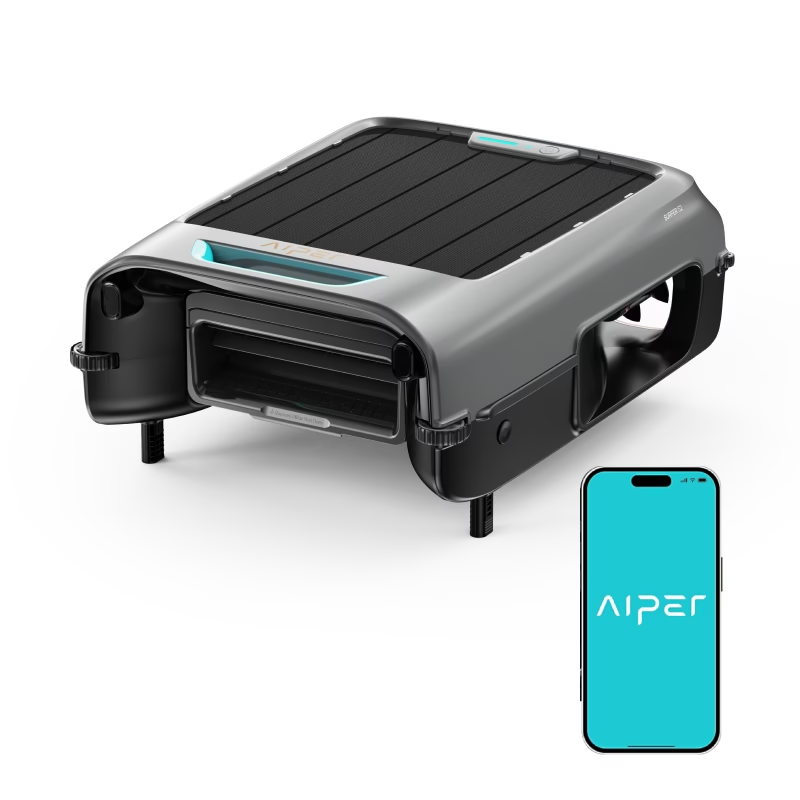
Short verdict: The EcoSurfer S2 is not a floor vacuum. It collects floating leaves before they sink.
The skimmer can run for up to 35 hours after adapter charging. SolarSeeker technology moves it toward sunlight when the battery gets low. It uses short solar charges to keep working.
Its 150-micron filter catches common surface debris. The four-liter basket pulls out from the side. It also has a dispenser for three-inch chlorine tablets.
Best for:
- Leaves floating on the surface
- Pollen and insects
- Pools near trees
- Owners who dislike hand skimming
- Use with a floor-cleaning robot
Pros:
- Long battery life
- Solar charging
- App schedules
- Large removable basket
- Obstacle sensors
- Works in many pool shapes
Cons:
- Does not clean the floor
- Does not scrub walls
- Solar charging depends on sunlight
- Needs a second robot for full-pool care
The Experts Duo pairs a floor cleaner with the surface skimmer. It offers top-to-bottom coverage and a seven-day automated care plan.
Choose the duo if your pool gets debris at every level. Buy the S2 alone if your current floor robot still works.
View the EcoSurfer S2 and Experts DuoBest Robotic Pool Cleaner by Inground Pool Type
Pool finish changes how a robot grips and scrubs. The safest pick is not always the strongest one.
Robotic pool cleaner for vinyl liner pools
Vinyl liners need gentle care. A worn brush or sharp trapped object may mark the liner.
Choose a light robot with soft brushes. Check the basket before each cycle. Remove stones, sharp twigs, or small metal pieces.
The Scuba V3 is a sensible starting point. Its low weight can make handling easier.
Avoid running any robot over a torn or loose liner. Repair liner damage first.
What to look for: Soft brushes, low weight, and smooth tracks.
Robotic pool cleaner for fiberglass pools
Fiberglass feels smooth compared with concrete. Some robots may lose grip on steep walls.
Choose tracks or rollers made for wall climbing. Smart path control also helps on curved transitions.
The Scuba X1 and V3 suit this job. Both clean the floor, walls, and waterline.
Oil and sunscreen can make walls slick. Brush those areas by hand if the robot starts to slip.
What to look for: Strong grip and steady waterline movement.
Robotic pool cleaner for concrete or plaster pools
Concrete and plaster have rough surfaces. They often hold more dirt and algae than smooth fiberglass.
A stronger brush system can help loosen grime. Fine filters also catch the dust that comes free.
The Scuba X1 Pro Max suits a large concrete pool. The Scuba X1 offers a lower-cost choice.
Rough surfaces cause more brush and track wear. Inspect these parts each month.
What to look for: Strong brushes and easy-to-replace wear parts.
Robotic pool cleaner for sloped floors and deep ends
Slopes demand grip and good route control. The robot must adjust as the floor angle changes.
A basic floor cleaner may stop at the slope. It may also circle the deep end.
The X1 Pro Max and V3 Ultra are better options. Both use sensors and planned cleaning paths.
Steps remain hard for most robots. Narrow steps and sharp corners may still need hand brushing.
What to look for: Tracked movement, slope support, and obstacle sensors.
Robot pool cleaners for large pools
Start with the stated pool area. Then compare runtime.
A robot rated for your exact pool size may have little room for delays. Obstacles, leaves, and slopes can make a cycle longer.
Choose a cleaner with spare coverage. The V3 Ultra suits the largest pools in this roundup. The X1 Pro Max is also a strong pick.
The Scuba V3 works well for many medium-size pools. Its current stated coverage reaches 1,600 square feet.
What to look for: Coverage above your pool size and longer runtime.
Inground Robotic Pool Cleaner Buying Guide: What to Look For
The longest feature list does not always give the best result. Match the cleaner to your pool and debris.
Pool size and shape
Measure the pool’s surface area and longest side. Do not rely only on gallons.
Square footage tells you how far the robot must move. The shape tells you how hard that route may be.
A rectangle is easy to cover. A kidney shape, ledges, steps, and beach entries are harder.
Buy some spare capacity. A 1,600-square-foot robot is better suited to a smaller pool than one at that exact limit.
What to look for: A rating above your pool’s measured area.
Battery life and charging time
Runtime tells you how long the robot can work. It does not show how well it uses that time.
A smart two-hour cycle may beat a random three-hour cycle. Planned routes reduce repeat passes.
Also check charging time. A slow charge can be annoying during storms or heavy leaf fall.
A charging dock is easier than opening a wet port. Still, the dock needs a dry and safe storage area.
What to look for: Enough runtime for one full cleaning cycle.
Filtration (fine mesh vs standard baskets)
A standard basket works well for leaves and twigs. Water flows through it with less resistance.
A fine filter catches dust, pollen, sand, and small algae. It may clog sooner.
Some Aiper cleaners use both filter types. You can match the filter to the current job.
Rinse fine filters after each cycle. Dried dirt can reduce flow and cleaning power.
What to look for: A large basket plus a removable fine filter.
Wall climbing and waterline cleaning
Floor cleaning removes settled dirt. Wall climbing removes stuck grime.
Waterline cleaning targets the oily ring near the surface. Sunscreen and body oils often collect there.
Not every wall-climbing robot stays at the waterline. Look for a named waterline mode.
Even a strong model may struggle on steps. Curved walls and slick tile can also reduce grip.
What to look for: Full wall coverage and sideways waterline movement.
Navigation and smart features (app control, scheduling, remote control, wifi)
Smart route planning helps the robot avoid waste. Sensors detect walls, ledges, and objects.
An app may show battery level and cycle status. Some models also let you change modes.
Wi-Fi does not work well underwater. Advanced cleaners may use a floating relay for communication.
Do not pay more for app control alone. Cleaning power and filter access matter more.
What to look for: Good route planning before extra app features.
Noise level
Underwater pool robots are usually quiet. Most motor noise stays below the surface.
You may hear water movement near the waterline. Surface skimmers are more noticeable because they stay above water.
Noise should not drive your choice. Basket access, coverage, and grip matter more.
A sudden grinding sound is not normal. Stop the robot and check for stones or sticks.
What to look for: Smooth movement without grinding or rattling.
Price and what you get at each budget
Prices move during seasonal sales. Use these ranges as a guide, not a fixed price list.
| Budget | What you can expect | Main trade-off |
|---|---|---|
| Under $600 | Basic floor cleaning or smaller-pool models | Limited wall and waterline care |
| $600–$1,200 | Full-pool cleaning and better filters | Shorter runtime or fewer smart tools |
| $1,200–$1,800 | Better routes, app control, and longer cycles | Higher upfront cost |
| $1,800–$2,500+ | Large-pool and multi-zone cleaning | Too much for simple pools |
Current US market ranges stretch from basic floor units below $600 to premium multi-zone systems above $2,000.
Do not focus on the sale discount alone. Check what the cleaner includes.
A cheap robot may lack the filter you need. A premium robot may offer features your pool cannot use.
What to look for: The lowest price that covers your real needs.
Compare Current Aiper PricesAdvanced Tips: Getting the Most From a Cordless Pool Robot
Good setup can improve cleaning and battery life. It also reduces wear.
Setting up and running your first cycle
Charge the robot fully before its first run. Read the safety and pool-depth limits.
Next:
- Remove large sticks by hand.
- Place the robot in the water.
- Tilt it to release trapped air.
- Let it sink on its own.
- Start the correct cleaning mode.
- Keep swimmers out during the cycle.
- Remove and rinse the filter afterward.
Watch the first cycle. Check how it handles drains, steps, and slopes.
Battery care and safe charging
Let the robot drain before charging. Dry the charging points if the manual requires it.
Charge it in a shaded, dry place. Keep the charger away from rain and pool spray.
Do not charge near fuel, paint, or other items that burn. Do not leave damaged batteries on charge.
Use the supplied charger. A charger with the wrong voltage may damage the battery.
Store the robot inside during freezing weather. Avoid leaving it in a hot shed for months.
Maintenance: cleaning the filter, brushes and tracks
Rinse the filter after every dirty cycle. Fine dust can dry into a hard layer.
Check brushes and tracks for hair. Remove fishing line, string, and plant fibers.
Inspect these areas:
- Intake opening
- Basket seal
- Fine filter
- Drive tracks
- Brushes
- Charging contacts
- Waterline jets
Do not use a pressure washer. Strong spray may harm seals or filter material.
Do you still need to skim and brush?
Yes, but not as often.
A floor robot cannot catch every floating leaf. It also may miss steps, corners, and narrow benches.
Hand skim after a storm. Brush tight areas before running the robot.
If surface debris is constant, add the EcoSurfer S2. It catches leaves before they become floor debris.
For hand tools, test kits, and treatments that keep the water clear, see our guide to the best pool cleaning products.
How long do cordless robot pool cleaners and their batteries last?
Lifespan depends on use, storage, heat, and replacement parts. No single figure fits every owner.
The battery often wears before the cleaner’s shell or motor. Runtime may fall as the battery ages.
You can help it last by:
- Charging with the correct unit
- Keeping the robot out of harsh sunlight
- Rinsing it after use
- Storing it dry
- Removing it after each cycle
- Cleaning clogged filters at once
- Following winter storage rules
Before buying, ask whether the battery can be replaced. Also check the cost and warranty process.
Are Robotic Pool Cleaners Worth It? Cost, Pros and Cons
A robotic cleaner is worth it if you clean often and value your time. It is less useful if your pool stays covered or gets little debris.
Professional pool service often costs about $100 to $200 per month. Full weekly plans may cost more in high-cost areas.
Here is a simple example:
| Option | Example yearly cost |
|---|---|
| Basic professional cleaning | $1,200–$2,400 |
| Robot purchase spread across four years | $250–$625 per year |
| Filters and wear parts | About $50–$100 per year |
| Electricity | Usually low, but use varies |
This is not a direct replacement comparison. A robot does not test chemicals or repair equipment.
Main benefits:
- Less manual vacuuming
- Cleaner floor between service visits
- No suction hose
- Less dirt sent to the pool filter
- Flexible cleaning schedule
Main drawbacks:
- High upfront cost
- Battery wear
- Filter cleaning after use
- Steps may still need brushing
- Repairs can cost more after warranty
A robot can reduce cleaning labor. It cannot replace water testing, chemical care, or equipment checks.
Frequently Asked Questions
What is the best robotic pool cleaner for inground pools?
The Aiper Scuba V3 is the best overall choice for most owners. It cleans the floor, walls, and waterline. It also has fine filtration and smart route planning. Choose the V3 Ultra or X1 Pro Max for a very large or complex pool.
Are cordless robotic pool cleaners good for inground pools?
Yes. A good cordless model can clean floors, slopes, walls, and the waterline. It also avoids cable tangles. Check the pool-size rating and runtime first. Basic cordless cleaners may lack the grip or power needed for deep inground pools.
How long does a cordless robot pool cleaner run on one charge?
Many models run for two to five hours underwater. Surface modes may run longer. Actual time depends on the chosen mode, pool shape, battery age, and debris load. Pick a model that can finish your pool in one cycle.
Can a robotic pool cleaner be used on vinyl liner and fiberglass?
Many models can clean both surfaces. Check the manufacturer’s approved surface list. Use soft brushes on vinyl and remove sharp debris first. Fiberglass pools may need better track grip because smooth walls become slippery.
Do robot pool cleaners work on sloped floors and deep ends?
Higher-end units can handle slopes and deep ends. Tracks, sensors, and planned routes help them keep moving. Very steep transitions may still cause trouble. Steps, ledges, and beach entries often need some hand cleaning.
What size inground pool can a cordless robot handle?
Coverage ranges from small residential pools to areas above 3,000 square feet. Match the stated coverage to your measured pool area. Leave some extra capacity for curves, obstacles, and deep sections.
Robotic or suction-side cleaner: which is better?
A robotic cleaner gives you better filtration and easier setup. It also works apart from the pool pump. A suction-side unit costs less, but it sends debris through the pool system. Robots suit buyers who want more hands-off cleaning.
Do robot pool cleaners climb walls and clean the waterline?
Some do, but not all. Look for both wall climbing and a waterline mode. A basic wall cleaner may only rise and drop. Better models move sideways along the waterline to scrub a wider band.
How much does a robotic pool cleaner for an inground pool cost?
Basic cleaners may cost under $600. Full-pool models often sit between $600 and $1,800. Premium all-in-one cleaners can cost more than $2,000. Sales can change these prices, so compare the current offer.
Do I need a skimmer as well as a robot cleaner?
You still need a pool skimmer basket. You may also need a hand net after storms. A solar robotic skimmer is optional. It helps if leaves, pollen, or insects cover the surface each day.
Final Verdict: Which Cordless Robot Is Right for Your Inground Pool?
The best robotic pool cleaners for inground pools should match the pool, not the longest feature list.
Choose the Aiper Scuba V3 for balanced cleaning and easy handling.
Choose the Scuba X1 Pro Max for the surface, floor, walls, and waterline.
Choose the Scuba V3 Ultra for a large pool, shallow ledges, or hard shapes.
Pick the Scuba X1 if you want strong core cleaning for less. Add the EcoSurfer S2 if surface leaves keep returning.
Check the current listing before buying. Confirm pool size, surface support, price, warranty, and included filters.
View the Full Aiper Lineup