
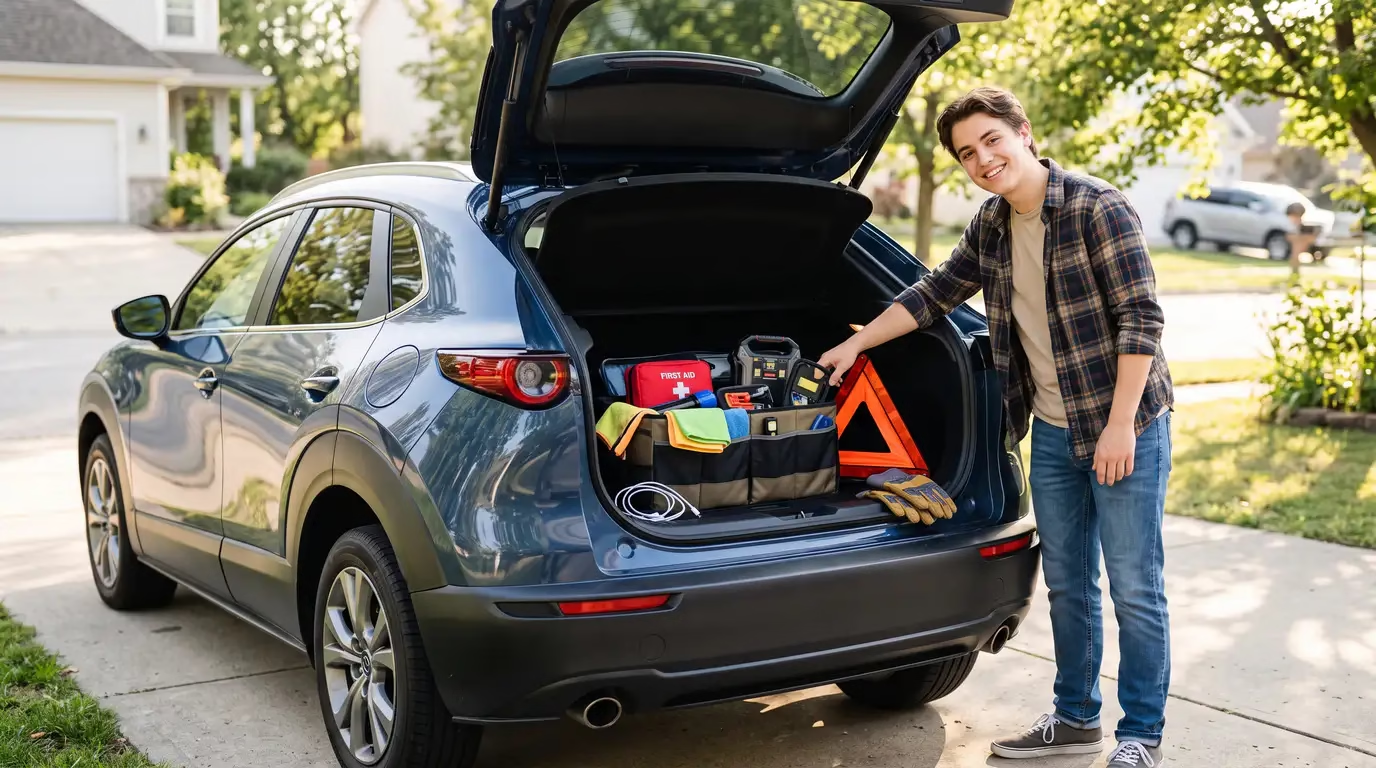
Your first car brings freedom, new plans, and more control over your time. It also brings flat tires, weak batteries, spills, warning lights, and surprise delays.
The right essential items for first-time car owners can make those problems easier to manage. Start with safety gear, basic tools, phone power, and roadside supplies. Add comfort and cleaning items later.
Affiliate disclosure: This page includes Amazon affiliate links. I may receive a small commission if you buy through them. You will not pay anything extra.
Introduction: Your First Car Needs More Than Fuel
You do not need to fill your trunk with random gadgets. You need a small set of useful items that solve real problems.
Your first car kit should help you:
- Stay visible during a roadside stop
- Handle a low tire or weak battery
- Treat small cuts and scrapes
- Keep your phone charged
- Manage minor messes
- Stay more comfortable during delays
- Find key documents fast
Start with items that protect you. Then add tools that suit your car, climate, and normal trips.
Always read your owner’s manual before buying car-specific tools. It tells you the right tire pressure, fluid type, jack points, and service plan.
Quick Checklist: Essential Items for a First Car
Here is a quick look at the main items in this guide.
| Priority | Category | Items to Buy |
|---|---|---|
| Buy first | Safety | First aid kit, warning triangles, flashlight, escape tool, gloves |
| Buy first | Roadside care | Tire inflator, pressure gauge, jump starter, jumper cables |
| Buy soon | Basic upkeep | Tool kit, funnels, microfiber cloths, washer fluid |
| Buy soon | Phone and records | Charger, phone mount, document case, maintenance log |
| Add later | Daily use | Trunk organizer, trash bin, wipes, shopping bags |
| Add as needed | Weather and comfort | Blanket, water, snacks, umbrella, scraper, sunshade |
Safety and emergency essentials
- First aid kit
- Reflective warning triangles
- Flashlight
- Seat-belt cutter and window-breaking tool
- Work gloves
- Reflective safety vest
- Emergency contact information
Breakdown and maintenance essentials
- Portable tire inflator
- Tire-pressure gauge
- Portable jump starter or jumper cables
- Spare tire, jack, and lug wrench
- Basic automotive tool kit
- Windshield washer fluid
- Microfiber cloths
Everyday essentials
- Phone mount
- Car charger
- Trunk organizer
- Small trash container
- Reusable shopping bags
- Tissues and cleaning wipes
- Sunglasses
Comfort and seasonal supplies
- Blanket
- Drinking water
- Shelf-stable snacks
- Rain poncho or umbrella
- Ice scraper in cold areas
- Windshield sunshade in hot areas
Use this as your first-time car owner checklist. You can build the kit in stages rather than buying everything at once.
Part 1: Safety Items Every First-Time Car Owner Should Buy First
These items should come before comfort gear and style upgrades. They help you respond to small injuries, roadside stops, darkness, and bad weather.
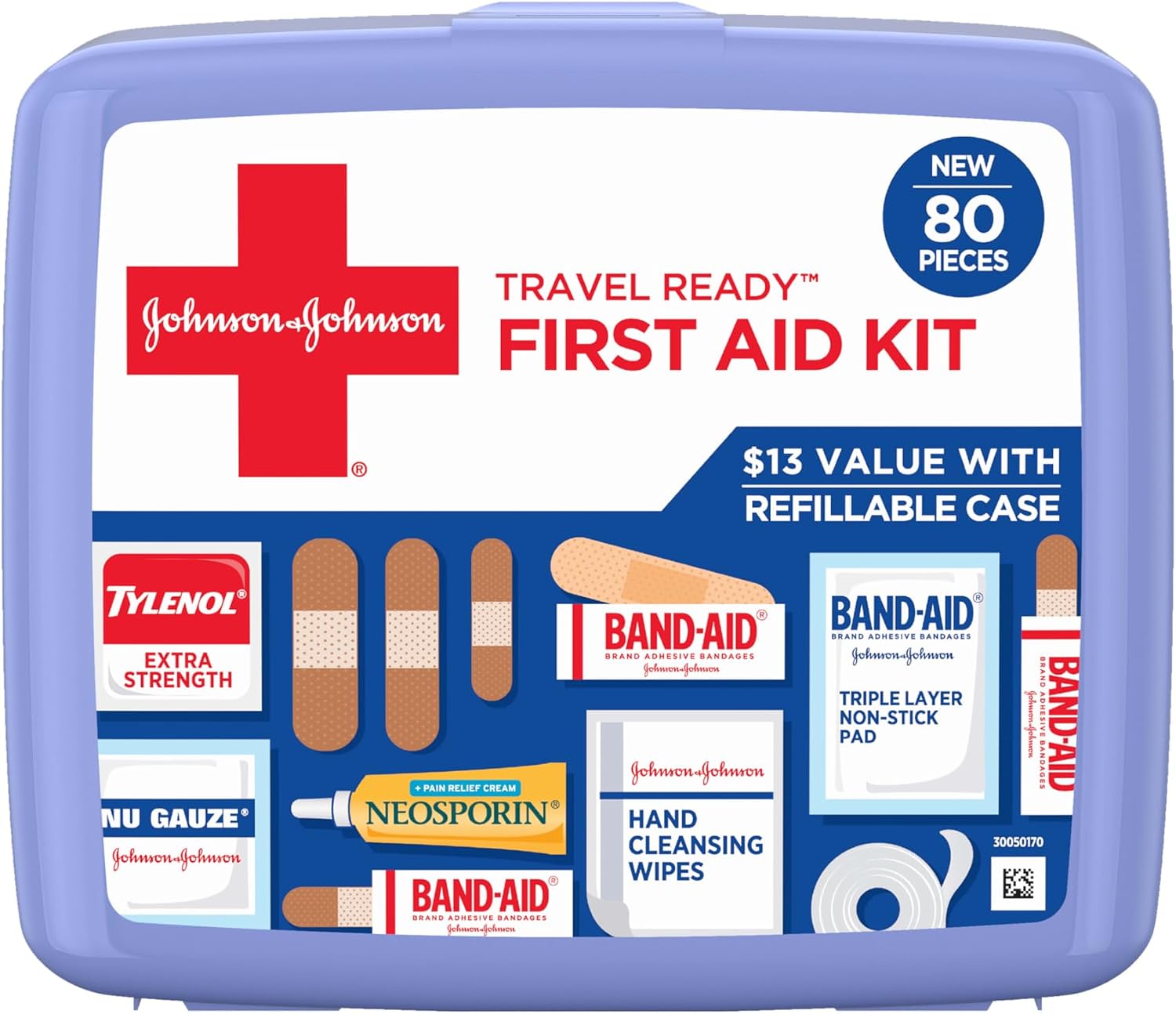
1. A Well-Stocked First Aid Kit
A minor cut can happen while you check a tire or look under the hood. A first aid kit lets you clean and cover small wounds.
Choose a kit with clear sections. You should not have to empty the whole case to find one bandage.
A practical kit may include:
- Adhesive bandages
- Sterile gauze
- Medical tape
- Antiseptic wipes
- Disposable gloves
- Small scissors
- Basic first aid instructions
Store the kit where you can reach it. A trunk organizer or seat-back pocket may work well.
Check the contents several times each year. Replace used, damaged, or old supplies.
Product recommendation
Compact vehicle first aid kit: Look for a firm case with labeled sections. Check the contents before you buy. A large item count does not always mean a better kit.
2. Reflective Warning Triangles or Roadside Markers
A stopped car can be hard to see at night. Rain, fog, curves, and hills can make the risk worse.
Reflective warning triangles help other drivers notice your stopped car. Foldable models take up little trunk space.
Learn how your markers work before you need them. Some have small supports that must be opened in a set order.
Product recommendation

Foldable reflective warning triangles: Choose a set with stable bases and a compact storage case. Bright reflective panels are easier to spot in poor light.
Check PriceNever walk into moving traffic to place a marker. Move to a safer spot and call for help if conditions feel unsafe.
3. A Reliable Flashlight
Your phone has a light, but it should not be your only one. A long roadside delay can drain your phone battery.
A separate flashlight helps you:
- Check a tire
- Look under the hood
- Read labels and instructions
- Find items in the trunk
- Improve your visibility after dark
Choose a flashlight with a simple switch. It should be easy to hold while you wear gloves.
Check its batteries each month. If it uses a built-in battery, recharge it on a set schedule.
Product recommendation

Bright, weather-resistant flashlight: Look for a strong grip, simple controls, and a size that fits your emergency kit.
Check Price4. Seat-Belt Cutter and Window-Breaking Tool
An escape tool may help during certain car emergencies. It often combines a protected blade with a glass-breaking point.
The tool must stay within your reach. It will not help if it sits under bags in the trunk.
Use a secure mount near the driver. Make sure it cannot fly around during a sudden stop.
Some types of car glass may react in different ways. Read your car manual and the tool instructions.
Product recommendation

Compact emergency escape tool: Look for a protected blade and secure holder. Avoid loose tools with exposed sharp parts.
Check Price5. Reflective Safety Vest and Work Gloves
A reflective vest can make you easier to see near a stopped car. It weighs little and folds into a small space.
Work gloves protect your hands from:
- Heat
- Dirt
- Sharp edges
- Rough tire surfaces
- Grease and road grime
Keep both items near your roadside tools. You should not have to search for them in the dark.
Product recommendation
High-visibility reflective vest: Choose a light vest that fits over your normal clothes.

Product recommendation
Durable work gloves: Look for a flexible pair with good grip. Thick gloves may make small tasks harder.
6. A Small Automotive Fire Extinguisher
A car fire can spread fast. Your first step should be to move away and call emergency services.
A small extinguisher may help with a very small fire. Yet you should only use it when you can do so safely.
Buy one made for suitable vehicle risks. Secure it with a firm bracket. A loose extinguisher can become dangerous in a crash.
Read the use guide in advance. Also check its pressure or status mark on a set schedule.
Product recommendation
Vehicle-suitable fire extinguisher: Look for a compact unit with a secure bracket and clear status gauge.
Check your local rules before fitting one. If a fire grows or blocks your exit, move away at once.
Part 2: Roadside Breakdown Essentials
Roadside trouble can feel much worse when you have no tools. These essentials to keep in your car cover common tire and battery problems.
7. Portable Tire Inflator
A slow leak can leave you with a soft tire. A portable inflator lets you add air until you can seek help.
It does not fix a cut, puncture, or damaged tire. It only adds air.
Look for:
- A clear pressure display
- Automatic shutoff
- A long power cable
- A useful hose length
- Simple controls
- A compact carry case
Check how the inflator receives power. It may use a car socket, battery, or both.
Product recommendation
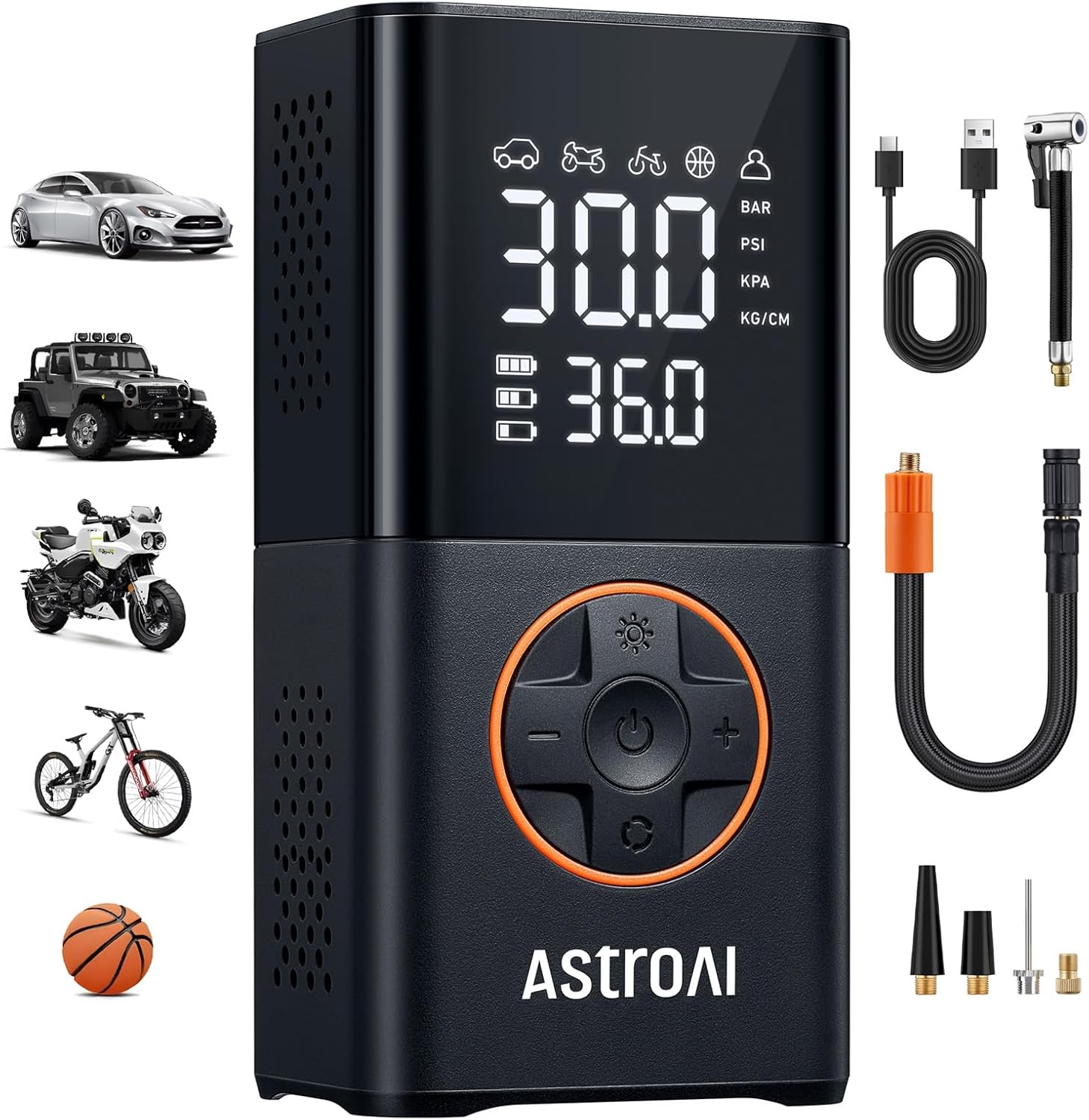
Portable tire inflator with pressure display: Choose one that fits your car’s power source and tire needs. A preset shutoff can make it easier to use.
Check Price8. Separate Tire-Pressure Gauge
Built-in inflator gauges are useful. A separate gauge gives you another way to check the result.
Your car’s correct tire pressure is often shown inside the driver’s door area. It may also appear in the owner’s manual.
Do not use the largest number printed on the tire as your target. That number serves a different purpose.
Check your tires at least once a month. Check them before long trips too.
Do not forget the spare. A flat spare cannot help you.
Product recommendation
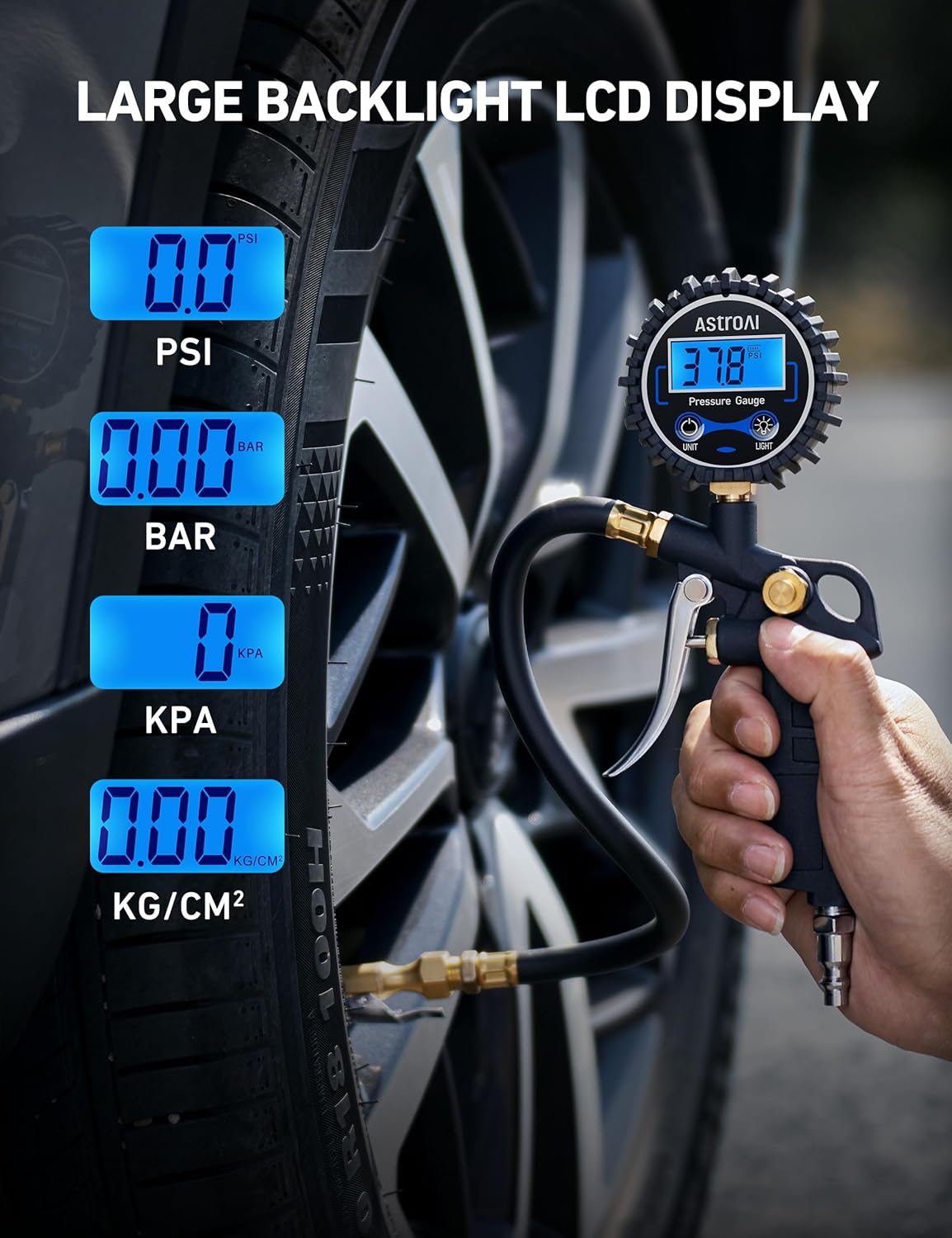
Easy-to-read tire-pressure gauge: Choose a compact gauge with a clear display. Keep it in your glove box or tool case.
9. Portable Battery Jump Starter
A weak battery may leave you with a car that will not start. A portable jump starter can supply the needed power.
Unlike jumper cables, it does not need a second car. That can help when you are alone or parked far away.
Look for:
- Support for your engine type
- Clearly marked clamps
- Charge status lights
- A storage case
- Simple safety alerts
- Clear written steps
A jump starter only works if it holds a charge. Check and recharge it often.
Product recommendation

Portable battery jump starter: Match it to your car and engine. Store its cable, clamps, and instructions together.
Check PriceFollow both sets of instructions. Use the steps from your car manual and the jump starter guide.
10. Jumper Cables
Jumper cables are simple and useful. They can help start your car with power from another suitable vehicle.
You will need someone willing to help. The cars must also be placed close enough for the cables to reach.
Choose cables with:
- Clear red and black markings
- Strong clamps
- Flexible covers
- Enough length
- A storage bag
Learn the safe order before an emergency. A wrong link can harm the car or cause sparks.
Product recommendation
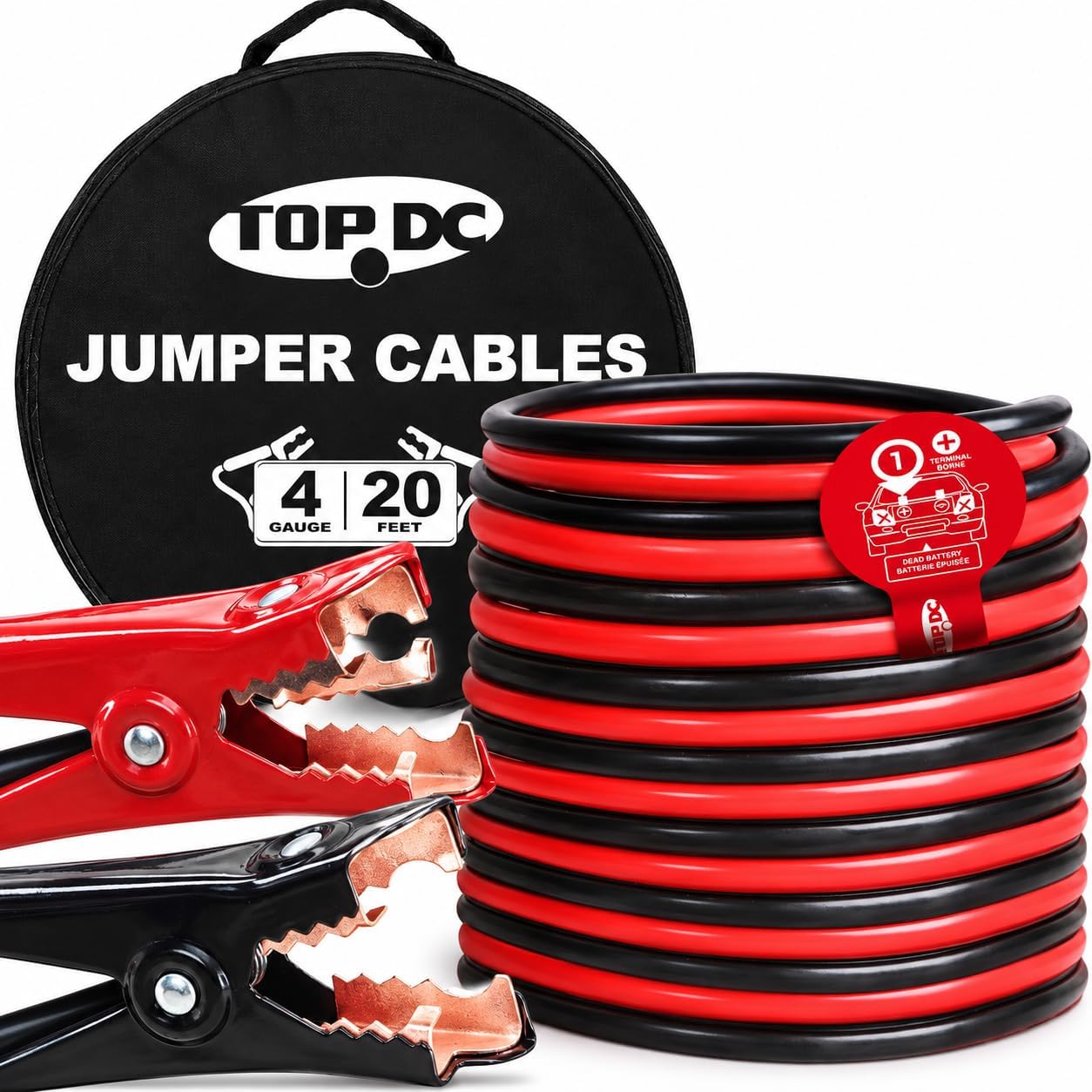
Heavy-duty jumper cables with a storage bag: Long, flexible cables tend to be easier to place. Clear clamp colors help reduce mistakes.
Check Price11. Spare Tire, Jack, and Lug Wrench
Do not assume your car has a spare tire. Some cars come with a repair kit instead.
Open the trunk and check for:
- A full-size spare
- A small temporary spare
- A tire repair kit
- A jack
- A lug wrench
- Instructions
A temporary spare has limits. It may restrict your speed and travel range. Read its label before use.
Your jack must suit your car’s weight. You must also place it at the correct lift point.
Never work beneath a car held by a basic tire jack. Use roadside help if the ground is soft, sloped, or unsafe.
Product recommendation
Vehicle-compatible lug wrench: Check the socket size first. A well-sized wrench may offer more grip than a small factory tool.
Product recommendation
Vehicle-compatible jack kit: Confirm the weight rating and lift range. Check your manual for the correct jack points.
12. Roadside Assistance Information
Tools cannot solve every problem. Roadside help gives you another option.
Your car, insurance plan, bank card, or dealer may include this service. Check before paying for a new plan.
Save the service number in your phone. Keep a paper copy in the glove box.
Your roadside record should include:
- Vehicle make and model
- Vehicle year
- Registration number
- Insurance contact
- Emergency contact
- Roadside service number
This section may save you money. You might already have roadside support without knowing it.
Part 3: Basic Maintenance Tools for Beginners
You do not need to become a mechanic. A few basic tools can help with simple checks and small tasks.
Leave brake work, wiring faults, and major repairs to a trained person.
13. Basic Automotive Tool Kit
A large mechanic set can cost more than you need. Start with a small kit for simple work.
It may include:
- Flat and cross-head screwdrivers
- Pliers
- Adjustable wrench
- Common socket sizes
- Electrical tape
- Cable ties
- Small work light
Keep each tool in its set spot. This makes missing parts easy to spot.
Do not use a tool if you do not understand the task. A cheap repair can become costly after one wrong step.
Product recommendation

Compact automotive tool kit: Choose a small, well-labeled set in a hard case. The case should hold each tool in place.
14. Funnel and Vehicle-Approved Fluids
A funnel helps you add fluid without making a mess. Small spills can damage parts or create strong smells.
Your car may use several fluids. Each one has its own type and purpose.
Common examples include:
- Engine oil
- Coolant
- Washer fluid
- Brake fluid
- Power steering fluid
Do not guess the right product. Never mix types unless your manual says you can.
Product recommendation

Compact automotive funnel set: A set of different sizes can help with varied fill points. Keep the funnels clean and dry.
Buy fluids only after checking your owner’s manual. The wrong type can harm your car.
15. Windshield Washer Fluid and Microfiber Cloths
A clear windshield helps you see road signs, people, and other cars. Dirt and bugs can block your view.
Use washer fluid made for your climate. Plain water may freeze in cold weather. It may also leave marks.
Microfiber cloths can help you:
- Clean interior glass
- Wipe dashboard dust
- Deal with small spills
- Check a dipstick
- Dry wet trim
Keep clean and dirty cloths apart. A greasy cloth can smear your glass.
Product recommendation

Automotive microfiber cloth pack: Choose cloths in several colors. You can assign one color to glass and another to dirty work.
16. Digital Maintenance Log or Small Notebook
It is easy to forget service dates. A short record helps you track work and plan costs.
Record:
- Service date
- Car mileage
- Oil changes
- Tire rotations
- Brake checks
- Battery changes
- Wiper changes
- Repair costs
Keep photos of large repair bills if you use a phone log. You may need them for a claim or future sale.
Product recommendation
Vehicle maintenance logbook: A simple book can keep dates, mileage, work, and costs in one place.
Free alternative
You can also use:
- A basic spreadsheet
- Phone notes
- Calendar alerts
- Your car maker’s app
- A folder for digital receipts
Choose the system you will keep using. A basic record is better than a complex one you ignore.
Part 4: Documents and Information to Keep Accessible
Your tools may sit in the trunk. Your records should stay closer.
You should be able to find needed details fast. You should also protect private data.
17. Essential Vehicle Documents
Document rules differ by location. Check which papers you must carry.
You may need:
- Vehicle registration
- Proof of insurance
- Inspection papers
- Roadside help details
- Emergency contact details
Do not leave your car title inside the car. It proves ownership and may contain private data.
Use a copy or accepted digital file where local rules allow it.
Product recommendation

Compact document organizer: A slim case can keep approved papers dry, clean, and easy to find.
Review your papers each year. Remove old insurance cards and expired records.
18. The Owner’s Manual
Your owner’s manual is one of your best car tools. It gives advice made for your exact model.
It may explain:
- Warning lights
- Tire pressure
- Fluid types
- Fuse locations
- Tow points
- Jack points
- Service dates
- Dashboard controls
Read the sections on tires, warning lights, and roadside care first. You can read the rest as needed.
If your printed manual is missing, check the car maker’s site. You may find a digital copy.
19. Accident Information Card
A crash can make it hard to think clearly. A short information card gives you a calm set of steps.
Your card may include:
- Insurance number
- Insurance phone number
- Emergency contact
- Roadside help number
- Space for the other driver’s details
- A reminder to take photos when safe
Keep a working pen with the card. Pens often disappear from glove boxes.
Do not display your home address or private details in clear view.
Product recommendation
Glove-box accident information kit: Look for a kit with forms, a pen, and a protective case.
Part 5: Phone, Navigation, and Charging Essentials
Your phone can provide maps, contact details, and roadside help. It becomes less useful with a dead battery.
Plan your phone setup before you start driving.
20. Secure Phone Mount
A mount keeps your phone in a fixed spot. You can glance at the map without holding the device.
Choose a place that does not block:
- Your view of the road
- Dashboard lights
- Airbags
- Air vents you need
- Gear controls
- Other car controls
Mount styles include dashboard, windshield, vent, and cup-holder designs. Some places limit windshield mounts, so check local rules.
Set your route before moving. A phone mount does not make typing while driving safe.
Product recommendation

Adjustable phone mount: Choose a mount that fits both your phone and car. It should hold the device firmly on rough roads.
21. Car Charger and Charging Cable
Maps and music can drain your phone fast. A car charger keeps it powered on longer drives.
Check the ports in your car. You may have:
- A round 12-volt socket
- A standard USB port
- A USB-C port
- A built-in wireless pad
Use a charger that suits both the car and phone. Keep the cable away from pedals and the gear area.
Product recommendation
Multi-port car charger: This lets you charge more than one small device. Check that it fits your car’s power socket.

Product recommendation
Durable spare charging cable: Leave one cable in the car. This helps you avoid taking it indoors and forgetting it.
22. Backup Power Bank
A power bank can charge your phone if the car loses power. It can also help during a long wait.
Recharge it on a set schedule. A dead power bank adds weight but offers no help.
Cars can become very hot or cold. Follow the maker’s storage guide for the battery.
Product recommendation

Compact portable power bank: Pick a size that fits your phone and storage needs. Store its cable beside it.
Check PricePart 6: Organization and Everyday Convenience
Good storage makes every other item easier to find. It also stops loose gear from moving around.
These products belong on a useful list of must-have car accessories. They serve a clear purpose and do not just add style.
23. Trunk Organizer
A trunk organizer keeps safety gear, tools, and cleaning items apart. It also helps you see when something is missing.
Useful features include:
- Firm sides
- Adjustable sections
- Carry handles
- A non-slip base
- A folding frame
- Secure straps
Place emergency items near the top. Do not bury them under shopping bags or sports gear.
Product recommendation

Collapsible trunk organizer: Choose one with strong sides and movable dividers. Secure it so it cannot slide.
24. Small Car Trash Container
Receipts, cups, and food wraps collect fast. A small bin keeps them off the floor.
Choose a leak-resistant design. It should also be easy to remove and wash.
Place it where you can use it without reaching far. It must not block a seat belt, door, or control.
Product recommendation

Leak-resistant car trash container: A washable inner part makes spills easier to clean.
Check Price25. Reusable Shopping Bags and Cargo Straps
Reusable bags can hold groceries, wet clothing, or small loose items. Fold them flat when not in use.
Cargo straps can help secure suitable loads. Use only approved tie points in your car.
Never place a heavy loose item behind a seat. It can move with force during a hard stop.
Product recommendation
Foldable reusable shopping bags: Choose strong bags with firm handles. A flat base can help keep groceries upright.

Product recommendation
Adjustable cargo straps: Match the strap to the load. Follow the use guide and check each strap for wear.
26. Tissues, Wipes, and Hand Sanitizer
Small spills can become stains if you leave them. Tissues and wipes help you act at once.
Use cleaners made for car surfaces. Strong home cleaners may harm trim, cloth, leather, or screens.
Store liquids upright. Check all labels for heat limits.
Product recommendation
Vehicle-safe interior cleaning wipes: Check which surfaces they suit. Do not assume one wipe is safe for every screen or seat.
Part 7: Comfort Supplies for Delays and Long Trips
Comfort items become more useful during long waits. They also help on road trips and bad-weather days.
They should not replace safety gear. Add them after your basic kit is ready.
27. Blanket or Emergency Thermal Blanket
A blanket can keep you warm during a breakdown. It can also support tired passengers.
You have two main choices:
- A packed foil-style emergency blanket
- A normal washable travel blanket
The foil type takes less space. A standard blanket feels better during regular use.
Keep either type in a dry bag. Moist fabric will not help much on a cold day.
Product recommendation

Compact emergency thermal blanket pack: These packs use little space and fit inside most roadside kits.
28. Drinking Water and Shelf-Stable Snacks
Water and simple snacks can help during a long delay. They are also useful if a trip takes longer than planned.
Choose sealed items that store well. Avoid foods that melt, leak, or spoil fast.
Check the supplies each month. Replace any damaged pack.
Simple snack options may include:
- Plain crackers
- Dry cereal bars
- Dried fruit
- Sealed nuts, if allergies are not a concern
- Other stable, low-mess food
This is not a long-term food plan. It is a small backup for short waits.
The phrase essential gear for living in a car may lead some readers here. However, this guide covers short trips and delays. Living in a car safely needs a much broader plan.
29. Sunglasses
Bright sun can strain your eyes and hide road detail. A spare pair of sunglasses can help.
Keep them in a hard case. Loose glasses can scratch or break.
If you need prescription lenses, keep a suitable spare. Do not use dark lenses at night.
Product recommendation
Driving sunglasses with protective case: Choose a pair that feels clear and comfortable. Avoid lenses that change traffic-light colors.
30. Umbrella or Rain Poncho
Rain can turn a simple tire check into a wet mess. An umbrella or poncho gives you basic cover.
A poncho keeps both hands free. An umbrella gives more day-to-day use.
Store either item near a door or at the top of your trunk. You should not have to unload bags to find it.
Product recommendation
Compact wind-resistant umbrella: Look for a small model with a secure sleeve and simple opening control.
Part 8: Seasonal Car Essentials
Your location should guide this part of your kit. Snow tools waste space in a hot area. A sunshade may matter more there.
Review your seasonal kit before the weather shifts.
31. Cold-Weather Items
Cold weather can affect tires, batteries, glass, and road grip.
Useful items may include:
- Ice scraper
- Snow brush
- Warm gloves
- Extra blanket
- Winter washer fluid
- Compact snow shovel
- Approved traction aid
Clear all windows before driving. Do not make a small opening and hope for the best.
Remove heavy snow from the roof too. It may slide onto your windshield or another car.
Product recommendation
Combined ice scraper and snow brush: A two-part tool saves space and handles both ice and loose snow.

Product recommendation
Compact snow shovel: Pick a firm shovel that fits your trunk. A folding handle may save space.
32. Hot-Weather Items
Car interiors can become very hot. Heat can harm food, batteries, and some personal products.
Useful hot-weather items include:
- Windshield sunshade
- Reusable water container for active trips
- Light towel
- Heat-safe storage case
- Cloth seat cover, if suitable
Do not leave children or pets in a parked car. A sunshade does not make a closed car safe.
Product recommendation
Foldable windshield sunshade: Measure the window before buying. A poor fit may sag or block less sun.
33. Wet-Weather Items
Rain can reduce sight and road grip. It also makes roadside work harder.
Your wet-weather kit may include:
- Rain poncho
- Waterproof flashlight
- Absorbent towels
- Extra washer fluid
- Shoe covers
- Small waterproof bag
Check your wiper blades before the rainy season. Replace them if they smear or skip.
Product recommendation
Water-resistant emergency poncho: A loose poncho can cover your clothes while keeping your hands free.
Part 9: Cleaning and Interior Protection
A clean car is easier to inspect and use. You can spot leaks, stains, and wear sooner.
You do not need a shelf full of car cleaning essentials. A small, safe kit can handle most daily messes.
34. Basic Car Cleaning Kit
Your starter cleaning kit may contain:
- Microfiber cloths
- Car interior cleaner
- Car glass cleaner
- Soft brush
- Small trash bags
- Protective gloves
- Carry pouch
Use separate cloths for glass, trim, and dirty work. This stops grease from spreading.
Test new cleaners on a small hidden spot. Do not spray liquid straight onto a screen.
Product recommendation

Compact car-cleaning kit: Choose simple products made for car surfaces. Avoid sets with many items you will not use.
Check Price35. Portable Car Vacuum
A small vacuum helps remove crumbs, dust, sand, and pet hair. It is useful for seat gaps and floor edges.
Corded models can run from the car’s power. Battery models offer more freedom but need charging.
Look for:
- A narrow gap tool
- A brush attachment
- An easy-empty dust cup
- A washable filter
- Simple storage
Product recommendation

Compact handheld car vacuum: Choose a model with tools for seat gaps. Check whether its power method suits your car.
36. Floor Mats or Cargo Liner
Floor mats protect the carpet from mud, water, and dirt. A cargo liner does the same for your trunk area.
Fit matters most on the driver’s side. A loose mat can move under a pedal.
Use the car’s mat clips if provided. Never stack one driver mat on another.
Product recommendation

Vehicle-compatible floor mats: Confirm your car’s year, make, and model. Check that the driver mat locks in place.
Part 10: Useful but Optional Accessories
These items may improve daily use. Yet you can drive without them.
Buy them after your safety and roadside kit is ready.
37. Dash Camera
A dash camera records part of your trip. Some drivers use it to keep a video record of road events.
Common setups include:
- Front camera only
- Front and rear cameras
- Parking recording
- Screen-free models
- Models with a small display
Check local privacy and recording rules. Mount the camera where it does not block your view.
Product recommendation
Beginner-friendly dash camera: Look for simple controls and a secure mount. Check its card, power, and storage needs.
38. Bluetooth Adapter for Older Cars
An older car may not have modern phone audio. A Bluetooth adapter may add wireless sound or calls.
The right type depends on your car. It may use:
- An audio input
- A USB port
- A radio signal
- A 12-volt socket
Complete the setup before you move. Do not pair devices while driving.
Product recommendation
Vehicle-compatible Bluetooth adapter: Check your car’s ports first. Pick a model with simple controls and clear sound.
39. Portable Tire Tread Gauge
Tire tread helps move water away from the road contact area. Worn tread can reduce grip.
A tread gauge gives you a simple depth reading. It does not replace a full tire check.
Also look for:
- Cracks
- Sidewall bulges
- Cuts
- Uneven wear
- Nails or other objects
Ask a tire expert for help if anything looks wrong.
Product recommendation

Compact tire tread-depth gauge: A clear scale makes repeat checks easier. Store it with your pressure gauge.
Part 11: What Not to Keep in Your Car
Some items should not stay inside a car. Heat, theft, leaks, and sudden stops can turn them into problems.
Avoid storing:
- Your original car title
- Large amounts of cash
- Spare house keys
- Private personal papers
- Unsecured heavy tools
- Loose fuel containers
- Leaking chemicals
- Food that spoils fast
- Heat-sensitive medicine
- Electronics not made for high heat
- Items banned by local law
- Products with unsafe storage warnings
Check product labels before leaving anything in the car. This matters for batteries, sprays, medicine, food, and cleaning liquids.
Remove clutter each month. Extra weight can also make your kit harder to reach.
Part 12: How to Choose Car Essentials Without Wasting Money
A long product list can feel costly. You can avoid waste by shopping in a clear order.
Buy items that solve likely problems. Ignore tools you cannot use or do not need.
Start With the Most Likely Problems
Use this order:
- Personal safety
- Roadside visibility
- Flat-tire support
- Battery problems
- Phone power
- Basic first aid
- Local weather
- Storage and comfort
This order keeps basic protection ahead of style upgrades.
Check Vehicle Compatibility
Before buying, confirm:
- Car make
- Car model
- Model year
- Tire size
- Engine size
- Battery type
- Car power ports
- Trunk size
- Jack weight rating
- Approved jack points
This also applies to essential things needed to buy a car. Before the sale, check that the spare tire, jack, key set, manual, and service records are present.
Choose Simple Products
The best beginner tools are often simple.
Look for products that are:
- Easy to read
- Easy to store
- Clearly marked
- Firmly packed
- Suited to your climate
- Suited to your car
- Backed by clear instructions
Extra buttons and modes do not always add value. You need tools you can use under stress.
Avoid Buying a Giant Kit Blindly
A large roadside kit may look like a good deal. Yet some sets count every tiny part as a separate item.
Check for the items you truly need:
- Strong warning markers
- Useful flashlight
- Proper gloves
- First aid supplies
- Tire support
- Clear instructions
- Firm storage case
Replace weak parts if needed. You can also build your own kit over time.
Part 13: First-Time Car Owner Shopping Plan by Budget
You do not need to buy all the essential items for first-time car owners in one order. Use this three-step plan.
Buy These Items First
Start with:
- First aid kit
- Reflective warning triangles
- Flashlight
- Tire-pressure gauge
- Phone charger
- Work gloves
- Emergency contact card
These cover basic care, visibility, communication, and minor roadside needs.
Recommended starter bundle
A useful starter bundle may combine:
- First aid supplies
- Reflective markers
- Flashlight
- Work gloves
- Small storage case
Add These Items Next
Your next purchases should cover tires and battery trouble.
Consider:
- Portable tire inflator
- Battery jump starter
- Basic tool kit
- Trunk organizer
- Emergency blanket
- Phone mount
Recommended roadside upgrade
A tire inflator and charged jump starter may help with two common roadside problems. Check that both suit your car.
Buy These Later
Add these after your core kit is ready:
- Dash camera
- Portable vacuum
- Cargo liner
- Bluetooth adapter
- Seasonal comfort items
- Extra storage products
Optional gear should not take money away from needed repairs. Fix worn tires, poor brakes, bad lights, and battery issues first.
Part 14: Monthly Car Essentials Check
A roadside kit can fail if you never inspect it. Set a monthly phone alert for a quick check.
Review these items:
- Recharge the jump starter
- Recharge the flashlight
- Recharge the power bank
- Check first aid supplies
- Replace old or damaged items
- Test the tire inflator
- Inspect the pressure gauge
- Check the spare tire
- Refill washer fluid
- Review document dates
- Rotate snacks and water
- Change seasonal gear
- Remove trunk clutter
- Check that all gear is easy to reach
This check should take only a short time. It can also show you what you never use.
Optional printable content upgrade
Create a printable called:
First-Time Car Owner Essentials and Monthly Inspection Checklist
It could include:
- A one-time shopping list
- A monthly check page
- A long-trip check page
- Space for roadside numbers
- A car service record
- A seasonal gear list
This can work well as an email sign-up gift.
Frequently Asked Questions
What items should a first-time car owner buy immediately?
Start with items that support safety and common roadside needs:
- First aid kit
- Reflective warning triangles
- Flashlight
- Tire-pressure gauge
- Portable tire inflator
- Jump starter or jumper cables
- Phone charger
- Emergency contact details
A secure trunk organizer can help you keep the set together.
What should I keep in my car at all times?
Keep approved car documents, basic safety gear, phone power, and roadside tools.
Your core set may include:
- Insurance and registration records
- First aid kit
- Warning triangles
- Flashlight
- Tire gauge
- Inflator
- Jump starter
- Gloves
- Phone charger
Some items should not stay in extreme heat or cold. Check their storage instructions.
Do I need both jumper cables and a portable jump starter?
No, but carrying both gives you more options.
Jumper cables need a second suitable car. A charged jump starter can work on its own.
If your budget is tight, a jump starter may offer more freedom. You must keep it charged and match it to your car.
Is a complete roadside emergency kit worth buying?
A ready-made kit can save time. It can also provide a neat storage case.
Check the kit before you buy. Make sure it contains useful, well-made items.
Review:
- Warning markers
- Flashlight
- Gloves
- First aid supplies
- Basic tools
- Instructions
- Storage case
Do not judge a kit by its item count alone.
Product recommendation

Preassembled roadside emergency kit: This can be a good starting point. Add or replace items based on your car and local weather.
What tools does a beginner actually need?
A beginner can start with:
- Tire-pressure gauge
- Tire inflator
- Flashlight
- Work gloves
- Screwdrivers
- Pliers
- Basic socket set
- Car-safe wrench
- Funnel
You do not need tools for large repairs you cannot safely perform.
Should I keep water in my car?
A small amount of sealed water can help during a delay. Check it often and replace damaged containers.
Follow the container’s storage advice. High heat can affect some bottles and lids.
For a planned long trip, bring fresh water from home. Do not rely only on water left in the car for months.
What should I keep in a used car?
A used car needs the same basic gear as a new one. It may also need closer checks.
Focus on:
- Spare tire condition
- Tire inflator
- Battery jump starter
- Pressure gauge
- Owner’s manual
- Service records
- Approved fluids
- Basic tool kit
- Roadside help details
Ask a trained mechanic to inspect the car after purchase. This can reveal worn parts before they cause trouble.
Where should I store emergency equipment?
Store emergency gear in a firm, easy-to-reach spot. A trunk organizer works well for many cars.
Keep the escape tool within the driver’s reach. Keep documents in the glove box if local rules allow it.
Do not place loose items near:
- Pedals
- Airbags
- The driver’s view
- Gear controls
- Seat tracks
- Open cup holders
Check the storage layout after loading luggage. Your emergency kit should stay easy to reach.
Conclusion: Build Your Car Kit in the Right Order
You do not need every product on day one. Start with essential items for first-time car owners that protect you during common problems.
Buy a first aid kit, warning triangles, flashlight, tire gauge, and phone charger first. Then add a tire inflator, jump starter, and basic tools. Comfort, cleaning, and tech accessories can wait.
Choose gear that fits your car. Read the instructions before you need them. Check the whole kit once each month.
A good car kit will not prevent every delay. It can help you stay calm, visible, connected, and better prepared.