Introduction
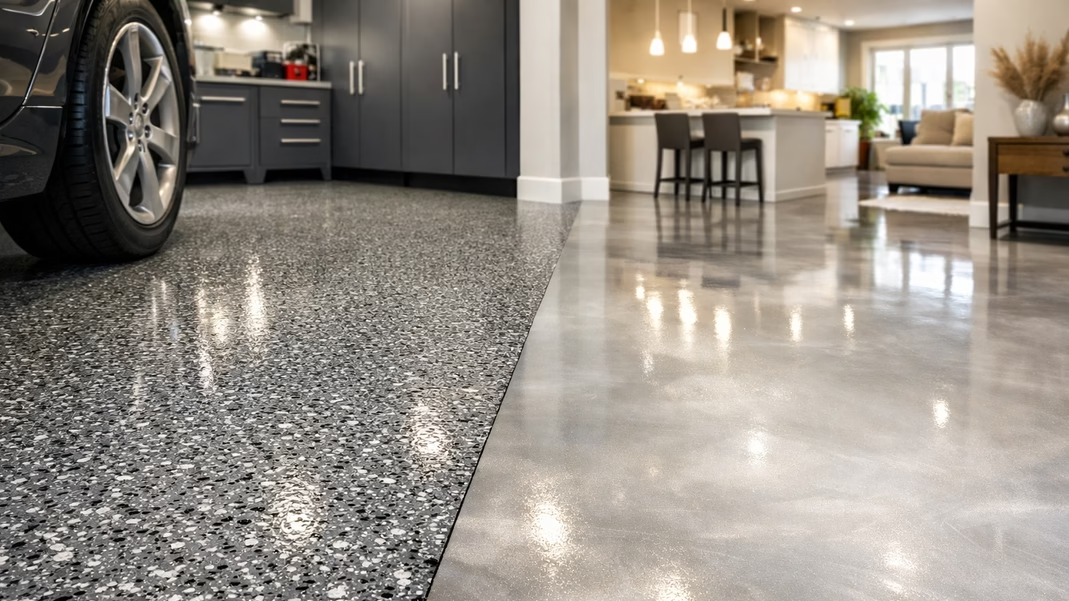
Epoxy flooring is popular because it can turn plain concrete into a clean, glossy, and tough surface. You often see it in garages, basements, shops, kitchens, and even modern homes. It gives the floor a smooth finish and helps protect it from stains, spills, dust, and daily wear.
But here is the catch. Not every epoxy floor is the same. Some products are great for garages. Some work better inside homes. Some look bold and stylish, like metallic epoxy flooring or 3D epoxy flooring. Others are built more for strength than beauty.
That is why this guide looks at the top epoxy flooring options in a simple way. You will learn what epoxy flooring is, where it works best, and which type may fit your space. We will also cover the best epoxy flooring for garage floors, homes, basements, wet areas, and concrete surfaces as the guide continues.
If you are planning a DIY project, this article will also help you understand what to look for in the best epoxy flooring kits. If you want to hire a pro, it will help you ask better questions before spending money.
The goal is simple. By the end, you should know which epoxy floor coating makes sense for your needs, your budget, and your style.
🏗️ Garage Floor Coating Comparison
Heavy-duty epoxy & polyurea systems for pros & DIYers
| Product | Quick Overview | Check Price |
|---|---|---|
ArmorPoxy
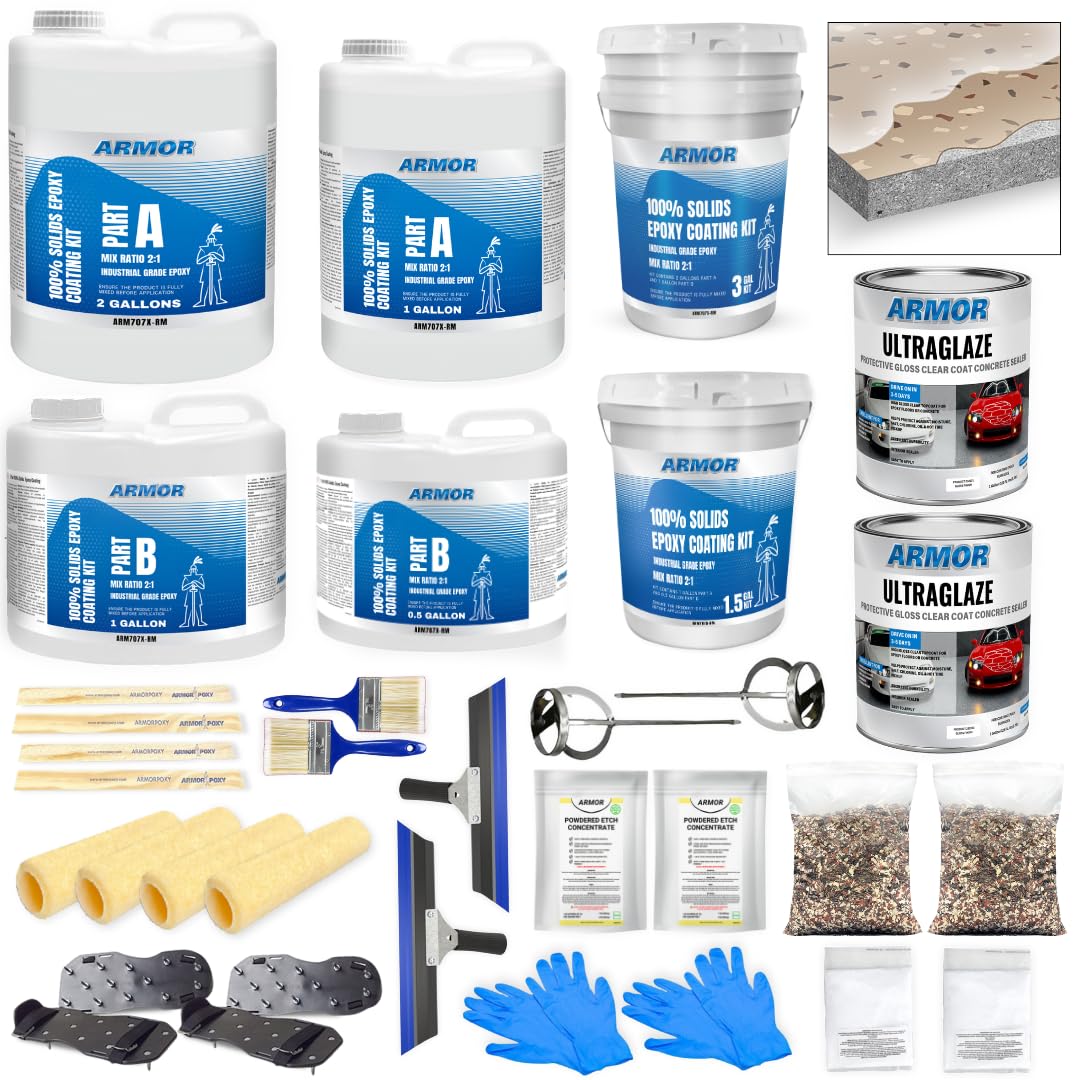
UltraGlaze Polyaspartic | 100% solids industrial formula. Superior UV resistance with polyaspartic topcoat. Contractor-grade high-build for heavy traffic. Complex DIY prep. | View Deal → |

Rust-Oleum
RockSolid Polycuramine | 20x stronger than epoxy. DIY-friendly kits, lasting 10–20 years. Short 30min pot life; possible hot tire pickup. | View Deal → |

Legacy Industrial
NOHR-S Polyurea Kit | Excellent DIY support & guidance. UV-stable polyurea for car enthusiasts. Online-only; higher cost than basic kits. | View Deal → |

Sika
Industrial Pro System | Exceptional chemical resistance for labs & plants. Up to 5-year warranty. Trained installers required; premium pricing. | View Deal → |

Sherwin Williams
ArmorSeal Commercial | USDA-compliant options, decorative flakes. Contractor-friendly & predictable results. Moderate industrial use; retail/store purchase. | Official Site → |
What Is Epoxy Flooring?
Epoxy flooring is a hard floor coating that goes over a surface, usually concrete. It is made by mixing epoxy resin with a hardener. When these two parts come together, they form a strong layer that bonds to the floor.
Think of it like a shield for your concrete. Once it cures, it creates a smooth and durable surface. This surface can handle stains, foot traffic, tools, tires, and many common spills better than bare concrete.
That is why many people use epoxy floor coating in garages, workshops, basements, warehouses, kitchens, and commercial spaces. It helps protect the floor while giving it a cleaner look.
How Epoxy Flooring Works
Epoxy does not work like normal paint. Paint mostly sits on top of the floor. Epoxy bonds much harder when the floor is prepared the right way.
The process often starts with cleaning and grinding the concrete. This helps the coating stick well. Then the epoxy is mixed and rolled onto the floor. Some floors also get flakes, color pigments, or a clear topcoat for extra strength and style.
A good epoxy floor can look simple and clean. It can also look bold and premium. That is why people search for everything from best epoxy floor paint to best metallic epoxy flooring.
Where Can You Use Epoxy Flooring?
Epoxy flooring works best on clean, dry, and solid concrete. It is often used in:
- Garages
- Basements
- Kitchens
- Bathrooms
- Laundry rooms
- Workshops
- Showrooms
- Warehouses
- Commercial kitchens
- Retail spaces
For homes, epoxy can give a sleek and modern finish. For garages, it can protect the concrete from oil, dirt, tire marks, and stains. For basements, it can make the floor easier to clean and less dusty.
Still, epoxy is not perfect for every space. Outdoor epoxy flooring needs care because sunlight can cause some coatings to fade or turn yellow. Wet areas also need texture, since glossy epoxy can become slippery.
Why People Like Epoxy Flooring
People choose epoxy flooring because it solves many common floor problems. Bare concrete creates dust. Tiles have grout lines that trap dirt. Wood can swell with moisture. Epoxy gives a smooth surface that is easier to clean.
It also offers many design choices. You can choose solid colors, flakes, metallic effects, marble looks, or high-gloss finishes. This makes epoxy useful for both practical and stylish spaces.
Some of the biggest benefits of epoxy flooring include:
- Strong surface
- Easy cleaning
- Modern look
- Stain resistance
- Water resistance
- Many color options
- Good value for concrete floors
- Long life when installed well
That said, the best epoxy flooring depends on the room, the surface, and how much wear the floor will face.
Quick Comparison: Top Epoxy Flooring Options
Before choosing a product, it helps to know the main types of epoxy flooring. Each type has a different use. Some are best for heavy traffic. Some are better for design. Some are easier for DIY users.
Below is a simple comparison of the top epoxy flooring options.
| Epoxy Flooring Type | Best For | Main Benefit | Possible Drawback |
|---|---|---|---|
| Garage epoxy floor coating | Garages and workshops | Strong and stain-resistant | Needs good floor prep |
| Self-leveling epoxy flooring | Uneven concrete and indoor floors | Smooth, clean finish | Can cost more |
| Metallic epoxy flooring | Homes, showrooms, feature rooms | Luxury look | Harder to install |
| 3D epoxy flooring | Decorative rooms and custom spaces | Unique design | Can feel too bold over time |
| Flake epoxy flooring | Garages, basements, laundry rooms | Better grip and hides dirt | Less sleek than solid epoxy |
| Quartz epoxy flooring | Wet areas and commercial spaces | Strong and slip-resistant | More expensive |
| Epoxy floor paint | Light-use concrete floors | Budget-friendly | Not as strong as true epoxy |
| Outdoor epoxy flooring | Patios and outdoor concrete | Can protect concrete | Needs UV-resistant coating |
| Residential epoxy flooring | Homes and small spaces | Stylish and easy to clean | Can feel hard underfoot |
| Commercial epoxy flooring | Shops, kitchens, warehouses | Built for heavy use | Usually needs a pro |
Garage Epoxy Floor Coating
Garage epoxy floor coating is one of the most common choices. It is made for concrete floors that take abuse. Cars, tools, oil, dust, and hot tires can damage weak floors fast.
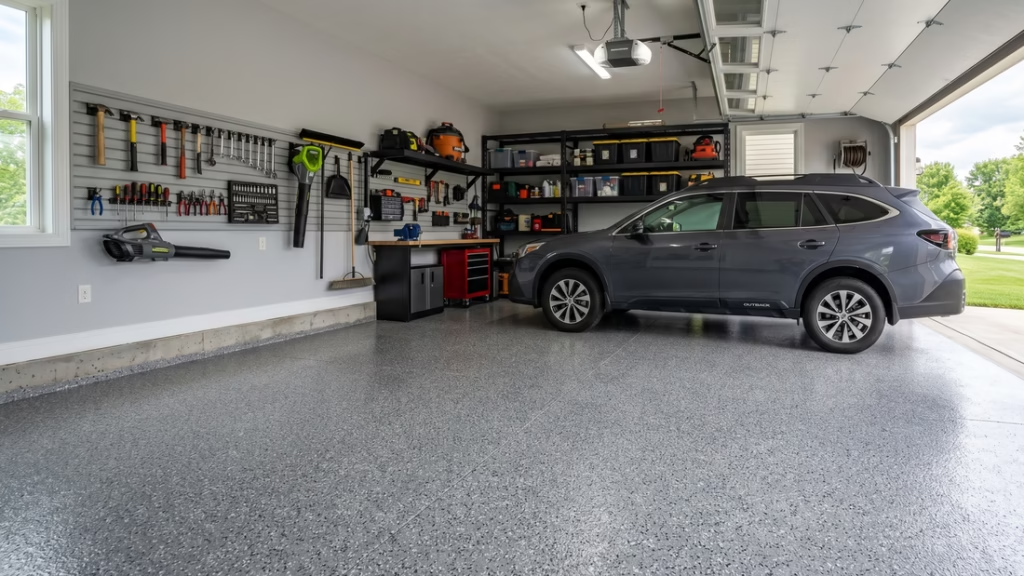
The best epoxy flooring for garage use is usually a 2-part epoxy system. It should also have a strong topcoat. Decorative flakes can help hide dirt and add grip.
This type is a good fit if you want a cleaner garage that looks finished, not dusty and dull.
Self-Leveling Epoxy Flooring
Self-leveling epoxy flooring creates a smooth surface over concrete. It can help cover small flaws and make the floor look clean and even.
This option works well in homes, offices, showrooms, and commercial spaces. It gives a sleek finish with fewer lines and joints.
It is not always the cheapest choice. But if you want a polished look, it can be worth it.
Metallic Epoxy Flooring
Metallic epoxy flooring is all about style. It uses special pigments to create a flowing, marble-like, or cloud-like effect. No two floors look exactly the same.
This is one of the best epoxy flooring design options for modern homes, salons, showrooms, and feature rooms. It can look expensive and bold.
The downside is installation. Metallic epoxy takes skill. If the mix or spread is poor, the final look may not match your plan.
3D Epoxy Flooring
3D epoxy flooring uses a printed image under a clear epoxy layer. It can create deep visual effects, such as ocean scenes, stone looks, or custom designs.
It can be fun and eye-catching. But it is not for everyone. A strong design may look exciting today and feel too much later.
Use 3D epoxy flooring in small spaces if you want a bold statement. For full homes, softer designs are often safer.
Flake Epoxy Flooring
Flake epoxy flooring uses small color chips added over the epoxy base coat. These flakes create texture and hide dust, scratches, and small marks.
It is a top choice for garages, basements, and laundry rooms. It gives the floor a finished look without being too fancy.
It also helps with grip. That makes it useful in spaces where the floor may get wet.
Quartz Epoxy Flooring
Quartz epoxy flooring mixes colored quartz grains with epoxy. It is strong, textured, and often used in places that need better slip resistance.
You may see it in commercial kitchens, bathrooms, locker rooms, hospitals, and busy public spaces. It is one of the strongest epoxy flooring choices for wet or heavy-use areas.
It may cost more than basic epoxy. But it gives both strength and safety.
Epoxy Floor Paint
Epoxy floor paint is often cheaper and easier to apply. But you need to be careful with the label. Some products called “epoxy paint” are not the same as true 2-part epoxy coating.
Epoxy paint can work for light-use areas. But for garages, workshops, and heavy traffic, a true epoxy floor coating is usually better.
If you want the best epoxy floor paint, check if it is made for concrete, traffic, moisture, and stains.
Outdoor Epoxy Flooring
Outdoor epoxy flooring can work in some cases, but it needs the right coating. Regular epoxy may turn yellow or fade in sunlight.
For patios, porches, pool decks, and outdoor concrete, look for a UV-resistant topcoat. In some cases, another coating type may perform better outdoors.
If the area gets rain, add texture. A glossy outdoor floor can become slippery fast.
Residential Epoxy Flooring
Residential epoxy flooring is growing in popularity. People now use it in kitchens, bathrooms, basements, living rooms, and home garages.
It gives a clean, modern look. It also has fewer seams than tile, so dirt has fewer places to hide.
But epoxy is hard underfoot. It can also feel cold. Rugs can help soften the space.
Commercial Epoxy Flooring
Commercial epoxy flooring is made for hard use. It works well in shops, warehouses, restaurants, factories, clinics, and service areas.
These floors need more than good looks. They must handle spills, cleaning, foot traffic, carts, and heavy equipment.
For this use, high quality epoxy floor systems are best. A professional installer is often the safer choice.
Short Takeaway
The best epoxy flooring depends on your space. For a garage, choose a strong 2-part epoxy garage floor coating. For a stylish home, look at metallic or self-leveling epoxy. For wet areas, choose textured epoxy with a slip-resistant finish. For outdoor concrete, make sure the coating can handle sunlight.
Next, we can move into the next sections, including best epoxy flooring for garage floors, best epoxy flooring for homes, and best epoxy flooring for basements.
Best Epoxy Flooring for Garage Floors
Garage floors take a beating. Cars roll in with dirt, water, oil, and hot tires. Tools fall. Boxes drag across the floor. Bare concrete can stain, crack, and create dust over time.
That is why epoxy is one of the best garage floor coating options. A good epoxy garage floor coating can make your garage look cleaner, brighter, and easier to maintain. It also helps protect the concrete from daily wear.
For most garages, the best epoxy flooring is a 2-part epoxy coating. This type uses resin and hardener. When mixed, it forms a tough surface that bonds well to prepared concrete.
What Makes a Good Garage Epoxy Floor?
A good garage epoxy floor should do more than look shiny. It needs to handle real use.
Look for these features:
- Strong bond with concrete
- Good stain resistance
- Hot tire resistance
- Scratch resistance
- Easy cleaning
- Anti-slip texture
- Clear topcoat
- Good coverage
- Simple instructions for DIY use
If the floor will hold cars, bikes, tools, and storage racks, avoid weak floor paint. The best epoxy garage floor coating should be made for concrete and heavy traffic.
Best Type of Epoxy for Garage Floors
For a garage, choose a true 2-part epoxy floor coating if your budget allows it. It is stronger than basic one-part epoxy paint. It also lasts longer when the concrete is prepared well.
A flake epoxy floor is also a smart choice for garages. The flakes help hide dust, tire marks, and small scratches. They also add light texture, which can make the floor less slippery.
If you want a premium finish, add a clear topcoat. This extra layer can improve shine, strength, and stain resistance.
Best Garage Epoxy Flooring Options
Here are the best epoxy flooring options for garage floors:
1. 2-Part Epoxy Garage Floor Coating
This is the best all-around choice for most garages. It gives a hard, durable finish and works well for cars, tools, and heavy foot traffic.
Choose this if you want strength first.
2. Flake Epoxy Garage Flooring
This option adds colored chips over the epoxy base. It looks clean and hides dirt better than a plain solid floor.
Choose this if you want a practical garage floor that still looks stylish.
3. High-Solids Epoxy Coating
This type has more coating material and less solvent. It can create a thicker and stronger floor.
Choose this for busy garages, workshops, or heavy-use spaces.
4. Epoxy Floor Coating Kit
A garage epoxy kit can be good for DIY users. Many kits include epoxy, flakes, and basic instructions.
Choose this if your floor is small, clean, and in good shape.
5. Epoxy with Polyurethane or Polyaspartic Topcoat
This setup gives extra protection on top of the epoxy base. It can help with scratches, sunlight, and daily wear.
Choose this if you want a longer-lasting finish.
DIY or Professional Garage Epoxy?
DIY epoxy flooring can save money. But it only works well if you prepare the floor the right way. Most garage epoxy failures happen because the concrete was dirty, damp, smooth, or poorly cleaned.
DIY may work if:
- Your garage is small
- The concrete is dry
- There are no major cracks
- You can clean and grind the floor
- You follow cure times
- You use a quality epoxy flooring kit
A professional may be better if:
- The floor has oil stains
- The concrete has cracks
- Moisture comes through the slab
- You want a thick coating
- You want a warranty
- You need a showroom-grade finish
Garage Epoxy Buying Tips
Before buying any garage epoxy floor coating, check the product details. Do not buy based on shine alone.
Look for:
- 2-part epoxy formula
- Coverage per kit
- Cure time
- Hot tire resistance
- Chemical resistance
- Slip resistance
- Concrete prep requirements
- Topcoat option
- Reviews from garage users
Also check the floor temperature range. Some epoxy products need a certain room temperature to cure well.
Best Look for Garage Epoxy Floors
For garages, simple colors often work best. Gray, tan, charcoal, and beige are safe choices. They hide dust and match most walls, cabinets, and cars.
Popular garage epoxy floor colors include:
- Light gray with black and white flakes
- Charcoal with blue flakes
- Tan with brown flakes
- White and gray blend
- Black and silver flake mix
Avoid very dark glossy floors if your garage gets dusty. They can show dirt faster.
Bottom Line for Garage Floors
The best epoxy flooring for garage floors is a true 2-part epoxy coating with flakes and a durable clear topcoat. It gives strength, style, and easy cleaning.
If you want the safest choice, go with a flake epoxy garage floor. It looks good, hides dirt, and works well for daily use.
Best Epoxy Flooring for Homes
Epoxy is no longer just for garages and warehouses. Many homeowners now use it inside the home. It can create a smooth, modern floor with a clean finish.
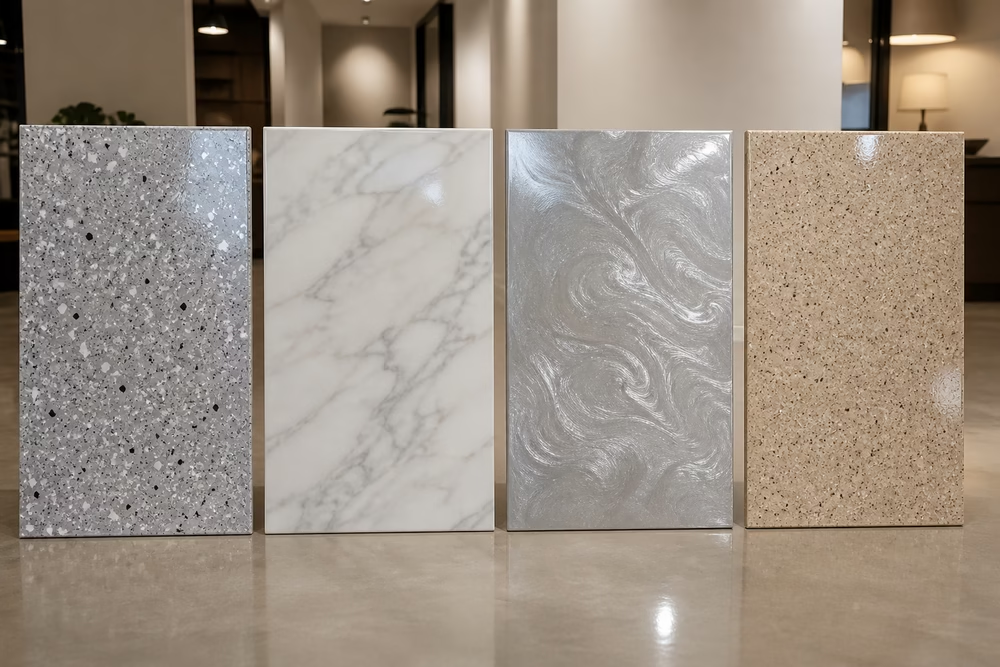
The best epoxy flooring for homes depends on the room. A kitchen needs stain resistance. A bathroom needs grip. A living room needs style. A basement needs moisture control.
Epoxy can work well in all these places if you choose the right type.
Why Use Epoxy Flooring at Home?
Epoxy flooring has a simple appeal. It looks clean and feels modern. It has no grout lines like tile. It can also make small rooms feel brighter because the surface reflects light.
Homeowners like epoxy because it is:
- Easy to clean
- Smooth and seamless
- Stain-resistant
- Water-resistant
- Durable
- Modern-looking
- Available in many colors
- Good for concrete floors
It can also be customized. You can choose a plain color, marble look, metallic finish, flakes, or a soft satin topcoat.
Best Rooms for Residential Epoxy Flooring
Epoxy can work in many areas of a home. But some rooms are better than others.
Kitchen
Epoxy flooring can be a good choice for kitchens. It handles spills, stains, and regular cleaning well. A seamless surface also means there are no grout lines to trap food or dirt.
For kitchens, choose a satin or lightly textured finish. A high-gloss floor can look great, but it may become slippery when wet.
Bathroom
Epoxy can work in bathrooms, but grip matters. Water on a glossy floor can create a slip risk.
For bathrooms, choose textured epoxy or add an anti-slip topcoat. Soft colors, stone looks, and light metallic finishes can work well here.
Living Room
For living rooms, epoxy is more of a design choice. Metallic epoxy flooring can create a bold, luxury look. Self-leveling epoxy can create a clean and smooth surface.
But remember this. Epoxy is hard. It does not feel soft like carpet or warm like wood. Use rugs if you want a softer feel.
Laundry Room
Epoxy is a strong option for laundry rooms. It can handle water drips, detergent spills, and daily cleaning.
A flake epoxy floor works well here because it adds grip and hides dust.
Hallways and Entryways
Entryways get shoes, dirt, water, and heavy foot traffic. Epoxy can make these areas easier to clean.
Use a non-slip finish if the area gets rainwater or mud.
Best Epoxy Flooring Designs for Homes
Home epoxy flooring should match the mood of the room. A garage-style flake floor may not fit a living room. A glossy marble look may not fit a laundry room.
Popular home epoxy flooring designs include:
Solid Color Epoxy
This is clean and simple. It works well in modern homes, kitchens, and basements.
Best colors:
- Warm gray
- Soft white
- Beige
- Charcoal
- Light taupe
Metallic Epoxy Flooring
This is one of the best epoxy flooring design choices for a bold home interior. It can look like marble, smoke, waves, or polished stone.
Best for:
- Living rooms
- Salons
- Showrooms
- Home offices
- Feature rooms
Marble-Look Epoxy
This gives a high-end look without using real marble. It works well in kitchens, bathrooms, and open living spaces.
Choose soft veining for a timeless look.
Flake Epoxy Flooring
This is more practical than fancy. It works best in basements, laundry rooms, mudrooms, and home garages.
It hides dirt better than plain epoxy.
Matte or Satin Epoxy
Not every epoxy floor needs to be glossy. A matte or satin finish can look more natural and less slippery.
This is a good choice for homes where comfort matters.
Epoxy Flooring for Homes: Pros and Cons
Pros
- Easy to clean
- Looks modern
- Works well over concrete
- Resists stains
- No grout lines
- Many design choices
- Can brighten dark rooms
Cons
- Can feel hard underfoot
- Can be slippery when glossy
- Needs careful floor prep
- Can be hard to remove
- May show scratches on dark glossy finishes
- Poor installation can peel
Best Home Epoxy Flooring by Use
Here is a simple guide:
- Best for kitchens: satin epoxy with stain resistance
- Best for bathrooms: textured epoxy with anti-slip finish
- Best for living rooms: metallic or marble-look epoxy
- Best for laundry rooms: flake epoxy flooring
- Best for hallways: durable epoxy with light texture
- Best for home garage: 2-part flake epoxy coating
Bottom Line for Homes
The best epoxy flooring for homes is not one single product. It depends on the room.
For style, choose metallic or marble-look epoxy. For daily use, choose satin or flake epoxy. For wet rooms, choose a textured surface with good grip.
Epoxy can look amazing in a home. Just make sure beauty does not come before safety and comfort.
Best Epoxy Flooring for Basements
Basements can be tricky. They are often dark, damp, dusty, and built on concrete. That makes flooring choice very important.
Epoxy flooring can be a smart basement option because it seals the concrete surface and makes the floor easier to clean. It can also make the space feel brighter and more finished.
But epoxy is not a magic fix for water problems. If your basement has leaks or moisture coming through the slab, fix that first.
Why Epoxy Works Well in Basements
Basement concrete can create dust over time. It can also stain and absorb moisture. A good epoxy basement floor coating helps cover and protect that surface.
Epoxy works well in basements because it can:
- Reduce concrete dust
- Improve the look of the floor
- Make cleaning easier
- Resist stains
- Handle foot traffic
- Brighten the space
- Create a smooth surface
- Protect concrete from light moisture
If you want to turn a basement into a gym, laundry area, storage room, hobby room, or family space, epoxy can be a strong choice.
Best Type of Epoxy for Basement Floors
For most basements, the best epoxy flooring is a water-resistant 2-part epoxy coating with a clear topcoat. If the basement gets foot traffic or light moisture, add texture for grip.
A flake epoxy floor is also a great choice. It hides dust, gives better traction, and makes the basement feel more finished.
If you want a living-space look, self-leveling epoxy or metallic epoxy can work. But the concrete must be dry and stable first.
Check Moisture Before Installing Epoxy
This step matters a lot. Basements often have moisture under the concrete. If you apply epoxy over damp concrete, the coating may bubble, peel, or fail.
Before installing epoxy, check for:
- Water seepage
- Damp spots
- Musty smell
- White powder on concrete
- Cracks
- Previous flooding
- Poor drainage outside the home
If you see these signs, solve the moisture issue first. You may need better drainage, crack repair, a vapor barrier, or professional help.
Best Basement Epoxy Flooring Options
1. Flake Epoxy Basement Floor
This is one of the best choices for most basements. It adds texture, hides dirt, and gives the floor a clean look.
Use it for:
- Laundry rooms
- Storage areas
- Home gyms
- Utility rooms
- Playrooms
2. Self-Leveling Epoxy
This gives a smooth and polished finish. It can make a basement feel more like a finished living area.
Use it for:
- Family rooms
- Home offices
- Hobby spaces
- Finished basements
3. Solid Color Epoxy
This is simple, clean, and budget-friendly. Light gray or beige can brighten a dark basement.
Use it for:
- Storage rooms
- Utility spaces
- Rental units
- Simple finished basements
4. Metallic Epoxy Flooring
This gives a bold and stylish look. It can turn a basement into a lounge, studio, or entertainment room.
Use it if design matters more than budget.
5. Epoxy with Anti-Slip Topcoat
This is best if the basement gets wet often. The texture helps reduce slipping.
Use it near:
- Laundry machines
- Basement entry doors
- Utility sinks
- Water heaters
Epoxy vs Other Basement Flooring
Epoxy is not the only basement flooring option. You may also consider tiles, vinyl, carpet, or polished concrete.
Epoxy is best if you want a hard, seamless, easy-clean floor. It works well where moisture risk is low to moderate.
Tiles can be better if you want more design options. Vinyl can feel warmer and softer. Carpet can feel cozy, but it is risky in damp basements.
If your basement floods, avoid materials that trap water. Epoxy may survive better than carpet, but standing water can still cause problems around walls, cracks, and edges.
Best Basement Epoxy Colors
Basements often lack natural light. So color matters.
Good basement epoxy colors include:
- Light gray
- Warm beige
- Soft white
- Sand
- Pale taupe
- Gray with white flakes
- Tan with brown flakes
Light colors can make the room feel bigger and brighter. Dark glossy colors can look rich, but they may make the basement feel smaller.
Basement Epoxy Flooring Mistakes to Avoid
Avoid these common mistakes:
- Installing epoxy over damp concrete
- Skipping crack repair
- Using cheap paint instead of true epoxy
- Choosing glossy epoxy without grip
- Ignoring drainage problems
- Applying epoxy before the floor is clean
- Rushing cure time
- Forgetting a topcoat
These mistakes can lead to peeling, bubbles, stains, or a slippery floor.
Bottom Line for Basements
The best epoxy flooring for basements is a 2-part epoxy coating with a moisture-safe base, light texture, and durable topcoat.
For most homes, flake epoxy is the safest choice. It looks clean, hides dirt, and adds grip. For finished basements, self-leveling or metallic epoxy can create a more polished look.
Just remember one rule. Fix moisture first. Then install epoxy.
Best Epoxy Flooring for Kitchens and Bathrooms
Kitchens and bathrooms need floors that can handle water, stains, and daily cleaning. These rooms see spills, soap, steam, food, grease, and heavy foot traffic. So the floor must be tough, safe, and easy to maintain.
Epoxy flooring can work well in both kitchens and bathrooms. It creates a smooth surface with no grout lines. That means dirt has fewer places to hide. It also gives the room a clean, modern look.
But there is one big rule. Glossy epoxy can become slippery when wet. So if you use epoxy in a kitchen or bathroom, choose the right texture and finish.
Why Epoxy Flooring Works in Kitchens
A kitchen floor has to deal with a lot. Water spills. Oil drops. Food stains. Chair legs. Pet bowls. Cleaning products. A weak floor will show damage fast.
Epoxy can help because it forms a hard, sealed surface over the floor. It does not absorb spills as easily as bare concrete. It is also much easier to mop than a floor with deep grout lines.
The best epoxy flooring for kitchen use should have:
- Stain resistance
- Water resistance
- Light texture
- Easy cleaning
- A durable topcoat
- A finish that matches your cabinets and walls
For most kitchens, a satin finish is better than a super glossy finish. It still looks clean, but it does not show every mark as much.
Best Kitchen Epoxy Flooring Options
For kitchens, these are the best choices:
Self-Leveling Epoxy
Self-leveling epoxy gives a smooth and clean look. It works well in modern kitchens and open-plan homes.
It is a good choice if you want a simple, seamless floor.
Marble-Look Epoxy
Marble-look epoxy can make a kitchen feel high-end. It gives the style of stone without grout lines.
Use soft veining for a more timeless design. Strong patterns can feel too busy after a while.
Satin Solid Color Epoxy
This is a safe and simple option. Warm gray, beige, cream, and soft white all work well in kitchens.
It looks modern without taking over the room.
Light Flake Epoxy
Flake epoxy is more common in garages, but a soft flake blend can work in casual kitchens, laundry kitchens, or utility spaces.
It hides crumbs, dust, and small marks better than plain glossy epoxy.
Why Epoxy Flooring Works in Bathrooms
Bathrooms need extra care. Water is always part of the space. So safety matters as much as style.
Epoxy flooring can be a good choice for bathrooms because it is seamless and water-resistant. It can also make a small bathroom look brighter and larger.
But never use a slick, high-gloss bathroom floor without texture. Wet feet and glossy epoxy are not a good mix.
The best epoxy flooring for bathroom use should have:
- Anti-slip texture
- Water-resistant finish
- Mold-resistant surface
- Easy cleaning
- Soft colors
- Good edge sealing
A bathroom epoxy floor should also be installed well around drains, walls, and fixtures. Poor edge work can let water get under the coating.
Best Bathroom Epoxy Flooring Options
For bathrooms, these options work best:
Textured Epoxy Flooring
This is the safest choice. A light texture helps reduce slips while keeping the floor easy to clean.
Quartz Epoxy Flooring
Quartz epoxy is strong and slip-resistant. It works well in wet areas, bathrooms, locker rooms, and commercial washrooms.
It may cost more, but it is one of the best epoxy flooring options for wet areas.
Soft Metallic Epoxy
A soft metallic finish can look beautiful in a bathroom. Choose calm tones, such as pearl, silver, beige, or pale gray.
Avoid very dark glossy colors in small bathrooms. They can show water spots and dust.
Stone-Look Epoxy
Stone-look epoxy can give a clean spa feel. It works well with white walls, wood accents, and matte black fixtures.
Kitchen and Bathroom Epoxy Mistakes to Avoid
Epoxy can look great in wet rooms, but mistakes can cause problems.
Avoid these common errors:
- Choosing a very slippery gloss finish
- Skipping anti-slip additive
- Using outdoor shoes on a wet bathroom floor
- Ignoring moisture under the concrete
- Installing epoxy over weak tiles
- Using harsh cleaners too often
- Choosing a loud design in a small room
- Forgetting to seal edges near walls and drains
Bottom Line for Kitchens and Bathrooms
Epoxy flooring can be a smart choice for kitchens and bathrooms if you use the right finish. For kitchens, choose a stain-resistant satin or self-leveling epoxy. For bathrooms, choose textured epoxy or quartz epoxy with good grip.
The goal is simple. Make it easy to clean, safe to walk on, and beautiful enough to enjoy every day.
Best Outdoor Epoxy Flooring: Is It a Good Idea?
Outdoor epoxy flooring sounds like a great idea at first. A clean, glossy patio or porch can look amazing. Epoxy can also protect outdoor concrete from stains, dust, and wear.
But outdoor spaces are tougher than indoor spaces. Sunlight, rain, heat, cold, and foot traffic can damage the wrong coating fast. So the real answer is this: epoxy can work outdoors, but only if you choose the right system.
Regular indoor epoxy is not always a good outdoor choice.
The Main Problem with Outdoor Epoxy
The biggest issue is sunlight. Many standard epoxy coatings do not handle direct sun well. Over time, they may yellow, fade, or lose their shine.
This matters on:
- Patios
- Porches
- Walkways
- Driveways
- Pool decks
- Outdoor steps
- Balcony floors
If the area gets strong sun, do not use basic epoxy alone. Look for a UV-resistant topcoat. You can also consider coatings made for outdoor concrete.
When Outdoor Epoxy Flooring Makes Sense
Outdoor epoxy flooring can work well in covered or shaded areas. It can also work when it has the right topcoat.
Good places for outdoor epoxy include:
- Covered patios
- Screened porches
- Outdoor kitchens
- Shaded walkways
- Garage entrances
- Covered balconies
- Semi-outdoor work areas
It works best when the concrete is dry, stable, and protected from standing water.
When Outdoor Epoxy Is Not the Best Choice
Epoxy may not be ideal in areas with full sun, heavy rain, or constant puddles. It can also become slippery if the finish is too smooth.
Avoid basic epoxy in:
- Open pool decks
- Uncovered driveways
- Rain-exposed steps
- Areas with standing water
- Hot outdoor zones with strong sunlight
- Concrete that cracks often
For these spaces, ask about UV-resistant coatings, textured concrete coatings, or polyaspartic topcoats.
Best Outdoor Epoxy Flooring Features
If you want to use epoxy outdoors, look for these features:
- UV-resistant topcoat
- Anti-slip texture
- Weather resistance
- Strong bond to concrete
- Good drainage
- Crack repair before coating
- Light color finish
- Matte or satin surface
Light colors are usually better outdoors. Dark floors can get hot and may show dust, water spots, and fading faster.
Best Outdoor Epoxy Design Ideas
Outdoor epoxy should be practical first. Style comes second.
Good outdoor design choices include:
Light Gray Flake Epoxy
This hides dirt well and keeps the surface brighter. It works for patios, porches, and garage entry areas.
Tan or Sand Quartz Epoxy
This gives a natural look and better grip. It works well near wet areas.
Stone-Look Epoxy
A soft stone effect can look nice on covered patios or outdoor kitchens.
Matte Solid Color Epoxy
A matte finish can reduce glare and make the floor look more natural.
Outdoor Epoxy Safety Tips
Outdoor floors get wet. That means grip matters.
Use these safety tips:
- Add anti-slip material
- Avoid high-gloss finishes
- Slope the floor for drainage
- Clean algae or dirt often
- Repair cracks before coating
- Use mats near doors
- Do not coat wet concrete
Bottom Line for Outdoor Epoxy
Epoxy flooring can be good outdoors only when the coating is built for outdoor use. Basic indoor epoxy may fade, yellow, or become slippery.
For covered patios and shaded concrete, epoxy can work well. For full sun, rain, or pool areas, choose a UV-resistant and textured system.
If in doubt, durability should beat shine every time.
Best Epoxy Flooring Designs and Colors
Epoxy flooring is not just about strength. It can also change the whole look of a room. The right color can make a space feel bigger, cleaner, warmer, or more high-end.
But the wrong design can feel loud, dark, or dated. So choose with care. A floor is a big surface. Once it is done, it becomes part of the room’s mood.
The best epoxy flooring design should match the space, the lighting, and the way you use the room.
Best Epoxy Flooring Colors
Some colors are safe and easy to live with. Others are bold and need more planning.
Here are the most popular epoxy flooring colors:
Light Gray
Light gray is one of the best epoxy floor colors for garages, basements, kitchens, and modern homes. It hides dust better than black and makes rooms feel brighter.
Charcoal
Charcoal looks strong and sleek. It works well in garages, workshops, and modern interiors.
Use it with flakes or a satin finish. A dark glossy floor can show dust and scratches.
Beige and Tan
Beige and tan tones feel warm and natural. They are great for basements, patios, kitchens, and homes with wood accents.
White
White epoxy can look clean and luxury. It can also make a room feel larger.
But it shows dirt fast. Use it in low-mess areas or with soft marble effects.
Black
Black epoxy looks bold and premium. It works best in showrooms, studios, and feature rooms.
For daily home use, it can be hard to maintain because it shows dust, footprints, and scratches.
Blue, Green, and Red
Bright colors can be fun, but use them with caution. They may look great in a gym, game room, or branded space. For a whole home, they can feel too strong.
Best Epoxy Flooring Designs by Room
Different rooms need different design choices.
Garage
Best designs:
- Gray flake epoxy
- Charcoal flake epoxy
- Tan flake epoxy
- Black and white chip blend
Why it works:
Flakes hide dirt, tire marks, and small scratches. They also add grip.
Basement
Best designs:
- Light gray epoxy
- Beige epoxy
- Soft flake epoxy
- Satin solid color epoxy
Why it works:
Light colors brighten dark spaces. A soft flake pattern hides dust.
Kitchen
Best designs:
- Marble-look epoxy
- Satin white epoxy
- Warm gray epoxy
- Beige stone-look epoxy
Why it works:
These designs feel clean and modern without being too loud.
Bathroom
Best designs:
- Quartz epoxy
- Stone-look epoxy
- Pearl metallic epoxy
- Light gray textured epoxy
Why it works:
Bathrooms need grip and water resistance. Soft colors also make the room feel fresh.
Living Room
Best designs:
- Metallic epoxy flooring
- Marble-look epoxy
- Soft neutral epoxy
- Low-gloss self-leveling epoxy
Why it works:
Living rooms need style. But the design should still feel calm and livable.
Metallic Epoxy Flooring
Metallic epoxy flooring is one of the most eye-catching options. It uses metallic pigments to create a flowing design. The result can look like marble, smoke, lava, water, or polished stone.
It is a great choice for:
- Living rooms
- Showrooms
- Salons
- Offices
- Feature rooms
- Studios
But metallic epoxy is not the best choice for every space. It can be harder to install. It can also look too dramatic if you choose strong colors.
For a timeless look, use soft tones like silver, pearl, champagne, gray, or bronze.
3D Epoxy Flooring
3D epoxy flooring uses a printed image under a clear epoxy layer. It can create a deep visual effect.
You may see designs like:
- Ocean waves
- Pebble stone
- Fish ponds
- Forest paths
- Abstract art
- Custom graphics
This can look exciting, but it is risky for long-term design. A 3D floor may feel fun at first and too intense later.
Use it in small spaces, not across a whole house.
Flake Epoxy Flooring
Flake epoxy is one of the most practical designs. It uses small chips to create a speckled surface.
It works well in:
- Garages
- Basements
- Laundry rooms
- Mudrooms
- Utility spaces
- Workshops
It hides dust and marks better than plain epoxy. It also gives the floor better texture.
Marble-Look Epoxy Flooring
Marble-look epoxy is a strong design choice for homes. It can look smooth, bright, and premium.
Best places for it:
- Kitchens
- Bathrooms
- Living rooms
- Entryways
- Home offices
Keep the pattern soft if you want a classy look. Too much contrast can make the floor feel busy.
How to Choose the Right Epoxy Floor Color
Ask yourself these questions:
- Is the room small or large?
- Does it get natural light?
- Will the floor get dirty often?
- Do I want a bold or calm look?
- Will the color match my walls?
- Will the finish show scratches?
- Is safety more important than shine?
As a rule, light and mid-tone colors are easier to live with. They hide dust better and make the space feel open.
Bottom Line for Designs and Colors
The best epoxy flooring colors are the ones that match your space and lifestyle. For garages and basements, flake epoxy is a safe pick. For homes, soft gray, beige, marble-look, and light metallic epoxy work well.
If you want a bold floor, go for it. Just make sure it still feels good five years from now.
Epoxy Flooring vs Tiles: Which Is Best?
Epoxy flooring and tiles are both popular choices. Both can look good. Both can last for years. But they feel very different in daily life.
So, which is best: epoxy flooring or tiles?
The answer depends on your room, budget, style, and maintenance needs.
Quick Answer
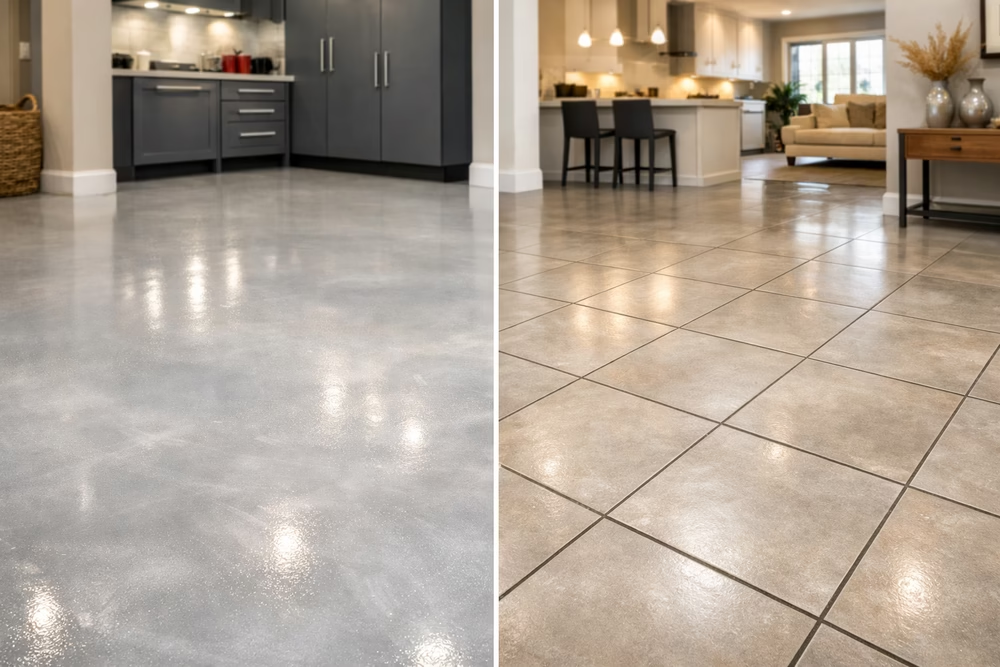
Epoxy flooring is best if you want a smooth, seamless, modern, and easy-clean floor over concrete.
Tiles are best if you want a classic look, more design choices, and easier spot repairs.
Neither one is perfect. The right choice depends on how you use the space.
Epoxy Flooring vs Tiles Comparison
| Feature | Epoxy Flooring | Tiles |
|---|---|---|
| Look | Smooth and seamless | Classic with visible grout lines |
| Cleaning | Easy to mop | Grout can trap dirt |
| Water resistance | Very good when installed well | Good, but grout needs care |
| Durability | Strong on prepared concrete | Strong, but tiles can crack |
| Comfort | Hard and cool | Hard and cool |
| Repair | Harder to patch neatly | Single tiles can be replaced |
| Design options | Modern, glossy, metallic, flake | Huge range of styles |
| Slip risk | Can be slippery if glossy | Depends on tile texture |
| Installation | Needs careful prep | Needs skilled layout and grout |
| Best use | Garages, basements, kitchens, modern homes | Bathrooms, kitchens, living spaces, patios |
Where Epoxy Flooring Wins
Epoxy wins when you want a seamless floor. There are no grout lines. This makes cleaning easier.
It also works well over concrete. That is why epoxy is so popular for garages, basements, workshops, and commercial spaces.
Epoxy is a strong choice if you want:
- Easy cleaning
- Seamless finish
- Modern look
- Concrete protection
- Stain resistance
- High-gloss or metallic design
- Fewer dirt traps
For a garage, epoxy often beats tiles. It handles oil, dust, and tools well when installed right. A flake epoxy garage floor is also easier to clean than many tiled garage floors.
Where Tiles Win
Tiles win when you want more design control. You can choose ceramic, porcelain, stone, wood-look, matte, glossy, textured, large, or small tile.
Tiles are also easier to repair in one spot. If one tile cracks, you can replace it. If epoxy gets damaged, patching it may not blend well.
Tiles are a strong choice if you want:
- More design variety
- Better heat resistance
- Easier small repairs
- Textured bathroom floors
- A classic home look
- Outdoor options
- Long-term style flexibility
For bathrooms, tiles are still a safe and common choice. They offer many slip-resistant textures. But grout needs care, or it can stain.
Epoxy Flooring or Tiles for Home?
For homes, the choice depends on the room.
Kitchen
Epoxy gives a smooth, modern, easy-clean surface. Tiles give more texture and style choices.
Best choice:
- Choose epoxy for a seamless modern kitchen.
- Choose tiles for a classic kitchen with more design options.
Bathroom
Tiles are often safer because many bathroom tiles have built-in texture. Epoxy can still work, but it needs anti-slip finish.
Best choice:
- Choose epoxy if you want a seamless spa look.
- Choose tiles if slip resistance and easy repairs matter more.
Basement
Epoxy is often a better choice for concrete basements. It can seal the surface and reduce dust.
Best choice:
- Choose epoxy for a clean, finished basement floor.
- Choose tiles if you want a warmer design and easier spot repair.
Garage
Epoxy is usually the better garage choice. It coats the concrete and creates a strong surface.
Best choice:
- Choose epoxy for most garages.
- Choose tiles if you want interlocking garage tiles that are easy to replace.
Living Room
This is more about taste. Epoxy can look bold and modern. Tiles can look warm, natural, or classic.
Best choice:
- Choose epoxy for a sleek designer look.
- Choose tiles for a more traditional home style.
Cost: Epoxy Flooring vs Tiles
Cost can vary a lot. A simple epoxy coating may cost less than high-end tiles. A premium metallic epoxy floor may cost more than basic tile.
Tile cost depends on:
- Tile type
- Tile size
- Pattern
- Labor
- Grout
- Surface prep
Epoxy cost depends on:
- Floor size
- Concrete condition
- Epoxy type
- Number of coats
- Design
- Topcoat
- DIY or professional installation
If you want a fair price, compare the full system. Do not compare cheap epoxy paint with premium porcelain tile. And do not compare luxury metallic epoxy with basic ceramic tile.
Maintenance: Which Is Easier?
Epoxy is usually easier to clean day to day. A mop, mild cleaner, and soft broom are often enough.
Tiles are also easy to clean, but grout can collect dirt. In kitchens and bathrooms, grout may need scrubbing or sealing.
If you hate cleaning grout, epoxy has a clear advantage.
Durability: Which Lasts Longer?
Both can last a long time when installed well.
Epoxy can fail if the concrete is not prepared right. It may peel, bubble, or chip. Tiles can crack if the base moves or if something heavy falls.
For heavy-use concrete floors, epoxy is often better. For general home use, tiles can be more forgiving because you can replace one damaged tile.
Final Verdict: Epoxy Flooring or Tiles?
Choose epoxy flooring if you want:
- A seamless surface
- Easy cleaning
- A modern look
- A strong concrete coating
- Good garage or basement flooring
- No grout lines
Choose tiles if you want:
- More design choices
- Easier spot repair
- Better texture options
- A classic home style
- Strong bathroom or outdoor flooring
So, epoxy flooring vs tiles: which is best?
For garages and basements, epoxy is often the better choice. For bathrooms and classic interiors, tiles may be safer. For modern kitchens and bold home designs, epoxy can be a stunning option if installed well.
FAQs About Top Epoxy Flooring
What is the best epoxy flooring?
The best epoxy flooring depends on where you want to use it. For garages, a 2-part epoxy garage floor coating with flakes and a clear topcoat is often the best choice. For homes, self-leveling epoxy or metallic epoxy flooring can give a smoother and more stylish look.
For wet areas, choose textured epoxy or quartz epoxy. For basements, flake epoxy is a safe and practical option.
What is the best epoxy flooring for garage floors?
The best epoxy flooring for garage floors is usually a true 2-part epoxy coating. It should resist oil, stains, tire marks, and daily wear.
For most garages, flake epoxy flooring is a smart pick. It hides dirt, adds grip, and gives the garage a clean, finished look. A clear topcoat can make it even stronger.
Is epoxy flooring better than tiles?
Epoxy flooring is better if you want a seamless, modern, and easy-clean floor. It has no grout lines, so dirt has fewer places to hide.
Tiles are better if you want more design choices and easier spot repairs. If one tile breaks, you can replace it. If epoxy gets damaged, patching it can be harder to hide.
For garages and basements, epoxy often wins. For bathrooms and classic home designs, tiles may be the safer choice.
Is epoxy flooring good for homes?
Yes, epoxy flooring can be good for homes. It works well in kitchens, basements, bathrooms, laundry rooms, hallways, and home garages.
It gives a clean and modern look. It is also easy to clean and can handle stains better than many bare concrete floors.
But it can feel hard and cool underfoot. In living areas, rugs can make the space feel warmer and more comfortable.
Is epoxy flooring good for basements?
Yes, epoxy flooring can be a great choice for basements. It can reduce concrete dust, improve the look of the room, and make cleaning easier.
But there is one key rule. Fix moisture problems first. If water comes through the concrete, epoxy may bubble, peel, or fail.
For most basements, flake epoxy or a light solid color epoxy works well.
Is epoxy flooring waterproof?
Epoxy flooring is highly water-resistant when installed well. It can handle spills, mopping, and light moisture better than bare concrete.
But it is not a magic fix for serious water problems. If moisture comes from under the slab, the floor may fail. Always test for moisture before applying epoxy in basements or wet areas.
Is epoxy flooring good for bathrooms?
Epoxy flooring can work in bathrooms, but it must have grip. A glossy epoxy floor can become slippery when wet.
For bathrooms, choose textured epoxy, quartz epoxy, or an anti-slip topcoat. Also make sure edges near walls, drains, and fixtures are sealed well.
Is epoxy flooring good for kitchens?
Yes, epoxy can work well in kitchens. It resists stains, handles spills, and creates a smooth surface that is easy to mop.
For kitchens, a satin or lightly textured finish is better than a high-gloss finish. It looks clean but is easier to live with day to day.
Can epoxy flooring be used outdoors?
Epoxy can be used outdoors, but only with care. Regular indoor epoxy may fade or turn yellow in sunlight.
For patios, porches, walkways, and outdoor concrete, choose a UV-resistant topcoat. Also add texture so the floor does not become slippery when wet.
For full sun or pool areas, ask about outdoor-rated coatings before choosing epoxy.
What is the best epoxy flooring design?
The best epoxy flooring design depends on the room.
For garages, gray flake epoxy is one of the best choices. For homes, marble-look epoxy, soft metallic epoxy, and satin solid colors work well. For bathrooms, stone-look or quartz epoxy can look clean and safe.
If you want a timeless floor, choose soft colors. Light gray, beige, taupe, and warm white are easier to match than bold colors.
What is the best epoxy floor color?
Light gray is one of the best epoxy floor colors because it works in many spaces. It looks clean, hides dust better than black, and makes rooms feel brighter.
Other good choices include beige, tan, charcoal, soft white, and gray flake blends.
Dark glossy colors can look premium, but they show dust, scratches, and footprints more easily.
Are epoxy floors slippery?
Epoxy floors can be slippery if they have a glossy finish, especially when wet. This is common in bathrooms, kitchens, outdoor areas, and garages.
To reduce slipping, use decorative flakes, quartz, sand texture, or an anti-slip additive in the topcoat.
How long does epoxy flooring last?
A good epoxy floor can last for many years if the surface is prepared well and the coating is installed correctly.
Garage and commercial floors may wear faster because they face cars, tools, carts, and heavy traffic. A clear topcoat can help extend the floor’s life.
Can I install epoxy flooring myself?
Yes, you can install DIY epoxy flooring if the project is small and the concrete is in good shape.
But the prep work matters most. You must clean the floor, repair cracks, remove grease, and grind or etch the surface. If you skip these steps, the epoxy may peel.
For large spaces, wet basements, metallic epoxy, or commercial floors, hiring a professional is usually safer.
What is the best DIY epoxy flooring kit?
The best DIY epoxy flooring kit should include a 2-part epoxy coating, clear instructions, good coverage, and a durable finish. For garages, look for a kit that includes flakes and supports a clear topcoat.
Avoid very cheap products if your floor gets heavy use. A low-cost kit may look fine at first but fail faster under cars, tools, or moisture.
Is epoxy flooring worth it?
Yes, epoxy flooring is worth it if you want a strong, smooth, and easy-clean surface over concrete.
It is especially useful for garages, basements, workshops, kitchens, bathrooms, and commercial spaces. But it may not be the best choice if you want a soft, warm, or easy-to-remove floor.
Conclusion: Which Top Epoxy Flooring Option Should You Choose?
Epoxy flooring can be a great choice when you match the right product to the right space. It can protect concrete, improve the look of a room, and make cleaning much easier.
For garages, the best choice is usually a 2-part epoxy garage floor coating with flakes and a clear topcoat. It is strong, practical, and made for daily abuse.
For homes, the best epoxy flooring depends on your style. Self-leveling epoxy gives a clean modern look. Metallic epoxy adds drama and luxury. Satin solid colors feel simple and calm.
For basements, choose a moisture-safe epoxy system and fix water issues first. Flake epoxy is often the safest pick because it hides dust and adds grip.
For kitchens and bathrooms, focus on safety. Epoxy can look beautiful, but it needs texture in wet areas. A glossy floor without grip can be risky.
For outdoor areas, be careful. Basic epoxy is not always the best outdoor flooring. Choose a UV-resistant coating and a slip-resistant finish if the floor gets sun or rain.
So, what is the best epoxy flooring overall?
There is no single answer. The best option depends on your room, budget, design taste, and how much wear the floor will face.
If you want the safest all-around choice, go with a high quality 2-part epoxy system, proper floor prep, and a durable topcoat. That combination gives you the best chance of getting a floor that looks good and lasts.
In short, do not choose epoxy by shine alone. Choose it by use, safety, prep, and long-term value. That is how you get a floor that works as hard as it looks.