
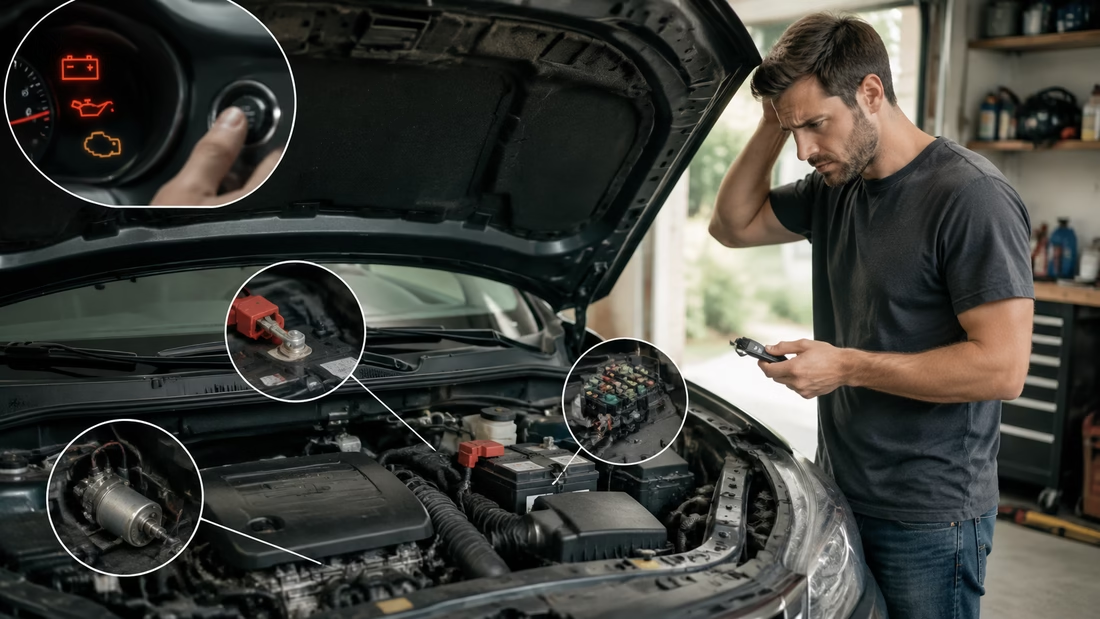
You turn the key or press the start button. The dash lights come on, but the engine does not move.
Maybe you hear one click. Maybe you hear several fast clicks. Or perhaps you hear nothing at all.
It is easy to assume the battery has died. But what if the battery seems fine?
A battery good but engine won’t turn over problem often comes from a bad connection, blown fuse, failed starter, or faulty safety switch. In rare cases, the engine itself may be stuck.
This guide will help you narrow down the cause without replacing random parts.
🛠️ Tools for Diagnosing a No-Crank
These are the exact tools referenced in the guide below — all available on Amazon.


As an Amazon Associate, we earn from qualifying purchases. These tools help support our work at no extra cost to you.
What Do “Turn Over,” “Crank,” and “Start” Mean?
People often use these terms to describe the same problem. However, they mean different things.
- Crank: The starter rotates the engine.
- Turn over: Another way to say the engine is cranking.
- Start: The engine fires up and runs on its own.
A no crank no start problem means the engine does not rotate at all. You may hear a click, but you will not hear the usual cranking sound.
That is different from an engine that cranks normally but will not start. A cranking engine may have a fuel, spark, or sensor problem. A no-crank engine usually has a battery, cable, starter, switch, or mechanical problem.
Pay close attention to the sound:
- Fast clicking: Often points to low power or a poor battery connection.
- One heavy click: May point to the starter, solenoid, or a locked engine.
- No click: May point to a fuse, relay, ignition switch, or safety switch.
- Normal cranking: The issue is not a true no-crank problem.
If your vehicle clicks instead of cranking, use this detailed guide on what to check when your car is clicking but not starting.
Confirm the Battery Really Is Good
Do not skip this step.
A battery can power the radio, lights, and dashboard but still fail to power the starter. The starter needs far more current than those smaller electrical parts.
A recent battery is not always a good battery, either. It may be undercharged, damaged, or connected through loose cables.
Try the Headlight Test
Turn on the headlights. Then have someone watch them while you try to start the engine.
Here is what the lights may tell you:
- They stay bright: The battery may be charged, though this does not prove it is healthy.
- They dim slightly: A small change can be normal.
- They become very dim: The battery may be weak, or the starter may be drawing too much power.
- They go out: Check the battery terminals and main cables for a poor connection.
- They flicker: Look for a loose terminal, damaged cable, or weak ground connection.
The headlight test is only a quick check. Headlights need much less power than a starter motor.
Check Battery Voltage With a Multimeter
Set the multimeter to direct-current voltage. Place the red probe on the positive battery post and the black probe on the negative post.
With the engine off, use these readings as a general guide:
- About 12.6 volts: Fully charged
- About 12.4 volts: Partly charged but often usable
- Around 12.2 volts or lower: Low charge
- Below 12 volts: Recharge and test the battery before going further
Next, watch the meter while someone tries to start the car. A large voltage drop may point to a weak battery, bad cable connection, or starter that is pulling too much current.
Be careful around moving parts. Keep loose clothes, jewelry, tools, and test leads away from belts and fans.
Do Not Trust Voltage Alone
A damaged battery can show normal voltage with no load. It may then fall flat as soon as the starter demands power.
A battery load test gives a better answer. Many auto parts stores and repair shops can perform one.
If you already tried a jump and nothing changed, read what to check when your car won’t start with a jump.
Once you know the battery is charged and healthy, move through the following causes in order.
1. Corroded Battery Terminals or a Poor Connection
This is one of the most common reasons an engine won’t turn over with a good battery.
The battery may hold plenty of power. But that power cannot reach the starter through a loose, dirty, or damaged connection.
Signs of a Poor Connection
Look for these clues:
- White, blue, or green buildup around a battery terminal
- Loose battery clamps
- Fast clicking when you try to start
- Dash lights that flicker or shut off
- A car that starts after you move a battery cable
- A hot battery cable or terminal
- Damaged or swollen cable insulation
Check both battery terminals. Then follow the cables as far as you can safely see.
The positive cable normally runs toward the starter or a main power box. The negative cable connects the battery to the vehicle body and engine.
Also inspect the ground strap between the engine and vehicle body. A loose or broken ground can cause a complete no-crank condition.
What You Can Do
With the vehicle switched off:
- Check whether either battery clamp moves by hand.
- Look for visible corrosion.
- Inspect the cables for cuts, cracks, and burned sections.
- Have damaged cables replaced.
- Clean corroded terminals with a proper battery-terminal cleaning tool.
Avoid touching both battery posts with a metal tool. That can create a dangerous short.
If a cable becomes very hot, starts smoking, or shows melted insulation, stop. Disconnecting or repairing heat-damaged wiring is a job for a professional.
2. Blown Fuse or Fusible Link
The starting system depends on fuses and other circuit protection. If one fails, turning the key may do nothing.
Your vehicle may use:
- A starter fuse
- An ignition fuse
- A starter relay fuse
- A main fuse
- A fusible link
A fusible link is a protected section of wire designed to fail during a serious electrical overload.
How to Check the Fuses
Find the fuse-box diagram in the owner’s manual or on the fuse-box cover.
Look for labels such as:
- START
- ST
- IGN
- CRANK
- STARTER
Remove and inspect the correct fuse only when it is safe to do so. A broken metal strip inside the fuse usually means it has blown.
However, some failed fuses look normal. A test light or multimeter gives a more reliable result.
Replace a blown fuse with the exact same type and rating. Never install a larger fuse in an attempt to keep it from blowing.
If the new fuse blows again, stop replacing it. The circuit may have a short or damaged wire. A larger fuse could allow the wiring to overheat.
3. Faulty Starter Motor
The starter motor uses battery power to rotate the engine.
Its internal parts wear over time. When they fail, you may hear a click without hearing the engine crank.
Signs of a Bad Starter
Common symptoms include:
- One loud click
- Several clicks with bright dash lights
- No cranking despite a charged battery
- Starting only after several attempts
- Grinding during previous starts
- An intermittent no-crank problem
- Smoke or a burning smell near the starter
Some people describe this as “the starter works but engine won’t turn over.” However, a click does not prove the starter motor works.
The click may only mean that the solenoid or relay received a signal. The motor itself may still be stuck, worn out, or unable to turn.
How a Mechanic Tests It
A technician may check:
- Voltage reaching the starter
- Voltage loss through the battery cables
- Starter current draw
- Starter control signal
- Whether the engine turns by hand
These tests help separate a failed starter from a bad cable or locked engine.
Starter access can also be difficult. It may sit close to hot exhaust parts or require working under the vehicle. Do not crawl under a car supported only by a jack.
4. Bad Starter Solenoid or Relay
The starter motor does not receive full battery power all the time. The relay and solenoid help control when that power reaches it.
The starter relay uses the signal from the key or start button to activate the starting circuit.
The starter solenoid connects heavy battery power to the starter motor. On many vehicles, the solenoid forms part of the starter assembly.
Signs of Relay or Solenoid Trouble
You may notice:
- One click but no cranking
- A click from the fuse box
- A click from the starter area
- Starting on some attempts but not others
- No sound, even with bright lights
- A starter that stays engaged after the engine starts
Some owners test a relay by swapping it with an identical relay from the fuse box. Only do this when the part number, pin layout, and rating match exactly.
Do not bridge starter terminals with a screwdriver. You could cause a short, damage electronics, create sparks, or make the vehicle move unexpectedly.
A safer choice is to test the relay and starter circuit with the correct meter.
5. Defective Ignition Switch
The ignition switch tells the starting system that you want to crank the engine.
On a keyed vehicle, the electrical switch may sit behind the key cylinder. This means the key can turn normally even when the electrical part has failed.
Signs of a Failing Ignition Switch
Look for these symptoms:
- No click when you turn the key
- Dash lights that cut in and out
- Accessories that stop working
- A car that starts only when you move the key
- An engine that starts after several tries
- Power that disappears in certain key positions
Push-button vehicles can have similar faults. The problem may involve the start button, brake-pedal switch, key-fob detection system, or related wiring.
Do not replace the ignition switch based on symptoms alone. A failed fuse, relay, safety switch, or cable can create the same result.
A proper test checks whether the switch sends a start signal when you turn the key.
6. Misadjusted or Failed Neutral Safety Switch
Automatic vehicles have a neutral safety switch. It prevents the engine from cranking while the transmission is in Drive or Reverse.
If the switch fails or moves out of position, the vehicle may not recognize that the shifter is in Park.
Try Starting in Neutral
Use this simple test:
- Apply the parking brake.
- Keep your foot firmly on the brake.
- Move the shifter into Neutral.
- Try to start the engine.
You can also move the shifter back into Park with firm, normal pressure. Then try again.
If the engine starts in Neutral but not in Park, the neutral safety switch or shifter adjustment may be the cause.
Manual-transmission vehicles use a clutch safety switch instead. It allows cranking only when you press the clutch pedal.
A failed clutch switch may cause the same no crank no start problem.
Do not bypass either safety switch. These parts help stop the vehicle from starting in gear.
7. Seized Engine
A seized engine cannot rotate. Even a good battery and healthy starter may not be able to move it.
The starter may produce one heavy click because it tries to turn a locked crankshaft.
Signs the Engine May Be Seized
Possible warning signs include:
- The engine stopped suddenly while driving
- The engine ran with very little oil
- Severe overheating occurred
- You heard loud knocking or metal sounds before it stopped
- The starter makes a heavy click and the lights dim
- The crankshaft will not turn by hand
Do not jump to this conclusion too quickly.
A seized engine is less common than a weak connection, blown fuse, bad relay, failed starter, or faulty safety switch. Rule out those causes first.
A locked accessory can also stop the engine from turning. For example, a failed belt-driven part may keep the crankshaft from moving. Fluid inside a cylinder can cause a similar lock.
A mechanic can remove the drive belt, inspect the accessories, and attempt to rotate the crankshaft with the correct tool.
Do not keep trying to start a locked engine. Repeated attempts may overheat the starter, cables, or battery.
Quick No-Crank Diagnostic Guide
Use the sound and light behavior to choose your next check.
Rapid Clicking
Check:
- Battery charge
- Battery terminal tightness
- Cable corrosion
- Engine and body grounds
- Battery condition under load
One Loud Click
Check:
- Positive starter cable
- Starter solenoid
- Starter motor
- Engine ground
- Whether the engine is mechanically locked
No Click at All
Check:
- Starter fuse
- Starter relay
- Ignition switch
- Neutral safety switch
- Clutch safety switch
- Brake switch on a push-button vehicle
- Key-fob recognition
Starts in Neutral but Not Park
Suspect:
- Neutral safety switch
- Shifter adjustment
- Shifter wiring
The Lights Go Out When You Try to Start
Recheck:
- Battery health
- Loose battery terminals
- Corroded connections
- Main ground cable
- Starter current draw
The Engine Cranks Normally but Does Not Start
This is not a no-crank problem.
The engine may lack fuel, spark, air, or a valid security signal. Move to a crank-but-no-start diagnosis instead.
When Should You Call a Mechanic?
Many early checks are simple. You can inspect the battery terminals, test battery voltage, check labeled fuses, and try starting in Neutral.
Stop and call a mechanic when the next step requires more risk or advanced testing.
Checks Most Owners Can Do
You may be able to safely handle:
- Watching the headlights during a start attempt
- Measuring battery voltage
- Looking for loose or dirty terminals
- Inspecting visible ground connections
- Checking an easy-to-reach fuse
- Trying to start an automatic vehicle in Neutral
Call a Professional If:
- A replacement fuse blows again
- A cable becomes hot or starts smoking
- You notice melted insulation
- You smell burning plastic
- The starter sits in a hard-to-reach location
- The vehicle needs to be raised
- You suspect damaged wiring
- The key or start button works only sometimes
- The engine may be locked
- You cannot confirm whether the starter receives power
- The basic checks do not explain the problem
You should also get help if the vehicle is stuck in a dangerous place. Arrange a safe tow instead of attempting repairs beside moving traffic.
Final Thoughts
When your car won’t turn over, start with the simplest cause.
First, confirm the battery is truly charged and healthy. Then inspect the terminals, cables, grounds, and fuses. After that, move to the starter, relay, ignition switch, and neutral safety switch.
Treat a seized engine as the final possibility, not the first.
The sound you hear offers the best early clue:
- Fast clicks often mean low power or a poor connection.
- One click often points toward the starter circuit.
- Silence often suggests a control-circuit or safety-switch problem.
Follow the checks in order. You will avoid replacing good parts and have much better information if you need to call a mechanic.
Blog Outline
Introduction: Engine Won’t Turn Over Even Though the Battery Seems Good
- Explain the difference between “turn over,” “crank,” and “start.”
- Define a no-crank, no-start condition.
- Describe the main symptoms:
- One click
- Rapid clicking
- No sound at all
- Explain why the sound matters during diagnosis.
Confirm the Battery Really Is Good
Perform the Headlight Test
- Watch for dimming, flickering, or lights shutting off.
- Explain why bright headlights do not fully prove the battery is healthy.
Test Battery Voltage
- Check resting voltage with a multimeter.
- Watch for a large voltage drop during a start attempt.
- Recommend a load test when resting voltage looks normal.
Check What Happens With a Jump Start
- Explain what a failed jump may reveal.
- Internally link to the guide about a car that will not start with a jump.
7 Causes When the Battery Is Good but the Engine Won’t Turn Over
1. Corroded Battery Terminals or a Poor Connection
- Inspect the battery posts and clamps.
- Check the positive starter cable.
- Check body and engine ground connections.
- Look for heat, corrosion, looseness, and damaged insulation.
2. Blown Fuse or Fusible Link
- Locate the correct fuse through the owner’s manual.
- Inspect starter, ignition, and main fuses.
- Replace a fuse only with the same rating.
- Stop if a replacement fuse blows again.
3. Faulty Starter Motor
- List the common signs of starter failure.
- Explain why hearing a click does not prove the starter works.
- Discuss voltage, current, and cable testing.
4. Bad Starter Solenoid or Relay
- Explain what the relay and solenoid do.
- Connect one-click symptoms with starter-circuit trouble.
- Warn against bridging starter terminals.
5. Defective Ignition Switch
- Explain how the switch activates the starter circuit.
- List signs such as intermittent starting and failing accessories.
- Mention related push-button-start faults.
6. Misadjusted or Failed Neutral Safety Switch
- Try starting an automatic vehicle in Neutral.
- Move the shifter firmly into Park and retest.
- Mention the clutch safety switch on manual vehicles.
- Warn against bypassing safety switches.
7. Seized Engine
- Explain why a seized engine is rare.
- List signs involving low oil, overheating, or sudden shutdown.
- Rule out the other six causes first.
- Have a professional check whether the crankshaft turns.
Quick No-Crank Symptom Guide
- Rapid clicking
- One loud click
- No sound
- Lights shutting off
- Starts in Neutral but not Park
- Normal cranking without starting
When to Call a Mechanic
Safe DIY Checks
- Headlight test
- Battery-voltage test
- Terminal inspection
- Visible ground inspection
- Fuse check
- Neutral-start test
Professional Repair Thresholds
- Repeated fuse failure
- Hot or smoking cables
- Burned wiring
- Difficult starter access
- Suspected ignition-switch failure
- Possible engine seizure
- No clear cause after basic checks
Conclusion
- Begin with the battery and connections.
- Work through the causes in order.
- Use the sound and light behavior as clues.
- Avoid replacing parts before testing them.