
Why the Gskyer 70mm is a Great First Pick
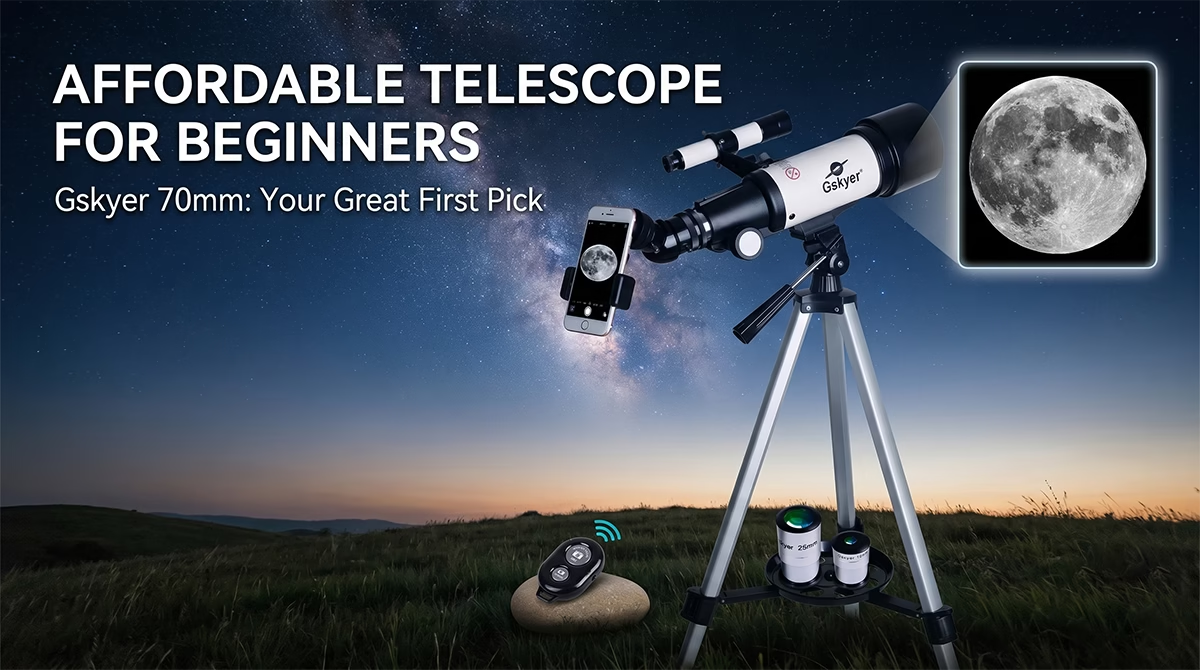
Looking for the best affordable telescope for beginners? The Gskyer 70mm takes the top spot for first-time stargazers. It removes the stress of learning complex gear. You get straight to the fun part: exploring the night sky.
Quick 5-Minute Setup
Beginner telescopes should not require an engineering degree. The Gskyer 70mm features a simple, tool-free setup. You can take it out of the box and start observing the moon in minutes. The basic mount moves up, down, left, and right. It is incredibly intuitive to steer.

Everything You Need in One Bag
This kit comes fully loaded. You get the telescope, a lightweight tripod, multiple lenses, and a custom travel backpack. It even includes a smartphone adapter and a wireless camera remote. You can easily snap amazing photos of lunar craters right through the lens using your phone.
Sharp, Bright Views
The 70mm glass lens pulls in plenty of light. This delivers sharp, bright images of our solar system. You will clearly see detailed textures on the moon. On a dark night, you can even catch a glimpse of Jupiter’s bright moons or the rings of Saturn.
The Realistic Verdict
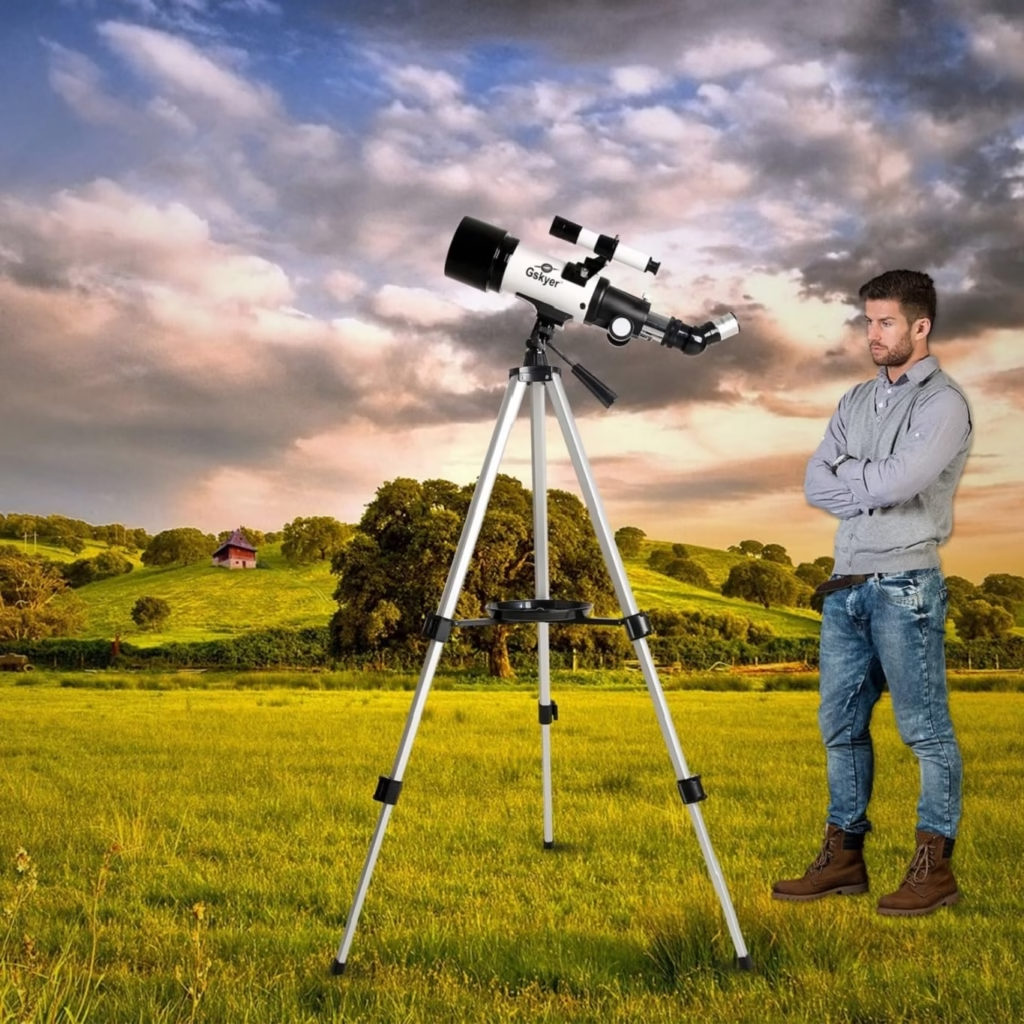
To keep things completely transparent, it is important to set the right expectations before you buy. While this ranks high among the best telescopes for beginners, it is an entry-level, lightweight kit. It is not built for hunting faint, deep-space galaxies. The included aluminum tripod is also on the shorter side. It is absolutely perfect for kids or tabletop use, but adults will want to grab a low, comfortable chair.
Ultimately, if you want an affordable, ultra-portable launchpad into astronomy, the Gskyer 70mm is an unbeatable first step.
Quick Verdict: Is the Gskyer 70mm a Good Affordable Beginner Telescope?
Yes, the Gskyer 70mm is a good affordable beginner telescope for people who want a simple start.
It works best for casual viewing. Think Moon craters, bright planets, star fields, and major constellations. It is not made for advanced space photography or deep-sky detail. But that is not a bad thing.
A beginner telescope should help you learn. It should help you enjoy the sky. It should not make you feel lost before you even start.
The Gskyer 70mm has four main features that help with that.
It has a 70mm aperture. That means the front lens is wide enough to collect useful light for basic stargazing.
It has a 400mm focal length. That gives you a wider view, which can make objects easier to find.
It uses a refracting design. That means it uses lenses, not mirrors. This design is simple and low maintenance.
It comes with an AZ mount. This type of mount moves up, down, left, and right. It feels natural, much like moving a camera tripod.
For many new users, that mix is more useful than raw power.
A powerful telescope can still be frustrating if it is hard to aim. A cheap beginner telescope can also disappoint if the view is shaky or the setup feels awkward.
The Gskyer 70mm sits in a nice middle ground. It is simple enough for new users, yet capable enough to make the Moon and bright sky objects fun to watch.
Who Is This Telescope Best For?
The Gskyer 70mm is not for every person. No telescope is.
But it is a strong match for several types of buyers.
Beginners Who Want an Easy First Telescope
If you have never used a telescope before, ease matters more than you may think.
Many first-time buyers focus only on magnification. That is a mistake. High magnification sounds great, but it can make the image dimmer and harder to keep steady.
A beginner needs a telescope that is easy to point. Easy to focus. Easy to carry. Easy to set up.
The Gskyer 70mm does well here.
Its AZ mount keeps things simple. You move the telescope left and right. You move it up and down. That is it.
There is no steep learning curve. You do not need to understand complex sky tracking. You can set it up, point it at the Moon, and start learning by doing.
That makes it one of the easiest telescope for beginners options in its price range.
Adults Buying Their First Telescope
Many adults want to try astronomy but do not want to spend a large amount right away.
That makes sense.
You may enjoy stargazing a few nights each month. You may want a calm hobby after work. You may want to learn the night sky from your backyard or balcony.
For that kind of use, this telescope works well.
If you have been asking what is the best beginner telescope for adults, the answer depends on your goals. If you want a serious long-term setup, you may need a larger telescope. But if you want a simple and affordable start, the Gskyer 70mm is a smart pick.
It gives you enough power to enjoy real views of the Moon and bright planets. It also stays light and easy to store.
So, what is a good beginner telescope for adults?
For many people, it is one that does not collect dust because it is too hard to use. The Gskyer 70mm has a better chance of being used often because it keeps things simple.
Parents Looking for an Affordable Telescope for Kids
The Gskyer 70mm can also work well as an affordable telescope for kids.
It is not a toy, though. That is a good thing.
Many kids’ telescopes look fun but give poor views. A child may use one once, see a blurry dot, and lose interest. A better beginner scope can make the experience more exciting.
The Gskyer 70mm gives kids a real chance to see the Moon in a new way. Craters and shadows can feel magical the first time they appear in the eyepiece.
Still, younger kids should use it with help from an adult. Adults can help with setup, aiming, and focus. They can also make sure the telescope is used safely.
One rule matters most.
Never point any telescope at the Sun unless you have the right solar filter made for that exact purpose.
For family stargazing, this telescope can be a lovely choice. It brings people outside. It starts questions. It turns a quiet night into a small adventure.
Gift Buyers Who Want Something Useful but Not Too Expensive
A telescope can be a great gift.
But only if it is practical.
The Gskyer 70mm works well for gift buyers because it feels more serious than a toy, yet it does not feel overwhelming. It suits birthdays, holidays, graduation gifts, and science-loving kids or adults.
It also works for people who may be curious about space but have not yet built a full hobby around it.
That is the sweet spot.
You are not buying a complex machine. You are buying a first step.
For many gift buyers, this makes it one of the best affordable telescopes for beginners.
Why the Gskyer 70mm Works Well as an Affordable Telescope for Beginners
A beginner telescope should do a few things well.
It should gather enough light. It should offer a clear view. It should be easy to aim. It should not need constant adjustment. And it should be light enough to use without effort.
The Gskyer 70mm checks those boxes.
70mm Aperture: Enough Light for Beginner Stargazing
Aperture is the size of the main lens or mirror.
In plain language, it is the part that collects light.
More light helps you see brighter and clearer images. A larger aperture can show more detail. But larger telescopes also cost more, weigh more, and may be harder to handle.
The Gskyer has a 70mm aperture. That is a practical size for a first telescope.
It gathers enough light to view the Moon well. You can see craters, bright areas, dark flat plains, and shadow lines near the Moon’s edge. These views are often the highlight for beginners.
A 70mm aperture can also show bright planets. Jupiter, Saturn, Venus, and Mars may appear under good conditions. You should keep your hopes realistic, though. You will not see giant, colorful planet views like space photos online.
Still, seeing Saturn’s shape or Jupiter’s moons with your own eyes can feel amazing.
That is what makes this a useful affordable telescope for astronomy. It gives you real sky views without asking for a large budget.
400mm Focal Length: Wider View and Easier Object Finding
Focal length affects how much of the sky you see.
A longer focal length gives more narrow views. That can help with high-power viewing, but it can also make objects harder to find.
A shorter focal length gives a wider view. This is helpful for beginners.
The Gskyer 70mm has a 400mm focal length. That wider view makes it easier to scan the sky and locate targets.
This matters a lot.
When you are new, even finding the Moon can feel strange at first. Finding a planet or star cluster can feel harder. A wider field of view gives you more room for error.
It is like looking through a wider window.
That makes the Gskyer useful as an affordable telescope for stargazing. It helps beginners spend more time viewing and less time fighting with the equipment.
Refracting Design: Simple, Crisp, and Low Maintenance
The Gskyer 70mm is a refracting telescope.
That means it uses lenses to bend and focus light.
Refractors are popular with beginners because they are simple. They usually need less maintenance than mirror-based telescopes. You do not have to worry as much about alignment. You can set up, point, focus, and enjoy the view.
A refractor is also a good match for Moon viewing. It can give crisp images with nice contrast.
This is one reason many people looking for quality affordable telescopes choose a small refractor as their first scope.
It will not beat a large advanced telescope. But it does not need to. Its job is to make astronomy easy to enter.
And it does that well.
AZ Mount: Simple Up-Down, Left-Right Movement
The mount is the part that holds and moves the telescope.
Many beginners ignore the mount. They should not.
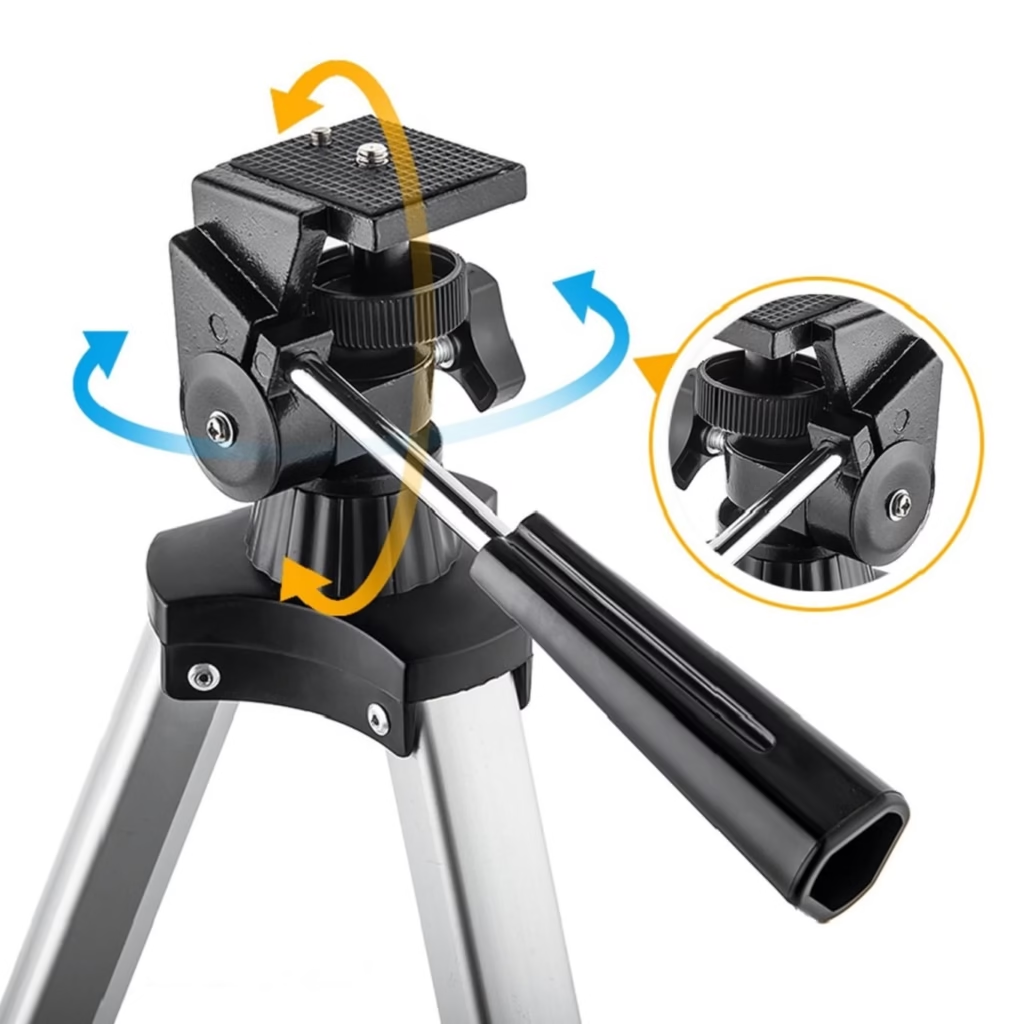
A poor mount can ruin the experience. If the telescope shakes too much, even a good lens will not help. If it is hard to move, you may give up fast.
The Gskyer 70mm uses an AZ mount. AZ stands for alt-azimuth, but you do not need to remember that term.
Just remember this.
It moves up and down. It moves left and right.
That is all most beginners need.
This mount style feels natural. If you have ever used a camera tripod, the motion will feel familiar. You can follow the Moon as it moves across the sky. You can pan around star fields. You can adjust your view without learning a complex system.
For anyone buying a telescope for beginners, this is a major benefit.
Simple controls mean less frustration.
Less frustration means more use.
More use means more fun.
What Can You See with the Gskyer 70mm Telescope?
This is the question every beginner asks.
And it is the right question.
The answer depends on your sky, your patience, your eyepiece, and your viewing conditions. Dark skies help. Clear air helps. A steady mount helps. Letting your eyes adjust to the dark also helps.
But in general, here is what you can expect.
The Moon
The Moon is the best first target.
It is bright. It is easy to find. It shows real detail. It looks different as its phase changes.
With the Gskyer 70mm, you can see craters, shadows, bright highlands, and darker flat areas. The best views often happen when the Moon is not full.
That may surprise some people.
A full Moon is bright, but it can look flat. A half Moon or crescent Moon often shows stronger shadows. Those shadows make craters and surface shapes stand out.
If you are new to astronomy, start here.
The first sharp view of the Moon can turn a casual interest into a real hobby.
Bright Planets
The Gskyer 70mm can show bright planets, but you should expect small views.
Jupiter may appear as a bright disk. On a good night, you may see its largest moons as tiny points of light nearby.
Saturn may show a small ring shape under good viewing conditions. It will not look like a large photo. But even a tiny Saturn can be thrilling when you know you are seeing it live.
Venus may show phases, much like the Moon. Mars may look like a small reddish dot, and at times it may show slight detail if conditions are good.
This makes the Gskyer a useful affordable telescope for planets, as long as your expectations stay realistic.
It is not a planet detail machine. It is a first look machine.
And that first look can be unforgettable.
Stars and Constellations
Stars will still look like points of light through most telescopes. That is normal.
But a telescope can show more stars than your eyes can see alone. It can reveal rich star fields and help you explore major constellations.
With a wide view, the Gskyer 70mm can make casual sky scanning fun. You can move across the sky and learn patterns. You can start to understand how the night sky fits together.
This is why affordable telescopes for stargazing do not need to be huge. Sometimes a light, simple scope gets used more often than a large one that stays in a closet.
Star Clusters and Bright Sky Objects
Under darker skies, you may spot some brighter star clusters and large sky objects.
Do not expect colorful clouds like the photos you see online. Most deep-sky objects appear faint to the human eye, even through bigger scopes.
But that does not mean they are boring.
There is something special about finding a cluster of stars and knowing you located it yourself. Astronomy rewards patience. Small wins feel big.
The Gskyer 70mm can help you build that skill.
What You Should Not Expect
This is important.
The Gskyer 70mm will not show Hubble-style images. It will not show bright pink nebulae in full color. It will not reveal detailed spiral arms of distant galaxies. It will not turn planets into giant balls full of detail.
No beginner telescope in this price range will do that.
Online space photos often use long camera exposures, advanced gear, image stacking, and editing. Your eye does not work the same way as a camera.
That does not make visual astronomy less valuable.
It makes it more personal.
When you see the Moon through your own telescope, that moment is yours. It is not a screen. It is not a photo. It is real light reaching your eye.
That is the joy of stargazing.
Is the Gskyer 70mm Good for Astrophotography?
The honest answer is: only for very basic photos.
If you want an affordable telescope for astrophotography, you need to know what kind of photos you mean.
For simple Moon shots, the Gskyer 70mm can be fun. If you have a phone adapter, you may be able to capture basic images of the Moon. It can take practice, but it is possible.
For serious astrophotography, this is not the right setup.
Deep-sky photos need more than a basic telescope. You need a stable tracking mount. You need long exposure support. You need careful alignment. You may need a dedicated camera and extra software.
That adds cost and complexity fast.
So, is the Gskyer the best affordable telescope for astrophotography?
Not if your goal is detailed photos of galaxies or nebulae.
But if your goal is simple Moon photos and fun first attempts, it can work as a starting point.
That is the better way to see it.
It is a visual telescope first. Photography is a bonus, not the main feature.
Gskyer 70mm vs Cheap Beginner Telescope: What Makes It Better?
There are many cheap beginner telescope options online.
Some are fine. Some are not.
The problem is that many low-cost telescopes focus on big promises. They may advertise very high magnification. But magnification alone does not make a telescope good.
In fact, too much magnification can make the view worse.
The image can become dim. It can shake more. It can be hard to focus. It can move out of view fast.
A good beginner scope needs balance.
The Gskyer 70mm gives you a useful aperture, a beginner-friendly focal length, a simple refractor design, and an easy AZ mount. That mix matters more than wild power claims.
It is also portable. You can carry it outside without much effort. You can store it without needing a large space. You can take it on short trips if you want darker skies.
That makes it more likely that you will use it.
And that is the real test.
The best affordable telescope for beginners is not always the biggest one. It is the one that helps you build the habit of looking up.
Pros and Cons of the Gskyer 70mm Telescope
No product is perfect. A good review should make that clear.
Here are the main strengths and limits of the Gskyer 70mm.
Pros
The biggest benefit is ease of use.
The Gskyer 70mm is simple to set up and simple to aim. That makes it friendly for new users.
It is also affordable. You can start astronomy without making a large investment. That is helpful if you are not sure how often you will use a telescope.
The 70mm aperture is useful for Moon viewing and bright sky objects. It gives enough light for basic astronomy.
The 400mm focal length offers a wider view. This helps beginners find objects with less stress.
The refracting design is low maintenance. You do not need to adjust mirrors or deal with complex setup steps.
The AZ mount is easy to understand. It moves in a simple way and feels natural.
The telescope is also portable. You can carry it outside for quick sessions. That matters on busy nights when you only have a short time to look at the sky.
Cons
The Gskyer 70mm has limits.
It is not ideal for serious astrophotography. You can try simple Moon photos, but it is not built for deep-sky imaging.
It will not show detailed galaxies or faint nebulae. Its aperture is too small for that kind of work.
Planet views will be basic. You may see shapes, moons, or hints of detail, but not large high-detail images.
The mount is simple, but it may not feel as smooth or stable as more costly mounts. A steady surface and careful handling will help.
It is also not a long-term advanced telescope. If you fall deeply in love with astronomy, you may want to upgrade later.
But that is not a failure.
A good first telescope helps you learn what you enjoy. Then you can make a smarter upgrade later.
How to Get the Best Results from This Beginner Telescope
A telescope is only part of the experience.
Your habits matter too.
Here are simple ways to get better views from the Gskyer 70mm.
Start with the Moon
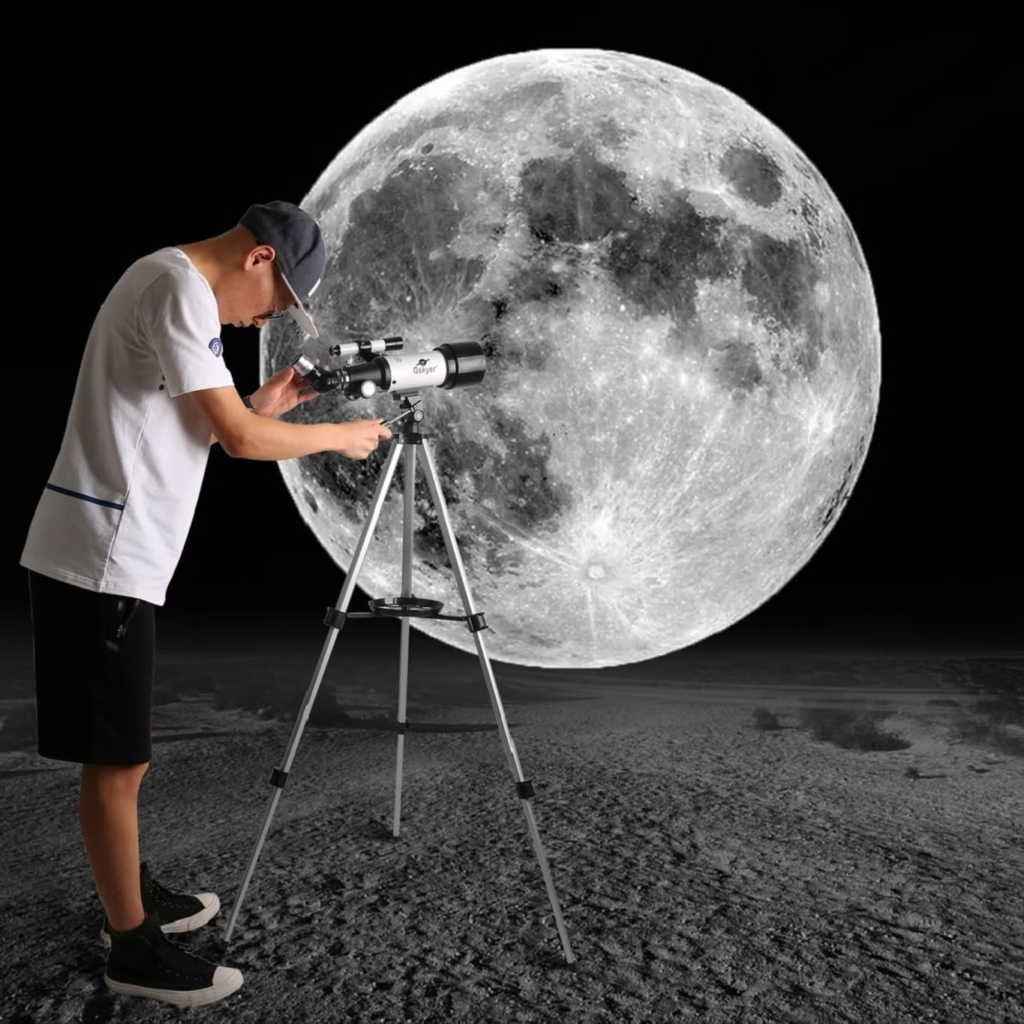
The Moon is bright, easy, and rewarding. It is the best target for your first few nights.
Do not rush to planets or faint objects right away. Learn how to aim and focus first.
Use Low Power First
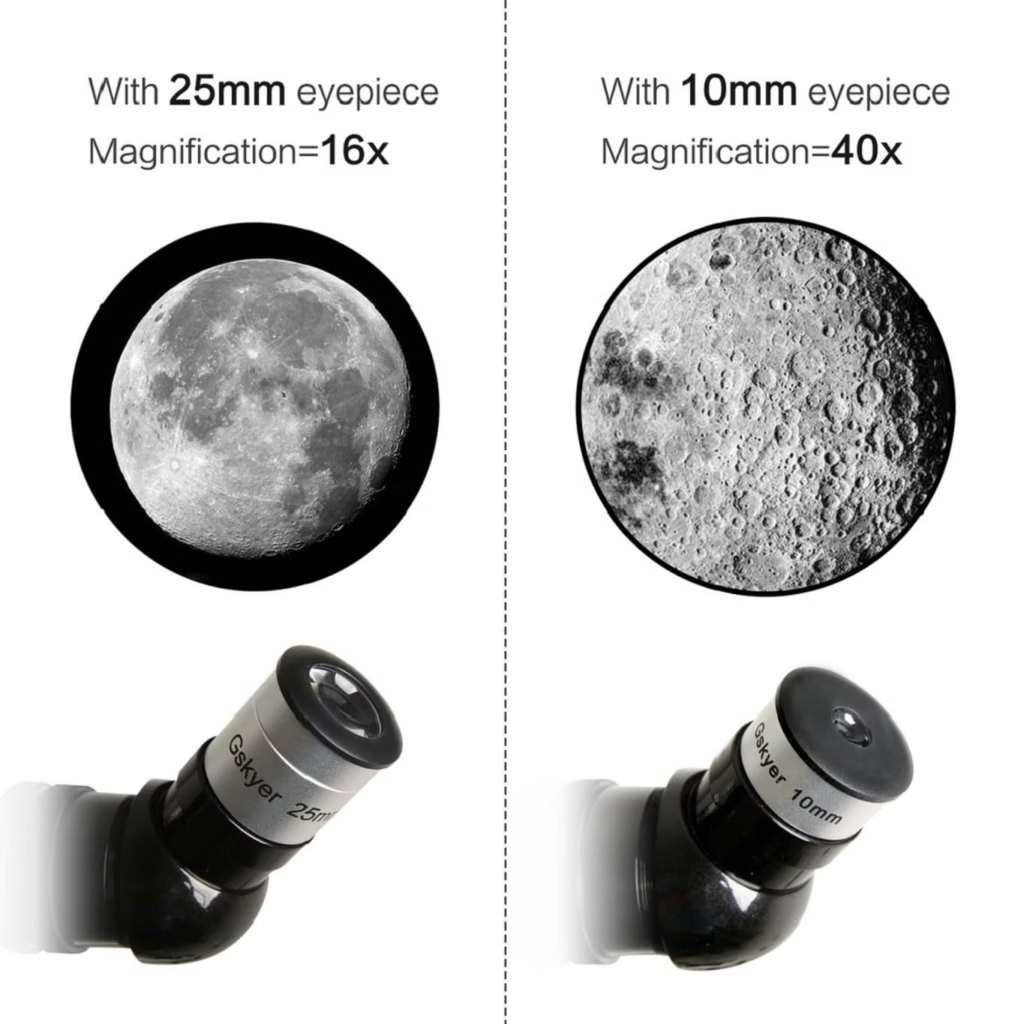
Start with the lowest magnification eyepiece.
This gives you a wider view. It also makes objects easier to find. Once you center the target, you can try more power.
Many beginners do the opposite. They start with high power and get frustrated.
Start wide. Then zoom in.
Avoid Bright Lights
Streetlights, porch lights, and phone screens can hurt your night vision.
Try to view from the darkest safe place you can find. Even moving away from a bright lamp can help.
If you live in a city, you can still enjoy the Moon and bright planets. For star clusters and faint objects, darker skies are much better.
Let Your Eyes Adjust
Your eyes need time to adapt to darkness.
Give them 15 to 30 minutes if you can. Avoid looking at bright screens during that time.
This small step can make the sky look richer.
Use a Stargazing App or Star Map
A beginner-friendly sky app can help you find planets and constellations.
You do not need to know the whole sky at once. Learn one or two targets per night.
That is enough.
Astronomy feels easier when you take it in small steps.
Do Not Look Through Windows
This is a common mistake.
A window can blur and distort the view. Warm indoor air and cool outdoor air can also create shimmer.
Use the telescope outside when possible.
Keep the Telescope Stable
Place the tripod on firm ground.
Avoid soft grass if it causes wobble. Avoid touching the telescope while viewing. Small movements can shake the image.
If the view shakes, wait a second after adjusting. Let it settle.
Be Patient with Focus
Focus slowly.
Tiny turns can make a big difference. If the image looks blurry, do not assume the telescope is bad. You may need to adjust focus, change eyepieces, or wait for steadier air.
Never Point It at the Sun
This rule matters.
Never point the telescope at the Sun without a proper solar filter designed for safe solar viewing.
Regular sunglasses, tinted glass, or homemade filters are not safe.
The Sun can damage your eyes fast.
Make It a Routine
The best way to enjoy a beginner telescope is to use it often.
Take it outside for short sessions. Ten minutes is enough. Watch how the Moon changes. Track where planets appear. Learn the sky piece by piece.
Small, regular sessions build confidence.
Is This the Best Affordable Telescope for Adults?
For many adults, yes, it can be a great first choice.
The Gskyer 70mm is not the most powerful telescope. It is not the best choice for advanced hobbyists. But it solves a real problem for beginners.
It makes astronomy feel easy.
That matters.
Adults often have limited time. They may not want a hobby that requires hours of setup. They may want something they can use on a clear night without stress.
This telescope fits that style.
It is good for backyard viewing. It is good for balconies with a clear view. It is good for casual trips to darker places.
If you want the best affordable telescope for adults, look for simple controls, useful optics, and low maintenance. The Gskyer 70mm offers those things.
It is also a smart choice if you want to test your interest before spending more.
You may later decide that you want a larger telescope. Great. By then, you will know more. You will know what you like to view. You will know if you care more about planets, the Moon, deep-sky objects, or photography.
A good first scope helps you make better second choices.
Is This the Best Affordable Telescope for Kids?
The Gskyer 70mm can be a strong option for kids, especially with adult help.
It is simple enough for family use. It is also more capable than many toy-like telescopes. That matters because kids can lose interest fast if the view is poor.
The Moon is the best target for kids. It is easy to find and full of detail. A child can see craters and shadows with their own eyes. That can spark real wonder.
The telescope can also help kids learn patience.
They learn to aim. They learn to focus. They learn that the sky moves. They learn that not everything appears right away.
That is part of the value.
For younger kids, an adult should handle setup. Older kids and teens may learn to use it with guidance.
As an affordable telescope for kids, the Gskyer 70mm works best as a shared tool. Use it together. Talk about what you see. Make it a family habit.
That will give it far more value than handing over the box and walking away.
Who Should Not Buy the Gskyer 70mm?
The Gskyer 70mm is a good beginner telescope, but it is not for everyone.
You should skip it if you want advanced performance from day one.
If your main goal is serious astrophotography, you will need a different setup. Look for a tracking mount and gear made for imaging.
If you want detailed views of faint galaxies, you will need more aperture. A 70mm telescope is not built for that.
If you want automatic object finding, this scope does not offer that style of use. You will point it by hand.
If you already have experience with telescopes, you may find it too basic.
If you expect huge, colorful space views, you may feel disappointed. That is not the fault of this telescope. It is just how visual astronomy works at this level.
The Gskyer 70mm is best for people who want a simple first step.
It is not a final destination for every hobbyist.
And that is okay.
How the Gskyer 70mm Compares to Other Affordable Telescopes
There are many affordable telescopes on the market. Some have larger apertures. Some have longer focal lengths. Some come with more parts. Some include phone adapters or extra eyepieces.
So why choose this one?
Because it focuses on ease.
For a beginner, easy is powerful.
A larger telescope may show more, but it may also be heavier. A more complex mount may track better, but it may take longer to learn. A high-power scope may sound exciting, but it may be harder to aim.
The Gskyer 70mm gives you a friendly balance.
It is one of the most affordable telescopes that still feels useful for real stargazing. It does not try to be everything. It gives beginners what they need most: a simple path into the night sky.
If you are comparing top affordable telescopes, do not only ask which one is strongest.
Ask which one you will use the most.
For many beginners, that answer is a light refractor with an easy mount.
Buying a Telescope for Beginners: What Really Matters?
Before you buy any beginner telescope, focus on a few key things.
Ease of Setup
If setup is hard, you will use the telescope less.
A good beginner telescope should be quick to assemble and simple to adjust.
Useful Aperture
A larger aperture collects more light, but size is not everything.
For a first telescope, 70mm is enough for basic Moon, planet, and star viewing.
Stable Mount
A shaky mount can ruin a clear night.
Look for a mount that feels easy to control and stable enough for casual use.
Realistic Magnification
Do not chase huge magnification numbers.
Clear, steady views matter more than big claims.
Portability
A telescope that is easy to move gets used more often.
This is one reason the Gskyer 70mm works well for new users.
Low Maintenance
Beginners often do better with simple gear.
A refractor design helps because it needs less adjustment than many reflector models.
When you look at it this way, the Gskyer 70mm makes sense as an affordable telescope for beginners.
It gives you the basics without making the process feel heavy.
Final Verdict: Should You Buy the Gskyer 70mm Telescope?
Yes, if you want a simple and affordable way to start stargazing.
The Gskyer Telescope, 70mm Aperture 400mm AZ Mount Astronomical Refracting Telescope is a strong first pick for beginners, adults, kids with guidance, and gift buyers.
It is best for the Moon, bright planets, and casual sky viewing. It is easy to move, easy to understand, and light enough to use often. Its refracting design keeps things simple. Its 400mm focal length helps beginners find objects with less stress. Its 70mm aperture gives enough light for fun first views.
It is not perfect.
It is not made for serious astrophotography. It will not show deep-sky objects in rich detail. It will not replace a large advanced telescope.
But it does not need to.
A first telescope should invite you outside. It should help you learn. It should make your first view of the Moon feel special.
The Gskyer 70mm does that well.
If you want an affordable telescope for beginners that keeps astronomy simple, friendly, and fun, this one is a smart choice.
FAQs About Affordable Telescopes for Beginners
What is the best affordable telescope for beginners?
The best affordable telescope for beginners is one that is easy to set up, simple to aim, and useful for the Moon and bright planets. The Gskyer 70mm is a strong choice because it has a 70mm aperture, a 400mm focal length, and an easy AZ mount.
Is the Gskyer 70mm good for adults?
Yes. The Gskyer 70mm is a good beginner telescope for adults who want a simple and affordable way to start stargazing. It is easy to carry, easy to use, and good for casual viewing.
Can kids use the Gskyer 70mm telescope?
Yes, kids can use it with adult help. It is a good affordable telescope for kids because it is simple and light. Adults should help with setup, aiming, and safe use.
Can I see planets with an affordable telescope?
Yes. You can see bright planets with an affordable telescope. With the Gskyer 70mm, you may see Jupiter, Saturn, Venus, and Mars under good sky conditions. The views will be small, but they can still be exciting.
Is the Gskyer 70mm good for astrophotography?
It is not designed for serious astrophotography. You may be able to take simple Moon photos with a phone adapter, but deep-sky photography needs more advanced gear.
What can I see with a 70mm telescope?
You can see the Moon, bright planets, major constellations, bright stars, and some star clusters. The Moon will usually give the most detailed views.
Is a refracting telescope good for beginners?
Yes. A refracting telescope is often good for beginners because it is simple, sturdy, and low maintenance. It is also great for Moon viewing and casual stargazing.
Is a cheap beginner telescope worth it?
A cheap beginner telescope can be worth it if it has decent optics, a stable mount, and simple controls. Avoid models that only promote huge magnification. Clear and steady views matter more.
Is the Gskyer 70mm the best budget telescope for beginners UK buyers can consider?
It can be a good option for UK buyers who want a simple starter telescope. Just check local price, availability, and what accessories come in the box before buying.
What makes the Gskyer 70mm different from other affordable telescopes?
Its main strength is balance. It is simple, portable, and easy to use. It gives beginners enough power for basic astronomy without making the setup feel complex.

Related Tags:
- good telescope
- best telescope for beginners
- best telescope to see planets
- best telescope for viewing planets and galaxies
- best budget telescope
- good home telescope
- best beginner telescope for adults
- best cheap telescope
- best telescope brands
- the best telescope to buy
- family stargazing telescope
- best affordable telescope for beginners
- beginner telescope buying guide
- easiest telescope for beginners
- best starter telescope
- starter telescope
- good telescope for beginners
- best amateur telescope
- telescope for adults beginners
- top telescopes for beginners
- good starter telescope
- top rated telescope for beginners
- best novice telescope