

If your ABS and traction lights stay on, check the red BRAKE light and how the pedal feels. Pull over safely and call for a tow if braking feels weak, the pedal sinks, or the red light stays on with the parking brake released.
If only the two amber lights are on and the brakes feel normal, check your owner’s manual. If it permits driving, a short trip to a nearby shop may be reasonable. Leave extra space. Avoid slick roads, where you may need the very features you’ve lost.
Why do the ABS and traction control lights come on together?
Picture one wheel starting to lock as you brake on a wet road. ABS [anti-lock braking system] can adjust brake pressure to help that wheel keep rolling. Now picture a tire spinning as you pull away. Traction control can brake a spinning wheel or cut engine power to help it grip.
Both systems need to know how fast the wheels turn. If one wheel sends an unreliable speed reading, the car may switch off both aids. That’s how one broken wire can light up two symbols.
First, check which symbol you see. A brief light at startup can be a normal check. A flashing skid symbol can mean the system is helping you regain grip. A steady warning after startup needs attention. A separate traction control OFF light can mean you switched the feature off. Check your manual for the symbols on your dash.
When should you stop driving and call a mechanic immediately?
Once you’re safely parked, fully release the parking brake. If the red BRAKE light stays on with the ABS light, keep the car parked. On some cars, that pair can signal a fault in how the brakes share force between the wheels.
- Call for a tow if the pedal feels unusually soft, keeps sinking, or the car takes more effort to stop.
- Keep the car parked if you see a brake-fluid leak or find fluid below the MIN mark. Adding fluid won’t tell you why the level fell.
- Skip a test stop. If you already noticed a change in braking, tell the shop what you felt. There’s no need to try to make it happen again.
What to check first, before buying a wheel speed sensor
Start with when the lights appeared. Did they stay on after a jump-start? Did they first show up as you pulled away after wheel work? Write down the timing and the exact dash message. That detail helps you choose the first check without buying parts.
Step 1. Check the fluid level and look for disturbed wiring
Park on level ground. Use the manual to find the brake-fluid tank and read its MIN and MAX marks. If the level is below MIN, leave the car parked and arrange help. Low fluid deserves attention even on a car where it triggers a different warning.
If the lights came on after wheel work, start at the wheel that was serviced. From a safe spot, look for an unplugged lead, a pinched wire, or a cable rubbing the tire. If you can’t see the wire without lifting the car, leave that check to the shop.
Step 2. Check the battery and charging system if the timing fits
After a battery change, check that both terminal clamps sit firmly in place. If the engine still cranks slowly or the battery keeps going flat, ask for a battery and charging test.
Some Subaru Impreza manuals describe an ABS light after a low-voltage jump-start. On those cars, it can go out once the battery regains its charge. If both lights persist, save the fault codes. A battery change alone won’t tell you what set them.
Step 3. Read the ABS module before clearing any codes
The ABS module is the car’s brake control computer. Check that your scan tool and app can read that module for your year and model. An engine scan with “no codes” on the screen can miss a stored brake fault.
If the tool can’t connect to the car at all, start with what to check when your OBD2 scanner won’t connect. If you’re weighing adapters, our OBDLink CX and vLinker MC+ comparison covers app fit. Confirm brake-system support for your car before you spend money.
Save the full code, any extra digits, and the wheel named on screen. A photo works well. Add a note about recent work and when the lights came on. You’ll have those details handy if the warning clears before your appointment.
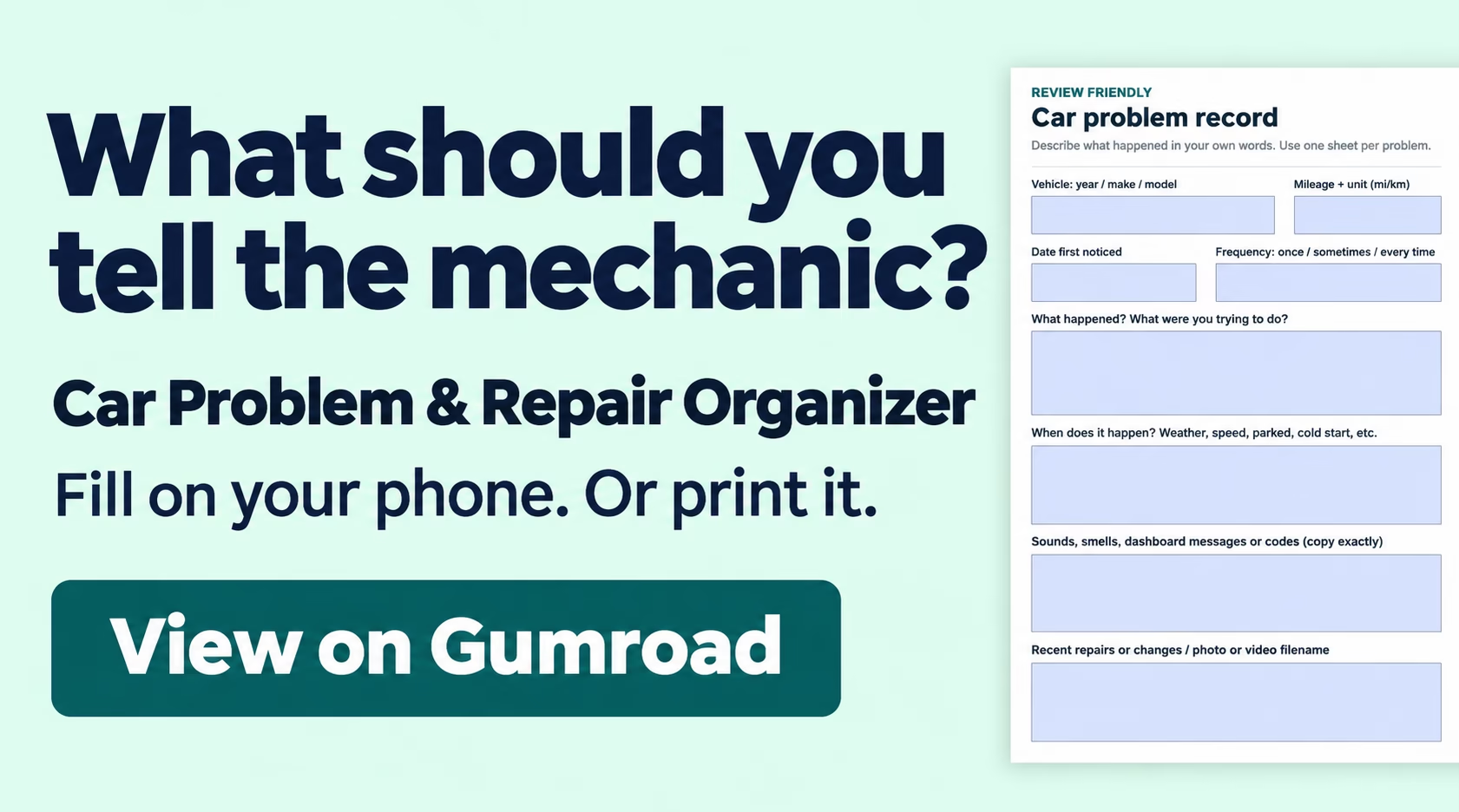
Step 4. Have the suspect wheel-speed signal tested
Suppose the code names the left front wheel. A technician can compare the wheel speeds on a scan tool. If that wheel drops to zero while the others keep rolling, the shop has a clue about where the signal gets lost.
The sensor reads a spinning target near the wheel. Your car may use a tone ring [toothed ring] or a magnetic encoder [ring with magnetic poles]. A damaged ring, a broken wire, or a loose plug can spoil the reading even if the sensor works. Ask which test narrowed it down before you approve a new sensor or hub [wheel mounting assembly].
Step 5. Investigate the ABS module or pump when the tests point there
If a shop’s tool can’t reach the brake computer, ask what it checked next. A technician can test the power feed, ground [electrical return path], and wires that carry data. A fault in any of those can make a working unit appear dead.
If the tests point to the controller or pump, ask which part the quote covers. Does the job need programming? Does the shop need a scan tool to bleed the brakes [remove trapped air]? Ask how it will verify the repair before you collect the car.
Why the model year can change the repair
Take two cars that both say “Impala” on the trunk. Their dash lights can look alike while the most useful first check differs.
On a 2007–2013 Chevrolet Impala with certain front wheel-speed codes, including C0035 or C0040, the short wire leading to a front sensor deserves a close look. It can break inside its outer cover. Tell the shop if the lights tend to come on during turns. An intact cover can hide the break.
On a 2014 Chevrolet Impala with the new body style, small bits of metal can stick to the magnetic ring and upset its signal. The code details help the shop choose the corner to inspect. Give the shop your model year and body style so it can match the service guidance to your car.
How much does it cost to fix both lights?
Your bill depends on which part failed. These U.S. estimates, checked in November 2026, give you a starting point for a quote. Local labor rates, taxes, fees, and related work can change the total.
- ABS diagnosis: $117–$171. Ask what testing the fee covers and whether the shop credits it toward the repair.
- Wheel speed sensor replacement: $234–$310. Check which wheel the price covers. If the car needs a complete hub, request a separate quote for that job.
- ABS control module replacement: $1,181–$1,278. Ask which test confirmed the fault and whether the price includes any required setup.
You don’t need to add all three figures together. A damaged wire calls for its own estimate. Ask the shop to list the diagnostic fee, parts, labor, and any setup work before you approve the job.
Frequently asked questions
Can I drive to work with the ABS and traction lights on?
If the two amber lights stay on, make the repair shop your destination. Check the manual first. A normal-feeling pedal in your driveway tells you little about how the car will respond to a sudden stop on a wet road.
There’s no fixed number of safe miles. If the route is slick, the manual says to stop, or the brakes feel different, arrange a tow.
Why do both lights stay on after a battery change?
Low voltage during a flat-battery event is one clue. A loose connection is another. Check the clamps and look in your manual for any steps your model needs after power loss.
If the warnings persist, have the ABS codes read before you disconnect the battery again. Keep the code details so the shop can tell whether the car logged a power fault or lost a wheel-speed signal.
Why are both lights still on after a sensor or wheel bearing was replaced?
If your ABS and traction lights stay on after the repair, ask for the current code. Does it name the same wheel as before? At that corner, the shop can check the plug, wire routing, sensor fit, and the ring the sensor reads.
Bring your first scan or repair receipt. Ask the shop to show that the wheel now reports a steady speed and that the fault stays away during the check for your model. That gives you a clear basis for deciding whether to approve more work.