
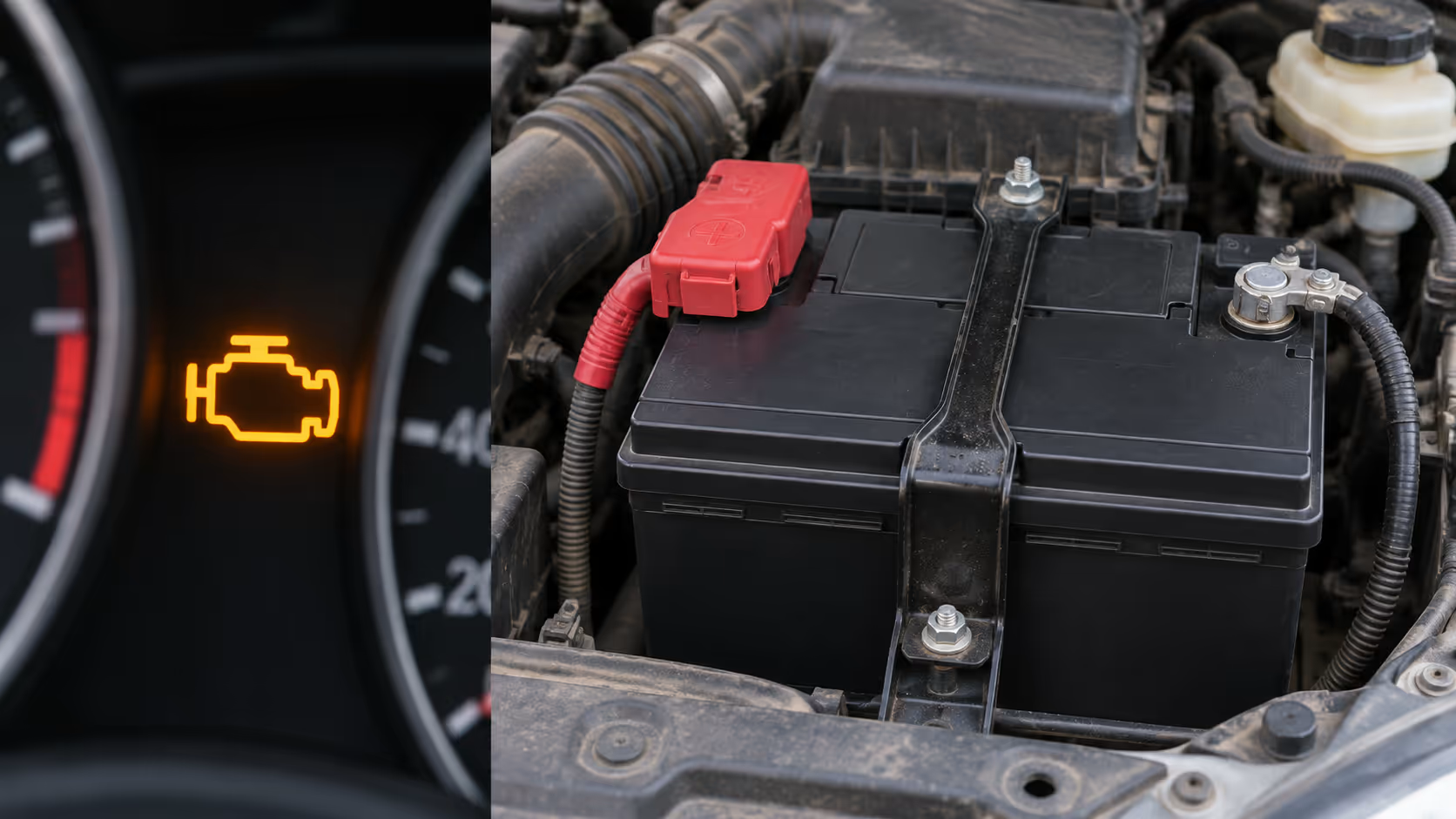
Check engine light on after changing battery? Start here
You turn the key after fitting a new battery. The engine starts, but the little engine symbol catches your eye. Check engine light on after changing battery? First, see whether it stays lit once the engine runs. A light that goes out at startup is usually the normal bulb check.
If the light stays steady and the car feels fine, save the fault code and recheck the installation. If it flashes and the engine shakes, ease off the gas and pull over safely. Here’s how to decide what needs attention on a car with a conventional 12-volt starting battery.
Quick answer: Can you drive with the light on?
Look at the shape of the light first. The engine symbol points you toward an engine or emissions fault. The battery symbol points you toward the charging system. Both can appear before you start the engine. What matters here is what stays on afterward.
| What you see | Possible cause | What to do |
|---|---|---|
| Engine light goes out once the engine starts | Normal lamp check | No repair needed for this alone. |
| Steady light, smooth engine | Stored engine or emissions fault | Scan soon and ask for an installation check. |
| Flashing light, shaking engine | Misfire that can damage the catalytic converter | Pull over safely. If it keeps flashing or shaking, arrange a tow. |
| Battery icon stays on; dash dims | Charging fault or poor power connection | Get to a safe place and seek help. |
| Rough idle after the air box was moved | Loose duct or sensor plug | Switch off and inspect the parts that moved. |
If the light flashed and then went steady, see what to do after the flashing stops.
A steady light alone can usually wait for a short, gentle trip to a shop if the car feels normal. A red oil pressure warning, an overheating engine, or a sudden loss of power changes that advice. Pull over safely and switch off.
Why did the light come on after the battery change?
What can reset normally when the battery is disconnected?
Your car runs a set of emissions checks as you drive. A loss of battery power can reset some of these checks. A scan tool may then show “not ready.” That means the car still needs the right conditions to run that test.
An unfinished test alone won’t switch on a steady engine light. Some cars also lose their learned idle settings when power goes off. You might feel a small change at a stop while the engine learns again. Read the code if the light stays on.
The light appeared on the first start
Think back to what had to move to get the battery out. A clamp can sit high on a post. A small ground lead can slip out of sight. If the air box came out, a sensor plug or intake hose may still be loose.
The sound of the first start helps narrow the search. A slow crank and a dash that went dark point you toward the battery and its cables. A brisk start followed by a rough idle gives you a reason to check the intake.
The old battery was dead, or the new one is already struggling
A flat battery tells you where the power ran out. It leaves open the question of why. The old battery may have worn out, a light may have stayed on, or the charging system may have failed.
Note when the new one struggles. If the battery light stays on while you drive, get the charging system checked promptly. If the car drives fine but goes flat after two nights parked, tell the shop that. It helps them decide whether to test for a drain with the car asleep.
The light returned hours or days later
Think about the dash before the battery died. Did you already have an engine light? A power loss can erase some fault records. Once the car repeats a test, the same fault can turn the light back on.
For example, a light that returns after a highway trip may reflect a test that finally ran. Save the new code and compare it with any old scan report. A match gives you a better lead than the date on the battery receipt.
How to diagnose it step by step
Step 1. Record what happened before resetting anything
Park first. A one-minute record can save you from trying to recall five dash lights at the shop.
- Photograph the dash with the engine running if safe.
- Note whether the light is steady or flashing.
- Write down slow cranking, rough idle, or stalling.
- Record any jump-start and which parts moved during the swap.
- Save the codes and scan data before clearing anything.
Step 2. Recheck the battery installation with the engine off
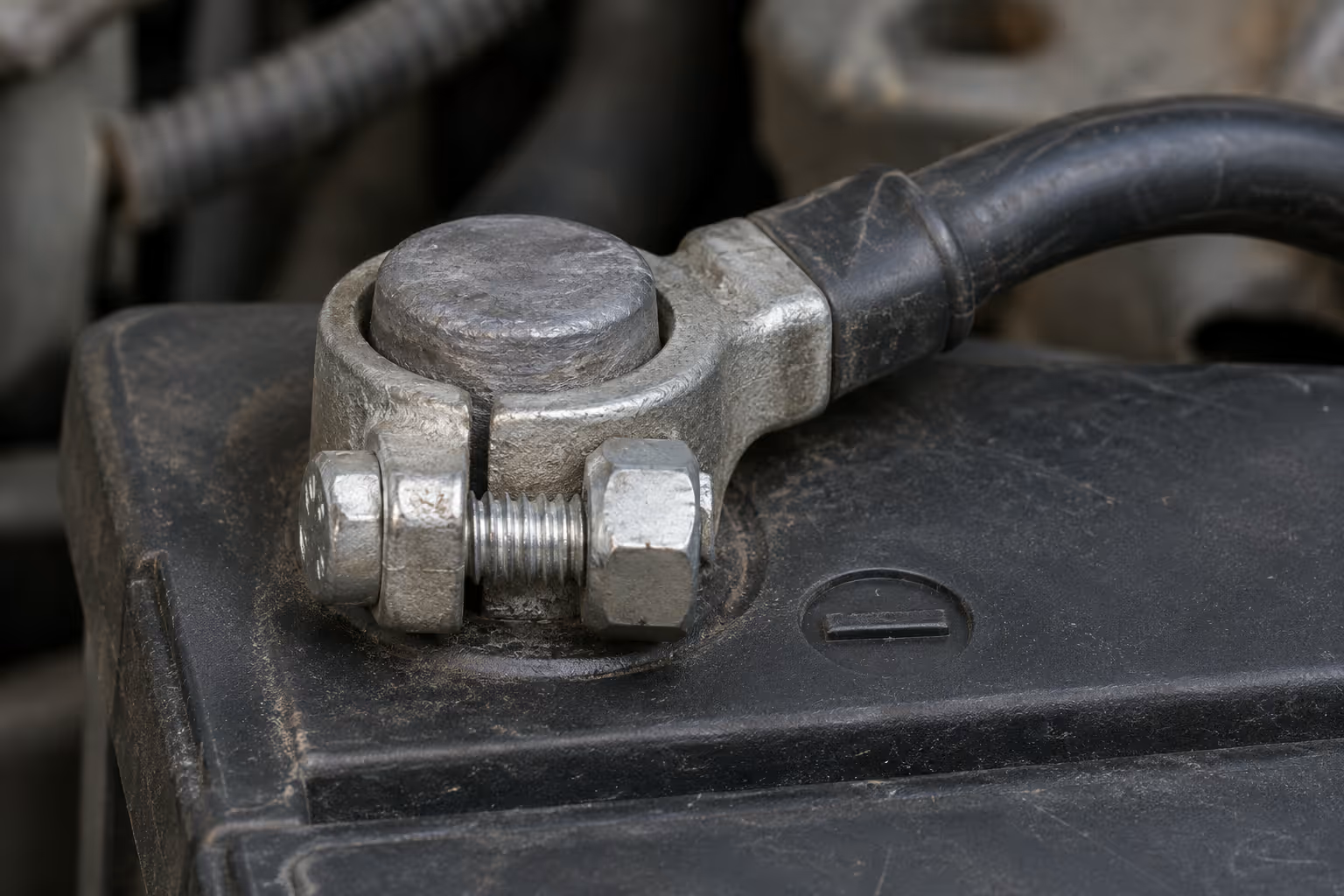
Set the parking brake, switch the car off, and keep the key away from it. Remove metal jewelry. If the case is cracked, swollen, or leaking, leave it alone and call for help.
On an accessible, undamaged battery, look at both clamps. Each should sit fully on its post. A fitted clamp should resist a gentle twist by hand. White or green crust, a split clamp, or a cable loose at its end deserves a closer look.
Check the hold-down too. It should keep the case in place. Compare the new battery label with the spec for your car, including size, post layout, and battery type. If the clamp still moves at the specified torque, stop tightening and have the fit checked.
Step 3. Trace only the parts moved to reach the battery
Start where your hands or the installer’s tools had to go. Follow the large air duct from the air box toward the engine. Look for a folded edge, a loose clamp, or a small hose hanging free.
Some cars have a mass airflow sensor plug on that duct. If someone unplugged it to lift the air box, check that it clicked back into place. Leave plugs elsewhere in the engine bay alone. Each extra plug you pull adds another possible fault.
Step 4. Read the OBD-II code and use it to choose a test
With the car parked, follow your reader’s instructions to scan the engine computer. Choose the read-codes menu. Save the exact letters and numbers, plus any label such as pending, confirmed, or permanent. If freeze-frame data is available, save that screen too. It shows a snapshot of conditions when the car recorded the fault.
| Scan result | What to check |
|---|---|
| P0562 · Low system voltage | Did it set when the old battery was flat? Test the battery, cables, and charging system if it returns. |
| P0102 · Low signal from the airflow circuit | Check the sensor plug and wiring near the air box before buying a sensor. |
| P0300 · Random or multiple misfires | Check how the engine runs. Take flashing and shaking seriously. |
| No codes shown | Confirm the scan tool can read the engine module and check pending codes. |
For a blank scan, check that the reader connected to the engine computer and that you chose the correct icon on the dash. If the light still stays on, ask for a scan with a tool that supports your model.
If your reader connects but shows zero codes, here’s what to check when the engine light is on but no codes show.
Step 5. Test the power supply if the symptoms point there
If the car cranks slowly, ask for a battery charge and condition test. A new battery can arrive partly charged. The shop may need to charge it and test it again before judging its health.
Ask for a charging test under load and a voltage-drop test on the cables. The latter measures how much voltage is lost along a cable or connection while current flows. It can expose a poor joint hidden under clean insulation. Some cars adjust charging voltage as you drive, so one idle reading can be misleading. Never remove a battery cable with the engine running to test the alternator.
Step 6. Check for a blown fuse only when the sequence fits
A fuse moves up the list if several functions stopped working at once. If you know the battery leads touched the wrong posts, leave the car off. Have the main fuses, power feeds, and charging system checked before another start attempt.
For an ordinary fuse check, use the diagram for your exact car. Fit only the specified type and amp rating. If the new fuse blows, stop there. A bigger fuse could let the wiring overheat.
What can you fix yourself, and when should the installer take over?
DIY fixes for a connection you can identify
With the car off, you can often seat a loose intake plug or refit a duct you moved yourself. Check that the plug locks and that the duct sits evenly before you snug its clamp.
Tighten a battery clamp yourself only if you can reach it safely and have the proper torque spec and tool. Keep the tool from touching the positive post and body metal at the same time. Leave damaged cables and hard-to-reach battery connections to the shop.
Return to the installer for fitment or registration issues
Take the receipt, the code photo, and the time the light first appeared. Ask the installer to check both terminals, the ground lead, and any plugs moved for access. Ask whether the installation recheck is covered.
Some models need battery registration or a battery sensor reset after replacement. That step lets the charging system account for the new battery. Have the installer check the procedure for your year and engine. A missed reset alone doesn’t tell you why the engine light came on.
Get a mechanic involved when the evidence points beyond installation
Book a diagnostic test if a code comes back after a clear physical fault is fixed. Ask which test showed the proposed part failed. A low-voltage code by itself is too little evidence to approve an alternator.
If the engine keeps shaking, the car stalls, or the dash goes dim while driving, pull over safely and arrange help. On a hybrid or EV, leave orange cables and high-voltage parts alone. Use the model’s own instructions for its 12-volt system.
What might a shop charge?
These rough U.S. ranges give you a starting point for a quote. Your car, local labor rate, and how much of the cable needs replacement can change the bill.
| Service | Approximate cost |
|---|---|
| Check engine light diagnosis and testing | $125–$183 |
| Battery terminal end service | $37–$54 |
| Full battery cable replacement | $392–$449 |
Ask what the estimate covers before authorizing work. A terminal service and a full cable assembly are different jobs. Also ask whether the shop credits the diagnostic fee toward the repair.
How to confirm the fix and prevent a repeat
Verify the repair without disconnecting the battery again
After a safe repair, start the car and check the original symptom. Does it crank at normal speed? Does the idle settle? If the light stays on, compare the scan with your saved report. A light can take time to go out after a successful repair.
A permanent emissions code can remain after the light goes out. The car clears that record when its own checks confirm the fault is gone. Repeated resets can erase other clues and send readiness checks back to the start.
Before the next battery change, save a baseline
Take a dash photo and save any codes before the old battery comes out, if it still has power. Check the battery spec and any required reset steps before buying the replacement. A quick photo of the cables and intake before you begin can also show where a small lead belongs.
Frequently asked questions
How many miles do I need to drive for the check engine light to go off?
There’s no set mileage. Some tests need a cold start, a certain fuel level, or a stretch of steady driving. If the light is on now, read the code first. Driving farther won’t seat a loose plug or repair a bad cable.
Why does my car idle roughly after a new battery?
Some engines need to learn their idle settings again. Check your owner’s manual for the steps for your model. If the air box was moved, inspect the intake duct and plug as well. Strong shaking, repeated stalls, or a flashing lamp call for prompt help.
Can a loose battery terminal cause a check engine light even if the car starts?
Yes. A poor connection may pass enough current to start the car yet cause a voltage drop at another time. A slow crank, dash reset, or low-voltage code adds weight to that clue. Check the fit and have the cable tested if the fault returns.
Will disconnecting the battery again clear the light?
It may turn the lamp off for a while on some cars. It can also erase the snapshot that helps a technician find the cause. Save the code and fix the fault first. Disconnecting the battery won’t erase a permanent emissions code.
Can I pass an emissions inspection if the light went off after the battery change?
Check the reader’s emissions readiness screen before you book. The lamp can be off while one or more tests still show incomplete. Rules vary by state, model year, and fuel type. Compare your screen with the local inspection requirements.
What to do next
Check engine light on after changing battery? If the car runs smoothly and the light stays steady, take a photo of the code and call the installer for a recheck. If it flashes and the engine shakes, pull over safely and arrange help.