

Check engine light flashing then stops? Ease off the gas and pull over as soon as it’s safe. If your car still shakes, loses power, or flashes the light again, call for roadside help. A brief flash warns of possible damage. It can’t tell you whether damage has already occurred.
If the car feels smooth again, check your owner’s manual before driving farther. Arrange a prompt inspection even if the light goes out.
Can I keep driving after the check engine light stops flashing?
Pull over if the car still shakes, loses power, or flashes again.
Ease off the gas and signal before you move out of traffic. Once you reach a safe spot, park away from dry grass and shut off the engine. A hot exhaust can ignite material beneath the car.
If you felt the car buck or struggle to keep up with traffic, tell roadside assistance. A tow is the safer choice if those symptoms persist or the light flashes again.
If the engine feels normal again, check the manual before moving on.
Look under “check engine light” or “malfunction indicator lamp” in your manual. Some models have specific steps for shutting down, waiting, and getting service.
If your manual permits it, the engine runs smoothly, and no other warning calls for a stop, a gentle trip straight to a nearby shop may be reasonable. If that means merging onto a fast highway with a car that just lost power, call the shop from where you parked.

What does a flashing check engine light mean, and why does it stop?
Flashing versus steady while driving.
On a gasoline engine, flashing usually points to a severe misfire. A misfire means a cylinder failed to burn its fuel mixture properly. Unburned fuel can reach the catalytic converter [the part that cleans exhaust] and cause it to overheat.
A steady light usually means the car has logged an emissions fault. It generally calls for less urgent service if the car feels normal. Shaking or a loss of power still deserves prompt attention, whatever the light does.
Why easing off the gas can stop the flashing.
Think of a car that runs smoothly on flat ground but stumbles on a hill. A worn spark plug may fire at a steady cruise, then miss when the engine works harder. Back off the gas and the severe misfire can ease enough for the flashing to stop.
What it means if the light goes dark or stays solid.
A dark dash means the warning has stopped for now. A solid light means the car still has a fault to report. Both details help the shop, especially if the car runs well by the time you get there.
What usually causes a check engine light to flash briefly?
If it happened as you pressed the gas, plugs and coils are sensible first checks. The order can change with the clues your car gives you.
Worn spark plugs, weak ignition coils, or damaged coil boots
A coil supplies the voltage that makes a spark jump across the plug. A worn plug gap or a cracked coil boot can let that spark fail under load. That can explain why your car idles smoothly but bucks as you pass another car.
A shop can move a suspect coil to another cylinder and check where the fault shows up next. If the misfire follows the coil, that gives you a reason to spend money on it.
If the car also bucks on trips when the light stays off, see what else can make a car jerk while driving.
A fuel injector problem or low fuel pressure
Each injector sprays fuel into the engine. A clogged or leaking injector can upset one cylinder. Low fuel pressure can affect several, especially as you ask for more power. The shop can use fuel pressure and injector tests to tell those problems apart.
A vacuum leak or incorrect airflow reading
A split intake hose can let extra air into the engine. An airflow sensor can also send a wrong reading, so the engine adds the wrong amount of fuel. If your car also idles roughly at a stop, mention it. The shop can check for air leaks before pricing a sensor.
Low compression or a valve or timing problem
Each cylinder needs to seal tightly to build pressure. A valve that fails to seal can leave one cylinder weak, even with a good plug and coil. If the same cylinder keeps missing, ask whether a pressure test would help find the cause.
What should I do when it happens? A step-by-step guide
Ease off the accelerator and get to a safe stopping place.
Keep your eyes on traffic and move over when you have room. Skip the hard burst of gas to see if the flash comes back. Once parked, follow your manual’s instructions for the warning.
Once parked, note what happened before and after the flash.
Write down the mileage and what your foot was doing when the light flashed. “Halfway up a hill, with light shaking until I lifted off the gas” gives the shop more to work with than “the light came on.”
- Was the engine cold or fully warm?
- Were you idling, passing, or climbing?
- Did the light go dark, stay solid, or flash again?
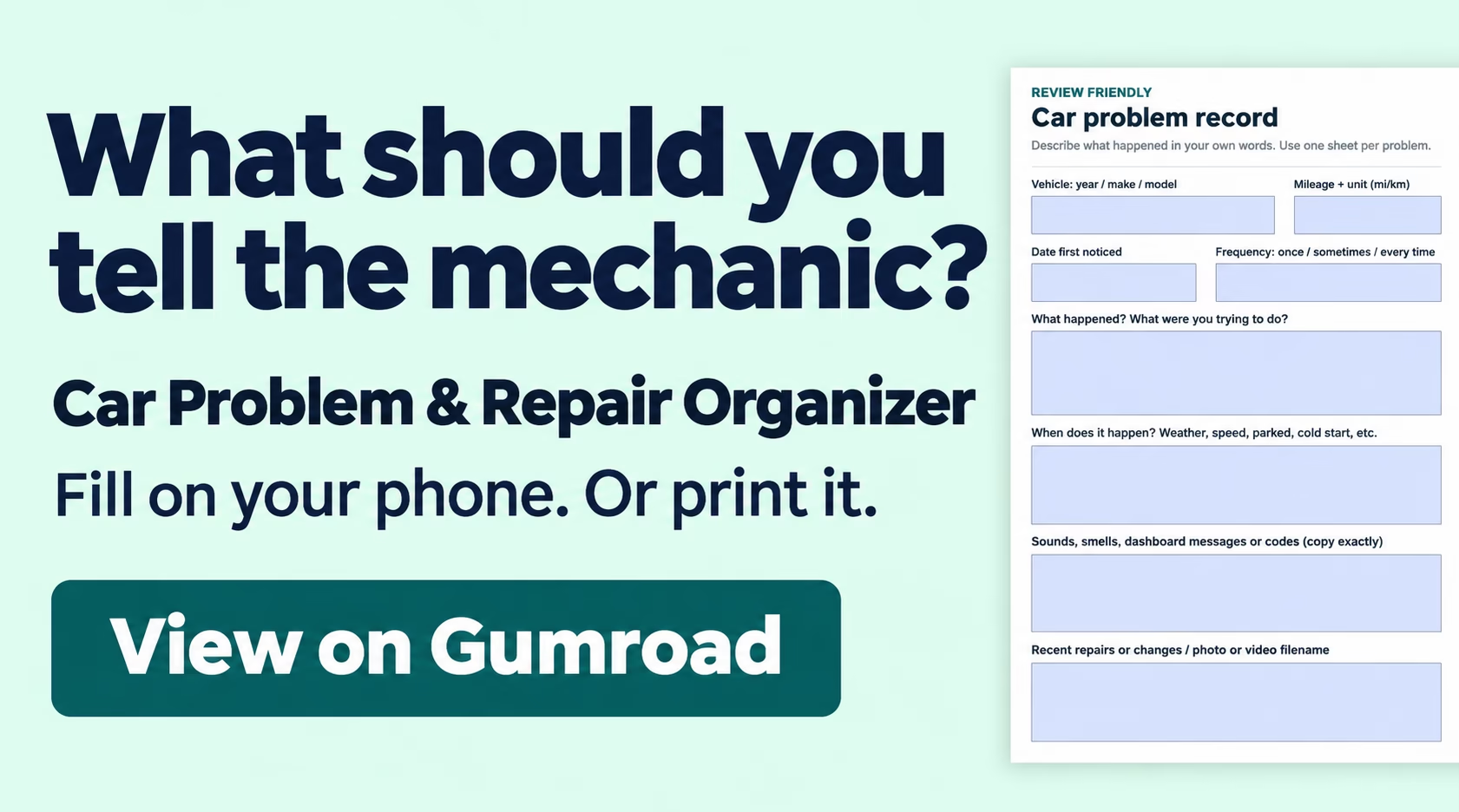
Save any diagnostic information before clearing anything.
If you have a code reader, save a photo of the codes. Save any freeze-frame data [engine readings when the fault occurred] too. Clearing codes can erase clues the shop could use. If your reader powers up but gets no response, see what to check if your OBD2 scanner won’t connect.
Call the shop with the symptom as well as the code.
Start with what you felt, then tell them how the car runs now. If it lost power on the highway, say so before asking whether to drive it in. Have the year, model, and any codes handy.
How will a mechanic diagnose it, and what might it cost?
What a scanner can still tell you.
A pending code means the car saw signs of a fault. A stored code may remain after the warning goes out. For example, P0302 [misfire on cylinder two] tells the shop where to look. The mechanic still needs to check what went wrong there.
If the light stayed on but your reader found nothing, see why a check engine light can be on with no codes. Share your notes even if the scan comes up blank.
What diagnosis and one common repair may cost.
For a U.S. budget estimate in November 2026, allow $125–$183 for diagnosis and testing. If testing points to a bad ignition coil, a separate estimate for that repair is $238–$320. Your engine, local labor rates, taxes, and fees can change the bill.
Before you approve work, ask what the first fee covers. Find out whether the shop applies it toward the repair and whether they’ll call before doing more tests.
Does a brief flash mean I need a catalytic converter?
The light warns that the misfire can overheat the converter. Flash duration alone can’t show what condition the converter is in. If a shop recommends a new one, ask what test showed damage and what caused the misfire in the first place.
If a later scan shows both catalyst codes, see what to check when P0420 and P0430 appear together.
When should I get immediate help, and what can I monitor?
Get immediate help if the warning or rough running continues.
If the car still shakes after the light goes dark, treat the shaking as a warning. Stay parked and call for help. Do the same if it struggles to move with traffic or the flashing returns.
After one brief episode, arrange service and monitor the pattern.
If your car is parked and feels fine, call to book a check. You can track any symptoms while you wait for service. You don’t need to drive the same hill or wait for a second flash to make that call.
How can I reduce the chance of another misfire?
Check the spark plug schedule for your exact engine.
Find the spark plug interval in your maintenance guide and compare it with your service records. Two engines sold in the same car model can use different plugs or schedules. If yours are due, give the shop that detail when you book.
Follow up if the same symptom returns after repair.
Keep the invoice and the codes found on the first visit. If the car bucks again, note whether it happened under the same conditions. A repeat on the same cylinder gives the shop a different lead from a new fault on another one.
Questions drivers ask after the flashing stops
Is it OK to drive home if my check engine light flashed and stopped?
If the engine still runs roughly or the flashing returns, pull over safely and call for help. If it feels normal, use your manual’s guidance and call a nearby shop before deciding where to go.
Why did it flash going uphill but stop when I eased off the gas?
Climbing puts more load on the engine. A weak spark or a fuel supply problem can show up on the climb and fade on level ground.
My car shook, but it runs fine after a restart. Do I still need it checked?
Yes. Tell the shop that both the shaking and the flashing stopped after you restarted. That detail can help them narrow down when the fault appears.
Can a mechanic find a misfire after the light goes out?
Sometimes. A pending code or saved engine readings can give the shop a lead. Leave the codes in place and bring your notes.
What if the check engine light stopped flashing but stayed on?
Arrange a scan even if the engine feels smooth now. If it still bucks or lacks power, stop safely and ask for roadside help.
Did those few seconds of flashing ruin my catalytic converter?
A brief flash alone can’t answer that. The first step is to find out why the engine misfired. A shop can then check the converter if there are signs of damage.
How much will it cost if the shop can’t reproduce the flashing?
Ask whether the initial diagnostic fee covers a scan, an inspection, and time spent testing. If your service request reads “check engine light flashing then stops,” add the road conditions and how the car felt. Then agree on a spending limit before the shop starts looking for a fault that comes and goes.