
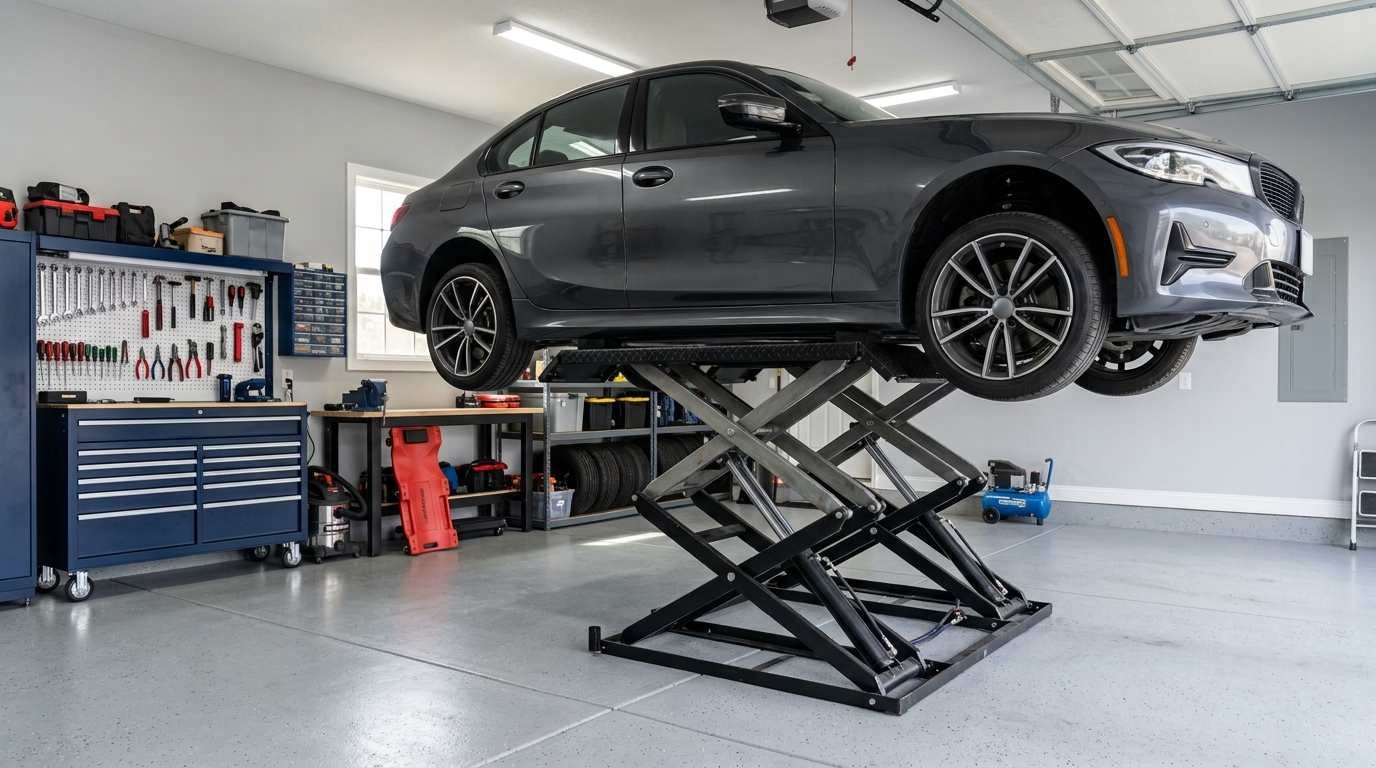
Before I ranked these lifts, I reviewed a broad mix of owner comments, customer feedback, and detailed buyer discussions. The list reflects long-term praise and recurring problems, not just claims from product pages.
The best scissor lift for home garage use is the BendPak MD-6XP. It offers useful working height, solid locks, and good parts support. Yet it will not suit every garage.
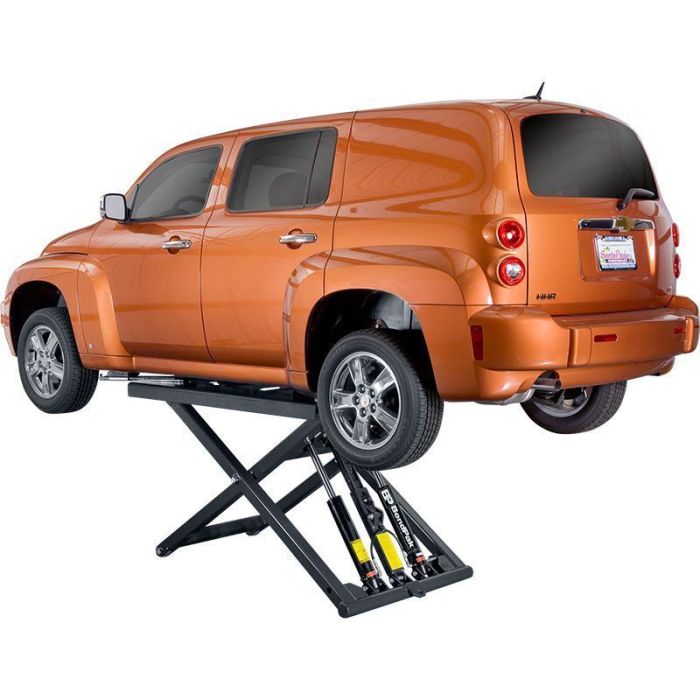
The QuickJack 6000TL is easier to store. The QuickJack 8000TLX better fits many SUVs. For open access under the car, the Atlas 7K Kwik Bay earns a closer look.
Your final choice must fit four things:
- Your vehicle’s weight
- Its approved lift points
- Your garage ceiling
- The repairs you plan to do
A high weight rating alone does not make a lift safe. Fit matters just as much.
Quick answer: The BendPak MD-6XP is the best overall choice for most home mechanics. It lifts up to 6,000 pounds and gives you about 47 inches of rise. Choose the QuickJack 6000TL if storage matters more. For larger SUVs and light trucks, consider the QuickJack 8000TLX.
Best Scissor Lifts for Home Garages at a Glance
The following table gives you a fast look at all eight picks. Some are true mid-rise scissor lifts. Others use two separate lifting frames.
Prices and model details can change. Check the current manual before ordering.
Also plan for extra costs. You may need ramps, adapters, fluid, or freight service. Some large lifts need a forklift or engine hoist for unloading.
For a wider view of available designs, see this guide to the best car lifts for home garages.
The Best Scissor Lift for Home Garage Use
You may not need the tallest or strongest lift. You need one that fits your car and work style.
Here are the top choices for three common needs.
Best Overall: BendPak MD-6XP
The BendPak MD-6XP offers a strong mix of height and ease of use. Its 47-inch rise lets you work from a stool. That feels far better than lying flat on the floor.
It also includes adjustable arms. These help you reach approved lift points on many cars.
Mechanical lock bars support the raised vehicle. You should lower the lift onto these bars before starting work.
The MD-6XP works best for:
- Brake jobs
- Suspension repairs
- Tire changes
- Detailing
- Basic underbody service
Its main flaw sits in the middle. The frame can block parts of the exhaust or driveline. That makes it less useful for large centerline repairs.
Best Portable Option: QuickJack 6000TL
The QuickJack 6000TL uses two separate frames. You place one on each side of the car.
This setup gives you more open space through the center. It is useful for oil changes and exhaust checks.
Each frame is easier to store than a full mid-rise lift. You can place them against a wall. Some owners leave them flat under a parked car.
Still, “portable” needs context. Each frame weighs much more than a normal floor jack. Moving both frames before every job can become tiring.
You can compare more compact choices in this guide to the best portable car lifts for home garages.
Best for SUVs and Light Trucks: QuickJack 8000TLX
The QuickJack 8000TLX handles up to 8,000 pounds. Its long frames suit many SUVs and light trucks.
The extra length also helps reach widely spaced lift points. Yet that same length can cause trouble with small cars.
Measure before you choose it. Check both the shortest and longest lift-point range.
Each frame weighs about 103 pounds. That is movable, but not light. You may not want to pull it from storage each weekend.
How We Chose the Best Automotive Scissor Lifts
A product page can tell you how much a lift holds. It cannot tell you how annoying it feels to move.
That is why this list weighs both specifications and owner feedback.
Safety and Locking System
A sound lift needs physical locks. These locks support the vehicle after it rises.
Hydraulic pressure should raise the car. It should not act as the only support while you work.
We looked for:
- Mechanical lock bars
- More than one lock height
- Clear lock release steps
- Protected hydraulic hoses
- Emergency lowering guidance
- Easy-to-find service manuals
You should hear or see both sides engage. Never start work if one side sits at a different height.
Vehicle Capacity
The rated capacity is the most weight a lift can hold. It is not a target.
Leave a fair margin between the vehicle’s weight and the lift’s limit. Added tools, cargo, fuel, and vehicle mods all add weight.
As a rough guide:
- Small cars often fit a 5,000-pound lift.
- Most sedans fit a 6,000-pound lift.
- Large SUVs may need 7,000 or 8,000 pounds.
- Some trucks need a larger lift.
Always check your exact model. Do not guess from body size alone.
Lift-Point Compatibility
This is where many buyers get caught.
A lift may hold 8,000 pounds but still not fit your car. Its pads must reach the approved lift points.
Measure:
- Front-to-rear lift-point distance
- Side-to-side spacing
- Clearance near each tire
- Space for blocks and adapters
Long frames can hit the tires of a short car. Short arms may not reach a long van.
Maximum and Minimum Height
Maximum height tells you how much room you gain. Minimum height tells you whether the lift fits under the car.
Most choices fall into three groups:
- Low-rise: Good for wheels, brakes, and body work
- Portable frame: Easy to store, but lower
- Mid-rise: Better for seated work under the car
A lift with a 50-inch rise sounds ideal. Yet it will not help if your sports car cannot clear it.
Portability and Storage
A full mid-rise lift may weigh hundreds of pounds. Built-in wheels do not make that weight vanish.
A lift moves best on:
- Smooth concrete
- A level garage floor
- A floor without deep joints
- A clear path without door tracks
Even a small slope can make a heavy lift hard to control.
Separate frames store more easily. Yet you must align them each time.
Owner Feedback and Common Problems
Owner reports helped reveal issues that basic specifications miss.
The most common themes included:
- Hard-to-seal hydraulic fittings
- Heavy frames
- Poor low-car clearance
- Difficult freight delivery
- Limited center access
- Lift arms that miss the jack points
- Slow access to replacement parts
One complaint does not prove a bad design. Repeated complaints deserve more weight.
8 Best Scissor Lifts for a Home Garage
The following reviews explain each lift’s best use. They also cover the tradeoffs that matter after delivery.
1. BendPak MD-6XP: Best Overall Scissor Lift for a Home Garage
The BendPak MD-6XP is the best mid rise scissor car lift for many home shops. It lifts high enough for seated work. It also avoids the permanent posts of a full-size lift.
Key specifications
- Capacity: 6,000 pounds
- Lift height: 47 inches
- Lowered height: 4.75 inches
- Power: 110 volts
- Lift time: About 45 seconds
- Design: Adjustable arms
- Safety: Multiple lock points
- Included item: Truck adapters
Why we recommend it
The MD-6XP offers more room than a low-rise frame lift. You can sit on a rolling stool for many jobs.
Its arms also give you more placement options. Fixed runways cannot match that range.
BendPak has a broad parts catalog. Detailed manuals and parts diagrams are also available. That helps if you plan to keep the lift for years.
What owners like
Owners often highlight its stable feel. They also like the working height.
It suits common garage tasks, such as:
- Brake pad changes
- Rotor work
- Suspension repairs
- Wheel swaps
- Fluid service
- Car detailing
It does not need tall posts. You also avoid drilling anchor holes in many setups.
Common complaints
The 4.75-inch body can be too tall for low cars. You may need rated drive-on ramps.
The frame beneath the car also takes up space. It may block a long exhaust section or transmission jack.
This lift is heavy. Plan its delivery before it arrives.
Best for
- Frequent home repairs
- Sedans
- Sports cars with enough clearance
- Small SUVs
- Garages with low ceilings
Who should skip it
Skip it if your vehicle exceeds its rating. It is also a poor match for frequent transmission work.
Pros
- Useful 47-inch rise
- Adjustable lifting arms
- Standard 110-volt power
- Several lock positions
- Good parts support
Cons
- Heavy to move
- Center frame blocks some work
- Low cars may need ramps
- Costs more than basic frame lifts
2. Atlas 6MR: Best Budget Mid-Rise Scissor Car Lift
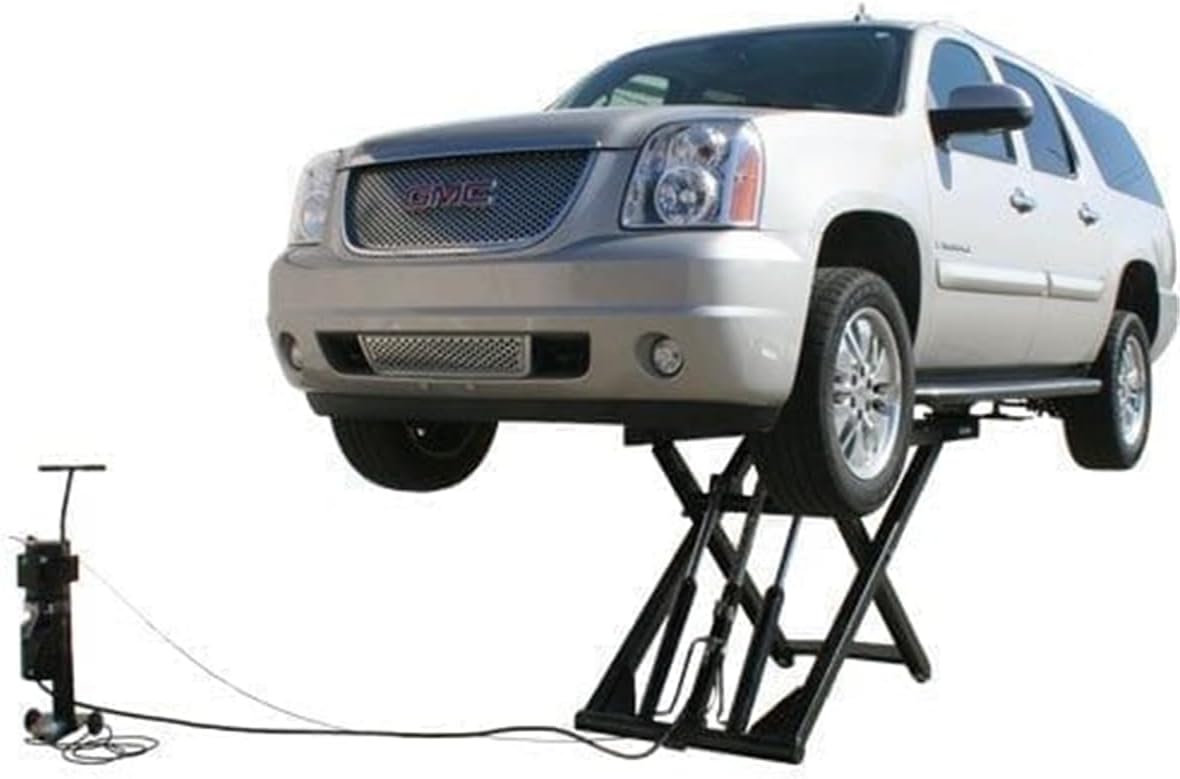
The Atlas 6MR is a lower-cost way to gain true mid-rise height. It works best in a set garage bay.
Its biggest strength is simple. You get more room under the car without installing posts.
Key specifications
- Capacity: 6,000 pounds
- Lift class: Mid-rise
- Power: 110 volts
- Mounting: Freestanding
- Design: Portable single-platform lift
- Best surface: Smooth, level concrete
Confirm the current height and full dimensions before ordering. Model details can change.
Why we recommend it
The Atlas 6MR costs less than many premium mid-rise models. Yet it still gives you room for seated work.
Atlas also sells a wide line of shop gear. That gives it an edge over unknown marketplace brands.
This lift makes the most sense if you can leave it in place. It is less suited to daily storage.
What owners like
Positive reports tend to focus on value and steady use. The lift handles common home repair work well.
It is useful for:
- Brake service
- Wheel work
- Suspension repairs
- Oil changes
- Cleaning wheel wells
Common complaints
The word “portable” can mislead you. The 6MR is hard to move on rough or sloped floors.
A floor seam can stop its small wheels. A sloped driveway makes movement much harder.
Low cars may also need ramps. Check the platform height first.
Best for
- A fixed home garage bay
- Cars and light crossovers
- Owners who want mid-rise height
- Buyers with a tighter budget
Pros
- Good height for the price
- No tall posts
- Runs on household power
- Suits many common repairs
Cons
- Hard to move
- Center frame blocks some access
- Delivery needs planning
- May not clear low cars
3. QuickJack 6000TL: Best Portable Scissor Car Lift
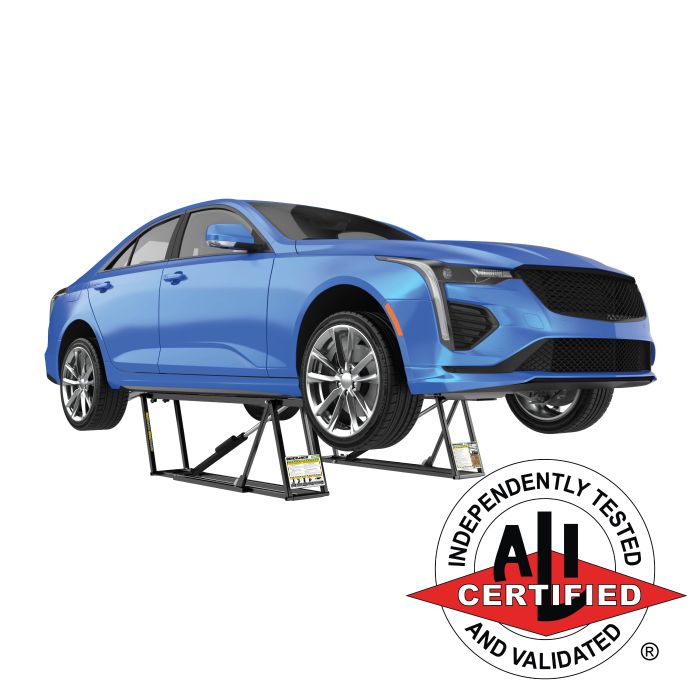
The QuickJack 6000TL is not a single scissor platform. It uses two slim side frames.
That design makes it one of the best portable scissor car lift options. It stores well and leaves the vehicle’s center more open.
Key specifications
- Capacity: 6,000 pounds
- Maximum height: Up to 24 inches
- Lowered height: About 3.5 inches
- Lift-point range: 37 to 60 inches
- Frame weight: About 78 pounds each
- Rise time: About 30 seconds
- Power: 110-volt option
Why we recommend it
The 6000TL works well in a one-car garage. You can move each frame without a forklift.
Its low profile also helps with sports cars. Many fixed mid-rise platforms sit too high.
You get clear space between the frames. That can help with some oil and exhaust jobs.
What owners like
Owners often say it saves time. You do not need to raise each corner with a floor jack.
The 6000TL works well for:
- Tire rotations
- Track-day checks
- Brake repairs
- Oil changes
- Basic suspension work
- Underbody cleaning
Its lock bars support the raised load. The vehicle should rest on these bars during service.
Common complaints
Leaks around fittings appear in some owner reports. Air can also remain in the system during first setup.
The frames are portable, but each weighs about 78 pounds. They may feel awkward in a narrow bay.
You must place both frames with care. A poor position can block a tire or miss a lift point.
Best for
- Sports cars
- Sedans
- Track cars
- Renters
- Small garages
Pros
- Easy to store
- Low profile
- Open center
- No floor anchors
- Faster than a floor jack
Cons
- Limited working height
- Heavy for one person
- Needs careful alignment
- Fittings need regular checks
4. QuickJack 8000TLX: Best Scissor Lift for SUVs and Light Trucks
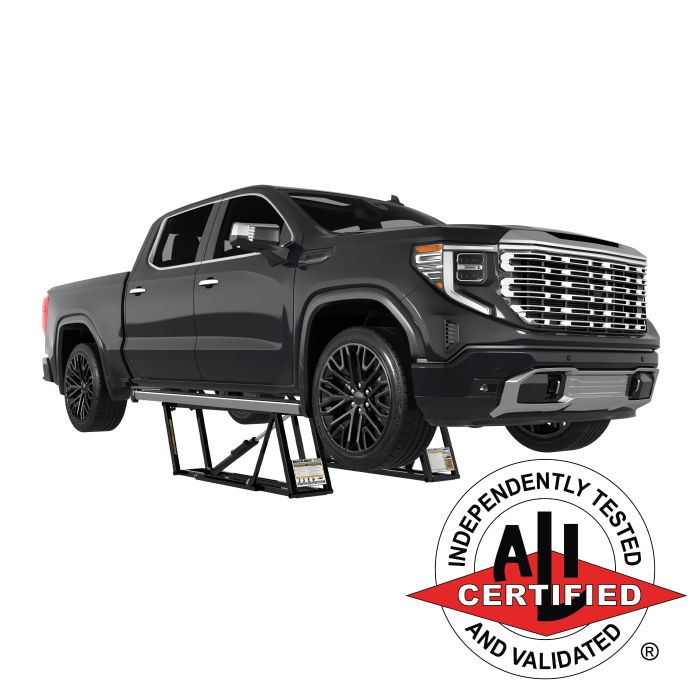
The QuickJack 8000TLX adds both weight capacity and frame length. It targets larger cars, SUVs, and light trucks.
It gives you higher capacity without a fixed shop lift.
Key specifications
- Capacity: 8,000 pounds
- Maximum height: Up to 24.5 inches
- Lowered height: About 3.75 inches
- Lift-point range: 43 to 66 inches
- Frame length: 76 inches
- Frame weight: About 103 pounds each
- Rise time: About 30 seconds
Why we recommend it
The long frames reach lift points on many large vehicles. The 8,000-pound rating gives you more room than a 6,000-pound model.
It is one of the best scissor lift for cars choices when your garage holds several vehicle types. Still, the smallest car may decide whether it fits.
What owners like
Owners value its open-center layout. It also stores in less space than a large mid-rise unit.
Truck adapters can add useful height. Use only adapters approved for your model.
Common complaints
At about 103 pounds per frame, the TLX can strain your back. It may stay on the floor more often than expected.
The 76-inch length can also cause fit issues. Short cars may not have enough room between the tires.
Check both the minimum lift spread and frame length. Do not focus on capacity alone.
Best for
- Long sedans
- Crossovers
- SUVs
- Light trucks within the limit
- Garages with little storage room
Pros
- 8,000-pound capacity
- Long lift-point reach
- Open center
- No fixed posts
- Compact compared with large mid-rise lifts
Cons
- Heavy frames
- Too long for some small cars
- Limited working height
- Needs careful placement
5. Atlas 7K Kwik Bay: Best Open-Center Mid-Rise Scissor Lift

The Atlas 7K Kwik Bay combines mid-rise height with open space below the vehicle.
That makes it a better fit for exhaust and driveline tasks. Most solid mid-rise lifts block that area.
Key specifications
- Capacity: 7,000 pounds
- Maximum height: About 41 inches
- Lowered height: About 4.25 inches
- Design: Open center
- Power: 110 volts
- Air need: 90 to 120 psi [air pressure]
- Lock release: Air powered
- Shipping weight: About 1,441 pounds
Why we recommend it
The open center makes a real difference. You can reach more of the exhaust, driveshaft, and floor pan.
The wide base also gives the lift a planted feel. Its platforms extend for longer vehicles.
This model acts more like fixed shop gear. It is not a lift you will move each Saturday.
What owners like
Owners value its span of use. It can support small sports cars and larger sedans.
The extendable platforms help with different wheelbases. The 41-inch rise also gives you more room than a QuickJack.
Common complaints
The Kwik Bay is very heavy. You need a clear plan for delivery and placement.
It also requires compressed air. Your garage may need a larger electrical circuit as well.
This all adds cost and setup work.
Best for
- A fixed home workshop
- Underbody service
- Exhaust repairs
- Larger cars
- Owners who have compressed air
Pros
- Open center
- 7,000-pound capacity
- Stable layout
- Extendable platforms
- Useful working height
Cons
- Very heavy
- High price
- Needs compressed air
- Hard to relocate
- Delivery can be difficult
6. Titan SL-6600: Best Value for Heavier Vehicles
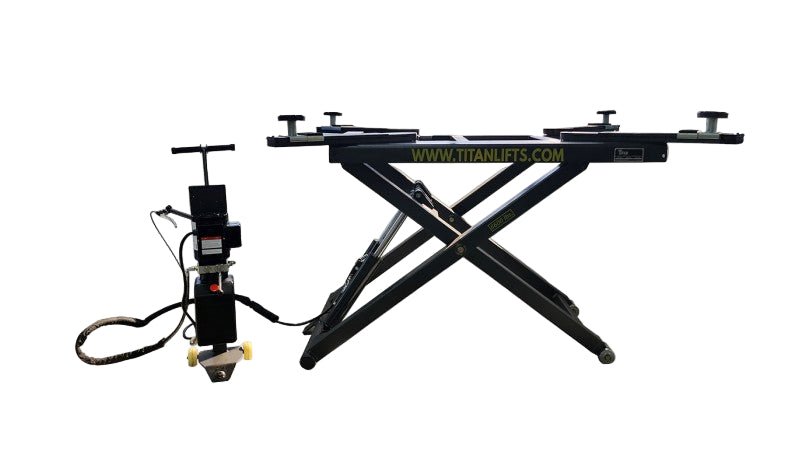
The Titan SL-6600 offers a little more capacity than common 6,000-pound models. That extra 600 pounds may help with a heavy sedan or midsize SUV.
Do not treat that margin as permission to exceed the limit. Check the full vehicle weight first.
Key specifications
- Capacity: 6,600 pounds
- Lift class: Mid-rise
- Power: 120 volts
- Safety: Multiple lock heights
- Adapters: Car and truck options
- Design detail: Three rollers on each leg
Verify the current rise, lowered height, and shipping weight before purchase.
Why we recommend it
The Titan offers a strong feature set for its price. It includes several lock heights and useful adapters.
The roller design can help spread movement across the base. It also uses standard household power.
What owners like
Owners often praise the lift’s capacity and included parts. It can serve a mixed home fleet.
Suitable tasks include:
- Brake service
- Tire changes
- Suspension work
- Fluid service
- Body cleaning
- Light underbody repairs
Common complaints
Unloading is a major concern. The packed lift is too heavy for casual handling.
Low cars may need ramps. Freight charges can also reduce its price advantage.
Check local access to parts before ordering. A good lift still needs hoses, seals, and lock parts over time.
Best for
- Full-size sedans
- Medium SUVs
- Some light trucks
- Buyers near a Titan dealer
- A fixed garage bay
Pros
- 6,600-pound capacity
- Several lock heights
- Truck adapters
- Fair value
- Household power
Cons
- Hard to unload
- Heavy to move
- May need ramps
- Parts access varies by area
7. APlusLift HW-SL6600X: Best Maximum Height for the Money
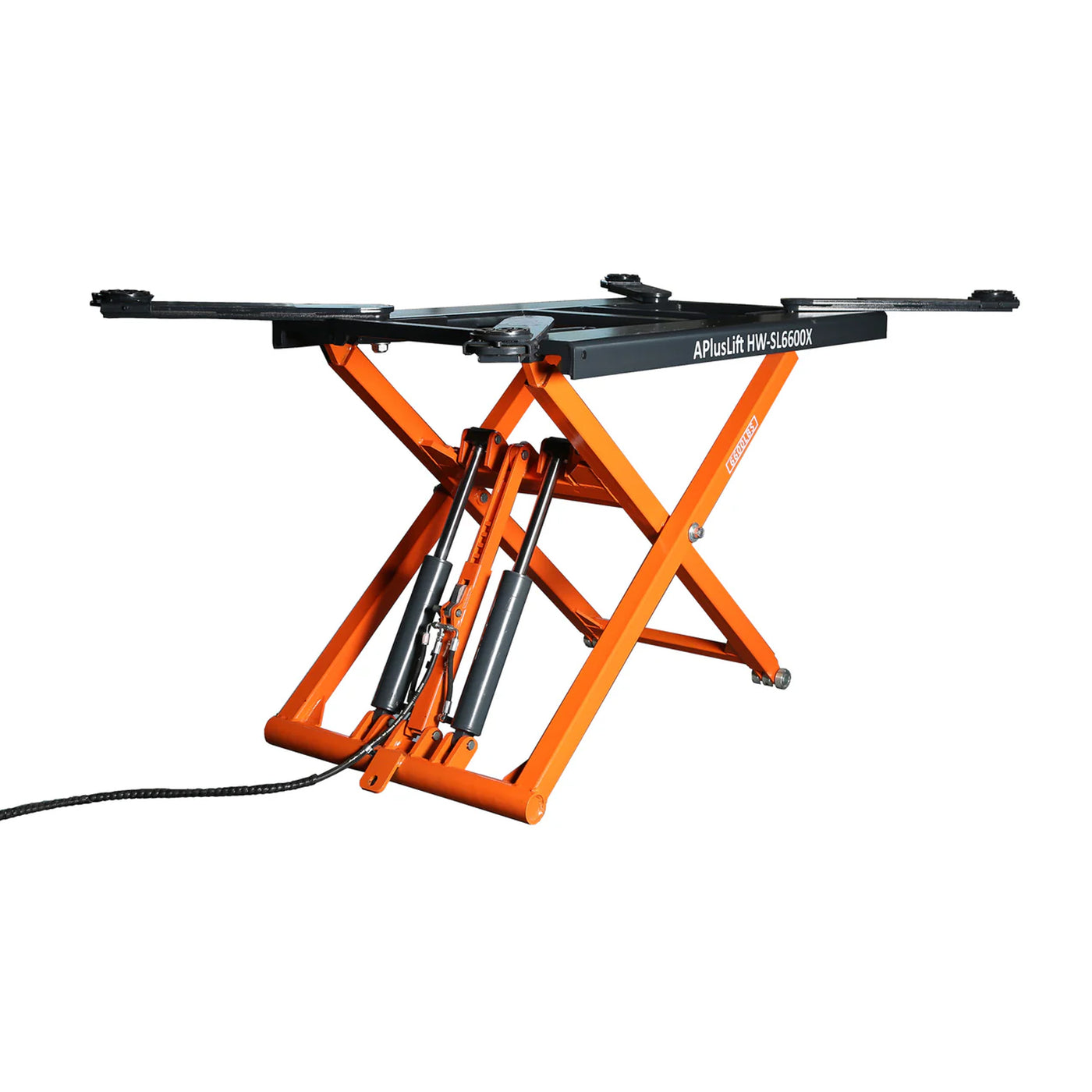
The APlusLift HW-SL6600X focuses on lift height. Its claimed rise reaches up to 55 inches.
That gives you more room than most portable lifting frames. You may sit upright for a wider range of tasks.
Key specifications
- Capacity: 6,600 pounds
- Maximum rise: Up to 55 inches
- Power: 110 volts
- Design: Mid-rise scissor lift
- Warranty: Structural coverage offered
- Best use: Fixed garage bay
Confirm all current dimensions before ordering. Also check the latest warranty terms.
Why we recommend it
The 55-inch rise is its core appeal. It gives you more working room without full-height posts.
The added capacity also suits many crossovers. Its price often falls below premium open-center lifts.
What owners and buyers should know
There is less long-term owner discussion for this exact model. That does not make it a poor lift. It does mean you should do more checks.
Ask about the stock of:
- Hydraulic hoses
- Cylinder seals
- Pump parts
- Lock springs
- Rubber pads
- Wheels and rollers
Also read the return terms. Shipping a heavy lift back can cost a lot.
Best for
- Value-focused home mechanics
- Taller working height
- Sedans and crossovers
- Garages with a fixed service area
Pros
- Up to 55 inches of rise
- 6,600-pound rating
- Household power
- Strong value on paper
Cons
- Less long-term owner history
- Large and heavy
- Service may vary by area
- Current details need close review
8. Atlas 6PL: Best Low-Rise Open-Center Scissor Lift

The Atlas 6PL fills the gap between a QuickJack and mid-rise platform. Its low-rise form suits garages with tight ceiling limits.
The open center also leaves more space beneath your car.
Key specifications
- Capacity: 6,000 pounds
- Design: Open-center low-rise lift
- Power: 110 volts
- Mounting: Freestanding
- Best work: Wheels, brakes, body work, and detailing
Confirm the current lift height, lowered height, and full dimensions.
Why we recommend it
The Atlas 6PL suits work done around the corners of a car. It can also provide access to some center parts.
It avoids tall posts and deep floor work. Atlas also carries a broad range of lift parts and shop gear.
Common limitations
A low-rise lift cannot match the room of a mid-rise unit. You will still work from a creeper for many jobs.
Its price may also overlap with taller lifts. Decide whether the open center matters more than lift height.
Best for
- Brake repairs
- Wheel service
- Detailing
- Body work
- Low-ceiling garages
Pros
- Open-center design
- No tall posts
- 6,000-pound capacity
- Compact form
Cons
- Limited working height
- Heavy for frequent storage
- Costs close to some mid-rise lifts
Real Owner Feedback: What Garage Forums Reveal
Owner discussions tend to repeat the same themes. These points matter more than tiny differences in lift speed.
Owners Rarely Regret Moving Beyond Jack Stands
A proper lift makes setup much faster. You raise the whole car in one process.
That helps with tasks that need all four wheels free. Tire rotations become much less tiring.
Owners also say they work on their cars more often. The setup no longer feels like half the job.
A floor jack still has a place. You may need one for quick work or added support. See this floor jack comparison based on owner feedback if you need a backup tool.
“Portable” Is Often a Misleading Description
Portable can mean several things.
A QuickJack frame can be carried or rolled away. Yet it may weigh 78 to 103 pounds.
A mid-rise lift may have wheels. It can still weigh several hundred pounds.
A large open-center unit may exceed 1,000 pounds. That is shop-movable, not truly portable.
Think about how often you will move the lift. A fixed bay may save you much stress.
Hydraulic Leaks Are a Common Setup Complaint
Small leaks often start near fittings and quick-connect points. Damaged seals can also leak.
Never ignore a wet fitting. Stop and inspect it before raising a vehicle.
During setup:
- Check each hose for shipping damage.
- Use the fluid in the manual.
- Bleed the system as directed.
- Run several empty lift cycles.
- Look for leaks after each cycle.
Do not use random tape or sealant. Hydraulic systems work under high pressure.
Low Cars Often Need Ramps
A sports car may sit lower than the lift frame. Side skirts can also reduce clearance.
Measure the lowest point near each lifting area. Do not rely on the maker’s height figure alone.
Use rated ramps made for the load. Avoid loose boards that can split or slide.
The car must remain stable and level. This helps each pad contact the right spot.
Center Access Determines Which Repairs Are Possible
A solid mid-rise lift works well near the wheels. Its frame may block the middle of the vehicle.
That can complicate:
- Full exhaust removal
- Driveshaft work
- Transmission removal
- Fuel tank removal
- Long underbody repairs
An open-center lift gives you better access. Separate side frames may provide even more room.
Types of Scissor Car Lifts Explained
The term “scissor lift” covers several designs. Each one suits a different type of work.
Portable Frame Lifts
Portable frame lifts use two separate lifting units. QuickJack is the best-known example.
They fit well in tight garages. They also leave the center of the car open.
Choose one if you value:
- Easy storage
- Low vehicle clearance
- Track use
- Open-center access
- No floor anchors
The tradeoff is height. Most lift the car about two feet.
Low-Rise Scissor Lifts
Low-rise lifts focus on wheel and body work. They often raise the car enough for a low creeper.
They suit:
- Tires
- Brakes
- Detailing
- Body repair
- Undercoating
They work well under low ceilings. Yet they do not give you much seated room.
Mid-Rise Scissor Lifts
A mid-rise model brings the car waist-high or close to it. This creates space for a rolling stool.
Common choices include:
- BendPak MD-6XP
- Atlas 6MR
- Titan SL-6600
- APlusLift HW-SL6600X
This is often the best automotive scissor lift style for a home mechanic. It gives you useful height without tall posts.
Open-Center Scissor Lifts
Open-center lifts leave a clear path beneath the vehicle.
This helps with:
- Exhaust systems
- Driveshafts
- Fluid changes
- Underbody checks
- Some transmission work
The Atlas 7K Kwik Bay is a strong example. The Atlas 6PL offers a lower version.
Open-center lifts often cost more. They can also be large and heavy.
Full-Rise Scissor Lifts
Full-rise models lift high enough for standing work. They suit large home shops and trade use.
These lifts may need:
- More ceiling height
- Stronger electrical service
- Floor preparation
- Professional setup
- Permanent placement
They offer better working room. They also cost much more.
Scissor Lift vs QuickJack vs Two-Post Lift
All three designs can raise a car safely. Their space and access needs differ.
Choose a Scissor Lift When
A scissor lift makes sense if:
- Your ceiling is low.
- You want seated working height.
- You do not want permanent posts.
- Most work happens near the wheels.
- You have room for a fixed lift platform.
A mid-rise unit suits frequent home use. It is less ideal for major centerline repairs.
Choose a QuickJack When
A QuickJack-style lift fits you if:
- Storage matters most.
- Your car sits low.
- You may transport the lift.
- You want open center access.
- About two feet of rise is enough.
It is also useful in rented homes. You do not need to drill the floor.
Choose a Two-Post Lift When
A two-post lift gives you the most open access. It works well for large repairs.
Choose one if:
- Your ceiling is high enough.
- Your concrete meets the stated needs.
- You plan major driveline work.
- The lift can stay in place.
- You want standing height.
| Feature | Scissor lift | QuickJack | Two-post lift |
|---|---|---|---|
| Working height | Low to mid | Low | Full |
| Storage | Fair | Good | Poor |
| Center access | Limited to good | Good | Excellent |
| Floor anchors | Often not needed | Not needed | Usually needed |
| Low-ceiling use | Good | Excellent | Limited |
| Major repair access | Fair | Fair | Excellent |
| Setup time | Fast | Moderate | Fast after installation |
How to Choose the Best Scissor Lift for Your Garage
A few measurements can save you from an expensive return.
Check Your Vehicle’s Actual Weight
Find the vehicle’s weight in the manual or door label. Check the exact model and trim.
Add the weight of:
- Fuel
- Cargo
- Toolboxes
- Running boards
- Winches
- Large wheels
- Other fitted gear
Do not choose a lift that barely covers the total. Leave room below the stated limit.
Measure the Approved Lift Points
Find all four approved points in the vehicle manual.
Then measure:
- Front point to rear point
- Left point to right point
- Front point to front tire
- Rear point to rear tire
Compare those figures with the lift’s range.
Never move the pads to an unapproved area just to make them fit.
Measure Vehicle Ground Clearance
Check more than the rocker panel.
Look at:
- Front splitters
- Exhaust pipes
- Plastic undertrays
- Side skirts
- Pinch welds
- Battery covers on electric cars
Measure at each point where the lift must pass. A single low part may create a problem.
Calculate Ceiling Clearance
Use this basic planning formula:
Vehicle height + lift rise + safety space = needed ceiling height
This is only a starting point. Lift geometry can shift the vehicle as it rises.
Also check the garage door. The open door may hang lower than the ceiling.
Decide How Much Working Height You Need
Your repair plans should guide the height.
- 20 to 25 inches: Creeper work and wheel service
- 35 to 45 inches: Seated brake and suspension jobs
- 45 to 55 inches: Better seated underbody work
- Standing height: Major repairs and trade use
More height often means more weight and cost.
Check Power and Air Requirements
Many home lifts use 110-volt power. Some need a dedicated circuit.
Check:
- Voltage
- Circuit size
- Plug type
- Motor draw
- Extension cord rules
- Compressed-air need
Do not assume any garage outlet will work.
Plan Delivery Before Ordering
Ask these questions first:
- Is the lift shipped to your home or a freight depot?
- Does delivery include a liftgate?
- Will the truck enter your driveway?
- How large is the pallet?
- What does the packed lift weigh?
- Do you need a pallet jack?
- Can you rent an engine hoist?
- How many helpers are needed?
Liftgate delivery only puts the pallet on the ground. It does not move it into your garage.
Investigate Parts and Warranty Support
A lift may last for years. Small service parts may not.
Check access to:
- Hoses
- Fittings
- Pump units
- Cylinder seals
- Rubber pads
- Lock springs
- Rollers
- Wheels
- Vehicle adapters
The best scissor lift brand is often the one that still sells parts later.
Can You Use a Scissor Lift in a Standard Residential Garage?
Yes, many scissor lifts work in a normal home garage. You still need to check the ceiling, floor, power, and available space.
Ceiling Height
An 8-foot ceiling can support many low-rise lifts. A mid-rise model may also fit with a low car.
A 9- or 10-foot ceiling gives you more freedom. Yet the vehicle roof remains the key limit.
Measure with the garage door open. Door tracks and motors often sit below the ceiling.
Concrete Floor
Many portable lifts do not need anchors. The concrete must still support the total load.
Inspect the floor for:
- Major cracks
- Deep surface damage
- Hollow spots
- Steep slopes
- Broken edges
- Weak patched areas
Ask a qualified local expert if the slab looks poor. Do not assume an old floor is safe.
Floor Space
Measure more than the lift itself.
You need room for:
- The vehicle
- Both lift sides
- The power cart
- Hydraulic hoses
- Open doors
- Tools
- A safe walking path
Mark the outline with tape. Park the car over it before ordering.
Garage Door Clearance
An open garage door can become the lowest point overhead.
Check:
- Door panels
- Support rails
- Cables
- Torsion hardware
- Door opener
- Hanging lights
A high-lift door setup may create more room. Have door changes done by a trained installer.
Scissor Car Lift Safety Tips
A lift places thousands of pounds above you. Small shortcuts can have severe results.
Apply the same care you would use with a floor jack. This floor jack safety checklist covers the core habits.
Read the Entire Manual Before Assembly
Do not skip straight to the setup pictures.
The manual explains:
- Correct fluid
- Hose routing
- Bleeding steps
- Lock use
- Adapter limits
- Service checks
- Emergency lowering
Keep the manual near the lift.
Test the Lift Before Loading It
Run several full cycles without a car.
Watch for:
- Uneven movement
- Jerking
- Fluid leaks
- Strange sounds
- Slow lock action
- Loose fittings
Then perform the first loaded test without going beneath the vehicle.
Use Only Approved Lifting Points
The vehicle maker chooses lift points for a reason.
Do not lift against:
- Floor pans
- Exhaust pipes
- Plastic covers
- Thin body seams
- Random suspension parts
Use approved pads and adapters. Never stack loose blocks.
Rest the Lift on Its Mechanical Locks
Raise the car past the chosen lock point. Then lower it onto the locks.
Confirm both sides sit evenly. The pump should not hold the full load during repair.
Follow the manual for added support. Some tasks may need approved stands.
Inspect the Lift Regularly
Before each use, check:
- Hoses
- Fittings
- Power cables
- Lock bars
- Pads
- Springs
- Rollers
- Pivot points
- Welds
Replace worn parts before the next lift.
Never Exceed the Rated Capacity
Correct balance matters as much as total weight.
An engine sits toward one end. Removing a heavy part can shift that balance.
Avoid forceful work that rocks the vehicle. Stop if the car moves on its pads.
Common Scissor Lift Problems and How to Avoid Them
Most problems start with fit, setup, or poor upkeep.
The Lift Will Not Fit Under the Car
The listed lowered height may not tell the full story. Your exhaust or undertray may sit lower.
Measure before ordering. Include the rubber pad height in your check.
Use only rated ramp systems. Keep both sides level.
The Lift Cannot Reach the Jack Points
This happens when the frame range does not match the car.
The lift may be:
- Too short
- Too long
- Too wide
- Too narrow
- Limited by its arm travel
Check every vehicle you plan to lift. Do not assume one lift fits your whole fleet.
One Side Rises Faster Than the Other
Stop if one side moves faster.
Possible causes include:
- Air in the lines
- Low fluid
- Poor hose routing
- Uneven load
- A blocked fitting
Follow the manual’s checks. Contact the maker if the issue remains.
Hydraulic Fluid Leaks
A leak can come from a fitting, seal, hose, or cylinder.
Do not raise a vehicle until the leak is fixed. High-pressure fluid can cause injury.
Use only approved replacement parts and fluid.
The Lift Is Too Heavy to Move
Check the full weight before ordering. Do not trust the word “portable.”
If movement matters, consider:
- Separate lifting frames
- A fixed bay
- Smooth floor coating
- Approved moving handles
- Wall storage for frame lifts
Never drag hydraulic hoses across rough concrete.
The Lift Blocks the Repair Area
Think about your likely jobs before choosing a design.
A solid middle works well for:
- Brakes
- Wheels
- Suspension
- Detailing
An open middle better suits:
- Exhausts
- Driveshafts
- Fuel tanks
- Underbody restoration
A two-post lift may suit frequent major repairs.
How Much Should You Spend on a Home Garage Scissor Lift?
The lift price is only part of the total cost.
Entry-Level Portable Lifts
Expect many portable frame systems to fall near the lower end of the market.
They suit:
- Occasional repairs
- Passenger cars
- Small garages
- Owners with limited storage
Extra costs may include:
- Adapters
- Wall hangers
- Fluid
- Shipping
- Low-car ramps
Mid-Range Scissor Lifts
Mid-rise lifts cost more. They also give you far more working room.
They suit:
- Regular DIY service
- Brake and suspension work
- Cars and light SUVs
- A fixed garage bay
Plan for freight and unloading. You may also need a new outlet.
Premium Open-Center and Full-Rise Models
Large open-center lifts sit at the upper end. Their higher price buys access and capacity.
They suit:
- Dedicated workshops
- Heavy home use
- Larger vehicles
- Exhaust and driveline work
Setup costs may include:
- Compressed air
- Electrical work
- Professional placement
- Floor changes
- Freight equipment
Do not choose by price alone. A poor fit has no value.
Our Final Verdict
The BendPak MD-6XP is the best scissor lift for home garage use for most serious DIY owners. It gives you real working height without permanent posts.
Choose the QuickJack 6000TL if floor space matters most. It stores better and fits many low cars.
The QuickJack 8000TLX is more suited to long SUVs and light trucks. Measure carefully before using it with a small car.
Choose the Atlas 7K Kwik Bay if center access matters. It needs far more setup space, though.
Your best choice is not always the strongest lift. It is the lift that reaches all four approved points and fits your garage.
Frequently Asked Questions
What is the best scissor lift for a home garage?
The BendPak MD-6XP is the best overall choice for many home mechanics. It offers a 6,000-pound rating, adjustable arms, and about 47 inches of rise. The QuickJack 6000TL is better if you need compact storage.
Are scissor car lifts safe to work under?
Yes, a well-made lift can be safe when used as directed. Place the pads on approved lift points. Lower the raised lift onto its physical safety locks before going beneath the car.
Do scissor lifts need to be bolted to the floor?
Many portable low-rise and mid-rise lifts do not need anchors. Full-rise and flush-mounted models may need fixed installation. Follow the manual for the exact model.
Can I use a scissor lift on a regular garage floor?
Often, yes. The floor must be solid, level, and in good shape. Large cracks, slopes, and weak patched areas may make the floor unsafe.
What capacity car lift do I need for an SUV?
Many SUVs need a lift rated between 6,000 and 8,000 pounds. Check the exact vehicle weight first. Also measure the lift points, as SUV wheelbases vary.
Is a 6,000-pound lift enough for a car?
A 6,000-pound lift covers many normal cars. Check the exact trim, fitted gear, fuel, and cargo. Leave a safe margin below the maximum rating.
What is the difference between a low-rise and mid-rise scissor lift?
A low-rise lift often raises a car around two feet. It works well for brakes and wheels. A mid-rise lift raises the car much higher and gives you room for seated work.
Can a scissor lift be used for oil changes?
Yes, if its frame does not block the drain plug or filter. Open-center lifts work better for cars with service points near the middle.
Can you remove a transmission with a scissor lift?
Some open-center models may allow it. Solid mid-rise frames often block the transmission area. A two-post lift is usually better for that job.
Can I park over a scissor lift?
Some lifts allow a car to park above the lowered frame. Check ground clearance and the model’s instructions. Never assume the lift can stay under every vehicle.
Are portable scissor lifts really portable?
Some are movable, but few are light. A separate frame may weigh 60 to over 100 pounds. A full mid-rise lift may weigh several hundred pounds.
Is QuickJack better than a scissor lift?
QuickJack is better for storage, transport, and low cars. A mid-rise scissor lift is better for working height. Your repair needs should decide.
What is the best scissor lift brand?
BendPak is a strong overall brand due to its manuals and parts network. QuickJack stands out for portable frames. Atlas offers several low-rise and open-center choices.
How high should a home garage car lift go?
About 24 inches works for creeper access. A 40-inch lift gives you seated room. A 47- to 55-inch mid-rise lift feels better for long repair jobs.