
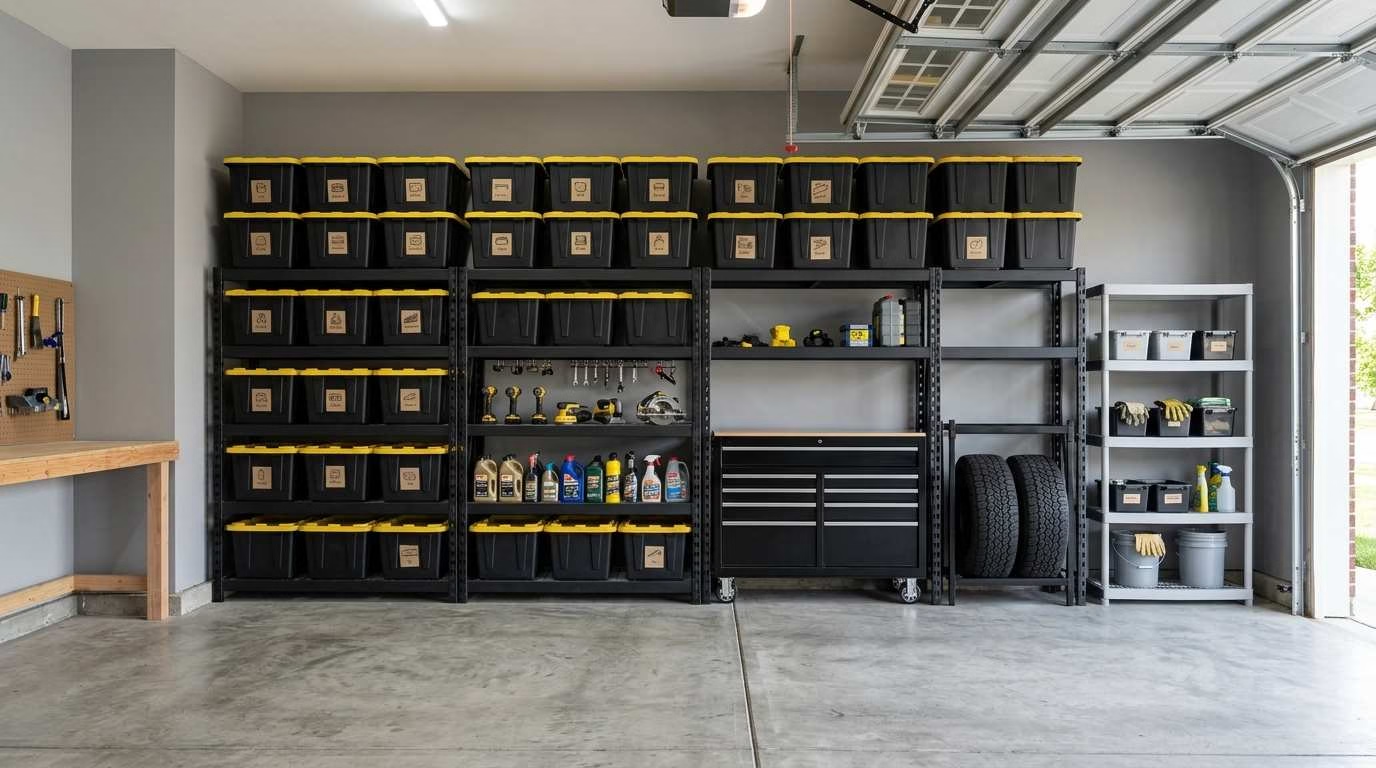
The best heavy-duty shelves for garage storage hold your gear without wobbling, sagging, or wasting floor space. For most garages, the Gladiator GARS774XEG offers the best mix of strength, size, and build quality.
Yet not every garage needs the same rack. You may need a low-cost plastic shelf, a mobile wire unit, or storage above your garage door. This guide covers eight options for those needs.
Our Top Picks

- Best Overall: Gladiator GARS774XEG
- Best Budget: HDX 5-Tier Plastic Shelving
- Best for Maximum Weight Capacity: Husky N2W772472W4B
Each shelf serves a different type of garage. Check the dimensions before choosing one. Also note whether the listed load applies per shelf or to the full unit. You might also like to read: 7 Best Heavy-Duty Metal Shelving Units for Garage Storage
Comparison Table
Some links on this page are Amazon affiliate links, which means I may receive a commission if you make a purchase.
*The height may increase when the wheels are installed.
**This rating applies to a stationary setup. The safe limit drops on wheels.
Always confirm the current specifications before loading a rack. Brands may revise parts, ratings, and model numbers.
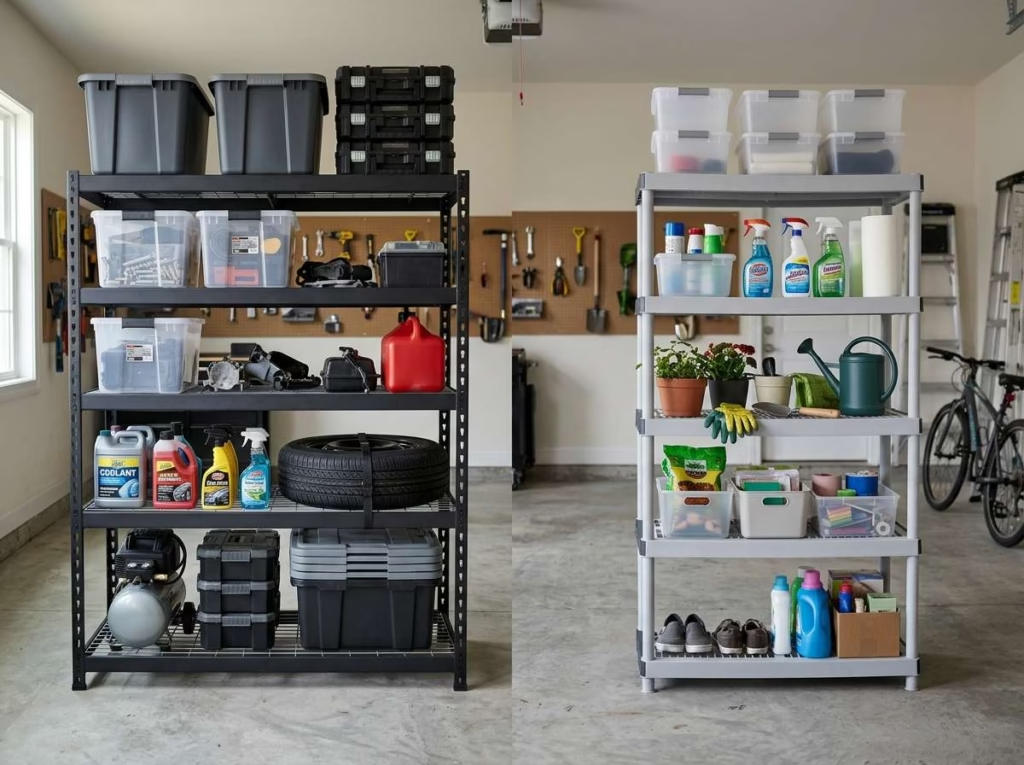
How We Chose
This list focuses on more than high load claims. A useful heavy duty shelving unit must also fit normal garage items.
The main factors included:
- Construction: Steel gauge, deck support, and connector design
- Capacity: Per-shelf and total load limits
- Size: Space for tools, tires, and storage bins
- Stability: Resistance to sway and tipping
- Shelf design: Wire, plastic, or solid boards
- Adjustment: Options for changing shelf height
- Moisture resistance: Protection from rust, swelling, and spills
- Assembly: Tool needs, setup time, and mounting requirements
- Warranty: Coverage for parts and structure
- Owner feedback: Common praise and repeated complaints
Forum feedback also helped reveal daily issues. These included board sag, weak casters, bent parts, and hard assembly.
No residential rack should hold an engine by default. Dense loads need special care. Commercial pallet racks may work better for engines and transmissions.
Product Reviews
1. Best Overall: Gladiator GARS774XEG
The Gladiator GARS774XEG is a wide heavy duty shelving rack for serious garage storage. It has four wire shelves and a welded steel frame.
Its 24-inch depth fits large bins without taking over your garage. The 77-inch width also gives you broad storage space.
Quick Verdict
Choose the Gladiator if you want strength without an industrial warehouse look. It feels more refined than many racks in this class.
Its wire decks also handle damp garage air better than exposed wood boards.
Best for
This rack suits tools, automotive supplies, tires, paint cans, and large bins. It also works well along a full garage wall.
Key Specs
- Dimensions: 77 inches wide, 24 inches deep, and 72 inches tall
- Number of shelves: Four
- Shelf material: Steel wire
- Capacity per shelf: 2,000 pounds
- Total capacity: 8,000 pounds
- Shelf adjustment: Yes
- Feet: Fixed floor supports
- Assembly: Tool-free snap-and-lock design
The load must remain even across each shelf. One dense item can place too much force on a small area.
Pros
- Strong welded steel frame
- Wide shelves hold bulky gear
- Wire decks resist moisture damage
- Shelf heights can be changed
- Tool-free main assembly
- Clean, finished appearance
Cons
- Large footprint
- Hard to move after loading
- Wire gaps can catch small items
- Assembly is easier with two people
- May feel too deep in a narrow garage
What Owners Say
Owners often praise the finish and steady frame. The center supports also help the wire shelves feel firm.
Some users find the unit heavy during setup. Others add shelf liners for small bottles and loose parts.
Why It’s Worth Buying
The Gladiator offers a good middle ground. You get high capacity, useful depth, and moisture-safe decks.
It is a practical heavy duty storage shelving unit for most two-car garages. You can use bins on top and tools below.
Who Should Skip It
Skip this rack if your parking space is tight. An 18-inch-deep shelf may leave more room beside your car.
It is also excessive for light boxes and holiday décor. A lower-cost rack can handle those items.
2. Best Budget: HDX 5-Tier Plastic Shelving
The HDX is a simple plastic heavy duty shelving unit for moderate loads. It will not match a large steel rack for raw strength.
Still, it solves several common garage problems. It does not rust, and its raised feet help during small floor spills.
Quick Verdict
Choose the HDX for bins, household goods, and car care supplies. Its low weight makes it easy to set up and move.
Do not use it for engines, heavy machine parts, or dense toolboxes.
Best for
This shelf works best in damp garages and utility areas. It can hold cleaning products, garden supplies, and seasonal items.
Key Specs
- Dimensions: 36 inches wide, 24 inches deep, and 72 inches tall
- Number of shelves: Five
- Shelf material: Ventilated plastic
- Capacity per shelf: 200 pounds
- Total capacity: 1,000 pounds
- Shelf adjustment: No
- Feet: Raised plastic feet
- Assembly: Tool-free
Pros
- Will not rust
- Easy to wipe clean
- Light enough to move
- Deep shelves fit many storage bins
- Raised feet limit contact with floor water
- No tools needed for setup
Cons
- Fixed shelf spacing
- Lower capacity than steel racks
- Can flex under dense loads
- Not made for heavy shop equipment
- Plastic may weaken near high heat
What Owners Say
Users tend to like plastic racks for damp rooms. They also value the quick assembly and easy cleanup.
The main complaint is limited adjustment. Tall bins may not fit between the fixed shelves.
Why It’s Worth Buying
Not every garage needs heavy duty metal storage shelving. Plastic makes sense when rust and spills are your main concerns.
The HDX also lets you sort light items across five levels. That saves floor space without adding a huge steel frame.
Who Should Skip It
Skip this unit if you store heavy power tools or metal parts. You should also avoid loading one shelf with a dense item.
A steel rack offers a better safety margin for workshop use.
3. Best for Maximum Weight Capacity: Husky N2W772472W4B
The Husky N2W772472W4B is a large heavy duty steel garage shelving unit. Its four wire shelves carry a high published load.
It has almost the same footprint as the Gladiator. However, its listed capacity is higher.
Check PriceQuick Verdict
Choose this Husky if weight capacity leads your list. It is built for dense tools, large bins, and bulky garage gear.
Pay close attention to the model number. Husky sells several racks with similar names and different designs.
Best for
This rack works well for power tools, automotive parts, compressors, and bulk supplies. It can also support many large storage bins.
Key Specs
- Dimensions: 77 inches wide, 24 inches deep, and 72 inches tall
- Number of shelves: Four
- Shelf material: Steel wire
- Capacity per shelf: 2,500 pounds
- Total capacity: 10,000 pounds
- Shelf adjustment: Yes
- Feet: Fixed floor supports
- Assembly: Boltless frame
Pros
- Very high published capacity
- Wide and deep shelves
- Wire decks resist spills
- Adjustable shelf positions
- Boltless main assembly
- Lifetime warranty on listed models
Cons
- Large and heavy
- Takes up much floor space
- Industrial appearance
- Small items need shelf liners
- Similar Husky models can cause confusion
What Owners Say
Many owners like the open 24-inch shelf depth. It provides space for large totes and broad pieces of equipment.
Recent discussions also stress model differences. Check the connectors and supports before you leave the store.
Why It’s Worth Buying
The Husky gives you room for future storage growth. Its capacity also leaves a wider safety margin for dense garage gear.
This is a strong choice for garage storage heavy duty needs. Yet you should still place the densest items near the bottom.
Who Should Skip It
Skip it if you store light household items. You would pay for strength and space that you may never use.
It may also block walkways in a small one-car garage.
4. Best for Workshops: DeWalt DXST10000
The DeWalt DXST10000 suits a garage that doubles as a work area. It pairs a steel frame with flat shelf decks.
Those solid surfaces support small tools better than open wire. Screws, drill bits, and narrow bottles stay upright.
Check PriceQuick Verdict
Choose the DeWalt if flat decks matter more than moisture resistance. It is a useful base for a workshop storage system.
Accessories can add pegboard storage and floor mounting.
Best for
This rack fits power tools, cases, chargers, boxed parts, and shop supplies. It works well beside a bench or tool chest.
Key Specs
- Dimensions: About 77 inches wide, 24 inches deep, and 72 inches tall
- Number of shelves: Four
- Shelf material: Coated composite boards
- Frame material: Steel
- Capacity per shelf: 2,500 pounds
- Total capacity: 10,000 pounds
- Shelf adjustment: Yes
- Accessory options: Pegboard panels and floor mounts
Pros
- Flat decks support small items
- High listed capacity
- Wide workshop-friendly design
- Adjustable shelf heights
- Optional side and rear storage
- Floor mounts can improve stability
Cons
- Composite boards dislike standing water
- Boards may sag if poorly supported
- Heavy parts make setup harder
- Large footprint
- Accessories may add setup work
What Owners Say
Flat shelves get praise from people who store hand tools and small cases. Nothing drops through a wire grid.
The key concern is moisture. Wet boards can swell over time, even with a coated surface.
Why It’s Worth Buying
The DeWalt combines a heavy frame with practical work surfaces. You can place tools anywhere without adding shelf liners.
It also works well as part of a larger tool area. Keep enough clearance around your garage door system. Our Chamberlain vs. Genie vs. LiftMaster comparison can help if your storage plan includes opener changes.
Who Should Skip It
Skip the DeWalt if water often reaches your shelves. Steel wire decks handle wet gear with less risk.
You may also prefer a smaller rack if you only own a few power tools.
5. Best Mobile Shelving: Seville Classics UltraDurable WEB562
The Seville Classics UltraDurable has five steel wire shelves. It includes both casters and leveling feet.
This gives you two setup choices. You can keep it fixed or move it around your garage.
Check PriceQuick Verdict
Choose the Seville if your garage layout changes often. It suits project work, cleaning, and shared storage spaces.
The capacity drops a lot when you use the wheels.
Best for
This unit works well for light tools, detailing supplies, paint, and project bins. It can move away from a wall when needed.
Key Specs
- Shelf size: 48 inches wide and 18 inches deep
- Number of shelves: Five
- Shelf material: Steel wire
- Capacity per shelf: 800 pounds on leveling feet
- Total stationary capacity: 4,000 pounds
- Total mobile capacity: 500 pounds
- Shelf adjustment: One-inch steps
- Wheels: Four casters, including two locking wheels
Pros
- Easy to move when lightly loaded
- Five adjustable shelves
- Wire decks allow air flow
- Leveling feet are included
- Tool-free shelf assembly
- Smaller footprint than wide industrial racks
Cons
- Much lower capacity on wheels
- Only 18 inches deep
- Wire shelves need liners for small parts
- A loaded rack can be hard to roll
- Wheels may catch in floor cracks
What Owners Say
Owners often like the firm frame and simple setup. The shelf spacing also offers more control than fixed plastic racks.
A common mistake is using the stationary capacity on wheels. The wheel rating applies to the whole unit.
Why It’s Worth Buying
A mobile rack gives you more ways to use one garage. You can roll supplies near your car, then return the unit to the wall.
That also helps if a freezer shares your storage area. Leave room for air flow around it. See our guide to the best garage freezer options for more placement tips.
Who Should Skip It
Skip this rack if you rarely change your layout. A fixed rack gives you more capacity with fewer weak points.
Avoid it for heavy engines, anvils, or large machine parts.
6. Best for Large Storage Bins: Trinity EcoStorage 5-Tier
The Trinity EcoStorage rack uses five wide wire shelves. Each shelf measures 48 inches by 24 inches.
That extra depth helps with large totes. Many slim wire racks are only 14 or 18 inches deep.
Check PriceQuick Verdict
Choose the Trinity if large bins make up most of your storage. Its five tiers give you more sorting space than four-shelf racks.
It can stand on levelers or roll on casters.
Best for
This rack suits large totes, car care products, coolers, camping gear, and household stock. It also works in a pantry or utility area.
Key Specs
- Dimensions: 48 inches wide, 24 inches deep, and 72 inches tall
- Number of shelves: Five
- Shelf material: Steel wire
- Total stationary capacity: 4,000 pounds
- Total mobile capacity: 800 pounds
- Shelf adjustment: One-inch steps
- Feet: Leveling feet included
- Wheels: Four casters included
Pros
- Full 24-inch shelf depth
- Five adjustable shelves
- Stationary and mobile setups
- Tool-free shelf placement
- Open wire helps wet gear dry
- Good size for large totes
Cons
- Mobile capacity is much lower
- Wire grid can mark soft bins
- Small items need liners
- Two people may help during setup
- Requires care on sloped floors
What Owners Say
Users like the deep shelf space and easy cleaning. The unit also feels less bulky than a 77-inch rack.
Some owners find the posts awkward during assembly. Building the unit near its final spot helps.
Why It’s Worth Buying
Large bins waste space on shallow racks. Their edges hang over, and lids may become hard to open.
The Trinity gives each bin a broad base. Its 5 tier heavy duty shelving design also separates gear by season or task.
Who Should Skip It
Skip this rack if you store mainly loose hand tools. Solid decks or liners will serve those items better.
You may also need a wider rack for tires and long equipment cases.
7. Best Wall-Mounted Shelving: Fleximounts WR26MB Pro
The Fleximounts WR26MB Pro keeps your garage floor open. It uses two long shelves fixed to a framed wall.
Each shelf measures about two feet deep and six feet wide.
Check PriceQuick Verdict
Choose this system if floor space matters most. It can sit above a mower, air compressor, or workbench.
Your wall structure and mounting work set the safe limit.
Best for
These heavy duty wall shelves for garage storage suit bins, tool cases, and seasonal gear. They also work above fixed appliances.
Key Specs
- Shelf count: Two
- Shelf size: About 2 x 6 feet each
- Frame material: Steel
- Capacity per shelf: Up to 800 pounds
- Total rated capacity: Up to 1,600 pounds
- Wall support: Wood studs or suitable concrete
- Assembly: Spring-pin frame system
- Floor contact: None
Pros
- Leaves the garage floor clear
- Wide shelves hold several bins
- No legs to block cleaning
- Works above other equipment
- Steel frame resists normal garage wear
- Several common stud spacings are supported
Cons
- Installation takes careful measuring
- Poor mounting can cause failure
- Not suitable for drywall alone
- Shelf height is harder to change
- Access may require a step ladder
What Owners Say
Wall shelves get high marks in small garages. They allow tools and machines to stay on the floor below.
Most problems come from poor mounting. A strong shelf cannot fix a weak wall connection.
Why It’s Worth Buying
Wall mounted heavy duty shelving uses space that often sits empty. It can free a full strip of floor along one wall.
Check your garage door track before mounting the shelves. A quieter opener may also reduce shake near high storage. Our guide to the quietest belt-drive garage door openers explains the main options.
Who Should Skip It
Skip wall shelves if you rent or cannot confirm the stud layout. Freestanding racks require fewer changes to the building.
They are also less useful if you need regular access to heavy items.
8. Best Overhead Garage Storage: SafeRacks 4 x 8 Overhead Rack
The SafeRacks system adds storage near the ceiling. Its large platform suits gear you use only a few times each year.
A four-by-eight-foot platform adds 32 square feet of storage. It does not take up floor space.
Check PriceQuick Verdict
Choose SafeRacks for light, bulky items that stay unused for months. Keep dense tools and liquids closer to the floor.
Careful placement matters. The rack must clear the open door, rails, opener, lights, and vehicles.
Best for
This rack suits holiday décor, camping gear, empty coolers, and light sports gear. Sealed bins help keep dust off those items.
Key Specs
- Platform size: 4 x 8 feet
- Mounting type: Ceiling-mounted
- Deck material: Steel wire
- Drop range: Varies by model
- Capacity: Varies by model and installation
- Required support: Approved wood ceiling joists
- Floor space used: None
Pros
- Uses wasted ceiling space
- Holds many large bins
- Keeps the floor open
- Wire platform allows clear views
- Drop options fit different ceilings
- Useful above some garage doors
Cons
- Harder to install than floor racks
- Safe access may require a ladder
- Poor mounting creates major risk
- Not ideal for items used often
- Must clear doors and opener parts
What Owners Say
Owners like the amount of floor space they regain. Many place the platform near or above the garage door.
Planning causes the most trouble. Tracks, lights, openers, and ceiling beams can limit the rack position.
Why It’s Worth Buying
A ceiling rack makes sense when wall and floor space are full. It can hold large items that weigh little for their size.
Garage heat also collects near the ceiling. Check temperature limits before storing paint, batteries, or food. Our garage heat calculator can help you plan heating needs.
Who Should Skip It
Skip overhead storage if you cannot confirm the ceiling structure. Do not guess where the joists run.
It is also a poor match for heavy items that need frequent access.
Garage Shelving Buying Guide
The right rack must fit your space, load, and garage conditions. A high rating alone does not make a shelf safe.
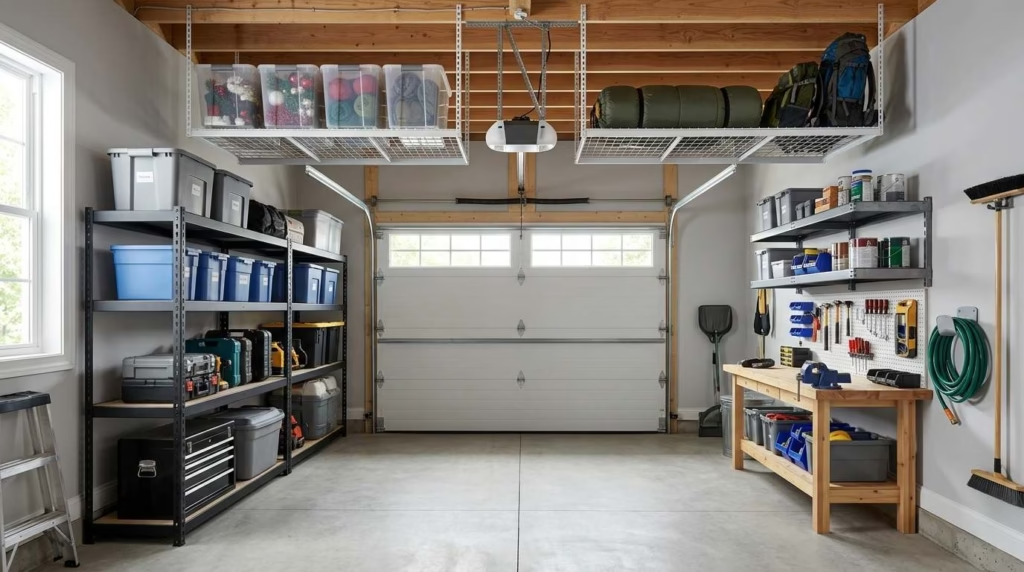
Use the following points to compare heavy duty shelves for storage.
Metal vs. Plastic Garage Shelves
Metal shelves hold more weight in most cases. They also offer more sizes, deck types, and shelf positions.
Steel works well for:
- Power tools
- Automotive parts
- Paint cans
- Tires
- Bulk supplies
- Large storage totes
However, bare steel can rust. Look for powder coating or a plated finish. Treat scratches before rust spreads.
Plastic heavy duty shelves handle damp areas better. They will not rust or swell after a spill.
Plastic works well for:
- Cleaning products
- Car wash supplies
- Garden tools
- Holiday décor
- Light storage bins
- Pool supplies
Plastic has lower heat resistance. It can also bend under dense loads. Keep it away from heaters and hot exhaust.
How Much Weight Capacity Do You Need?
Start by weighing your heaviest group of items. Do not choose a rack based on a rough guess.
Here is a simple guide:
- Up to 100 pounds per shelf: Light boxes and household goods
- 100 to 300 pounds: Full bins and garden supplies
- 300 to 800 pounds: Power tools and dense shop supplies
- 800 pounds or more: Heavy equipment and automotive parts
You rarely need the highest rating. A unit with 800-pound shelves may cover most home garages.
Keep these rating rules in mind:
- Load each shelf evenly.
- Do not place one dense item at the center.
- Add the weight of bins and shelf liners.
- Use the lower rating when wheels are fitted.
- Never exceed the full unit limit.
- Replace bent beams and damaged clips.
A 2,500-pound rating does not mean every spot holds that load. The weight must spread across the deck and supports.
Freestanding vs. Wall-Mounted vs. Overhead Shelves
Freestanding shelves provide the easiest setup. You can move them and change the shelf heights.
They suit most garages because they need little wall work. Yet they use floor space and can tip if poorly loaded.
Wall-mounted shelves free the floor. They work well above benches, mowers, and fixed equipment.
Their strength depends on the wall. Fasteners must reach studs or approved concrete anchors.
Overhead racks offer the most floor savings. They work best for light seasonal gear.
Choose by access needs:
- Daily access: Freestanding rack
- Weekly access: Wall-mounted shelf
- Seasonal access: Overhead rack
Do not place heavy daily-use tools above your head. Lower storage is safer and faster.
Adjustable vs. Fixed Shelves
Adjustable heavy duty shelving lets you change the gap between levels. That helps when you own bins of several sizes.
It also allows space for tall equipment. You can move one shelf and keep the rest close together.
Fixed shelves cost less and contain fewer loose parts. They work well if all your bins share one size.
Before choosing, measure your tallest item. Add space for your hands and the bin lid.
A tight fit looks neat but feels awkward. Leave at least a few inches above each bin.
Choosing the Right Shelf Depth and Width
Shelf depth affects both storage and parking space. Measure the garage with your car inside.
Common depths include:
- 14 inches: Small boxes and pantry goods
- 18 inches: Tools and medium bins
- 24 inches: Large totes and bulky equipment
- 30 inches or more: Industrial storage
A 24-inch rack fits many large bins. Yet it can narrow the path beside a parked car.
Width matters too. Wide racks hold more, but long beams face more stress.
Check these areas before choosing a size:
- Car door swing
- Walking paths
- Garage door rails
- Wall outlets
- Windows and vents
- Water heaters
- Freezers and appliances
- Workbench access
Do not block air around a garage freezer. Leave the clearance shown in its manual.
Wire Decks vs. Solid Shelf Boards
Wire decks resist water and allow air to flow. They also make dust easier to see and remove.
Their drawbacks include gaps and an uneven surface. Small bottles and parts may tip.
You can add liners made from:
- Thin plywood
- Plastic panels
- Rubber sheets
- Clear shelf liners
Solid boards create a flat work surface. They suit tool cases, jars, and loose supplies.
Composite boards can swell after water exposure. Plywood tends to handle damp air better, though it still needs sealing.
Avoid untreated boards near wet floors. Check them often for sag, cracks, and soft spots.
Rust and Moisture Resistance
Garages face water, road salt, and sudden temperature shifts. Those conditions can damage steel.
Look for:
- Powder-coated frames
- Plated wire shelves
- Sealed board edges
- Plastic feet
- Raised bottom shelves
- Replaceable deck panels
Wipe road salt off steel racks. Salt can speed up rust, even on coated metal.
Treat deep scratches with matching paint. Small chips can grow into larger rust spots.
Keep cardboard away from damp floors. Use sealed bins for items that must stay dry.
Wheels vs. Leveling Feet
Wheels add freedom, but they lower safe capacity. The caster stems and brackets carry the full load.
A loaded rack also gains momentum. It may be hard to stop on a sloped garage floor.
Use wheels when:
- You clean behind the rack
- Your project area changes
- The stored items are light
- The floor is smooth and level
Use leveling feet when:
- You store dense tools
- The floor has a slight slope
- The rack stays in one spot
- Maximum capacity matters
Locking wheels help, but they do not turn a cart into a fixed rack. Anchor it if the maker calls for wall support.
Assembly and Anchoring Requirements
Many steel racks use boltless tabs. The beams lock into slots on the upright posts.
A rubber mallet often helps seat each beam. Do not use a steel hammer on painted parts.
Follow these setup steps:
- Check each beam for shipping damage.
- Build the rack on a level surface.
- Seat every connector fully.
- Confirm the frame is square.
- Install all braces and safety pins.
- Add the decks.
- Level the feet.
- Anchor the unit if required.
- Load the bottom shelf first.
Do not skip braces because the frame feels firm. Those parts limit sway under load.
For wall shelves, identify the wall type first. Drywall alone cannot support a high load.
For overhead racks, locate the joists with care. If the structure is unclear, use a trained installer.
Safety Tips for Heavy Garage Storage
A well-built rack can still become unsafe. Poor loading causes many storage problems.
Use these safety rules:
- Put the heaviest items on the bottom.
- Keep liquids below eye level.
- Spread weight across each shelf.
- Do not climb on the rack.
- Keep children away from loaded shelves.
- Anchor tall racks where advised.
- Lock casters before loading.
- Replace damaged parts.
- Check fasteners every few months.
- Leave space around heaters and outlets.
Keep batteries away from extreme heat. Store fuel and chemicals in approved areas.
Label closed bins by weight and contents. That helps you avoid lifting a heavy bin from above your head.
Frequently Asked Questions
What Type of Shelving Is Best for a Garage?
Steel shelving works best for most heavy loads. It supports tools, bins, and automotive gear.
Plastic works better in wet areas with lighter items. Wall and ceiling racks help when floor space is scarce.
How Deep Should Garage Shelves Be?
A 24-inch depth fits many large storage bins. It also gives broad support for bulky gear.
Choose 18 inches if parking space feels tight. Measure with your car and doors in place.
How Much Weight Should Garage Shelves Hold?
Most garages do well with 300 to 800 pounds per shelf. Light household storage needs much less.
Choose extra capacity for dense tools and car parts. Always spread the weight across the shelf.
Is Metal or Plastic Shelving Better for a Damp Garage?
Plastic handles water and damp air better. It will not rust.
Coated metal can also work well. Fix deep scratches and keep water from sitting on the frame.
Do Freestanding Garage Shelves Need to Be Anchored?
Some do, especially tall or narrow units. Anchoring also helps in homes with children or pets.
Follow the product manual. Never assume a heavy rack cannot tip.
Are Advertised Shelf Weight Capacities Reliable?
They are useful when you follow the test conditions. Most ratings need an even load and correct assembly.
Wheels, missing braces, bent parts, or soft floors can lower safe capacity.
Can Heavy Tools Be Stored on Wire Shelves?
Yes, if the shelf has enough capacity. Set small feet on a firm liner or broad board.
This spreads the force and stops tools from tipping through the grid.
Is Overhead Garage Storage Safe?
It can be safe with correct mounting and sensible loads. The rack must attach to approved ceiling supports.
Keep dense and often-used items on lower shelves. Check the mounts from time to time.
What Items Should Go on the Bottom Shelf?
Store your heaviest and least stable items at the bottom. Good examples include large toolboxes, fluids, and dense bins.
This keeps the rack’s center of weight low. It also reduces lifting risk.
How Can You Prevent Metal Garage Shelves From Rusting?
Keep the coating clean and repair scratches. Remove road salt and spilled chemicals quickly.
You can also use a dehumidifier in a damp garage. Leave space for air to move around the rack.
Final Verdict
The Gladiator GARS774XEG is the best all-around choice for most garages. It combines useful depth, high capacity, and steel wire decks.
The HDX plastic unit suits light storage and damp spaces. The Husky offers more listed capacity for dense garage gear.
Your best heavy duty shelves for garage storage should match your real load. Measure the wall, check your bins, and plan safe access. A smaller rack that fits well is often better than a huge unit that blocks your car.