
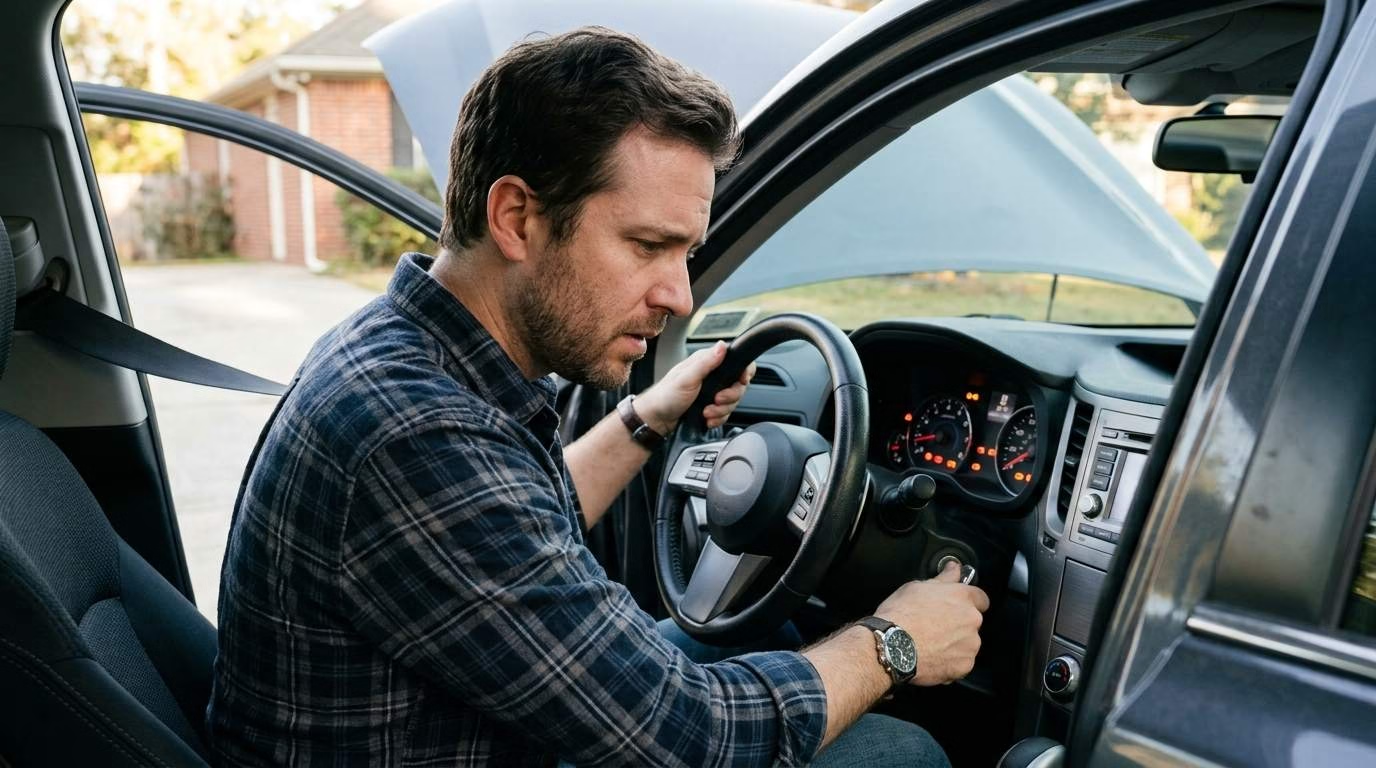
You turn the key or press the start button. The dash lights glow. The radio may even play. Yet the engine does not turn.
This can make the battery seem fine. But working lights do not prove that. Starting the engine needs far more power than running a few lights.
Quick Answer
If your car won’t crank but lights come on, start with the battery and its connections. A weak battery may power the lights but fail to run the starter.
Rapid clicks often point to low battery power. One hard click may point to the starter. No sound can mean a bad switch, fuse, relay, or security fault.
First, Confirm That the Engine Is Not Cranking
Before you test anything, make sure you have a true no-crank issue.
“Cranking” means the starter is turning the engine. A healthy engine often makes a steady “rrr-rrr-rrr” sound before it starts.
No-Crank vs. Crank-No-Start
These two problems may sound alike, but they have different causes.
- No-crank: The engine does not turn.
- Crank-no-start: The engine turns but does not run.
- Slow crank: The engine turns, but much slower than normal.
If the engine turns at its usual speed, your starter system may be working. You may have a fuel, spark, air, or sensor issue instead.
This guide focuses on a car that has power but will not turn over.
Listen to What Your Car Does
The sound you hear can narrow the search fast. Turn off the radio and climate controls. Then try to start the car once.
Avoid making many attempts in a row. This can heat the starter and its wires.
Rapid Clicking
A fast series of clicks often means low or unstable power.
Common causes include:
- A weak battery
- A discharged battery
- Loose battery clamps
- Corroded battery posts
- A damaged battery cable
- A poor ground connection
The lights may stay on because they use little power. The starter needs a much stronger burst.
One Loud Click
One firm click often means the starter solenoid moved, but the starter did not spin.
Possible causes include:
- A failed starter motor
- A bad starter solenoid
- A weak battery
- A loose main battery cable
- A poor engine ground
- A seized engine
Do not replace the starter based on the sound alone. A poor cable connection can cause the same symptom.
Complete Silence
Silence often means the starter never received a start signal.
Check for:
- A bad starter fuse
- A faulty starter relay
- A worn ignition switch
- A failed start button
- A Park or Neutral switch fault
- A clutch pedal switch fault
- A key or security system problem
- A broken control wire
Watch the dash as you turn the key. A flashing key or security light offers a useful clue.
Grinding or Whirring
Grinding may mean the starter gear is not engaging as it should. It may also point to worn teeth on the flywheel.
A free-spinning whir can mean the starter spins without turning the engine. Stop trying to start the car if you hear either sound.
Smoke or a Burning Smell
Stop at once if you see smoke or smell hot plastic.
Repeated start attempts can overheat:
- The starter
- Battery cables
- Cable ends
- Relays
- Damaged wiring
Turn the ignition off. Keep sparks and flames away from the battery. Arrange for help if a cable feels hot or begins to smoke.
Cause 1: The Battery Is Too Weak
A weak battery is one of the most common causes of this problem.
Your headlights do not need much current. The starter motor does. That is why your lights can work while the engine remains still.
Signs of a Weak Battery
Look for these clues:
- Rapid clicking
- Slow power windows
- Dim interior lights
- Headlights that dim during a start attempt
- A dash that resets or flickers
- A clock that loses its setting
- Starting trouble after the car sits
- A car that starts with a jump
A battery may also fail with little warning. Heat, cold, age, and short trips can all reduce its strength.
Test the Battery
If you own a multimeter, test the battery after the car has been off for several hours.
A healthy, fully charged battery often reads near 12.6 volts at rest. A reading near or below 12.2 volts means the battery has a low charge. Temperature and battery type can affect those readings.
A simple voltage check does not tell the whole story. A battery can show fair voltage and still fail under load. A load test gives a better answer.
Try a Safe Jump-Start
Follow the steps in your owner’s manual. Some hybrid and newer cars have special jump points.
If the engine cranks after a proper jump, check:
- Battery charge
- Battery age
- Cable condition
- Alternator output
- Power drain while parked
If your car battery keeps dying overnight, the battery may not be the root cause. A light, module, alarm, or damaged wire may keep drawing power after you park.
Fix a Weak Battery
Your next step depends on the test result:
- Recharge the battery if it is only low.
- Clean and tighten its connections.
- Test the charging system after the engine starts.
- Replace the battery if it fails a load test.
- Check for a power drain if it keeps going flat.
Do not assume the alternator caused the first no-crank event. Test before replacing parts.
Cause 2: The Battery Terminals Are Loose or Corroded
The battery may hold a full charge but still fail to power the starter. The current must pass through clean, tight connections.
Even a small amount of resistance can block the high current the starter needs.
Signs of a Bad Terminal Connection
Check for:
- White, blue, or green buildup
- Loose terminal clamps
- Cracked cable ends
- Power that cuts in and out
- Clicking that changes when a cable moves
- Headlights that flicker
- Heat near a battery terminal
You should not be able to twist a battery clamp by hand.
How to Inspect the Terminals
Turn off the ignition and all accessories. Keep the key fob away from the car.
Wear gloves and eye protection. Then inspect both battery posts and cable ends.
Look for:
- Loose clamps
- Cracks in the metal
- Swollen cable insulation
- Frayed wire strands
- Heavy corrosion
- Burn marks
Do not touch both battery posts with the same metal tool.
How to Fix the Connection
You may be able to fix light corrosion with battery terminal cleaner and a suitable brush.
If you disconnect the battery, follow the owner’s manual. Some cars may lose saved settings. Others may need a battery reset or registration process.
After cleaning:
- Reconnect the cables in the correct order.
- Make sure each clamp sits fully on its post.
- Tighten the clamps until they cannot move.
- Do not use enough force to damage the posts.
- Test the car again.
Replace a cracked, burned, or badly corroded cable end.
Cause 3: The Ground Cable Has a Poor Connection
The battery’s negative cable links the electrical system to the body and engine. This path is called the ground.
A weak ground may still let the lights work. Yet it may block the heavy current needed by the starter.
Signs of a Bad Ground
Common signs include:
- One click with no crank
- Rapid clicks
- Flickering dash lights
- Random electrical faults
- A hot negative cable
- A frayed engine ground strap
- Starting that changes with weather
- Starting that works only at times
The fault may sit at the battery, car body, engine, or transmission.
Check the Ground Path
Trace the negative cable from the battery. Inspect each point where it bolts to metal.
Look for:
- Rust
- Loose bolts
- Oil or dirt
- Broken wire strands
- Burn marks
- Green corrosion inside the cable
Some bad cables look fine on the outside. A voltage-drop test can find hidden resistance.
Fix the Ground
Clean and tighten any ground point you can reach safely. Replace frayed or swollen cables.
Do not reach near belts, fans, or hot engine parts. An electric cooling fan can start even when the engine is off.
Cause 4: The Starter or Solenoid Has Failed
The starter is a small electric motor. It uses battery power to turn the engine.
The solenoid acts like a heavy-duty switch. It also helps the starter gear engage the engine.
Bad Starter Symptoms
A bad starter may cause:
- One solid click
- No crank with bright dash lights
- Random no-start events
- Grinding or whirring
- A start after several tries
- No change after a proper jump
- Smoke after repeated attempts
A starter can also fail with no sound.
Rule Out Power Problems First
Do not replace the starter until you check:
- Battery charge
- Battery condition
- Terminal clamps
- Main positive cable
- Engine ground
- Starter fuse
- Starter relay
- Start signal at the starter
A poor cable can act like a bad starter. Testing first can save time and avoid a wrong repair.
For a closer look at this type of fault, see what to check when the battery is good but the engine won’t turn over.
Fix a Bad Starter
A shop can test whether power and the start signal reach the starter.
If both reach it and the starter stays still, replacement may be needed. On some cars, the starter sits under other parts. This can make a home repair hard.
Avoid tapping the starter. That old trick may cause damage and will not fix the worn part.
Cause 5: A Starter Fuse or Relay Has Failed
The start circuit uses a fuse and often a relay. The relay lets a small control signal switch a much larger current.
If either part fails, the dash may light up while the starter stays silent.
Find the Right Fuse
Check your owner’s manual or fuse-box cover.
Look for labels such as:
- START
- ST
- CRANK
- IGN
- Starter
- Starter relay
Your car may have more than one fuse box. One may sit under the hood. Another may sit inside the cabin.
Check the Fuse
Remove the fuse only with the ignition off.
A blown fuse may have a broken metal strip. Yet some breaks are hard to see. A test light or multimeter gives a better check.
Replace the fuse with the same type and rating.
Never fit a larger fuse. The larger fuse may let the wire overheat before the fuse blows.
What If the New Fuse Blows?
A fuse that blows again points to another fault.
Possible causes include:
- A shorted wire
- A failed starter
- Water in a fuse box
- A damaged relay socket
- A pinched wire
- A poor prior repair
Do not keep replacing the fuse. Find the cause first.
Check the Relay
Some fuse boxes use matching relays for different circuits. A repair manual may let you test the starter relay against a known good match.
Do not swap relays based only on shape. Their pin layout and ratings may differ.
Cause 6: The Car Does Not Detect Park or Neutral
An automatic car should start only in Park or Neutral. A switch tells the car which gear you selected.
If that switch wears out, the car may think it is in Drive. The system then blocks the starter.
Try Starting in Neutral
Use this quick check:
- Set the parking brake.
- Hold the brake pedal.
- Move the shifter firmly into Park.
- Try to start the engine.
- Move the shifter into Neutral.
- Try again.
If the car starts in Neutral but not Park, the gear position switch may need adjustment or replacement.
Do not rely on this trick as a lasting fix. The fault can return without warning.
Check the Gear Display
Look at the gear shown on the dash.
If the display does not match the shifter, you may have:
- A worn range switch
- A loose shifter cable
- A cable adjustment issue
- A wiring fault
- A control module fault
A scan tool may show which gear the car thinks you selected.
Manual Cars Use a Clutch Switch
A manual car often has a switch near the clutch pedal. It blocks the starter unless you press the pedal fully.
Try these checks:
- Press the clutch all the way down.
- Remove any floor mat blocking the pedal.
- Check whether starting changes with pedal position.
- Look for a broken plastic stop near the pedal.
Have the switch tested if the car starts only when you press the pedal at an odd angle.
Cause 7: The Ignition Switch or Start Button Is Faulty
The ignition switch sends the request to start the engine. On push-button cars, several parts work together to approve that request.
The lights may come on even if the start part of the switch has failed.
Signs of an Ignition Switch Fault
Watch for:
- No sound when you turn the key
- A key that feels loose
- Power loss in certain key positions
- Dash lights that flicker
- Starting only when you move the key
- Random loss of accessory power
Do not hang a large, heavy key ring from the ignition. Its weight can add wear over time.
Push-Button Start Checks
If your car uses a start button, check the basics:
- Press the brake pedal firmly.
- Check whether the brake lights work.
- Try the spare key fob.
- Replace a weak fob battery.
- Hold the fob near the backup start point.
- Move the steering wheel while pressing Start.
- Remove other electronic keys from the area.
Your owner’s manual will show the backup point for the key fob. It may be the start button, steering column, or a marked spot in the cabin.
Why Brake Lights Matter
Many push-button cars need a brake pedal signal before they will crank.
If your brake lights do not turn on, the car may not know that you pressed the pedal. A bad brake light switch can then block starting.
Cause 8: The Key or Security System Is Blocking the Start
Modern keys contain a small coded chip. The car checks that code before it allows the engine to start.
If the code is missing or wrong, the car may block the starter.
Signs of a Security Fault
Look for:
- A flashing security light
- A key-shaped warning light
- A “Key Not Detected” message
- One key that works while another does not
- A fault after a battery change
- A fault after alarm or remote-start work
Some cars crank during a security fault but do not run. Others block cranking.
What You Can Try
Use simple checks first:
- Lock and unlock the car with the remote.
- Try the spare key.
- Replace the key-fob battery.
- Move other keys and tags away.
- Hold the fob near the backup start point.
- Follow the key reset steps in the owner’s manual.
Do not use random reset steps from another model. Security systems can work in very different ways.
If the spare key also fails, the car may need a scan or key programming.
Cause 9: The Starter Wiring Is Damaged
A car may have a good battery and starter but still refuse to crank. The fault may lie in the wire between them.
Wiring faults can be hard to spot. A wire may look fine while corrosion hides under its cover.
Common Wiring Problems
You may find:
- A loose starter cable
- A damaged start-signal wire
- Rodent damage
- Water in a connector
- A burned relay socket
- A pinched wire
- A poor repair joint
- Corrosion inside a cable
Recent repairs can offer a clue. A wire may have been left loose or trapped under another part.
Signs of a Wiring Fault
Possible signs include:
- The problem comes and goes.
- Moving a harness changes the symptom.
- Starting fails after rain.
- A fuse keeps blowing.
- The starter gets no control signal.
- Scan tools show lost links between control units.
Do not probe random wires. Some circuits connect to air bags, computers, or hybrid parts.
How a Shop Tests the Circuit
A technician may perform:
- A battery load test
- A cable voltage-drop test
- A starter current test
- A fuse and relay test
- A scan for stored fault codes
- A check of the start request
- A wiring check from the switch to the starter
This follows the power path and finds where it stops.
Cause 10: The Engine Is Mechanically Locked
This cause is less common, but it is serious.
A charged battery and good starter cannot turn an engine that has locked. The starter may make one hard click and stop.
Possible Causes
An engine may not turn due to:
- Severe internal damage
- Loss of engine oil
- Major overheating
- Liquid inside a cylinder
- A locked belt-driven part
- A broken internal part
- Damage after a poor repair
Liquid inside a cylinder is often called hydrolock. Since liquid does not compress like air, the piston may stop.
Warning Signs
Think about what happened before the no-crank issue.
Warning signs include:
- The engine stopped while driving.
- The oil warning light came on.
- The engine overheated.
- The car entered deep water.
- Coolant or fuel entered a cylinder.
- A loud knock occurred before shutdown.
- A belt-driven part had made noise.
Stop trying to start the engine. More force may cause more damage.
A trained person can check whether the crankshaft turns by hand. This test must be done with the car made safe.
Car Won’t Crank but Lights Come On: Step-by-Step Check
Use this order to avoid replacing good parts.
Step 1: Note the Sound
Try to start the car once.
Ask:
- Do you hear rapid clicks?
- Do you hear one click?
- Is there no sound?
- Do you hear grinding?
- Does the engine turn slowly?
Write down what happens. Small clues matter.
Step 2: Watch the Lights
Turn on the headlights. Then try to start the engine.
- Lights dim hard: Check the battery and main cables.
- Lights go out: Check for a loose terminal or very weak battery.
- Lights stay bright: Check the starter control circuit and starter.
- Lights flicker: Check the battery clamps, grounds, and cables.
This is not a full test. It only points you toward the next check.
Step 3: Check Park, Neutral, or the Clutch
For an automatic car:
- Move firmly into Park.
- Try Neutral.
- Watch the gear display.
For a manual car:
- Press the clutch fully.
- Move the floor mat.
- Note if pedal position changes the result.
Step 4: Inspect the Battery
Check:
- Battery age
- Loose clamps
- Corrosion
- Cracked cable ends
- Swollen battery case
- Leaks
- Damaged wires
Do not jump a battery that is swollen, leaking, or frozen.
Step 5: Test or Jump the Battery
Use a multimeter or get a load test. If safe, try a jump with the steps in your owner’s manual.
Note the result:
- Starts at once: Battery charge or battery health is suspect.
- Cranks but still does not run: You now have a crank-no-start issue.
- Clicks but does not crank: Check the cables, ground, and starter.
- No change at all: Check the control circuit, security system, and starter.
Step 6: Check the Fuses and Relay
Find the start circuit fuse and relay. Inspect them with the ignition off.
If a fuse has blown, use the same rating. Stop if it blows again.
Step 7: Check the Key and Security Light
Try the spare key or fob. Look for a flashing security symbol.
If the warning stays on, follow the owner’s manual. The car may need a scan or key service.
Step 8: Test the Starter Circuit
If the basic checks find nothing, test:
- Battery power at the starter
- Ground quality
- Start signal
- Cable voltage drop
- Starter current draw
These checks often need tools and safe access under the car.
Quick Symptom Guide
Rapid Clicks
Most likely causes:
- Weak battery
- Low battery charge
- Loose battery clamp
- Corroded connection
- Poor ground
One Hard Click
Most likely causes:
- Failed starter
- Bad solenoid
- Weak main cable
- Poor engine ground
- Very weak battery
- Locked engine
No Sound
Most likely causes:
- Car not in Park or Neutral
- Failed clutch switch
- Blown fuse
- Bad relay
- Faulty ignition switch
- Security system fault
- Broken control wire
Lights Dim During the Start Attempt
Start with:
- Battery test
- Terminal inspection
- Ground check
- Main cable test
Lights Stay Bright
Check:
- Starter relay
- Start signal
- Park or Neutral switch
- Clutch switch
- Security system
- Starter motor
Car Starts in Neutral Only
Suspect:
- Gear position switch
- Shifter cable
- Shifter adjustment
- Range switch wiring
Car Starts With a Jump
Check:
- Battery charge
- Battery health
- Battery connections
- Alternator output
- Power drain while parked
Car Still Will Not Crank With a Jump
Check:
- Jump cable contact
- Ground path
- Starter and solenoid
- Starter relay
- Ignition switch
- Park or Neutral switch
- Security system
- Mechanical engine lock
Common Mistakes to Avoid
A no-crank issue can tempt you to guess. That often leads to wasted time and good parts being replaced.
Assuming the Lights Prove the Battery Is Good
They do not. The starter needs far more current than the lights.
Test the battery under load before ruling it out.
Buying a Starter Before Testing the Cables
A loose or corroded cable can copy the signs of a bad starter.
Check both ends of each main cable. Do not inspect only the battery end.
Replacing the Battery Without Finding the Drain
A new battery may also go flat if the car has a power drain.
If the battery dies after sitting, test for power use while the car is off.
Fitting a Larger Fuse
Never do this. A larger fuse can let the circuit overheat.
Use the rating shown in the owner’s manual or fuse-box guide.
Making Too Many Start Attempts
Long or repeated attempts can overheat the starter.
Pause between tries. Stop if you smell heat or see smoke.
Ignoring the Security Light
A flashing key symbol is not just a battery warning. It can mean the car does not accept your key.
Try the spare key before replacing starting parts.
Disconnecting the Battery Without Checking the Manual
Some cars need special steps after battery power is removed.
You may lose:
- Window settings
- Radio settings
- Idle memory
- Steering angle data
- Key or alarm settings
Some cars also need the new battery entered into the car’s control system.
DIY Checks You Can Usually Handle
Many first checks need little skill.
You can often:
- Try starting in Neutral.
- Press the clutch fully.
- Check for loose battery clamps.
- Inspect visible corrosion.
- Try the spare key.
- Replace a key-fob battery.
- Check an easy-to-reach fuse.
- Test battery voltage.
- Arrange a battery load test.
- Perform a safe jump-start.
Stop if the job needs access under the car. Never work under a car held up by a jack alone.
Repairs Best Left to a Mechanic
Professional help makes sense when the first checks do not find the fault.
A shop may be better suited for:
- Starter replacement
- Cable voltage-drop testing
- Security key programming
- Ignition switch testing
- Control unit diagnosis
- Hidden wiring repair
- Repeat fuse failure
- A suspected locked engine
- Hybrid or high-voltage faults
Ask for test results before approving large repairs. A clear diagnosis should show why the failed part cannot do its job.
How to Prevent Another No-Crank Problem
You cannot prevent every fault. Still, a few checks can reduce the odds of getting stuck.
Test an Aging Battery
Have the battery tested before harsh heat or cold. Replace it if it fails a proper load test.
Do not judge it by age alone. Use its test result and starting behavior.
Keep Battery Connections Clean
Check the terminals during normal service.
Make sure they stay:
- Clean
- Dry
- Tight
- Free of cracks
- Free of heavy corrosion
Also inspect the ground cable and engine ground strap.
Pay Attention to Early Starter Signs
Do not ignore:
- A slow crank
- A single click
- Random no-crank events
- Grinding
- Whirring
- A delay before the engine turns
A fault that works “most of the time” can still leave you stranded.
Investigate Repeat Battery Drain
A drained battery does not always mean the battery is bad.
The cause could be:
- A light left on
- A stuck relay
- An alarm fault
- A control unit that stays awake
- Damaged wiring
- A charging fault
- Too many short trips
Find the cause instead of relying on jump-starts.
Frequently Asked Questions
Why Won’t My Car Crank If the Lights Work?
The lights need much less power than the starter. A weak battery may run the lights but fail when you ask it to crank the engine.
Loose terminals, bad grounds, and failed starters can cause the same result.
Can the Battery Be Bad If the Headlights Come On?
Yes. Headlights are not a true battery load test.
Watch whether they dim during a start attempt. Then test the battery with a proper load tester.
What Does One Click Mean?
One click often means the starter solenoid moved, but the starter did not turn.
The cause may be a bad starter, weak battery, damaged cable, poor ground, or locked engine.
What Does Rapid Clicking Mean?
Rapid clicking often means the voltage drops each time the starter tries to engage.
Start with the battery, terminal clamps, cables, and ground points.
Why Does My Car Start in Neutral but Not Park?
The gear position switch may not detect Park. The shifter cable may also need adjustment.
Have the fault repaired. It may get worse and stop working in Neutral too.
Will a Jump-Start Fix a Bad Starter?
A jump-start will not repair a failed starter.
It may help if low battery power caused the symptom. If a proper jump makes no change, test the starter and its circuit.
Can a Bad Alternator Cause a No-Crank Problem?
Yes, but often in an indirect way.
A bad alternator may fail to recharge the battery. The battery then becomes too weak to crank the engine on the next trip.
How Can I Tell If the Battery or Starter Is Bad?
A successful jump often points toward the battery or its connections.
One click, bright lights, and no change after a proper jump may point toward the starter. Testing the battery, cables, and starter circuit gives a firm answer.
Can a Blown Fuse Stop the Car From Cranking?
Yes. A blown start or ignition fuse can block the signal to the starter.
If the replacement fuse blows, stop. The circuit may have a short or failed part.
When Should I Call for a Tow?
Arrange a tow if:
- You see smoke.
- A cable gets hot.
- The battery leaks or swells.
- A fuse keeps blowing.
- Jump-starting makes no change.
- You hear grinding.
- The engine may be locked.
- The security system will not accept the key.
- You cannot reach the starter safely.
Get the Right Fix Without Guessing
When your car won’t crank but lights come on, do not start by buying parts. Start with the symptom.
Rapid clicks often lead back to the battery or its connections. One click can point toward the starter circuit. Silence can mean a fuse, switch, relay, safety lock, or key fault.
Check the simple items first. Test the battery, clean the connections, and try Park and Neutral. If those steps do not help, test the full starter circuit before replacing anything.