
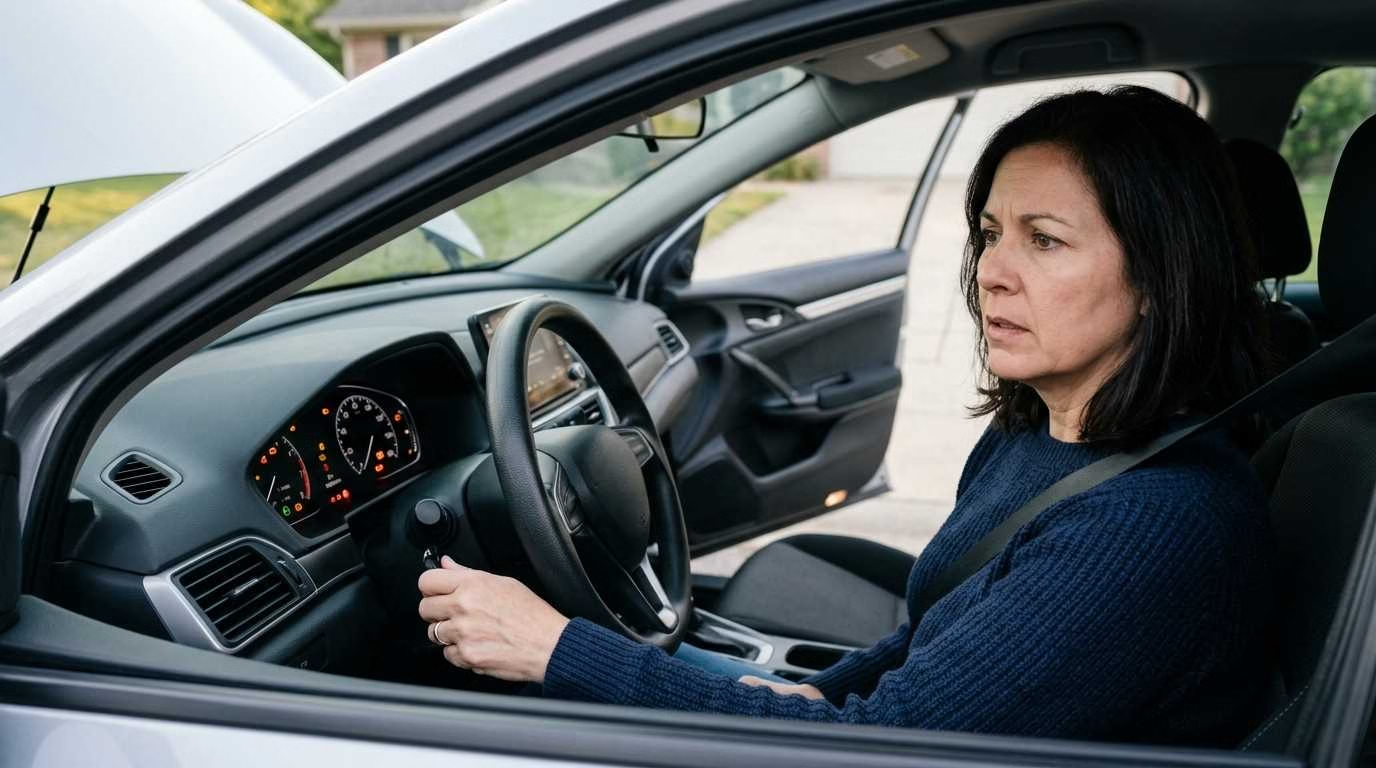
You turn the key and hear one solid click. Then nothing happens. The engine does not crank, yet the lights may still work.
When the starter clicks once then nothing happens, check the battery first. Loose terminals and bad cables are also common. If those parts test well, the starter may have failed. You may use our free Torque Wrench Extension Calculator.
Do not buy a new starter yet. A weak battery can cause the same sound. Follow the checks below to find the real fault.
Quick answer: One click usually means the starter tried to work. Yet it did not get enough power, or it could not turn. Start by checking the battery, terminals, cables, and ground connections.
What Does One Click Mean?
Your starter motor turns the engine before it starts. It needs a large burst of power from the battery.
When you turn the key, a small switch inside the starter moves. This part is called the starter solenoid. It connects battery power to the starter motor.
The click means that something in the start system moved. However, the click does not prove the starter motor works.
If the starter solenoid clicks once but no crank follows, you may have:
- A weak or dead battery
- Loose battery terminals
- Corroded cable connections
- A damaged battery cable
- A bad engine ground
- A worn starter motor
- A failed starter solenoid
- A locked engine or engine part
One Click vs. Rapid Clicking
The sound pattern can provide a useful clue.
One Solid Click
A single, strong click often points to:
- A poor cable connection
- A weak battery
- A failed starter
- A bad starter solenoid
- An engine that cannot turn
Rapid Clicking
Fast clicks often point to low battery power. The solenoid connects, loses power, and releases. It then repeats that cycle.
If your car makes many clicks, see this guide on a car clicking but not starting. It covers other clicking patterns and no-start causes.
No Click
No sound can suggest a different fault, such as:
- A dead battery
- A blown fuse
- A failed starter relay
- A bad ignition switch
- A gear position switch fault
- A security system problem
The Engine Cranks but Will Not Start
This is not the same problem. If the engine turns at a normal speed, the starter is doing its job.
The fault may involve fuel, spark, air, or engine timing.
Why Your Lights Can Still Work
Your lights need far less power than the starter. A weak battery may run the radio and dashboard with ease.
The starter needs much more current. That is why your car can have bright lights but still refuse to crank.
Never use the headlights as your only battery test.
Common Causes of a Starter That Clicks Once
Begin with the easiest and most common faults. This may save you from replacing a good starter.
Weak or Discharged Battery
A weak battery remains one of the top causes of a single click.
It may have enough power for the lights. Yet its voltage can fall as soon as you try to start the engine.
Common reasons include:
- You left a light on
- The car sat for several weeks
- The battery is old
- The weather is very cold or hot
- You mostly take short trips
- The charging system has a fault
- An electrical part drains power while parked
Watch the dashboard as you turn the key. A sharp drop in light level often points to low battery power.
If the battery often goes flat while parked, read this guide on why your car battery keeps dying overnight. You may have a hidden power drain.
Loose Battery Terminals
Battery terminals must fit tightly around the battery posts. A loose terminal can block the large flow of power needed by the starter.
You may still have working lights and a normal dashboard. Yet the connection can fail under the starter’s heavy load.
Try to move each battery terminal by hand. It should not twist or lift from the post.
Do not touch both terminals with a metal tool.
Corroded Battery Connections
Battery corrosion may look white, blue, or green. It can form around the posts and cable ends.
This buildup adds resistance. In plain terms, it makes power harder to move through the connection.
A small amount may cause an uneven start. Heavy corrosion can lead to one click and no crank.
Corrosion can also hide between the terminal and battery post. You may need to remove the terminal to see it.
Damaged Positive Battery Cable
The thick positive cable links the battery to the starter. It must carry a great deal of current.
A cable may fail due to:
- Rust at the connection
- Heat damage
- Broken inner strands
- Loose mounting nuts
- Corrosion beneath the insulation
- Damage from oil or road debris
A cable can look fine from the outside. Yet it may be green and weak inside.
Stiff, swollen, or hot cable sections deserve close attention.
Poor Engine Ground
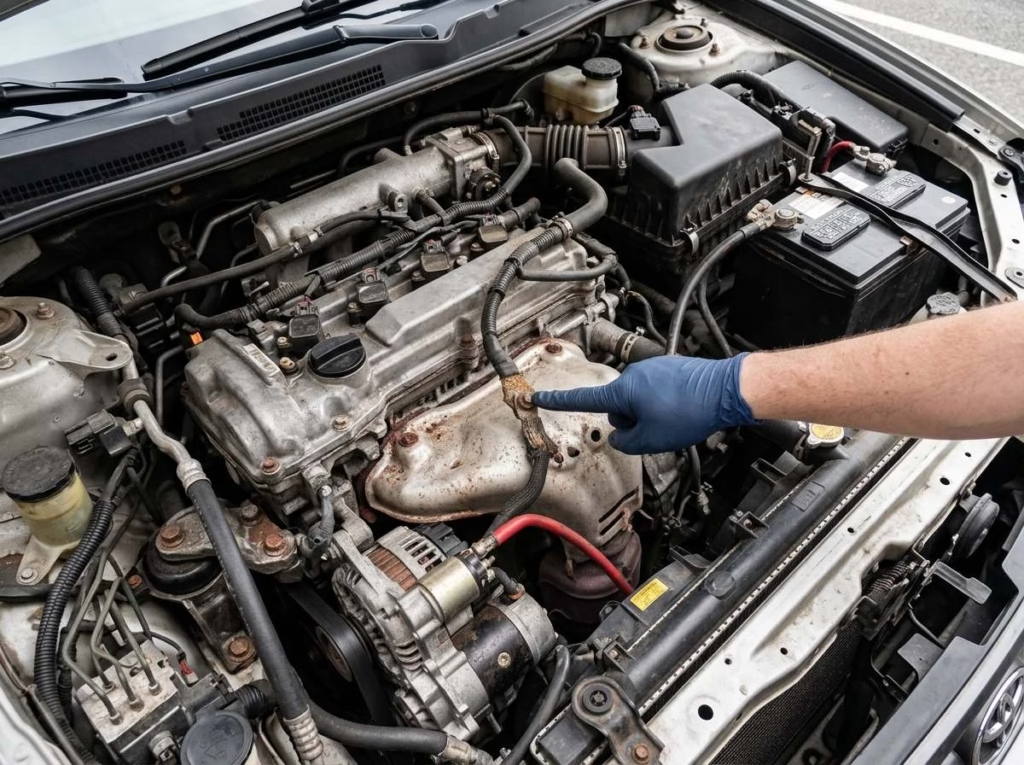
The battery has a positive and negative side. Both sides need a sound path.
The negative cable often connects the battery to the car body. A second cable or strap links the body to the engine.
If that ground path fails, the starter clicks once but doesn’t turn. The current cannot flow back to the battery as it should.
Check for:
- Loose ground bolts
- Rust below a ground connection
- Frayed ground straps
- Broken cable strands
- Oil-soaked connections
- Hot negative cables
A bad ground can look like a dead battery or failed starter.
Worn Starter Motor
The starter motor contains parts that wear with age. Brushes, bearings, and contacts can all fail.
A worn starter may work one day and stop the next. It may also start after several tries.
Common signs include:
- One strong click near the engine
- No change after a proper jump-start
- A battery that passes testing
- Clean and tight battery terminals
- Starting trouble after a hot drive
- The starter working on some attempts
If the starter motor clicks once but won’t start the engine, do not assume it needs replacement. Test the power supply first.
Failed Starter Solenoid
The solenoid moves the starter gear and connects power to the motor. It can click even when its inner contacts have failed.
This creates a clear click without engine movement.
On many cars, the solenoid forms part of the starter. The full starter unit may need replacement. Other vehicles use separate parts.
Faulty Starter Relay
The starter relay handles the electrical command from the key. It often sits inside a fuse box.
A relay can click but fail to send enough power onward. That can create a starter relay clicks once but no crank condition.
A failed fuse, wire, switch, or plug can cause a similar result.
Park or Neutral Switch Fault
An automatic car should start in Park or Neutral. A safety switch checks the shifter position.
When that switch fails, it may block the start command.
Try starting in Neutral. If that works, the switch or shifter may need repair.
This test does not prove the switch is bad. It only gives you a strong clue.
Clutch Pedal Switch Fault
Most manual cars have a switch near the clutch pedal. You must press the clutch before the starter can work.
A thick floor mat may stop full pedal travel. The switch may also wear or move out of place.
Press the clutch firmly, then try again. Keep the car out of gear and set the parking brake.
Security System Problem
Modern cars may block the starter if they cannot read the key.
Look for a flashing key or lock symbol. You may also see a security warning on the dashboard.
Try these safe steps:
- Lock and unlock the car
- Move other keys away from the ignition
- Replace a weak key-fob battery
- Try the spare key
- Follow the reset steps in the owner’s manual
Security steps vary by car. Avoid random reset methods found in online comments.
Locked Engine or Accessory
A starter cannot crank an engine that will not turn.
An engine may lock after:
- Severe overheating
- Running with too little oil
- Internal part failure
- Water entering a cylinder
- Coolant leaking into a cylinder
A seized alternator or air conditioner pump can also stop the engine. These parts connect to the engine with a belt.
This is less common than a battery fault. Still, it needs quick attention.
Stop trying to start the car if it recently overheated. Do the same if it made loud knocks before it stopped.
Quick Symptom Check
Match your symptom to the likely problem area.
- One click and the lights become very dim: Check the battery and connections.
- One click and the lights stay bright: Check the starter circuit and starter.
- Fast clicking: The battery may be weak or poorly connected.
- The car starts with a jump: Test the battery and charging system.
- A good jump makes no change: Check cables, grounds, and the starter.
- The car starts in Neutral: Check the gear position switch.
- It starts after several tries: Suspect a worn starter or poor connection.
- It fails after a hot drive: Heat may affect the starter or cable.
- The security light flashes: Check the key and security system.
- A cable becomes hot: Stop. The cable may have high resistance.
- One click follows an overheat: The engine may not be able to turn.
These clues do not give a final answer. They help you choose the next test.
Tools You May Need
You can complete the first checks with a few basic tools.
- Safety glasses
- Work gloves
- Flashlight
- Wrench or socket set
- Battery terminal brush
- Digital voltage meter
- Battery charger
- Jump pack or jumper cables
- Owner’s manual
A voltage meter is also called a multimeter. It measures battery voltage and other electrical values.
Do not place a wrench across the battery terminals. That can cause sparks, burns, and battery damage.
How to Diagnose a Starter That Clicks Once
Work through these steps in order. Do not skip straight to starter replacement.
Step 1: Confirm the Sound
Turn off the radio, fan, and lights. Open the window or door so you can hear the click.
Then make one short start attempt.
Ask yourself:
- Did you hear one click or many?
- Did the engine move at all?
- Did the dashboard go dark?
- Did the click come from the engine area?
- Did a security light appear?
- Did the problem begin at once or get worse over time?
“Crank” means the engine turns before it begins to run. A no-crank fault means the engine does not turn.
Step 2: Check the Gear Position
A gear position fault is quick to rule out.
For an Automatic Car
- Set the parking brake.
- Hold the brake pedal.
- Move the shifter into Park.
- Try to start the engine.
- Move the shifter into Neutral.
- Try once more.
You can also hold the key in the start position briefly. Move the shifter gently within Park or Neutral.
Stop if the car tries to move.
For a Manual Car
- Set the parking brake.
- Place the gear lever in Neutral.
- Press the clutch fully.
- Make sure the floor mat is clear.
- Try to start the engine.
A car that starts only with pedal pressure may have a clutch switch fault.
Step 3: Look at the Battery
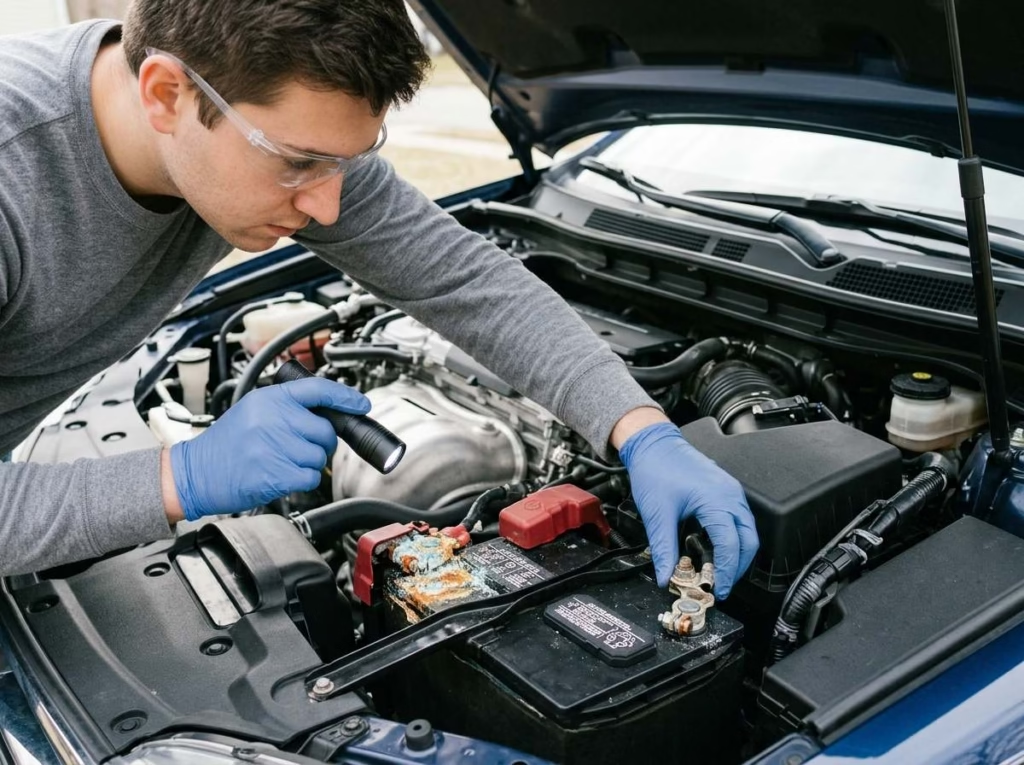
Open the hood and find the battery. Some cars place it in the trunk or beneath a seat.
Check for:
- A swollen battery case
- Cracks or leaks
- Loose mounting parts
- White or green corrosion
- Damaged cable ends
- Loose terminals
- Melted plastic
- A strong rotten egg smell
Do not jump-start a cracked, leaking, swollen, or frozen battery. Keep flames and sparks far away.
Step 4: Check Terminal Tightness
Try to twist each terminal with your hand. Wear gloves while doing this.
A sound connection should not move.
If a terminal moves, tighten it with the right tool. Do not use heavy force. Battery posts can break.
After tightening, try to start the car again.
Step 5: Clean Corroded Terminals
First check your owner’s manual. Some cars need special steps before battery removal.
A basic cleaning process looks like this:
- Turn the car off.
- Remove the key.
- Keep the key fob away from the car.
- Disconnect the negative terminal first.
- Disconnect the positive terminal.
- Clean the posts and cable ends.
- Refit the positive terminal first.
- Refit the negative terminal last.
- Tighten both terminals.
Use a battery terminal brush for thick buildup. Keep dirty material away from your eyes and skin.
The car may lose saved settings after battery removal. Some newer cars may also need a reset.
Step 6: Measure Battery Voltage
Let the car sit with all electrical parts off. Set your meter to direct current voltage.
Place the red probe on the positive post. Place the black probe on the negative post.
Use these values as a basic guide:
- About 12.6 volts: The battery has a high charge.
- About 12.4 volts: The battery has a partial charge.
- About 12.2 volts: The battery needs charging and testing.
- Near 12.0 volts: The battery has a very low charge.
- Well below 12.0 volts: The battery may be deeply discharged.
These values only show the battery’s present voltage. They do not prove it works under load.
A weak battery may show a fair voltage at rest. It can still fail during a start attempt.
Watch the Voltage While Starting
Ask a helper to turn the key while you watch the meter. Keep your hands clear of belts and fans.
A large voltage drop can point to:
- A weak battery
- A poor connection
- A starter drawing too much current
- A starter or engine that cannot turn
If the voltage barely changes, power may not reach the starter. The relay, switch, wire, or security system may be blocking it.
Step 7: Try a Safe Jump-Start
Check the owner’s manual before using jumper cables. Some cars have set jump points under the hood.
The general process is:
- Park the donor car close without touching.
- Turn both cars off.
- Connect the positive cable to the dead battery.
- Connect its other end to the donor battery.
- Connect the negative cable to the donor battery.
- Connect the final clamp to an approved ground point.
- Start the donor car if the manual allows it.
- Try starting the disabled car.
- Remove the cables in reverse order.
Do not let the clamps touch each other.
Hybrids, electric cars, and some modern vehicles need special care. Follow the maker’s instructions.
What the Result Tells You
- The engine starts fast: The battery may be weak or discharged.
- The engine starts slowly: Check the battery, cables, and starter.
- The car still gives one click: Check grounds, cables, and the starter.
- The cables become hot: Stop the test at once.
- The car dies soon after starting: Test the charging system.
A jump-start can improve a poor terminal connection. The jumper clamp may create a better contact. So a successful jump does not always prove the battery is bad.
Step 8: Inspect the Main Cables
Follow the positive cable from the battery. It may run to a fuse box and then to the starter.
Also inspect:
- The negative battery cable
- The body ground point
- The engine ground strap
- Cable ends near the starter
- Large fuses in the battery power box
Look for cracks, rust, loose nuts, and burnt spots.
Do not touch the starter cable until the battery is disconnected. It may have power even when the key is off.
Step 9: Find the Click
A click from the fuse box may come from the starter relay. A hard click low on the engine may come from the solenoid.
Ask a helper to make one start attempt. Stand at the side of the car and listen.
Keep clear of:
- Belts
- Fans
- Pulleys
- Hot exhaust parts
- Moving engine parts
Never crawl under a car held up by a jack. Use rated stands on firm ground or leave the test to a shop.
Step 10: Check the Fuse and Relay
Use the fuse box map in your manual. Find the starter, ignition, or engine control fuse.
Remove and inspect only the correct fuse.
If it has failed:
- Replace it with the same type
- Use the same amp rating
- Try one start attempt
- Stop if the new fuse fails
A fuse that blows twice often points to a short circuit. Installing a larger fuse can melt wires or cause a fire.
Some cars use matching relays for different parts. You may swap two matching relays for a short test. Do this only if the manual confirms they are the same.
Step 11: Get a Starter Circuit Test
At this point, you may need more than a basic voltage check.
A mechanic can test:
- Battery strength under load
- Voltage loss along each cable
- Power at the starter
- The solenoid control wire
- Starter current use
- Engine movement by hand
Voltage loss testing matters because a cable can show full voltage with no load. Yet it may fail when the starter asks for high current.
Avoid shorting starter terminals with a tool. This can cause burns, sparks, vehicle movement, and wiring damage.
What Your Test Results Mean
Your results can narrow the fault before you replace anything.
It Starts After You Clean the Terminals
The terminals likely had too much resistance. This blocked the starter’s power.
Keep an eye on the connections. Fast returning corrosion may point to a damaged terminal or battery leak.
You should still test an older battery. Low battery strength can make connection faults more clear.
It Starts With a Jump
The battery may be low, weak, or unable to hold a charge.
However, test the full charging system. The battery may have gone flat due to:
- A weak charging system
- A light left on
- A hidden power drain
- Many short trips
- Long storage
- Loose battery connections
Do not replace the alternator based on one jump-start.
The Battery Tests Well, but You Hear One Click
Check the parts that carry power to the starter:
- Positive battery cable
- Starter connection
- Negative battery cable
- Engine ground strap
- Starter solenoid
- Starter motor
A good battery makes a cable or starter fault more likely. It does not prove which part has failed.
The Voltage Drops Hard
A sharp drop can mean the battery lacks strength. It can also mean the starter draws too much current.
A locked starter or engine can create the same result.
You need a battery load test and starter draw test to separate these faults.
The Voltage Does Not Drop
If the voltage stays near its resting level, the starter may not receive the start command.
Check:
- Starter relay
- Starter fuse
- Ignition switch
- Gear position switch
- Clutch switch
- Solenoid control wire
- Security system
The Car Starts in Neutral
The Park or Neutral switch may have worn out. The shifter cable may also need adjustment.
Do not rely on Neutral as a long-term repair. The fault may get worse and leave you stuck again.
It Clicks Only When Hot
Heat can expose a weak starter. Metal parts expand, while electrical resistance may rise.
This can also point to:
- A loose starter cable
- A corroded engine ground
- Worn solenoid contacts
- Heat damage near the exhaust
Note how long the car must cool before it starts. That detail can help the mechanic.
DIY Fixes You Can Try
Some repairs suit a careful beginner. Others need more skill and access.
Clean and Tighten the Battery Connections
This is often the best first repair.
You may handle it if:
- The battery is easy to reach
- The case has no damage
- The terminals have mild corrosion
- Your manual allows battery removal
- You have the correct tools
Stop if the terminal spins inside the battery. The battery may have internal damage.
Charge the Battery
Use a charger that matches your battery type. Modern cars may use standard, enhanced, or absorbent glass mat batteries.
Check the label or manual if you are unsure.
Charge the battery in a well-aired space. Keep the charger away from water and heat.
A charger can restore a low battery. It cannot repair a battery with damaged inner parts.
Replace a Failed Battery
Replace the battery only after testing it. Match these key details:
- Physical size
- Terminal position
- Starting power rating
- Battery type
- Hold-down style
Some newer vehicles need battery registration. This tells the car that a new battery has been fitted.
If your car needs this step, use a mechanic or a proper scan tool.
Replace a Bad Fuse or Relay
A fuse or relay is often easy to replace. Match the old part exactly.
A replacement is reasonable when testing confirms the fault.
Do not keep feeding fuses into a circuit that blows them. That circuit needs a full electrical check.
Replace an Easy Ground Strap
An exposed ground strap may be simple to change. Disconnect the negative battery terminal first.
Clean the mounting points to bare, sound metal. Fit the correct strap and tighten each end.
Avoid thin universal cables. Starter current needs a thick, low-resistance path.
Treat Neutral Starting as a Clue
If the car starts only in Neutral, you may use that fact to explain the fault.
However, do not treat it as a final fix. Have the switch and shifter checked soon.
Repairs Best Left to a Mechanic
Starter replacement can look simple in a short video. Real access may be tight and unsafe.
Get help with:
- A starter hidden below the engine
- A starter near hot exhaust parts
- Rusted starter bolts
- Damaged heavy power cables
- Gear position switch adjustment
- Ignition switch faults
- Security system faults
- Key programming
- Wiring repairs
- Repeat fuse failure
- Engine rotation tests
- Possible engine damage
- Hybrid electrical systems
A proper test often costs less than replacing the wrong part.
Special Cases: Trucks, Tractors, Motorcycles, and ATVs
The same basic fault can affect many types of vehicles. Yet the parts and safety steps may differ.
Ford Ranger Starter Clicks Once
If a Ford Ranger starter clicks once, begin with the battery terminals and grounds. Trucks often face water, dirt, and road salt.
Check the engine ground and starter cable with care. Model year and engine type affect the relay and starter layout.
Use the fuse map and start steps for your exact model.
Tractor Starter Clicks Once
A tractor starter that clicks once may have a weak battery or dirty ground. Tractors often sit unused for long periods.
Check for:
- Corrosion at the battery posts
- Rust at the frame ground
- Loose starter cable nuts
- A weak battery
- A safety switch fault
- Stiff engine oil in cold weather
Make sure the tractor is in Neutral. Lower any raised tool before working near it.
Harley Starter Clicks Once
If a Harley starter clicks once, check battery charge and cable tightness first. Motorcycle batteries are small and can lose power fast.
A loose ground cable can also cause one solid click.
Keep the bike stable and in Neutral. Follow the service steps for the exact model.
ATV Starter Solenoid Clicks Once
When an ATV starter solenoid clicks once, check the battery under load. A battery may show fair voltage but fail during cranking.
Also inspect mud-covered ground points and loose cable ends.
Set the parking brake and confirm the ATV is in Neutral. Never bypass a safety switch as a repair.
When to Call a Mechanic
Stop home testing if the next step goes beyond your tools or skill.
Call a mechanic when:
- A fully charged battery does not help
- A safe jump-start makes no change
- The starter cable becomes hot
- You smell burnt wire insulation
- Smoke comes from the battery or starter
- A fuse fails more than once
- The starter makes a grinding sound
- The security system blocks starting
- The starter sits in a hard-to-reach spot
- The engine recently overheated
- The engine ran low on oil
- The car went through deep water
- You cannot confirm that the engine turns
- The vehicle uses a high-voltage hybrid system
Stop at once if the battery leaks or swells. Do not keep turning the key.
Water inside an engine cylinder can cause major damage. If the car stopped in deep water, have it towed.
What to Tell the Mechanic
Useful details can shorten the test process.
Share the following facts:
- You hear one click or many clicks
- The lights dim or stay bright
- The battery’s age
- The measured battery voltage
- Whether a jump-start helped
- Whether the car starts in Neutral
- Whether the fault happens while hot
- Any security warning on the dash
- Any recent starter or battery work
- Any overheating or low-oil event
- Any contact with deep water
- Whether the fault began at once
Do not just say, “My starter is bad.” Describe what the car does. Let the test results name the failed part.
How Much Can the Repair Cost?
The final cost depends on the car and the failed part. Starter access also affects labor time.
In general:
- Cleaning battery terminals is a low-cost job.
- A basic relay or fuse is often inexpensive.
- Battery replacement costs more on cars with special battery types.
- Cable repair can range from simple to time-consuming.
- Starter replacement often costs more due to labor.
- Security and wiring faults need added test time.
- Internal engine damage can become very expensive.
Ask for a written estimate before repair work begins.
The estimate should show:
- The failed part
- The tests that found the fault
- Parts cost
- Labor cost
- Warranty terms
- Added work that may be needed
This keeps the repair clear without pushing the shop toward your own guess.
Mistakes That Can Make Things Worse
A no-crank fault can tempt you to try quick tricks. Some of them can cause more harm.
Avoid these mistakes:
- Replacing the starter before testing the battery
- Trusting bright headlights as a battery test
- Holding the key in Start for a long time
- Making dozens of start attempts
- Hitting the starter with a hammer
- Bridging starter terminals with a tool
- Using a larger fuse
- Jumping a swollen or frozen battery
- Mixing up jumper cable ends
- Ignoring a hot battery cable
- Working beneath a car held by one jack
- Removing a battery cable while the engine runs
- Trying to start an engine after deep-water entry
- Buying several parts without testing them
Hitting the starter may seem to work once. Yet it can damage the case or internal parts. It also places you near live cables and moving parts.
How to Prevent Another No-Crank Problem
A few small checks can reduce the chance of another single click.
- Keep the battery posts clean.
- Make sure the terminals stay tight.
- Check the battery before harsh weather.
- Record the battery install date.
- Replace cracked cable covers.
- Repair weak ground straps.
- Avoid leaving lights and chargers on.
- Use a battery maintainer during long storage.
- Check slow cranking before it becomes a no-start.
- Test the charging system after repeat battery loss.
- Fix oil leaks and cooling faults early.
Slow cranking is an early warning. Do not wait until the starter clicks one time then stops.
Frequently Asked Questions
Why Does My Starter Click Once?
The solenoid may move, but the motor cannot turn. A weak battery, poor connection, bad cable, or failed starter can cause this.
Start with the battery. Then inspect both main cables and the engine ground.
What Does It Mean if My Starter Only Clicks Once?
It means part of the start circuit responded. It does not mean the starter motor is good.
The motor may lack enough power. It may also have an internal fault.
Can a Weak Battery Cause One Click?
Yes. A weak battery can cause one solid click instead of many clicks.
The battery may still power the lights and radio. Test it under load before you rule it out.
Why Won’t My Car Start if the Lights Work?
The starter uses far more power than your lights. A weak battery may handle small loads but fail during cranking.
Loose battery terminals can cause the same symptom.
How Can I Tell if the Battery or Starter Is Bad?
Test the battery, terminals, and cables first. Try a safe jump-start if the battery has no physical damage.
The starter becomes more suspect when:
- The battery passes a load test
- The cables pass voltage loss tests
- Full power reaches the starter
- The engine can turn by hand
- The starter still does not crank
Will a Jump-Start Work With a Bad Starter?
Usually not. Extra battery power cannot fix worn starter parts.
An uneven starter may work after a jump by chance. This does not mean the jump repaired it.
Why Does the Starter Click Once but Won’t Turn Over?
Power may not reach the starter motor. A worn motor or failed solenoid can also stop it.
A locked engine creates the same basic symptom. Test the electrical system before assuming engine damage.
Can a Bad Ground Cause One Click?
Yes. A poor ground can let the solenoid click but block starter current.
Inspect both the battery ground and engine ground strap.
Can a Bad Alternator Cause the Starter to Click Once?
It can cause the problem in an indirect way. A weak alternator may fail to charge the battery.
The low battery then causes the click. Test the battery and charging system before replacing either part.
Why Does the Starter Click Once When the Engine Is Hot?
Heat can make worn starter parts bind. It can also raise resistance in weak cables and connections.
A heat shield may be missing on some vehicles. Exhaust heat can then affect the starter.
Why Does My Car Start After Several Tries?
You may have worn starter contacts or an uneven solenoid. A loose cable, bad relay, or safety switch could also cause it.
The next failed start may leave you stuck. Have the circuit tested soon.
Is Tapping the Starter Safe?
No. It can damage the starter and place you near live power cables.
It is not a safe repair. Replace the starter after proper testing confirms the fault.
How Long Should I Keep Trying?
Make only short attempts. Give the starter time to cool between tries.
Stop if you notice:
- Hot cables
- Smoke
- Burning smells
- Grinding sounds
- Leaking battery fluid
- A fuse that keeps failing
Does One Click Mean the Engine Is Seized?
No. Battery and cable faults happen far more often.
Engine damage becomes more likely after overheating, low oil, deep water, or loud internal noise.
Why Does the Starter Click Once After Replacement?
A new starter does not fix a weak battery or damaged cable. The replacement may also have a poor connection.
Check:
- Battery charge
- Battery terminal fit
- Starter mounting
- Positive cable torque
- Engine ground
- Solenoid control wire
- Correct starter fit
A wrong or faulty replacement part is possible. Test the circuit before removing it again.
Should I Replace the Battery and Starter Together?
No. Replace only the part that fails testing.
A cable fault can imitate both a weak battery and bad starter. Buying both parts may waste money.
Your Final No-Crank Checklist
If the starter clicks once then nothing happens, use this order:
- Confirm that you hear one click.
- Watch the dashboard lights.
- Try Park and then Neutral.
- Check for a security warning.
- Inspect the battery for damage.
- Check terminal tightness.
- Clean any corrosion.
- Measure battery voltage.
- Try a safe jump-start.
- Inspect the positive cable and grounds.
- Check the correct fuse and relay.
- Arrange a full starter circuit test.
One click does not always mean a bad starter. The battery and cable connections deserve your attention first.
Stop if you see smoke, feel hot cables, or smell burnt wiring. Those signs need prompt professional help.