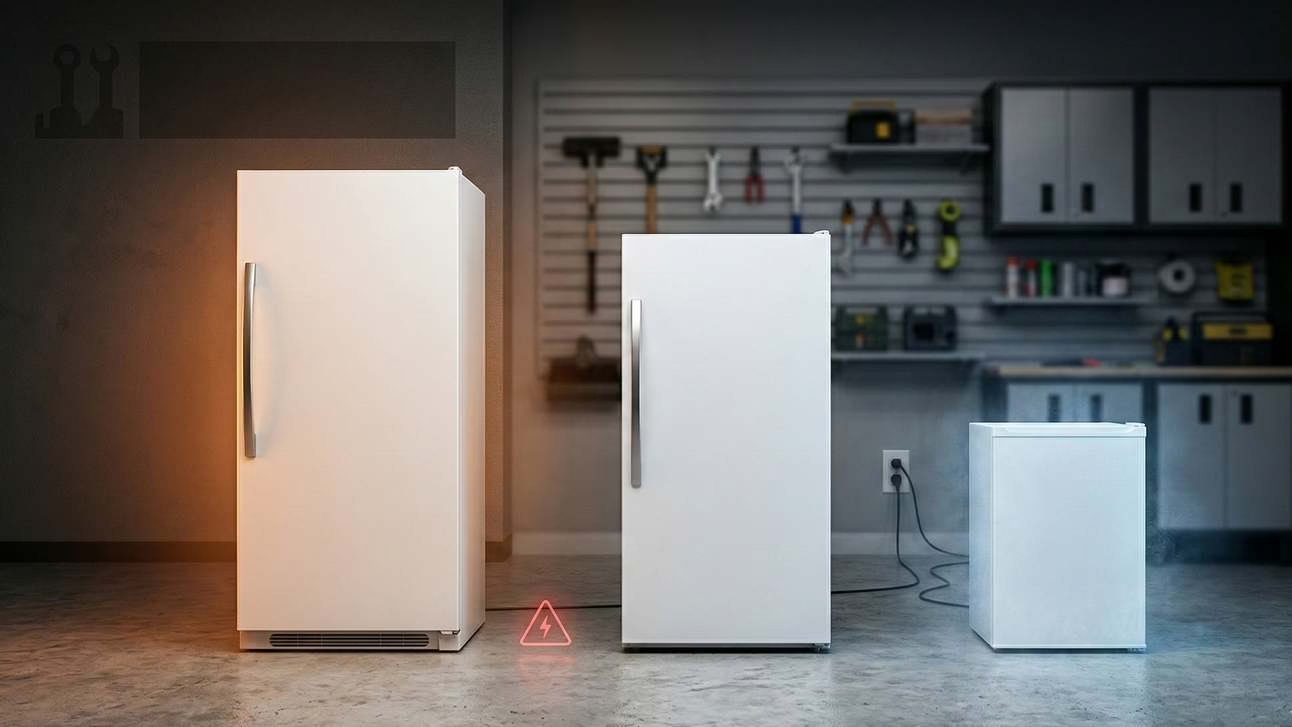
If you’re searching for the best deep freezer for a garage, you’re not actually buying “freezing.” You’re buying reliability under abuse: heat that turns the garage into an oven, winter cold that confuses thermostats, humidity that punishes seals, dust that clogs vents, and power hiccups that quietly thaw your food while everything looks “fine.”
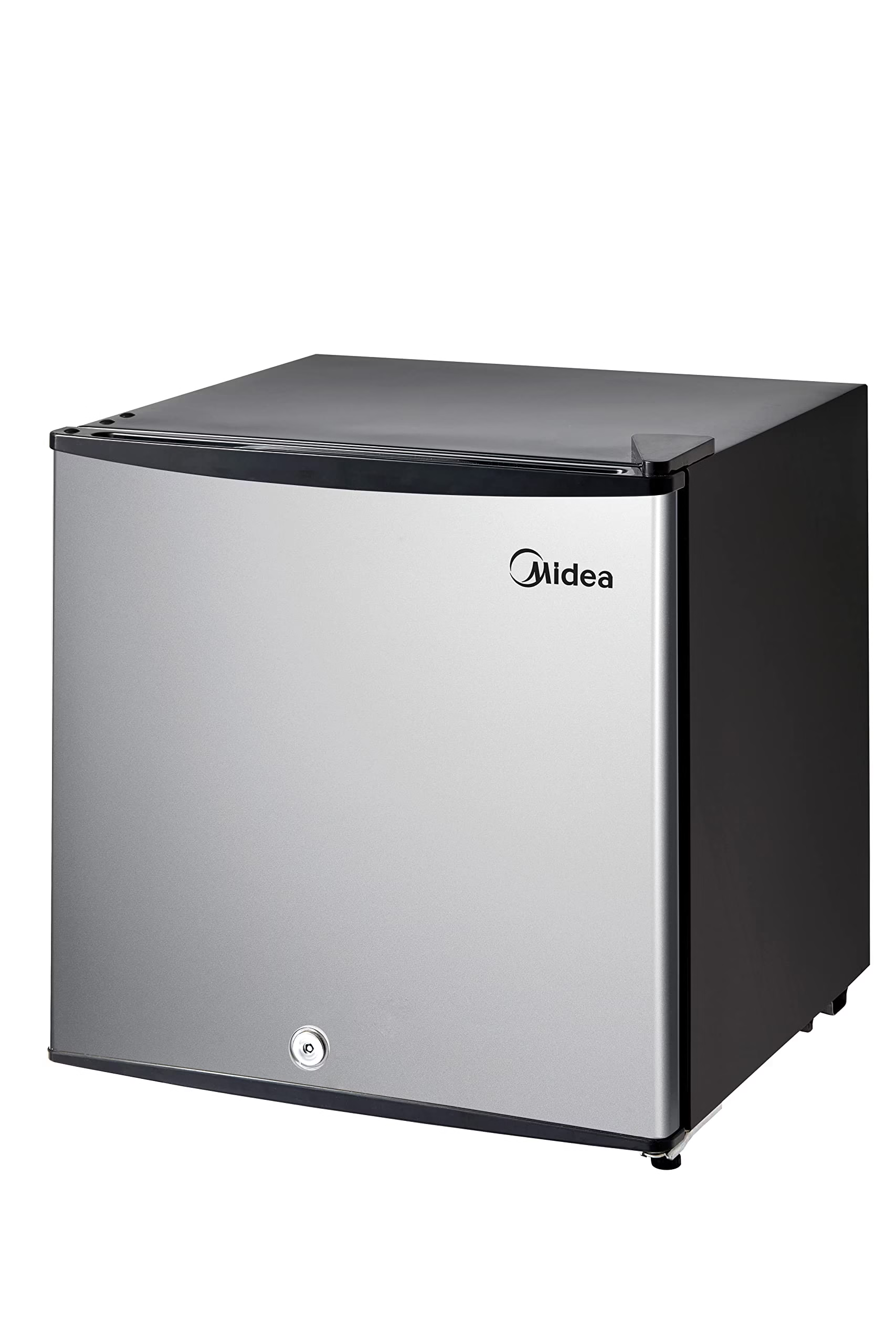
- 17.7″D x 18.6″W x 19.4″H
- mechanical thermostat · manual defrost
- reversible door, built‑in lock
- 33.4 dB · Energy Star
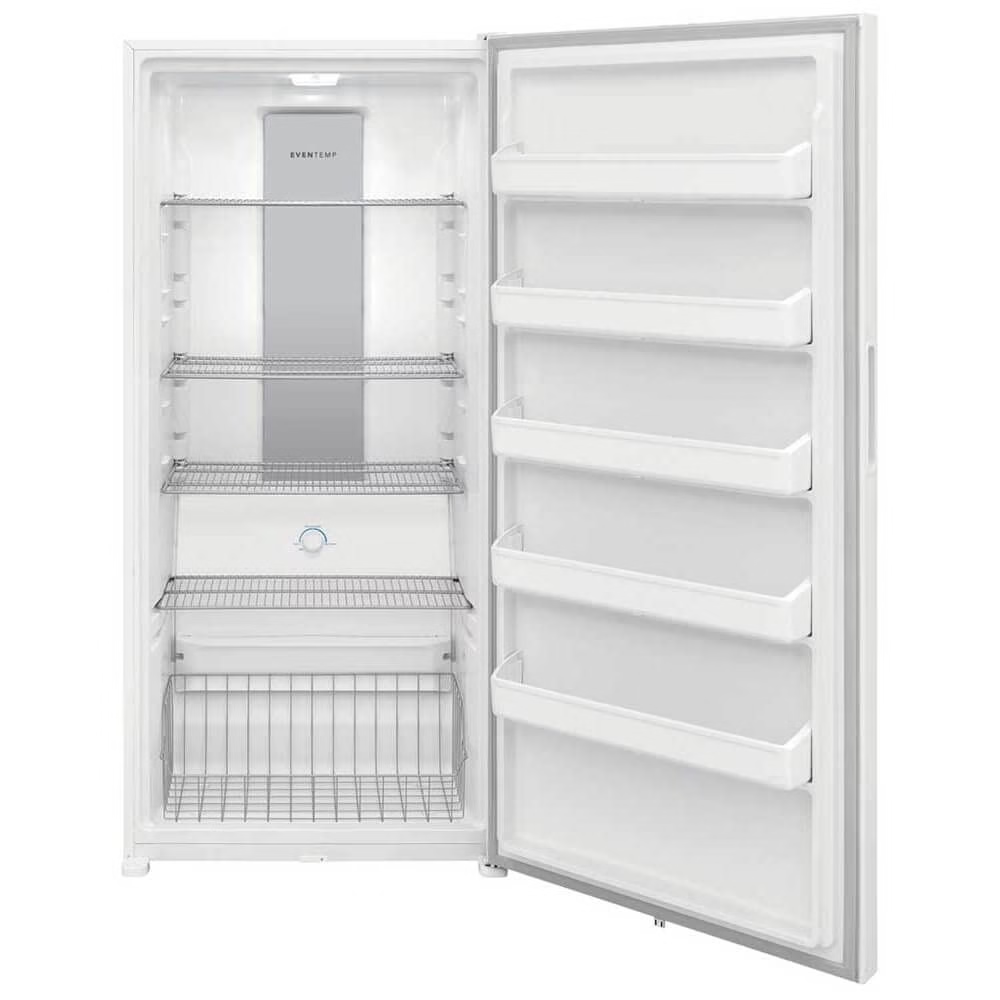
- 28.3″D x 32.6″W x 71.8″H
- EvenTemp™, auto‑close doors
- power outage assurance
- Energy Star certified
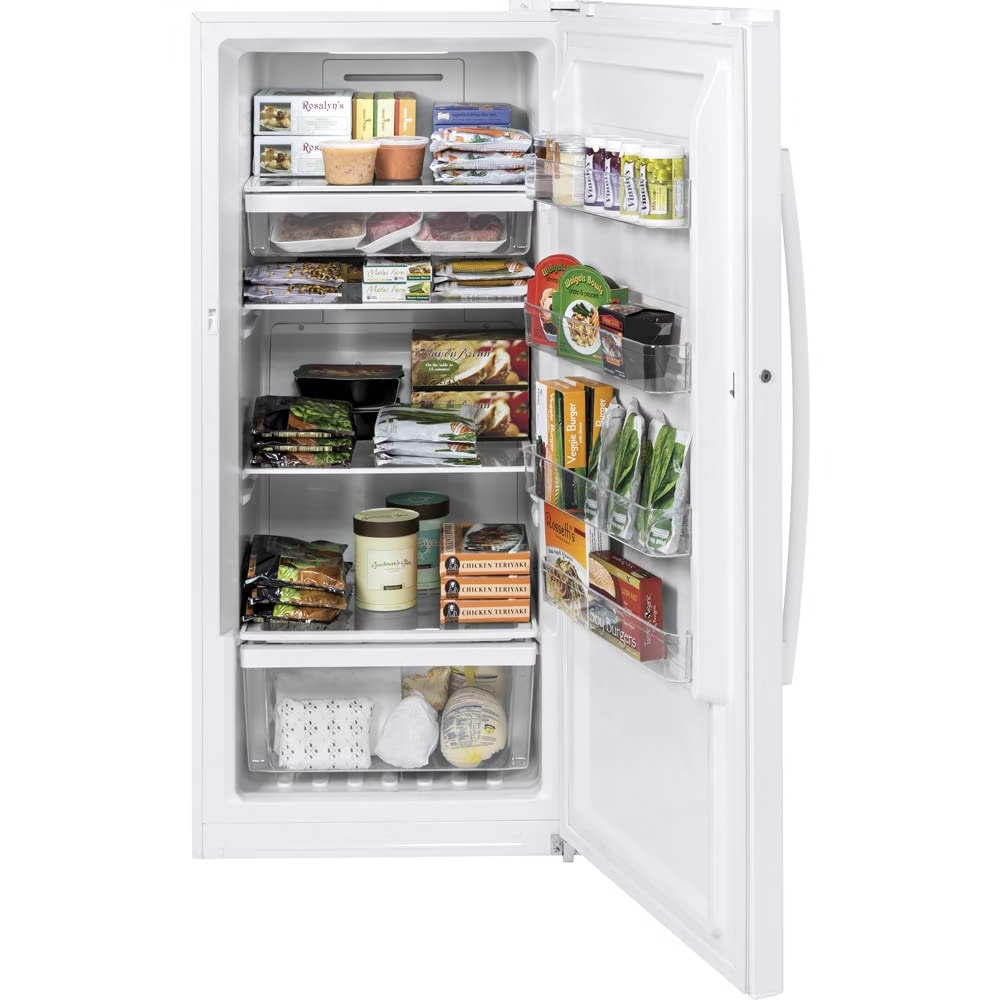
- 31.5″D x 29.8″W x 64.8″H
- Turbo Freeze · external controls
- LED interior light · lock & key
- designed for garages
Here’s the brutal truth: most garage freezer failures don’t start with a dramatic bang. They start with something boring—a door that didn’t fully seal, a circuit that tripped, a unit shoved too tight into a corner, or a frost/airflow problem that slowly warms the top shelf. The models below are all upright freezers, but they represent three totally different buyer profiles:
- Frigidaire FFUE2022AW: big-capacity garage upright for serious bulk storage
- GE FUF14DLRWW: mid-size garage upright that fits “normal” storage needs and daily use
- Midea MRU01M3ASL: ultra-compact mini freezer for tight spaces or “high-value items” storage
Yes, the Midea is tiny compared to the other two. That’s intentional. Some people don’t have room for a monster freezer. Others want a dedicated freezer that nobody rummages through. It belongs in the decision tree.
Quick Verdict (If You Want the Answer First)
Best overall for most garages
GE FUF14DLRWW
The practical middle ground: enough capacity for many households, easier organization than a chest freezer, and the kind of everyday features that matter in a garage (visibility, temperature control convenience, security lock).
Best for bulk storage and “fill it and forget it”
Frigidaire FFUE2022AW
If you’re storing a ton of meat, stocking seasonal food, or you’re tired of playing freezer Tetris, the larger capacity is the whole point. But with big size comes bigger consequences if something goes wrong—seal issues and airflow problems are not “minor” at this scale.
Best for tiny spaces or a dedicated “hands off” freezer
Midea MRU01M3ASL
Not a traditional deep freezer replacement. It’s a compact, simple unit designed for places where a standard freezer won’t fit. Great as overflow storage or for sensitive/high-value items—but you won’t bulk-store anything in it.
What “Garage-Ready” Actually Means (And Why You Should Care)
A garage is not a kitchen. It’s a hostile environment.
Hot garage problem
When your garage gets hot, the freezer’s compressor has to work harder and longer to remove heat. The hotter it is, the more your freezer runs. More runtime means:
- higher electricity cost
- more wear on compressor and components
- more sensitivity to poor ventilation and dust buildup
Cold garage problem
When your garage gets cold, some systems can behave strangely depending on how temperature sensing and control logic are designed. You expect a freezer to “just stay frozen,” but some designs cycle differently in cold ambient conditions. That can cause:
- temperature drift
- odd cycling patterns
- increased risk if you’re relying on the freezer without monitoring
The real garage-ready advantage
A “garage-ready” freezer is intended to keep operating reliably across a wider range of ambient temperatures than a typical indoor-only unit. That doesn’t mean it’s immortal. It means it’s less likely to struggle in extreme conditions.
Brutal truth: garage-ready doesn’t replace good setup and monitoring. It just narrows your risk.
Upright vs Chest Freezer for Garage: The Trade You’re Actually Making
Most people searching “best deep freezer for garage” assume a chest freezer. But many buyers end up choosing an upright for one reason: you can actually use it without digging to the bottom like an archaeologist.
Why chest freezers dominate “reliability” talk
- Better temperature stability when opened (cold air doesn’t spill out as fast)
- Usually better performance during power outages (more thermal mass + less air exchange)
- Often simpler designs with fewer parts to fail (especially manual defrost models)
- Generally more efficient per cubic foot
Why uprights dominate “real life” ownership
- Organization is easier (shelves, bins, visibility)
- Inventory rotation is easier (less forgotten food)
- Better for daily access (no bending, no digging)
The upright downside in a garage
- Open the door and cold air dumps out, replaced by hot humid air
- Frost-free systems can add complexity (more parts, more possible failure modes)
- If airflow gets compromised, the top can warm before you notice
Brutal truth: uprights are easier to live with, but you must use them smarter—short door openings, better organization, and monitoring.
The 3-Model Comparison: Who Each Freezer Is For
Capacity Reality Check (This Matters More Than Features)
- Frigidaire FFUE2022AW: large capacity for bulk storage
- GE FUF14DLRWW: mid-size capacity for most households
- Midea MRU01M3ASL: tiny capacity for overflow or specialty use
If you buy too small, you’ll outgrow it fast. If you buy too big, you risk wasting money, space, and making delivery/setup harder than it needs to be.
Model 1: Frigidaire FFUE2022AW — The Bulk Storage Beast
Who this is for
You want one freezer that can handle:
- bulk meat purchases
- seasonal food storage
- meal-prep stockpiling
- “I don’t want to think about freezer space again for years”
This is the “stop playing games” size tier.
What people typically like about it
1) The capacity changes your lifestyle
Large upright capacity means you can:
- buy meat when it’s cheap
- store large batches of meals
- keep separate zones for categories (meat, vegetables, prepared meals, bread)
If you’ve ever had to jam bags into a freezer and break the seal just to close the door, you already understand the appeal.
2) Upright organization without the chest freezer chaos
When you stock a chest freezer heavily, organization becomes the whole job. An upright reduces that pain because the shelves force structure.
3) Garage-focused intent
This model class is designed and marketed for garage use, which is exactly what you need if your environment swings hard.
The Brutal Truth: where things can go wrong
1) Door seal issues are catastrophic at this size
A big upright that isn’t sealing properly is a food-loss machine. A door that swings open, doesn’t “pull” closed, or gets blocked by overstuffed shelves can cost you hundreds of dollars in one quiet night.
Reality rule: if you buy a large upright, you also buy the responsibility of keeping that door seal perfect.
2) Airflow/frost problems are the silent killer in uprights
If an upright develops a frost or airflow issue, you might not notice until:
- top shelves start softening
- ice builds where it shouldn’t
- the unit runs constantly
- the temperature looks “fine” in one spot but not in others
This is why garage freezer owners obsess over alarms and independent thermometers.
3) Big appliance delivery risk increases with size
The larger the freezer:
- the more likely it gets dented
- the harder it is to move and position safely
- the more annoying it is to return or exchange
If you can’t inspect it properly on delivery, you’re gambling.
Pros
- Massive capacity for serious bulk storage
- Upright organization makes inventory management easier than a chest freezer
- Designed for garage placement, not just indoor kitchens
Cons
- Door/seal problems are especially costly at this size
- Upright airflow/frost issues can create uneven cooling if something goes off
- Large delivery footprint increases shipping and handling risk
Buy this if…
- You will actually use the space (not “maybe someday”)
- You can set it up correctly with ventilation clearance and monitoring
- You want one freezer to cover your bulk storage needs
Skip this if…
- Your garage power is unstable and you refuse to run alarms
- You can’t reliably keep the door area clear and the seal protected
- You want the simplest, lowest-risk system possible over maximum capacity
Model 2: GE FUF14DLRWW — The Practical Garage Upright
Who this is for
You want:
- enough freezer space to matter
- upright organization for daily life
- a garage-suitable model that doesn’t dominate the room
This is the “most people should buy this size” category.
What people typically like about it
1) The size is big without being ridiculous
Mid-size uprights often hit the sweet spot:
- enough capacity for bulk buys and meal prep
- still manageable in garage footprint
- still movable without turning into a nightmare
2) Convenience features that matter in a garage
The best garage features aren’t fancy. They’re practical:
- controls that don’t require holding the door open
- lighting that lets you actually see what you’re grabbing
- security lock if you share space or want to restrict access
3) Organization is the whole reason you buy an upright
If you open the freezer frequently—daily meals, kids grabbing frozen items, meal prep—upright shelving is the difference between “usable” and “I hate my freezer.”
The Brutal Truth: where things can go wrong
1) Uprights punish long door openings in hot garages
If your garage runs hot and you keep standing there with the door open, you’re feeding the freezer warm humid air. That increases:
- runtime
- frost development
- energy cost
- long-term wear
2) Modern appliance longevity can be unpredictable
Across the appliance world, buyers complain that newer units don’t always last like the old tanks did. That doesn’t mean this model is doomed. It means you should plan like an adult:
- protect it with good ventilation
- keep coils and vents clean
- monitor temperature
- don’t overload the door seal
3) Delivery still matters
Even if the unit is smaller than the Frigidaire, delivery damage and handling issues can still happen.
Pros
- Strong “sweet spot” capacity for most households
- Upright organization that supports frequent access
- Practical garage-friendly usability features
Cons
- Still an upright: frequent openings in heat will punish performance
- You must plan for monitoring and good placement
- Delivery damage is always a possibility with large appliances
Buy this if…
- You want the most balanced garage upright option
- You want organization and daily usability without extreme size
- You want a freezer that fits a typical garage layout
Skip this if…
- You want the most temperature-stable option during frequent openings (consider chest)
- You want the fewest possible components and simplest controls above all else
Model 3: Midea MRU01M3ASL — The Compact “Overflow” Freezer
Who this is for
You have one of these problems:
- you don’t have space for a full-size freezer
- you want a dedicated freezer for specific items
- you want overflow storage so you stop opening your main freezer constantly
This is not a bulk-storage garage deep freezer. It’s a niche solution.
What people typically like about it
1) It fits where nothing else fits
If you live with limited space, a compact freezer can be the difference between having frozen storage and not having it at all.
2) Simple controls and manual defrost design
Mechanical-style control and manual defrost tends to mean:
- fewer automated systems to fail
- fewer “weird behaviors”
- simpler troubleshooting
3) Best as a “high-value items” freezer
This is where it shines:
- breast milk storage
- medication storage (where appropriate)
- specialty foods
- “do not touch” dedicated freezer space
Because it’s small, you can also keep it in a more stable corner or even indoors if your garage conditions are extreme.
The Brutal Truth: where things can go wrong
1) Capacity limits everything
You can’t change the laws of physics. If you need bulk storage, this isn’t it.
2) Brand confidence depends on your risk tolerance
Midea is a huge manufacturer globally, but buyers still debate long-term reliability and service experiences depending on region and model. If you want the most proven mainstream garage freezer path, the bigger-name garage-ready models feel safer psychologically.
3) Small doesn’t eliminate delivery risk
Even small appliances can arrive damaged. And compact units can still have early-life failures like any mass-produced product.
Pros
- Solves the “no space” problem
- Simple manual-defrost/mechanical style concept appeals to reliability-first buyers
- Great for dedicated overflow or specialty storage
Cons
- Not a true deep freezer replacement
- Not for bulk storage
- Long-term confidence depends on your comfort with the brand and service availability
Buy this if…
- Space is your limiting factor
- You want a dedicated small freezer to reduce opening your main freezer
- You want simple operation and compact storage
Skip this if…
- You’re trying to store large quantities of meat or bulk food
- You want one freezer to handle all garage storage
The Winner Depends on Your Garage Reality (Use This Decision Tree)
If you store a lot of meat or bulk food
- Choose the Frigidaire FFUE2022AW if you truly need the capacity.
- Choose the GE FUF14DLRWW if you want a more manageable size while still getting serious storage.
If you open the freezer frequently
- Choose the GE FUF14DLRWW for daily-use convenience and organization.
If you barely have space
- Choose the Midea MRU01M3ASL as an overflow or dedicated-use freezer.
If your garage is brutally hot
- Prioritize garage-suitable models and pay obsessive attention to ventilation and door behavior.
- If you open frequently, prefer the mid-size upright over a giant unit.
If your garage is cold and unheated
- Monitoring becomes even more important.
- Keep the freezer reasonably full for thermal stability and check temperatures with an independent thermometer.
Setup Rules That Make Garage Freezers Last (Ignore These and You’ll Pay)
1) Monitoring is not optional
A garage freezer should have at least:
- a temperature alarm (audible and ideally remote)
- an independent thermometer you trust
Why? Because a freezer can be “running” while your food is slowly warming due to a seal problem, airflow issue, or power interruption you didn’t notice.
2) Ventilation clearance is survival
Do not wedge the freezer into a tight corner with no airflow. Your freezer needs space to dump heat. If it can’t, the compressor runs longer and hotter.
3) Your door seal is sacred
Garage life is chaotic:
- people bump doors
- kids grab stuff
- boxes and bags block shelves
- door bins get overloaded
All of that can compromise sealing. Keep the door area clean. Do not jam items that push against the door. Do not let ice build in a way that prevents closing.
4) Stop treating your freezer like a fridge
Every second the door is open is a heat and humidity injection. In hot garages, that’s brutal. Use an organization system so you can grab items quickly.
5) Inspect on delivery like a maniac
Before you accept delivery:
- check corners, door alignment, and visible panels
- open and close the door
- look for dents and seal issues
- document everything immediately
A dent might be cosmetic. A twisted door or damaged seal area is a real problem.
How to Organize a Garage Upright Freezer (So You Don’t Lose Food)
If you buy an upright for the garage, organization is your advantage. Use it.
The “Zones” system
Create zones by shelf level:
- Top shelves: frequently used items
- Middle shelves: weekly rotation items
- Bottom shelves: bulk storage, long-term items
The “category bins” system
Use bins or baskets labeled:
- beef
- chicken
- seafood
- vegetables
- prepared meals
- bread/snacks
The “door shelves” warning
Door shelves are convenient but can:
- overload the door
- increase the chance of poor sealing if stuffed
- warm faster during door openings
Use door space for less critical items or small packs you rotate quickly.
Label everything
Date + item name. Future-you is not psychic.
Power and Electrical Reality in a Garage
Garages are notorious for:
- shared circuits (tools, chargers, lights)
- outlets that trip
- power events you don’t notice
Best practice:
- use the most stable outlet/circuit available
- avoid cheap extension cords
- keep connections tight and dry
- don’t overload the circuit with high-draw tools while the freezer is running
And again: use alarms. A freezer can’t save your food if it’s not getting power.
Energy Cost: What Actually Raises Your Bill
Your bill rises when:
- the garage is hot
- the freezer is wedged into a heat trap
- you open the door constantly
- the seal leaks
- dust blocks vents
- the freezer is half-empty (less thermal mass, faster temperature changes)
Ways to reduce cost and stress:
- keep the freezer reasonably full
- open the door fewer times, for shorter periods
- maintain ventilation clearance
- keep vents/coil areas clean
- keep the door seal clean and unobstructed
Common Garage Freezer Problems (And What They Usually Mean)
Freezer runs constantly
Likely causes:
- hot garage + poor ventilation
- door seal leak
- frequent openings
- dust buildup
What to do:
- improve airflow clearance
- clean vent/coil areas
- check seal with a paper test (should grip firmly)
- reduce door-open time and reorganize for faster access
Top shelves warming first
Likely causes:
- airflow/defrost imbalance
- frost buildup interfering with circulation
- overloaded interior blocking vents
What to do:
- reduce blockage around internal vents
- monitor temperature in multiple zones
- if the pattern persists, treat it as a warning sign and move sensitive items lower
Ice buildup in inconvenient places
Likely causes:
- humid air from door openings
- seal not sealing perfectly
- long door-open time
What to do:
- shorten openings
- improve organization
- check gasket and alignment
- address seal issues early before they become a full failure cycle
Food thawing after a power event
Likely causes:
- outlet trip
- breaker trip
- long outage
- door not closed properly during recovery
What to do:
- alarms and monitoring
- keep freezer full for thermal mass
- avoid opening after outage until you confirm temperature stability
Final Verdict: Best Deep Freezer for Garage (For Real People)
Choose Frigidaire FFUE2022AW if…
You need maximum capacity and you will actually use it. This is the bulk-storage option. You’re buying space and lifestyle convenience—but you must respect the risks: door seals and airflow issues are expensive at this scale.
Choose GE FUF14DLRWW if…
You want the best balance for a typical garage: meaningful capacity, daily usability, and a size that doesn’t turn delivery and placement into a circus. For most households, this is the “smart” buy.
Choose Midea MRU01M3ASL if…
You need compact freezer storage where a full-size unit won’t fit, or you want a dedicated freezer for specialty items. It’s not a bulk deep freezer. It’s a space-saver solution.
FAQ (Fast Answers)
Is an upright freezer good for a garage?
Yes—especially for organization and frequent access. But uprights require better habits: short door openings, good ventilation, and monitoring.
Do I really need a garage-ready freezer?
If your garage gets very hot or very cold, you should prioritize models intended for that environment. If your garage stays moderate, you still benefit from strong seals, good airflow, and alarms.
What’s the number one mistake garage freezer owners make?
No monitoring. A cracked door, a tripped circuit, or a slow temperature drift can ruin food quietly.
Chest or upright for garage—what’s safer?
Chest freezers tend to be more temperature-stable and efficient. Uprights are easier to organize and use daily. “Safer” depends on how often you open it and whether you monitor it.
Bottom Line
The best deep freezer for garage is the one that matches your real behavior and your garage conditions. If you need bulk storage, go big. If you need daily usability, go mid-size upright. If you need space efficiency, go compact. But whichever you choose, the brutal truth stays the same: setup and monitoring decide whether you win or lose.