You’re not buying a dash cam for fun. You’re buying it for the one day you’ll need proof.
And on that day, two things matter more than anything else:
- Did it record?
- Can you actually read what happened?
That’s why this comparison isn’t a lazy spec parade. It’s a real buyer’s guide built around what drivers complain about, what they praise, and what consistently shows up in long-term ownership.
Today’s matchup:
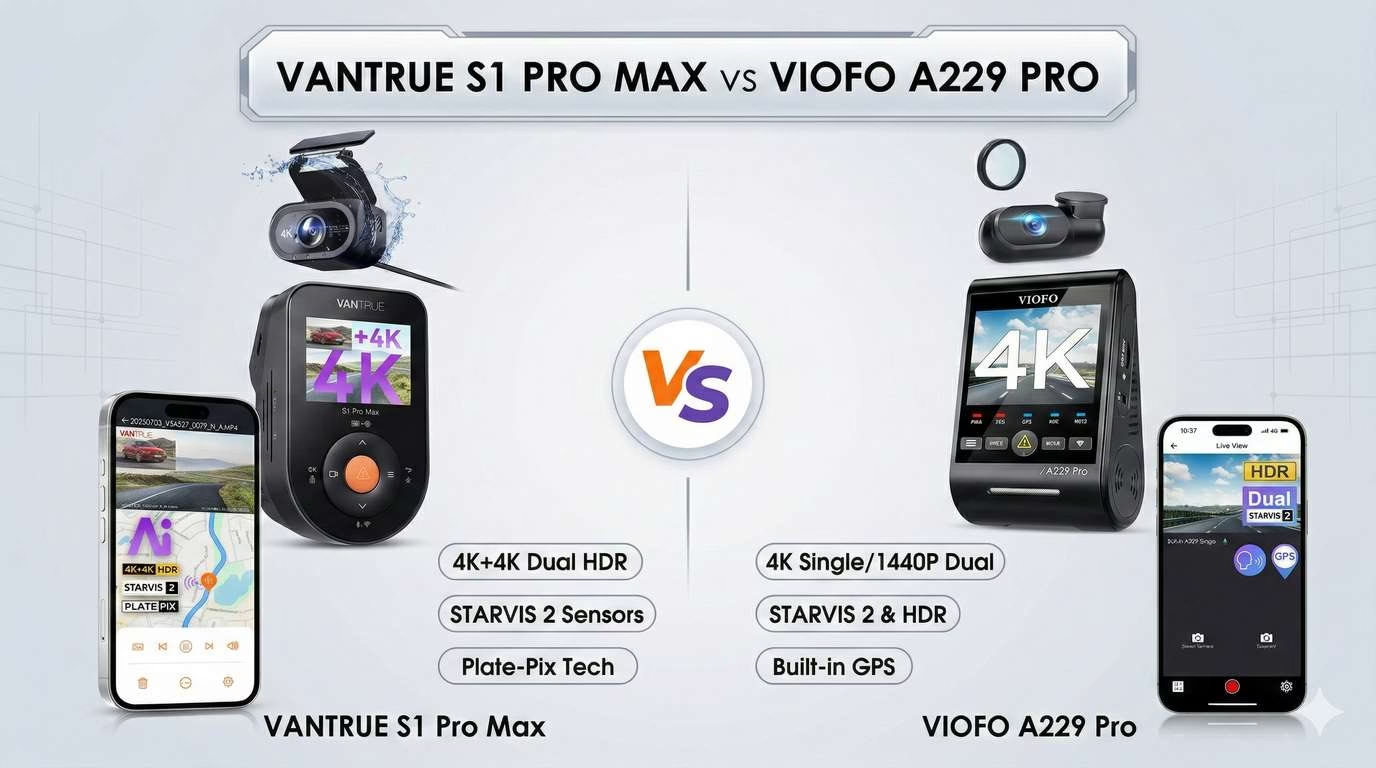
- Vantrue S1 Pro Max: premium dual-channel with AI features, optional LTE, and even dual-4K variants.
- Viofo A229 Pro: premium multi-channel lineup built around evidence quality, strong night performance, and robust parking options.
Let’s settle this the smart way.
Quick Verdict (Buy This, Not That)
If your top priority is the highest odds of readable plates at speed—especially at night, the Viofo A229 Pro is the safer bet. It’s built like an evidence machine.
If you want dual-4K options, advanced driver alerts, optional LTE remote monitoring, and massive storage headroom, the Vantrue S1 Pro Max is the feature-heavy powerhouse.
Most people should buy A229 Pro.
But the right people should buy S1 Pro Max.
Let’s make sure you’re in the right group.
⚡ Quick Decision Table
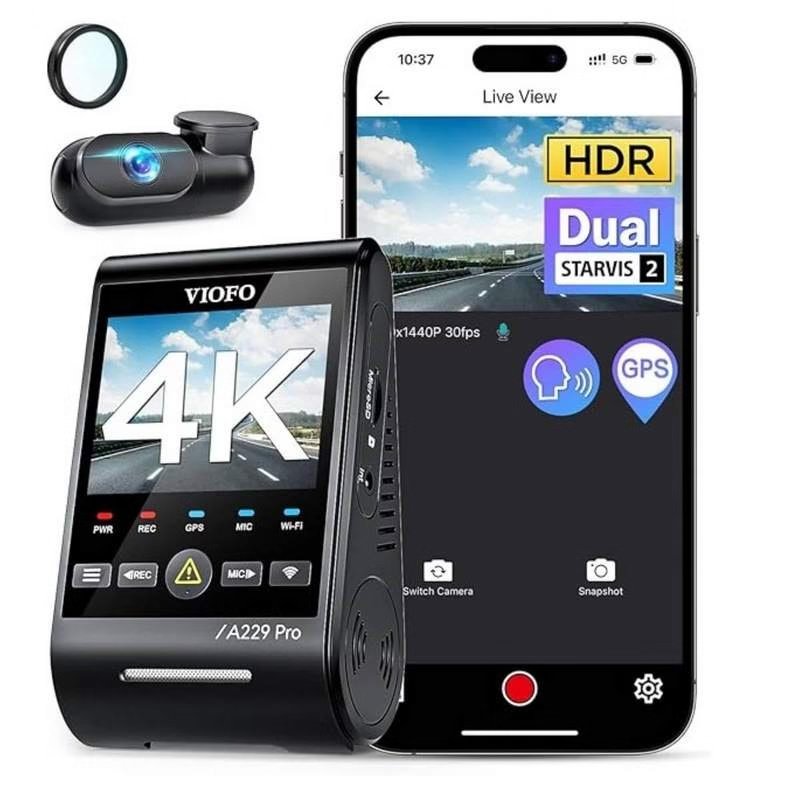
- Superior night‑time plate & motion clarity
- Buffered parking mode (hardware kit optional)
- 2CH / 3CH with IR interior (rideshare / taxi)
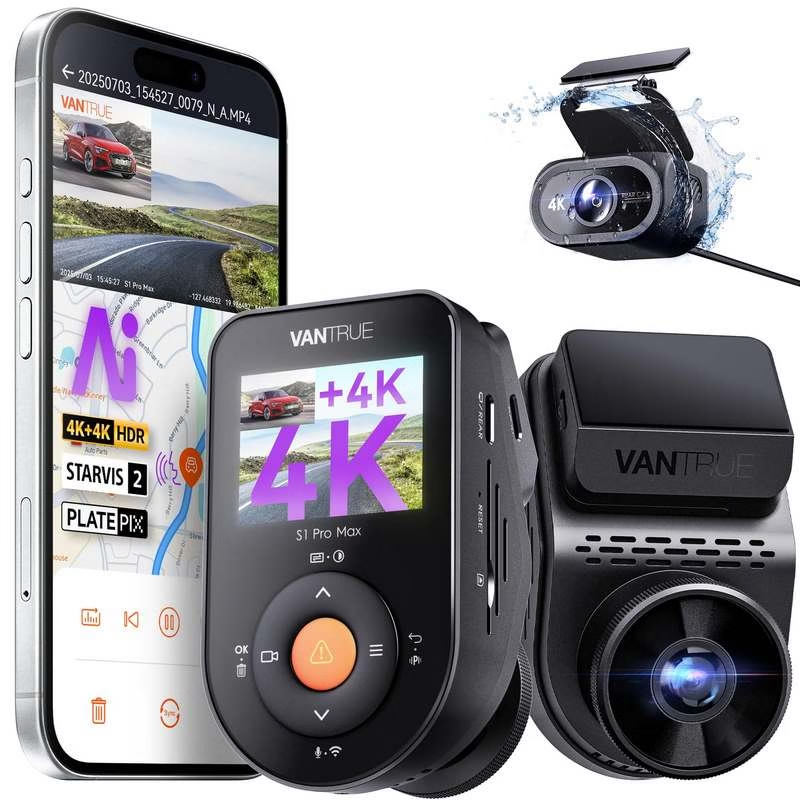
- Dual‑4K channels + front/side/interior options
- AI alerts (ADAS, BSD) & optional LTE module
- Massive 1TB storage support (heavy drivers)
🛍️ Affiliate links · we may earn a commission
📸 Side‑by‑Side Comparison· Vantrue S1 Pro Max vs Viofo A229 Pro
- Front res / fps4K (3840×2160) @ 30fps
- Rear res / fps4K @ 30fps or 2.5K @ 30fps (variant‑dependent)
- HDR/WDRHDR supported
- Parking modeBuffered 15s pre‑record + low‑bitrate/low‑fps options (hardware required)
- GPSBuilt‑in dual‑system GPS logger
- Wi‑Fi / App5 GHz Wi‑Fi + iOS/Android app
- microSD supportUp to 1TB
- Front 4K (30fps) with Sony STARVIS 2 IMX678
- Variants: front 4K + rear 4K, front 4K + rear 2.5K, or front‑only 4K
- H.265 video, MP4 format
- 5 GHz Wi‑Fi · Built‑in dual‑system GPS logger
- Up to 1TB microSD
- Operating range: −20°C to 70°C
- Optional LTE module (remote cloud / real‑time alerts)
- AI features: ADAS, Blind Spot Detection, optional Driver Monitoring add‑on
- Front res / fps4K (3840×2160) @ 30fps
- Rear res / fps2K (2560×1440) @ 30fps (IP67 variant available)
- HDR/WDRHDR supported
- Parking modeBuffered 15s pre + 30s post, time‑lapse, low‑bitrate, hybrid (hardware required)
- GPSQuad‑mode GPS (GPS/BeiDou/Galileo/GLONASS)
- Wi‑Fi / App2.4 + 5 GHz Wi‑Fi + iOS/Android app; Bluetooth support
- microSD supportUp to 512GB (picky; high‑endurance recommended)
- Front 4K (30fps) with Sony STARVIS 2 IMX678
- 2CH: front 4K + rear 2K | 3CH: adds interior 1080p IR camera
- H.264 video, MP4 format
- Dual‑band Wi‑Fi (2.4 + 5 GHz) plus Bluetooth (optional remote)
- Quad‑mode GPS (GPS + BeiDou + Galileo + GLONASS)
- Up to 512GB microSD (high‑endurance strongly recommended)
- Operating range: −10°C to 65°C (storage −20°C to 70°C)
- Includes a front CPL filter (bonus)
The 7 Things That Actually Decide the Winner
Here’s how you should judge any dash cam, including these two:
- Day clarity (fine detail, not fake sharpness)
- Night clarity (plate odds under real glare)
- Motion handling (smear vs readable)
- Heat stability (reboots, shutdowns, corruption)
- Parking mode reliability (buffered events, consistency)
- App and downloads (because footage is useless if you can’t get it)
- Total ownership pain (install effort, SD pickiness, accessory costs)
We’ll hit them in that order.
Video Quality (Day): Crisp Detail vs “Looks Sharp”
In daylight, both cameras are capable. They’re premium for a reason.
But “premium” doesn’t mean identical.
Vantrue S1 Pro Max in daylight
The S1 Pro Max pushes a very clean, very confident image. After firmware improvements, users report better front detail and a more competitive “evidence grade” look. It’s the kind of footage that makes you relax because it feels serious.
You also get flexible configurations. If you choose the dual-4K variant, you’re giving the rear camera a real chance to capture meaningful detail—not just “something happened behind me.”
That matters on highways. And it matters in parking lots.
Viofo A229 Pro in daylight
The A229 Pro has a reputation for sharp, readable footage that holds up when you zoom in. This is where Viofo’s “evidence first” approach shows. Users routinely describe it as top-tier for clarity, especially with the front camera.
It also runs a high front bitrate in typical 2-channel use, and that helps preserve detail in motion.
Day verdict: This one is close.
If you’re buying based on day footage alone, you won’t hate either choice.
But nobody buys a dash cam for perfect noon lighting. Night is where your money gets tested.
Video Quality (Night): Plate Capture Odds in the Real World
Night footage is where most dash cams become expensive decorations.
Headlights bloom. Reflections explode. Plates turn into glowing rectangles. And motion blur eats everything.
So the right question isn’t “Which is 4K?”
It’s “Which gives me the best odds of readable plates when it matters?”
Viofo A229 Pro at night
The A229 Pro is consistently praised for night detail and plate readability at speed. It’s built around Sony STARVIS 2 sensors across channels, and it shows in the kind of feedback people leave: fewer complaints about “everything is bright but nothing is readable.”
The result is a more dependable “grab a plate during motion” experience.
Not perfect. No dash cam is.
But reliably better than average.
Vantrue S1 Pro Max at night
The S1 Pro Max can look excellent at night, especially after firmware improvements. Many owners praise nighttime clarity and say it captures usable evidence when they needed it.
But there’s one important wrinkle: PlatePix™.
PlatePix is meant to improve plate visibility. And sometimes it does. But owner feedback also calls it inconsistent—especially with distant or moving plates. In some situations it can darken footage without delivering a proportional gain in readability.
So what does that mean for you?
- If your roads are well-lit and incidents are usually close-range, S1 Pro Max can deliver strong results.
- If you need consistent plate odds at speed and under ugly glare, A229 Pro is the safer play.
Night verdict:
If you care about night plates, the A229 Pro wins more often.
HDR: Helpful Tool or Unwanted Side Effects?
Both models support HDR. And HDR can be a lifesaver in mixed lighting.
But HDR isn’t magic. It can introduce ghosting. Or it can flatten contrast. Or it can overcorrect and make bright areas look weird.
Where HDR really matters
- Exiting tunnels into sunlight
- Sunset glare into the windshield
- City intersections with harsh contrast
- Headlight blast on dark roads
Both models aim to balance these conditions. The practical takeaway is simple:
If you drive a lot in mixed lighting, HDR is worth having.
But don’t assume it guarantees plates. It mostly protects the overall scene.
Heat Stability: The Silent Killer of Dash Cams
Heat is where dash cams go to die.
Not immediately.
Slowly.
Random reboots. Corrupted files. Missed recordings. Or the worst one: it “works” until the day you need it.
The good news: both cameras use supercapacitors, which is the correct design for heat safety compared to battery-based units.
Vantrue S1 Pro Max heat reality
The S1 Pro Max is rated for −20°C to 70°C operation. That’s strong on paper. In ownership, most feedback does not point to widespread failure. Minor overheating in direct sun does show up, but it’s not described as a consistent dealbreaker.
The rear camera can run warm, especially if sealed and high-resolution. That’s normal. The key is whether it stays stable and keeps recording.
Overall impression: solid, with occasional heat notes in extreme scenarios.
Viofo A229 Pro heat reality
The A229 Pro is rated −10°C to 65°C operation, with storage up to −20°C to 70°C. Users do mention it can generate noticeable heat under prolonged use or direct sun. But it includes protections, and the general pattern is “warm but stable,” especially when properly powered.
Here’s the important part: a dash cam that runs warm is not automatically a problem.
A dash cam that reboots, corrupts, or stops recording is a problem.
Heat verdict:
Both are built for heat. Both can get warm.
Neither has a clear “avoid at all costs” heat pattern in the feedback provided.
If you live in brutal sun and park outdoors daily, I’d lean slightly toward Vantrue’s wider operating range and feature set—especially if optional LTE monitoring matters to you. But for most drivers, heat won’t be the deciding factor between these two.
Parking Mode: Where Buyers Get Burned
Parking mode is the feature everyone wants… and many people set up wrong.
Good parking mode has three traits:
- Buffered recording (captures seconds before the event)
- Reliable triggering (doesn’t miss, doesn’t false-trigger nonstop)
- Stable power behavior (voltage cutoff that protects your battery)
Vantrue S1 Pro Max parking mode
The S1 Pro Max includes:
- 15-second buffered pre-recording for motion/collision events
- Low-bitrate or low-frame-rate continuous modes (including 1 fps) for long coverage
- Adjustable collision sensitivity
This is a strong package. It’s built for people who actually want 24-hour surveillance, not just a checkbox feature.
But the reality is simple: you need the hardwire kit for full parking functionality. Without it, you’re not using the camera the way it’s designed.
Viofo A229 Pro parking mode
The A229 Pro includes:
- 15-second pre-event + 30-second post-event buffered recording
- Time-lapse (1–10 fps)
- Low-bitrate continuous recording
- Hybrid modes
This is a mature parking feature set. It’s flexible. And it’s proven useful in real incident capture according to user feedback.
Again, full functionality needs the optional hardwire kit (HK4 or HK6 are commonly referenced for this model).
The practical parking advice (read this twice)
- If you can’t hardwire, don’t buy a premium dash cam expecting “real” parking mode.
- If you can hardwire, both of these can protect you properly.
- If your car battery is small or you park for long hours, you must configure cutoff correctly.
Parking verdict:
Both are strong.
The A229 Pro gets a slight edge for its mature buffered workflow (pre + post) and flexible combinations.
But the S1 Pro Max is absolutely in the same league.
App, Wi‑Fi, and Firmware: The “Get Footage Now” Test
This is the part reviewers love to ignore until something goes wrong.
Your app experience decides whether you can pull video in two minutes… or spend twenty minutes swearing in a parking lot.
Vantrue S1 Pro Max app experience
Feedback commonly describes the Vantrue app as easy and fast, with strong 5 GHz performance. Voice control is also praised for hands-free actions like locking video or toggling Wi‑Fi.
There are occasional connectivity drops reported. Most are solved with a restart. That’s annoying, but not catastrophic.
Viofo A229 Pro app experience
The A229 Pro supports dual-band Wi‑Fi and also offers fast transfers. Some users mention needing occasional app restarts, plus minor quirks like white balance shifts or voice sensitivity.
The bigger “ownership truth” with the A229 Pro is not the app. It’s the SD card pickiness. More on that in a second.
App verdict:
Both are good enough for daily use.
Neither is perfectly flawless.
Vantrue gets slightly more “easy app” praise, while Viofo gets more “benchmark evidence cam” praise.
Installation: The Real-World Pain Level
A great dash cam installed poorly becomes a mediocre dash cam.
And multi-camera systems add cable complexity. That’s just life.
Vantrue S1 Pro Max install reality
Front mount is straightforward with the adhesive magnetic mount. The swiveling lens is a genuinely practical win, especially on curved windshields.
Rear install can be slightly harder because the rear cable is thicker. That can make routing through tight trim channels more annoying.
But for a typical sedan install, most users describe it as manageable within a couple hours without professional help.
Viofo A229 Pro install reality
The 2-channel setup is reasonable. The 3-channel setup is where effort jumps. More cabling. More routing. More time.
The included trim tool helps. But you still have to do the work.
If you’re driving an SUV or hatchback, routing to the rear can get annoying no matter what you buy. Rubber grommets and hatch hinges are always a party.
Install verdict:
- Easiest overall: Vantrue S1 Pro Max (especially 2CH)
- Most complex: A229 Pro 3CH (but you get cabin coverage)
Storage and microSD Reliability: Don’t Cheap Out
This is the unsexy truth: your dash cam is only as reliable as your microSD card.
Vantrue S1 Pro Max storage
Supports up to 1TB, which is huge. It’s ideal for heavy drivers and people running parking mode often. More capacity means more retention. More retention means fewer “it overwrote the clip” regrets.
Viofo A229 Pro storage
Supports up to 512GB and is described as selective with SD cards. Incompatible cards can cause interruptions or errors. The fix is simple: use a high-endurance card that’s known to play well, and don’t cheap out.
Best practices that prevent 90% of problems
- Use a high-endurance microSD
- Format it in the camera on day one
- Re-format on a schedule (monthly is a common habit for heavy use)
- If you see skipped files or errors, the SD card is the first suspect
Storage verdict:
Vantrue wins on capacity headroom.
Viofo demands smarter SD selection but rewards you with excellent footage when set up correctly.
Reliability Audit (The Part That Actually Matters)
Let’s talk about the stuff that kills trust:
- missed recordings
- corrupted files
- overheating shutdown loops
- flaky rear connections
- app failure when you need footage
Vantrue S1 Pro Max reliability pattern
Overall feedback is strongly positive. Owners describe it as premium, reliable, and improved by firmware updates.
Common negatives are usually “quality of life” issues:
- AI alerts can be annoying or false-trigger
- PlatePix can be inconsistent
- occasional app disconnection that’s fixed by restarting
- minor heat notes in extreme sun
- rare file skipping often tied to SD card or power
That’s a reasonable profile for a feature-packed camera.
Viofo A229 Pro reliability pattern
The A229 Pro is widely treated as a benchmark premium model when set up properly.
Common negatives tend to be practical:
- can run warm (but protected)
- SD compatibility can be picky
- occasional firmware quirks solved by updates
- multi-camera installs take time
What you don’t see heavily is “this thing is unreliable junk.” The dominant tone is: set it up right and it performs like a serious evidence tool.
Reliability verdict:
Both are solid.
But the A229 Pro has a stronger “evidence-first trust” reputation—assuming you use the right SD card and power setup.
Killer Feature Highlight (One for Each)
Vantrue S1 Pro Max killer feature: Optional LTE + AI ecosystem
If you want a dash cam that behaves more like a security system, the S1 Pro Max is built for that mindset.
- Optional LTE for remote monitoring and alerts
- AI safety features like ADAS and blind spot detection
- Optional driver monitoring add-on
- Strong parking modes with buffered recording
This is the “I want it all” camera.
The tradeoff?
More features means more settings, more alerts, and more opportunities for something to annoy you. Many owners end up turning off the chatty AI prompts.
Viofo A229 Pro killer feature: Evidence-focused clarity + multi-channel flexibility
The A229 Pro’s superpower is straightforward: it’s designed to capture usable evidence in real conditions.
And you can tailor it:
- 2CH for most drivers
- 3CH with IR interior for rideshare or family safety
- Waterproof rear option if your setup needs it
- Optional remote control convenience
The tradeoff?
You’ll do more cabling, and you must be disciplined about SD cards.
Hidden Costs (Don’t Get Surprised)
Neither of these is truly “complete” out of the box if you want full capability.
Common add-ons:
- Hardwire kit (required for proper parking mode)
- Fuse taps (for clean hardwire installs)
- High-endurance microSD card
- Optional CPL (A229 Pro includes a front CPL; others may be optional)
- Professional install (if you don’t want to fight trim panels)
This matters because pricing can look similar until you add the real setup costs.
Where Each One Wins (Fast Summary)
Vantrue S1 Pro Max wins if you care about…
- Dual-4K options (front + rear 4K variants available)
- Huge storage support (up to 1TB)
- Wider operating temperature range on paper (−20°C to 70°C)
- AI driver alerts and optional LTE remote monitoring
- Slightly easier 2CH install experience and useful swiveling lens
Viofo A229 Pro wins if you care about…
- Consistently strong evidence clarity, especially at night
- Higher “plate odds” reputation under motion and glare
- Better configuration choices (2CH or 3CH with IR interior)
- Mature buffered parking workflow (pre + post event, plus flexible modes)
- Quad-mode GPS logging and convenient optional accessories
Best Pick by Scenario (No Overthinking)
1) You drive highways at night. You want plates.
Buy the Viofo A229 Pro.
This is the cleanest choice for night evidence.
2) You park outdoors and want a security-style setup
Buy the Vantrue S1 Pro Max, especially if optional LTE monitoring fits your needs.
It’s built for that “always watching” mindset.
3) You’re rideshare or you want cabin coverage
Buy the A229 Pro 3CH.
Interior IR coverage is exactly what you want for night cabin recording.
4) You want rear footage that’s actually meaningful
Consider the S1 Pro Max dual-4K variant.
Rear detail matters more than most people realize.
5) You hate fiddling and want simple ownership
Lean Vantrue S1 Pro Max for the smoother “feel” and praised app experience.
Just be ready to disable AI alerts if they annoy you.
My Setup Checklist (Do This on Day One)
Do these and you’ll avoid most headaches:
- Install with a stable power source (hardwire if you want parking)
- Use a high-endurance microSD card
- Format the card inside the camera
- Set time zone and GPS preferences
- Enable parking mode only after voltage cutoff is configured
- Take a quick test drive and check:
- does it start recording automatically?
- are files saving correctly?
- do you have front + rear coverage as expected?
Simple. But it saves you from regret.
FAQs
1) Which is better overall: Vantrue S1 Pro Max or Viofo A229 Pro?
For most drivers, the Viofo A229 Pro is the better overall pick because it’s tuned like an evidence tool and earns strong praise for clarity—especially at night. The Vantrue S1 Pro Max becomes the better pick when you want dual-4K variants, optional LTE monitoring, and a heavier feature stack.
2) Which one is better for night driving?
The A229 Pro is the safer bet for night driving if your goal is readable plates and clear motion detail. The S1 Pro Max can perform well at night, but its PlatePix behavior is described as inconsistent in certain conditions.
3) Do both support buffered parking mode?
Yes. Both offer buffered recording with roughly 15 seconds of pre-event capture, which is what you want if someone hits your car and leaves quickly. Full parking mode functionality typically requires a hardwire kit.
4) Which one is better for parking protection?
Both are strong. The A229 Pro gets a slight edge because its parking workflow includes a clear pre- and post-event buffered approach plus flexible time-lapse and low-bitrate modes. The S1 Pro Max is also excellent, especially if you value extended coverage modes and a security-style feature set.
5) Which one handles heat better?
Both use supercapacitors, so they’re built for heat compared to battery-based cams. On paper, the S1 Pro Max has a wider operating temperature range. In practice, both can run warm in direct sun, and stable installation and power matter more than tiny spec differences.
6) Do I need to buy extra accessories?
If you want real parking mode, yes. Plan for a hardwire kit and a high-endurance microSD card. For the A229 Pro, SD card choice is especially important because compatibility can be picky.
7) Which is easier to install?
The Vantrue S1 Pro Max tends to be simpler, especially in a 2-channel setup. The A229 Pro is also manageable in 2CH form, but the 3CH setup adds noticeable cabling work.
8) Which has better storage support?
Vantrue S1 Pro Max supports up to 1TB, which is great for long retention and parking mode use. A229 Pro supports up to 512GB, and it strongly prefers high-endurance, compatible cards.
9) Is the Vantrue AI stuff actually useful?
It can be. ADAS and blind spot alerts can help in heavy traffic. But many people find the alerts chatty or occasionally false-trigger and end up dialing down sensitivity or disabling them. If you love driver-assist prompts, Vantrue’s feature set is a genuine advantage.
10) Should I pick 3-channel A229 Pro over 2-channel?
Pick 3CH only if you truly need interior coverage (rideshare, kids, cabin security). Otherwise, 2CH is simpler, easier to install, and still delivers premium evidence capture.
11) Will higher resolution automatically give me better plates?
No. Resolution helps, but plate readability is more influenced by exposure tuning, motion handling, bitrate, and glare control. That’s why the A229 Pro’s reputation for plate clarity matters more than just “4K vs 4K.”
12) What’s the fastest way to pull footage?
Both support Wi‑Fi transfers. The A229 Pro also supports fast direct transfer via USB‑C on compatible devices, which can be a big convenience if you hate waiting on Wi‑Fi.
Final Verdict
If you want the most consistent “evidence-grade” experience—especially for night driving and plate capture—buy the Viofo A229 Pro. It’s the cleaner recommendation for the average driver who just wants proof that holds up.
Buy the Vantrue S1 Pro Max if you’re the kind of owner who loves features and wants a dash cam that behaves like a mini vehicle security system—dual-4K options, strong parking modes, AI alerts, massive storage support, and even optional LTE remote monitoring.
In short:
- Most people: Viofo A229 Pro
- Power users and feature lovers: Vantrue S1 Pro Max
Pick based on your real life. Not the marketing bullet list.
And whatever you choose, don’t sabotage it with a cheap SD card or a sloppy power setup. That’s how good dash cams fail.